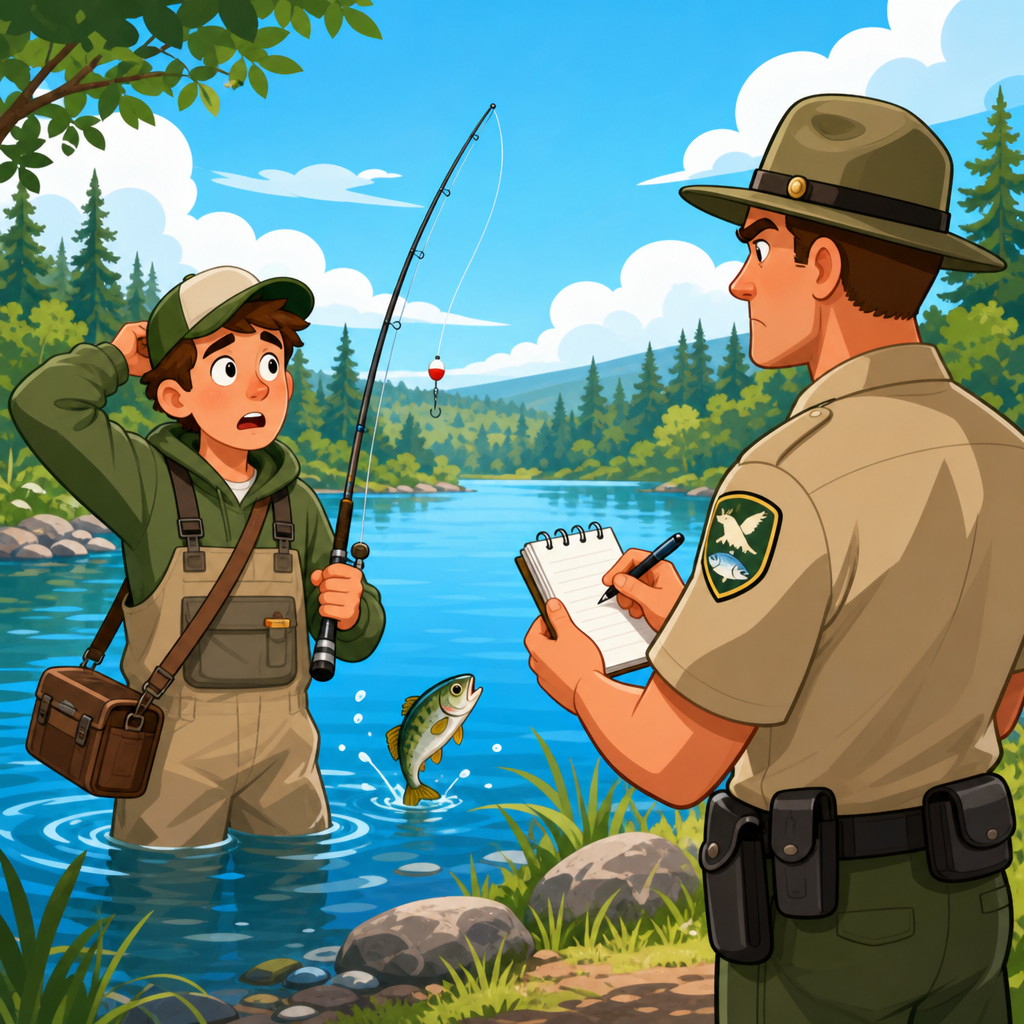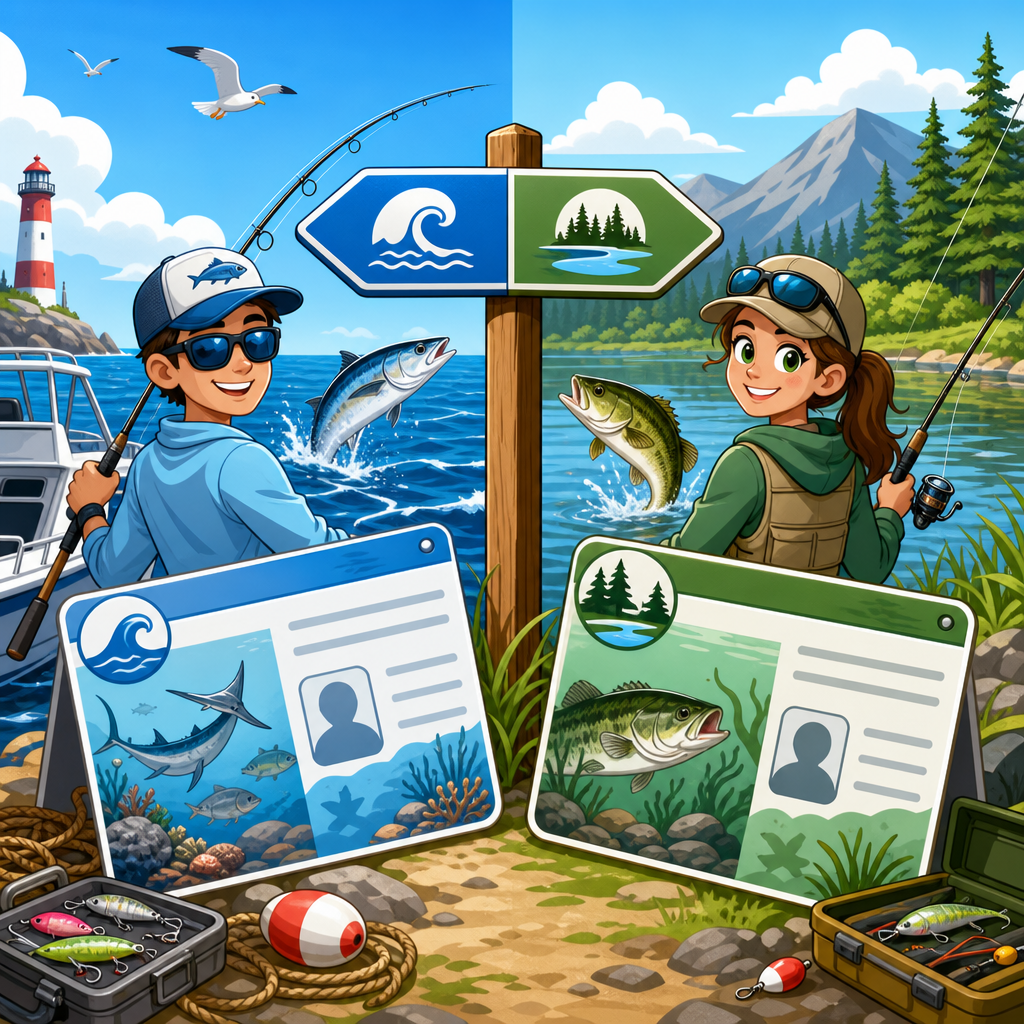
Saltwater vs. freshwater fishing permits differ because states regulate species, habitats, harvest limits, and access in separate ways, and understanding those differences is essential before you cast a line. A fishing permit is the legal authorization to fish in a defined place, during a defined season, for certain species, often with separate rules for residents, nonresidents, age groups, and methods such as shore fishing, charter fishing, or spearfishing. In practice, I have found that most violations do not come from deliberate poaching; they come from anglers assuming one license covers everything, or believing a boat registration, hunting license, or charter booking automatically satisfies fishing regulations and licensing requirements. It usually does not.
This matters because permit mistakes can trigger fines, confiscated gear, and invalidated catches, and they can also undermine conservation systems that fund stocking, habitat restoration, law enforcement, and fish population research. Freshwater fisheries often depend on inland management of lakes, rivers, ponds, and reservoirs, while saltwater fisheries are shaped by coastal state rules, interstate commissions, and federal management under agencies such as NOAA Fisheries. Those overlapping systems create confusion, especially for travelers and boaters crossing state lines or fishing estuaries where fresh and salt water meet. As the hub page for fishing regulations and licensing under boating laws and regulations, this guide explains what is typically required, where the rules split, and how to stay compliant whether you fish from shore, private boat, kayak, pier, or charter vessel.
The key terms are straightforward once you see how regulators use them. A license usually means the basic authority to fish. A permit, endorsement, tag, or stamp usually means an added authorization for a species, area, or method, such as lobster, salmon report cards, trout stamps, reef fish permits, or harvest tags for sturgeon. A registry is different again: some coastal states require marine anglers to enroll in a saltwater registry even when no fee applies, often to support federal data collection linked to the National Saltwater Angler Registry. Seasons, bag limits, possession limits, and size limits are separate from the permit itself. You can hold a valid license and still break the law by keeping the wrong fish, exceeding a limit, using prohibited bait, or fishing in a closed zone.
How freshwater and saltwater permits are usually structured
Freshwater fishing permits are generally managed at the state level, and the structure is often simple at first glance: buy a resident or nonresident inland fishing license, then add stamps or validations where required. Yet the details vary widely. In many states, trout waters require a trout stamp or inland trout validation. Some salmon and steelhead fisheries require harvest cards. Certain reservoirs limit the number of rods, require aquatic invasive species inspections for trailered boats, or impose local access rules through park authorities. State wildlife agencies such as the Texas Parks and Wildlife Department, Florida Fish and Wildlife Conservation Commission, California Department of Fish and Wildlife, and New York State Department of Environmental Conservation all publish annual regulations because freshwater rules change with stocking plans, drought conditions, invasive species management, and spawning protection.
Saltwater fishing permits can look simpler because many states issue one marine recreational license, but marine compliance often becomes more layered once you examine location and species. Coastal anglers may need a state saltwater license, free registration in a marine registry, and species-specific permits for lobster, crabs, reef fish, or highly migratory species. Anglers targeting tuna, billfish, swordfish, or sharks from private vessels may also run into federal permit requirements administered through NOAA Fisheries, especially when the permit applies to the vessel rather than each person. Party boats and charter boats further complicate the question because the operator may hold a blanket license covering paying passengers, but not always in every jurisdiction or for every species. The only safe assumption is that marine fishing requires checking both state and federal layers before departure.
One pattern explains most differences: freshwater rules are usually tied to where you stand, while saltwater rules are often tied to where the fish species fall within broader management plans. A bass angler on an inland reservoir is typically governed by state law and local site restrictions. A snapper angler leaving an inlet may be subject to state seasons in nearshore waters and federal seasons offshore, with different opening dates and reporting obligations. Estuaries, tidal rivers, and brackish marshes are where confusion peaks. In those areas, whether you need a freshwater license, a saltwater license, or both depends on the state’s legal boundary definitions, not what the water tastes like.
What anglers are commonly required to carry or prove
In most jurisdictions, you need to be able to prove four things on the water: identity, legal fishing authority, compliance with harvest rules, and any required vessel or access permissions. Proof of legal fishing authority may be a printed license, a mobile app confirmation, or a customer number linked to a state database. Several states now accept digital licenses, but some still advise carrying a printed copy in areas with poor cell coverage. For harvest-controlled species, proof may include tags attached to fish, punch cards, report cards, or electronic catch reporting. If you fish from a boat, marine patrol or conservation officers may also inspect required safety gear because boating enforcement and fishing enforcement often overlap during a stop.
Age exemptions and residency status are major variables. Children below a certain age often do not need a license, but the cutoff differs by state. Seniors may qualify for discounted or lifetime licenses, though “lifetime” usually means lifetime within that issuing state only. Active-duty military members sometimes receive resident pricing or temporary exemptions. Nonresidents nearly always pay more, and in destination states the difference can be substantial. I regularly tell traveling anglers to compare annual, short-term, and combination options because a seven-day nonresident saltwater permit can cost less than two one-day purchases, while a freshwater and hunting combo may be cheaper than stand-alone fishing privileges if you plan multiple trips in the same year.
Species-specific requirements catch people off guard more than any other issue. In freshwater, examples include paddlefish tags, steelhead validations, and salmon record cards. In saltwater, examples include lobster report cards, reef fish descent device rules, shore-based shark permit education courses in some states, and federal Highly Migratory Species permits for certain vessel activities. None of these are covered simply because you bought the base license. The legal framework is intentional: general licenses fund broad management, while add-on permits help agencies control pressure and collect data on sensitive or valuable fisheries.
| Scenario | Freshwater permit pattern | Saltwater permit pattern | Common mistake |
|---|---|---|---|
| Resident fishing from shore | State inland license, possible trout stamp | State marine license or free registry | Assuming one annual license covers both environments |
| Nonresident weekend trip | Short-term inland license, park access fee | Short-term saltwater license, pier or beach rules | Buying only site access and skipping the fishing license |
| Private boat targeting special species | Base license plus tags or harvest card | Base marine license plus species or vessel permit | Missing species-specific endorsement |
| Charter passenger | Often covered by guide in some states | Often covered by charter vessel, not universally | Assuming blanket coverage without confirmation |
| Estuary or tidal river | May require inland license depending on boundary | May require saltwater license depending on boundary | Judging by water appearance instead of legal definition |
State, federal, and local rule overlap
Fishing regulations and licensing are not controlled by a single national code, which is why a lawful setup in one state may be unlawful two miles away. States issue most recreational licenses and define inland seasons, size limits, and access rules. Federal agencies manage species and waters under federal authority, particularly beyond state marine boundaries that usually extend three nautical miles from shore on the Atlantic and Pacific coasts and nine nautical miles for Texas and the Gulf coast of Florida. Local governments and park authorities can add launch fees, closed zones, lighting restrictions, or no-wake areas that affect fishing access even when your license is valid.
For boaters, this overlap matters because your route can change the rules. Launching from a county ramp inside a state park may involve entrance fees, invasive species checks, and horsepower or wake restrictions before fishing law even enters the picture. Moving from a tidal creek into nearshore federal waters can switch the governing season for species such as red snapper or triggerfish. I have seen anglers with perfectly valid state licenses cited because they retained fish under a state season while drifting in federal water where the season was closed. The permit was not the issue; the jurisdiction was.
The practical solution is to treat every trip as a three-part check. First, confirm the personal or vessel license requirement. Second, confirm species rules for the exact water body or marine zone. Third, confirm local access rules at the launch, pier, beach, or wildlife management area. State agency apps, printed regulation digests, and NOAA Fisheries bulletins are the most reliable sources. Retail bait shops can be helpful for conditions, but they should never be your final authority for legal requirements.
Special cases: charters, piers, border waters, and reciprocal agreements
Some of the most searched questions involve exceptions, and they deserve direct answers. Do you need your own permit on a charter boat? Sometimes no, because many charter operators hold licenses that cover passengers, but you must verify the policy before the trip and ask whether species permits or harvest reporting are still your responsibility. Do you need a license to fish from a public pier? In some coastal states, no individual saltwater license is required if the pier holds a blanket permit. In others, the exemption is narrow or limited to specific structures. Can one license work in two states? Occasionally yes, on named border waters through reciprocal agreements, but those agreements are highly specific and may apply only to certain sections of a river or reservoir.
Border waters are where careful reading pays off. The Mississippi River, the Columbia River, Lake Texoma, and sections of the Potomac illustrate how compact rules, tribal authority, and adjacent state agreements can create exceptions to standard licensing. However, reciprocal privileges rarely mean universal reciprocity. One state may recognize the other’s license only while afloat on the shared water, not while bank fishing from its shoreline. Methods can also differ. You might be legal to troll from a boat under an agreement but illegal to harvest a protected species that the neighboring state manages differently.
Piers and shore exemptions also create false confidence. An angler may be exempt from buying a saltwater license on a licensed pier, then walk to the adjacent beach and unknowingly lose that exemption. Similarly, a guide-covered freshwater trip on a private ranch pond does not imply coverage on a public reservoir the next morning. The pattern is consistent: exemptions are narrow, and they apply only under the conditions stated by the issuing authority.
How to stay compliant and avoid common permit mistakes
The best compliance system is a repeatable checklist. Before any trip, identify the water body, confirm whether it is classified as freshwater, saltwater, tidal, or border water, and check the managing agency. Next, buy the correct license for your residency and trip length. Then review species rules, including size, bag, possession, and gear restrictions, plus any tags, stamps, or reporting cards. If fishing from a boat, verify whether the operator’s license covers passengers and whether federal permits apply offshore. Finally, save screenshots, download PDFs for offline use, and carry tools for legal measurement because many disputes begin with an avoidable size violation rather than a missing permit.
Several named tools make this easier. State wildlife apps often store mobile licenses and regulation summaries. NOAA Fisheries posts current recreational season notices for federally managed marine species. The U.S. Fish and Wildlife Service publishes information relevant to migratory species and federal refuges. For invasive species compliance, western states frequently use watercraft inspection programs tied to launch access. If you fish often, create a folder on your phone with license confirmations, vessel registration, species cards, and bookmarked regulations for your home waters and your most common travel destinations.
The larger benefit of getting permits right is not merely avoiding a ticket. Accurate licensing supports stocking programs, habitat work, hatchery operations, creel surveys, boat ramp maintenance, and enforcement presence that protects legal anglers from resource abuse. Freshwater and saltwater systems are different because the fisheries are different, but the core principle is the same: legal access depends on matching your license to your water, species, method, and location. Use this hub as your starting point for every fishing regulations and licensing question, then drill into your state rules before each trip. A ten-minute check today is cheaper than a citation tomorrow, and it keeps the fishery healthy for your next launch.
Frequently Asked Questions
What is the main difference between a saltwater fishing permit and a freshwater fishing permit?
The main difference is that saltwater and freshwater fishing are usually managed under separate regulatory systems, even within the same state. A freshwater fishing permit typically covers inland waters such as lakes, rivers, streams, reservoirs, and ponds, while a saltwater fishing permit applies to coastal waters, bays, estuaries, tidal creeks, and offshore areas. Because fish populations, habitats, seasons, and harvest pressures differ so much between these environments, states often issue different licenses, stamps, registrations, or endorsements depending on where you fish and what you target.
In practical terms, that means an angler cannot assume that one license automatically covers both types of fishing. Some states sell a combined license, while others require separate permits for inland and marine fishing. There may also be extra requirements for highly regulated species, special management zones, or fishing methods such as spearfishing, lobster harvesting, shellfish collection, or guided charter trips. The most important takeaway is that the permit is tied not just to the act of fishing, but to the water type, location, target species, and method used.
It is also common for rules to vary based on residency, age, military status, disability exemptions, and trip duration. For example, a resident annual freshwater license may be separate from a nonresident short-term saltwater permit. In many states, the legal details matter: fishing from a shoreline, pier, boat, or charter vessel may not all be treated the same way. Before heading out, anglers should always confirm whether they need a freshwater license, a saltwater license, a combined credential, or an additional species-specific permit.
Do I need separate permits if I fish both freshwater and saltwater in the same state?
Often, yes. Many states treat inland and marine fisheries as separate categories, so if you plan to fish both freshwater and saltwater, you may need two different permits unless the state offers a bundled or all-waters license. This is one of the most common points of confusion for anglers, especially travelers who assume a standard fishing license covers every body of water in the state. In reality, the rules may split coverage between freshwater lakes and rivers on one hand, and tidal or coastal waters on the other.
Even when a state offers a combined option, it is still important to read the fine print. A combined permit may cover general recreational fishing but not special harvest activities or protected species. For example, you may still need a separate permit or endorsement for salmon, sturgeon, crab, lobster, reef fish, bait collection, or shellfish. Likewise, some states require no-fee registration for saltwater anglers even when a freshwater license is already in place, largely for conservation tracking and federal reporting purposes.
Another detail many anglers overlook is the boundary between freshwater and saltwater regulation. Tidal rivers, brackish estuaries, inlets, and bays can create gray areas where the applicable rules depend on the exact location or species being targeted. A river may be managed as freshwater above a bridge or dam and as saltwater below it. Because of that, the safest approach is to check the state wildlife or marine fisheries agency’s definitions before the trip. If you expect to move between inland and coastal waters in the same outing or vacation, confirming permit coverage in advance can help you avoid citations and keep your fishing legal.
Are there different permit rules for residents, nonresidents, children, seniors, and charter passengers?
Yes, and these distinctions are a major reason anglers should never rely on assumptions. Fishing permit requirements often change depending on whether you are a resident or nonresident, how old you are, whether you qualify for a senior exemption, and whether you are fishing independently or through a licensed charter or guide. Residents typically pay lower fees than nonresidents, while visitors may choose from short-term options such as one-day, three-day, seven-day, or annual permits. Those shorter permits can be convenient, but they may not include every privilege that an annual license provides.
Age-based rules are also common. Many states exempt young children from needing a license, but the cutoff age varies. Some states also offer free or reduced-fee permits for seniors, veterans, active-duty military members, or anglers with qualifying disabilities. However, an exemption from buying a license does not always mean exemption from all fishing rules. Bag limits, size limits, seasonal closures, and species restrictions still apply, and some individuals may still need to carry identification or complete a registration even if no fee is charged.
Charter and pier situations deserve special attention as well. In some saltwater fisheries, a licensed charter boat, party boat, or public pier may hold a blanket permit that covers paying passengers, meaning individual anglers do not need a separate saltwater license for that trip. In other cases, the captain’s license does not replace the passenger’s personal obligation. Freshwater guided trips can also vary by state. The key is to verify whether the operator’s licensing status covers you personally, and if so, what activities are included. If you step off the boat and fish on your own later that day, your own permit may still be required.
How do species, seasons, and fishing methods affect what permit I need?
They can affect it significantly. A basic fishing permit often authorizes general recreational fishing, but that does not mean every species, season, or method is automatically included. States manage fish and marine resources carefully, and permit requirements may become more specific when a species is highly regulated, migratory, vulnerable, or economically important. For instance, an angler may have a standard saltwater license but still need a separate permit, tag, stamp, report card, or harvest record for species such as tuna, lobster, crabs, reef fish, or certain game fish. Freshwater anglers may face similar add-ons for trout, salmon, or other stocked or managed fisheries.
Seasonal rules matter just as much as species rules. A valid permit does not override closed seasons, spawning protections, temporary conservation closures, or regional harvest restrictions. You might be fully licensed to fish in saltwater, but not legally allowed to keep a species that is out of season. The same applies in freshwater, where rivers or streams may have special regulations during spawning runs or in catch-and-release stretches. In other words, the license gives you legal access to participate, but the regulations determine what you may do once you are there.
Method-specific requirements are another area where anglers can get caught off guard. Shore fishing, private boat fishing, charter fishing, spearfishing, bowfishing, netting bait, harvesting shellfish, or using certain gear types may all trigger different rules. In saltwater especially, method and location often intersect with safety, conservation, and habitat protection laws. If you are fishing from a jetty, wading in tidal flats, diving for species, or targeting fish from a vessel, you should verify whether your standard permit covers that activity or whether an endorsement or separate permit is required.
What is the best way to make sure I have the right fishing permit before I go?
The best approach is to verify everything through the official state agency responsible for fish and wildlife or marine fisheries before your trip. Start by identifying exactly where you will fish, whether the water is classified as freshwater, saltwater, tidal, or brackish, and which species you intend to target. Then confirm whether you need a resident or nonresident permit, a short-term or annual license, and any extra permits, tags, stamps, or registrations tied to your fishing method or harvest plans. This process may seem tedious, but it is the most reliable way to avoid mistakes.
It also helps to gather a few practical details in advance: your age, residency status, identification requirements, vessel type, and whether you are fishing from shore, a private boat, or a charter. If you are crossing state lines, remember that permits usually do not transfer from one state to another unless there is a specific reciprocal agreement. Border waters and shared rivers can have special rules, and those should be checked separately. Anglers should also review current regulations shortly before departure, since seasons, fees, and species rules can change from year to year or even within the same season.
Finally, keep proof of your permit accessible while fishing, whether in printed form, on a mobile device, or through the state’s licensing app if one is available. Save copies of confirmation emails and note any permit numbers for species reporting requirements. If you are unsure about a tidal boundary, charter coverage, or species-specific endorsement, contact the agency directly rather than guessing. A few minutes of verification can prevent fines, confiscated catch, or trip disruptions, and it ensures you are fishing responsibly and legally in the waters you choose.