Coral reefs are among the most productive ecosystems on Earth, yet they are also among the most vulnerable to everyday boating activity. For anyone researching the best ways to protect coral reefs while boating, the core idea is simple: a reef can be damaged by a single careless maneuver, but careful boaters can reduce that risk dramatically through planning, equipment choices, and on-water habits. Coral reefs are living colonies of tiny animals called polyps that build calcium carbonate structures over decades and centuries. Those structures create habitat for fish, crustaceans, turtles, sharks, and countless microorganisms, while also buffering shorelines from wave energy and supporting tourism and fisheries. When boats ground on reefs, drop anchors on coral heads, leak fuel, discharge sewage, or create repeated propeller scour in shallow seagrass and reef flats, the damage can persist for years.
I have spent enough time around marinas, mooring fields, dive boats, and coastal cruising routes to know that most reef harm is not deliberate. It usually comes from small preventable mistakes: approaching a cove too fast, trusting outdated charts, tying off to unauthorized structures, feeding wildlife for photos, or cleaning a hull with products that wash directly into sensitive water. Because reefs already face heat stress, ocean acidification, disease outbreaks, and sediment runoff from land, local boating pressure matters more than many people realize. A reef under climate stress has less capacity to recover from a broken coral branch, a dragged anchor chain, or chronic pollution.
This article serves as a practical hub for how boaters can help protect marine life, with coral reef protection at the center. It covers route planning, anchoring alternatives, speed control, wake management, pollution prevention, wildlife-safe boating, gear maintenance, and responsible recreation near reefs. It also explains why these actions matter in plain terms, with examples that reflect common choices made by recreational boaters, charter captains, anglers, and liveaboards. Protecting reefs is not only an environmental obligation; it is also basic seamanship. A skipper who understands habitat zones, uses moorings properly, avoids shallow strikes, and follows discharge rules is reducing liability, protecting passengers, and preserving the places that make boating worthwhile.
Plan Before You Launch: Charts, Conditions, and Local Rules
The most effective reef protection begins before the engine starts. Good trip planning reduces the chance of groundings, anchor damage, and wildlife disturbance. In practice, that means using updated electronic charts, paper backups, tide tables, weather forecasts, and local notices to mariners. Reefs that appear well offshore at high tide can sit dangerously close to the surface at low water, especially in the Florida Keys, the Bahamas, the Great Barrier Reef lagoon, and many Pacific atolls. I always advise boaters to confirm chart datum, mark no-go zones on the plotter, and compare depth sounder readings against tidal state rather than assuming the chart tells the whole story in real time.
Local regulations matter just as much as navigation data. Many marine protected areas prohibit anchoring, fishing, wildlife approach, discharge, or entry into restoration sites marked by buoys. National marine sanctuaries and park waters often publish reef etiquette guidelines, speed restrictions, and seasonal closures. These rules are not bureaucratic details; they are targeted protections based on known habitat sensitivity. If a bay has installed mooring buoys, that usually means managers have documented anchor damage there. If a channel has an idle-speed zone near mangroves and flats, it is often because juvenile fish, manatees, turtles, or seabirds use that nursery habitat. Boaters who review site-specific guidance in advance avoid last-minute decisions that cause harm.
Use Mooring Buoys Whenever Possible
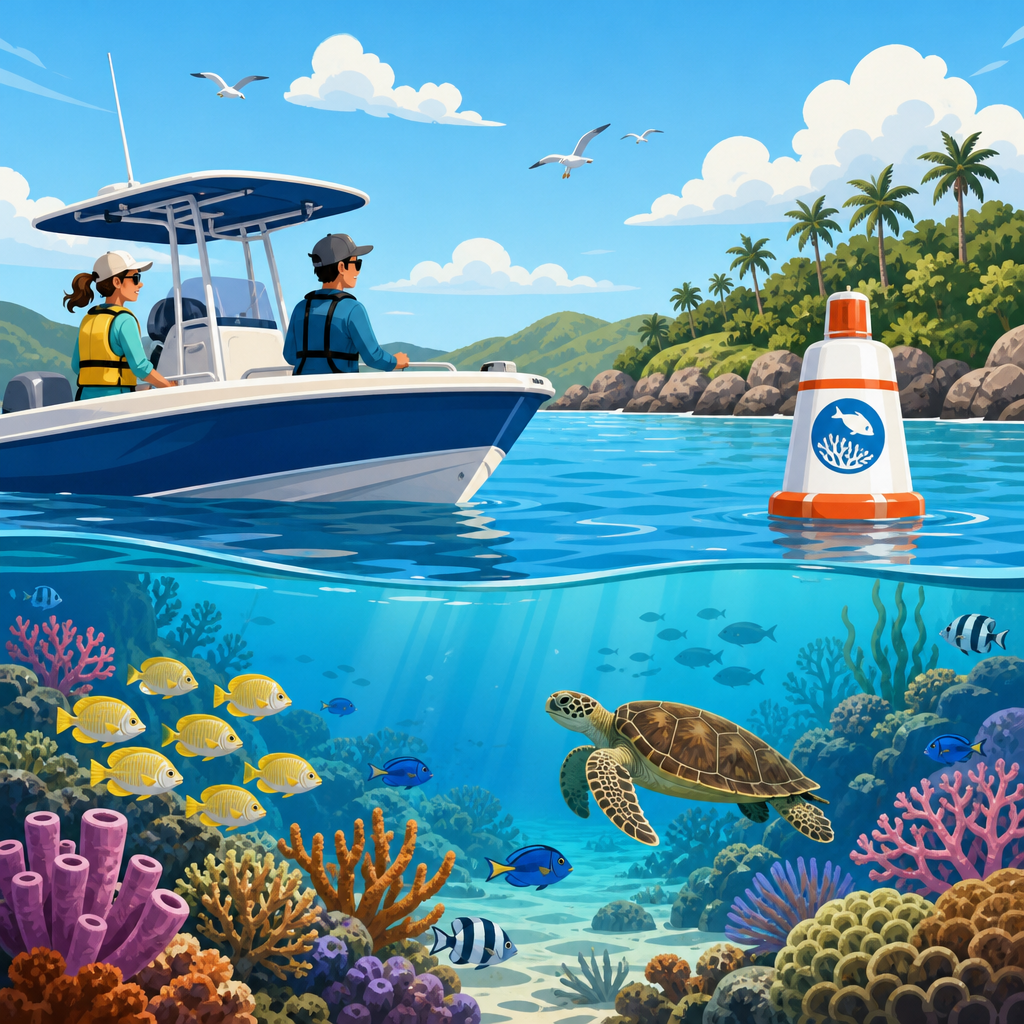
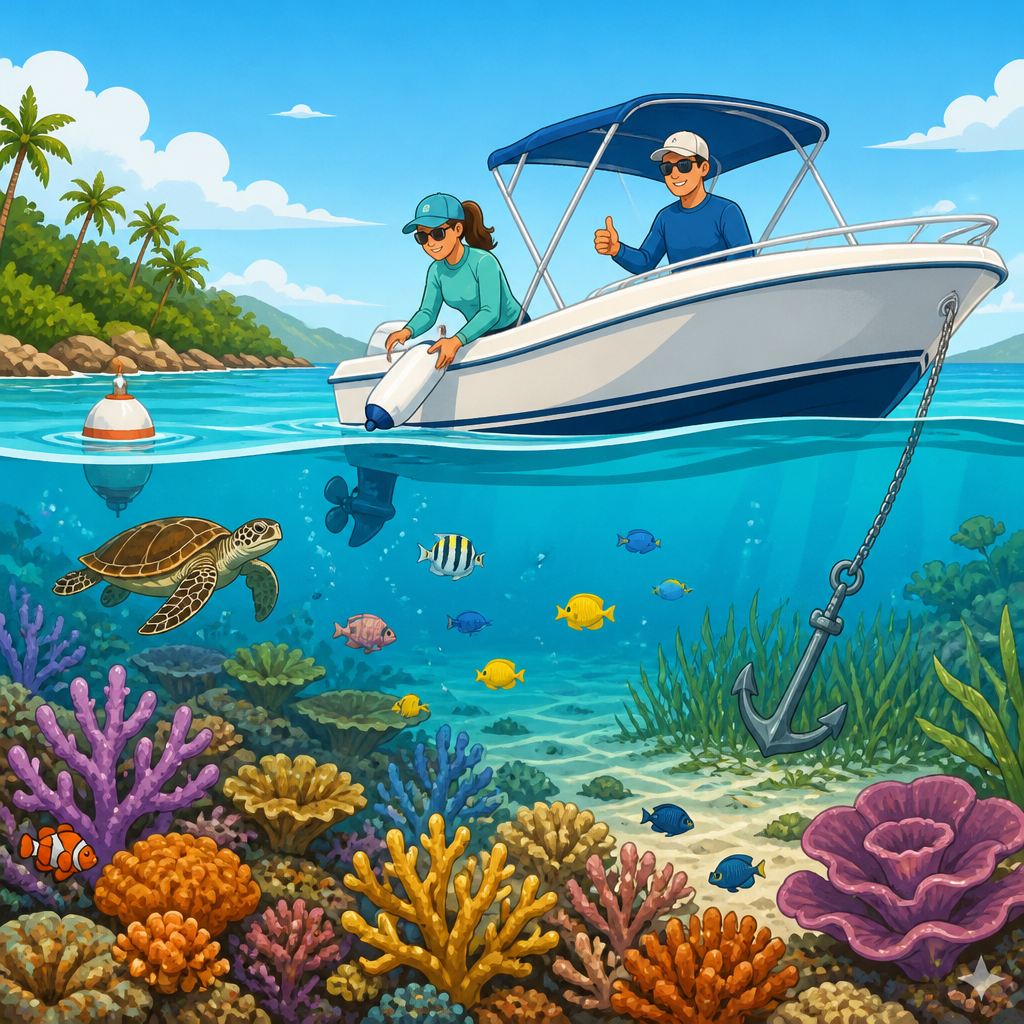
If you remember one rule about boating near coral reefs, make it this: never anchor on coral when a mooring buoy is available. Anchors crush living coral tissue on impact, and the chain sweeps a wide circle as the boat swings with wind and current. That chain can break branching corals, topple massive colonies, and scar adjacent seafloor repeatedly through the day or night. A single anchoring event in a popular reef site can damage habitat that took decades to form.
Mooring buoys are designed to eliminate that contact. They concentrate vessel attachment on hardened systems installed to avoid sensitive bottom habitat, and they reduce the cumulative damage caused when dozens of visiting boats all choose their own anchor spots. In places with heavy dive and snorkel traffic, mooring fields also improve safety by separating boats from swimmers and reducing congestion over shallow reef structures. Proper use matters. Approach slowly, pick up the pennant with a boat hook, secure the line to a cleat as instructed, and respect posted vessel length or time limits. Never tie to reef markers, navigation aids, or random buoys that are not designated moorings.
When no mooring exists, the right response is not “drop wherever it looks sandy.” The right response is to verify bottom type, depth, swing radius, and local permission. Sand patches can be appropriate in some areas, but only if the full anchor-and-chain arc remains clear of coral, seagrass, and rocky habitat. In clear tropical water, what looks like clean sand from the bow can hide juvenile corals or mixed substrate. If there is any doubt, move elsewhere.
Anchor Only in Safe Bottom, and Know How to Set and Retrieve Cleanly
There are times when anchoring is necessary, especially outside managed mooring areas. The safest reef-friendly technique is to anchor only in bare sand or mud well away from coral heads, bommies, and seagrass beds, then confirm that the boat will not swing into habitat as wind shifts. Scope matters because too little scope leads to dragging, and dragging across reef or grass can be devastating. Boaters should lower, not throw, the anchor; back down gently to set it; and snorkel-check the anchor placement if conditions and skill permit. I have seen many skippers prevent damage simply by taking two extra minutes to verify where the chain lies.
Retrieval is another overlooked risk point. If the anchor is fouled near hard bottom, powering forward blindly can plow the chain across coral. A better method is to approach vertically over the anchor, recover tension carefully, and if necessary use a trip line or a trained diver where local rules allow. Anchoring systems also matter. All-chain rode improves holding in many conditions but increases bottom contact if used carelessly near reefs. In sensitive areas, the answer is not different gear alone; it is disciplined site selection and boat handling. If the anchorage does not provide adequate room to avoid habitat, the responsible decision is to leave.
Control Speed, Wake, and Propeller Wash in Shallow Habitat
Coral reefs are part of a broader coastal habitat network that includes seagrass meadows, mangroves, sand flats, and channels. Boaters who want to protect marine life must manage speed and wake across all of it. Excessive speed increases grounding risk, shortens reaction time near snorkelers and wildlife, and can force propellers into bottom habitat when operators trim engines too low in thin water. Repeated prop scars in seagrass are not cosmetic; they fragment nursery habitat used by juvenile reef fish, conch, rays, and sea turtles, and recovery can take years.
Wake damage also deserves more attention. In enclosed lagoons, marinas, and mangrove creeks, boat wake erodes shorelines, suspends sediment, and stresses shallow corals by reducing light penetration. Corals depend on symbiotic algae called zooxanthellae for energy, and water clouded by sediment reduces photosynthesis. The practical takeaway is straightforward: obey idle-speed and no-wake zones, trim appropriately, stay in marked channels, and never cut across flats to save time. Depth alarms, jack plates, trolling motors, and push poles can all reduce habitat contact in shallow water, but none of them replaces local knowledge and restraint.
| Boating action | Risk to reefs and marine life | Better practice |
|---|---|---|
| Anchoring on visible coral | Crushed coral, chain abrasion, long recovery time | Use a mooring buoy or anchor in verified bare sand well clear of habitat |
| Running fast over flats | Grounding, prop scars, wildlife strikes | Stay in marked channels and reduce speed in shallow water |
| Large wake near mangroves or snorkel sites | Erosion, sediment suspension, swimmer danger | Observe no-wake zones and approach at idle speed |
| Fueling carelessly at dock or from cans | Hydrocarbon pollution, water contamination | Use absorbent pads, avoid topping off, and clean spills immediately |
| Feeding fish or approaching turtles closely | Behavior change, stress, injury risk | Observe wildlife from a respectful distance without interaction |
Prevent Pollution: Fuel, Sewage, Trash, and Toxic Cleaners
Many reef impacts are invisible at first. A small fuel sheen, a bilge discharge with detergent, or an overboard trash bag may seem minor compared with a grounding, but chronic pollution weakens reef systems over time. Hydrocarbons can harm fish larvae and invertebrates, while nutrients from sewage can fuel algal growth that competes with corals for space and light. Plastic waste entangles turtles and seabirds, breaks into microplastics, and can transport pathogens across habitats. In busy anchorages, cumulative low-level pollution becomes a real ecological pressure.
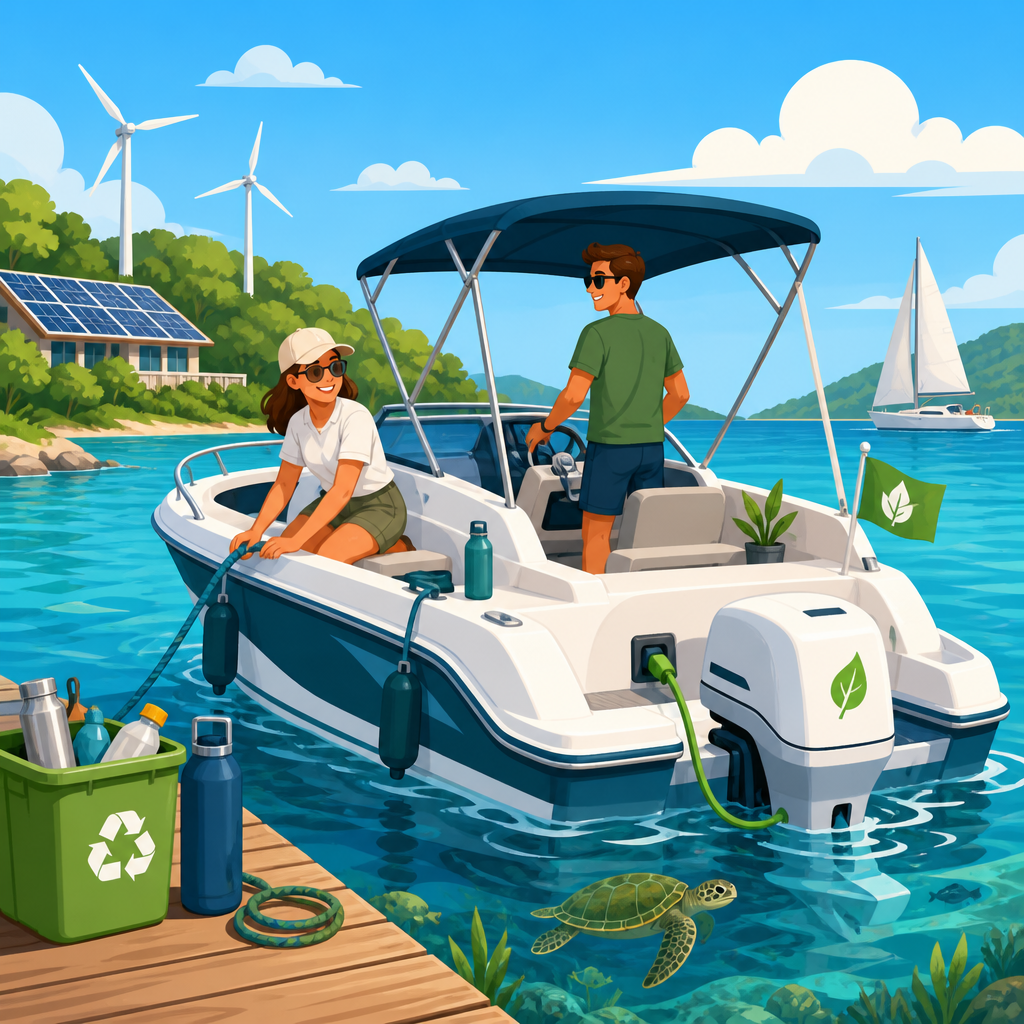
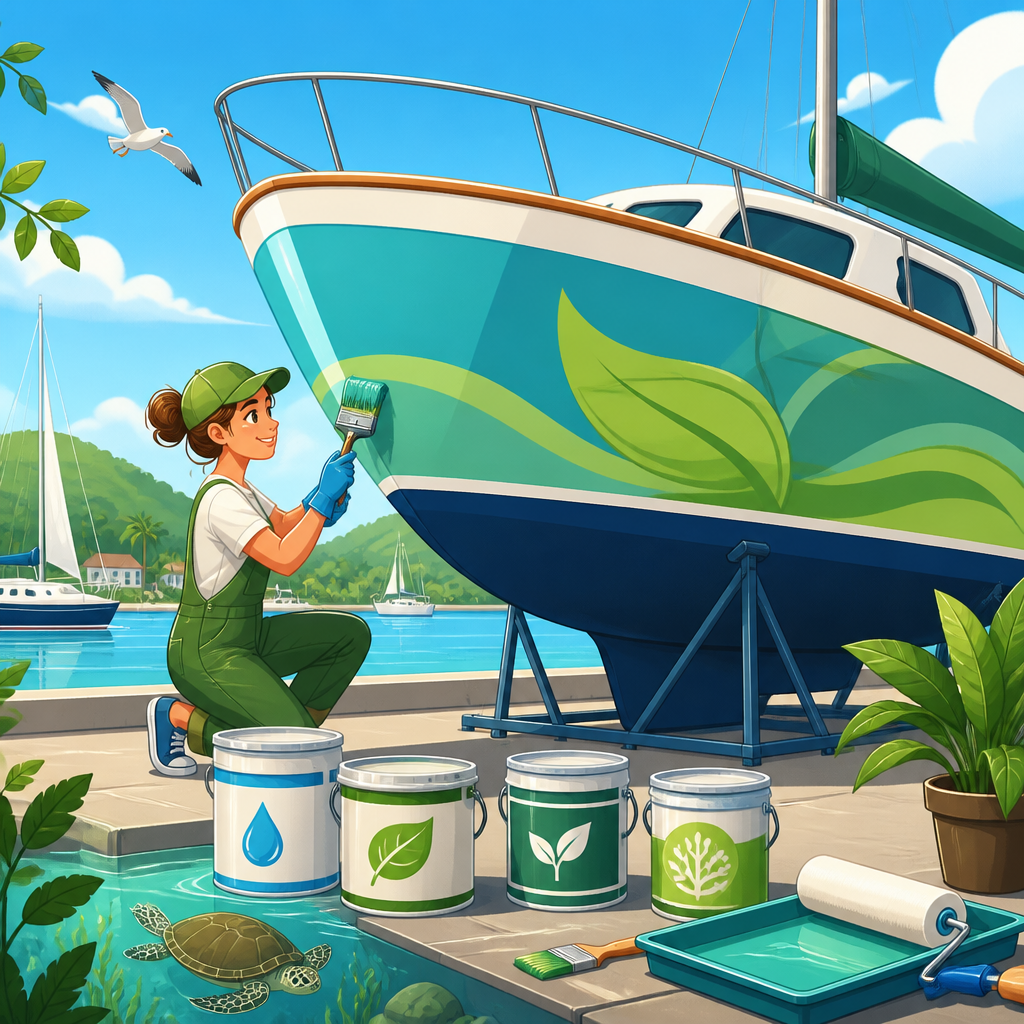
Smart pollution prevention is procedural. Fuel slowly and never top off to the rim, because heat expansion can push fuel out the vent. Keep absorbent pads ready at the fill and vent. Maintain engines to prevent leaks, and fix bilge contamination at the source instead of pumping oily water overboard. Use pump-out facilities and marine sanitation devices correctly, following local discharge laws. Store trash securely so wind cannot carry it overboard, and sort recyclables when facilities exist. For deck and hull cleaning, choose phosphate-free, biodegradable products approved for marine use, and avoid in-water scrubbing that releases paint residue or fouling organisms in sensitive areas. Copper-based antifouling paints, for example, are effective but can contribute metal loading in enclosed marinas, so product choice and maintenance intervals should match local conditions and regulations.
Protect Wildlife Through Distance, Timing, and Quiet Observation
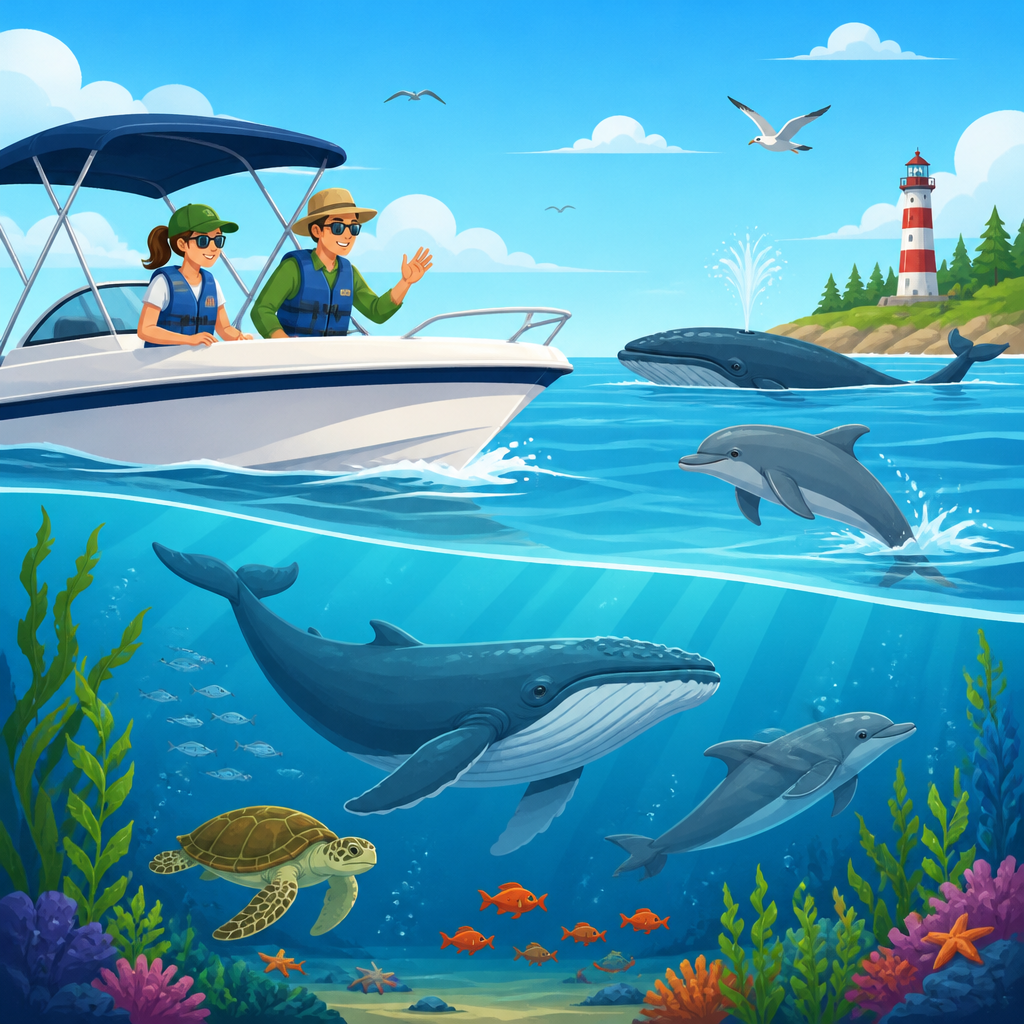
Coral reef protection is inseparable from wildlife protection because reefs function as habitat, feeding ground, nursery, and shelter. Responsible boating means understanding that marine animals often cannot predict vessel behavior. Sea turtles surface unexpectedly, dolphins may bow-ride but still be vulnerable to prop strikes, and seabirds nesting on low islands can abandon chicks if repeatedly disturbed. Even fish feeding around reefs can be altered by human interaction, especially when boaters toss food to attract action.
The best practice is to observe without pursuing. Keep legal approach distances where they exist, slow down in areas known for turtles, manatees, or dolphins, and avoid circling wildlife for photos. Timing matters too. Dawn, dusk, breeding seasons, and migration periods can increase sensitivity. In tropical anchorages, nighttime deck lights may disorient hatchling sea turtles or attract baitfish in ways that change predator behavior near reefs. Noise reduction helps more than many people think: avoid unnecessary revving, stereos at high volume in enclosed coves, and repeated passes through wildlife aggregation areas. Boaters who treat encounters as a privilege rather than an attraction consistently leave less damage behind.
Snorkeling, Diving, and Fishing Practices That Reduce Reef Harm
Many boat trips include swimming, snorkeling, diving, or fishing, and each activity carries reef-specific risks. For snorkelers and new divers, the biggest issue is accidental contact. Fins, knees, camera housings, and dangling gauges break corals easily, particularly branching species such as elkhorn and staghorn. Brief every guest before they enter the water: maintain buoyancy, never stand on coral, secure equipment, and enter away from shallow structures. Reef-safe boating includes passenger management, not just helm decisions.
Fishing around reefs requires equal care. Heavy tackle dragged across coral, lost monofilament, and discarded lead all create persistent hazards. Use tackle suited to the target species so fish can be landed quickly, minimize handling, and cut line cleanly if a fish wraps deep in structure rather than ripping coral apart. Follow size limits, seasonal closures, and no-take designations because overfishing changes reef ecology. Herbivorous fish such as parrotfish and surgeonfish help control algae growth on reefs; where those populations decline, corals face added stress. Spearfishing, lobster hunting, and collection of shells or coral fragments may also be regulated or prohibited. Knowing the rule set for each area is part of ethical boating.
Maintain Your Boat to Reduce Chronic Environmental Impact
Boat maintenance is reef protection by another name. Poorly tuned engines emit more pollutants, leaking seals send oil into bilges, and neglected hulls require harsher cleaning and more frequent paint work. I have found that boaters who follow disciplined maintenance schedules not only spend less over time but also create less environmental risk on every trip. That means inspecting fuel lines, clamps, and vents; checking shaft seals and lower units; servicing sanitation systems; and monitoring battery compartments for acid or corrosion issues.
Hull and propeller condition affect habitat too. A damaged prop can increase vibration and inefficiency, tempting operators to use more throttle in sensitive areas. Fouled bottoms raise fuel consumption and emissions. Marinas with haul-out facilities, washwater capture, and proper hazardous waste disposal are better choices than informal shoreline maintenance that sends residue directly into the sea. If you trailer your boat between watersheds, clean, drain, and dry it thoroughly to avoid transporting invasive species. Protecting marine life is not only about what happens over a reef; it is also about what your vessel carries from one ecosystem to another.
Protecting coral reefs while boating comes down to competent decisions repeated consistently. Plan routes with current charts and local rules, choose mooring buoys over anchors, anchor only in verified safe bottom when necessary, manage speed and wake in shallow habitat, prevent every form of discharge and spill, respect wildlife distance, brief passengers for low-impact recreation, and maintain the boat so chronic pollution never becomes normal. These habits protect coral, seagrass, fish nurseries, turtles, seabirds, and the water quality that connects them all.
The broader benefit is that responsible boating preserves the places people travel to experience. Healthy reefs support clearer water, better fishing, stronger coastlines, richer wildlife encounters, and more resilient local economies. They also make boating safer by encouraging better navigation, better seamanship, and better awareness of conditions. Whether you run a center console, sailboat, charter catamaran, or small skiff, your daily choices matter more than you think.
Use this guide as your starting point for eco-friendly and sustainable boating, then apply one improvement on your very next trip: check local reef rules, book a mooring, assemble a spill kit, or brief your crew before entering sensitive water. Protect the reef, and you protect the entire boating experience for everyone who comes after you.
Frequently Asked Questions
1. What is the single most important thing boaters can do to protect coral reefs?
The most important step is to avoid any direct contact between your boat and the reef. In practice, that means planning your route ahead of time, staying in marked channels, watching water depth carefully, and never assuming clear water means safe water. Coral reefs often sit just below the surface, and even a brief grounding can crush living coral, break decades of growth, and leave long-lasting scars on the habitat. Because coral is made up of living colonies of tiny polyps that build hard calcium carbonate structures over time, damage that takes seconds to cause can take many years to recover from.
For most boaters, reef protection starts before leaving the dock. Study charts, tide tables, local navigation warnings, and any reef protection zones in the area. If you are unfamiliar with the waterway, slow down and use extra caution rather than relying only on memory or visual judgment. On the water, maintain a safe speed, keep a constant lookout, and give shallow areas a wide berth. If you are operating in a reef-rich region, treat every unfamiliar shoal, color change, or breaking patch as a possible hazard. Careful navigation is the foundation of reef-safe boating because preventing contact is always better than trying to minimize damage after a mistake.
2. How should I anchor near coral reefs without causing damage?
The best answer is simple: avoid anchoring on or near coral whenever possible. Use designated mooring buoys if they are available, because they are specifically installed to keep anchors and chains from dragging across fragile reef structures. Mooring buoys are one of the most effective reef protection tools in popular boating areas, and using them is often the easiest way for recreational boaters to reduce their impact immediately.
If you must anchor, choose a sandy bottom well away from coral heads, seagrass beds, and rocky reef ledges. Lower the anchor carefully rather than throwing it overboard, and make sure both the anchor and the chain will remain clear of any living reef as the boat swings with wind and current. A common mistake is selecting a sandy patch that looks safe, only to let the chain sweep into nearby coral as conditions change. Before setting the anchor, consider your swing radius and how far the rode and chain may travel. If there is any doubt, reposition.
When retrieving anchor gear, bring it up vertically and slowly so it does not snag or scrape nearby habitat. If the anchor is stuck, do not power forward recklessly in a way that may drag it across the bottom. Reef-safe anchoring is about more than where the anchor lands; it also includes where the chain drags, how the boat swings, and how the gear is recovered. Taking a few extra minutes to anchor thoughtfully can prevent severe and unnecessary damage.
3. What boating practices increase the risk of harming coral reefs?
Several everyday habits can put reefs at risk, even when damage is unintentional. The biggest threats include running in shallow water, straying outside marked channels, anchoring on reef habitat, operating too fast to react safely, and ignoring tides or local depth changes. In many reef areas, low tide can expose hazards that were safely submerged earlier in the day, so a route that seemed harmless in the morning may become dangerous later. Overconfidence is often a factor, especially in clear tropical water where depth can be visually misleading.
Propeller wash and vessel groundings are also serious concerns. If a boat runs aground and the operator keeps applying throttle, the propeller can carve trenches into the reef and scatter broken coral over a wide area. Even smaller boats can cause significant destruction this way. Another problem is poor waste and fuel management. Fuel spills, oil leaks, trash overboard, and sewage discharge can all degrade water quality, which adds stress to coral ecosystems already vulnerable to warming, disease, and pollution from other sources.
Careless passenger behavior matters too. Snorkelers, divers, and swimmers entering the water from a boat can accidentally stand on coral, kick it with fins, or handle marine life if they are not properly briefed. Protecting reefs is not just the captain’s responsibility; it includes everyone aboard. Good boating around coral reefs means combining safe navigation, clean operating practices, proper anchoring, and clear guidance for guests so that the vessel and its occupants leave as little trace as possible.
4. What should I do if my boat accidentally touches or runs aground on a coral reef?
First, stop immediately and avoid making the situation worse. Do not continue powering forward or reversing aggressively if the boat is on or near coral, because propellers and hull movement can multiply the damage very quickly. Shift to neutral, assess the situation calmly, and check for injuries, flooding, or fuel leaks. Your next steps should focus on safety while also minimizing further harm to the reef.
If the vessel is lightly touching bottom, sometimes waiting for a rising tide can be the least damaging option. In other cases, local authorities, marine patrol, harbor officials, or a professional salvage or towing service should be contacted for guidance. The right response depends on the boat type, sea conditions, tide, and exact location. What matters most is avoiding impulsive actions that grind the hull, rudder, keel, or propeller across the reef. If you need assistance, ask for it early rather than trying to force the boat free.
After the immediate incident, report the grounding if required by local law or park regulations. Many reef areas are managed closely, and reporting helps authorities assess damage and guide recovery efforts. It is also wise to document what happened for insurance and compliance purposes. Most importantly, treat the event as a learning opportunity: review charts, tide conditions, route choices, and lookout practices so the same mistake is not repeated. Responsible boaters are not defined by never making an error, but by responding correctly when one occurs and taking steps to prevent future damage.
5. Are there equipment choices or trip-planning habits that make boating safer for coral reefs?
Yes, and they can make a major difference. Good trip planning is one of the most effective reef protection tools available to any boater. Before departure, review updated nautical charts, GPS routes, tide predictions, local reef maps, weather forecasts, and protected area rules. Many reef zones have no-anchor areas, speed limits, seasonal access restrictions, or marked mooring fields. Knowing those details in advance reduces rushed decisions on the water and helps you avoid accidental entry into sensitive habitat.
Equipment also matters. A reliable depth sounder or fishfinder helps you monitor changing depth in real time, while a properly functioning GPS/chartplotter can improve route accuracy. Polarized sunglasses can help the operator read water color and spot shallow hazards more easily in daylight. Well-maintained engines and fuel systems reduce the chance of leaks or breakdowns that could lead to emergency anchoring in fragile areas. If you boat regularly around reefs, carrying up-to-date local charts and maintaining strong situational awareness should be considered basic safety practice, not optional extras.
It also helps to prepare your crew and passengers. Brief everyone on reef-safe behavior before arriving: no littering, no feeding wildlife, no standing on coral, and no tossing anything overboard. If anyone will swim, snorkel, or dive, remind them to maintain buoyancy control and keep fins, hands, and gear off the reef. Small choices add up. A well-planned route, the right equipment, and informed passengers can dramatically reduce the chances of reef damage while making the entire boating trip safer and more enjoyable.