Legal requirements for chartering a boat in another country can determine whether an otherwise perfect voyage begins smoothly at the dock or ends in fines, denied boarding, or invalid insurance coverage. In practical terms, chartering means renting a vessel, usually with or without a professional skipper, for private use over a defined period. International boating laws and travel requirements cover the rules that govern entry into a country, operation of a vessel in its waters, passenger documentation, safety compliance, customs declarations, and financial responsibility. I have worked through these issues with charter operators, marina officials, and insurers, and the pattern is consistent: most problems come not from obscure maritime law, but from missing everyday documents or misunderstanding who is legally responsible on board.
This matters because boat charters cross several legal systems at once. A traveler may book through a company based in one country, board in another, cruise through a third country’s territorial waters, and be insured under a policy issued elsewhere. Each layer brings obligations. The charter contract sets private duties such as security deposits and operating limits. National maritime authorities impose licensing and safety rules. Immigration and customs agencies control passports, visas, and border formalities. Port state authorities can inspect the vessel, while coastal administrations may require cruising permits, fishing permits, or environmental fees. The result is that a foreign charter is never just a vacation purchase; it is a regulated activity that combines travel law, maritime law, and local administrative practice.
For most travelers, the core legal questions are straightforward. Do you need a boating license? Is an International Certificate of Competence accepted? Can you charter bareboat, or must you hire a skipper? What documents must every passenger carry? Are there age restrictions, security deposit rules, or mandatory insurance clauses? What happens if you sail between countries during the charter period? This hub article answers those questions comprehensively and provides the framework you need before drilling into destination-specific pages on licenses, customs clearance, radio rules, and charter contracts. If you understand the categories of legal requirements before booking, you reduce risk, avoid expensive schedule changes, and make it easier for a charter company to approve your reservation quickly.
Operator qualifications, skipper rules, and who may legally command the vessel
The first legal checkpoint in any international charter is determining who may serve as skipper. In a bareboat charter, the charterer takes operational responsibility for the vessel and must prove competence. In a crewed charter, that responsibility shifts largely to the professional captain supplied by the operator. Countries do not apply a universal standard. Croatia often requires an accepted skipper license plus a VHF radio certificate. Greece has historically accepted the ICC for many visiting operators, sometimes with a second experienced crew declaration. Italy may accept equivalent national licenses depending on vessel type and operator profile. Spain can be stricter in certain regions and vessel categories. Thailand, the British Virgin Islands, and some parts of the Caribbean may be more flexible in practice, but insurers and charter companies still impose their own competence screening.
The most commonly referenced competence document for visiting leisure boaters is the International Certificate of Competence, issued under UNECE Resolution 40. It is widely recognized, but not universal, and recognition can depend on flag, vessel size, engine power, and whether coastal or inland waters are involved. Charter companies also evaluate practical experience. I have seen valid license holders denied a bareboat handover because their logged sea time did not match the boat size, local weather conditions, or complexity of the itinerary. Companies routinely ask for a sailing résumé listing previous charters, qualifications, tidal experience, night passages, and familiarity with catamarans or monohulls. Legally, that screening matters because if an unqualified operator is allowed to take the vessel, the operator and insurer may face increased exposure after an incident.
If no accepted certificate is available, many travelers choose a skippered charter. This is often the simplest legal route because the licensed skipper carries command authority, handles port formalities, and ensures compliance with navigation rules. Even then, passengers remain subject to travel and customs laws. It is also important to know whether local law permits informal “instruction” charters as a workaround. Some destinations allow a hired skipper to remain on board for a limited period before sign-off; others treat this as a bareboat charter from day one and require the named charterer to be qualified at handover. Ask for written confirmation from the operator about accepted credentials, radio requirements, and whether a certificate translation is necessary.
Travel documents, immigration rules, and border formalities for passengers
Every person on board must meet the destination country’s entry requirements, and charter guests often overlook how strictly marinas and port police verify names against passports. At minimum, each passenger should carry a valid passport with the required remaining validity period, usually six months in many jurisdictions, although exact rules vary. Visa requirements depend on nationality, purpose of visit, and length of stay. A charter holiday is usually treated as tourism, but if the itinerary involves extended stays, repeated entries, or joining the vessel in a country different from the embarkation state, immigration treatment can change. Children may need additional consent documents when traveling with one parent or non-parent adults. Some countries request return tickets, proof of accommodation, or evidence of sufficient funds even when the vessel itself serves as accommodation.
Cross-border cruising during a charter adds another layer. Sailing from the U.S. Virgin Islands to the British Virgin Islands, from Croatia to Montenegro, or between Schengen and non-Schengen ports triggers formal arrival and departure procedures. These can include advance passenger lists, customs declarations, payment of cruising taxes, garbage or health fees, and passport inspection for all persons on board. The skipper may need to submit crew lists through marina offices or electronic systems before departure. In the European Union, customs and immigration treatment differs depending on whether you move within the Schengen Area, within the EU customs territory, or between the two systems. Those categories are not identical, and that distinction affects whether passport control, temporary import, or VAT questions apply.
Many charter contracts restrict international crossings unless approved in advance. The reason is legal as much as operational. Insurance navigation limits may exclude specific countries, war-risk regions, or passages beyond a defined distance from shore. Customs rules may require the vessel to carry original registration papers, transit logs, and proof of charter authorization. In some places, only the registered owner or an expressly authorized master can clear the vessel. When preparing for multi-country cruising, verify not just entry rules for people, but clearance rules for the boat itself. That includes advance notice requirements, overtime fees for weekend clearance, pet import rules, and local rules on carrying restricted foods, drones, fishing gear, or prescription medication.
Vessel documents, charter contracts, insurance, and financial responsibility
When officials inspect a charter boat, they usually start with the vessel’s papers, not the holiday itinerary. A compliant charter vessel should carry registration documents, evidence of seaworthiness or commercial coding where required, radio licenses, crew lists, proof of insurance, and the charter agreement. In regulated charter markets, operators may also need a commercial permit or concession to place the vessel into charter service. Travelers do not file these documents personally, but they should confirm the operator is properly licensed. An illegally operated charter can be detained, and passengers may lose use of the boat with little practical recourse during the trip.
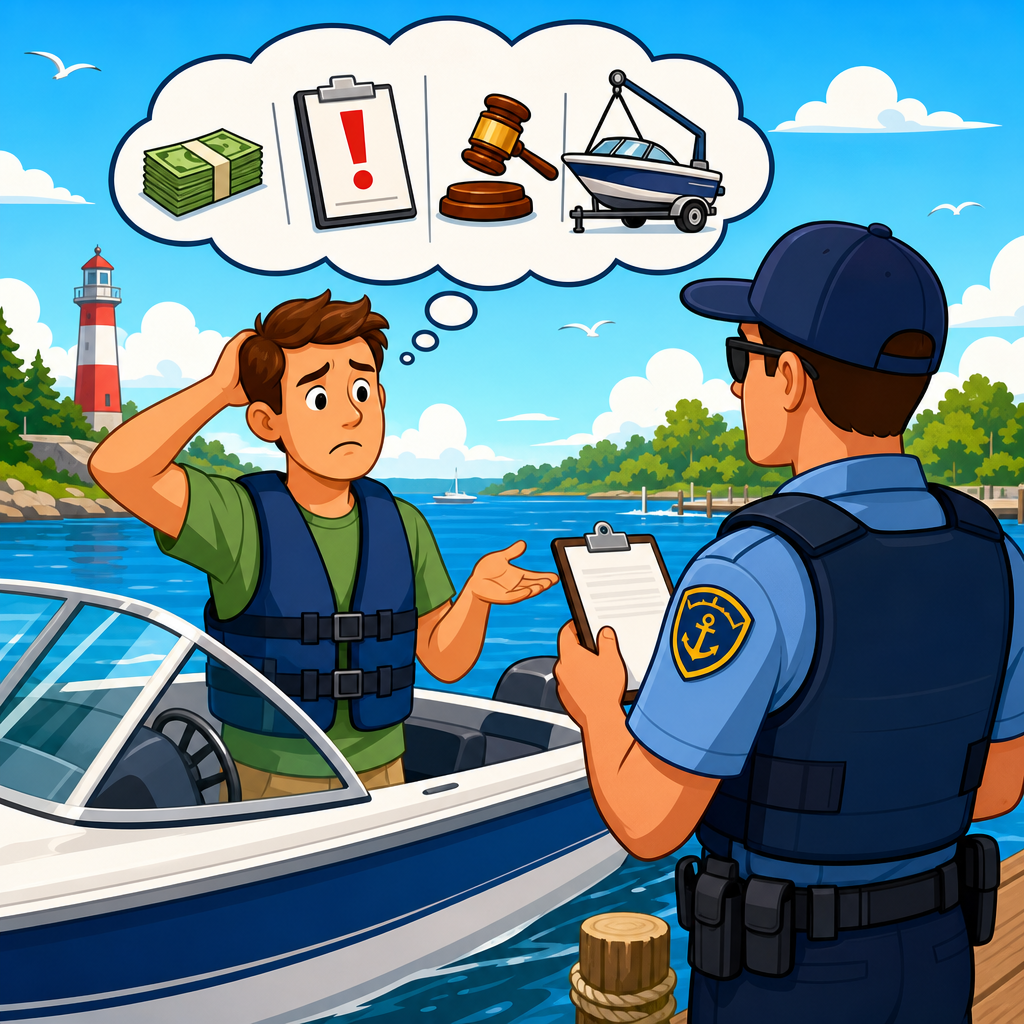
The charter contract is the legal backbone of the transaction. It should identify the vessel, charter period, included equipment, navigation area, cancellation terms, security deposit, fuel policy, cleaning charges, liability allocation, and circumstances that allow the operator to refuse handover. Read clauses on weather delays, mechanical breakdowns, substitute vessels, and mandatory skipper services carefully. Many contracts place full responsibility for fines, grounding damage, lost gear, clogged toilets, late returns, and immigration penalties on the charterer. Security deposits can range from a few thousand euros to well over ten thousand on larger yachts. Deposit reduction products lower exposure, but they are not the same as waiving liability; exclusions often apply to gross negligence, blocked holding tanks, missing dinghies, or damage to sails.
Insurance deserves separate attention because legal compliance and coverage are closely linked. Hull insurance protects the vessel owner, while protection and indemnity or civil liability insurance addresses third-party claims. Charterers may also be offered security deposit insurance, personal accident cover, cancellation insurance, and travel medical evacuation coverage. A critical point I stress to clients is that an insurance certificate is only meaningful if the voyage stays within policy terms. Unapproved night sailing, operating outside the navigation zone, using an unqualified skipper, or carrying more passengers than allowed can all void coverage. Ask for confirmation of passenger limits, racing exclusions, water-toy liability, and procedures after an accident, including who must notify the insurer and within what timeframe.
| Legal area | What to verify before booking | Common risk if ignored |
|---|---|---|
| Skipper qualification | Accepted license, ICC status, VHF certificate, recent experience | Denied bareboat handover or invalid insurance |
| Passenger entry rules | Passport validity, visa needs, child consent forms, crew list accuracy | Refused boarding or immigration fines |
| Vessel documentation | Registration, commercial permit, radio license, cruising permit | Detention, inspection delays, canceled itinerary |
| Insurance | Navigation limits, passenger limits, exclusions, claims procedure | Uncovered losses after accident or damage |
| Charter contract | Deposit terms, cancellation policy, breakdown remedies, border approvals | Unexpected charges and legal disputes |
Local navigation laws, safety mandates, and environmental compliance
Once the vessel leaves the dock, local operating rules become the next legal priority. International Regulations for Preventing Collisions at Sea apply broadly, but each country adds domestic requirements on speed limits, minimum distance from swimmers, anchoring zones, protected habitats, discharge restrictions, and reporting duties. In Mediterranean charter destinations, anchoring over Posidonia seagrass is increasingly restricted and can trigger significant fines because these meadows are protected ecosystems. In parts of the Caribbean, marine park permits and mooring fees are mandatory. In U.S. waters, no-discharge zones and protected species rules are actively enforced. Charterers should expect briefing packs that identify exclusion zones, military areas, swim areas, and harbor approach procedures.
Safety equipment rules are equally important because they influence both legality and charter company obligations. Required gear typically includes lifejackets, flares, navigation lights, fire extinguishers, sound signals, first-aid kits, bilge pumps, and, on many vessels, AIS, EPIRBs, and life rafts based on coding and offshore category. The operator must supply compliant equipment, but the skipper must know how to use it. During handover, inspect expiration dates on flares, count lifejackets, test the VHF, and verify the ship’s papers match the vessel. If local law requires a radio operator certificate, carrying a VHF without one is not a harmless technicality. In an emergency or inspection, it becomes a compliance issue immediately.
Alcohol, drug, and age-related rules vary and should never be assumed. Some countries mirror road-style blood alcohol limits for skippers; others apply stricter maritime standards or broad powers to sanction unsafe operation regardless of a measured limit. Jet skis, tenders with larger outboards, spearfishing gear, and drones can all trigger additional licensing or permit requirements. Fishing from a charter yacht may require a separate recreational license even when the vessel itself is fully legal. The same is true for scuba activities, underwater scooters, and use of protected-anchorages. Good charter operators explain these details during briefing, but the legal responsibility still rests with the person in command.
How to prepare legally before departure and avoid common compliance failures
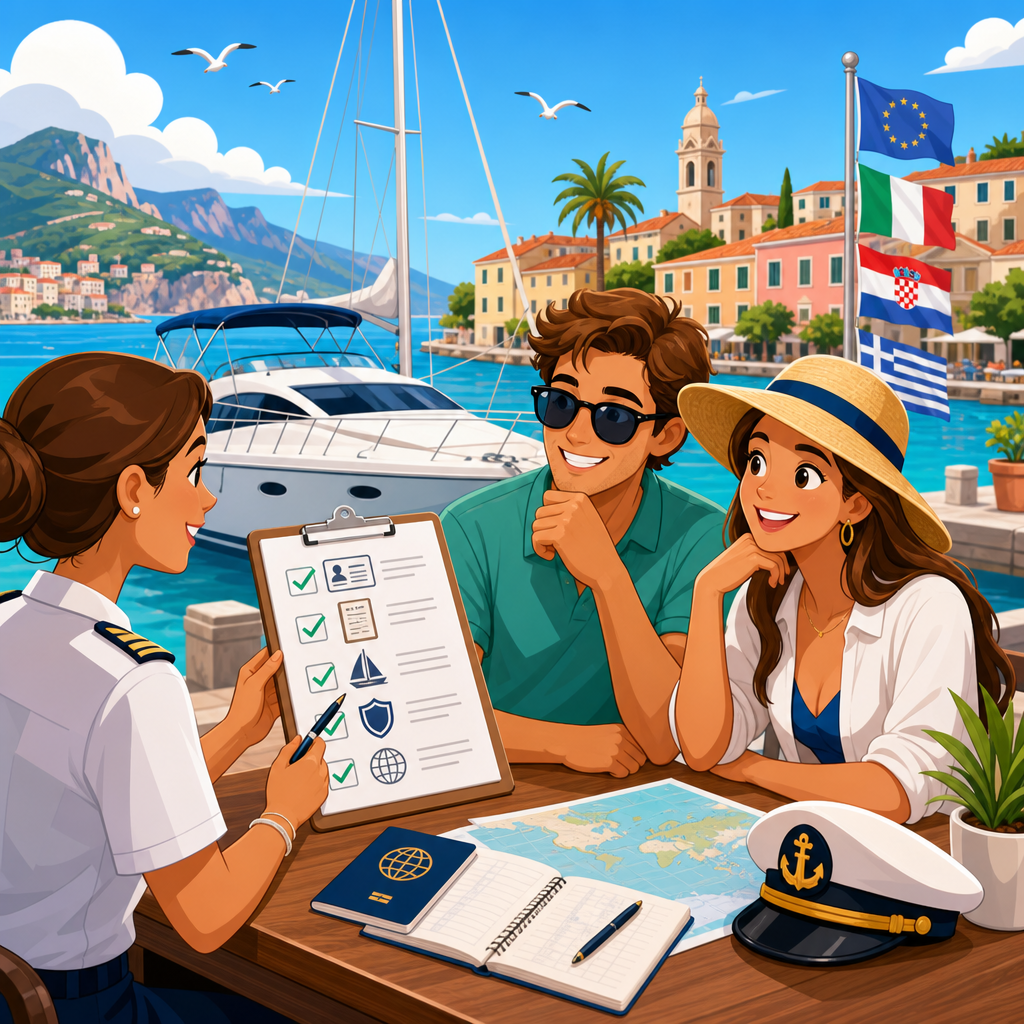
The best way to manage international boating laws and travel requirements is to build a verification process before paying the final charter balance. Start with the destination’s maritime authority guidance, then confirm the operator’s own rules in writing. Ask three direct questions: what qualifications are required for bareboat charter, what documents must each passenger present at check-in, and are any route or border clearances restricted? Then match those answers against your passport validity, visa status, travel insurance, and boating credentials. Save digital and printed copies of licenses, passport ID pages, charter contracts, insurer contacts, and emergency numbers. If documents are not in English or the local language, ask whether certified translations are advisable.
Common failures are predictable. Passenger names on crew lists do not match passports exactly. Skippers assume a domestic boating card will be accepted abroad without confirmation. Travelers plan to visit another country mid-charter, only to discover the contract prohibits it. Security deposits exceed card limits at embarkation. Medication is carried without prescriptions, or a child traveling with grandparents lacks a parental consent letter. I have also seen travelers ignore checkout deadlines, which matters because late return can breach contract terms, miss customs windows, and incur daily penalties. These are solvable issues if addressed early, ideally several weeks before departure rather than at the marina desk.
As the hub page for international boating laws and travel requirements, this guide establishes the legal checklist every foreign charterer needs: confirm skipper eligibility, verify passenger immigration documents, review vessel papers and insurance, understand contract liability, and follow local navigation and environmental rules. The benefit is not just compliance; it is control. When you know which legal obligations belong to the operator, the skipper, and each passenger, you can compare charter offers intelligently and avoid last-minute surprises. Use this framework as your starting point, then move to destination-specific resources on licensing, customs clearance, marine radio rules, and charter insurance before you book your next boat abroad.
Frequently Asked Questions
What documents do I usually need to charter a boat in another country?
In most cases, you will need a valid passport, your charter agreement, and a payment record or security deposit confirmation. If you are chartering without a skipper, you may also need proof of boating competence, such as an internationally recognized license, sailing resume, or certification accepted by the destination country and the charter company. Some countries require a VHF radio operator certificate if the boat has marine communication equipment on board. If the charter includes crossing borders or operating near customs-controlled areas, authorities may also ask for a crew list, itinerary, and passenger identification documents for everyone on board.
Beyond personal documents, the vessel itself should carry registration papers, proof of insurance, safety equipment certifications where required, and any cruising permits issued by local maritime authorities. These are often provided by the charter operator, but you should confirm that everything is current before departure. It is also wise to check whether visas, tourist entry permissions, or health-related entry forms are required for your nationality. A charter can be fully booked and paid for, yet still be delayed or denied if a passenger lacks the correct travel documentation. Reviewing both immigration requirements and boating-specific paperwork well in advance is one of the most effective ways to avoid problems at check-in.
Do I need a boating license to charter a boat abroad, or can I hire one without formal certification?
That depends on the country, the type of boat, and whether you are chartering bareboat or with a professional skipper. A bareboat charter means you are taking responsibility for operating the vessel yourself, and many countries require the person in command to hold an accepted boating license or sailing qualification. Even when the law is flexible, charter companies often apply their own stricter standards and may ask for prior experience handling similar vessels. They may review your nautical resume, question you about navigation and docking skills, or require a practical assessment before releasing the boat.
If you do not have the required certification, hiring a skipper is often the simplest solution. In a skippered charter, the licensed professional is responsible for operating the boat in compliance with local rules, which can make the legal side much easier for travelers unfamiliar with regional requirements. However, that does not remove all obligations from the charterer. You may still need valid travel documents, compliance with passenger limits, and adherence to local conduct, anchoring, and customs rules. Because recognition of licenses varies widely, it is important to confirm with both the charter company and, where necessary, the local maritime authority that your qualification will be accepted before you travel.
How do customs, immigration, and local maritime laws affect an international boat charter?
Customs and immigration rules can be just as important as boating rules when chartering in another country. Even if you are not personally piloting the vessel, you are still entering a foreign jurisdiction and may need to comply with passport control, visa requirements, arrival declarations, and restrictions on where you can legally embark or disembark. In some destinations, you must check in only through designated ports of entry, and moving between islands or coastal regions may trigger additional reporting obligations. If your itinerary includes crossing into another country’s waters, separate clearance procedures may apply for departure and arrival.
Local maritime laws govern how and where the vessel may be used once you are on the water. These rules can cover speed limits, anchoring restrictions, protected marine areas, night navigation, alcohol use, fishing permissions, waste disposal, and passenger capacity. Some countries enforce strict environmental regulations, especially in national parks, coral reef zones, and wildlife reserves. Violations can lead to on-the-spot fines, vessel detention, or cancellation of insurance coverage if the breach contributes to an incident. For that reason, charterers should ask for a full briefing on local navigation rules, restricted zones, and reporting requirements before departure rather than assuming the laws will be similar to those at home.
Is insurance automatically included when chartering a boat in another country?
Not always, and this is one of the most misunderstood parts of an international charter. Most charter boats carry some form of vessel insurance arranged by the owner or charter company, but that does not mean every loss, accident, or liability is fully covered. Policies often include deductibles, exclusions, weather-related limitations, navigation area restrictions, and conditions requiring the boat to be operated only by approved or properly licensed individuals. If you charter without meeting local legal requirements or outside the agreed cruising area, the insurer may reduce or deny coverage.
You should also distinguish between hull coverage for damage to the boat, liability coverage for harm to third parties, and optional extras such as cancellation protection, personal accident coverage, and security deposit insurance. Ask whether the policy covers all named operators, whether watersports equipment is included, what happens in the event of grounding or negligence, and whether storms, towing, or emergency assistance are excluded. If you are arranging your own travel insurance, verify that marine activities and charter-related liabilities are not excluded. A careful insurance review is essential because legal noncompliance abroad can quickly turn a routine incident into a major out-of-pocket expense.
What are the most common legal mistakes people make when chartering a boat in another country?
One of the most common mistakes is assuming that boating qualifications, insurance protections, and operating habits from home automatically apply abroad. Travelers often book a bareboat charter without confirming that their license is recognized locally or that the charter company accepts their level of experience. Another frequent issue is incomplete passenger documentation, especially when one member of the group lacks a valid passport, visa, or entry authorization. People also overlook local rules on age limits for operators, maximum passenger capacity, restricted anchoring areas, and required permits for fishing, diving, or using certain equipment.
Another major error is failing to read the charter contract carefully. Many disputes arise from terms involving the security deposit, weather cancellations, permitted cruising zones, fuel obligations, skipper authority, and liability for damage. Some charterers also make informal itinerary changes, enter prohibited waters, or allow an unapproved person to take the helm, all of which can violate local law and the charter agreement at the same time. The safest approach is to treat the charter as both a travel arrangement and a legal agreement: verify your qualifications, confirm destination-specific rules, review insurance terms, and request a detailed pre-departure briefing. A few extra checks before boarding can prevent fines, denied departure, or serious legal complications later.