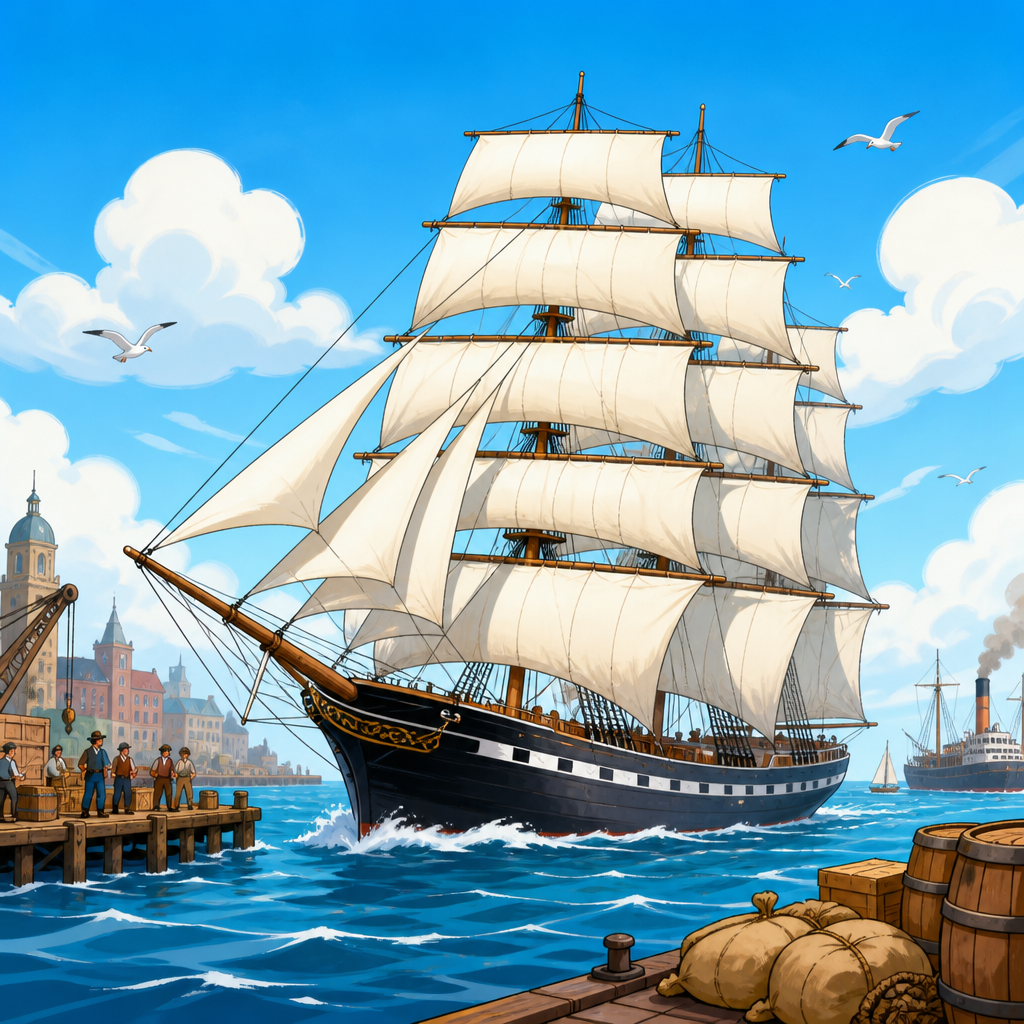
Clipper ships transformed nineteenth-century maritime trade by carrying high-value cargo, mail, and passengers across oceans at speeds that earlier merchant vessels could rarely match. Within the broader study of historic and classic boats, they occupy a pivotal place because they connect naval architecture, global commerce, imperial expansion, and the public imagination. A clipper ship was a fast, usually three-masted sailing vessel built with a long, narrow hull, sharp bow, lofty rig, and large sail area designed to maximize speed rather than cargo volume alone. Although the word “clipper” had earlier been used for swift vessels, it became firmly associated with the great ocean-going merchant ships of the 1840s through the 1860s.
In my work reviewing maritime archives and museum collections, I have found that clipper ships are often remembered only as romantic icons with clouds of canvas, yet their real importance lies in economics. They thrived in trades where time had measurable value: tea from China, wool from Australia, mail to distant colonies, passengers to California and Australia during gold rushes, and perishable or fashionable goods that commanded premiums when delivered first. Before steamships fully dominated long ocean routes, clippers represented the high-performance end of commercial sail. They were not general solutions for every shipping need, but in the right market they outperformed bulkier cargo carriers by turning voyages into contests of speed.
This matters for anyone exploring historic and classic boats because clipper ships show how boat design follows trade pressures. Their hull form, rigging, crew demands, and route selection were responses to insurance rates, commodity pricing, wind systems, and competition between merchants. They also sit at the center of a larger family of classic vessels, including East Indiamen, packet ships, barques, brigs, schooners, and later windjammers. Understanding clippers provides a framework for understanding why some boats prioritized endurance, some capacity, and some velocity. As a hub topic, historic and classic boats makes most sense when clipper ships are treated not as isolated masterpieces, but as part of a wider evolution in maritime transport.
The era of clipper ships was relatively short, but it left an outsized legacy. Famous vessels such as Cutty Sark, Flying Cloud, Thermopylae, and Sovereign of the Seas became benchmarks for speed and craftsmanship. Their records were reported in newspapers, their departures drew crowds, and their voyages influenced global expectations about how fast news, people, and commodities could move. At the same time, their decline reveals the arrival of iron hulls, compound marine engines, the Suez Canal, and a logistics model less dependent on seasonal winds. To understand early maritime trade clearly, it is necessary to examine both the advantages that made clippers successful and the structural changes that made them obsolete.
How Clipper Ships Emerged Within Historic and Classic Boats
Clipper ships did not appear suddenly; they evolved from earlier fast sailing traditions in the Atlantic world. American shipbuilders, especially in Baltimore, New York, and Boston, drew on designs used for swift schooners and packet ships, refining sharper entries, greater length-to-beam ratios, and tall rigs. By the 1840s, shipyards such as those led by Donald McKay were producing extreme clippers built specifically for rapid passages. British builders soon responded, particularly for the China tea trade, and the type matured into some of the finest wooden merchant ships ever launched.
Within the category of historic and classic boats, this development is important because it illustrates a recurring pattern: each vessel type emerges to solve a commercial problem. East Indiamen had prioritized defense and carrying capacity on long imperial routes. Packet ships emphasized schedule reliability for mail and passengers across the Atlantic. Clippers shifted the balance toward speed. They sacrificed some cargo space, imposed higher construction and operating costs, and demanded skilled seamanship, but they could earn exceptional returns when markets rewarded early arrival. That tradeoff defines their place among classic commercial vessels.
The California Gold Rush beginning in 1848 and the Australian gold discoveries in 1851 created immediate demand for rapid transport of people, tools, manufactured goods, and correspondence. At the same time, the tea trade from Chinese ports such as Fuzhou and Shanghai became intensely competitive. The first cargoes of a new tea season fetched the best prices in London. A ship that arrived days or weeks ahead of rivals could materially improve profits for owners and merchants. Clippers emerged because the commercial environment paid for velocity.
Design Features That Made Clippers Fast
The defining feature of a clipper ship was efficiency through hydrodynamic and aerodynamic design. Compared with fuller-bodied cargo ships, clippers had finer hull lines, a more pronounced rake in the masts, and extensive sail plans that let them drive hard before favorable winds. Their sharp bows reduced resistance, while long hulls improved speed potential. Builders also paid close attention to weight distribution, framing strength, and the relationship between sail area and hull stability. The result was a vessel that could maintain high average daily runs over long distances, not merely achieve a brief burst of speed.
Construction quality mattered as much as shape. American clippers often used live oak and other strong timbers, with diagonal iron bracing in some designs to resist hogging and twisting. British tea clippers refined composite construction later in the century, combining iron frames with wooden planking and copper sheathing. Copper on the hull reduced biofouling from weeds and barnacles, which was critical on long voyages where a dirty bottom could noticeably reduce speed. In practical terms, fast design only worked if the hull stayed fair and the underwater surfaces stayed clean.
Rigging was equally demanding. A clipper carried a vast spread of canvas across multiple yards and staysails, which gave it remarkable power but required a disciplined crew. Speed depended on constant sail handling, rapid reefing in bad weather, and experienced judgment about when to press the ship and when to preserve spars and canvas. In archival logbooks, captains repeatedly note not just wind direction, but the state of sails, repairs, and crew labor. Clippers were machines of trade, but they were powered by highly skilled human effort.
| Feature | Clipper Ship | Typical Full-Rigged Merchantman | Trade Impact |
|---|---|---|---|
| Hull shape | Long, narrow, sharp-lined | Fuller, broader cargo hull | Higher speed, less cargo volume |
| Sail plan | Very large, performance oriented | Moderate, easier to manage | Faster passages in favorable winds |
| Cargo strategy | High-value, time-sensitive goods | Bulk goods | Profit tied to early arrival |
| Crew demands | High skill and labor intensity | Lower relative complexity | Higher operating cost |
| Commercial role | Competitive express trade | Steady transport | Strong in niche markets |
What Clippers Carried and Why Speed Mattered
The most famous cargo associated with clipper ships is tea, but the type served several lucrative trades. Tea was ideal because freshness, seasonal timing, and market excitement all increased the premium on early delivery. The annual tea races to London became public spectacles, yet beneath the drama was straightforward commercial logic. A merchant receiving new tea first could command stronger prices and market share. Even when direct bonuses for the first ship became less decisive than later legend suggests, speed remained a competitive advantage in financing, reputation, and turnover.
Passengers also formed a major part of early clipper economics. During the California and Australian gold rushes, thousands sought the fastest route to opportunity. Clippers delivered migrants, merchants, and professionals willing to pay more for shorter passages. Flying Cloud’s 1854 New York to San Francisco run in 89 days, 8 hours established a record around Cape Horn that stood for generations. That achievement was not simply sporting glory; it demonstrated the value of compressing transit time on one of the world’s longest and most dangerous commercial routes.
Other cargoes included silk, spices, opium in earlier and controversial contexts, mail, machinery, textiles, and luxury manufactured goods. Wool from Australia later became another important trade. The pattern is consistent across these examples: clippers were most useful when the cargo was expensive relative to its size, susceptible to price shifts, linked to seasonal demand, or tied to communication. A slow ship might still make money carrying bulk commodities such as coal, grain, guano, or timber, but that was not the clipper’s natural territory. In maritime trade, vessel choice always followed the economics of the cargo.
Major Trade Routes and Ports of the Clipper Era
Clipper ships operated on routes shaped by prevailing winds, imperial networks, and commodity geography. The China trade linked ports in southern and eastern China with London and occasionally American markets. The route around the Cape of Good Hope remained central before the Suez Canal became practical for steam. The Australia run connected London with Melbourne and Sydney, especially during periods of migration and wool export growth. The Cape Horn route connected the U.S. East Coast and Europe with California, western South America, and Pacific markets.
These voyages were long, and route planning mattered enormously. Experienced captains used the global wind system strategically: northeast and southeast trade winds, the doldrums, and the powerful westerlies of the Southern Ocean. The so-called clipper route to Australia often dipped far south to exploit stronger following winds despite colder, harsher conditions. From a modern logistics perspective, this was optimization by weather rather than fuel burn. Success depended on reading seasons, currents, and cloud behavior with precision.
Ports such as New York, Boston, London, Liverpool, Hong Kong, Shanghai, Fuzhou, Melbourne, and San Francisco became nodes in a fast-moving network. Insurance underwriters, brokers, ship chandlers, and marine newspapers all supported the system. Lloyd’s of London, for example, was not just an insurer but part of the information structure that made rapid shipping commercially legible. In practice, clipper trade was never only about the ship at sea. It was an integrated commercial chain involving finance, cargo booking, warehousing, naval architecture, and communication ashore.
Life On Board and the Cost of Speed
From the dock, clipper ships looked elegant. At sea, they were labor-intensive workplaces where speed demanded discipline. Crews worked aloft in dangerous conditions, shortening sail in squalls, repairing lines, and balancing performance against survival. Captains gained reputations for either hard driving or prudent seamanship, and the difference mattered. Pushing too aggressively could cost spars, sails, cargo condition, and lives. A fast passage was valuable only if the ship arrived in commercially usable condition.
Passenger experience varied widely. Wealthier travelers might enjoy better cabins and victuals than emigrants on crowded voyages, yet no one escaped the motion, noise, and uncertainty of a hard-driven sailing passage. Around Cape Horn especially, cold seas and violent winds tested ships and people alike. Maritime museums preserve diaries describing constant damp, cramped quarters, and the psychological strain of long ocean crossings. When discussing historic and classic boats, it is essential to remember that beautiful design often concealed severe daily labor.
Operating costs could also be high. Clippers needed more maintenance than slower, less highly stressed merchantmen. Their rigs wore quickly, and any delay for repairs eroded the very advantage owners were paying for. This helps explain why the clipper model worked best under specific market conditions rather than universally. They were premium tools, not all-purpose carriers.
Decline, Legacy, and Why Clippers Still Matter
Clipper ships declined because the economics of maritime trade changed. Steamships became more fuel efficient, more reliable on schedule, and better suited to canals and coaling networks. The opening of the Suez Canal in 1869 favored steam because sailing vessels struggled with narrow channels and inconsistent winds. Iron and then steel hulls improved durability and cargo efficiency. In markets where timing had once favored clippers, steam increasingly offered predictable arrival dates, which merchants, insurers, and passengers valued even more than raw speed.
Yet the clipper legacy endured. Some later sailing ships, including composite tea clippers and large windjammers, inherited parts of their design philosophy. Cutty Sark survives as a museum ship in Greenwich and remains one of the clearest physical links to the era. More broadly, clippers established a lasting principle in maritime history: transport systems are shaped by the value of time. Whether in sailing packets, container vessels, or air freight, speed commands a premium only when supply chains reward it.
For readers exploring historic and classic boats as a hub topic, clipper ships provide an ideal anchor. They connect design innovation, human skill, global trade, and industrial transition in one vessel type. They also point naturally toward related subjects worth studying next, including packet ships, East Indiamen, schooners, barques, steamships, and museum preservation of classic craft. The key takeaway is simple: clipper ships mattered because they turned speed into commercial power at a decisive moment in world trade. If you are building a deeper understanding of classic boats, start with the clippers, then follow the routes, rivals, and technologies that surrounded them.
Frequently Asked Questions
What was a clipper ship, and what made it different from other merchant vessels?
A clipper ship was a fast ocean-going sailing vessel, most famously associated with the mid-nineteenth century, designed to move cargo, passengers, and mail far more quickly than traditional merchant ships. What set clippers apart was their distinctive combination of naval architecture and sail power. They were typically built with long, narrow hulls, a sharp bow, and a large spread of canvas carried on three tall masts. This design reduced drag in the water and allowed them to achieve impressive speeds, especially on long ocean routes where consistent winds could be used to full advantage.
Unlike bulkier merchant vessels that prioritized cargo capacity over speed, clipper ships were optimized for swift passage. They could not always carry as much volume as slower ships, but they made up for that limitation by transporting goods whose value depended heavily on speed. Tea, spices, silk, mail, newspapers, and even passengers could command higher prices if delivered first or delivered on schedule. In practical terms, that meant a clipper’s speed was itself a commercial asset. This is why clipper ships became so prominent in the broader history of classic boats: they were not simply beautiful sailing craft, but highly specialized tools of global trade built to meet the demands of a rapidly expanding and increasingly time-sensitive world economy.
Why were clipper ships so important in early maritime trade?
Clipper ships played an important role in early maritime trade because they helped redefine what merchants, governments, and the public expected from ocean transport. Before their rise, long-distance trade was often slow, uncertain, and heavily shaped by seasonal winds and lengthy passages. Clippers did not eliminate those realities, but they dramatically improved transit times on major intercontinental routes. By doing so, they made it more practical and profitable to move valuable goods quickly across vast distances, linking producers and consumers more efficiently than earlier merchant sailing vessels could.
Their importance was especially clear in trades where timing affected price and prestige. The tea trade is one of the best-known examples, because the first cargoes to arrive in Britain could earn premium returns. The same logic applied to mail delivery, passenger service, and high-value manufactured or luxury goods. Clippers also supported the wider expansion of nineteenth-century commercial networks by tightening connections among ports in Asia, Europe, the Americas, and Australia. In that sense, they were part of a larger transformation in global commerce: they accelerated exchanges of commodities, information, and people, and they helped maritime trade become more competitive, interconnected, and time-conscious. Their significance lies not only in their speed, but in how that speed altered commercial strategy and strengthened the links between shipping, empire, and world markets.
What kinds of cargo did clipper ships usually carry?
Clipper ships were best suited to carrying cargoes that justified the cost of fast transport. Rather than serving primarily as floating warehouses for low-value bulk goods, they specialized in shipments where arrival time mattered. Tea is the classic example, particularly on the route from China to Britain, where merchants benefited from getting the season’s first tea to market. Clippers also carried spices, coffee, opium in certain trade contexts, silk, textiles, and other luxury or semi-luxury goods whose freshness, fashionability, or market price could decline if delivery was delayed.
In addition to cargo, many clipper ships transported mail, official dispatches, and passengers. This mixed role reflects their place in a rapidly changing maritime economy. They were not just merchant carriers; they were part of an international communications system. Fast mail service had political and financial value, while passengers, especially those traveling for business, migration, or colonial administration, often paid a premium for shorter voyage times. During gold rush periods, some clippers also carried people and supplies to booming regions such as California and Australia. Their cargo profile therefore tells us a great deal about the economic priorities of the era: speed mattered most when shipping goods, information, or travelers whose value depended on urgency, reliability, and competitive timing.
How did clipper ships influence ship design and naval architecture?
Clipper ships had a lasting impact on ship design because they demonstrated how hull form, rigging, and balance could be refined to maximize speed under sail. Their builders emphasized a fine entry at the bow, a lean hull, and tall masts capable of carrying a vast amount of canvas. These features were not simply aesthetic, though they certainly gave clippers their elegant and memorable profile. They reflected a deliberate engineering response to commercial demand. Shipbuilders were experimenting with how to move vessels faster through the water while still maintaining enough strength and seaworthiness for long ocean passages.
The clipper era helped push naval architecture toward greater precision and performance-minded design. Builders had to think carefully about hydrodynamics, sail plans, weight distribution, and structural materials, including the use of composite construction in some vessels. Clippers showed that merchant ships could be purpose-built for a specific economic role rather than designed according to older, more general cargo-carrying traditions. Even after steam power began to eclipse them on major trade routes, the lessons learned from clipper construction remained important. Their legacy survives in the study of historic and classic boats because they represent a moment when beauty, technical innovation, and commercial practicality came together in a particularly striking way. They stand as a bridge between older sail traditions and the increasingly specialized, performance-driven world of modern marine design.
Why did clipper ships decline, and what is their legacy today?
Clipper ships declined primarily because the conditions that had made them so valuable began to change. Steamships became more efficient, more reliable, and less dependent on wind patterns. While early steam vessels had limitations, technological improvements gradually made them better suited to regular commercial schedules. This advantage became even more significant with developments such as coaling networks and the opening of major canal routes, especially the Suez Canal, which favored steam-powered vessels over large ocean-sailing ships. In many trades, reliability and predictable arrival times became more valuable than the occasional spectacular speed of a clipper under ideal sailing conditions.
Economic factors also contributed to their decline. Clippers were expensive to build, heavily rigged, and labor-intensive to operate. Their design was ideal for premium, time-sensitive cargoes, but less practical when trade increasingly favored standardized, schedule-based transport and larger-scale industrial logistics. As steam-powered shipping expanded, the commercial niche that had sustained clipper ships narrowed sharply. Yet their legacy remains powerful. Clippers symbolize a dramatic phase in maritime history when sail technology reached one of its highest and most elegant expressions. They continue to fascinate historians, model makers, museum visitors, and enthusiasts of classic boats because they embody speed, craftsmanship, risk, and global ambition. More broadly, they remind us that maritime trade is shaped not only by what ships carry, but by how quickly, efficiently, and imaginatively societies find ways to connect distant parts of the world.