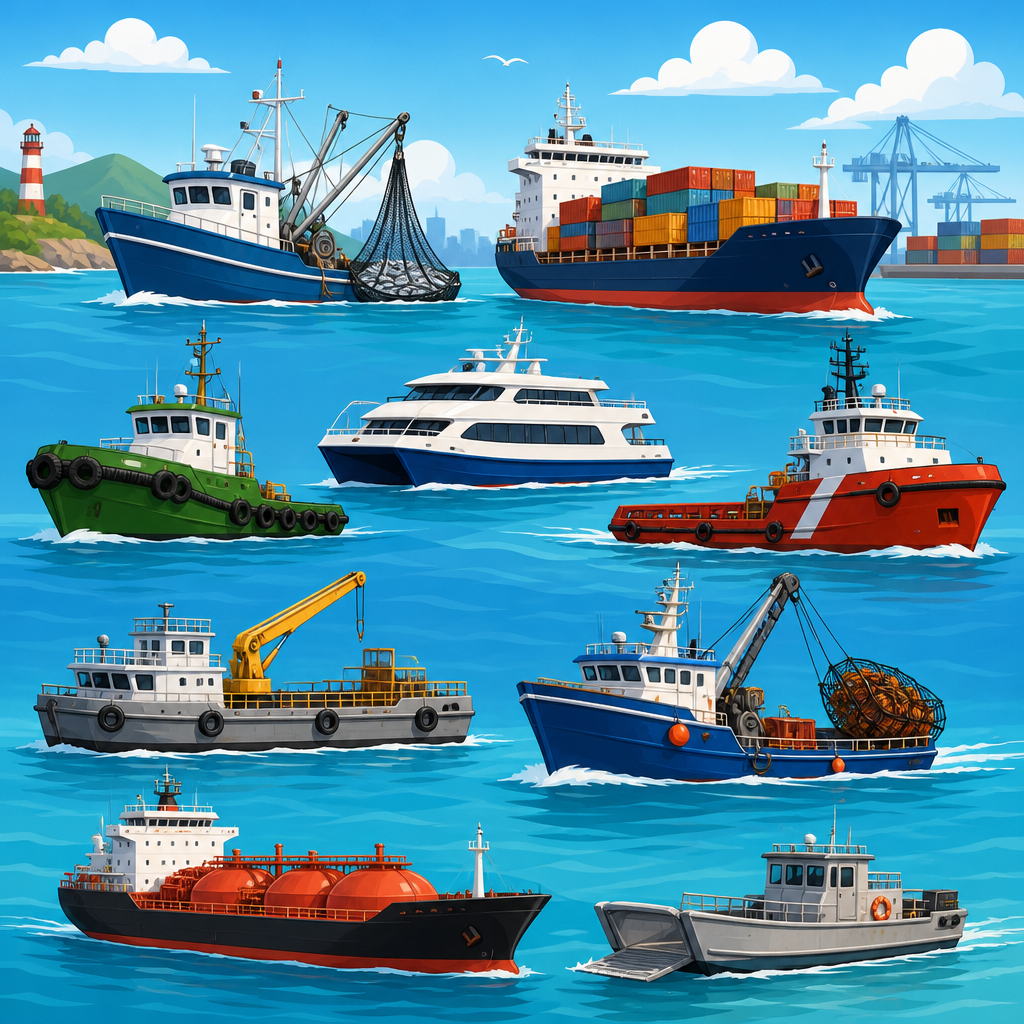
Commercial boats are the working backbone of ports, fisheries, offshore energy fields, inland waterways, and coastal infrastructure, moving cargo, supporting industry, and performing jobs that recreational craft are neither designed nor certified to handle. In the broad “Types of Boats” landscape, work and utility boats form a distinct category defined by function first: these vessels are built around payload, stability, endurance, deck space, towing force, lifting capability, or specialized onboard equipment rather than speed or leisure amenities. After years reviewing fleet specifications, shipyard builds, and operating profiles for marine businesses, I have found that most confusion starts with terminology. A commercial boat is any vessel used primarily for business, transport, industrial support, public service, or professional operations. A workboat is a subset focused on hands-on tasks such as towing, dredging, pilot transfer, crew transport, fishing, servicing offshore assets, firefighting, or harbor maintenance. A utility boat usually refers to smaller, practical craft used for nearshore transport, inspection, patrol, line handling, or maintenance. Understanding the different types of commercial boats matters because vessel choice affects safety, fuel cost, regulatory compliance, crew efficiency, and profitability. A tug that is perfect for escorting tankers is unsuitable for shallow marsh maintenance, while a crew boat optimized for technicians will fail as a bulk cargo carrier. This hub article explains the main classes of work and utility boats, what each one does best, and how operators match hull form, propulsion, deck layout, and certifications to real jobs.
Tugboats, Towboats, and Push Boats
Tugboats are among the most recognizable commercial boats because their purpose is so clear: they generate controlled pulling or pushing force to move vessels and floating structures that cannot maneuver safely on their own. Harbor tugs assist container ships, tankers, and cruise ships in tight quarters, often using azimuth stern drives or Voith Schneider propulsion for exceptional maneuverability. Escort tugs work alongside large ships in confined channels, using high bollard pull and indirect towing forces to help steer and brake the assisted vessel. Ocean-going tugs handle long-distance towing of barges, rigs, and disabled ships. Inland towboats and push boats, especially common on river systems such as the Mississippi, are designed to push barge tows rather than tow astern. Their boxier shape, reinforced knees, and shallow draft suit inland navigation far better than a classic deep-hulled tug.
The practical use case determines the design. A harbor tug needs fendering, quick response, firefighting monitors on some routes, and robust towing winches. An inland push boat needs visibility over a large flotilla, reliable medium-speed diesels, and durability for continuous contact with barges. Operators evaluate bollard pull, propulsion redundancy, class requirements, and deck machinery before acquisition. The defining advantage of these commercial boats is force multiplication: one relatively compact vessel can safely position ships worth hundreds of millions of dollars.
Fishing Vessels and Fishery Support Boats
Fishing vessels are one of the oldest and most varied categories of commercial boats, with layouts driven by catch method, target species, and trip duration. Trawlers tow nets through the water or along the seabed, requiring powerful winches, otter boards, and stern or side working arrangements. Longliners deploy miles of baited hooks and need organized line handling systems and cold storage. Purse seiners surround schooling fish with a large net and then close the bottom like a drawstring, making deck machinery and fish pumping systems central to the design. Crab boats, lobster boats, gillnetters, and shrimp boats all reflect the gear they carry and the waters they operate in.
Modern commercial fishing boats also function as mobile processing and preservation platforms. Refrigerated seawater tanks, blast freezers, insulated holds, sorting belts, and bycatch reduction equipment affect value and compliance as much as the hull itself. Regulations shape operations heavily. In many fisheries, vessel monitoring systems, stability standards, quota reporting, and gear restrictions are mandatory. Support craft may ferry supplies, fuel, bait, or crew to larger fishing units. The best fishing vessel is never simply “big”; it is optimized for safe deck workflow, catch quality, weather tolerance, and the legal framework of its fishery.
Cargo Barges, Coastal Freighters, and Landing Craft
Some commercial boats are designed to move goods efficiently where road or rail access is limited. Barges are the most straightforward example. Non-self-propelled cargo barges carry aggregates, containers, fuel, equipment, and project cargo, while tug and barge combinations remain cost-effective on inland and coastal routes. Their economic value comes from enormous carrying capacity with relatively low transport cost per ton. On rivers, one towboat can move a barge string that would otherwise require hundreds of trucks.
Small coastal freighters and landing craft fill a different niche. A landing craft uses a bow ramp and open deck to load vehicles, building materials, pallets, or heavy equipment directly onto a beach, remote dock, or undeveloped shoreline. That makes it indispensable in island logistics, military support, humanitarian response, and construction projects in areas with poor port infrastructure. Coastal freighters provide scheduled service between regional ports, often carrying mixed cargo where larger ships are impractical. For operators, the central considerations are draft, loading method, cargo securing, and route exposure. A shallow-draft barge may excel on a river but be unsuitable for open-sea passages without the right towing and weather planning.
Offshore Supply Vessels, Crew Boats, and Service Operation Craft
Offshore energy has created highly specialized workboats built to support oil platforms, gas installations, and increasingly offshore wind farms. Platform supply vessels, usually called PSVs, carry drilling mud, cement, fuel, water, pipes, containers, and spare parts to offshore installations. Their large aft working deck, dynamic positioning systems, and multiple segregated tanks allow them to deliver varied cargo safely in exposed waters. Anchor handling tug supply vessels combine towing power with deck equipment for handling anchors, mooring lines, and subsea gear.
Crew boats and fast supply vessels focus on personnel transfer. In the Gulf of Mexico and other offshore regions, these commercial boats move technicians, food, light cargo, and urgent parts at speed. In offshore wind, service operation vessels and crew transfer vessels have become central to maintenance planning. They use motion-compensated gangways, daughter craft, and seakeeping-focused hulls to put technicians safely onto turbines. The job profile determines everything from freeboard height to fender arrangement. Dynamic positioning, redundant power generation, and strict safety management are not optional extras in this sector; they are operational necessities because weather windows, offshore distances, and transfer risks leave little margin for failure.
Dredgers, Crane Barges, and Marine Construction Boats
Marine infrastructure depends on commercial boats that alter, maintain, or build the waterway itself. Dredgers remove sediment from channels, ports, marinas, and rivers to maintain navigable depth. Cutter suction dredgers loosen compacted material and pump it ashore or into barges. Trailing suction hopper dredgers vacuum sediment into onboard hoppers and transport it for disposal or beach nourishment. Backhoe dredgers use excavators mounted on barges for precise digging around quays and confined areas. Each method suits different material types, environmental restrictions, and production targets.
Crane barges and construction support vessels lift pilings, bridge components, caissons, rock armor, and modular structures. Pile-driving boats, jack-up barges, survey launches, multicats, and dive support craft often work together on one project. I have seen projects delayed not because a crane lacked lifting capacity, but because the support vessel had insufficient deck load rating or poor station-keeping in current. That is typical in marine construction: vessel specification must align with lift geometry, soil conditions, water depth, and permit limits. These workboats are less about transit and more about creating a stable, compliant floating jobsite.
Patrol, Pilot, Rescue, and Firefighting Boats
Not all utility boats transport cargo or tow heavy loads. Many protect waterways, guide larger ships, or respond to emergencies. Pilot boats transfer marine pilots from shore to incoming ships so those ships can navigate local waters under expert guidance. They need speed, rugged fendering, excellent seakeeping, and safe boarding arrangements because pilot transfer often happens in difficult conditions. Harbor patrol boats support port authorities, police, customs agencies, and environmental enforcement units. Their equipment may include radar, thermal cameras, loudhailers, pollution response gear, and secure boarding areas.
Search and rescue boats are designed for rapid response, survivability, and recovery of people from the water. Fireboats add powerful pumps and monitors for vessel, terminal, and waterfront fire response, with some capable of supplying thousands of gallons per minute. These commercial boats prioritize reliability and mission readiness over cargo economics. In busy ports, their presence reduces operational risk across the entire harbor ecosystem. A single well-equipped pilot boat or rescue craft can prevent collisions, shorten closures, and save lives.
Utility Boats by Job Profile
Smaller work and utility boats vary widely, but most can be grouped by the task they perform most often.
| Boat type | Primary use | Typical features |
|---|---|---|
| Work skiff | Inspection, line handling, dock maintenance | Open layout, outboards, shallow draft |
| Aluminum utility boat | Government, industrial, or marina support | Welded hull, simple console, durable deck |
| Crew transfer vessel | Move technicians to offshore or nearshore sites | High speed, shock-mitigating seats, boarding fenders |
| Survey boat | Hydrographic mapping and inspection | Stable platform, sonar mounts, electronics space |
| Line boat | Assist mooring and barge handling | Heavy fendering, towing bitts, practical deck layout |
| Pollution response boat | Contain and recover spills | Boom handling gear, storage tanks, recovery systems |
These boats may look simple compared with larger commercial vessels, yet specification still matters. Hull material, outboard versus inboard propulsion, passenger limits, local certification, and deck ergonomics affect daily operating cost and safety.
How Operators Choose the Right Commercial Boat
Selecting among the different types of commercial boats starts with mission definition, not brand preference. Operators first identify the payload, number of personnel, route length, exposure to weather, dock constraints, and specialized equipment required. Then they assess technical factors: hull type, draft, fuel consumption curve, engine redundancy, lifting or towing capability, stability, endurance, and maintenance access. Regulatory requirements follow. Depending on flag, route, and use, vessels may need compliance with Coast Guard rules, SOLAS provisions, MARPOL pollution standards, load line requirements, class society rules from organizations such as ABS, DNV, or Lloyd’s Register, and occupational safety procedures.
Economics matter just as much as capability. The cheapest vessel to purchase can become the most expensive to operate if it burns too much fuel, requires frequent drydocking, or cannot perform enough billable days each year. Good operators also plan for lifecycle support: spare parts availability, crew familiarity, resale market, and shipyard service network. As a hub within the “Types of Boats” topic, this guide should make one point clear: work and utility boats succeed when their design matches a specific commercial task. Tugboats move ships, fishing boats harvest and preserve catch, barges move bulk cargo, offshore vessels support energy assets, dredgers maintain waterways, and utility craft keep day-to-day marine operations running. If you are comparing commercial boat categories for a project, start with the job, narrow the operating environment, and then evaluate the vessel class built to do that work safely and efficiently.
Frequently Asked Questions
What are the main types of commercial boats and what does each one do?
Commercial boats cover a wide range of working vessels, and each type is designed around a specific job rather than leisure or speed alone. Cargo ships and barges are built to move goods, raw materials, containers, fuel, and equipment through ports, rivers, canals, and coastal routes. Fishing vessels are designed to harvest seafood and may include trawlers, longliners, purse seiners, and crab boats, each matched to a particular method of catching fish or shellfish. Tugboats are compact but extremely powerful vessels used to push, pull, and maneuver much larger ships in tight harbor spaces or along inland waterways.
Other major categories include offshore support vessels, which transport crews, fuel, tools, and supplies to oil platforms, wind farms, and offshore construction sites. Dredgers are specialized boats that remove sediment from the bottom of harbors, channels, and rivers to keep navigation routes open and safe. Pilot boats transport harbor pilots to and from large incoming ships, while workboats and utility boats handle maintenance, inspections, line handling, and small-scale transport around ports and marine facilities. Ferries also fall under the commercial umbrella because they carry passengers, vehicles, or both on scheduled routes. In short, the main difference between these boats is not just size, but the type of work they are engineered to perform every day under demanding conditions.
How are commercial boats different from recreational boats?
Commercial boats are fundamentally different from recreational boats because they are built around workload, compliance, and operational capability. A recreational boat is usually designed for comfort, watersports, fishing for pleasure, or personal travel. A commercial boat, by contrast, must safely carry cargo, equipment, workers, fuel, catch, or specialized machinery while operating for long hours in challenging environments. That means stronger hull construction, more durable propulsion systems, heavier-duty deck hardware, larger working areas, and layouts optimized for job efficiency rather than luxury.
Another major difference is regulation. Commercial vessels are typically subject to stricter inspection, licensing, safety, crewing, and maintenance standards than private craft. Depending on the boat’s size and purpose, it may need to meet national maritime authority requirements, industry-specific certifications, and occupational safety rules. Commercial boats may also include specialized features such as towing winches, cranes, refrigerated holds, net-handling systems, fire monitors, push knees, dredging equipment, or dynamic positioning systems. In practical terms, recreational boats are designed for enjoyment, while commercial boats are designed to perform essential economic and industrial tasks reliably, safely, and repeatedly.
Why are tugboats, barges, and dredgers so important to ports and inland waterways?
Tugboats, barges, and dredgers are some of the most important vessels in the commercial marine world because they make trade and navigation possible behind the scenes. Tugboats provide the concentrated power needed to move ships that are far too large or unwieldy to maneuver safely on their own in crowded harbors, narrow channels, or docking areas. They guide tankers, container ships, bulk carriers, and other large vessels through difficult turns, berths, and departures, reducing the risk of collisions, groundings, and infrastructure damage.
Barges are essential because they move enormous quantities of cargo efficiently, especially on inland waterways. They are commonly used for bulk materials such as grain, sand, gravel, coal, scrap, construction supplies, and petroleum products. Because barges can carry heavy loads with relatively low fuel use per ton, they are a cost-effective and efficient transportation solution. Dredgers are just as critical because waterways naturally fill with silt, sand, and sediment over time. Without dredging, channels can become too shallow for commercial traffic, limiting port access and increasing the risk of vessels running aground. Together, these three vessel types support the flow of commerce by keeping waterways navigable, ports functional, and freight moving reliably.
What types of commercial boats are used in fishing, offshore energy, and marine construction?
In the fishing industry, commercial boats are selected based on target species, fishing grounds, and harvesting methods. Trawlers tow nets through the water or along the seabed, longliners deploy baited hooks across great distances, and purse seiners encircle schools of fish with large nets. Other fishing vessels may be built for crabbing, lobstering, shrimping, or shellfish harvesting. Many of these boats include refrigerated storage, sorting areas, gear-hauling equipment, and rugged deck layouts designed to handle repetitive, physically demanding work in rough conditions.
In offshore energy, support vessels play a central role. Crew boats transport workers between shore and offshore platforms, while platform supply vessels carry fuel, drilling mud, food, spare parts, and technical equipment. Anchor handling tug supply vessels assist with towing rigs, setting anchors, and managing heavy offshore gear. In marine construction, commercial boats may include crane barges, pile-driving vessels, survey boats, dive support vessels, and multipurpose workboats. These vessels are used to build docks, bridges, pipelines, seawalls, offshore foundations, and coastal infrastructure. What ties all of them together is specialization: each boat is outfitted to perform a narrow set of demanding tasks safely and efficiently in environments where ordinary vessels would not be suitable.
How do businesses choose the right type of commercial boat for a specific job?
Choosing the right commercial boat starts with the mission. Operators need to define exactly what the vessel must do: transport cargo, tow other vessels, move crews, harvest fish, support offshore operations, dredge channels, or perform maintenance. From there, they evaluate practical requirements such as payload capacity, deck space, draft, towing power, crane or lifting needs, fuel range, sea conditions, and whether the boat will work offshore, in shallow rivers, or inside busy ports. A vessel that performs well in one environment may be completely unsuited to another, so matching the hull design and onboard systems to the operating area is essential.
Businesses also consider regulatory compliance, crew needs, maintenance costs, and long-term operating efficiency. For example, a harbor operator may prioritize maneuverability and bollard pull in a tugboat, while a fisheries business may focus on storage, processing layout, and gear handling. Offshore contractors may need dynamic positioning, advanced navigation systems, and accommodations for technicians, whereas inland operators may care more about shallow draft and push capacity. Budget matters, but the lowest initial cost is not always the smartest choice if the vessel cannot meet workload demands or safety standards. The best commercial boat is the one engineered for the exact job, because in working marine environments, function, reliability, and compliance are what ultimately determine value.