
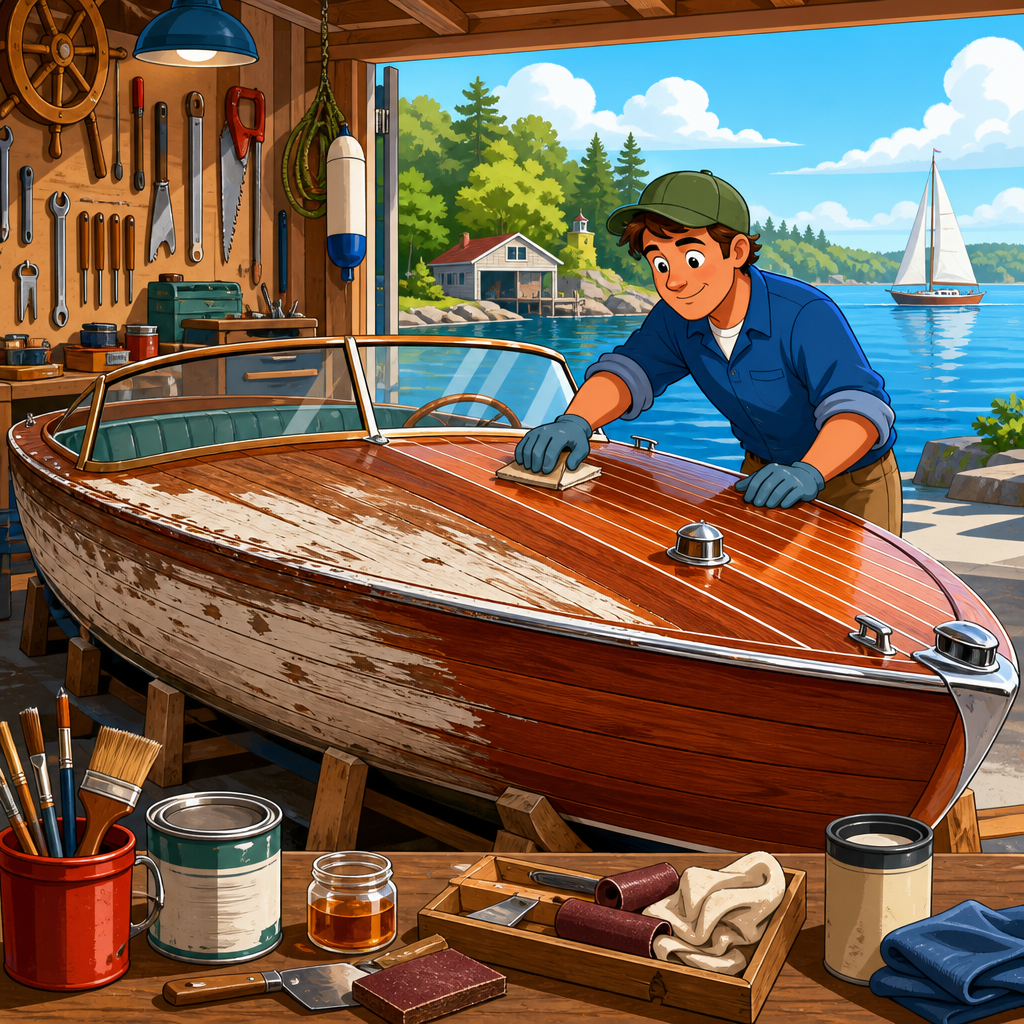
Restoring a classic wooden boat begins with understanding what makes these vessels different from fiberglass runabouts, aluminum fishing skiffs, or modern composite yachts. A classic wooden boat is usually defined by traditional plank construction, period-correct design, and historical significance, whether it is a lapstrake dinghy from the 1930s, a mahogany Chris-Craft utility boat from the 1950s, or a carvel-planked sailboat built before plywood production changed small-craft construction. In practical terms, restoration means returning the boat to safe, functional, and visually faithful condition while respecting its original structure, materials, and character.
This matters because wooden boats are not just recreational machines. They are artifacts of regional boatbuilding traditions, marine engineering, and family history. I have worked on restorations where the paperwork was missing, frames were cracked, fasteners had dezincified, and owners wanted “a quick refinish.” In nearly every case, the project succeeded only after we stopped treating the boat like furniture and started treating it like a moving structure that lives in water. A proper restoration plan protects value, seaworthiness, and authenticity.
Historic and classic boats cover a wide span of designs and methods. You will encounter clinker or lapstrake hulls, where overlapping planks create stiffness and a distinct shadow line; carvel hulls, where planks meet edge to edge over frames; strip-planked boats; steam-bent frames; sawn frames; canvas-covered decks; laid teak; and bright-finished mahogany topsides. Hardware may be silicon bronze, brass, galvanized steel, or stainless steel added later. Adhesives can range from old resorcinol glue to modern epoxy systems. Each detail affects the restoration sequence.
As a hub for historic and classic boats, this guide explains the full process: assessing condition, documenting originality, choosing repair methods, selecting timber and fasteners, restoring mechanical systems, and finishing for long-term service. It also addresses a core question many buyers ask: restore, conserve, or rebuild? The answer depends on intended use, budget, and how much original fabric remains. If you understand those tradeoffs from the start, you avoid the costliest mistake in wooden boat work: taking a rare boat apart before you know how it was meant to hold together.
Identify the Boat, Its Construction, and Its Restoration Goal
The first step in restoring a classic wooden boat is identification. You need the builder, year, hull number, original engine if applicable, construction method, and major modifications. Search for builder’s plates, stamped frame numbers, registration records, old surveys, and photographs. For production brands such as Chris-Craft, Hacker-Craft, Century, Lyman, or Riva, owner associations and archival registries can help verify layouts, hardware patterns, and factory colors. For one-off sailboats, plans from the designer or museum archives are often the best source.
Next, define the project goal. A museum-grade preservation project keeps as much original material as possible, including tool marks and finish evidence. A user restoration prioritizes safe operation and visual fidelity, accepting more replacement wood and discreet upgrades. A sympathetic rebuild may recreate a severely deteriorated hull using the original lines and hardware. These are not the same job, and mixing them causes conflict. If you say you want originality but plan to sheath the hull in fiberglass and replace all bronze hardware with polished stainless, you are no longer restoring in the strict sense.
Boat type matters because repair logic changes by construction. A lapstrake tender can tolerate some local plank replacement but depends on the integrity of gains, laps, and riveted fastening. A carvel cruiser may need refastening if plank seams have opened due to frame movement and fastener fatigue. A plywood runabout may look repairable until hidden rot has spread through deck beams and transom knees. Before budgeting, inspect keel, stem, sternpost, chines, horn timber, frames, floors, deck beams, transom framing, shaft logs, and engine beds. Moisture meters can help, but an awl, mirror, borescope, and experienced eye are often more valuable.
Survey the Hull Before Removing Anything
A thorough condition survey is the foundation of every successful wooden boat restoration. Do not begin by stripping paint or pulling planks. First record hull shape, plank lines, fastener locations, and evidence of previous repairs. I photograph every station, make a fastening map, and note where seams are proud, where frames have cracked at turn-of-bilge, and where discoloration suggests freshwater leaks rather than saltwater saturation. Measure beam, sheer heights, transom rake, and diagonal symmetry. Once pieces come off, reference points disappear quickly.
The survey should answer direct questions. Is the backbone sound? Are the frames failing from compression, rot, or fastener wear? Has the boat been stored too dry, causing seam opening and sprung planks? Were repairs done with incompatible materials, such as polyester filler over moving seams or drywall screws in structural members? Are engine beds aligned? Is there electrolysis around underwater metals? On classic inboards, inspect shaft, strut, rudder shoe, stuffing box, fuel tank supports, and ventilation. On sailboats, inspect chainplates, mast step, partners, and ballast keel bolts.
For larger or more valuable boats, commission a marine surveyor with wooden-boat experience. A general surveyor may miss important clues, especially in compound structures where hidden rot follows fasteners or deck leaks. If the boat has provenance or racing history, involve a conservator or marque specialist before replacing signature parts. A single original windshield frame, coaming profile, or hatch fitting can separate an accurate restoration from a generic refit.
| Area | What to Check | Common Failure | Typical Remedy |
|---|---|---|---|
| Keel and stem | Fastener corrosion, rot at scarfs, grounding damage | Backbone weakness | Scarf repair or replacement timber |
| Frames and floors | Cracks, frame-head rot, loose bolts | Loss of hull shape | Sister frames, steam-bent replacements, refastening |
| Planking | Edge-fastener wear, soft spots, sprung seams | Leaks and distortion | Dutchman repairs or full plank replacement |
| Deck and cabin | Water intrusion around fittings and canvas failure | Hidden beam rot | Re-bed hardware, replace beams, renew deck skin |
| Mechanical systems | Engine mounts, shaft alignment, fuel lines | Vibration and safety risk | Rebuild, realign, update critical components |
Choose Materials That Match the Boat’s Structure
Wood selection is not cosmetic. It is structural, historical, and environmental. Mahogany is common on classic runabouts because it is stable, workable, and finishes beautifully. White oak remains standard for frames, stems, and bent members because of its strength and rot resistance. Cedar is widely used for planking on many small craft. Teak appears on decks and trim, while Douglas fir shows up in spars and structural members in certain regions. Use species that match original engineering unless there is a clear reason to substitute.
Fasteners deserve equal attention. Silicon bronze is the preferred choice for many restorations because it resists corrosion in marine service and is compatible with traditional timber. Brass is often confused with bronze, but ordinary brass is weaker and less suitable below the waterline. Stainless steel can perform well in the right application, especially above water, yet it is not an automatic upgrade. In poorly oxygenated wet wood, some stainless alloys can suffer crevice corrosion. Mixing metals without considering galvanic compatibility creates future damage.
Adhesives and sealants must fit the construction method. Traditional carvel planking relies on movement and usually should not be rigidly glued edge to edge. Epoxy is excellent for scarfs, laminations, and plywood repairs, but indiscriminate epoxy saturation can trap moisture and shift stresses into adjacent original wood. For bedding hardware, use marine polysulfide or butyl in appropriate locations; avoid hard household sealants. For seam compounds, choose products designed for plank movement rather than general-purpose fillers. Materials that look modern are not necessarily better if they work against how the hull was designed to flex, swell, and drain.
Repair Structure in the Right Order
Structural restoration follows a strict sequence: stabilize the hull, repair the backbone, restore framing, then replace planking and deck structure. Support the boat correctly before cutting anything. A distorted hull restored on poor blocking will lock in bad shape. On inboard boats, engine weight and shaft alignment also influence how the hull sits, so document before removal. If the keel, stem, or transom is out of true, fix that before cosmetic work.
Backbone repairs often involve scarf joints, gripe repairs, deadwood replacement, or sternpost work. These pieces carry loads from planking, ballast, rig, and propulsion, so shortcuts fail. Frame repairs vary by boat type. Steam-bent frames must be replicated with proper stock orientation and fastening pattern. Sistering can be acceptable when original material remains largely sound, but doubling every weak frame without understanding load paths adds weight and may trap moisture. Floors, knees, breasthooks, and lodging knees should be inspected as connectors, not isolated parts.
Plank repairs should preserve fairness. Small local damage may accept a dutchman patch, but long split planks, severe edge-fastener elongation, or rot at hood ends usually require full replacement. Spiling, beveling, and fastening are skilled tasks that determine whether the hull remains fair and tight. On lapstrake boats, replacing a plank means maintaining exact lap geometry and rivet spacing. On carvel hulls, replacing multiple adjacent planks without temporary ribbands can let the shape move. Good restorers remove only what they can accurately put back in sequence.
Restore Systems Without Compromising Character
Mechanical and electrical systems often decide whether a restored wooden boat is pleasant to use or a constant dockside project. Classic inboard engines such as Gray Marine, Chrysler Crown, Chris-Craft KBL, or vintage Perkins diesels can often be rebuilt if core components are intact. Keep the original engine when historical value is high, but do not ignore safety. Fuel lines, tanks, clamps, ventilation blowers, battery switches, bilge pumps, and fire suppression should meet current marine safety standards even in a period-sensitive restoration.
Electrical rewiring is usually necessary. Cloth-covered wire and improvised household connectors belong in museums, not operating boats. Use marine-grade tinned copper wire, proper circuit protection, and labeled panels. Hide upgrades carefully when visual authenticity matters. Lighting can often retain period housings with updated internals. Steering systems, stuffing boxes, rudder bearings, and seacocks should be rebuilt or replaced with marine-rated equivalents. If the boat will carry passengers, local regulations and insurance requirements may dictate additional upgrades.
Sailboats add rigging concerns. Standing rigging has a finite life, and chainplate corrosion where metal passes through damp decks is a known failure point. Replace suspect wire or rod, inspect mast compression areas, and ensure ballast bolts are sound. Spar restoration may require scarfing, glue-line assessment, and new coatings with ultraviolet protection. The goal is simple: preserve historic appearance while ensuring that hidden systems are more reliable than when the boat left the factory.
Finish, Preserve, and Plan for Ongoing Care
Finishing a classic wooden boat is where many owners overspend for appearance while underspending on protection. Brightwork is beautiful, but bare-looking varnish over damp or unstable wood fails quickly. Surface preparation matters more than brand choice. Remove failed coatings, neutralize contamination, fair repairs carefully, and seal end grain. Traditional varnish remains the benchmark for clear-finished mahogany because it offers depth, repairability, and ultraviolet resistance when maintained. Paint systems can be equally authentic and often more practical on working craft.
Caulking and seam treatment should match hull type. Cotton and seam compound are standard in many carvel restorations, but overcaulking can force planks apart. Lapstrake hulls rely on tight laps and rivets rather than heavy seam filling. Below the waterline, choose primers and antifouling compatible with wood movement and local waters. Never assume a finish schedule developed for fiberglass will perform on a traditionally planked hull.
Long-term preservation depends on storage and maintenance. Keep the boat ventilated, shaded, and properly supported. Cover it so water sheds without trapping humidity. Inspect fasteners, coatings, and bedding annually. Revarnish before failure, not after gray wood appears. Run engines regularly, keep bilges clean, and address leaks immediately. If you are building a broader understanding of historic and classic boats, continue into focused guides on runabouts, classic sailboats, workboats, and traditional construction methods. The central lesson is clear: restore the structure first, respect original design, and use marine materials that belong on a wooden boat. Done well, restoration gives you more than a beautiful hull. It returns a piece of maritime history to living service. Start with a survey, define your goal, and repair one system at a time.
Frequently Asked Questions
What makes a classic wooden boat different from newer fiberglass or aluminum boats?
A classic wooden boat is different in both how it is built and how it behaves in the water and over time. Unlike fiberglass runabouts, aluminum fishing boats, or modern composite yachts, classic wooden boats are usually built with traditional planking methods such as carvel or lapstrake construction over frames, ribs, battens, and a backbone structure that includes the keel, stem, and transom. The wood itself is part of the boat’s engineering, not just its appearance. Planks expand and contract with moisture, fasteners can loosen as wood ages, and the hull depends on a balance of flexibility, tight joinery, and proper maintenance to remain sound.
These boats also carry historical and design value that goes beyond simple function. A 1930s lapstrake dinghy, a 1950s mahogany Chris-Craft, or a pre-plywood carvel sailboat reflects a specific era of craftsmanship, materials, and marine design. That means restoration is not the same as ordinary repair. Owners are often trying to preserve originality, period-correct details, and traditional building methods while still making the boat safe and usable. In practical terms, that affects every decision, from whether to replace a plank or repair it, to whether to use bronze screws instead of modern substitutes, to how much of the original finish, hardware, and structural fabric should be retained. Restoring a classic wooden boat is as much about stewardship as it is about getting a vessel back on the water.
How do you know whether a classic wooden boat is worth restoring?
The first step is a realistic condition assessment that looks at structure, originality, historical value, and cost. Start by inspecting the hull, frames, keel, stem, planking, deck beams, transom, and fasteners. Look for soft wood, rot, splits, sprung planks, open seams, delamination in later plywood components, broken ribs, corrosion around fasteners, and signs of previous poor-quality repairs. Areas that stay damp, such as bilges, garboards, transom corners, and deck-to-hull joints, often reveal the most serious problems. A proper inspection should also include sounding planks, probing suspect timber carefully, checking for hogging or twist in the hull, and evaluating whether the boat has been stored properly or neglected for years.
Beyond physical condition, value comes from rarity, provenance, design significance, and completeness. A well-documented boat from a respected builder with original hardware, engine, interior components, and identifiable historical features is usually a stronger restoration candidate than a heavily altered boat with missing parts. That said, “worth restoring” does not always mean “worth restoring for profit.” Wooden boat restoration is rarely the cheapest route to ownership, and it often costs more than buyers expect. The right question is whether the boat’s cultural value, personal importance, and long-term enjoyment justify the work. Many restorers consult a marine surveyor or an experienced wooden boat builder before committing, especially if structural replacement appears likely. An expert opinion can help separate a challenging but feasible project from one that will consume time and money without preserving much original material.
What is the first step in restoring a classic wooden boat?
The first step is documentation and assessment before any major disassembly begins. It is tempting to start stripping finishes or removing damaged parts right away, but careful documentation saves enormous trouble later. Photograph every area of the boat inside and out, including hardware placement, trim details, fastener patterns, interior layout, steering components, deck fittings, and joinery. Measure key dimensions, label removable parts, and create notes about what appears original, what has already been repaired, and what is clearly deteriorated. If the boat has builder’s plates, hull numbers, registration history, or old photographs, preserve that information as part of the restoration record.
Once the boat is documented, the next phase is a methodical structural evaluation. Restoration should proceed from the backbone and framing outward, not from cosmetics inward. In other words, there is no point applying varnish or paint until you know the keel, stem, frames, planking, and deck supports are sound. The usual sequence involves stabilizing the hull in proper shape, removing components only as needed, identifying what can be conserved, and planning repairs in the correct order. This is also when material choices are made. Matching wood species, grain orientation, fastener type, adhesives where appropriate, and finishing systems all matter. A disciplined beginning prevents a project from turning into uncontrolled dismantling, which is one of the most common mistakes in wooden boat restoration.
Should you repair original wood or replace damaged parts during restoration?
In most high-quality restorations, the goal is to preserve as much original material as possible without compromising safety, strength, or longevity. That means repair is preferred when the wood remains fundamentally sound and the damaged area can be stabilized with a proper traditional repair such as a dutchman, scarf, frame sister, spline, or localized timber replacement. Conserving original planks, frames, trim, and joinery helps maintain the boat’s authenticity and historical value. It also preserves subtle details of shape and workmanship that are hard to duplicate exactly, especially on older hand-built boats where no two components are perfectly identical.
Replacement becomes the better choice when rot is extensive, fastener damage has weakened the wood beyond dependable use, a structural member has lost its integrity, or previous bad repairs have created hidden problems. The key is not just replacing wood, but replacing it correctly. New parts should match the original species whenever practical, follow the original construction method, and fit without forcing the hull out of shape. For example, replacing a plank on a carvel hull requires attention to bevels, edge set, fastening schedule, and fairness, while replacing ribs in a lapstrake hull requires careful control of overlap and fastening through the laps. The best restorations strike a balance: save what is genuinely worth saving, replace what can no longer perform, and avoid both extremes of unnecessary replacement and sentimental over-preservation of unsafe material.
What are the most common mistakes people make when restoring a classic wooden boat?
One of the biggest mistakes is underestimating the project. Wooden boat restoration often looks manageable on the surface because the boat may still appear complete, but hidden deterioration is common. Paint, filler, fiberglass sheathing, carpeting, and interior panels can conceal serious rot, broken frames, and corroded fasteners. Another major error is starting with cosmetic work before structural work. Sanding brightwork, polishing hardware, or buying upholstery too early may feel productive, but the boat’s hull structure, moisture issues, and mechanical systems must come first. Taking the boat apart too aggressively is another frequent problem. Removing too many planks, frames, or deck components at once can allow the hull to distort, making accurate reconstruction much harder.
Material and method mistakes are equally important. Using the wrong fasteners, inappropriate modern sealants, construction-grade lumber, or heavy fiberglass as a “shortcut” can trap moisture, accelerate decay, and alter how the boat was designed to move. Poor ventilation during storage, rushed drying, and incompatible coatings also cause trouble. Many first-time restorers make the mistake of treating a wooden boat like a house carpentry project instead of a flexible marine structure. Finally, failing to establish a realistic budget and timeline can stall a restoration indefinitely. Successful projects depend on a plan, proper sequencing, respect for traditional construction, and willingness to seek advice from marine surveyors, wooden boat yards, or experienced restorers when major structural questions arise. Patience and accuracy matter far more than speed.


