In the world of luxury maritime experiences, the terms “superyacht” and “mega yacht” are often used interchangeably, leading to confusion even among some yacht enthusiasts. However, these terms signify two distinct categories of luxury vessels, each with its unique features, target clientele, and operational scopes. Understanding the differences between superyachts and mega yachts is crucial for potential buyers, charter clients, and industry professionals alike. Yacht enthusiasts and luxury seekers need this knowledge to make informed decisions about ownership, investments, or charter experiences. This article delves into the specifics of what sets these two types of yachts apart and why knowing the difference matters.
Understanding the Basics: Definitions and Distinctions
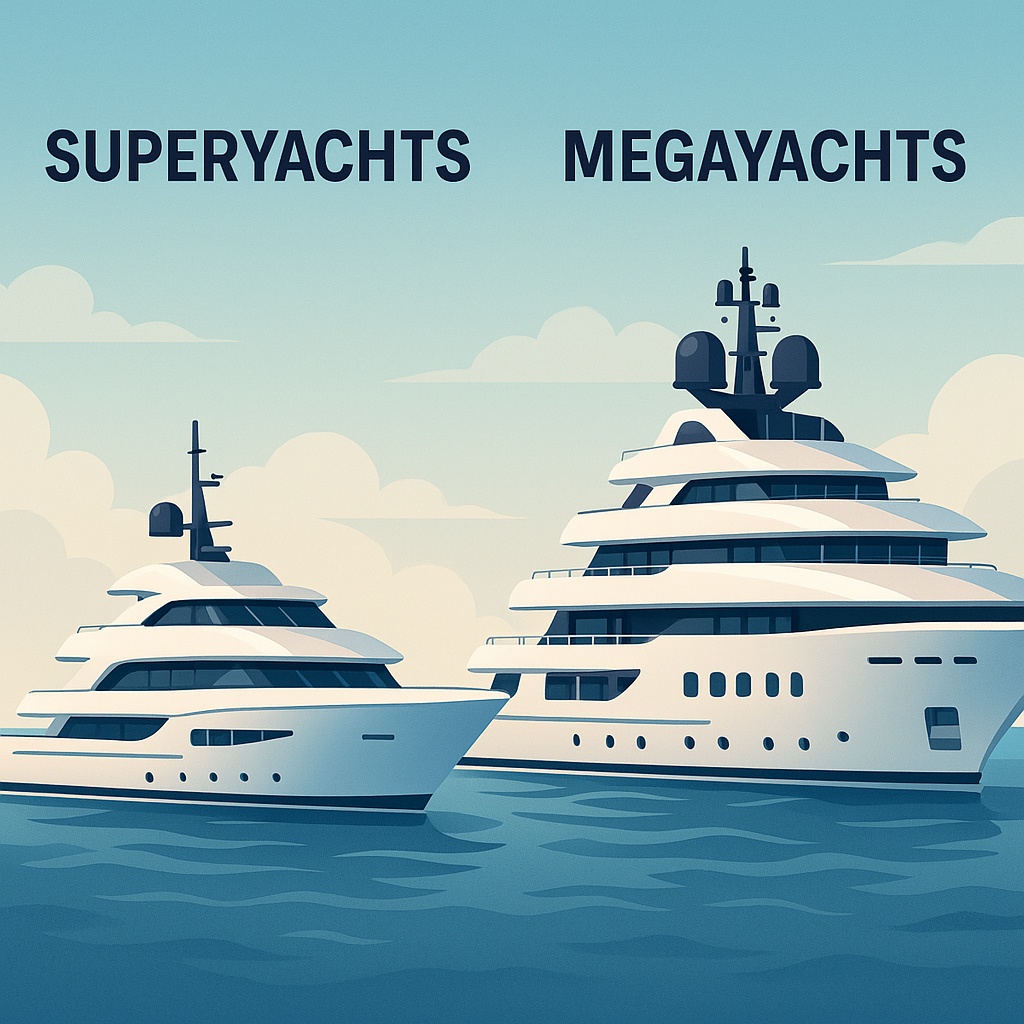
To clearly differentiate between superyachts and mega yachts, one must first understand the basic definitions of each. A superyacht is a privately owned luxury yacht that typically measures over 24 meters (approximately 79 feet) in length. These vessels are often custom-created to provide luxury, comfort, and innovative design features for high-net-worth individuals. On the other hand, a mega yacht is usually considered a more exclusive category, often exceeding 60 meters (approximately 197 feet) and designed to provide the ultimate in luxury and exclusivity. Mega yachts often feature cutting-edge technologies, extensive amenities, and can accommodate a larger crew and passenger capacity.
The main distinction between superyachts and mega yachts lies in their size and offerings. While both provide luxury and comfort, mega yachts stand out with a higher degree of personalization, larger size, and more luxurious features. As yacht size increases, so do the complexities of ownership and operation, necessitating a more seasoned team for seamless functioning. This distinction is vital for those considering yacht purchase or charter, as the choice impacts costs, maintenance, and overall experience.
Design and Construction: Crafting the Perfect Vessel
Superyachts and mega yachts both showcase high levels of craftsmanship, but the design and construction processes set them apart. Superyachts are often seen with sleek designs, focusing on aerodynamic efficiency and elegant interiors. While they provide luxury, their smaller size compared to mega yachts means fewer customization options.
Mega yachts, however, are a different story. With greater size comes more room for custom amenities such as helipads, swimming pools, and even submarines. The construction process for mega yachts is more intensive and involves cutting-edge technologies to ensure safety, luxury, and performance. A real-world example of cutting-edge construction would be the “Azzam,” which, at 180 meters, stands as one of the largest mega yachts in the world. Built by Lürssen Yachts, it features advanced propulsion systems and a sophisticated interior design.
Ownership and Maintenance: The Responsibilities of Luxury
Owning a yacht requires substantial financial investment, not just in acquisition but also in regular upkeep, staffing, and operational costs. Superyacht owners may face lower costs relative to their mega yacht counterparts due to smaller crew requirements and maintenance demands. Typically, a superyacht crew might include a captain, engineers, deckhands, and hospitality staff.
Mega yachts, with their larger scale, require extensive crew members often running into dozens, including specialized roles like helicopter pilots or sous-chefs. The maintenance of a mega yacht is also more complex and costly given the advanced systems onboard. As a real-world example, Roman Abramovich’s “Eclipse,” one of the most famous mega yachts, reportedly costs tens of millions of dollars just in annual upkeep.
Chartering vs. Owning: Flexibility and Experience
For those not ready to fully commit to yacht ownership, chartering offers a viable alternative, providing the luxury experience without the responsibilities of maintenance. Superyachts are generally easier to charter than mega yachts due to their more manageable size and simpler operational demands. The cost of chartering superyachts is also more accessible for a wider market.
Conversely, mega yachts offer a once-in-a-lifetime experience with unparalleled amenities and customization options suitable for exclusive events and high-profile clients. However, chartering a mega yacht can be significantly more expensive, with charter costs ranging substantially higher than those for superyachts. An example of a mega yacht available for charter is the “Ulysses,” which comes with numerous luxury features and state-of-the-art accommodations, attracting clients seeking ultimate privacy and indulgence.
Legal and Environmental Considerations
The operation of both superyachts and mega yachts involves multiple legal and environmental considerations. Regulations vary based on the intended use, size, and navigation routes of the vessel. Owners must adhere to laws of the flag state (the country under which the yacht is registered) as well as international maritime regulations.
Environmental sustainability has become an increasing concern within yachting, with emphasis on minimizing ecological footprints. Mega yachts, due to their size and power requirements, have been more scrutinized for their environmental impact. However, advancements in green technologies are allowing newer mega yachts to incorporate features like hybrid engines and energy-efficient systems. For example, the “Savannah,” a hybrid mega yacht built by Feadship, employs a unique electro-mechanical propulsion system aimed at reducing its ecological impact.
The balance between luxurious living and environmental responsibility is a growing area of focus, with owners and charter customers increasingly looking for eco-conscious options without compromising on luxury.
Technological Innovations: Staying Ahead of the Curve
Technological advancements play a significant role in distinguishing superyachts from mega yachts. Superyachts, while luxurious, often implement technologies that focus on elegance and comfort. Features such as advanced navigation systems, luxurious interiors, and high-quality entertainment systems are standard in superyachts.
Mega yachts, due to their scale, integrate more sophisticated technologies. These may include state-of-the-art communication systems, advanced safety and security measures, and cutting-edge design features. The real-world example of “Dilbar,” one of the largest mega yachts by gross tonnage, demonstrates the heights of technology in yachting. It features a water desalination system and advanced air conditioning to maintain luxury comfort even in the most demanding conditions.
For potential buyers and charterers, understanding these technological offerings is critical, as it can significantly affect the onboard experience and the value retention of the vessel over time.
| Feature | Superyacht | Mega Yacht |
|---|---|---|
| Average Length | 24m to 60m | 60m and above |
| Crew Size | Smaller, up to 20 | Larger, 20 and above |
| Charter Costs | More accessible | Significantly higher |
| Customization | Limited | Extensive |
| Environmental Focus | Standard | Increasingly innovative |
Conclusion: Navigating Your Journey in Yachting
Understanding the differences between superyachts and mega yachts is essential for enthusiasts, prospective buyers, or charter clients to navigate successfully in the world of luxury yachts. The choice between a superyacht and a mega yacht impacts budgeting, experience, and one’s environmental footprint. Superyachts offer a perfect balance of luxury and manageability for those new to yachting or seeking a more conventional experience. Meanwhile, mega yachts deliver unmatched opulence and exclusivity, ideal for those wishing for a lavish maritime exploit.
Recognizing the key features, technological advancements, and responsibilities associated with each type enables a more informed and satisfying engagement with luxury yachting. Whether opting for ownership or chartering, the knowledge of these differences opens up avenues for tailored experiences, ensuring every moment spent aboard aligns with personal preferences and expectations.
For those intrigued by the allure of the sea, the next step is simple: define your vision of luxury and embark on a journey that suits your unique aspirations and preferences. Whether it’s a bespoke superyacht or an extraordinary mega yacht, the oceans await your exploration.
Frequently Asked Questions
1. What exactly defines a superyacht, and how does it differ from a mega yacht in terms of size?
Superyachts and mega yachts are both high-end luxury vessels, but they do have different defining characteristics, primarily in terms of size. A superyacht is generally classified as any privately-owned luxury yacht that is 24 meters (about 78 feet) or more in length. On the other hand, a mega yacht takes the grandeur up a notch, typically starting at 60 meters (approximately 197 feet) in length or more. While both types offer opulence and advanced technology, mega yachts often come with a grandeur scale that includes more space, rooms, and facilities.
2. How do the amenities differ between superyachts and mega yachts?
Both superyachts and mega yachts boast exceptional amenities designed to cater to the elite’s desire for luxury and comfort on the open seas. Superyachts often feature luxurious cabins, expansive decks, swimming pools, jacuzzis, bars, and advanced navigation systems. Mega yachts, however, take the luxury experience even further. They may include features such as multiple swimming pools, helicopter pads, cinemas, conference rooms, lavish spas, and even small submarines. The sheer size of mega yachts allows for a more extensive range and size of amenities. In terms of service, both types are staffed with highly trained crews to ensure a personalized experience.
3. Who typically owns or charters superyachts versus mega yachts?
Superyachts and mega yachts attract slightly different clientele mainly due to the difference in size and grandeur. Superyachts are more accessible, appealing to high-net-worth individuals who desire luxury but may wish to balance against more modest operational costs. Mega yachts, however, due to their size and expense, are often owned by the ultra-wealthy, including billionaires, celebrities, and royalty. When it comes to chartering, superyachts offer an introduction to yacht luxury without the overwhelming extravagance, while mega yachts are the choice for those wanting nothing short of the ultimate prestige in sea travel, capable of hosting larger groups for high-profile events or extended family vacations.
4. In terms of operational scope, how do regulations differ between superyachts and mega yachts?
The operational scope of yachts is not just a matter of preference but of regulation as well. Superyachts must comply with strict marine laws designed for vessels beyond a particular size, which covers everything from safety equipment to staffing requirements. Mega yachts, given their larger size and capacity, are subject to even more stringent regulations. This includes enhanced requirements for maritime safety, environmental impact assessments, and sometimes even territorial permissions, as mega yachts often have the capability to explore more remote locations. The processes can vary depending on the flag state under which the yacht is registered, but generally, the larger the yacht, the more complex and costly the regulatory compliance. It is crucial for owners and operators of mega yachts to be diligent with adhering to international safety and environmental laws.
5. How do the costs of owning or chartering a superyacht compare to those of a mega yacht?
Owning or chartering a yacht, whether a superyacht or a mega yacht, is a significant financial endeavor. Superyachts are generally more cost-effective compared to mega yachts due to their smaller size and fewer opulent features. However, owning a superyacht is still a substantial investment considering purchase costs, yearly maintenance, staffing, and docking fees. On the other hand, a mega yacht involves towering ownership costs due to premium purchase prices, higher maintenance fees, more extensive crew requirements, and expansive amenities that need constant upkeep. Chartering costs vary based on the season and yacht specifications, with superyachts starting at a lower price range while charters for mega yachts can reach unparalleled heights, frequently into the millions for a week during peak season. The higher cost of mega yachts reflects their immense luxury, exclusivity, and potential for customization in travel experiences.