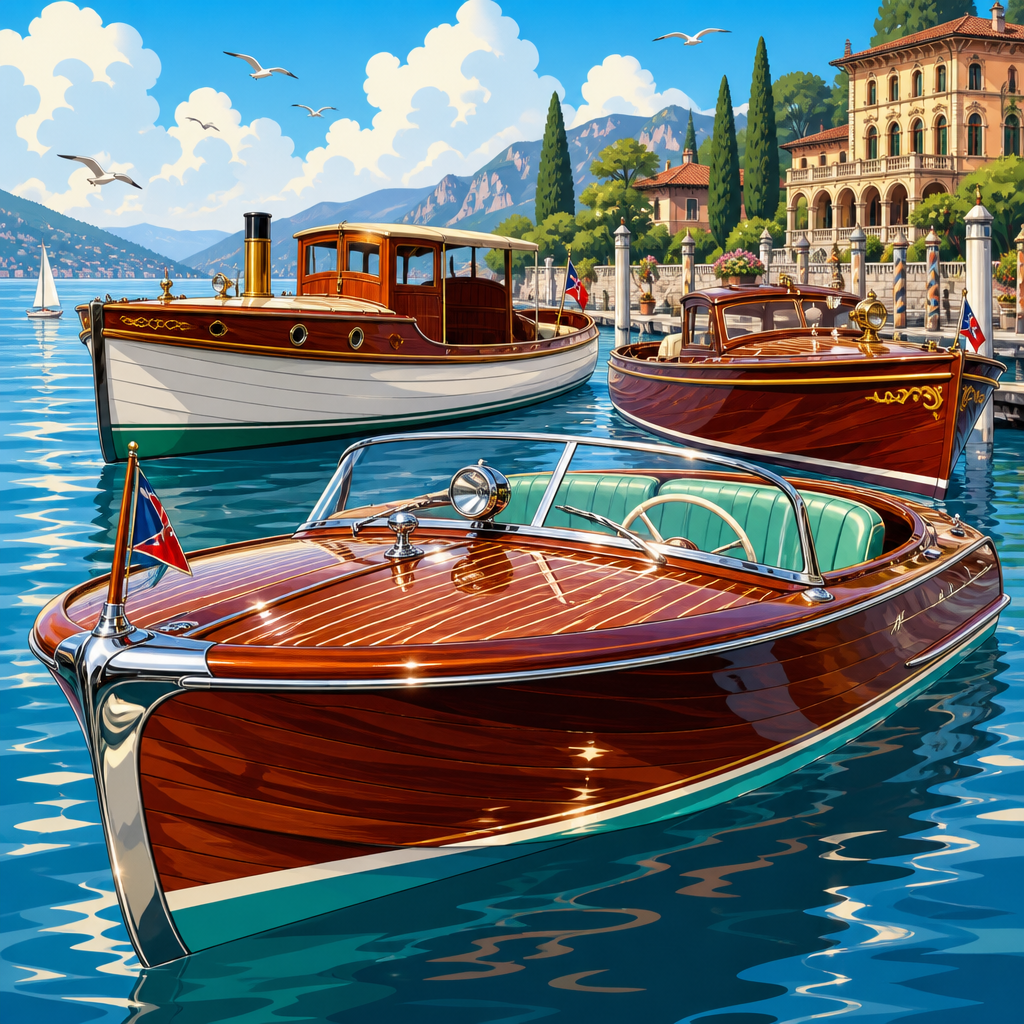
The most expensive antique boats ever sold reveal how maritime history, craftsmanship, engineering, and provenance converge to create extraordinary value. In the classic boat market, “antique” usually refers to vessels from earlier eras that retain historical significance, while “historic” and “classic” often broaden the field to include landmark racing yachts, early motor launches, celebrated commuter boats, and meticulously restored wooden craft from the late nineteenth and twentieth centuries. I have spent years studying brokerage listings, auction results, museum collections, and restoration projects, and one lesson stands out: buyers are rarely paying only for wood, bronze, and canvas. They are paying for documented lineage, original design, association with notable owners or races, surviving originality, and the cost of preserving a disappearing standard of boatbuilding.
This matters because antique boats occupy a unique place within the broader types of boats landscape. They are not just collectibles; they are working artifacts that demand maintenance, specialist skills, protected storage, and often sympathetic upgrades to remain seaworthy. For enthusiasts entering the historic and classic boats subtopic, headline sales provide a useful entry point into bigger questions: What makes one antique boat worth millions while another struggles to sell? Which builders define the category? How do restoration standards, racing pedigree, and market timing affect price? And where do antique sailboats, motor yachts, launches, and runabouts fit among other classic boat types?
Understanding these questions helps readers evaluate not only famous sales but also the structure of the market itself. The highest prices have generally gone to two broad categories: elite classic racing yachts with blue-chip provenance and iconic wooden motorboats from celebrated builders such as Chris-Craft, Hacker-Craft, Gar Wood, Riva, and Feadship’s early heritage lineages. At the very top end, truly museum-grade boats can trade privately for sums that rival fine art, especially when they are tied to names like Herreshoff, Fife, Camper & Nicholsons, or to glamorous periods of American and European yachting culture.
As a hub article for historic and classic boats, this guide explains the sales that set records, the factors behind those numbers, the major types within the category, and the practical realities of ownership. If you are researching classic wooden boats, antique yachts, vintage runabouts, or restoration-worthy historic vessels, this page gives you the framework to understand the market and decide which subcategory deserves deeper exploration.
Record-Setting Antique Boats and Why They Command Premium Prices
The most expensive antique boats ever sold are usually large sailing yachts with major regatta histories or singular design importance. One of the best-known examples is Shamrock V, the 1930 J-Class yacht built for Sir Thomas Lipton as an America’s Cup challenger. J-Class yachts occupy the summit of classic yachting prestige because they combine grand scale, elite naval architecture, and direct association with the most famous trophy in sailing. Restored examples and faithful continuations have traded at levels that place them among the costliest historic vessels in private hands, often well into eight figures depending on restoration depth, racing inventory, and campaign readiness.
Another benchmark category includes classic yachts designed by Nathanael Herreshoff and William Fife III. Herreshoff boats are prized for engineering elegance and direct impact on American yacht design, while Fife yachts are widely regarded as some of the most beautiful sailing vessels ever drawn. When a large, authenticated Fife cutter or Herreshoff racer appears with complete provenance, original construction details, and documented restoration by a respected yard, buyers treat it less like a used boat and more like a portable maritime monument. In private brokerage, values can exceed many public auction figures because top-tier buyers prefer discreet transactions.
Historic motorboats can also command astonishing prices, although generally below the rarest mega-yacht-class sailing icons. Prewar commuter yachts, mahogany runabouts, and celebrity-owned launches from the golden age of boating have sold for seven figures when condition and rarity align. I have seen otherwise similar wooden speedboats separated by hundreds of thousands of dollars simply because one retained original hardware, had a known ownership chain, or won major concours awards after restoration. In this market, small differences in authenticity can create very large differences in price.
| Boat or Category | Era | Why It Reaches Top Prices | Typical Market Tier |
|---|---|---|---|
| J-Class yachts such as Shamrock V | 1920s–1930s | America’s Cup pedigree, elite design, extreme restoration cost, rarity | Eight figures and above |
| Large Fife and Herreshoff sailing yachts | 1890s–1930s | Design significance, racing history, craftsmanship, documented provenance | High seven to eight figures |
| Classic commuter yachts and gentleman’s motor yachts | 1910s–1940s | Luxury heritage, low survival rates, museum-grade restoration | Mid six to low seven figures |
| Chris-Craft, Hacker-Craft, Gar Wood runabouts | 1920s–1950s | Brand recognition, concours condition, iconic styling, collector demand | High five to seven figures |
| Riva Aquarama and early postwar classics | 1950s–1970s | Celebrity cachet, design fame, limited pristine examples | High six to low seven figures |
The biggest prices are also shaped by replacement cost. Restoring a major antique yacht can consume years and millions of dollars, especially when frames, planking, spars, engines, fastenings, and systems must be rebuilt to period-correct standards. Buyers know they may spend more recreating a vessel than acquiring an already restored example. As a result, a finished classic with current surveys, race eligibility, and exceptional pedigree often sells at a premium because it saves time, uncertainty, and specialist yard risk.
The Historic and Classic Boats Hub: Main Categories Every Buyer Should Know
Historic and classic boats are not one homogeneous market. Antique sailboats include gaff cutters, yawls, schooners, meter boats, and early racing sloops. Their values depend on designer reputation, competition record, rig originality, and the integrity of structural restorations. A restored Fife cutter with recent documentation from a known yard appeals to a different buyer than a pocket cruiser built by a regional yard, even if both are beautifully maintained. Scale, fame, and paper trail matter.
Classic motor yachts form another important branch. These include commuter yachts, sedan cruisers, house launches, and gentleman’s express boats from builders such as Mathis, Elco, Trumpy, and early Huckins. The best examples combine varnished joinery, period hardware, and upgraded mechanical systems hidden in ways that preserve the vessel’s appearance. Buyers are often seeking social utility as much as collectible value: a boat that can appear at a wooden boat festival on Saturday and host guests in comfort on Sunday.
Vintage runabouts are often the gateway into the classic boat world. Chris-Craft barrelbacks, Hacker-Craft utilities, and Gar Wood speedsters remain especially liquid because they are recognizable, trailerable in some cases, and supported by enthusiast communities, parts networks, and concours circuits. However, the top examples are not merely polished toys. They often carry factory-correct engines, matching hull cards, restored gauges, and exact upholstery patterns verified against original build records.
Historic workboats and specialty craft deserve attention as well. Lifeboats, steam launches, early pilot boats, and military heritage craft may not always produce the highest sale prices, but they are central to the historic boats category because they preserve construction methods and operating traditions that pleasure craft alone cannot represent. Some museums and private collectors deliberately pursue these vessels because they tell a broader story about regional boatbuilding, commerce, and naval technology.
If you are building a reading path within this subtopic, start by separating vessels into four practical groups: antique sailing yachts, classic motor yachts, vintage runabouts, and historic utility or specialty craft. Each group has different ownership costs, restoration standards, event calendars, and resale dynamics. That distinction is far more useful than treating all old boats as a single collector segment.
How Provenance, Restoration, and Originality Shape Value
Provenance is the verified history of a boat’s design, construction, ownership, racing, and restoration. In the upper tier of antique boats, provenance is not decorative; it is foundational to price. A documented build by Herreshoff Manufacturing Company, Camper & Nicholsons, or William Fife’s yard establishes authorship in the same way a signature matters in fine art. Add notable ownership, wartime survival, famous regatta participation, or publication in respected registries, and the market responds accordingly.
Originality is more complicated. Boats are functional objects exposed to water, fastener corrosion, rot, engine wear, and rig fatigue, so no serious buyer expects complete untouched originality in a century-old vessel. What matters is the quality and honesty of replacement. Original lines, faithful scantlings, correct species of timber, period joinery methods, and properly archived interventions preserve historical integrity. By contrast, over-restoration can hurt value when it introduces modern shortcuts, alters deck layouts, changes engine type without documentation, or creates a glossy but historically inaccurate finish.
Restoration reputation carries measurable weight. Yards such as Pendennis, Fairlie Restorations, Rockport Marine, French & Webb, and other respected specialists have built trust because they document their work and understand historic structures. When I evaluate a classic listing, I look for surveys, invoices, fastening records, mast and rig reports, engine rebuild details, and photographs of work beneath the varnish. A beautiful topside finish means little if frame repairs, keel bolts, or planking seams were treated cosmetically rather than structurally.
A practical example comes from the vintage runabout market. Two similar 1930s mahogany speedboats may appear equally polished at first glance, yet one can outperform the other dramatically on price because its hull card matches factory specifications, the engine serial aligns with records, and the restoration won judged awards at a major event such as the Lake Tahoe Concours d’Elegance. The other may still be enjoyable, but collectors discount uncertainty. Documentation reduces risk, and lower risk translates directly into higher value.
Market Realities: Auctions, Private Sales, Ownership Costs, and Risk
Public auction headlines are only part of the story. The highest-value antique boats often sell through specialist brokers, family offices, or personal networks rather than televised auction rooms. Brokerage firms such as Edmiston, Fraser, Bernard Gallay, Northrop & Johnson, and boutique classic yacht brokers regularly handle heritage vessels where confidentiality matters. As a result, the true ceiling of the market is often higher than the public record suggests.
Ownership costs are the filter that keeps this market specialized. Wooden hulls require vigilant moisture management, paint or varnish cycles, haul-outs, fastener inspections, and indoor storage whenever possible. Sailing yachts add spars, standing rigging, sail inventories, and race-committee compliance if they compete under classic regatta rules. Motorboats add engine rebuilds, fuel system upgrades, shaft alignment, and often custom fabrication because off-the-shelf parts may no longer exist. Insurance carriers also scrutinize survey quality, navigation limits, crew competence, and yard plans before binding coverage.
Risk management therefore becomes part of valuation. A buyer paying top dollar for an antique boat is often purchasing a vessel that has already moved through the riskiest phase: discovery, structural diagnosis, and major restoration. That is why “project boats” can be deceptively expensive even when purchase prices seem low. I have watched six-figure restoration budgets overtake seven-figure values because owners underestimated hidden deterioration under decks, around transoms, or in stem and horn timber connections.
For newcomers, the soundest approach is to buy the best-documented example you can afford, commission a surveyor with classic-boat experience, and understand the annual carrying cost before falling in love with appearance alone. In historic and classic boats, deferred maintenance is not an abstract concern. It is the single fastest way to erase value.
What These Record Sales Mean for Collectors and Enthusiasts
The most expensive antique boats ever sold do more than set glamorous benchmarks. They clarify the rules of the classic boat market. First, rarity alone is not enough; rarity must be paired with significance. Second, restoration creates value only when it respects authenticity and is supported by evidence. Third, brand and designer matter because they anchor trust, desirability, and future resale. Finally, the best boats attract buyers from multiple worlds at once: collectors, historians, sailors, lifestyle owners, and institutions.
For anyone exploring historic and classic boats as a subtopic under types of boats, these lessons provide a practical roadmap. Study the major builders. Learn the difference between sympathetic restoration and replacement disguised as heritage. Read surveys, race histories, and registry entries with the same care you would give an art catalog. Most important, match the boat type to your intended use. A J-Class yacht, a Fife cutter, a Trumpy motor yacht, and a Chris-Craft runabout may all be “classic,” but they require entirely different budgets, crews, and ownership expectations.
The enduring benefit of this category is that it connects boating with cultural preservation. A great antique boat is not frozen history; it is history under way. If you want to go deeper into classic sailboats, vintage motor yachts, wooden runabouts, or restoration standards, use this hub as your starting point and continue into the specific historic boat types that best fit your interest, budget, and ambitions.
Frequently Asked Questions
What makes an antique boat so expensive at auction or private sale?
The highest prices in the antique and classic boat market are usually driven by a rare combination of historical importance, craftsmanship, originality, condition, and provenance. A boat becomes especially valuable when it represents a meaningful moment in maritime history, such as an early breakthrough in yacht design, a celebrated racing pedigree, or a notable association with a famous owner, builder, or event. Buyers are not simply purchasing a vessel; they are often acquiring a physical piece of nautical heritage.
Construction quality also plays a major role. Boats built by iconic yards and designers, especially those known for exceptional wooden construction, elegant joinery, innovative engineering, or limited production, tend to command premium prices. Original materials, surviving period hardware, and correct restoration work can significantly increase value because they preserve the vessel’s authenticity. Conversely, major modifications that erase original character may limit top-end pricing, even when a boat is visually impressive.
Condition is another essential factor, but in this segment of the market, “condition” does not always mean modernized perfection. Collectors often place a premium on sympathetic restoration, documented maintenance, and faithfulness to original design intent. A boat that has been expertly restored while retaining its historical fabric can be far more desirable than one that has been aggressively rebuilt with contemporary substitutions. In the very top tier, exceptional provenance and rarity often elevate a vessel from merely valuable to truly record-setting.
What types of boats are usually included when people talk about the most expensive antique boats ever sold?
In practice, the term “antique boat” is often used broadly in articles and market discussions, especially when discussing headline sales. Strictly speaking, antique boats are generally from earlier eras and retain clear historical significance, but the conversation usually expands to include historic and classic vessels as well. That means the list of top sales may feature late nineteenth-century sailing craft, early twentieth-century motor launches, elegant commuter yachts, landmark racing yachts, and finely restored wooden boats from the mid-twentieth century.
Many of the most expensive examples are not small collectibles but major vessels with strong cultural or competitive significance. Racing yachts with documented regatta success often rank highly because they combine design innovation, performance history, and prestige. Similarly, commuter boats and luxury launches from respected builders can reach extraordinary values when they are rare, beautifully restored, and tied to a known design lineage. In some cases, historically important motor yachts or early engineering milestones also enter the discussion because their influence extends beyond pleasure boating into broader maritime development.
So while the label may vary between antique, historic, and classic, the market’s most expensive boats usually share a common trait: they are standout representatives of an era, a builder, a type, or a technological leap. That broader interpretation helps explain why top sales often span multiple generations of boatbuilding rather than fitting into a single narrow age category.
How important are provenance and documented history in determining value?
Provenance is one of the most powerful value drivers in the upper end of the antique boat market. A vessel with a well-documented chain of ownership, original builder’s records, race entries, restoration files, period photographs, and archival references gives buyers confidence in what they are purchasing. That documentation helps verify authenticity, supports historical claims, and often transforms a beautiful old boat into a fully traceable artifact with a story that can be proven rather than merely repeated.
Documented history matters even more when the boat is associated with a distinguished designer, a prestigious boatyard, a famous owner, or a major event. For example, a yacht that competed in significant regattas, a launch commissioned by an influential figure, or a vessel featured in maritime publications can command a substantially higher price than a similar boat with uncertain background. In many sales, the paperwork and historical file are almost as important as the physical object itself because they establish legitimacy in a market where originality and narrative carry immense weight.
From a buyer’s perspective, strong provenance also reduces risk. Antique and classic boats can involve substantial restoration, operating, and preservation costs, so serious collectors want assurance that a vessel truly merits its asking price. A complete, credible historical record provides that assurance and often makes the difference between ordinary market interest and intense competition among top-tier buyers.
Does restoration increase or decrease the value of an antique boat?
Restoration can either enhance or diminish value depending on how it is approached. In general, high-level restoration adds value when it is expertly executed, thoroughly documented, and respectful of the boat’s original materials, layout, fittings, and character. The best restoration work aims to preserve authenticity while stabilizing the vessel structurally and aesthetically for continued use. In the antique and classic boat world, buyers tend to reward craftsmanship that honors the boat’s era rather than imposing a modern identity on it.
Problems arise when restoration becomes over-restoration. Replacing too much original fabric, altering major design elements, installing inappropriate hardware, or introducing finishes that are inconsistent with the boat’s period can reduce historical integrity. Even if the result looks polished, collectors may view the vessel as less original and therefore less important. That is why top restorations are usually undertaken by specialists who understand traditional construction methods, period-correct materials, and the standards expected by knowledgeable judges, historians, and collectors.
Documentation is crucial here as well. A boat with detailed restoration records, photographs, invoices, surveys, and expert notes is easier to evaluate and generally more trusted in the market. In many of the highest-value sales, restoration does not create importance on its own; rather, it preserves and reveals the qualities that made the boat significant in the first place. When done correctly, restoration protects both the vessel’s usability and its place in maritime history.
Why do collectors and institutions pay so much for historic and classic boats?
At the top end of the market, buyers are motivated by more than utility or luxury. Historic and classic boats embody design heritage, engineering progress, social history, and artisanal skill in a way few other collectibles can. A remarkable vessel can represent the vision of a master designer, the techniques of a storied shipyard, the glamour of a bygone yachting era, or the technological ambition of early marine innovation. For collectors, owning such a boat can be comparable to acquiring an important painting, vintage automobile, or architectural landmark.
These vessels also offer a rare combination of object and experience. Unlike many collectibles, a significant boat can sometimes still be operated, exhibited, raced, or shown at prestigious events. That living quality adds emotional and cultural value. Owners are not just preserving an artifact; they are participating in a tradition. The most expensive sales often reflect that blend of stewardship, prestige, and passion, especially when a boat is eligible for renowned classic yacht regattas or concours-level exhibitions.
Institutions, museums, and heritage-minded buyers may also pay premium prices because they recognize that truly important boats are scarce and increasingly difficult to replace. Once a historically significant vessel is lost, heavily altered, or broken up, its original context disappears with it. High prices, in that sense, often reflect both rarity and responsibility. The market is assigning value not only to the vessel’s beauty and pedigree, but also to its role as a surviving witness to maritime history.