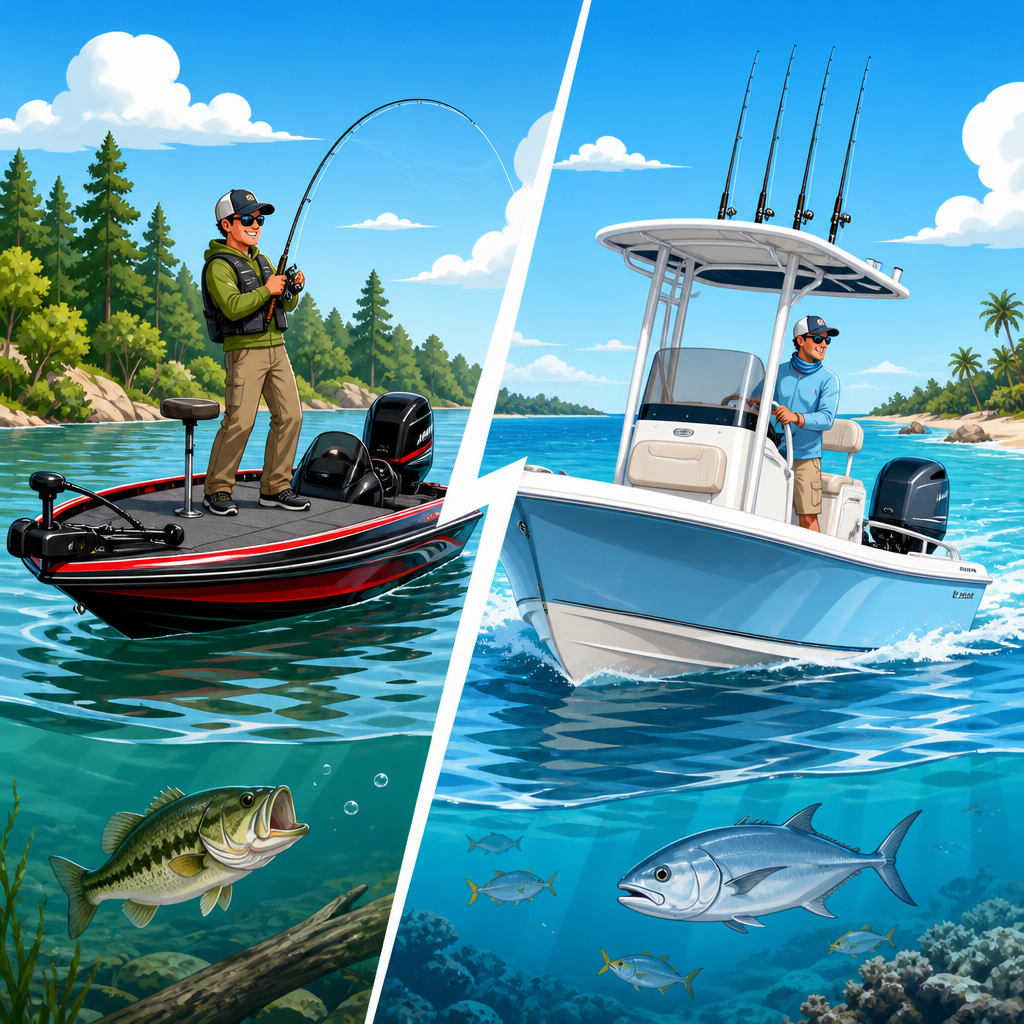
Choosing between a bass boat and a center console is one of the most important decisions an angler can make because the hull, layout, and propulsion system directly shape where you fish, how efficiently you move, and how comfortable you stay through a full day on the water. In simple terms, a bass boat is a low-profile freshwater fishing platform designed for speed, casting room, and shallow-water access, while a center console is a deeper, more versatile boat with a helm positioned near the middle, allowing 360-degree fishability and better performance in larger or rougher water. I have spent time rigging, testing, and fishing from both styles, and the right answer is not which one is universally better, but which one better fits your water, your target species, your towing situation, and the way you like to fish.
This question matters because boat ownership is expensive, and the wrong choice creates friction every trip. Purchase price is only the start. Fuel consumption, maintenance, storage height, trailer weight, electronics, insurance, and resale value all affect the long-term cost of ownership. So does usability. A tournament bass angler who fishes reservoirs at dawn has different needs from an inshore angler running tidal creeks, and both differ from a family that wants to troll, cast, and occasionally pull a tube. If you are researching the best boats for fishing enthusiasts, these two categories sit at the center of the conversation because they represent two very different philosophies of fishing design: optimized specialization versus broad versatility.
Before comparing them, it helps to define a few key terms. Draft is how much water a boat needs to float without touching bottom; less draft generally improves shallow-water access. Freeboard is the distance from the waterline to the upper edge of the hull; more freeboard usually adds security in chop and when carrying passengers. Deadrise refers to the angle of the hull bottom, especially at the transom; higher deadrise often softens rough-water rides but can reduce shallow efficiency and stability at rest. Beam is the boat’s width, affecting deck space and trailering. These terms matter because most tradeoffs between bass boats and center consoles come down to how hull geometry and deck layout influence fishability, safety, and comfort.
As a hub page for best boats for fishing enthusiasts, this article covers the core buying decision and helps you identify where to go deeper. If your priority is freshwater tournament performance, electronics integration, and front-deck casting efficiency, the bass boat category deserves close attention. If your priority is all-around capability, saltwater readiness, family flexibility, and confidence in changing conditions, center consoles usually lead. The rest of this guide compares performance, fishability, cost, comfort, and ownership realities so you can choose a fishing boat that works not just on paper, but on the water you actually run.
Bass Boats: Strengths, Limits, and Ideal Use Cases
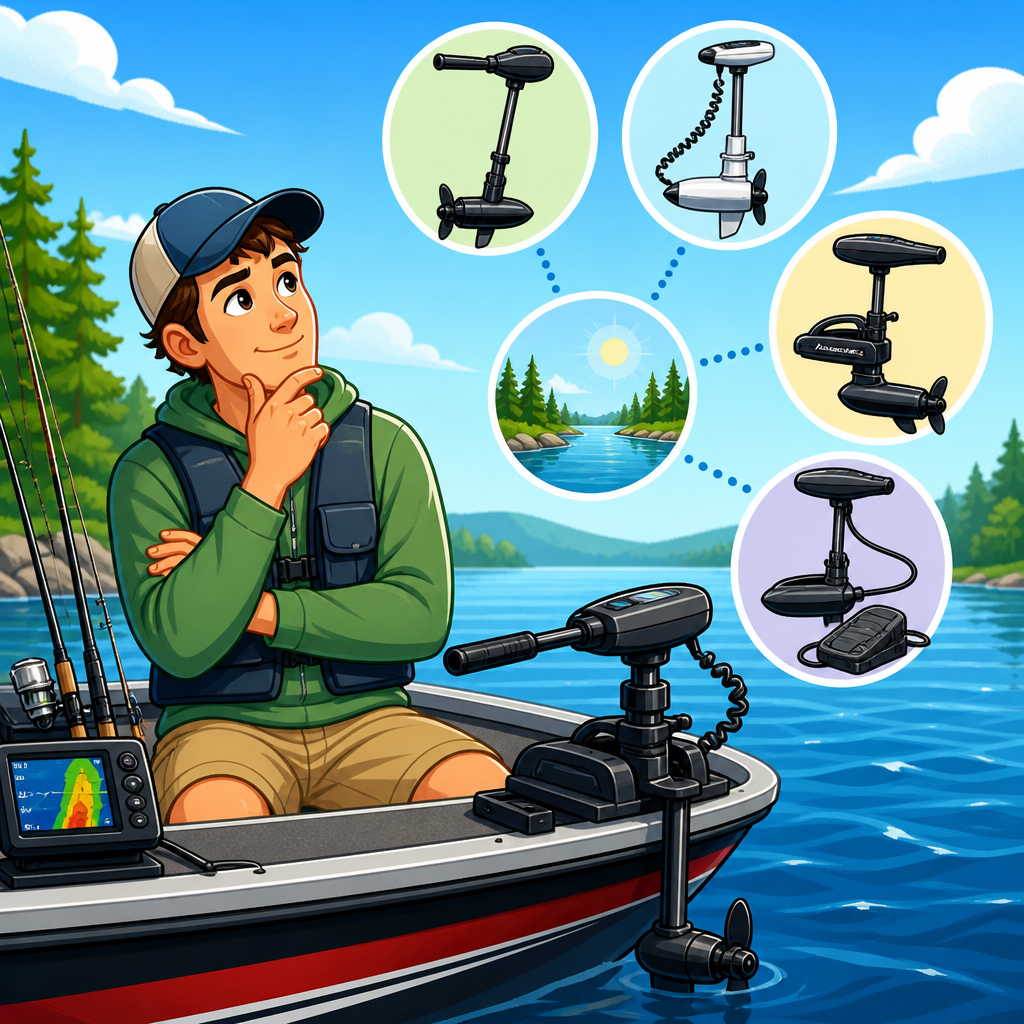
A bass boat is purpose-built for anglers who want to cover water fast, fish precisely, and spend long hours casting from elevated decks. Most modern bass boats range from about 17 to 21 feet, use fiberglass hulls, and carry a single outboard. The hallmark design features are a large forward casting deck, a secondary rear deck, multiple lockable rod lockers, integrated livewells, and a trolling motor mounted on the bow. In real fishing terms, this means one or two anglers can move from spot to spot quickly, deploy the trolling motor quietly, and work shorelines, points, grass lines, docks, or offshore structure with minimal setup. That efficiency is why bass boats dominate tournament circuits on lakes and reservoirs.
The biggest advantage of a bass boat is fishability for casting presentations. The front deck is expansive and low to the water, making it easy to pitch jigs, skip docks, work topwaters, or fan-cast a flat without obstacles. Storage is another strength. Long rod lockers often hold a dozen or more rigged setups, and dedicated compartments keep tackle boxes, rain gear, throw cushions, and batteries organized. Speed matters too. Many 20-foot bass boats equipped with a 225- to 250-horsepower outboard can run well above 60 mph, with some high-performance tournament rigs pushing beyond 70 mph under the right load and setup. When you are fishing a sprawling impoundment and need to hit several patterns in a day, that speed is a competitive advantage.
Still, bass boats are specialized machines with clear limitations. The low freeboard and open decks that make them efficient for freshwater casting can feel exposed in rough water, especially on large, wind-driven reservoirs or tidal areas with confused chop. They are also less forgiving for families, children, or passengers who are not used to moving around a low-slung deck. While some crossover models exist, bass boats are not the best default choice for offshore runs, beach launching, or fishing in heavy current around open bays. Their layout also prioritizes anglers over social seating, so if your boat must serve equal parts fishing platform and family day boat, a bass boat may feel narrow in purpose.
For the right user, however, that specialization is exactly the point. If your fishing revolves around largemouth, smallmouth, spotted bass, walleye in certain layouts, or inshore species in protected water where casting accuracy and shallow access matter most, a bass boat can be the highest-efficiency tool available. Brands such as Ranger, Skeeter, Phoenix, Nitro, Bass Cat, and Caymas built their reputations on refining that formula. The category shines when every inch of the platform serves one mission: helping an angler fish faster, quieter, and more methodically.
Center Consoles: Versatility, Seaworthiness, and All-Around Fishing Value
A center console places the helm in a central position, usually with walkaround access on both sides, which creates unobstructed movement around the boat and supports multiple fishing techniques. This design is common in saltwater because it works exceptionally well for casting, live-bait fishing, trolling, drifting, and fighting fish in any direction. Center consoles span a much wider size range than bass boats. Smaller bay and skiff-adjacent models may start around 18 feet, while serious offshore center consoles can exceed 40 feet with twin, triple, or quad outboards. For most buyers comparing them to bass boats, the practical overlap is in the 18- to 26-foot class.
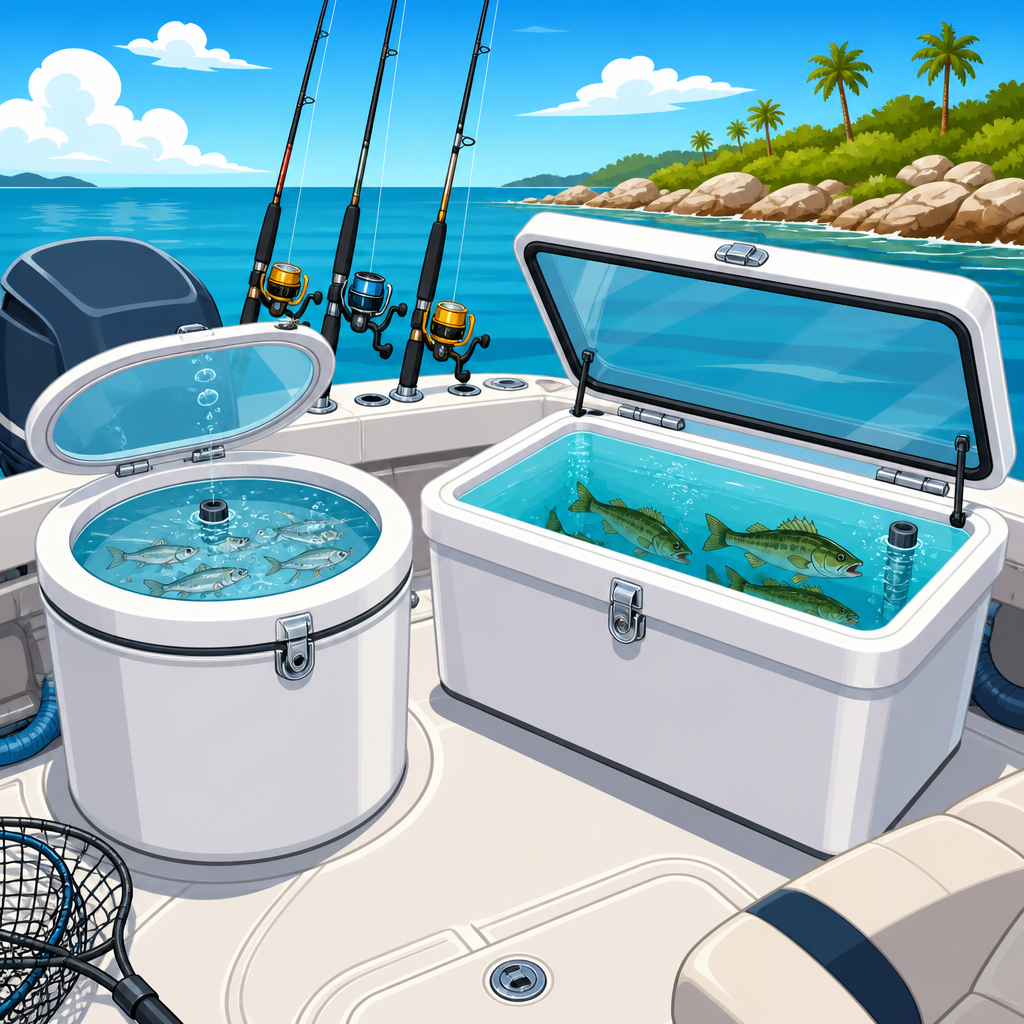
The key advantage of a center console is versatility. You can fish inshore flats in the morning, run an estuary in the afternoon, and take a nearshore trip when the weather window allows. The deeper hull, higher freeboard, and generally more robust bow entry make these boats better suited to chop, boat wakes, and changing conditions. I have watched anglers who felt nervous standing on a bass boat in afternoon wind become immediately more comfortable on a center console simply because the hull felt more secure and the cockpit offered more containment. Add in features like leaning posts, T-tops, insulated fish boxes, raw-water washdowns, and transom livewells, and you get a platform that handles more situations with fewer compromises.
Center consoles also tend to be more passenger-friendly. Seating can include bow cushions, stern benches, jump seats, or foldaway arrangements without completely sacrificing fishability. That matters for owners who need one boat to satisfy dedicated fishing days and casual recreational use. They also adapt well to different fisheries. A bay boat style center console can chase redfish and speckled trout in shallow water. A deeper-V model can work reefs, wrecks, and nearshore pelagics. Electronics mounting is often generous, and modern helm designs readily support multifunction displays from Garmin, Simrad, Humminbird, or Lowrance, plus radar, VHF, and autopilot on larger builds.
The tradeoff is that center consoles rarely match bass boats in front-deck efficiency, top-end speed per dollar, or highly optimized tackle storage for bass-style casting. They also tend to catch more wind, especially with T-tops, making boat control trickier in some scenarios. Fuel burn can rise quickly with larger hulls and multiple engines. Yet for many fishing enthusiasts, especially those around coasts, big lakes, or mixed-use waterways, the center console earns its reputation as the most broadly capable fishing boat style on the market.
Head-to-Head Comparison: Performance, Layout, Cost, and Ownership
When buyers ask which is better for fishing, they usually mean better at what, where, and with whom. That is why direct comparison works better than broad claims. A bass boat is generally better for freshwater casting precision, speed across inland lakes, shallow structure fishing with a trolling motor, and tournament-style efficiency. A center console is generally better for multi-species versatility, rough-water confidence, passenger comfort, and mixed freshwater-saltwater use. Neither category wins every metric. The right boat is the one whose strengths align with your most common fishing days, not your occasional dream trip.
| Factor | Bass Boat | Center Console |
|---|---|---|
| Primary waters | Lakes, reservoirs, protected rivers | Bays, coasts, big lakes, mixed waters |
| Best fishing style | Casting-focused, spot-to-spot fishing | Casting, trolling, drifting, live bait |
| Shallow access | Excellent in many setups | Varies by hull; bay boats do well |
| Rough-water comfort | Moderate to limited | Strong, especially deeper-V hulls |
| Passenger friendliness | Limited | Usually better |
| Storage for rods and tackle | Excellent and purpose-built | Good, but less specialized |
| Top-end speed | Often higher for size and price | Usually lower in comparable lengths |
| Saltwater suitability | Limited unless designed for crossover use | Excellent on many models |
| Tow and storage ease | Often lighter and lower profile | May be taller, wider, heavier |
Cost deserves careful attention because it changes the answer for many buyers. Entry-level used bass boats can offer significant fishing capability for less money than a similarly equipped center console, especially if the comparison includes electronics, trolling motor, and shallow-water anchors already installed. At the new-boat level, however, premium bass boats with large graphs, lithium batteries, jack plates, dual Power-Poles, and 250-horsepower engines can become very expensive. Center consoles cover a similarly wide range. A simple 19-foot center console may be affordable, but once you add a hardtop or T-top, larger outboard, advanced electronics, trolling motor, and trailer upgrades, pricing climbs fast. Insurance and fuel also tend to be higher on larger center consoles.
Ownership realities go beyond purchase price. Bass boats often fit better in standard garages because of their lower profiles, though trailer length still matters. Center consoles frequently require more storage height, and T-tops can force off-site storage. Maintenance differs too. Saltwater use means more aggressive rinsing, corrosion prevention, and hardware inspection. On the bass boat side, tournament-style electrical systems can be complex, with multiple batteries, chargers, sonar units, and networking components that require proper setup. I have seen buyers focus heavily on horsepower while overlooking trailer brakes, tire condition, battery age, and transom integrity, even though those factors affect safety and real cost much more than a few extra miles per hour.
How to Choose the Best Boat for Your Fishing Style
The most reliable way to choose between a bass boat and a center console is to map your actual use, not your aspirational use. Start with water conditions. If 80 percent of your trips happen on freshwater lakes, electric-motor control matters more than cockpit versatility, and your day revolves around repeated casting, a bass boat is usually the stronger fit. If your calendar includes tidal water, bays, larger lakes with frequent chop, nearshore opportunities, or regular family passengers, a center console often makes more sense. Be brutally honest about where you launch, how far you tow, and who comes with you. Those factors decide satisfaction more than marketing claims do.
Next, match the boat to your target species and techniques. For largemouth bass, schooling smallmouth, and structure-oriented casting, bass boats are hard to beat. For redfish, snook, stripers, cobia, flounder, kingfish, or mixed-species trips where casting, jigging, and live bait all appear in the same day, center consoles offer more flexibility. Think about deck movement as well. A solo angler may love the open deck of a bass boat, while two or three anglers moving around each other often work more comfortably on a center console. If you fish with children or older family members, higher gunwales and easier seating can become decisive safety and comfort advantages.
Finally, sea-trial before you buy and inspect rigging quality as closely as hull shape. Test how the boat planes, corners, drifts, and responds to trim. Open every hatch. Check whether rods fit without tangling. Look at livewell plumbing, battery access, trailer bunks, wiring organization, bilge finish, and service records. A well-kept used boat from a reputable brand can outperform a flashy but poorly maintained newer rig. The best boats for fishing enthusiasts are not the ones with the loudest specifications. They are the ones that let you launch easily, fish confidently, and come home wanting the next trip on the calendar.
Bass boats and center consoles are both excellent fishing platforms, but they solve different problems. A bass boat is the sharper tool for freshwater casting efficiency, high speed, organized tackle storage, and tournament-minded precision. A center console is the broader tool for multi-species versatility, rougher conditions, passenger comfort, and saltwater readiness. If your fishing life is built around inland lakes and casting structure all day, the bass boat usually delivers the better experience. If your fishing spans changing conditions, varied techniques, and more than one kind of water, the center console often gives you more usable boat over time.
The main benefit of choosing correctly is not just better performance. It is lower frustration. The right layout makes launching easier, moving around safer, and every hour on the water more productive. That is why this comparison belongs at the center of any guide to the best boats for fishing enthusiasts. Boat ownership rewards clarity. Know your water, your species, your crew, your storage limits, and your budget, then buy the hull that matches those realities instead of chasing a category that looks exciting online.
If you are narrowing your options now, make a shortlist of three boats in each category, compare draft, freeboard, storage, power, and trailer fit, and schedule on-water demos before making a final decision. A few careful comparisons today will save years of compromise later.
Frequently Asked Questions
1. What is the main difference between a bass boat and a center console for fishing?
The biggest difference comes down to design purpose. A bass boat is built primarily for freshwater anglers who want speed, shallow-water capability, and large casting decks for techniques that require constant movement and precision. Its low profile, lighter weight, and powerful outboard make it ideal for lakes, reservoirs, rivers, and backwater areas where quick hole shots, tight maneuvering, and easy access to skinny water matter. The layout is focused on fishing efficiency, with elevated front and rear casting platforms, abundant rod storage, and a clean deck that supports bass-specific tactics such as flipping, pitching, and working shorelines all day.
A center console, by comparison, is designed as a more versatile all-around fishing platform. The helm is positioned near the middle of the boat, which improves 360-degree fishability and leaves open deck space at the bow and stern. Center consoles typically have deeper hulls, higher freeboard, and a more offshore-capable ride, making them better suited for larger bodies of water, coastal bays, nearshore trips, and changing weather conditions. They are often chosen by anglers who want one boat that can handle multiple species, a wider range of environments, and even some family or recreational use. In short, bass boats are specialized tools for efficient freshwater casting, while center consoles are broader-purpose fishing boats with greater range and versatility.
2. Which boat is better for freshwater fishing: a bass boat or a center console?
For dedicated freshwater fishing, especially if your target species include largemouth, smallmouth, or spotted bass, a bass boat is usually the better fit. It is purpose-built for the way freshwater anglers fish. The wide, elevated casting decks make it easier to move around with confidence, the low sides allow comfortable pitching and casting close to the water, and the typical setup supports trolling motors, electronics, shallow-water anchors, and large tackle storage systems exceptionally well. If you spend most of your time fishing lakes, stump fields, weed edges, docks, and shallow cover, a bass boat offers a level of efficiency that is hard to match.
That said, “better” depends on how broad your freshwater use really is. If you fish large windswept lakes, troll for multiple species, carry more passengers, or want a boat that can shift from inland waters to bays and inshore areas, a center console may be the more practical choice. It may not provide the same tournament-style bass layout, but it often offers a safer, drier ride in rough water and more flexibility for mixed-use angling. So if your freshwater fishing is highly technique-driven and bass-focused, the bass boat generally wins. If your freshwater fishing is more varied and you value adaptability over specialization, a center console may be the smarter long-term purchase.
3. Is a center console better than a bass boat for saltwater and rougher conditions?
In most cases, yes. A center console is generally the better option for saltwater use and rougher water because of its hull design, deeper freeboard, and more seaworthy overall construction. These boats are commonly built to handle chop, boat wakes, coastal swell, and longer runs across open water with more confidence than a typical bass boat. The extra hull depth helps keep passengers drier and safer, while the centerline helm improves visibility and balance underway. Many center consoles are also equipped with features that saltwater anglers value, such as livewells, raw-water washdowns, corrosion-resistant hardware, and layouts that make it easier to fight fish around the entire boat.
A bass boat can be used in some saltwater environments, especially protected inshore areas, calm back bays, or tidal rivers, but it is not usually the ideal platform for that role. Its lower sides and flatter fishing posture are excellent for inland casting but less comfortable and less forgiving when the weather changes or the water gets rough. Saltwater also introduces greater maintenance demands, particularly for trailers, wiring, fittings, and engines if the boat is not rigged and cared for with corrosion prevention in mind. If your fishing regularly includes bays, coastal waters, or bigger open-water conditions, the center console is typically the more capable and dependable choice.
4. Which boat is faster, easier to fish from, and more comfortable for a full day on the water?
A bass boat is often faster and, for many freshwater anglers, easier to fish from in a highly specialized sense. It is designed to get on plane quickly, run efficiently between spots, and provide expansive casting decks that support standing, casting, and lure presentation all day. For anglers who fish actively and methodically, that low-profile layout feels natural and efficient. Reaching rods, tackle, electronics, and trolling motor controls is streamlined, which can make a big difference over a long day of repeated casts and frequent relocations. If your idea of comfort is fishing performance and minimal wasted motion, the bass boat has a strong advantage.
Comfort, however, is not just about fishing layout. A center console often delivers a more comfortable overall ride, especially when wind picks up or water conditions deteriorate. The deeper hull can soften impacts, the higher sides can create a greater feeling of security, and the console itself often provides some wind protection while running. It also tends to be easier for multiple anglers to fish together without crowding, and it may offer more flexible seating and movement around the boat. So if you define comfort as speed, deck efficiency, and bass-focused fishability, the bass boat stands out. If you define comfort as ride quality, safety feeling, and all-day versatility in varied conditions, the center console may come out ahead.
5. How should I choose between a bass boat and a center console based on where and how I fish?
The best way to choose is to look honestly at your primary fishing environment, target species, and typical day on the water. If most of your trips happen on freshwater lakes, rivers, and reservoirs; if you spend hours casting to structure; if shallow-water access is important; and if tournament-style efficiency appeals to you, a bass boat is probably the better match. It is designed to maximize fishing performance for that style of angling. You will likely appreciate the casting space, storage, speed, and specialized rigging every single trip.
If your fishing is more varied, a center console is often the wiser investment. Anglers who split time between freshwater and saltwater, fish bigger and rougher water, target multiple species, or need room for family, friends, and general recreation often get more long-term value from a center console. It may not be as specialized as a bass boat for bass fishing, but it can handle many more scenarios with confidence. Ultimately, the right boat is not the one that does everything perfectly on paper; it is the one that matches your real-world habits most of the time. Buy for the waters you fish most often, not the occasional trip you imagine taking, and your decision becomes much clearer.