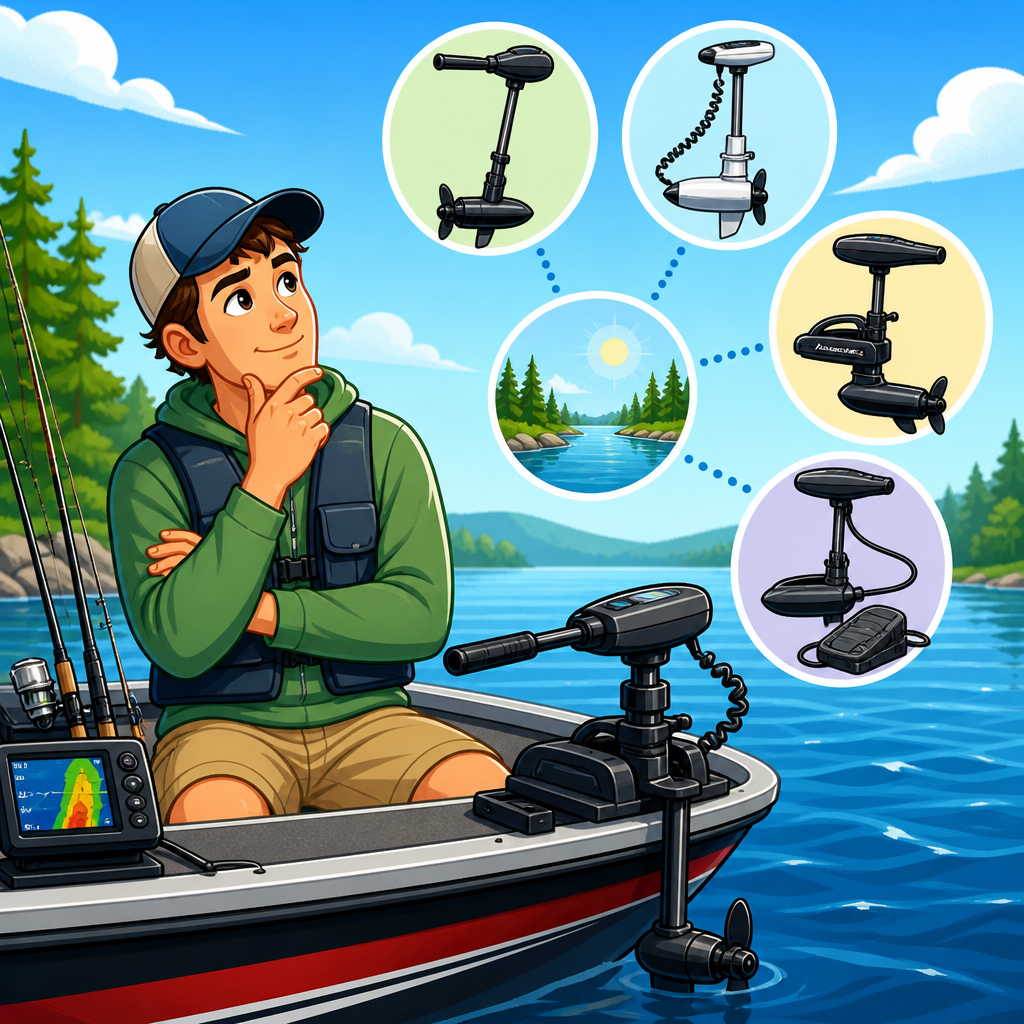
Choosing the right trolling motor for your fishing needs starts with understanding your boat, your water, and the way you actually fish, because the best motor is not simply the most powerful or expensive option. A trolling motor is a low-speed electric propulsion system used for precise boat control, quiet movement, and hands-free positioning while casting, drifting structure, or working shorelines. In practice, it often matters more than many anglers expect, because boat control determines lure presentation, fatigue level, and how effectively you stay on fish in wind, current, and changing depth.
I have rigged and tested trolling motors on aluminum jon boats, fiberglass bass boats, and multi-species tiller setups, and the same lesson keeps repeating: a good match improves every trip, while a poor match becomes frustrating immediately. When anglers ask how to choose the right fishing gear for your boat, the trolling motor is one of the smartest places to begin because it affects battery planning, electronics layout, deck space, and even safety. It also connects directly to other core gear decisions such as battery chargers, sonar, shallow-water anchors, and mounting hardware, making this article a practical hub for the wider boat-gear conversation.
To choose well, you need to evaluate several key terms. Thrust refers to the pushing power of the motor and is measured in pounds. Shaft length determines whether the propeller stays submerged in waves and chop. Voltage, usually 12V, 24V, or 36V, affects power and battery requirements. Mount style can be bow, transom, or engine-mounted. Control type ranges from hand tiller to foot pedal to wireless remote. Today’s premium systems also add GPS anchoring, route recording, spot lock style positioning, and integration with fish finders from brands like Humminbird, Lowrance, and Garmin. These features are not gimmicks when used correctly; they change how efficiently you fish.
This matters because the wrong motor creates avoidable problems. Too little thrust drains batteries and struggles in wind. A shaft that is too short cavitates in waves and loses steering authority. A transom mount on a bow-oriented casting boat often feels awkward. An advanced GPS motor paired with undersized batteries performs below its potential. On the other hand, the right setup lets you hold on offshore structure, creep through shallow cover, and fish longer with less noise and less effort. Whether you chase bass, walleye, crappie, redfish, or stripers, selecting the right trolling motor is one of the most important boat-gear choices you will make.
Start With Your Boat Size, Weight, and Hull Style
The first step is matching the trolling motor to the boat itself. Boat length is useful, but length alone is not enough. Hull type, loaded weight, freeboard, and how much wind your boat catches all influence the motor you need. A 16-foot jon boat with two anglers and a simple battery layout can fish effectively on a 12V motor in many lakes. A 19-foot bass boat with dual consoles, full tackle load, and windy reservoirs usually needs 24V or 36V power to stay controlled all day. A deep-V multi-species boat often requires more thrust than a low-profile bass hull of similar length because it presents more surface area to wind.
A practical rule many anglers use is at least 2 pounds of thrust for every 100 pounds of fully loaded boat weight, but that is a baseline, not a finish line. If you regularly fish current, tidal water, or large open lakes, step up beyond the minimum. In my experience, nobody regrets having a little more control margin when afternoon wind builds. They do regret trying to save money with too little motor. Weight also includes fuel, batteries, gear, livewell water, coolers, and passengers, so use realistic numbers, not the dry hull weight from a brochure.
Mount location should also fit the hull and fishing style. Bow-mount trolling motors are the standard for bass boats and many serious fishing rigs because pulling the boat from the front gives more precise steering and boat positioning. Transom-mount motors are common on smaller utility boats, inflatables, and as secondary systems where simplicity and cost matter more than advanced control. If your deck layout is limited, measure carefully before buying. Bow shape, cleats, trailer clearance, and access to the stowed motor all matter more than buyers expect.
Choose the Right Thrust and Voltage for Real Conditions
Thrust and voltage are tightly connected. In general, 12V motors deliver lower thrust and fit smaller boats, 24V models serve the broad middle of freshwater fishing boats, and 36V systems are built for heavy boats, strong wind, and anglers who demand long run time at higher power settings. Common thrust ranges are roughly 45 to 55 pounds on 12V, 70 to 80 pounds on 24V, and 100 pounds or more on 36V setups. Those ranges vary by manufacturer, but they provide a useful planning framework.
For a compact skiff or jon boat on protected water, 55 pounds of thrust may be plenty. For a 17- to 18-foot bass boat, 80 pounds on 24V is a proven sweet spot. For a 20-foot fiberglass boat, a loaded walleye rig, or anglers fishing the Great Lakes tributaries, tidal rivers, or broad southern reservoirs, 112 pounds on 36V often makes sense. More voltage does not automatically mean you run faster all day; it means the motor can produce power more efficiently and with less strain, which often translates into better battery life and cooler operation.
The most common mistake is choosing thrust based on calm-water testing instead of real fishing conditions. A boat that moves acceptably on a calm morning may become difficult to control by noon. If you fish points, offshore humps, bridge pilings, or weed edges where staying on line matters, reserve power is valuable. It lets you make smaller corrections rather than constantly running near maximum speed. That improves precision and battery endurance.
| Boat Type | Typical Loaded Size | Recommended Voltage | Common Thrust Range | Best Use Case |
|---|---|---|---|---|
| Small jon boat or inflatable | 12 to 16 feet | 12V | 45 to 55 lb | Ponds, small lakes, protected water |
| Aluminum fishing boat | 16 to 18 feet | 24V | 70 to 80 lb | General freshwater fishing, moderate wind |
| Bass boat or deep-V | 18 to 20+ feet | 24V or 36V | 80 to 112+ lb | Large lakes, current, advanced electronics |
Get Shaft Length Right for Boat Control and Safety
Shaft length is often overlooked, yet it has a direct effect on performance. If the shaft is too short, the propeller can ventilate when the bow rises in chop, causing loss of thrust and steering inconsistency. If it is too long, stow and deploy can become awkward, and the motor may sit unnecessarily deep. The goal is to keep the prop submerged under normal fishing conditions with room for rougher water.
A common guideline for bow-mount motors is to measure from the mounting surface on the bow to the waterline and then add roughly 20 inches in calm conditions, or more if you routinely fish big water. Many manufacturers publish shaft selection charts, and they are worth using. For many bass boats, 45- to 52-inch shafts work well. Larger deep-V boats, bay boats, and rough-water setups may need 60 inches or longer. If you fish tidal systems or reservoirs where wind stacks rollers on the bow, longer is usually safer.
I advise anglers to think about where they fish on their worst realistic day, not their average easy day. A slightly longer shaft is often easier to live with than a shaft that repeatedly pops the prop out of the water. This is especially true when using GPS anchoring features, which depend on consistent prop bite to hold the boat accurately over structure.
Pick the Control Style and Features That Match How You Fish
Control style should support your technique, not interrupt it. Cable-steer foot-pedal motors remain popular with bass anglers because they offer immediate response when fishing docks, grass lines, and shallow cover. Electric-steer motors are quieter in operation, often easier to integrate with GPS and sonar, and are common among multi-species anglers who troll, vertical jig, or fish offshore structure. Wireless remotes are useful for solo anglers, tiller boats, and situations where you move around the boat frequently.
The most valuable modern feature is GPS boat positioning, commonly called anchor mode or spot lock style control. This lets the motor automatically hold the boat near a waypoint, which is a major advantage when fishing brush piles, rock piles, bridge corners, or windy shoals. Route recording is also practical. You can save a drift line along a break or weed edge and repeat it precisely. For walleye anglers on contour lines and crappie anglers circling suspended fish, this can be more useful than raw speed.
Integration matters if your boat already has electronics. Minn Kota pairs closely with Humminbird through One-Boat Network, while MotorGuide and Lowrance have historically offered integration in compatible ecosystems, and Garmin Force works seamlessly with Garmin displays. These pairings can enable follow-the-contour functions, waypoint sharing, and route control from the fish finder. If you are building a complete fishing gear package for your boat, choosing systems that communicate well can reduce clutter and improve efficiency.
Plan Batteries, Chargers, and Wiring as Part of the Purchase
A trolling motor is only as good as the power system behind it. Battery type, charger capacity, cable gauge, circuit protection, and installation quality all influence runtime and reliability. Traditional flooded lead-acid deep-cycle batteries remain budget friendly, but AGM batteries offer lower maintenance and often better durability. Lithium iron phosphate batteries cost more upfront, yet they are significantly lighter, maintain voltage better under load, and can provide longer usable runtime. For many anglers upgrading a boat, lithium changes the way the boat performs by reducing weight and improving hole shot and deck balance.
However, lithium is not a universal answer. You need a compatible charger and should confirm the motor manufacturer’s guidance, onboard charging profile, and cold-weather considerations. A 24V or 36V system with poor wiring can underperform no matter how premium the motor is. Use the manufacturer’s recommended wire gauge, install a proper breaker, and keep cable runs as short and clean as practical. Corroded terminals and undersized connectors are common causes of voltage drop and random shutdowns.
When helping anglers rig a complete boat setup, I treat the trolling motor, batteries, and charger as one system. If you buy the motor first and try to save money on the rest, you often lose the benefits you paid for. A quality onboard charger from brands such as NOCO, Dual Pro, or Minn Kota is not glamorous, but it directly affects battery health and readiness for the next trip.
Balance Budget, Brand, and Long-Term Value
The right trolling motor is not necessarily the cheapest or the flagship model. It is the one that fits your boat, your water, and your fishing style with enough margin to stay reliable for years. Trusted brands include Minn Kota, Garmin, and MotorGuide, and each has strengths in steering feel, GPS functions, integration, and service network. Availability of parts, mounts, props, and local repair support should influence the decision, especially if you fish often or travel for tournaments.
Spend where performance matters most: sufficient thrust, correct shaft length, dependable GPS positioning if you fish offshore, and a power system that supports the motor properly. Save money by skipping features you will not use. A small backwater angler may not need network integration. A dock fisherman on electric-only lakes might care more about battery endurance than sonar linking. A serious bass angler may value fast foot-pedal response over every other feature.
If you are building out your broader boat setup, use this hub as the starting point for choosing the right fishing gear for your boat. Your trolling motor decision should connect logically to your battery strategy, sonar placement, deck organization, and mount hardware. Make a list of your normal fishing conditions, boat specifications, and must-have features, then compare models side by side before buying. That simple process prevents expensive mistakes and leads to a setup that helps you fish better every time you launch.
In the end, choosing the right trolling motor comes down to fit and function. Match the motor to your loaded boat weight, hull style, and typical conditions. Select enough thrust and voltage to handle wind and current without running at full power all day. Choose a shaft length that keeps the prop engaged, and pick controls and GPS features that suit how you actually fish. Then support the system with proper batteries, charging, and wiring.
When those pieces line up, the payoff is immediate: quieter movement, better boat position, less fatigue, and more time presenting lures effectively. That is why the trolling motor sits at the center of smart boat rigging for serious anglers. Review your current setup, identify its weak points, and use this guide as your hub for the next steps in choosing the right fishing gear for your boat. A well-matched trolling motor will improve every trip you make on the water.
Frequently Asked Questions
1. How do I know what size trolling motor my boat actually needs?
The right trolling motor size starts with matching thrust to your boat’s total loaded weight, not just the boat’s published dry weight. You need to think about the full fishing setup: hull, motor, fuel, batteries, passengers, gear, tackle, livewell water, and anything else you normally carry. A common baseline many anglers use is at least 2 pounds of thrust for every 100 pounds of fully loaded boat weight, but that is only a starting point. If you fish in wind, current, tidal water, or large open lakes, it is usually smart to move above the minimum rather than buying right at the edge of what might work on calm days.
Boat style matters too. A lightweight jon boat, kayak, or small aluminum fishing boat can often perform well with less thrust than a heavier fiberglass bass boat or deep-V rig of similar length. Wider boats and higher-profile boats also create more resistance in wind, which increases the need for power. If your trolling motor is undersized, you may still move the boat on easy days, but you will struggle to maintain boat control around points, docks, weed edges, and offshore structure. Since boat positioning directly affects casting accuracy and presentation, that can hurt your fishing more than people realize.
In general, smaller boats may do fine with lower-thrust 12-volt setups, while larger and heavier rigs often require 24-volt or 36-volt systems for the thrust and efficiency needed to fish confidently. Choosing a little more capacity than you think you need is often the better long-term decision because it gives you better control, less strain on the motor, and more usable performance when conditions become difficult. The goal is not just movement—it is precise, reliable control throughout a full day on the water.
2. What is the difference between 12V, 24V, and 36V trolling motors, and which one should I choose?
The voltage system of a trolling motor affects both power and efficiency. A 12-volt motor typically uses one battery and is commonly found on smaller boats where lower thrust is acceptable. A 24-volt motor uses two batteries in series and is a major step up in performance, often offering better thrust, better efficiency, and improved run time under load. A 36-volt motor uses three batteries and is generally chosen by anglers running larger boats, fishing in tougher conditions, or wanting maximum control and endurance.
Choosing between them depends on your boat size, how long you fish, and the type of water you fish most often. If you are on a compact boat and fish protected ponds, small lakes, or calm reservoirs, a 12-volt setup may be perfectly practical. If you regularly fish medium-to-large lakes, deal with moderate wind, or need to hold your position on structure for long stretches, a 24-volt system is often the better fit. If you fish big water, strong current, heavy vegetation, or simply want the strongest and most responsive setup available for a full-sized bass or multi-species boat, 36 volts is often the premium choice.
There is also a battery management side to this decision. Higher-voltage systems require more batteries, which adds cost, weight, and space requirements, but they also tend to run more efficiently because the motor can produce needed power with less current draw relative to the workload. That often translates to longer practical run time and less stress on the system. In other words, the right choice is not only about raw power—it is about building a setup that can handle your real fishing conditions without leaving you underpowered halfway through the day.
3. Should I choose a bow-mount or transom-mount trolling motor?
Bow-mount and transom-mount trolling motors serve different kinds of boats and fishing styles. A bow-mount motor is installed at the front of the boat and generally offers the best control because it pulls the boat through the water rather than pushing it from behind. That pulling action gives anglers more precise steering, smoother tracking, and better boat positioning when casting to cover, following weed lines, or holding on offshore structure. For bass boats and many dedicated fishing rigs, a bow-mount motor is usually the preferred option for serious boat control.
A transom-mount motor attaches to the back of the boat and is often more affordable, easier to install, and well suited to smaller boats such as jon boats, utility boats, inflatables, and some small aluminum rigs. These motors can work very well for casual fishing, smaller waters, and simpler setups. They are especially practical when deck space is limited or the boat design does not support a bow-mount installation. For anglers who want a straightforward electric motor mainly for maneuvering and short-distance movement, a transom mount can be an excellent fit.
The key question is how you fish. If your approach depends on accurate boat positioning, frequent casting angles, and working shoreline or structure in a controlled way, bow-mount is usually worth the investment. If you need a more budget-friendly, versatile solution for a smaller boat and simpler fishing situations, transom-mount may be all you need. Also consider features: many advanced technologies such as GPS anchoring, route recording, foot control, and integrated sonar are more common on bow-mount models, which can make a big difference for anglers who rely heavily on boat control throughout the day.
4. How important are shaft length and propeller choice when selecting a trolling motor?
Shaft length is extremely important because even a powerful trolling motor will perform poorly if the shaft is too short or unnecessarily awkward if it is too long. The motor head and control system may get most of the attention, but the prop needs to stay submerged consistently for the motor to steer properly and deliver steady thrust. If the shaft is too short, the prop can come out of the water in chop, waves, or while the boat rocks, leading to reduced control and lost efficiency. If it is too long, it may be harder to deploy, stow, or manage around the deck, especially on smaller boats.
The right shaft length depends largely on where the motor is mounted and the distance from the mounting point to the waterline. Bow height, hull design, and the roughness of the water all matter. Boats fishing windy reservoirs, tidal systems, or rougher lakes often benefit from a little extra shaft length to keep the prop buried under changing conditions. It is usually better to choose a shaft long enough to maintain performance in less-than-perfect water than to select the shortest option just for convenience.
Propeller choice also plays a role, especially if you fish heavy weeds, shallow cover, or open water. Some props are designed to maximize efficiency and general-purpose thrust, while others are better at cutting through vegetation or reducing vibration. For anglers who spend time in hydrilla, milfoil, or other dense vegetation, a weedless-style prop can improve performance and reduce fouling. You should think of shaft length and prop style as part of the motor’s real-world fishability. Thrust ratings matter on paper, but proper depth and the right prop are what allow that power to work effectively on the water.
5. Which features are worth paying extra for on a modern trolling motor?
The most valuable extra features are the ones that improve boat control, reduce fatigue, and match the way you fish. GPS anchoring, often called spot lock or electronic anchoring, is one of the most useful upgrades for many anglers because it allows the boat to hold position automatically without using a physical anchor. That can be a game changer when fishing offshore humps, brush piles, bridge pilings, current seams, or windy points. Instead of constantly adjusting the motor, you can focus on presentation and repeat casts more efficiently.
Another major feature to consider is the control style. Foot-control motors are popular with anglers who want hands-free operation while actively casting, especially in bass fishing. Hand-control models may be fine for smaller boats and simpler situations, but they can be less efficient when frequent steering adjustments are needed. Remote-control capability adds flexibility and is especially useful on multi-species boats, pontoons, or when fishing from different positions in the boat. If several people use the boat, ease of control can matter just as much as raw thrust.
Built-in sonar integration and networking can also be worth the cost if you rely on electronics to locate structure and fish. Some motors integrate directly with fish finders and chartplotters, letting you follow routes, maintain heading, or combine navigation and motor functions in one system. Digital maximizer-style power management, battery monitoring, and quieter variable-speed control are other practical upgrades that improve efficiency and time on the water. The best way to judge features is simple: pay for the ones that solve real fishing problems. If a feature helps you stay on fish, fish longer, or control the boat more precisely, it is not just a luxury—it may be one of the smartest investments in your setup.