The best bait tanks and live wells for fishing boats do more than hold water; they protect bait health, preserve catch quality, and shape how efficiently you fish all day. In practical terms, a bait tank is a circulating container designed to keep live bait active, while a live well is a managed water compartment that keeps fish or bait alive through aeration, recirculation, and stable temperature. Boat owners often use the terms interchangeably, but the design priorities differ: bait tanks emphasize constant movement and low-stress water flow, while live wells balance fish capacity, oxygenation, and compliance with tournament or local handling rules. Choosing the right system matters because weak circulation, poor placement, or the wrong tank shape can kill bait quickly, crowd deck space, and limit the gear you can safely carry.
I have rigged small skiffs, center consoles, and aluminum multi-species boats, and the pattern is always the same: anglers spend heavily on rods, electronics, and trolling motors, then underestimate how much a well-designed tank improves results. Healthy pilchards, shrimp, goggle-eyes, herring, or minnows behave naturally and draw more strikes. A reliable live well also reduces wasted bait purchases and helps avoid fish mortality from low dissolved oxygen, ammonia buildup, and sloshing injuries. Because this page is a hub for choosing fishing gear for your boat, it looks beyond tank size alone. The right choice depends on hull type, fishing style, pump capacity, plumbing layout, battery load, cleaning demands, and how the tank integrates with rod storage, coolers, casting room, and safety equipment. If you want one upgrade that affects both your catch rate and onboard organization, start here.
Why bait tanks and live wells matter in a complete boat gear plan
When anglers ask how to choose the right fishing gear for a boat, I start with systems rather than individual products. Your bait tank or live well sits at the center of that system. It influences where batteries can go, how hoses run, which deck areas stay clear, and whether your crew can move around safely with hooks, cast nets, and landing nets. On a 17-foot bay boat, a 30-gallon leaning-post bait tank may offer ideal bait capacity but make stern access tighter. On a larger offshore center console, that same capacity may be too small for a day of slow trolling with live baits. The best setup fits your target species, trip length, and cockpit workflow.
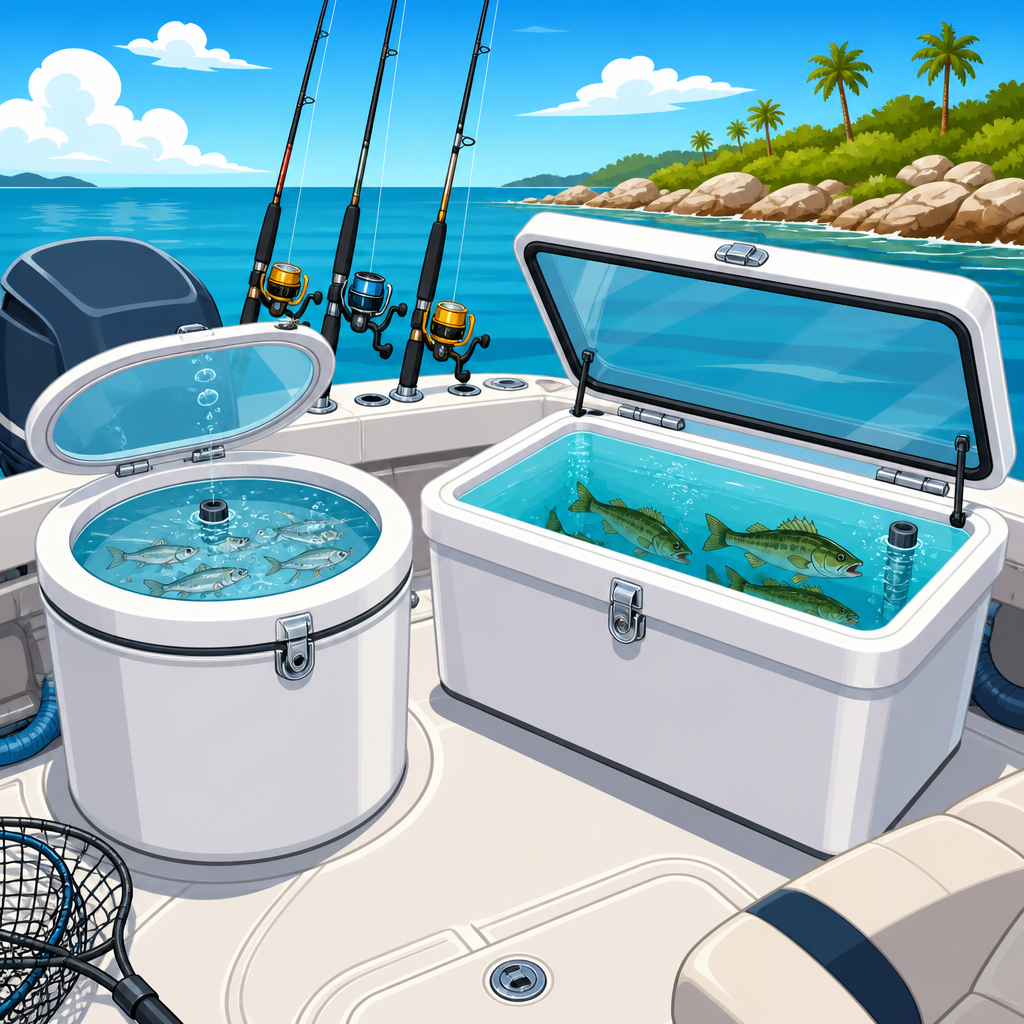
Bait survival is controlled by three basic variables: oxygen, water quality, and stress. Oxygen comes from aeration and water exchange. Water quality depends on turnover rate, filtration, and not overloading the tank. Stress comes from abrupt corners, violent slosh, overcrowding, and rough plumbing that creates strong jets. Round or oval bait tanks are preferred because they create circular flow, which helps baits like sardines and anchovies swim naturally without pinning into corners. By contrast, many factory live wells on bass boats and inland multispecies rigs are rectangular because they are built into available compartments; they work well for hardier bait and for keeping catch alive, but they are not always ideal for fragile saltwater baitfish.
This matters for the broader gear plan because bait type dictates tackle choices. If your boat is rigged for live shrimp under popping corks, you may need modest volume, a gentle pump, and easy dip-net access. If you fish offshore with threadfin herring or pilchards, you need higher circulation, rounded geometry, and enough reserve water volume to buffer temperature swings. In other words, the tank is not an accessory added at the end. It is foundational boat fishing gear that should be selected alongside rod holders, fish boxes, electronics, and washdown systems.
How to size a bait tank or live well for your boat and fishing style
The right size is the smallest system that reliably keeps your bait or catch healthy for the full trip. Bigger is not automatically better. A very large tank adds weight high in the boat, changes trim, consumes deck space, and may require a stronger pump and more battery capacity. Water weighs about 8.34 pounds per gallon, so a 40-gallon tank holds roughly 334 pounds of water before counting the tank, plumbing, and bait. On a small skiff, that is a major load. On a 24-foot center console, it may be acceptable, especially if the tank is centered and low.
A useful field rule is to size for both species fragility and trip duration. Hardy baits such as pinfish or croakers tolerate tighter stocking density than threadfins, anchovies, or pilchards. For short inshore trips, many boaters do well with 15 to 20 gallons. For mixed inshore and nearshore use, 20 to 30 gallons is a versatile range. Serious offshore live-bait anglers often prefer 30 to 50 gallons or more, particularly if they are carrying multiple bait sizes or making long runs. Tournament anglers keeping bass, walleye, or redfish alive may focus less on bait density and more on oxygenation, additives approved by event rules, and pump redundancy.
Shape affects usable capacity. A 25-gallon circular tank often outperforms a 25-gallon square box for fragile bait because more of the volume supports healthy movement. Depth matters too. Tanks that are too shallow can slosh violently and stress bait in chop, while tanks that are too deep may be harder to net from and can create dead spots if the plumbing is poorly designed. The goal is balanced volume, smooth circulation, and practical access from the deck position where you actually rig baits.
Key features that separate the best systems from average ones
The best bait tanks and live wells share several nonnegotiable features. First is proper water flow. A pump rated around 500 to 800 gallons per hour may be enough for smaller tanks, while 800 to 1100 gallons per hour is common for larger offshore bait systems. The exact need depends on head height, hose length, fittings, and whether the system recirculates or draws fresh raw water continuously. In real installations, published pump ratings drop once plumbing resistance is introduced, which is why undersized pumps are a common mistake.
Second is oxygen management. Spray heads and directional inlets help, but oxygen comes primarily from water exchange and surface agitation, not bubbles alone. Some freshwater tournament rigs use supplemental oxygen systems, especially in hot weather. Third is drain design. Standpipes, overflow screens, and full-flow drains must move waste and excess water without trapping scales or clogging. Fourth is lid and access design. Clear lids reduce the need to open the well repeatedly, which helps maintain water quality, but every lid must also be strong, secure, and easy to open with wet hands.
Materials also matter. Rotomolded polyethylene resists impact and UV well, fiberglass tanks look integrated on many boats, and insulated live wells help manage temperature. Light-colored interiors make it easier to inspect bait condition and cleanliness. Smooth interior surfaces reduce injury. Good plumbing uses marine-grade hose, corrosion-resistant clamps, seacocks where appropriate, and wiring protected by proper fusing and heat-shrink terminals. In practice, reliability depends less on the brand sticker and more on whether the entire system was engineered as marine equipment instead of improvised from generic hardware.
| Boat and Use Case | Recommended Capacity | Preferred Shape | Typical Pump Range | Main Priority |
|---|---|---|---|---|
| Small skiff, inshore bait and shrimp | 15 to 20 gallons | Oval or rounded rectangle | 500 to 800 GPH | Low weight and deck space efficiency |
| Bay boat, mixed inshore and nearshore | 20 to 30 gallons | Round or oval | 700 to 900 GPH | Balanced capacity and access |
| Center console, offshore live bait | 30 to 50 gallons | Round | 800 to 1100 GPH | Bait health during long runs |
| Bass or multispecies tournament boat | Factory well or 20+ gallons | Integrated rectangle or oval | Recirculation plus aeration | Fish survival and rule compliance |
Matching the tank to boat type, species, and other fishing gear
The right fishing gear for your boat has to work as a package. On bass boats, the live well is usually integrated from the factory, so upgrades focus on timers, oxygenation, insulation, and pump reliability. On center consoles and skiffs, deck-mounted bait tanks are common, often positioned behind the leaning post or on the transom. That placement gives easy access while rigging, but it must not interfere with outboard tilt, splashwell drainage, or rear casting space. On pontoon and utility boats, portable live wells can be sensible if the layout changes between family cruising and fishing days.
Species should drive the final choice. Shrimp need gentle circulation and secure lids because they jump. Pilchards and sardines demand smooth circular flow and enough volume to avoid red noses and scale loss. Blue runners and pinfish are hardier, so they tolerate more crowding and less specialized tank geometry. Freshwater bait like shiners benefits from cool, clean, oxygen-rich water, especially in summer. If your target species are bass, walleye, or redfish that may be released after weigh-in or photos, prioritize fish care features such as recirculation mode, treatment additives approved for the fishery, and insulation against heat soak.
Other gear should be selected around the tank, not after it. A cast net user needs open swing space and a tank opening wide enough for fast loading. Anglers using sabiki rigs offshore benefit from quick top access near rod holders and dehooking tools. Boats that troll live baits should have a clean path from tank to transom corners where rods are set. If the tank blocks tackle drawers or forces anglers to step around plumbing, the boat becomes less safe and less fishable, no matter how good the pump is.
Installation, maintenance, and common mistakes to avoid
A premium tank fails if it is installed badly. The inlet must create directional flow rather than blasting bait. The pickup should receive consistent water at speed and at rest, and many offshore boats benefit from a high-speed pickup plus recirculation backup. Pumps should be mounted where they are accessible for cleaning, and every electrical circuit should be fused to manufacturer specifications. Through-hull fittings must be bedded correctly and paired with quality seacocks or shutoff hardware where required. I also recommend labeling switches clearly so crew can operate fill, recirculate, and drain functions without guessing.
Maintenance is straightforward but cannot be skipped. Rinse the tank after every trip, flush pumps and lines, inspect screens, and remove scales or slime that can feed bacteria. Periodically check hose clamps for corrosion, especially in saltwater environments. Test pumps under load, not just by listening for motor noise. Replace brittle hoses and leaking gaskets early. If your bait dies regularly, measure water temperature, inspect actual flow at the inlet, and consider whether the tank is overloaded. Many bait losses blamed on “bad bait” come from heat, ammonia, and weak circulation.
The most common mistakes are predictable: buying oversized tanks for small boats, ignoring total weight, choosing square tanks for fragile bait, trusting pump ratings without accounting for plumbing loss, and failing to plan around deck movement. Another mistake is treating the live well as separate from the rest of your boat setup. The best hub approach to choosing fishing gear for your boat is to think in linked systems: bait management, tackle storage, electronics, safety gear, and fish handling all affect one another. Once those systems are aligned, your boat becomes easier to fish, easier to maintain, and much more productive.
Best buying strategy for a boat gear hub page
If you are building out a complete fishing setup, start with your real fishing pattern, not the biggest tank advertised. Count how many anglers usually fish, what live bait you actually carry, how long your runs are, and whether your priority is inshore versatility, offshore bait health, or tournament fish care. Then map available deck space, stern weight, and power supply. A skiff used for redfish and trout needs a different answer than a center console chasing kingfish or sailfish. The best bait tanks and live wells are the ones that match that mission precisely.
As a practical buying order, choose the boat-safe location first, then capacity, then shape, then pump and plumbing quality, then convenience features such as lids, lighting, and finish. Evaluate brands that publish tank dimensions, pump specifications, and installation guidance rather than vague marketing claims. If possible, inspect how the lid opens, how easy the drain is to clean, and whether the inlet promotes a circular current. These details determine day-to-day performance far more than cosmetic styling. For many anglers, one correctly sized, well-plumbed tank is better than two compromised wells fighting for space and battery power.
The main takeaway is simple: healthy bait and healthy catch come from stable water, adequate oxygen, low-stress tank design, and smart integration with the rest of your boat fishing gear. Treat the bait tank or live well as a core system, and every trip improves, from rigging efficiency to hook-up rates to fish care. Use this page as your hub for how to choose the right fishing gear for your boat, then compare your target species, layout, and trip style against the features outlined here. Make those choices deliberately, and your boat will fish better from the first launch.
Frequently Asked Questions
What is the difference between a bait tank and a live well on a fishing boat?
A bait tank and a live well both hold water and support aquatic life, but they are usually built with different priorities in mind. A bait tank is designed primarily to keep live bait healthy, active, and usable for as long as possible. That means the focus is on gentle but constant water circulation, high oxygen levels, smooth interior surfaces, and tank shapes that reduce stress and scale loss. Many quality bait tanks are rounded or oval because baitfish tend to swim continuously, and sharp corners can cause them to bunch up, injure themselves, or die more quickly.
A live well, by contrast, is often intended to temporarily hold fish you catch, whether for tournament use, measuring, delayed release, or keeping fish alive until you return to the dock. Live wells still rely on aeration and recirculation, but they may place more emphasis on water management features such as drain systems, adjustable pumps, lids, separators, overflow control, and temperature stability. In many boats, one system can do both jobs, but the ideal setup depends on how you fish. If you rely heavily on live bait like pilchards, shrimp, or herring, a purpose-built bait tank usually performs better. If your priority is keeping caught fish healthy and compliant with tournament or local handling practices, a dedicated live well may be the smarter choice. The terms are often used interchangeably, but understanding the design intent helps you choose equipment that matches your fishing style.
What size bait tank or live well do I need for my boat?
The right size depends on three main factors: the species you are keeping, how many fish or how much bait you plan to carry, and the available space and weight capacity on your boat. Bigger is not automatically better. A tank that is too small can overcrowd bait, reduce oxygen quickly, and lead to rapid die-off. On the other hand, a tank that is excessively large can add unnecessary weight, take up valuable deck space, and place more demand on your pumps and battery system. For many inshore anglers using shrimp or smaller baitfish, a modest tank may be enough. Offshore anglers carrying larger volumes of delicate bait often benefit from significantly more capacity.
As a practical rule, think in terms of keeping the load comfortable rather than packed. Delicate baitfish need room to swim naturally, and game fish held in a live well need enough space to remain upright and avoid constant contact with the walls. Also consider the full operating weight of water. Water is heavy, so even a moderate-size tank adds a meaningful load to the boat, which can affect trim, fuel efficiency, and performance. It is also wise to match tank size to trip length. A short morning run may require less capacity than a full-day offshore trip in warm weather. The best approach is to choose the smallest tank that reliably supports your intended bait or catch volume without crowding, while still fitting your boat layout and electrical system.
What features matter most when choosing the best bait tank or live well?
The most important features are water circulation, aeration, tank shape, insulation, pump quality, and ease of cleaning. Good circulation is essential because stagnant water quickly loses oxygen and accumulates waste. A strong system moves fresh or recirculated water efficiently without creating a violent current that exhausts bait or injures fish. Aeration matters just as much. Oxygen levels drop fast in warm water and crowded conditions, so a reliable aerator, spray head, or oxygenation system can make a major difference in survival rates.
Tank shape is one of the most overlooked details. Rounded corners or fully circular interiors are especially valuable for bait tanks because they reduce collision points and help baitfish swim in a natural pattern. Smooth interior finishes also minimize damage to scales and slime coat. If you fish in hot climates or spend long hours on the water, insulation becomes more important because it helps stabilize water temperature. Sudden heat buildup is one of the fastest ways to stress both bait and fish. A dependable lid, overflow protection, and a properly sized drain system also improve performance and prevent messy sloshing.
Beyond fish care, think about daily usability. Access hatches should let you net bait quickly without excessive chasing. Pumps should be marine-grade and easy to service. Plumbing should be straightforward and resistant to clogging. Many anglers also appreciate recirculation modes for times when raw-water intake is less effective, such as in shallow, muddy, or debris-filled conditions. In short, the best bait tanks and live wells balance aquatic health, durability, and convenience. If the system is hard to maintain or inconsistent in operation, it will eventually cost you bait, fish quality, and fishing time.
How do I keep bait alive longer in a bait tank or live well?
Keeping bait alive longer comes down to reducing stress and maintaining stable water conditions. The biggest factors are oxygen, water quality, temperature, and overcrowding. Start by using a tank that suits the type of bait you are carrying. Fragile baitfish need smooth, rounded tanks and consistent flow. Make sure the pump is working properly and delivering enough water exchange or recirculation to keep oxygen levels up. If you are fishing in warm weather, pay close attention to temperature because warmer water holds less oxygen and accelerates bait stress. Shade, insulation, and careful water management all help.
Overcrowding is one of the most common mistakes. Even with a strong pump, too many baitfish in too little water quickly leads to scale loss, ammonia buildup, and weak or dying bait. Handle bait as little as possible, and use a soft net to avoid injury. Clean tanks regularly so slime, debris, and old waste do not contaminate fresh loads. Many experienced anglers also avoid blasting bait with overly aggressive inflow, since constant turbulence can wear them out. The goal is steady, supportive circulation, not chaos inside the tank.
If your system includes recirculation, use it wisely when outside water quality is poor, but remember that recirculated water still needs oxygen and filtration support. In some setups, additives are used to neutralize chlorine, reduce stress, or manage ammonia, especially when transporting fish, but they should only be used according to product guidance and species sensitivity. Ultimately, bait lasts longest when the tank environment stays clean, cool, oxygen-rich, and uncrowded. A well-designed bait tank helps tremendously, but disciplined day-to-day handling practices are what consistently keep bait lively from the first stop to the last cast.
Are portable bait tanks and live wells worth it, or should I install a permanent system?
Portable bait tanks and live wells can be absolutely worth it, especially for anglers with smaller boats, multipurpose layouts, or limited installation options. A portable unit gives you flexibility. You can bring it aboard only when needed, remove it for cleaning, and free up deck space when you are not fishing with live bait or keeping fish. For skiffs, jon boats, kayaks with support platforms, and family boats that serve multiple roles, portability can be a major advantage. Many portable systems are also easier and less expensive to set up because they do not require the same level of plumbing modification as a built-in tank.
A permanent system, however, often delivers better integration, capacity, and overall convenience for serious anglers. Built-in bait tanks and live wells can be positioned to support balance, maximize space efficiency, and connect directly to dedicated pumps, drains, and switch panels. They are usually the better choice for frequent offshore fishing, tournament use, or any situation where bait health and fish care are mission-critical all day long. Permanent systems can also look cleaner, perform more consistently in rough conditions, and reduce the hassle of managing hoses, power cords, or temporary mounting hardware.
The best choice depends on how often you fish, how much live bait you use, and how specialized your boat setup is. If you only occasionally need live bait support, a well-made portable tank may be the most practical solution. If live bait is central to your fishing and you demand dependable, all-day performance, a permanent system is usually the better long-term investment. In either case, build quality, pump reliability, secure mounting, and proper water circulation matter far more than whether the unit is portable or fixed.