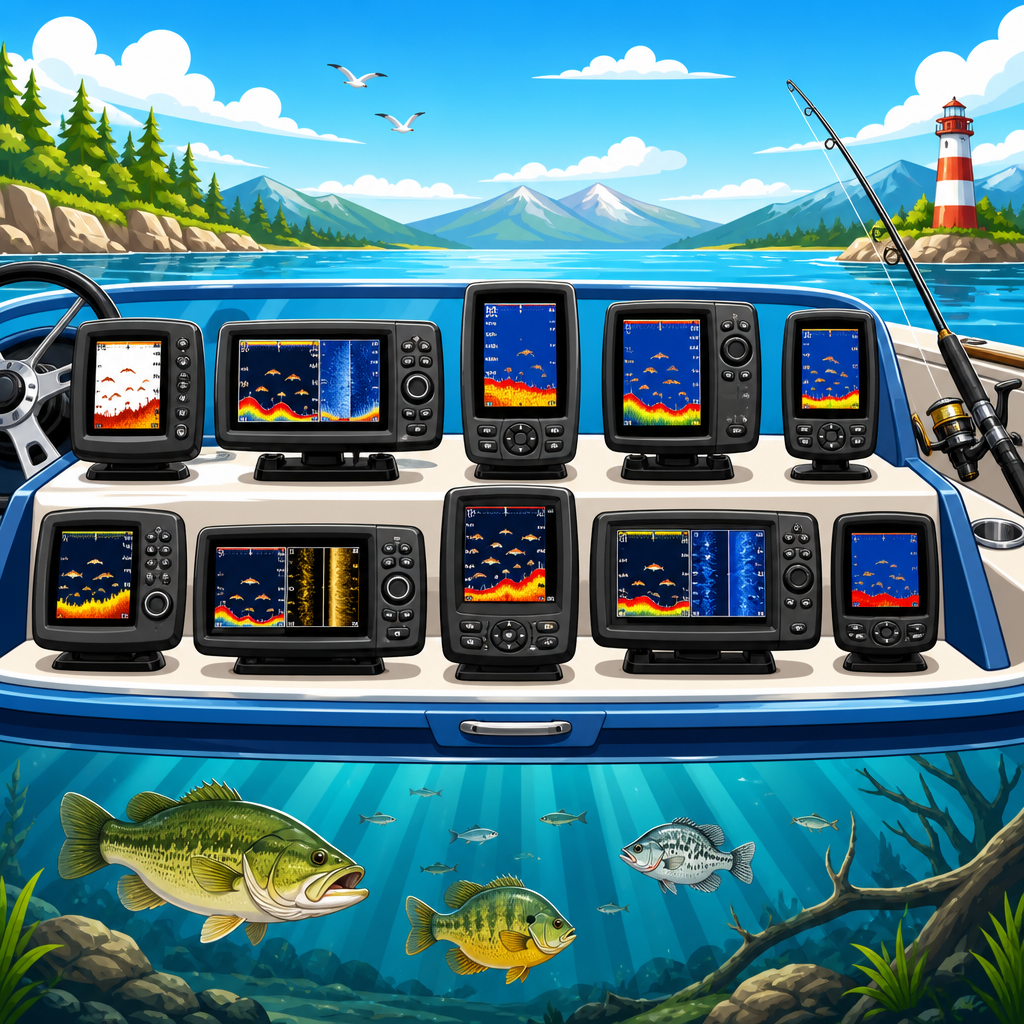
Choosing the best fish finder for your boat in 2025 starts with understanding how modern sonar, mapping, networking, and mounting options affect real fishing decisions on the water. A fish finder is an electronic system that uses sonar pulses to detect depth, structure, bait, and fish, then displays that information on a screen in real time. For boat owners, it is not just a convenience tool. It directly influences where you run, how safely you navigate, how efficiently you search, and whether your broader fishing gear setup actually works together.
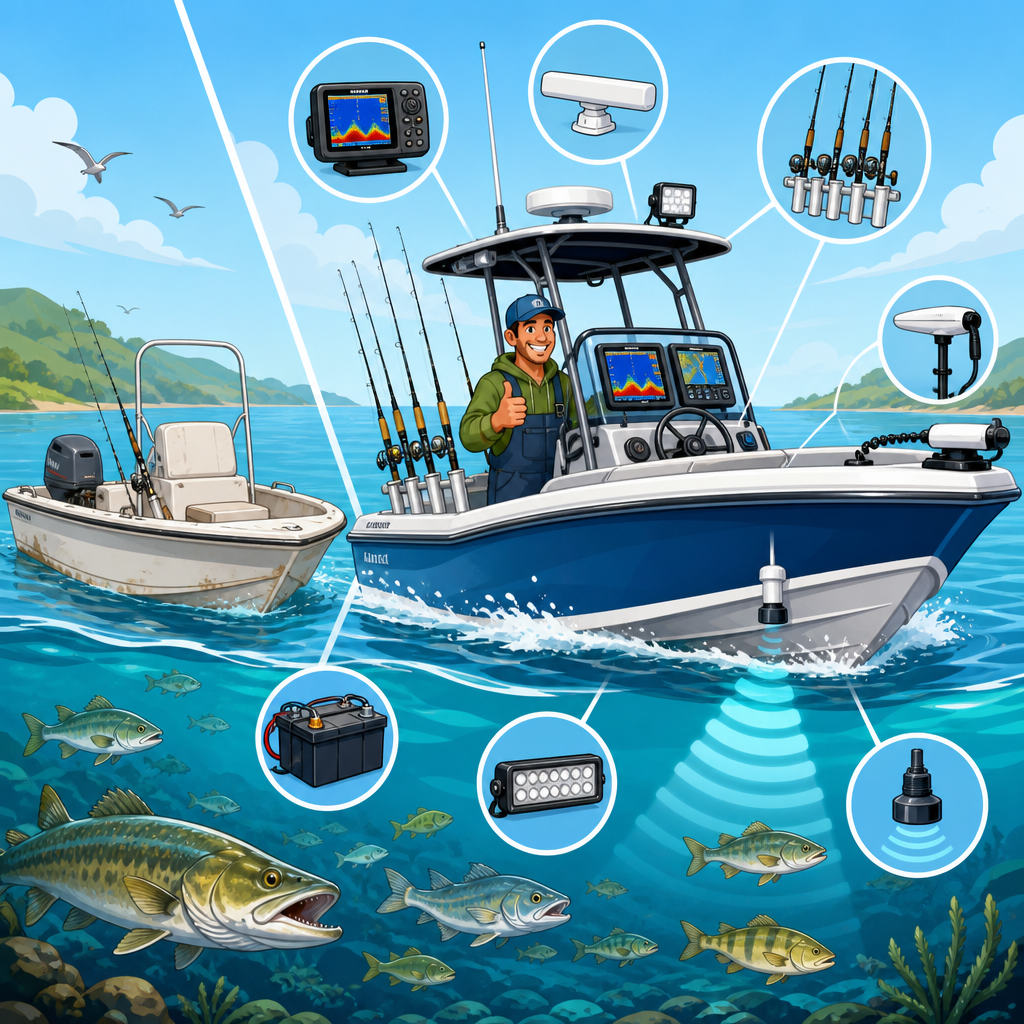
In practice, I have seen anglers overspend on a premium display yet miss key features they actually needed, such as side imaging for locating cover, a compatible trolling motor link, or a transducer suited to their hull. That is why any serious guide to the top 10 fish finders for boats in 2025 must also explain how to choose the right fishing gear for your boat as a complete system. Your electronics, rod storage, battery capacity, charger, transducer placement, and charting software all interact. If one part is mismatched, performance suffers.
Fish finders matter more in 2025 because the category has matured beyond basic depth readings. Today’s best units combine CHIRP sonar, side scanning, down scanning, GPS chartplotting, live sonar support, waypoint sharing, and network control of accessories. Brands such as Garmin, Humminbird, Lowrance, and Raymarine continue to define the market, while improvements in screen brightness, processor speed, and mapping subscriptions make buying decisions more nuanced. The right pick depends on your boat size, target species, water type, and budget. The wrong pick can waste money, battery power, and deck space. The right one helps build a smarter, more reliable fishing boat.
What makes a fish finder right for your boat
The right fish finder matches your hull, power system, fishing style, and skill level. Start with boat type. A 16-foot aluminum tiller, a center console bay boat, and a fiberglass bass boat have different helm space, transom layouts, and electrical capacity. Screen size matters because readability affects decisions at speed and while casting. On compact boats, a 7-inch display may be practical. On larger boats, 9-inch to 12-inch screens are often easier to interpret, especially when splitting sonar, charts, and side imaging.
Transducer selection is equally important. Traditional CHIRP sonar gives strong bottom separation and fish arches. Side imaging scans outward and is excellent for finding brush piles, grass edges, docks, and rock transitions. Down imaging sharpens vertical detail beneath the boat. In shallow freshwater, side imaging often gives the biggest jump in efficiency. Offshore or deep reservoirs, higher-output transducers and clean installation become more important. Hull design also affects performance. A poorly mounted transducer on a stepped hull or turbulent transom can cause signal loss at speed.
Power draw is a gear decision many buyers ignore. Large displays and live sonar systems require healthy batteries, proper fuse protection, correct wire gauge, and ideally dedicated electronics power. I have fixed many interference issues that were actually wiring problems, not sonar defects. Also consider networking. If you may later add radar, a trolling motor integration, heading sensor, or a second unit at the bow, choose a platform that supports expansion. A fish finder should fit today’s needs and tomorrow’s upgrades.
Top 10 fish finders for boats in 2025
The best fish finders for boats in 2025 balance sonar performance, mapping, reliability, and fit for specific boat setups. Garmin ECHOMAP Ultra 2 stands out for its bright touchscreen, quick interface, strong chart support, and compatibility with LiveScope, making it ideal for serious freshwater and inshore anglers. Humminbird HELIX 10 MSI+ G4N remains a top choice for anglers who prioritize side imaging detail, LakeMaster mapping, and Minn Kota integration. Lowrance HDS PRO offers premium networking, high-end ActiveTarget support, and excellent customization for tournament-style rigs.
Garmin GPSMAP 943xsv is one of the best crossover units for anglers who also value navigation and offshore versatility. Humminbird SOLIX 10 CHIRP MEGA SI+ provides large-screen control and deep integration for advanced bass boat electronics layouts. Lowrance Elite FS 9 is a smart midrange option with strong sonar and networking value. Garmin Striker Vivid 7sv remains attractive for buyers who want capable scanning sonar without paying for advanced chartplotter ecosystems. Raymarine Element 9 HV delivers sharp HyperVision imaging and an uncomplicated interface.
For compact installations, Humminbird HELIX 7 CHIRP MEGA DI GPS G4 gives dependable mapping and down imaging in a manageable footprint. Rounding out the list, Lowrance Eagle Eye 9 Live brings an emerging value-oriented path into live-view sonar for anglers who want modern fish tracking without flagship pricing. No single model is best for everyone. A kayak-scale display can feel cramped on a bay boat, while a tournament-grade networked unit can be excessive on a simple jon boat. The best choice is the one whose sonar type, display size, and expansion path match how your boat is actually used.
| Model | Best For | Key Strength | Main Tradeoff |
|---|---|---|---|
| Garmin ECHOMAP Ultra 2 | Freshwater versatility | Fast interface and LiveScope support | Higher total cost with accessories |
| Humminbird HELIX 10 MSI+ G4N | Structure scanning | Excellent side imaging detail | Menu learning curve |
| Lowrance HDS PRO | Premium network builds | Advanced customization | Expensive full-system setup |
| Garmin Striker Vivid 7sv | Budget-conscious boats | Strong sonar value | No full chartplotter ecosystem |
How sonar, mapping, and live view change buying decisions
Most buyers ask the same practical question: which feature actually helps catch more fish? Traditional CHIRP sonar is still the foundation because it reads bottom hardness, depth changes, and fish beneath the hull with dependable clarity. If you troll, drift, or vertical fish, this matters every trip. Side imaging is the best search tool for many boat anglers because it covers water quickly. You can idle along a creek channel and mark stump rows, brush, shell beds, and bait schools without driving directly over them. Down imaging helps verify what side imaging found.
Mapping is not secondary. Good charts save time and improve safety. Built-in basemaps are useful, but serious anglers often benefit from upgraded cartography such as LakeMaster, Navionics, C-MAP, or Garmin Navionics+. Contour detail helps position the boat on ledges, humps, breaklines, and submerged roadbeds. Some systems also support custom mapping through on-water recordings. On heavily pressured lakes, your self-made contour layer can reveal sweet spots not obvious on standard charts. That becomes part of your boat’s broader fishing gear advantage, just like a better trolling motor or anchor system.
Live sonar has become the most debated feature in fishing electronics. It lets anglers watch fish movement and lure response in real time, which is transformative for forward-casting presentations, suspended fish, and offshore structure fishing. It is not necessary for every boat, and it adds cost, wiring demands, and setup complexity. But for anglers targeting crappie, bass, walleye, and some inshore species, live view can compress the learning curve dramatically. If you think you may want it later, choose a fish finder platform with compatible networking now, even if you add the live transducer later.
How to choose the right fishing gear for your boat
A fish finder should anchor a complete fishing gear plan rather than sit in isolation. Begin with the boat’s mission. If your boat is primarily for bass fishing on electric-only lakes, prioritize bow electronics, trolling motor integration, shallow-water anchoring, and deck-friendly rod management. If it is a multi-species family boat, a simple helm-mounted unit, durable mounts, and easy-to-read mapping may matter more than tournament-level networking. Offshore boats need stronger charting, larger displays, and transducers capable of maintaining bottom lock in deeper water and rougher conditions.
Battery and charging systems deserve the same attention as rods and reels. Electronics perform best on stable voltage. Lithium batteries are increasingly common because they reduce weight and sustain voltage under load, but compatibility with chargers and onboard systems must be confirmed. Use marine-grade wiring, heat-shrink terminals, and correct fuse sizing. Interference from pumps, lights, and trolling motors can often be reduced through grounding discipline and separated power feeds. These are not glamorous upgrades, yet they frequently matter more than jumping from one sonar brand to another.
Mounting hardware, too, changes usability. A flush-mounted unit looks clean at the console, but adjustable gimbal or reinforced aftermarket mounts from brands like RAM or Balzout can improve viewing angles and reduce vibration. Think about where you stand while fishing, whether the screen stays visible in glare, and how often you trailer the boat on rough roads. Also consider gear storage around the unit. Pliers, leader spools, net handles, and life jackets should not block the display or pull on cables. Good boat rigging makes every piece of fishing gear more effective.
Best choices by boat type, budget, and fishing style
For small aluminum boats, jon boats, and utility skiffs, value and simplicity usually win. A 7-inch unit with CHIRP and side imaging is often enough, especially if deck space and battery reserve are limited. Garmin Striker Vivid 7sv and Humminbird HELIX 7-class units fit this role well. For bass boats, the decision usually shifts toward larger screens, networking, and bow-to-console consistency. Garmin ECHOMAP Ultra 2, Humminbird HELIX 10 or SOLIX 10, and Lowrance HDS PRO all support serious scanning and accessory expansion.
Bay boats and inshore center consoles often benefit from a split-purpose unit that handles both navigation and fishing. Garmin GPSMAP 943xsv and Raymarine Element 9 HV are strong examples because they bridge route planning, nearshore charting, and fishfinding without feeling too specialized. Pontoon owners and family fishing boats may prefer clearer interfaces over deep customization. In those cases, straightforward menu systems and preloaded maps can be more useful than advanced tournament tools that go unused. Buying beyond your real use case rarely improves results.
Budget also shapes the right answer. Under the midrange tier, prioritize screen quality, sonar clarity, and dependable GPS before chasing premium extras. In the upper tier, ask whether networking, live sonar readiness, and mapping subscriptions will genuinely be used. The best fish finder for your boat is the unit you can install cleanly, power reliably, read quickly, and interpret confidently while fishing. That practical fit matters more than headline features on a spec sheet.
Installation, setup, and maintenance tips that protect your investment
Even the best fish finder underperforms if installation is rushed. Mount the display where it can be seen from your normal operating position without blocking gauges or switches. Route transducer and power cables separately when possible to reduce electrical noise. Follow manufacturer recommendations for transducer height and angle, and test on the water before drilling final holes if your hull design is tricky. On fiberglass boats, many installers use transducer boards to avoid repeated hull drilling when electronics change later.
Software updates are essential in 2025. Major brands regularly issue updates that improve chart compatibility, networking stability, user interface behavior, and sonar functions. Keep mapping cards and subscriptions current if your fishing depends on contour precision. Clean screens with appropriate materials, inspect cable strain points, and protect connectors from corrosion with marine-safe practices. If you trailer often, confirm that mounts remain tight and that the unit is not absorbing repeated shock.
The biggest maintenance lesson is simple: learn your unit deeply. Time on the water adjusting sensitivity, contrast, range, palette, scroll speed, and chart overlays pays off more than endlessly comparing models online. Save waypoints systematically, name productive structures clearly, and back up data. A well-chosen fish finder becomes the information hub of your boat. If you want to choose the right fishing gear for your boat in 2025, start with a fish finder that matches your waters, wire it correctly, and build the rest of your setup around how you actually fish.
Frequently Asked Questions
What should boat owners look for first when choosing a fish finder in 2025?
The most important starting point is matching the fish finder to the way you actually use your boat. In 2025, the best unit is not simply the one with the biggest screen or the most advanced feature list. It is the one that fits your fishing style, boat size, water type, and budget. If you spend most of your time on small inland lakes, you may prioritize clear 2D sonar, down imaging, accurate GPS, and simple lake mapping. If you run offshore or cover large reservoirs, you may need a larger display, side imaging, chart integration, networking, radar compatibility, and stronger transducer performance at speed and depth.
Screen quality matters more than many buyers expect. A bright, high-resolution display with good visibility in full sun can make a major difference when reading contour lines, identifying bait schools, or separating fish from structure. Touchscreen controls can be fast and intuitive, but many boaters still prefer physical buttons for rough water, wet hands, and cold-weather operation. Mounting style also deserves attention. A compact unit may work well on a small console or kayak-style setup, while larger center consoles and multi-display helm layouts can support wider screens and more advanced networking.
Beyond hardware, think carefully about sonar capability. Traditional CHIRP sonar remains the foundation for depth readings and fish arches, while side imaging and down imaging add far better detail for structure, drop-offs, timber, rock piles, and transitions in bottom composition. If your fishing depends on precision, then live sonar compatibility may also be worth considering, especially for anglers targeting suspended fish or actively tracking fish movement around cover. Finally, review map options, software updates, waypoint management, and ease of use. The right fish finder should help you make faster, better decisions on the water rather than burying useful information under complicated menus.
How important are sonar types like CHIRP, side imaging, down imaging, and live sonar when comparing fish finders?
These sonar technologies are extremely important because they determine how much useful information your unit can provide and how quickly you can interpret what is happening below and around the boat. CHIRP sonar is still the core technology for most anglers because it sends a range of frequencies instead of a single frequency, which typically improves target separation, clarity, and depth performance. In practical terms, that means you get a cleaner view of fish, bait, and bottom contours, especially when trying to tell the difference between fish tight to structure and the structure itself.
Down imaging gives you a more picture-like view directly beneath the boat. It is especially helpful for identifying brush piles, stumps, ledges, rock, and weed edges with far more visual detail than standard 2D sonar. Side imaging expands your search area to both sides of the boat, which can dramatically improve efficiency. Instead of idling directly over every piece of structure, you can scan wide sections of water and mark promising targets before ever making a cast. For anglers covering unfamiliar water, side imaging is often one of the biggest upgrades in real-world productivity.
Live sonar has become one of the biggest talking points in modern electronics, and for good reason. It gives near-real-time views of fish movement, lure presentation, and structure positioning, allowing anglers to react instantly. That can be a major advantage in vertical fishing, forward-facing presentations, and situations where fish behavior changes by the second. However, not every boater needs live sonar to get excellent results. For many boat owners, a strong combination of CHIRP, side imaging, down imaging, and quality mapping delivers all the performance needed. The key is to choose sonar features that match how you fish, rather than paying for technology you may not use often enough to justify the cost.
Do expensive fish finders really perform better, or can a mid-range model still be enough?
Higher-end fish finders usually do perform better, but that does not automatically mean they are the smartest choice for every boat owner. Premium units often offer larger and brighter displays, faster processors, better split-screen performance, enhanced sonar clarity, stronger networking features, and broader compatibility with accessories such as radar, trolling motors, autopilot systems, and live sonar modules. Those upgrades matter most for serious anglers, offshore operators, tournament fishermen, and anyone who spends long days interpreting electronics in changing conditions.
That said, a well-chosen mid-range model can be more than enough for many recreational boaters. If your main goal is finding depth, locating fish-holding structure, navigating safely, and marking productive spots, a solid mid-tier fish finder with CHIRP sonar, GPS, and mapping can do the job very well. Many of today’s mid-range units also include side imaging or down imaging, which used to be reserved for premium models. As a result, the performance gap between price categories is often more about speed, screen size, networking, and refinement than whether the unit can help you catch fish at all.
The better question is not whether expensive fish finders are better, but whether their extra capability will actually improve your results on the water. If you fish occasionally on smaller lakes, you may gain very little from an ultra-premium setup. If you run a larger boat, fish in diverse environments, or rely heavily on electronics to pattern fish and navigate safely, spending more can be well worth it. In most cases, the best value comes from buying the most capable unit you will consistently use, rather than stretching for the most expensive option available.
How do mapping, GPS, and networking features improve fishing and boating safety?
Mapping, GPS, and networking are no longer just premium extras. They are central features that can improve both fishing efficiency and overall safety on the water. GPS allows you to mark waypoints, track routes, monitor boat speed, and return precisely to productive areas, ramps, channels, and offshore spots. That precision matters when fish are holding on a small hump, brush pile, contour break, or isolated piece of cover that would be nearly impossible to relocate visually. It also matters when fog, low light, or rough weather reduces visibility and you need reliable navigation support.
Detailed mapping gives context to what sonar is showing you. Instead of reacting only to what is directly under the boat, you can study contour lines, drop-offs, creek channels, flats, points, and depth transitions before you ever idle across them. This helps anglers create a search pattern, identify likely holding zones, and understand why fish are positioned where they are. On larger lakes, rivers, and coastal systems, quality charting can also help you avoid shallow hazards, bars, stump fields, and other navigation risks. In that sense, a fish finder becomes part fishing tool and part situational awareness system.
Networking takes that utility further by allowing multiple devices to share data across the boat. Depending on the brand and setup, networking can connect fish finders with trolling motors, radar, AIS, engine data, charts, and mobile apps. That integration can streamline everything from route planning to boat control. For example, shared waypoints between bow and console units let you scan structure at the helm and then fish it precisely from the front deck. On larger boats, having coordinated electronics can reduce confusion, improve decision-making, and make navigation more controlled and efficient. For many boat owners in 2025, strong mapping and networking features are just as important as sonar itself.
What installation and transducer setup mistakes should boat owners avoid with a new fish finder?
One of the most common mistakes is buying a quality fish finder but overlooking installation details that directly affect performance. The transducer is especially critical because even the best display cannot compensate for poor sonar input. If the transducer is mounted too high, too low, in turbulent water, or at the wrong angle, you may lose bottom readings at speed, see excessive noise on the screen, or get inconsistent image quality. Proper placement depends on hull design, engine setup, and how the boat sits and runs in the water, so it is worth taking time to follow manufacturer guidance closely.
Another frequent issue is underestimating power and wiring requirements. Fish finders, especially larger models and networked systems, need stable, clean power to operate correctly. Weak connections, undersized wiring, poor grounding, or sharing circuits with noisy accessories can lead to interference, screen glitches, or shutdowns. Many experienced installers recommend dedicated power runs and careful cable routing to reduce electronic noise. Transducer cable placement is also important. Running sonar cables too close to engine wiring or other high-interference lines can degrade signal quality.
Boat owners should also think ahead about screen location, viewing angle, and future expansion. A unit mounted where it is hard to see in sunlight, difficult to reach, or exposed to excessive impact from rough water becomes frustrating quickly. If you may later add a second display, live sonar, radar, or trolling motor integration, plan your layout and network compatibility from the beginning. Finally, do not skip setup and calibration after installation. Updating software, selecting the right sonar frequencies, adjusting sensitivity, confirming map data, and learning your custom screen views can have a major impact on how useful the fish finder feels on the water. Proper installation is not just a technical detail. It is what turns a good electronic system into one you can truly trust.