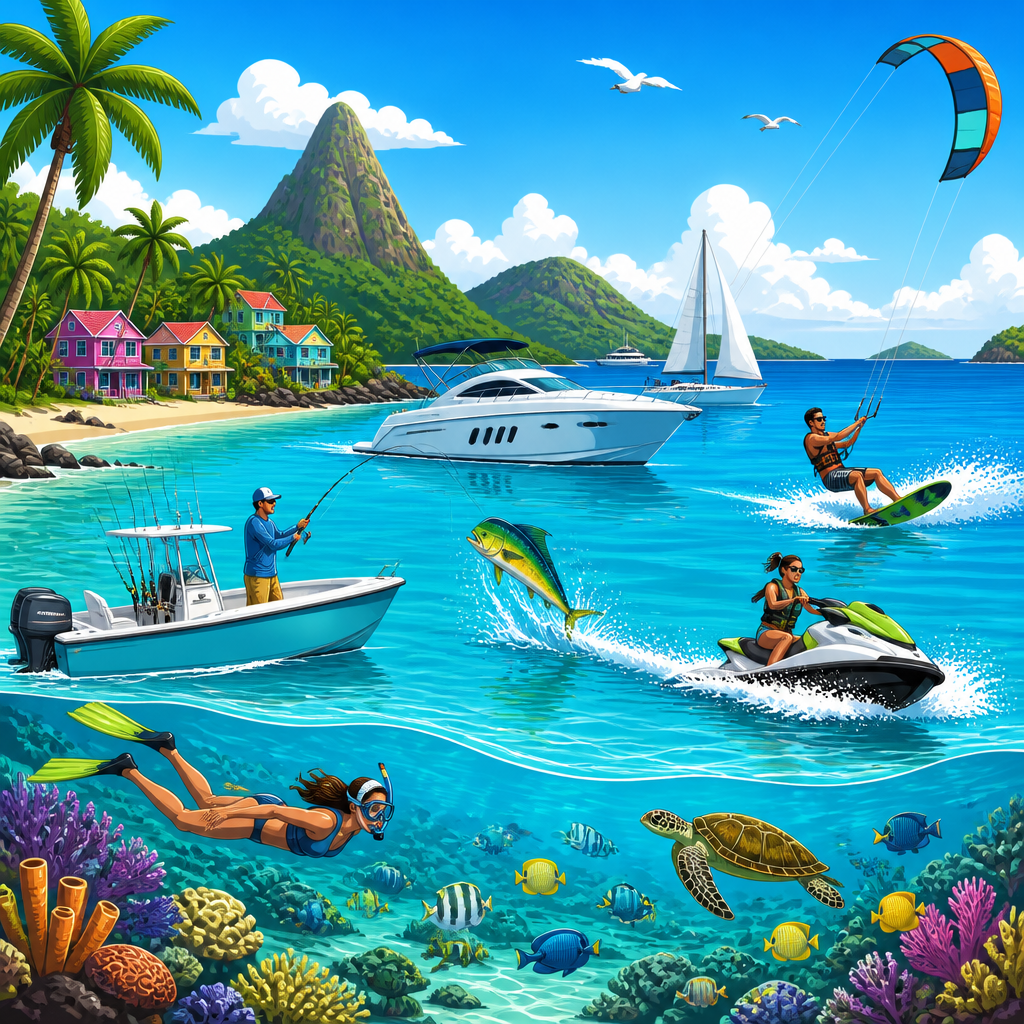
The best Caribbean islands for boating, fishing, and watersports combine reliable trade winds, protected anchorages, healthy reefs, accessible marinas, and enough onshore infrastructure to keep a trip easy rather than exhausting. For travelers planning around water first and everything else second, the Caribbean remains the most versatile region in the Atlantic because short passages connect dramatically different experiences: bluewater marlin runs, shallow bonefish flats, world-class kite beaches, family snorkeling coves, and liveaboard sailing routes that rarely require long open-ocean crossings. That variety is exactly why choosing the right island matters.
In practical terms, boating refers to everything from bareboat sailing and crewed charters to power catamaran hopping and day cruising between cays. Fishing spans offshore big-game trolling, reef and bottom fishing, flats angling for bonefish, permit, and tarpon, and seasonal tuna or wahoo runs. Watersports covers diving, snorkeling, surfing, windsurfing, kitesurfing, wing foiling, paddleboarding, kayaking, and jet-powered activities where local rules permit them. I have planned Caribbean itineraries around all three, and the same lesson always holds: an island that is excellent for one activity is not automatically excellent for the others.
Weather windows, customs procedures, marine park restrictions, fuel availability, launch ramps, charter rules, and fishery management all shape the experience as much as scenery does. The eastern Caribbean generally delivers stronger, steadier wind for sailing and kite sports, while the Bahamas and Turks and Caicos excel for shallow-water navigation, flats fishing, and easy snorkeling in clear banks. Volcanic islands often offer dramatic diving and protected bays but can have deeper nearshore water and fewer broad sand flats. Infrastructure also varies widely. St. Martin, the British Virgin Islands, and Antigua support high-volume charter traffic with established marinas and repair yards, while more remote islands reward experience and self-sufficiency.
This hub highlights the best Caribbean islands for fishing and water sports by focusing on what travelers actually need to know: which islands are best for sailing, where offshore fishing is strongest, which destinations suit beginners, where families can split time between beaches and boats, and when conditions are most favorable. Use it as the starting point for deeper trip planning across the wider fishing and watersports category, whether you want a weeklong yacht charter, a dedicated bonefishing lodge, a surf-focused escape, or a mixed itinerary with diving, wake sports, and island-hopping.
British Virgin Islands: the easiest all-around boating base
If someone asks me for the safest recommendation for a first Caribbean boating trip, I usually start with the British Virgin Islands. The reason is straightforward: line-of-sight navigation, short passages, abundant mooring fields, professionally run charter fleets, and protected anchorages reduce the operational stress that can make a vacation feel like a delivery trip. Tortola, Virgin Gorda, Jost Van Dyke, and Anegada each offer distinct water conditions within manageable distances, so crews with mixed skill levels can enjoy sailing, snorkeling, beach stops, and light fishing without committing to long offshore runs.
For watersports, the BVI is strongest in sailing, snorkeling, diving, and paddle activities rather than hardcore surf or kite scenes. The Baths at Virgin Gorda and the reefs around Norman Island and Cooper Island are classic snorkel and dive stops. Fishing is more variable. Offshore pelagics such as mahi-mahi, tuna, and wahoo are available seasonally, but serious anglers often treat the BVI as a cruising destination with opportunistic fishing rather than a pure sportfishing base. Anegada is the exception, with productive surrounding waters and famous lobster culture. Families and first-time charterers get the best balance here because logistics are simple and the learning curve is forgiving.
Bahamas: premier flats fishing and shallow-water cruising
The Bahamas is not one destination but a vast archipelago, and that distinction matters. The Exumas, Abacos, Bimini, Andros, Eleuthera, and Long Island all serve different priorities. What unites them is extraordinary water clarity, broad banks, and some of the best shallow-water navigation and flats ecosystems in the world. For boating, the Exumas are the standout for island-hopping. Cruisers can move through protected waters, anchor in electric-blue sand channels, and access beaches and snorkel sites that feel remote even during high season.
For fishing, the Bahamas sits at the top tier because it offers both ends of the spectrum. Andros and Abaco are globally respected for bonefish on expansive flats, where technical poling and accurate casting matter more than heavy tackle. Bimini, sitting close to the Gulf Stream, has long been associated with blue marlin, tuna, wahoo, and dolphin fishing. Spearfishing regulations require careful review because many areas are protected and equipment rules are specific. Watersports are broad: snorkeling in the Exuma Cays Land and Sea Park, diving blue holes, paddling mangroves, and surfing select Atlantic exposures on Eleuthera. The tradeoff is weather exposure. Fronts and winter winds can make crossings and anchorages uncomfortable, so route planning is crucial.
Turks and Caicos: clear water, reef systems, and strong crossover appeal
Turks and Caicos works especially well for travelers who want high-end amenities without sacrificing marine quality. Providenciales is the main gateway, and from there boaters can reach cays, reef walls, and sandbars quickly. The destination excels in visibility, often exceeding 100 feet on calm days, which makes it exceptional for snorkeling, diving, and underwater photography. Grace Bay provides easy access for day charters, while South Caicos and Grand Turk appeal to anglers and divers who want less traffic.
Fishing in Turks and Caicos is diverse. Offshore, steep drop-offs support marlin, sailfish, tuna, and wahoo. Inshore, there are productive reef species and respectable bonefish habitat, though dedicated flats anglers often rank the Bahamas higher overall. For watersports, the combination of calm lagoon zones and exposed windy areas supports kayaking, paddleboarding, kiteboarding, and beginner-friendly snorkeling. Boaters should pay attention to reef charts and local pilotage because the same coral systems that create beautiful water can punish casual navigation. The payoff is a destination that suits couples, families, and mixed-interest groups unusually well.
St. Martin and St. Barts: big-water access with polished marine services
St. Martin is one of the Caribbean’s strongest operational hubs for boaters because it combines international airlift, full-service marinas, chandleries, repair yards, and charter support. I have used it repeatedly as a practical jumping-off point when clients wanted both comfort ashore and serious time on the water. From Simpson Bay or Marigot, crews can day sail, run to Anguilla or St. Barts where clearance rules allow, or fish nearby bluewater that comes close to shore compared with flatter bank systems farther north.
For sportfishing, St. Martin has a real edge. The deep water offshore supports mahi, tuna, wahoo, and billfish, and experienced captains can adapt quickly to current lines and seasonal bait movement. Watersports are similarly varied. Orient Bay is well known for wind-driven sports, while calm leeward beaches support snorkeling and paddling. Nearby St. Barts adds premium yachting appeal, elegant harbors, and clean marine management. These islands are not the cheapest choice, and slips, dining, and fuel can raise the budget fast, but for travelers prioritizing convenience and polished service, they are among the best Caribbean islands for boating.
Aruba, Bonaire, and Curaçao: southern reliability and specialized watersports
The ABC islands sit outside the main hurricane belt, a major planning advantage during late summer and fall. That alone makes them important within any best locations for fishing and water sports discussion. Aruba is strongest for wind sports and day boating, Bonaire is the diving specialist, and Curaçao offers the broadest mix of marinas, beaches, and urban support. Conditions are generally drier and more consistently windy than much of the northeastern Caribbean, especially on Aruba’s exposed coasts.
Bonaire is one of the region’s most established marine conservation success stories, with protected reefs, regulated moorings, and shore diving that is genuinely world class. Serious anglers may find it less compelling than destinations built around offshore tournaments, but divers and snorkelers often rank it near the top of the entire Caribbean. Aruba’s Fishermen’s Huts area is a known windsurfing and kitesurfing venue, while Curaçao’s Spanish Water and west-coast beaches support cruising, paddling, and reef exploration. The limitation is that inter-island hopping is less casual than in compact charter clusters such as the BVI, so these islands work better as single-base vacations than roaming sailing circuits.
Best islands by activity and trip style
Travelers often narrow choices faster by matching the island to the dominant activity rather than starting from a map. The table below summarizes the most useful fits.
| Priority | Best island group | Why it stands out |
|---|---|---|
| First sailing charter | British Virgin Islands | Short passages, protected anchorages, dense charter support, simple navigation |
| Flats fishing | Bahamas | Huge bonefish habitat, expert guides, technical wading and skiff options |
| Big-game offshore fishing | St. Martin, Bimini, Turks and Caicos | Fast access to deep water, seasonal pelagics, experienced charter fleets |
| Diving and snorkeling | Bonaire, Turks and Caicos, BVI | Protected reefs, strong visibility, easy site access for mixed skill levels |
| Kiteboarding and wind sports | Aruba, St. Martin | Reliable wind, dedicated launch areas, rental and instruction networks |
| Family water vacation | BVI, Turks and Caicos, Exumas | Calm water options, beach access, snorkel variety, straightforward logistics |
There are honorable mentions. Antigua has a deep sailing heritage and major regattas. Puerto Rico offers excellent surfing on the west coast, strong marinas, and easy U.S. access. The Dominican Republic has famous billfishing, especially around Punta Cana and Cap Cana. The Cayman Islands deliver diving quality and polished boating services. Still, for a hub page aimed at the best locations for fishing and water sports, the islands above cover the widest range of travel goals with the fewest surprises.
How to choose the right island, season, and operator
Start with the primary activity, then work backward through seasonality, budget, and skill level. If the trip is built around bonefishing, moon phase, tides, and guide quality matter more than nightlife. If the trip is centered on sailing, marina density, customs procedures, and protected overnight stops matter more than absolute fish abundance. Winter and spring usually bring the most reliable trade winds and comfortable temperatures, but they also bring higher prices and more crowded anchorages. Summer can be excellent for diving and quieter cruising, especially in the southern Caribbean, yet hurricane risk and heat need to be factored in.
Operator quality is often the difference between a great trip and an expensive compromise. For boating, look for fleets accredited through recognized charter standards, clear maintenance protocols, and transparent insurance terms. For fishing, ask what species are realistically targeted in the specific month, whether fuel and tackle are included, and whether captains practice tag-and-release for billfish where appropriate. For watersports, confirm rescue support, equipment age, and whether instruction follows internationally recognized training systems such as PADI for diving or IKO for kiteboarding. Review marine park rules before arrival, because protected zones, spearfishing bans, and anchoring restrictions are actively enforced in many islands.
The best Caribbean islands for boating, fishing, and watersports are not simply the prettiest islands or the most famous ones. They are the islands where marine conditions, access, and infrastructure align with the experience you actually want. Choose the British Virgin Islands for easy sailing and broad family appeal, the Bahamas for flats fishing and shallow cruising, Turks and Caicos for luxury paired with clear-water reef access, St. Martin for full-service boating and sportfishing convenience, and the ABC islands for dependable southern-season watersports and standout diving. Each delivers a different version of a water-centered Caribbean trip, and that difference should drive your choice.
If you are planning the wider Fishing & Water Sports journey, use this page as your hub and then narrow into island-specific guides, seasonal fishing breakdowns, charter-planning resources, and activity-focused articles for sailing, diving, surfing, and flats angling. The more precisely you match your island to your priorities, the more time you will spend on the water doing what you came for. Start with your top activity, shortlist two or three islands, and build the itinerary from there.
Frequently Asked Questions
Which Caribbean islands are best overall for boating, fishing, and watersports in one trip?
The best all-around Caribbean islands for a water-focused trip are usually the ones that balance reliable conditions offshore with practical support onshore. The British Virgin Islands are a standout for boaters because the passages are short, the anchorages are protected, navigation is relatively straightforward, and marinas, mooring fields, fuel docks, and provisioning are easy to find. That makes the BVI especially appealing for sailors, charter guests, and families who want to spend more time on the water and less time dealing with logistics. For travelers who want calm cruising plus snorkeling, paddleboarding, and beach-hopping, it is one of the easiest entries into Caribbean boating.
The Bahamas also rank near the top, especially for anglers, center-console boaters, and anyone drawn to shallow turquoise banks, reef systems, and flats fishing. Islands such as Bimini, Abaco, and Exuma offer dramatically different boating experiences, from quick offshore runs and deep-sea fishing to protected cruising routes and sandbar-heavy days built around swimming, diving, and island hopping. Turks and Caicos is another strong contender, particularly for kiteboarding, snorkeling, diving, and upscale boating access around Providenciales and the surrounding cays.
For travelers who prioritize wind-powered watersports, Aruba and the Grenadines deserve serious attention. Aruba is known for consistent trade winds and beaches that support kitesurfing, windsurfing, and strong all-season watersports infrastructure. The Grenadines, including Bequia, Mustique, Canouan, and Union Island, are exceptional for sailors who want scenic passages, classic Caribbean anchorages, and easy access to reefs and clear-water swimming. In practical terms, the best island is less about a single winner and more about matching your priorities: the BVI for easy sailing, the Bahamas for fishing diversity, Aruba for wind sports, and the Grenadines for a more adventurous but still highly rewarding boating circuit.
What should I look for when choosing a Caribbean island for a boating or watersports vacation?
If your trip is built around being on the water first and doing everything else second, the smartest way to choose an island is to evaluate conditions and infrastructure before aesthetics. Beautiful beaches are everywhere in the Caribbean, but not every island offers the same level of boating convenience, fishing access, or watersports reliability. Start with wind patterns and sea state. Reliable trade winds can be a major advantage for sailing, kiteboarding, and windsurfing, but they can also make some exposed anchorages uncomfortable and certain passages rough. If you want easy day cruising or family-friendly boating, look for islands with protected leeward anchorages, shorter passages, and reef-sheltered waters.
Next, consider marine infrastructure. Good marinas, haul-out facilities, fuel access, customs efficiency, charter bases, and provisioning options make a huge difference, especially if you are moving between islands or operating on your own schedule. A destination may look perfect on a map, but if fuel, ice, tackle, repairs, or groceries require major detours, a supposedly simple trip can become exhausting. Travelers should also look at the type of fishing or watersports available. Some islands are better for bluewater trolling and big-game fishing, while others are known for flats fishing, reef fishing, diving, wingfoiling, surfing, or kiteboarding.
Finally, think about the non-water support that still matters once you come ashore. Easy airport access, good accommodations near marinas, reliable transport, experienced guides, weather flexibility, and medical services all improve the experience. The strongest Caribbean boating and watersports destinations succeed because they combine natural advantages with enough infrastructure to keep the trip smooth. In other words, the ideal island is not just beautiful in the water; it also helps you get on the water quickly, safely, and consistently.
Which Caribbean islands are best for fishing, including offshore and flats fishing?
The best Caribbean fishing destinations depend on whether you want bluewater action, reef species, or technical shallow-water sight fishing. For offshore fishing, the Bahamas, Puerto Rico, the Dominican Republic, and St. Thomas are among the most respected options. The reason is simple: deep water can be reached quickly in many of these areas, so anglers spend less time running and more time fishing. Blue marlin, white marlin, sailfish, mahi-mahi, tuna, and wahoo are all part of the appeal, especially in seasons when bait concentrations and current lines are favorable. Puerto Rico and the Dominican Republic have long-standing reputations in the sportfishing world, while the Bahamas offer broad variety depending on where you launch.
For flats fishing, few places in the wider Caribbean compare with the Bahamas. Bonefish are the main draw, and islands with expansive shallow banks and healthy turtle grass flats provide the kind of sight-fishing that dedicated anglers travel specifically to experience. The appeal is not just the fish population but the geography: large, wadable or skiff-accessible flats, clear water, and the chance to combine technical fishing with easy boating and beach time. Belize is often included in broader regional conversations for permit and tarpon, but within the island-focused Caribbean discussion, the Bahamian islands remain especially dominant for bonefishing.
If you want a mixed fishing trip that includes reef species, trolling, and casual nearshore action, islands with strong charter networks and easy marina access tend to be best. That includes the U.S. Virgin Islands, parts of the Bahamas, and sections of the southern Caribbean where local captains know the seasonal patterns well. A good rule is to choose islands where fishable water is close, charter operations are established, and local guides can tailor the day to your goals. That combination usually delivers a better experience than simply picking a famous island without considering the actual style of fishing you want to do.
Are the British Virgin Islands the best choice for first-time Caribbean boating travelers?
For many first-time Caribbean boating travelers, yes, the British Virgin Islands are often the most practical and enjoyable place to start. The BVI have built their reputation on accessibility. Distances between islands are short, line-of-sight navigation is common, anchorages are plentiful, and there is a mature charter ecosystem that supports bareboat sailors, skippered charters, catamaran vacations, and powerboat trips. That means newcomers can experience classic Caribbean cruising without needing to commit to long open-water passages or highly technical route planning. Conditions still require judgment, of course, but compared with more spread-out island chains, the BVI are relatively forgiving.
Another reason the BVI work so well for beginners is the quality of the overall marine experience. You can move between islands like Tortola, Norman Island, Virgin Gorda, Jost Van Dyke, and Anegada while finding protected stops, snorkeling sites, beach bars, moorings, and support services along the way. For groups with mixed interests, that matters. One person may want to sail, another may want to dive, someone else may care most about paddleboarding or relaxing at anchor, and the BVI can satisfy all of them in a compact cruising area. It is hard to overstate how valuable that convenience is when planning a first trip.
That said, “best” depends on expectations. If your top priority is flats fishing, the Bahamas may be a better match. If you care most about strong wind for kiting or windsurfing, Aruba may be stronger. If you want a more remote, passage-oriented sailing experience, the Grenadines may feel more adventurous. But if the goal is a smooth first charter or boating holiday with minimal friction, the BVI remain one of the safest recommendations in the Caribbean because they consistently combine scenery, manageable cruising, and reliable marine infrastructure.
When is the best time to visit the Caribbean for sailing, fishing, and watersports?
In general, the most popular time for Caribbean boating and watersports runs from December through April, when weather is typically drier, temperatures are comfortable, and trade winds are more consistent. This is peak season for a reason: sailing conditions are often excellent, visibility for snorkeling and diving can be strong, and many islands are operating at full capacity in terms of charters, marinas, guides, and tourism services. For travelers who want the broadest range of options and the highest likelihood of smooth logistics, these months are usually the safest planning window.
However, the best season also depends on the activity. Sailors and kiteboarders often appreciate reliable wind patterns during the winter and early spring, while anglers may target specific islands based on seasonal runs for marlin, mahi, tuna, wahoo, tarpon, or bonefish. Some destinations fish exceptionally well outside the classic winter high season, and shoulder months can offer fewer crowds and better rates without sacrificing much in conditions. Late spring can be especially appealing for travelers who want warm water, decent breezes, and less congestion at marinas and anchorages.
The biggest factor to account for is hurricane season, which officially runs from June through November. That does not mean travel is impossible during that period, but it does mean more weather uncertainty, the potential for tropical systems, and in some islands a reduction in charter availability or marina activity. If you are planning a trip where everything depends on reliable days on the water, winter and spring usually offer the best blend of conditions, safety, and operational ease. The smartest approach is to