Boating accidents during water sports are rarely caused by bad luck alone; they usually result from preventable mistakes in preparation, operation, supervision, or judgment. In practical terms, boating accidents include collisions, falls overboard, propeller strikes, capsizing, swamping, towing injuries, carbon monoxide exposure, and incidents triggered by weather or equipment failure. Water sports covers a broad range of activities around a boat, including waterskiing, wakeboarding, tubing, personal watercraft riding, kayaking, paddleboarding, snorkeling support, and fishing from small craft. Avoiding common boating accidents during water sports starts with understanding that safety is not a single action. It is a system built from training, maintenance, communication, legal compliance, and disciplined decision-making.
I have worked around fishing boats, tow boats, rental fleets, and mixed-use recreation lakes long enough to see the same patterns repeat. A skilled driver with poor lookout habits is still dangerous. A well-equipped boat with overloaded passengers is still unstable. A family wearing life jackets can still get hurt if nobody knows how to cut engine power during a fall. This topic matters because the consequences escalate quickly on the water. The U.S. Coast Guard’s recreational boating reports consistently show that operator inattention, improper lookout, inexperience, excessive speed, and machinery failure remain leading contributors to accidents. Many fatal cases also involve the absence of life jackets. For anglers and water sports participants, this hub page covers the safety and training foundations that reduce risk before, during, and after launch.
Good safety and training for water sports and fishing means more than buying gear. It means matching the boat to the activity, following capacity limits, checking local regulations, using engine cut-off switches, briefing everyone on board, keeping a spotter when towing, understanding right-of-way rules, and knowing when conditions exceed the crew’s skill level. It also means building habits that support every related activity under fishing and water sports: safe casting around passengers, secure rod storage, boarding ladders for swimmers, propeller awareness, emergency signaling, weather planning, and recovery drills. When people ask how to avoid common boating accidents during water sports, the direct answer is simple: prepare thoroughly, operate conservatively, communicate clearly, and never let routine override basic safety procedures.
Start With Training, Local Rules, and a Pre-Departure Safety Brief
The safest boat operators I know are not always the most experienced; they are the most systematic. Formal boater education is the first layer of accident prevention because it teaches navigation rules, aids to navigation, emergency procedures, and legal responsibilities. In many states, completion of an approved boating safety course is required by age or vessel type, and even where it is not mandatory, it should be treated as essential. The National Association of State Boating Law Administrators approves recognized course standards, and state agencies publish location-specific requirements for life jackets, fire extinguishers, sound devices, registration, and towing rules. If your activity includes wake sports, tubing, or fishing in congested channels, local restrictions matter as much as general seamanship.
Before leaving the dock, conduct a safety brief that every passenger can understand. Explain where life jackets are stored, when they must be worn, how to board from the water, where the fire extinguisher and throwable flotation device are located, and what to do if someone falls overboard. Identify who will serve as lookout or spotter during towing sports. Show guests how to use the VHF radio if you are in coastal waters, or at minimum how to access a charged phone stored in a dry pouch. Review hand signals for skiers and wakeboarders. On fishing trips, discuss hook safety, knife handling, and where not to stand during casting. A two-minute briefing prevents confusion during the ten seconds that matter most.
Match the Boat, Gear, and Load to the Water Sport
Many boating accidents happen because the vessel is poorly matched to the activity. A bass boat set up for casting can become hazardous if used casually for tubing without proper seating, tow point design, and passenger management. A small aluminum fishing boat may be ideal for sheltered water angling but unstable for multiple standing passengers shifting weight while swimmers reboard. Every boat has a capacity plate or manufacturer guidance covering maximum persons, weight, horsepower, and sometimes intended use. Exceeding those limits affects freeboard, steering response, stopping distance, and the risk of swamping by wake.
Equipment selection matters just as much. Life jackets should be U.S. Coast Guard approved, correctly sized, and suited to the activity. Inflatable models can be excellent for anglers, but many are not approved for high-impact towed sports, children, or non-swimmers. For wakeboarding and waterskiing, use impact-rated vests designed for mobility and flotation. Keep a throwable device accessible, not buried under tackle bags. Install a boarding ladder if swimmers or skiers will re-enter from the water; without one, exhausted participants often grab trim tabs, engine covers, or tow hardware and get injured. Store anchors, tackle boxes, coolers, and spare fuel so they cannot shift during turns. On mixed fishing and water sports days, secure rods horizontally or in lockers to prevent puncture wounds during sudden movement.
| Risk Area | Common Mistake | Safer Practice |
|---|---|---|
| Capacity | Too many passengers or heavy gear aft | Follow capacity plate and balance weight evenly |
| Life Jackets | Wrong size or not worn during active sports | Use activity-appropriate, properly fitted approved vests |
| Towing | No observer and poor hand-signal review | Assign a spotter and brief rider signals before departure |
| Fishing Decks | Loose tackle, rods, and wet surfaces | Stow gear, use non-slip footwear, keep deck clear |
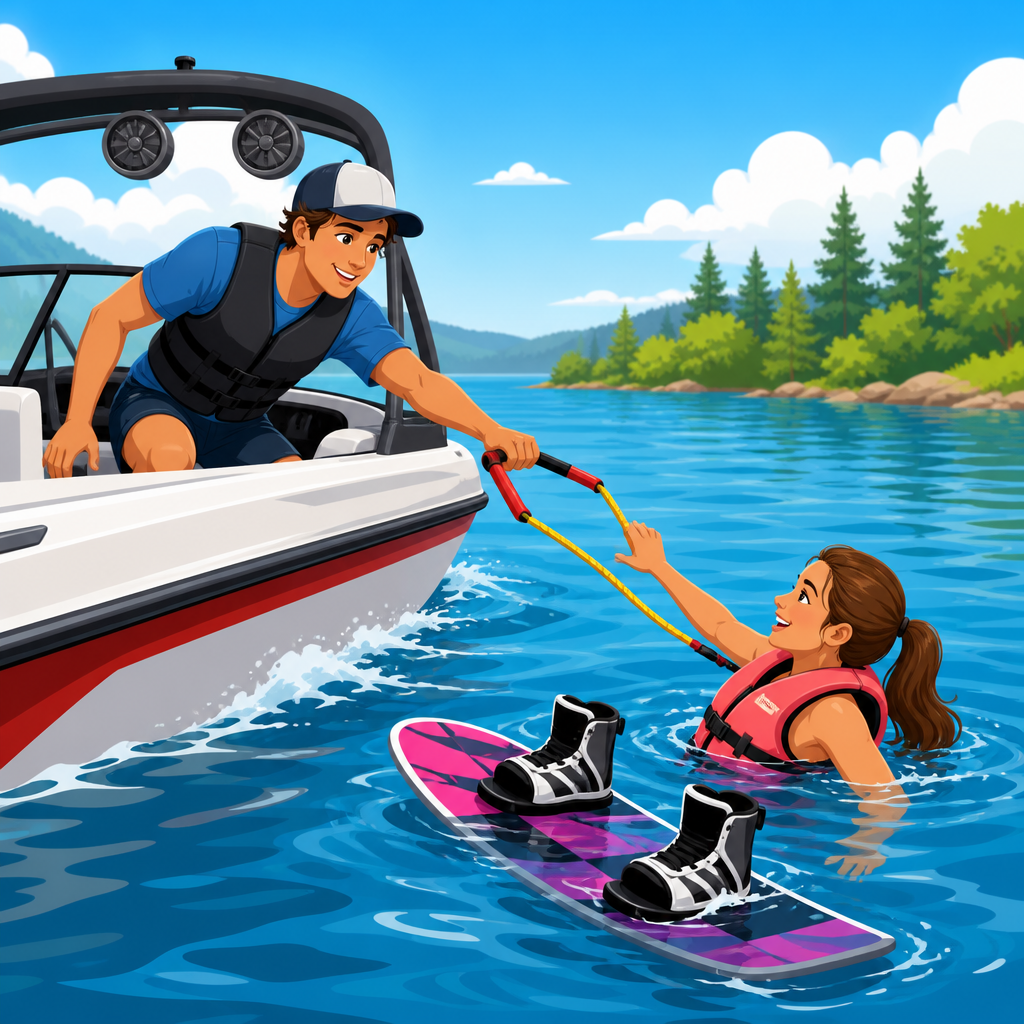
| Reboarding | No ladder and engine left running | Shut engine off and deploy a proper boarding ladder |
Prevent Operator Error: Speed Control, Lookout Discipline, and Navigation Basics
Operator behavior is the center of most recreational boating incidents. Excessive speed does not only mean full throttle; it means traveling too fast for traffic, visibility, wake conditions, or stopping distance. On busy summer lakes, I have seen skilled drivers create dangerous situations simply by cutting too close behind anglers, crossing a tow line path, or entering no-wake zones late. Safe speed is a judgment standard, not a number painted on the throttle. It changes with congestion, shoreline hazards, glare, current, and the experience level of people in the water behind you.
Improper lookout is another frequent factor. The operator must scan ahead, to both sides, and astern when turning, while a dedicated spotter watches the rider during towing. Never ask one person to drive, watch the rider, monitor a fish finder, and manage music controls at the same time. In narrow channels, remember practical navigation rules: maintain a predictable course, reduce wake near smaller craft, give way when required, and assume other operators may be inexperienced. Personal watercraft can change direction rapidly; kayaks may be hard to see in chop or low sun. If you fish near main traffic routes, display proper lights in low visibility and avoid drifting where faster boats crest blind points.
Reduce Falls Overboard, Propeller Injuries, and Towing Accidents
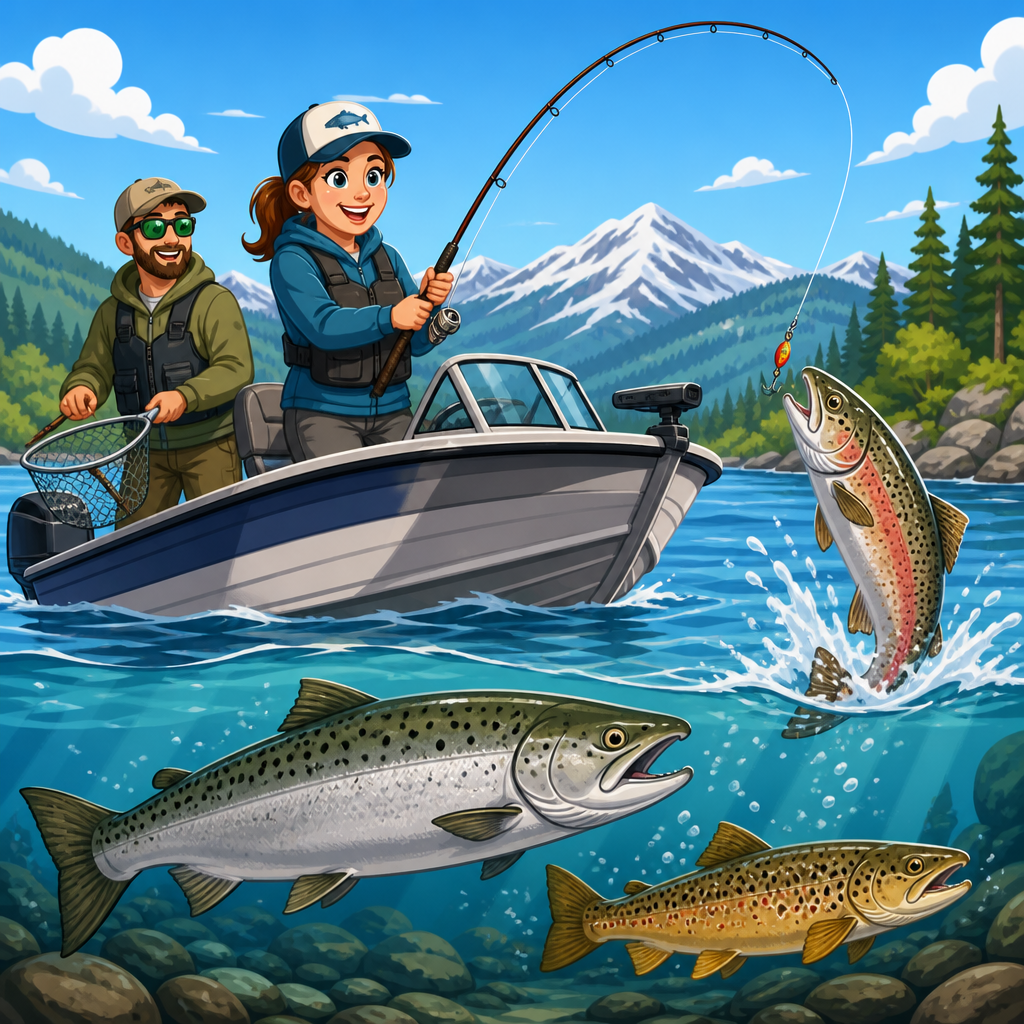
Falls overboard are usually tied to movement at the wrong time, poor balance, alcohol use, or unsafe seating. Passengers should remain seated while the boat is getting on plane, crossing wakes, or making tight turns. Bow riding is dangerous because sudden deceleration can eject a passenger into the water in front of the boat. Gunwales, seat backs, and casting decks are not passenger seats while underway. For anglers, the risk increases when landing a fish while the operator is repositioning with the trolling motor or main engine. Establish a rule: one major movement at a time. Either fight the fish, or reposition the boat, but do not do both without communication.
Propeller strikes are among the most severe yet most preventable boating injuries. Before anyone enters the water, place the engine in neutral, shut it off completely, remove the key or use the cut-off switch, and confirm the propeller has stopped. This should happen every time, even during quick swim stops. Swimmers returning to a stern platform can drift under the transom if the boat is not secured. Carbon monoxide can also collect near stern areas on some boats, especially during idling or generator use, so avoid lingering close to exhaust outlets.
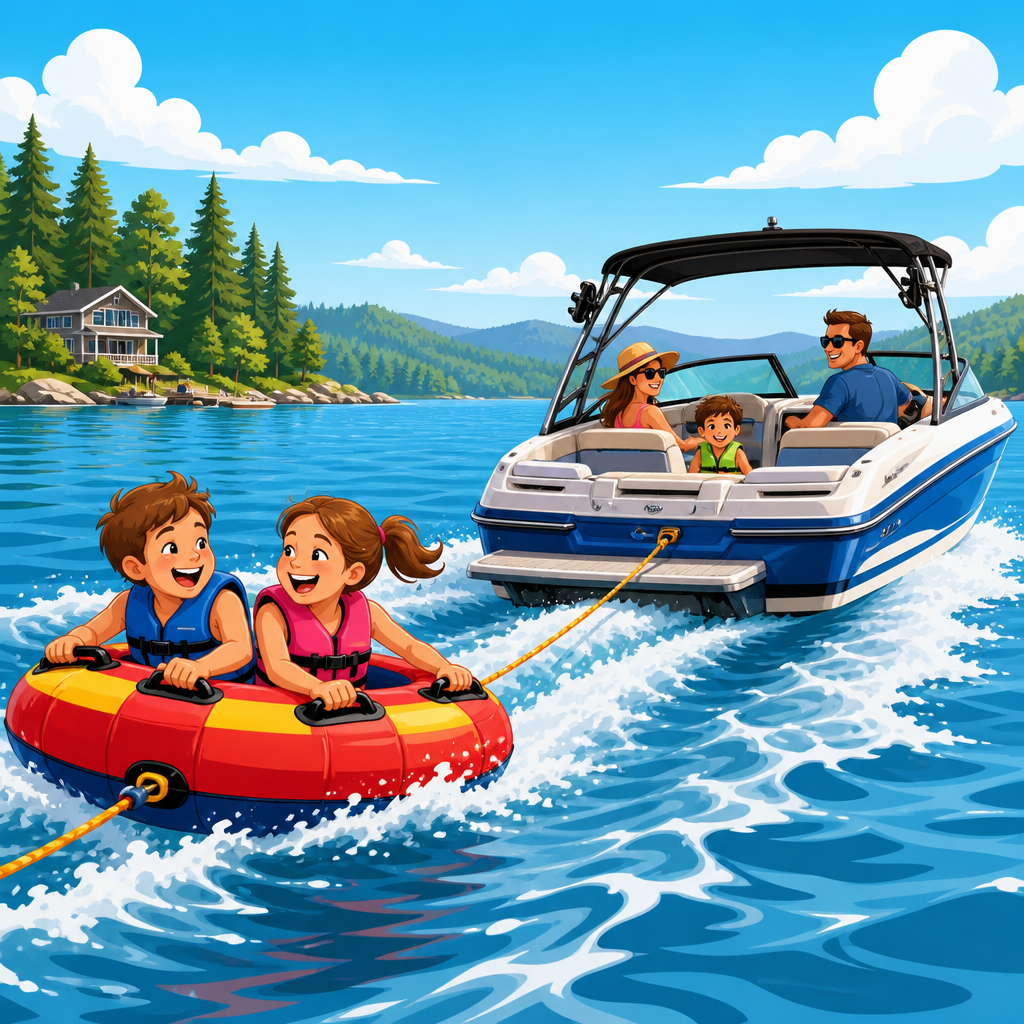
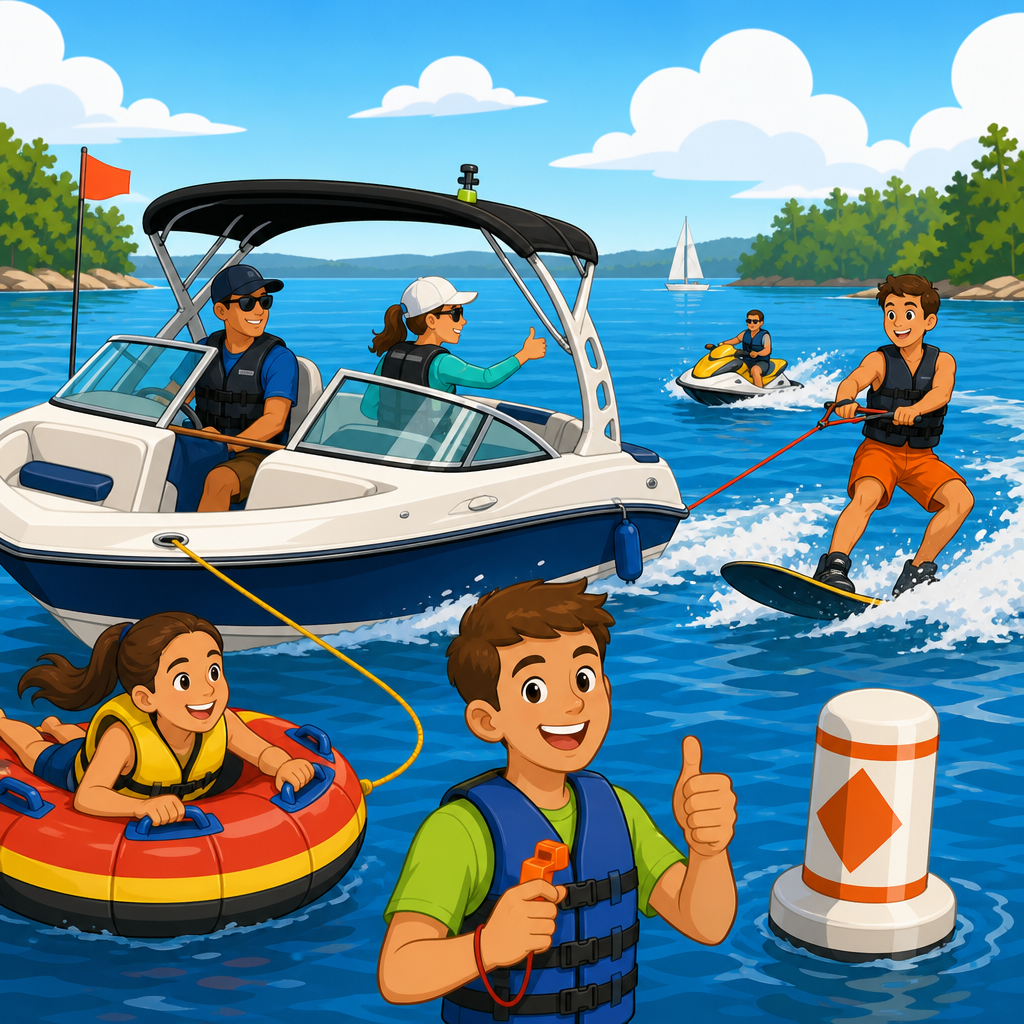
Towing sports require special discipline. Use an observer in addition to the driver where required, maintain a clear tow path, avoid shallow water and docks, and wait for a fallen rider signal before circling back. Approach a person in the water from the driver’s side when practical so they remain visible, keeping the engine off during final pickup. Tubing deserves extra caution because sharp turns can sling riders outside the boat’s path into docks, rocks, or other traffic. What feels exciting to the driver may create violent lateral force for the rider. Conservative turns prevent broken wrists, shoulder injuries, and collisions.
Weather, Water Conditions, and Emergency Readiness
Weather changes faster on the water than many new boaters expect. Wind can turn a routine paddleboard support outing into a recovery problem within minutes, and summer thunderstorms can create lightning exposure long before rain reaches the launch. Check a marine forecast before departure, not just a generic phone weather app. Pay attention to wind speed, gusts, wave height, radar, air temperature, and small craft advisories where applicable. On inland reservoirs, long open fetch can build steep chop that overwhelms lightly loaded fishing boats and makes skier pickup difficult. Cold water is another underestimated hazard; even on mild days, immersion can reduce dexterity and swimming ability rapidly.
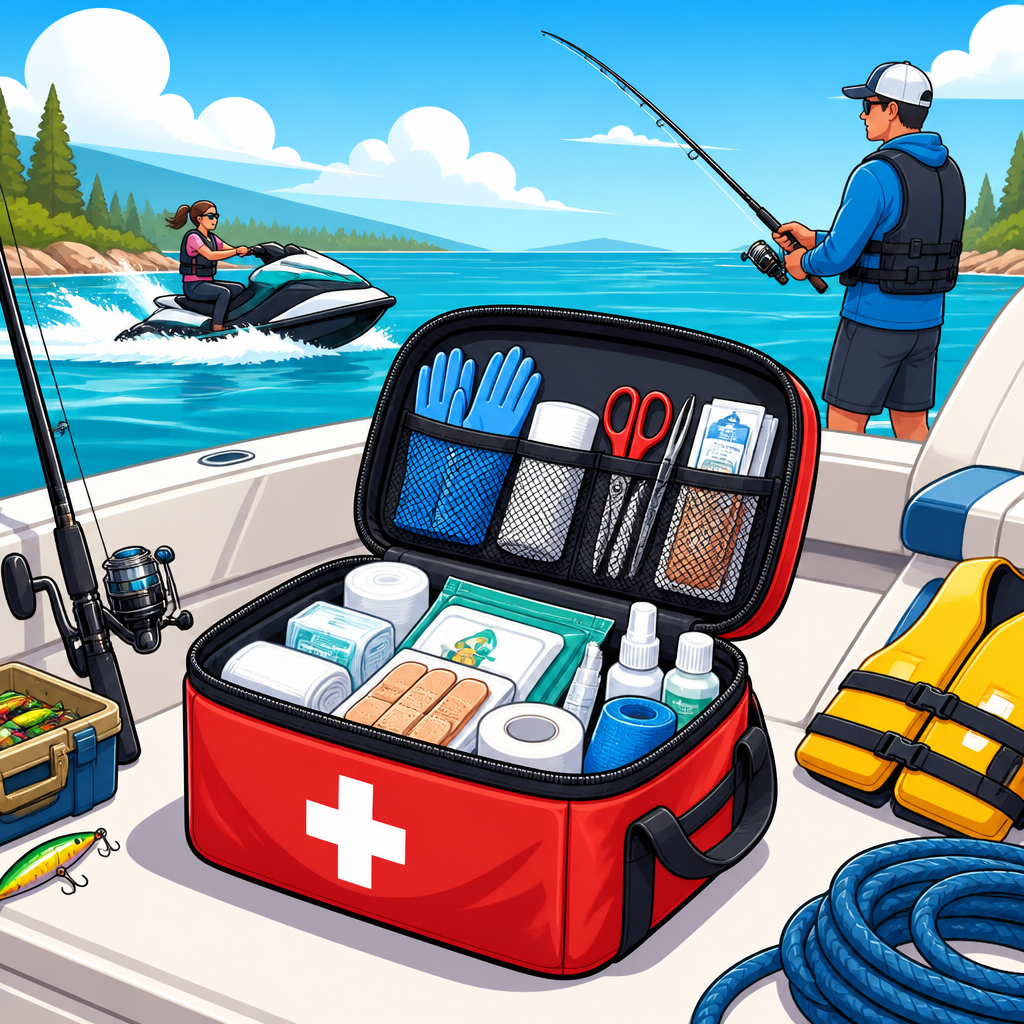
Emergency readiness means carrying equipment you can actually use under stress. At minimum, keep signaling devices current, a first-aid kit accessible, a working bilge pump or bailing method available, and a tool or knife capable of cutting tow lines or tangled fishing line. On larger waters, a VHF radio provides more reliable emergency communication than a cell phone. Share a float plan with someone ashore that includes launch point, route, return time, boat description, and passenger names. Practice man-overboard recovery and discuss who handles helm, flotation, and communication. In my experience, crews who rehearse emergencies react calmly; crews who rely on improvisation lose valuable time.
Alcohol, Fatigue, and the Human Factors Most People Underestimate
The boating environment amplifies impairment. Sun, heat, glare, noise, vibration, dehydration, and constant motion wear people down faster than they realize. That is why alcohol is so closely associated with serious recreational boating accidents. Even when someone appears functional at the dock, judgment, balance, reaction time, and risk perception degrade on the water. For operators, the rule should be zero alcohol. For passengers, moderation still matters because intoxicated guests are more likely to fall, mishandle hooks, dive into unsafe water, or interfere with the driver.
Fatigue is just as real, especially on full-day fishing and towing schedules. An operator who launched before dawn for fishing, then spends the afternoon pulling wakeboarders, is managing two different risk profiles with a tired brain. Rotate responsibilities when possible, hydrate consistently, use sun protection, and take shore breaks before the crew becomes sloppy. Children need tighter supervision late in the day, when excitement and exhaustion combine. If conditions worsen or attention drifts, end the session early. A conservative decision is often the mark of an experienced boater, not an overly cautious one.
Build a Safety Culture for Fishing and Water Sports Every Time You Launch
The most effective way to avoid common boating accidents during water sports is to make safety routine instead of reactive. Use checklists for fuel, drain plug, battery charge, weather, life jackets, communication gear, and tow equipment. Inspect propellers, steering, lights, and trailer components before each trip. Replace frayed tow ropes, expired flares, brittle fuel lines, and damaged life jackets immediately. Keep decks dry, assign roles clearly, and insist that anyone operating the boat understands the day’s plan and local rules. If you run a family boat, involve teenagers in these routines early so safe habits become normal seamanship rather than last-minute lectures.
This hub for safety and training for water sports and fishing comes down to a practical truth: most accidents are avoidable when people prepare well, stay within limits, and refuse shortcuts. Training improves judgment. Proper equipment reduces injury severity. Clear communication prevents confusion. Conservative operation buys time and space, which are the two resources you lose fastest on the water. Review your procedures before your next trip, update any missing gear, and commit to one improvement that will make every launch safer for everyone on board.
Frequently Asked Questions
What are the most common causes of boating accidents during water sports?
The most common causes of boating accidents during water sports are operator inattention, excessive speed, poor communication, inexperience, improper lookout practices, unsafe towing procedures, alcohol use, and changing water or weather conditions. In most cases, an accident is not caused by a single dramatic failure but by several small mistakes that build on each other. For example, a driver may focus on the person being towed instead of the water ahead, while no spotter is assigned to watch the skier, tube rider, or wakeboarder. That lapse can lead to collisions, sudden turns, or delayed reactions if someone falls.
Preparation errors are also a major factor. Boats that are overloaded, poorly maintained, or missing basic safety gear create preventable hazards before anyone even enters the water. Faulty tow ropes, engine problems, steering issues, low fuel, weak batteries, and improper weight distribution can all contribute to capsizing, swamping, or losing control. In addition, many injuries happen when passengers move around unexpectedly, sit in unsafe areas, or enter the water near an idling boat without following propeller safety rules.
Another leading cause is poor judgment. That includes towing riders in congested areas, operating too close to docks or swimmers, ignoring no-wake zones, attempting sharp turns at unsafe speeds, or continuing activity when visibility drops. Weather plays a role as well, but often because boaters fail to respond appropriately to it. Wind, chop, current, and storms can quickly turn a routine outing into a dangerous one if the operator does not slow down or head back in time. The safest approach is to treat every outing as a coordinated activity that requires planning, clear roles, attention, and disciplined decision-making.
How can boat operators safely manage towing sports like tubing, waterskiing, and wakeboarding?
Safe towing starts with assigning responsibilities before the boat leaves the dock. The operator should focus only on driving, while a dedicated observer or spotter watches the person being towed at all times. That division of attention is essential because a driver who keeps turning around to check on a rider is not watching traffic, floating hazards, changing water conditions, or the shoreline. Hand signals should be reviewed in advance so everyone understands how to communicate speed changes, stops, distress, and readiness. The rider should know what signal means “faster,” “slower,” “stop,” and “I’m okay after a fall.”
Equipment setup matters just as much as boat handling. Use a tow rope designed for the specific activity and inspect it for fraying, weak spots, or worn handles. Make sure the tow point is manufacturer-approved and that the rope length suits the sport and conditions. Riders should wear properly fitted U.S. Coast Guard-approved life jackets appropriate for towing activities. The tow area should be clear of swimmers, docks, shallow obstructions, anchored boats, and heavy traffic. Before accelerating, confirm that the rider is ready, the rope is clear of the propeller, and all passengers are seated securely.
While underway, the operator should make gradual turns, maintain a safe and consistent speed, and avoid crossing wakes aggressively unless conditions and skill levels allow it. Wide turns are generally safer because they reduce the chance that the rider swings into hazards. After a fall, the operator should slow carefully, keep the fallen person on the driver’s side when possible for better visibility, and approach only after confirming the engine and propeller risk are controlled. Never reverse toward a rider in the water. In busy or rough conditions, the safest decision may be to stop towing altogether. Good towing practice is not about pushing excitement to the limit; it is about controlling every variable that can reasonably be controlled.
What safety equipment should every boat have to help prevent water sports injuries?
Every boat used for water sports should carry more than the legal minimum. At a basic level, you need enough properly fitted life jackets for every person onboard, plus jackets suitable for the specific activity. A throwable flotation device, sound-producing device, fire extinguisher, navigation lights, and registration and emergency documentation should also be onboard as required by law. For water sports, however, practical safety goes further. A rearview mirror can help the operator maintain awareness, but it should never replace a human spotter. A boarding ladder is important for bringing people back aboard safely after a fall or swim.
You should also have a well-stocked first-aid kit, an emergency cut-off switch with a lanyard for the operator, a reliable anchor, extra tow lines, a paddle or boat hook, and a fully charged communication device in a waterproof case. A VHF radio is especially useful in larger bodies of water where cell coverage may be unreliable. If your boat has an enclosed or partially enclosed stern area, carbon monoxide awareness is critical. That means understanding where exhaust can collect and making sure passengers do not linger in dangerous areas near the swim platform or stern while the engine is running.
Condition matters as much as presence. Safety equipment that is damaged, buried under gear, or unfamiliar to passengers may be nearly useless in an emergency. Everyone onboard should know where life jackets, fire extinguishers, signaling devices, and emergency shutoffs are located. Tow ropes, handles, and attachment points should be inspected before every outing, and the propeller area should be treated as a high-risk zone at all times. In short, the right equipment helps prevent minor problems from becoming serious accidents, but only if it is appropriate, accessible, and backed by good habits.
How do weather and water conditions increase the risk of boating accidents during water sports?
Weather and water conditions are major accident factors because they affect visibility, boat control, rider stability, stopping distance, and the operator’s reaction time. Wind can create rough chop that makes towing unpredictable, especially for beginners on skis, wakeboards, or tubes. Strong current can push a boat off line, carry a fallen rider into a hazard, or make pickup maneuvers more difficult. Glare from the sun can reduce the operator’s ability to see other boats, floating debris, and people in the water. Even conditions that seem manageable at launch can deteriorate quickly, particularly in the afternoon or on large lakes and coastal waterways.
Storms are an obvious concern, but subtle changes can be just as dangerous. Building boat traffic, increasing wakes, lower light, and dropping temperatures all affect safety. Rough water increases the risk of falls overboard, hard landings, and towing injuries. It can also make it easier for a boat to swamp or capsize if weight is distributed poorly or if the operator turns sharply. If the boat is taking spray over the bow, struggling to maintain stable control, or forcing riders into repeated uncontrolled impacts, the conditions are no longer appropriate for that activity.
The best prevention strategy is to check the forecast before departure, monitor changing conditions while on the water, and be willing to end the session early. Operators should know local hazards such as shallow areas, sandbars, sudden drop-offs, heavy current zones, and common afternoon wind patterns. If thunder is heard, visibility drops, or whitecaps begin forming, it is time to head in. Safe boating during water sports depends on judgment more than optimism. Conditions do not need to look extreme to become unsafe, and waiting too long to react is one of the most common avoidable mistakes.
What should passengers, swimmers, and riders do to reduce the chance of falls overboard, propeller strikes, and other serious injuries?
Passengers, swimmers, and riders play a direct role in accident prevention, and their actions matter just as much as the operator’s. Passengers should remain seated in safe locations when the boat is moving, avoid sudden shifts in weight, keep hands and feet inside the boat, and never ride on the bow, gunwale, transom, seat backs, or other unsafe areas unless the boat is specifically designed for that use under safe conditions. Abrupt movement can destabilize the boat or distract the driver at the worst possible moment. Everyone onboard should understand that horseplay around a moving boat can quickly turn into a fall overboard or collision injury.
For anyone entering the water, propeller safety must be treated seriously every time. No one should swim near the stern while the engine is running, even at idle. Before a swimmer gets in or a fallen rider is recovered, the operator should ensure the boat is under control and the propeller danger is managed. Riders should re-enter the boat from the side or stern ladder only when the engine is off or when the operator has clearly established a safe boarding procedure consistent with the boat’s design and the immediate situation. People in the water should make themselves visible, stay with approved flotation, and avoid drifting behind the boat.
Riders being towed should use properly fitted life jackets, communicate clearly, and avoid attempting maneuvers beyond their skill level or the day’s conditions. If they fall, they should signal that they are okay when able and remain visible with skis up or arms raised as appropriate. Children require especially close supervision, and no one should assume another adult is watching them. The broader rule is simple: boating safety during water sports depends on predictable behavior. When passengers stay seated, swimmers respect propeller hazards, and riders follow clear procedures, the risk of serious injury drops significantly.