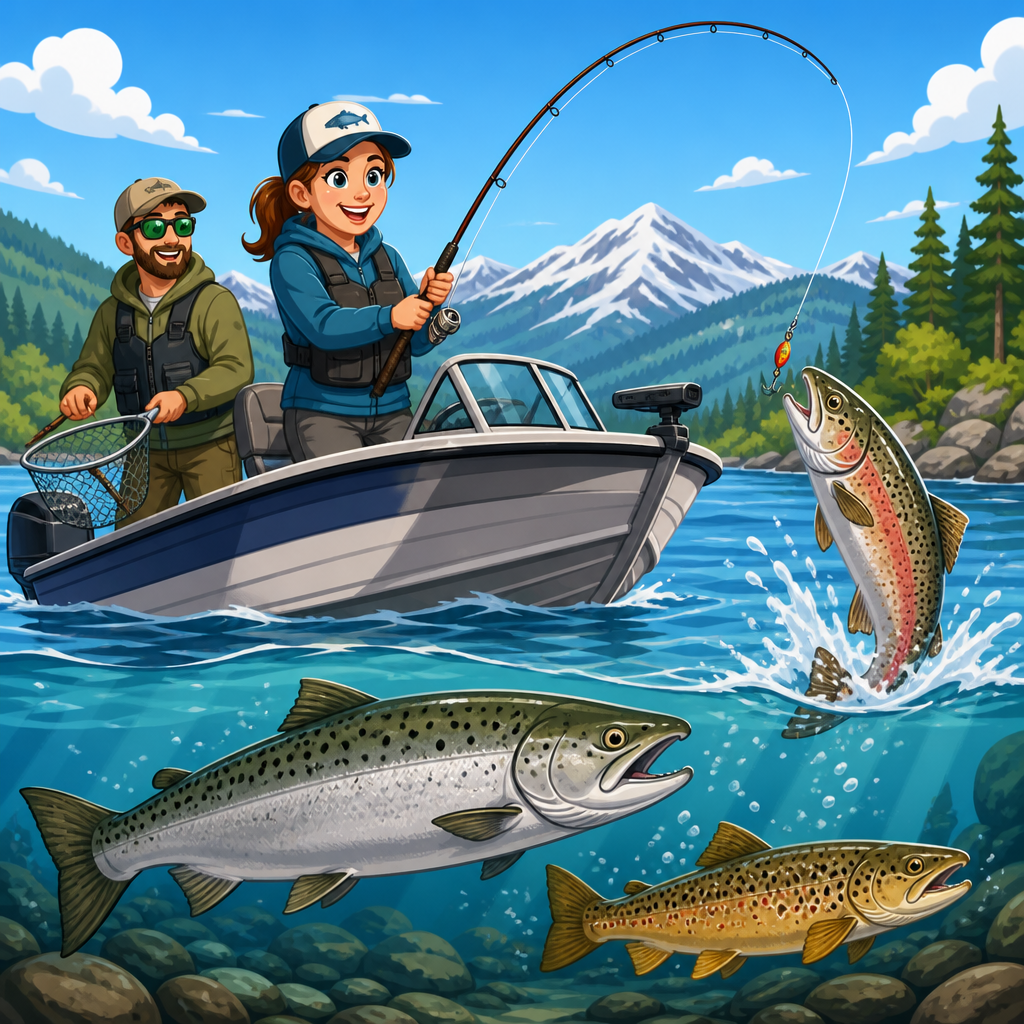
How to catch trout and salmon from a boat starts with understanding how fish, current, depth, and boat control work together. In this sub-pillar guide to fly fishing from a boat, I am focusing on practical methods that consistently produce trout and salmon in rivers, lakes, reservoirs, and protected coastal water where fly tackle is effective. Trout include rainbow, brown, brook, lake trout, and cutthroat. Salmon may include Atlantic salmon and Pacific species such as coho, chinook, pink, chum, and sockeye when local regulations allow fly fishing from a drifting or anchored boat. The reason this matters is simple: a boat expands water access, improves presentation angles, and lets anglers cover structure efficiently, but it also adds complexity in safety, positioning, line management, and fish handling.
Fly fishing from a boat differs from wading because your casting platform moves, even when it feels still. Wind, current, motor drift, and the movement of other anglers all change how your fly tracks through the strike zone. Trout and salmon often hold in specific lanes: seam edges, drop-offs, weed lines, shoals, creek mouths, submerged timber, bait concentrations, and thermal transitions. A productive boat angler reads those holding lies first, then chooses fly line density, fly size, retrieve speed, and boat speed to match them. In my own guiding and boat-fishing days, the biggest jump in catch rate never came from secret flies. It came from better boat placement, cleaner drifts, and changing depth with intention rather than guessing.
This article serves as the hub page for the subtopic because every advanced question branches from a few core skills: selecting the right boat setup, choosing tackle that matches trout and salmon behavior, positioning the boat so flies drift naturally, and fighting fish safely around hulls, anchors, and motors. If you want to know how to catch trout and salmon from a boat with a fly rod, begin by treating the boat as a presentation tool, not just transportation. Everything that follows is built around that principle, from rigging and casting to landing fish and deciding when trolling, drifting, anchoring, or using an electric motor gives the cleanest, most repeatable result.
Choose the Right Boat Setup for Fly Fishing
The best boat for fly fishing is the one that keeps you stable, quiet, and in control of distance. Drift boats excel on moving rivers because they slip sideways and let rowers hold anglers on productive banks, buckets, and riffle transitions. Jon boats and skiffs are versatile on lakes and sheltered estuaries, especially with a bow-mounted trolling motor. Inflatable rafts can be excellent on moderate rivers when stripped line is managed carefully. Larger deep-V boats handle open water better but can be awkward for constant casting unless their decks are clear. For trout and salmon, deck space matters more than luxury. Loose cleats, coolers, and tackle bags catch fly line and cost fish.
Every boat needs a fly-fishing layout. Keep stripping baskets or clear line trays available, especially in wind. Mount nets where they can be reached one-handed. Use anchor systems suited to the water: a stern anchor for stillwater positioning, or a proper river anchor system handled by an experienced rower in legal, safe conditions. Personal flotation devices should be worn, not stowed. Polarized glasses are essential because they reduce glare and reveal drop-offs, weed lanes, bait schools, and cruising fish. If the boat carries electronics, a modern sonar unit such as Garmin LiveScope, Lowrance ActiveTarget, or Humminbird MEGA Imaging can accelerate patterning on lakes by identifying bait depth, suspended fish, and bottom composition, but electronics never replace sound presentation.
Tackle and Fly Lines That Catch More Fish
For trout from a boat, a 5- to 7-weight outfit covers most jobs. A 6-weight is the all-around standard because it casts streamers, indicator rigs, and larger dry flies while protecting tippets well. For salmon, many anglers step up to 7-, 8-, or 9-weight rods, depending on species, fly size, and current strength. Rod length between 9 and 10 feet helps with mending, line control, and lifting line off the water during repeated casts from a seated or elevated position. Reels should have smooth drags. This matters far more with salmon and lake-run trout, which commonly surge under the boat or into current after hookup.
Fly line selection is where many boat anglers either solve the depth problem or create one. A weight-forward floating line handles dry flies, shallow nymphing, and indicator rigs. Sink-tip lines are ideal when trout or salmon hold a few feet down near current seams, gravel bars, or drop-offs. Full sinking lines become essential when fish suspend over deep basins or patrol ledges in cold water. Line density should match depth and drift speed. If fish are marking at 12 feet and your fly only tracks at six, your retrieve will look attractive to anglers but invisible to fish. Leaders for streamers and sinking lines are usually shorter, often 4 to 7 feet, while floating-line systems may require 9 to 15 feet depending on clarity and technique. Fluorocarbon is useful for subsurface abrasion resistance and sink rate; nylon remains better for many dry-fly applications because it floats and lands softer.
Boat Positioning, Drift Control, and Presentation
Boat positioning is the skill that separates random casting from consistent fly fishing from a boat. Trout and salmon nearly always reward angle control. On rivers, the rower should set drifts that give anglers a quartering downstream or cross-current cast into likely holding water, then maintain enough lateral distance that the fly enters first and the hull passes outside the fish’s comfort zone. On lakes, the best approach is often to line up a contour, weed edge, shoal, or bait shelf and use the electric motor to hold a steady path parallel to the structure. In estuaries and tidewater, boat speed must match current speed closely enough that the fly swings or strips naturally without dragging unnaturally fast.
Presentation changes with species mood. Trout often respond to drag-free nymph drifts, hover pauses on chironomid rigs, or short erratic streamer strips that suggest sculpins, smelt, or leeches. Salmon may eat swung flies, stripped baitfish patterns, or dead-drifted egg and flesh imitations where regulations permit. The common thread is depth plus angle. If fish are on the inside edge of a seam, cast above and across so the fly enters the lane before the boat does. If lake trout are chasing ciscoes over a point, set up a drift that keeps your sinking line on the break for the maximum possible distance. Good boat anglers are always asking one direct question: where will the fly travel relative to the fish, not where will the cast land.
| Situation | Best Boat Position | Recommended Fly Line | Typical Fly Choices |
|---|---|---|---|
| River seam for trout | Quartering drift outside holding lane | Floating or light sink-tip | Nymphs, small streamers, soft hackles |
| Lake drop-off | Parallel pass along contour | Intermediate or full sink | Leeches, baitfish, balanced minnows |
| Wind-blown shoal | Controlled drift across feeding edge | Floating, intermediate, or sink-tip | Damselflies, baitfish, dries if fish rise |
| Salmon tide current | Match current speed and swing lane | Sink-tip or full sink | Intruders, tube flies, sparse baitfish |
Proven Fly Fishing Tactics for Trout from a Boat
Trout tactics vary with season and forage, but several methods consistently catch fish from boats. Indicator nymphing shines on rivers and shoals where fish hold near bottom yet feed selectively. The boat should drift slightly slower than the surface current if possible, letting the rig travel naturally. Adjust weight until the flies tick bottom occasionally rather than dredging constantly. Streamer fishing is often the highest-upside tactic because boats let you cover banks, boulder lines, and deep transitions efficiently. Cast toward structure, mend if needed, then strip with deliberate pauses. Brown trout, in particular, often strike at the hang-down near the boat, so finish every retrieve cleanly.
On stillwaters, chironomid fishing under an indicator is a staple for rainbow trout and cutthroat in many western reservoirs and British Columbia lakes. Electronics or a simple countdown method help place the fly one to three feet above bottom or at the exact level of suspended fish. Slow retrieves with leeches, woolly buggers, and balanced minnows also produce year-round. During mayfly, caddis, or callibaetis hatches, anchoring outside a rise zone and presenting long leaders with a floating line can be deadly. I have seen anglers waste an entire hatch by motoring directly into surfacing trout; the better move is to stop short, study rise direction, and let the boat drift quietly into range. Trout tolerate boats poorly when water is calm and light is high, so stealth becomes part of the tactic, not an afterthought.
How to Target Salmon Effectively with Fly Gear
Salmon from a boat demand power and discipline. In rivers, many anglers fish classic swung-fly presentations from a drift boat, casting across current and allowing the fly to arc broadside through travel lanes. This is effective because salmon moving upstream react to speed change and profile rather than feeding like resident trout. In estuaries and lower tidewater, stripping baitfish patterns around current lines, rips, and bait schools can be excellent for coho and pink salmon. Chinook generally require heavier tackle and deeper presentations, and in many areas conventional gear dominates, so always check whether fly methods are practical and legal before planning a trip.
One of the most reliable principles for salmon is matching the holding level and visibility. In glacial rivers with color, larger profiles and brighter accents help fish find the fly. In clear water, sparse patterns and longer leaders may be better. Sink-tip systems are standard because they present the fly below surface turbulence while keeping casting manageable. When fishing from a boat, avoid repeated drifts that push directly over resting fish in shallow tailouts or pools. Instead, hold farther off and make the fly pass through the lane first. Fresh-run salmon can be aggressive one hour and indifferent the next, so changes in fly silhouette, depth, and swing speed usually matter more than changing colors endlessly.
Safety, Fish Fighting, and Responsible Handling
Safe boat fly fishing is organized boat fly fishing. Before the first cast, assign jobs. Who rows or runs the motor? Where will stripped line go? Which side will fish be landed on? That coordination prevents crossed rods, hooks in clothing, and sudden balance shifts. Keep hooks pinned or debarbed when regulations or conditions favor quick release. A long-handled rubber net protects trout and salmon far better than lifting them by leader. When a fish runs under the boat, submerge the rod tip and walk the line around the bow or stern only when the operator confirms it is safe. Most break-offs around boats happen because anglers freeze instead of changing rod angle.
Responsible handling matters even more in warm water and during migration periods. Trout stressed above about 68°F are at greater risk after release, especially after long fights. Salmon staging in low rivers may also be vulnerable. Use heavier tippet than many anglers think necessary so fish can be landed quickly. Keep them in the water while removing flies, support them horizontally, and release them facing current only until they hold upright and kick away. Follow local rules on closed zones, wild fish retention, snagging definitions, and anchor restrictions. Catching more fish is only meaningful if the fishery remains healthy enough to return next season.
Common Mistakes and How to Fix Them
The most common mistake in fly fishing from a boat is fishing the wrong depth for too long. Anglers often keep changing flies when the real problem is that the presentation never reaches the fish. Start by finding the depth band, then refine pattern and retrieve. Another frequent error is poor line management. Loose fly line under boots, around seats, or wrapped on cleats causes missed shots and lost fish. Clear the deck before every drift. Overcasting is also common. Many trout and salmon are hooked within efficient, repeatable casting distance, not at hero range. Shorter accurate casts usually maintain better depth and control.
Boat noise is another underestimated problem. Dropped hatches, banging anchors, and hard motor corrections can shut down shallow trout instantly. Position early and move less. Finally, anglers often fight the boat instead of using it. If wind pushes you too fast down a bank, do not force the same cast repeatedly. Reset, change angle, or switch to a line that holds depth despite the drift. The boat should improve presentation, not dictate a bad one. If you treat every drift as data and make one deliberate adjustment at a time, your catch rate will rise quickly.
How to catch trout and salmon from a boat comes down to controlled access, precise depth management, and repeatable presentation. The boat lets you reach banks, shoals, seams, drop-offs, and current lanes that wading anglers cannot cover easily, but that advantage only pays off when you pair it with a clean deck, appropriate tackle, disciplined boat positioning, and fish handling that protects the resource. For trout, that may mean indicator rigs, chironomids, streamers, or hatch-focused dry flies. For salmon, it often means sink-tips, swing control, and an exact pass through migration or holding lanes. In both cases, the fundamentals stay the same: find the fish, match the depth, present from the right angle, and keep the boat quiet and stable.
Use this hub as the foundation for every related fly fishing from a boat topic, whether you are refining lake trout tactics, planning a coho tidewater trip, setting up a drift boat for river trout, or choosing lines for deep reservoir presentations. Mastering these skills makes every outing more efficient and far more enjoyable because you spend less time guessing and more time making purposeful casts. On your next trip, pick one variable to improve—boat position, line choice, or depth tracking—and measure the result. That single focused adjustment is often the fastest path to more trout, more salmon, and better decisions on the water.
Frequently Asked Questions
What is the best way to catch trout and salmon from a boat with fly tackle?
The best approach is to match your boat position, fly depth, and presentation speed to where the fish are actually feeding. From a boat, trout and salmon are rarely caught by blind casting at random water for long. The most consistent anglers first identify productive zones such as current seams, drop-offs, shoals, creek mouths, weed edges, bait concentrations, submerged structure, and temperature breaks. Once fish location is narrowed down, the next priority is boat control. A well-positioned boat lets you cover water naturally, maintain the right drift, and keep your fly in the strike zone longer.
In rivers, this often means using the boat to approach quietly and then presenting flies across current, down-and-across, or on a controlled swing through travel lanes and holding water. Trout may sit behind boulders, along cutbanks, inside softer current, or at the heads and tails of pools. Salmon often hold in deeper slots, tailouts, and current edges where they can rest while still intercepting food or reacting to a fly. In lakes and reservoirs, the boat is especially useful for reaching structure and contour changes that are difficult to fish effectively from shore. Slow drifts over shoals, points, ledges, or suspended bait schools can be excellent for rainbow, brown, cutthroat, brook, and lake trout, as well as coho and other salmon where local regulations and conditions allow fly fishing.
Successful fly anglers from boats also pay close attention to depth control. If fish are feeding near the surface, floating lines with long leaders, dry flies, emergers, or unweighted nymphs may be ideal. If fish are deeper, intermediate or sinking lines, weighted flies, and countdown presentations become far more effective. In many cases, the difference between a slow day and a great one is not changing flies constantly but getting the same fly to the correct depth and moving it at a believable speed. Add in a quiet approach, accurate casting, and a disciplined retrieve, and you have the foundation for consistently catching trout and salmon from a boat.
How do I position and control the boat so I can present flies naturally?
Boat control is one of the biggest advantages in fly fishing for trout and salmon, but it is also one of the most overlooked skills. The goal is to use the boat to improve presentation, not interfere with it. In moving water, that usually means keeping the boat at a pace that matches or slightly adjusts the current so your fly behaves naturally. If the boat races ahead of the fly, the line drags and the presentation becomes unnatural. If the boat lags too much, the fly may stall or swing poorly. Oars, a trolling motor, or a small outboard used carefully can help maintain a controlled drift and keep the casting angle productive.
In rivers, many anglers fish most effectively by setting up slightly upstream or across from the target and then making casts that allow the fly to drift, swing, or strip through the holding lane. Keep enough distance so fish are not spooked by hull noise, hull shadow, or repeated passes overhead. Side-to-side placement matters too. A boat that is ten feet too far inside or outside a seam can pull the line across conflicting currents and ruin the drift. In lakes and reservoirs, boat positioning is more about holding over contour lines, staying parallel to drop-offs, managing wind drift, and approaching structure without scattering fish. Drifting socks, anchors used with care, spot-lock systems, or a light trolling motor correction can all help maintain the ideal angle.
Wind, current, and casting room must be managed together. Always think about where your backcast goes, where your line lands, and how your retrieve will track relative to the boat. Keep decks clean, communicate clearly with other anglers onboard, and avoid abrupt movements. In clear water, long drifts and subtle corrections are usually better than aggressive repositioning. Good boat control makes every method better, whether you are dead-drifting nymphs, swinging streamers, stripping baitfish flies, or fishing chironomids under an indicator. If your fly is tracking naturally and staying in productive water, your odds go up dramatically.
What fly lines, leaders, and flies work best for boat fishing for trout and salmon?
The best setup depends on the depth, water type, and the species you are targeting, but versatility is the key theme. A floating line remains essential because it handles dry flies, indicators, shallow nymphing, and many streamer situations in rivers and calm lakes. An intermediate line is one of the most useful choices from a boat because it covers the upper water column without sinking too fast, making it excellent for baitfish patterns, cruising trout, and salmon feeding just below the surface. Fast-sinking lines become important when fish are holding deep over structure, in cold water, or during bright conditions when trout and salmon drop lower in the column.
Leader choice should support turnover and depth, not work against it. Long, finer leaders are often useful for dry flies, emergers, and wary trout in clear water. Shorter, stouter leaders are usually better for streamers, heavier flies, and sink-tip or sinking-line presentations because they help transfer energy and maintain direct contact. Trout leaders may commonly range from 3X to 6X depending on fly size, fish size, and water clarity, while salmon and larger streamer applications often call for stronger tippet to handle aggressive takes, heavier flies, and more powerful fish. In boats, where fish can run under or around the hull, using appropriately strong tippet is often a smart tradeoff.
For flies, think in categories rather than one magic pattern. Nymphs, leeches, baitfish imitations, woolly buggers, sculpins, smelt patterns, egg patterns where legal and seasonally appropriate, chironomids, and attractor streamers all have a place. Dry flies and emergers can be excellent when trout are feeding on top in lakes or along softer river margins. For salmon, flies that suggest baitfish, intruders, tubes, sparse streamers, or traditional wet-fly silhouettes can all be productive depending on region, run timing, and water conditions. Color choices often follow light and clarity: natural tones in clear water, darker silhouettes in low light, and brighter attractor colors when visibility is reduced or when fish are reacting rather than actively feeding. The most effective anglers carry multiple line densities and then use proven fly styles to cover the exact depth zone where trout or salmon are holding.
How do I know what depth to fish for trout and salmon from a boat?
Depth control is everything because trout and salmon spend much of their time in very specific bands of the water column. Start by asking where the food is, what the water temperature is doing, and how light conditions are affecting fish behavior. In rivers, trout may slide shallow to feed during low light and move deeper or tighter to structure when the sun gets high. Salmon in rivers often rest in defined lanes, deeper slots, tailouts, and softer current near migration paths. In lakes and reservoirs, trout and salmon may suspend over deep water, cruise along contour edges, feed over shoals early and late, or hold near thermoclines and bait schools.
A fish finder can help tremendously in stillwater and reservoirs by revealing depth, contour, bait, and suspended fish, but even without electronics you can estimate depth by combining local knowledge, observation, and line choice. Count down your fly after the cast if you are using an intermediate or sinking line, then repeat the same timing once you find fish. If you contact bottom too often, speed up the retrieve, shorten the countdown, or lighten the setup. If you are never near fish, go deeper or change line density. In rivers, watch whether your fly is ticking bottom occasionally in deeper runs when nymphing or whether a swung fly is tracking through the likely holding layer rather than passing too far above it.
Season matters as well. Cold-water periods often concentrate fish in slower, deeper water where they conserve energy, while warming trends, hatches, wind-driven food, and bait movement can pull them shallower. Early morning, evening, overcast skies, chop on the surface, and insect activity frequently encourage trout and salmon to move upward in the water column. Bright calm conditions usually make precise depth control even more important. A practical rule is to systematically cover the water column instead of guessing. Fish the top, middle, and deeper layers with intention, make notes on where follows or strikes happen, and then commit to the productive depth until conditions change.
What are the most common mistakes anglers make when trying to catch trout and salmon from a boat?
The most common mistake is poor boat positioning. Even good casters and skilled fly tiers struggle if the boat is too close, drifting too fast, or approaching from the wrong angle. A close second is fishing the wrong depth. Many anglers change flies repeatedly when the real problem is that the fly is moving above or below the fish. Another frequent issue is covering water too quickly. Boats make it easy to move constantly, but trout and salmon are often caught by making several thoughtful presentations through the same productive lane, contour edge, or bait zone rather than racing to the next spot.
Noise and disturbance are also major factors. Dropping gear on the deck, running directly over shallow structure, making repeated hard corrections with the motor