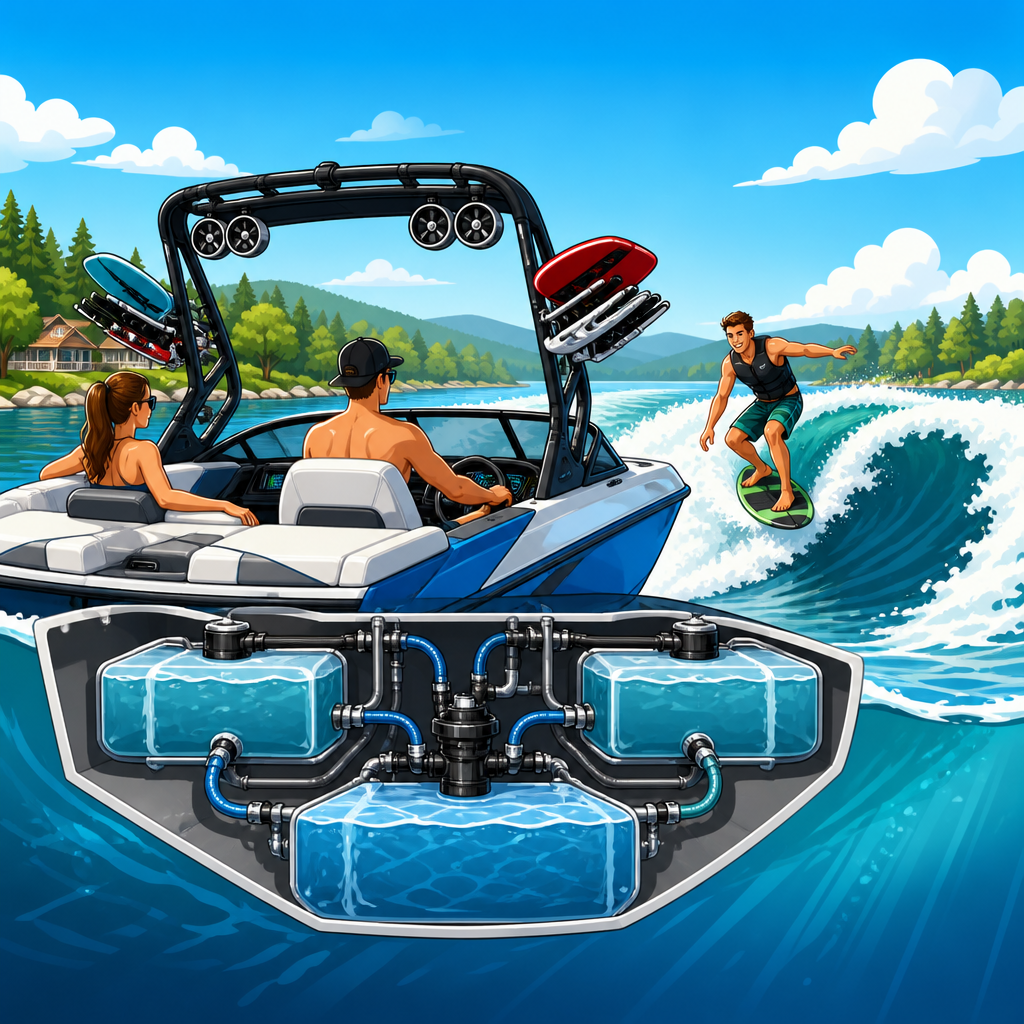
Choosing the best boat ballast systems for creating the perfect wake starts with understanding a simple truth: wake quality is engineered, not guessed. In wakeboarding and wakesurfing, ballast is the weight added to a boat to change how deep the hull sits in the water, which directly affects wake height, length, shape, and firmness. A wakeboarding boat without the right ballast system may still run well, but it will struggle to produce the clean, consistent wake that helps riders progress. As someone who has set up factory and aftermarket ballast on inboards, V-drives, and crossover tow boats, I have seen how the right setup turns an average session into one where every rider gets a repeatable pull and a predictable landing zone.
This topic matters because “best” does not mean heaviest. It means matching ballast capacity, pump speed, bag placement, hull design, passenger load, engine torque, and rider goal. Water skiing, wakeboarding, and wakesurfing all ask different things from a boat. Skiers usually want a flatter, softer wake at specific line lengths and speeds, while wakeboarders want rampy or steep transitions and surfers want a tall, powerful wave with push. That is why a good ballast system is not just gear; it is the control center for tuning a tow boat. For readers exploring water skiing and wakeboarding boats as a broader category, ballast is the feature that links hull design, powertrain choice, prop selection, wake-shaping devices, and onboard convenience into one practical decision.
At the hub level, it helps to define the main terms clearly. A ballast system can include hard tanks, soft ballast bags, reversible pumps, aerator pumps, thru-hull fittings, manifolds, check valves, vents, timers, sensors, and digital helm controls. Factory ballast systems are integrated by the boat manufacturer and typically tied into the dash display, while aftermarket systems are added later to increase capacity or improve flexibility. Wake shape refers to the face and lip of the wake; displacement is the amount of water the hull moves; and listed weighting means placing more ballast on one side, a tactic once common in wakesurfing before surf systems became standard. Understanding these terms makes it much easier to compare boats, diagnose poor wake performance, and choose a system that is safe, efficient, and suited to your sport.
How boat ballast systems create wake size, shape, and consistency
Ballast works by increasing displacement. When more weight is added, the hull settles deeper into the water and pushes a larger volume outward, creating a bigger wake. That basic principle is universal, but the result depends on where the weight is placed. Bow ballast lengthens the wake transition and can clean up the lip by keeping the boat from riding too stern-heavy. Stern ballast increases wake height and punch. Midship ballast adds overall size without dramatically changing the running attitude. In practice, the best wakeboarding setup usually blends all three so the wake grows without becoming washed out or too vertical for the rider’s style.
Speed and rope length also interact with ballast. A rider at 22 to 24 mph and 70 to 75 feet will experience the wake differently than a rider at 20 mph and 65 feet, even behind the same weighted boat. That is why serious setup work happens as a system: ballast, speed control, trim attitude, and rope length are tuned together. On many modern tow boats, wake plates, surf tabs, or power wedges further adjust the wake by changing stern lift and flow. Ballast provides the mass, but these devices refine the shape. The most effective setups are the ones that let a driver repeat those settings accurately for each rider.
Consistency is just as important as size. A wake that changes every pass due to slow fill times, uneven bag draining, or passenger movement makes progression harder. Factory systems often have the advantage here because the tanks are molded into the boat and engineered around the hull. Aftermarket systems can equal or exceed that performance, but only when plumbing, venting, and pump selection are correct. I have seen many large-capacity bag installations disappoint because airlocks slowed filling, undersized hose restricted flow, or bag placement blocked storage and shifted under load. The best ballast systems are predictable, balanced, and easy to adjust on the fly.
Factory ballast systems versus aftermarket upgrades
Factory ballast systems are the cleanest option for buyers shopping new or late-model wake boats. Brands such as Malibu, MasterCraft, Nautique, Centurion, Supra, Moomba, and Axis typically integrate ballast into touchscreen controls, rider presets, and wake-shaping hardware. This matters because the whole platform is designed to work together. Tanks are located with the boat’s center of gravity in mind, pumps are wired to marine standards, and sensors help the driver know when compartments are full or empty. Warranty support is another benefit. If a pump fails or a fitting leaks, service is usually straightforward through the dealer network.
Aftermarket ballast systems make sense when the stock system is too small, the boat is older, or the owner wants more flexibility. WakeMakers, Fly High, and Johnson Pump are common names in retrofit projects. A typical upgrade might add plug-and-play rear locker bags to a V-drive, increase hose diameter from three-quarter inch to one inch, or replace aerator pumps with reversible impeller pumps for easier plumbing. On direct-drive and crossover boats, aftermarket bags can also help owners tune the wake for wakeboarding while keeping the option to drain quickly for skiing. The tradeoff is complexity. Installation quality determines results, and poor installs can cause slow fills, siphoning, leaks, or electrical issues.
For most owners, the decision comes down to use case. If you want simple operation, fast dealer support, and presets for multiple riders, a strong factory ballast package is usually best. If you already own a capable hull and need more capacity per dollar, aftermarket upgrades often provide better value. The key is to view ballast as part of the entire tow-boat system, not as isolated bags and pumps.
Types of ballast components and what each one does
The main ballast components are tanks or bags, pumps, plumbing, vents, and controls. Hard tanks are durable, clean, and low-maintenance, but they are limited by available molded space. Soft bags maximize capacity and can fit irregular lockers, making them popular for wakeboarding boats that need larger rear loads. Pumps come in two main styles. Aerator pumps are inexpensive and can move water quickly, but they often require separate fill and drain pumps. Reversible impeller pumps use one pump to fill and empty a bag, simplifying plumbing and reducing thru-hulls, though they can be more expensive and sensitive to running dry.
Plumbing quality matters more than many buyers expect. Hose size influences fill speed, and vent placement affects whether a bag reaches full capacity or traps air. Check valves can prevent backflow, but too many restrictions can slow the system. Through-hull fittings must be installed correctly and sealed with marine-grade materials to avoid leaks. Electrical loads also matter. Multiple pumps running at once require proper wire gauge, fusing, relays, and battery support, especially on boats with large audio systems and long engine-off sessions.
| Component | Best Use | Main Advantage | Main Limitation |
|---|---|---|---|
| Hard ballast tanks | Factory-integrated wake boats | Clean fit and reliable repeatability | Fixed capacity and shape |
| Soft ballast bags | Aftermarket upgrades and maximum capacity | Flexible sizing and placement | Can reduce storage space |
| Aerator pumps | Budget-conscious multi-pump systems | Fast water movement at low cost | More complex plumbing |
| Reversible pumps | Clean installs with simple control logic | One pump fills and drains | Higher cost and slower than some dual-pump layouts |
Controls have improved dramatically over the past decade. Premium systems now store rider presets that combine ballast levels, surf settings, trim, and speed. That feature is not marketing fluff; it improves safety and performance by reducing distraction at the helm. When a driver can recall exact settings for a beginner skier, an intermediate wakeboarder, and an advanced surfer, every set starts faster and with fewer errors.
Best ballast setups for wakeboarding, wakesurfing, and water skiing
Wakeboarding ballast should build a clean, symmetrical wake with enough transition length for edging. On a typical 21- to 23-foot V-drive, that often means heavy rear ballast paired with meaningful bow weight to keep the hull from dragging stern-low. For example, a boat with 1,200 to 2,500 pounds of total ballast may run best for wakeboarding with roughly 55 to 60 percent aft and 40 to 45 percent forward, adjusted for passengers and wake device position. Riders who prefer a steeper wake usually move slightly more weight rearward. Riders who like a longer, rampier wake usually add more bow weight and maintain a level running attitude.
Wakesurfing ballast is more aggressive because the goal is wave height, face length, and push at lower speeds, often around 10 to 12 mph. Modern surf boats use combined ballast and surf tabs rather than extreme listed setups, but weight distribution still matters. Extra rear-corner ballast on the surf side, center ballast for displacement, and enough bow weight to prevent excessive bow rise remain the basics. Deep-V hulls from brands such as Centurion and Supreme often respond well to substantial ballast because they convert displacement into a powerful surf wave efficiently. The best systems here are the ones that let you fine-tune side-to-side weight quickly as crew size changes.
Water skiing is different. Skiers generally want minimal wake at speeds around 30 to 36 mph, especially in slalom. In that context, the best ballast system may be one that drains completely, fills selectively, or is simply not used during ski sets. Crossover boats solve this by offering moderate ballast for wakeboarding and rapid draining for skiing. If your household splits time between skiing and boarding, prioritize a system with fast empty times and precise controls rather than maximum capacity. A giant rear-bag setup may create a great wakeboard wake, but it can make ski transitions harsher and reduce the versatility that crossover owners value.
How to choose the right ballast system for your boat and riding style
Start with hull type. A dedicated wake boat with a V-drive layout, wide beam, and wake-focused running surface can usually handle more ballast and make better use of it than a runabout or fish-and-ski. Then look at engine torque and propeller setup. Adding 2,000 pounds of ballast changes hole shot, cruising efficiency, and engine load. Many owners who increase ballast also switch to a lower-pitch prop from brands like ACME or OJ for stronger acceleration and better RPM control. Without that adjustment, a heavily weighted boat may struggle to plane, especially at higher elevations.
Next, define your primary sport and skill level. Beginners do not need extreme ballast. In fact, too much wake can slow progression by making the wake intimidating and less forgiving. Intermediate riders often benefit most from a clean, medium-sized wake with consistent shape. Advanced riders may want larger capacity and more granular control. Storage and crew size matter too. Rear locker bags that consume all gear space may be acceptable for a dedicated riding crew, but they can frustrate family users carrying skis, life jackets, ropes, and coolers.
Finally, prioritize safety and serviceability. Use marine-rated pumps, tinned wire, waterproof connectors, and properly supported hose runs. Confirm that the boat remains within safe operating limits and that ballast does not block ventilation, bilge access, or emergency gear. A ballast system should improve the day on the water, not create maintenance headaches. If you are building this section of a broader Fishing & Water Sports plan, ballast is the gateway topic that informs later decisions on wake-shaping devices, tow ropes, rider setup, prop upgrades, and boat buying.
Common ballast mistakes and how to avoid them
The most common mistake is chasing weight instead of balance. Owners hear that a certain boat runs 3,000 pounds and try to match that number without considering hull shape, passengers, or engine setup. The result is often a washy wake, poor planing, and stressed driveline components. Another mistake is ignoring bow weight. Too much stern ballast without enough forward balance makes many boats plow, increases fuel burn, and shortens the usable wake transition.
Poor installation is another frequent problem. I have corrected systems where bags never fully filled because vents were too low, pumps lost prime because intake placement was wrong, or water siphoned into empty bags while underway. These are solvable issues, but they show why component choice and layout matter. Maintenance is also overlooked. Impeller pumps wear, hose clamps loosen, and bag fittings can seep over time. A quick inspection before the season and periodic testing of each zone prevents most mid-summer failures.
Do not ignore legal and practical limits. More ballast means more draft, more fuel use, and sometimes less freeboard at rest. Rough water, sudden passenger movement, and inexperienced drivers amplify those risks. The smartest ballast system is one that delivers the wake you need while preserving handling, visibility, and safety margins.
The best boat ballast systems for creating the perfect wake are the ones that match your hull, your sport, and your expectations on the water. Factory systems excel at integration, ease of use, and repeatability. Aftermarket systems shine when you need more capacity, better value, or a custom layout tailored to an older boat. In every case, the fundamentals stay the same: balanced weight distribution, reliable pumps, correct plumbing, and settings that can be repeated rider after rider. When those pieces work together, wakeboarding becomes more consistent, wakesurfing gains push and shape, and crossover boats stay versatile enough for family skiing.
For a hub page covering water skiing and wakeboarding boats, ballast is the central topic because it connects directly to wake quality, engine performance, storage, safety, and long-term ownership cost. It also gives buyers a practical lens for comparing tow boats across brands and generations. Instead of asking which system carries the most weight, ask which system gives you the cleanest wake, the fastest adjustments, and the fewest compromises for how you actually ride.
If you are evaluating a new boat or upgrading your current one, map your ideal riding setup before you buy parts: target speed, crew size, storage needs, and primary sport. Then choose a ballast system that supports those goals with reliable hardware and precise control. Get that foundation right, and every other wake upgrade works better.
Frequently Asked Questions
What does a boat ballast system actually do, and why is it so important for wake quality?
A boat ballast system adds controlled weight to the boat so the hull sits deeper in the water. That extra displacement changes the shape, size, and firmness of the wake. In practical terms, ballast is what allows a boat to produce a taller, cleaner, longer, and more consistent wake for wakeboarding or a surfable wave for wakesurfing. Without the right ballast setup, a boat may still perform fine for cruising, but it usually will not create the kind of predictable wake that helps riders improve technique, timing, and confidence.
The reason ballast matters so much is that wake quality is not random. It is engineered through weight distribution, hull design, speed, and rope length. Ballast is one of the most influential variables because it directly affects how the boat interacts with the water. More weight in the stern can make the wake steeper and taller, while weight moved forward can lengthen the transition and help clean up the wake face. Side-to-side distribution also matters, especially in wakesurfing, where the surf side is often weighted more heavily to build a longer pocket and more push.
Modern ballast systems make this process easier and more repeatable. Instead of relying only on loose gear or guessing where to place passengers, dedicated ballast tanks and bags let owners fill, drain, and fine-tune weight with much more precision. That consistency is a major advantage because riders can return to the same setup session after session. If your goal is creating the perfect wake, ballast is not just an accessory. It is one of the core tools that turns an average pull into a deliberate, dialed-in riding experience.
What are the main types of boat ballast systems, and which one is best?
The main types of boat ballast systems are hard tanks, soft ballast bags, and integrated plug-and-play combinations that use both. Hard tanks are built into the boat and are popular because they are clean, convenient, and easy to operate. They typically fill and drain quickly through factory plumbing and switches, and they do not take up usable storage in the same way large loose bags can. For owners who want a tidy, user-friendly setup, hard tanks are often the most convenient option.
Soft ballast bags, sometimes called ballast sacs, are flexible containers that can be placed in lockers, under seats, in the bow, or on the floor depending on the boat and desired wake shape. Their biggest advantage is versatility. They are available in many sizes and shapes, making them ideal for custom wake tuning or increasing capacity beyond stock ballast. They are especially useful for riders who want to experiment with different setups for wakeboarding versus wakesurfing. The tradeoff is that they can use up space, require careful installation, and may be less convenient than fixed tanks if they are not part of a well-designed plumbing system.
For many boat owners, the best solution is a hybrid system. A boat may come with factory hard tanks and then be upgraded with additional plug-and-play ballast bags that connect to the existing pumps and hoses. This gives you the convenience of built-in ballast with the flexibility to add more weight where it matters most. The best ballast system is not one universal product for every boat. It is the system that matches your hull, your riding style, your crew size, and how much control you want over wake shape. The right choice usually balances capacity, convenience, storage impact, fill speed, and adjustability.
How much ballast do you need to create the perfect wake for wakeboarding or wakesurfing?
The amount of ballast you need depends on the boat’s hull design, engine power, prop setup, passenger load, and whether you are wakeboarding or wakesurfing. There is no single number that works for every boat. Some boats produce a strong wake with modest factory ballast, while others need significant additional weight to reach their full potential. In general, wakeboarding often benefits from a more balanced front-to-back distribution that creates a clean, symmetrical wake, while wakesurfing usually relies on heavier, more strategic weighting to one side and toward the rear to build a longer and more powerful surf wave.
For wakeboarding, many riders start with factory ballast and then make adjustments based on wake shape. If the wake is too steep, adding some weight forward can lengthen the transition. If it feels too small or soft, more total ballast may help, assuming the boat can safely handle it. The goal is not just a bigger wake. It is a clean wake with the right lip and firmness at your riding speed and rope length. Advanced riders often prefer a more defined, vertical pop, while beginners may do better with a mellower shape that is easier to edge through consistently.
For wakesurfing, ballast tuning is even more precise. Weight is often concentrated on the surf side, and fine adjustments can dramatically affect pocket length, face cleanliness, and push. Too little weight may produce a weak, washy wave. Too much in the wrong area can make the wave short, overly steep, or inconsistent. The best approach is to start with manufacturer recommendations, then test and document changes in small increments. Always keep safety in mind and never overload the boat beyond its rated capacity. The perfect wake comes from tuned weight distribution, not simply adding more ballast than the boat was designed to carry.
Should you choose factory ballast or upgrade with an aftermarket ballast system?
Factory ballast is a strong starting point because it is designed specifically for the boat’s layout, plumbing, and electrical system. It is usually easy to operate, integrates cleanly with the dash controls, and has been engineered with fit and function in mind. For many recreational riders, factory ballast provides enough performance and simplicity to deliver a solid wake without extra complexity. It also tends to preserve storage areas better and can be more seamless from a resale standpoint because buyers often appreciate original equipment that looks and functions like it belongs with the boat.
Aftermarket ballast systems become appealing when factory capacity is not enough or when you want more customization. Many stock systems are designed to satisfy a wide range of users, which means they may leave room for serious wake enthusiasts to improve size, shape, and adjustability. Aftermarket upgrades can include larger ballast bags, faster pumps, additional valves, custom plumbing, wake-specific weighting zones, and automated controls. These upgrades are especially valuable for owners who switch between wakeboarding and wakesurfing or who want to optimize their setup for different rider preferences.
The best choice often depends on how serious you are about wake performance. If convenience, reliability, and ease of use are your top priorities, factory ballast may be ideal. If you are chasing a highly tuned wake and are willing to trade some storage space, budget, or installation complexity for more control, an aftermarket upgrade can be worth it. In many cases, the smartest route is building on the factory system rather than replacing it entirely. That gives you a dependable base while expanding your ability to customize the wake to match exactly how you ride.
What features should you look for in the best boat ballast systems?
When comparing ballast systems, focus first on capacity, fill and drain speed, and adjustability. Capacity matters because it determines how much influence the system can have on wake size and shape. Fill and drain speed matter because a system that takes too long becomes frustrating, especially if you change setups often during the day. Adjustability is equally important because the perfect wake is rarely created with one fixed weight profile. The best systems let you control separate zones such as bow, center, stern, and surf side so you can fine-tune performance instead of settling for a one-size-fits-all result.
Reliability and build quality should also be high on your checklist. Pumps, hoses, fittings, and valves need to withstand repeated use in a wet, high-vibration environment. Poor-quality components can lead to slow filling, leaks, clogs, or pump failure at the worst time. Look for systems with durable marine-grade materials and a reputation for dependable operation. Ease of installation and maintenance are also important. Even a high-capacity system loses value if it is difficult to service or frequently needs troubleshooting. A clean, well-planned layout usually performs better and is easier to live with long term.
Finally, think about how the ballast system fits your actual boating habits. If you regularly bring a large crew, you may not need as much supplemental ballast as someone who rides with only two or three people. If you switch between wakeboarding and wakesurfing, independent zones and quick adjustments become more important. If storage is limited, bag shape and placement matter a lot. The best boat ballast systems are the ones that create repeatable wake performance without making the boat inconvenient, unsafe, or overly complicated. The ideal setup combines enough weight, smart distribution, durable hardware, and easy control so you can spend less time guessing and more time riding.