Improving your waterskiing skills starts long before you drop into the water. The right boat setup shapes every part of the run, from how cleanly you get out of the hole to how consistently you cross the wake, hold edge pressure, and recover after mistakes. In practical terms, boat setup means the combination of hull design, engine and propeller choice, speed control, rope and pylon placement, ballast management, wake shape, seating load, and safety systems. When those pieces are matched to the skier’s level and the discipline being practiced, progress comes faster and with fewer bad habits.
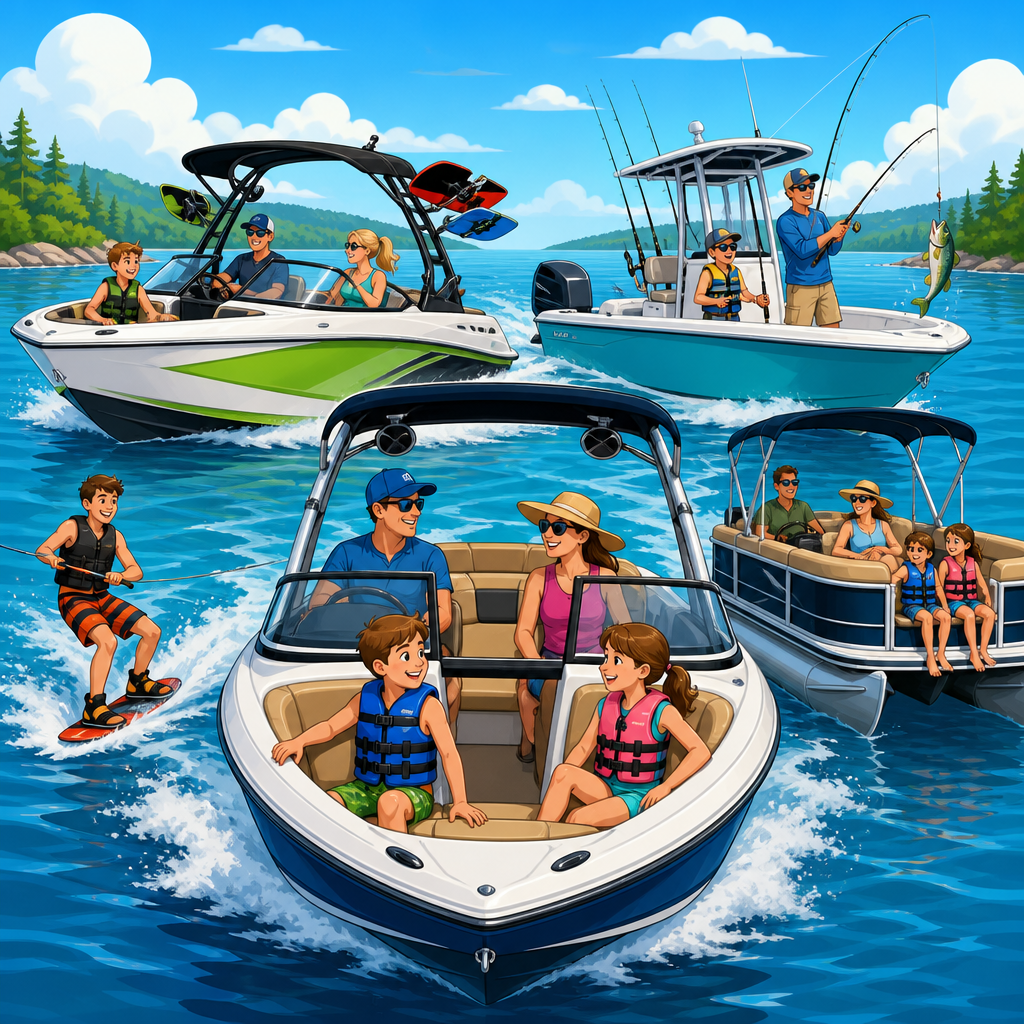
Water skiing and wakeboarding boats are often grouped together, but they are not identical tools. A dedicated slalom ski boat is built to create a small, soft wake at precise speeds, usually with a direct-drive layout that keeps weight centered. A wakeboard boat is designed to do almost the opposite, using ballast, hull geometry, and often a V-drive layout to produce a larger, more defined wake. Many families own crossover tow boats that can do both reasonably well, but setup becomes critical because small changes in weight distribution, line attachment, and speed can dramatically alter the ride.
I have worked with new skiers who assumed better technique alone would solve their struggles, only to find that the boat was running too slow, the rope was too long, the stern was overloaded, or the propeller was wrong for strong acceleration. Once we corrected the setup, their starts became cleaner and their body position improved without endless coaching. That is why this topic matters. Good setup reduces fatigue, improves consistency, and lets a skier feel the correct movement patterns. It also keeps sessions safer by minimizing unpredictable wake behavior and reducing the chance of hard falls caused by surging speed or poor visibility from the driver’s seat.
As a hub for water skiing and wakeboarding boats, this guide explains the equipment and adjustments that matter most, how they influence skill development, and how to choose the right configuration for slalom skiing, recreational skiing, wakeboarding, and mixed family use. If you want faster improvement, better pulls, and more productive time on the water, start with the boat.
Choose the Right Boat Type for the Skill You Want to Build
The fastest way to improve waterskiing is to use a boat whose design supports the discipline you are practicing. For slalom skiing, the best platform is a tournament-style direct-drive inboard from brands such as MasterCraft, Malibu, Nautique, or Centurion’s ski-focused models. These boats typically run a flatter hull, carry weight low and near the center, and produce a minimal wake at common slalom speeds between 30 and 36 mph. The direct-drive engine placement helps keep the boat balanced, which matters when a skier is trying to maintain rhythm through both wakes.
For wakeboarding, riders usually prefer V-drive boats because the engine sits aft, naturally increasing stern weight and wake size. Ballast tanks, wake plates, and surf systems are common on these boats, and they allow the crew to tune wake shape for pop and landing transitions. The tradeoff is that a wake-oriented hull can create a larger, firmer wake that makes recreational slalom skiing harder, especially for beginners who are still learning to cut across cleanly.
Crossover boats sit in the middle. They may include retractable ski pylons, optional ballast, and hull features aimed at reducing wake when ballast is empty. They are excellent for families that alternate between skiing, tubing, and wakeboarding, but the setup needs to change by activity. Emptying ballast, moving passengers forward, shortening the line, and running the correct speed can make a crossover boat much more ski-friendly. Leaving full ballast in place and towing a novice skier at a wakeboard speed is one of the most common reasons people think they are “bad at skiing” when the setup is actually the problem.
Dial In Speed Control, Pull Characteristics, and Propeller Match
Boat speed is not a detail. It is the reference point for skill development. In slalom, even a 1 mph variation changes timing, line load, and wake crossing feel. Modern speed control systems such as PerfectPass and Zero Off exist because precise speed matters that much. Zero Off is the standard in tournament slalom and uses GPS-based control to hold exact speed under load. For recreational skiers, a well-calibrated PerfectPass system is a major upgrade because it removes the inconsistency that comes from manual throttle corrections.
Beginners on two skis often do best around 24 to 30 mph depending on size, strength, and ski shape. Intermediate open-water slalom skiers commonly progress in the upper 20s to low 30s. Advanced course skiers train at 34 or 36 mph. Wakeboarders usually ride much slower, often around 18 to 24 mph, because they want a larger wake and more time to set edge. Trying to learn waterskiing behind a boat locked at wakeboard speed produces a steep, disruptive wake and weakens the skier’s body position.
Propeller selection also changes pull quality. A lower-pitch prop can improve hole shot and help a heavily loaded boat maintain speed, which is useful when pulling deep-water starts or larger adult skiers. A propeller that is optimized only for top-end speed may feel sluggish out of the hole and lead to speed sag, especially in hot weather, at elevation, or with a full crew. I have seen boats transformed by switching to an Acme or OJ propeller matched to the engine’s torque curve and the owner’s actual tow sports use. The result is a stronger, smoother launch and less throttle hunting once the skier is up.
Throttle response should be progressive, not abrupt. If the driver hammers the throttle to get the skier up, then backs off sharply, the skier gets yanked, then dropped into slack. The correct pull is firm and steady, with the boat accelerating in a controlled arc to target speed. Good setup helps, but driver discipline is part of the system.
Manage Weight Distribution, Wake Shape, and Line Setup
Wake shape is largely a function of hull design, speed, and where the weight sits in the boat. For skiing, less stern weight is almost always better. Empty all ballast tanks, drain bags fully, and move passengers toward the center or slightly forward. A bow-heavy boat can porpoise, but a stern-heavy boat creates the steep wake that frustrates skiers. Even moving two adults from the aft bench to the observer seat and bow walkway area can noticeably soften the wake on a crossover boat.
Rope length and attachment point matter because they determine where the skier crosses the wake and how the pull feels. Recreational skiers often use a 60- to 75-foot line, but the ideal length depends on boat wake width, speed, and skill level. Sometimes shortening the rope by 5 feet puts the skier at a cleaner part of the wake and immediately improves confidence. For slalom skiing, a fixed ski pylon or center-mounted tow point gives the most direct, predictable pull. High tow points on wake towers are excellent for wakeboarding because they help riders get upward lift, but they can feel wrong for traditional waterskiing by altering body alignment and pull angle.
Trim devices, if equipped, should be used carefully. Wake plates and adjustable tabs can flatten the running attitude and clean up wake shape, but overcorrecting can affect handling and visibility. The target is a level, efficient run with minimal wake turbulence at the skier’s speed. Test changes one at a time and watch both sides of the wake because some hulls react asymmetrically when crew weight is uneven.
| Setup Factor | Best for Waterskiing | Best for Wakeboarding | Skill Impact |
|---|---|---|---|
| Ballast | Empty or minimal | Full or tuned by side and stern | Controls wake size and softness |
| Passenger placement | Centered or slightly forward | Aft-biased when building wake | Changes boat attitude and consistency |
| Tow point | Center ski pylon | Wake tower | Alters pull angle and body position |
| Speed | 24–36 mph depending on skier | 18–24 mph | Sets timing, wake width, and line load |
| Rope length | Adjusted for clean wake crossing | Set for trick approach and landing | Affects rhythm and confidence |
Set Up the Boat for Beginner, Intermediate, and Advanced Skiers
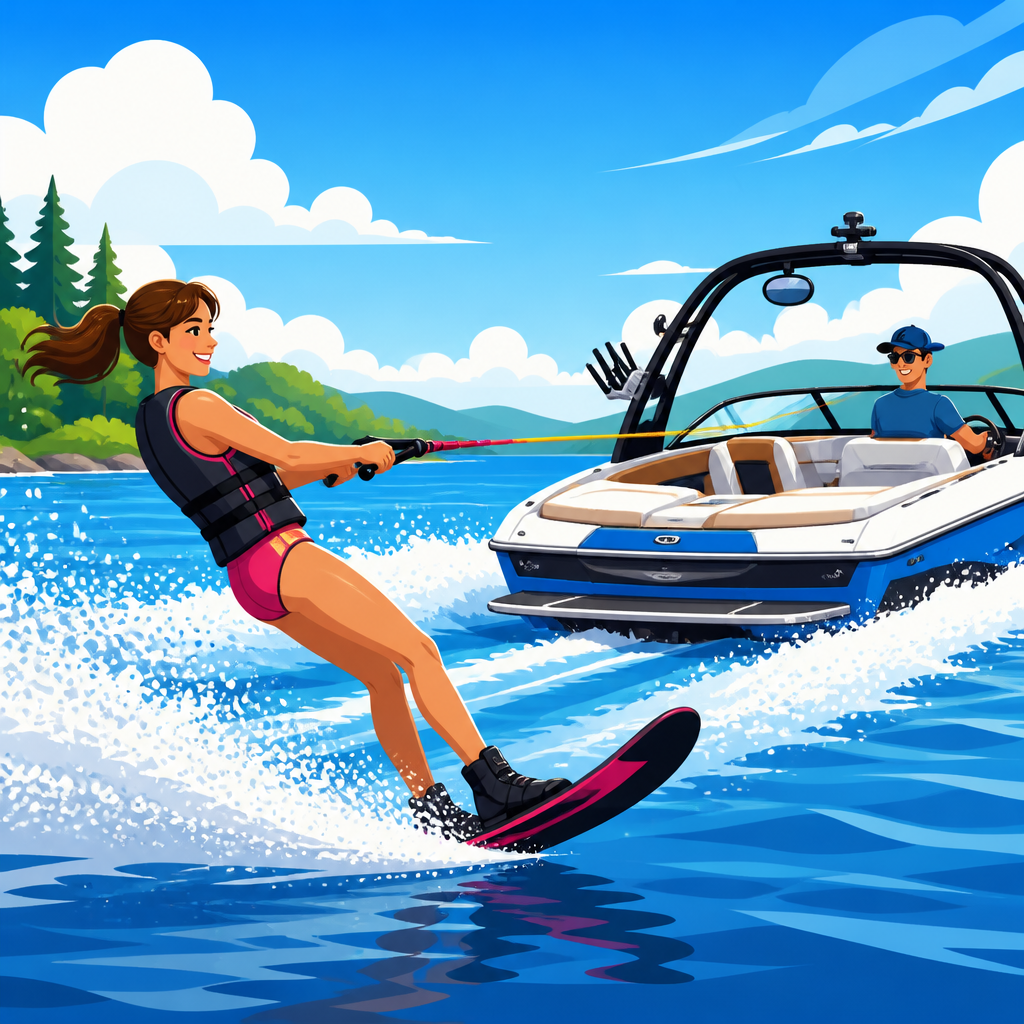
A beginner-friendly waterski boat setup focuses on easy starts and forgiveness. Start by minimizing wake: no ballast, balanced fuel load, and crew placed away from the transom. Use a stable speed in the mid-20 mph range for adults on combo skis, or lower for lighter youth skiers. A deep-V recreational runabout can pull a skier, but the wake may be larger than ideal; in that case, shorten the rope so the skier crosses closer to the rooster tail where the wake may be narrower. Consider training aids such as a boom for first rides because it gives immediate feedback and reduces drag from a long line.
Intermediate skiers usually need consistency more than anything else. They are learning single-ski starts, stronger edge changes, and controlled cuts outside the wake. At this stage, speed control should be automated if possible. The driver should hold straight lines using shoreline references rather than steering toward the skier. Small steering corrections can swing the rope and disrupt technique. Intermediate skiers benefit from experimenting with rope length and speed in small increments, because one click of adjustment can turn repeated failures into repeatable successes.
Advanced skiers demand precision. Course skiers need exact speed, clean tracking, tournament-style pull, and minimal chine spray. Tracking fins, rudder feel, engine mount condition, and steering cable health all become relevant because any slop in the system can show up as path inconsistency. At higher levels, even propeller cup, altitude compensation, and water conditions matter. Early morning water is usually best because reduced chop lets the skier feel true boat feedback instead of reacting to surface noise. The boat setup for advanced performance is not just about comfort; it is about creating a controlled standard so each pass is comparable.
Driver Technique, Safety Systems, and Maintenance That Protect Progress
A perfectly set up tow boat still underperforms if the driver lacks discipline. The driver should accelerate smoothly, bring the boat to speed without surging, maintain a straight course, and keep the skier in clear view using a spotter and proper mirror placement. In most jurisdictions, an observer is legally required when towing. Convex ski mirrors improve sightlines, but they supplement rather than replace a dedicated spotter. Hand signals for speed up, slow down, stop, and return should be agreed on before every set.
Safety equipment influences improvement because confident skiers learn faster. A Coast Guard-approved life jacket with the right fit keeps a fallen skier protected without restricting movement. Engines should have functioning emergency cutoffs, bilge blowers should be used before starting gasoline inboards, and swim platforms must stay clear during engine operation. Carbon monoxide exposure around idling boats is a serious risk, especially when people gather near the transom. Safe habits are not separate from performance; they create the conditions for longer, better sessions.
Maintenance is another hidden performance factor. Dirty hull bottoms increase drag and alter wake shape. Worn motor mounts can affect driveline alignment, creating vibration and reduced efficiency. A nicked propeller introduces cavitation and inconsistent pull. Inboard boats also depend on healthy tracking fins and rudders for straight tracking under skier load. If the boat wanders each time the skier cuts hard, check steering play, fin condition, and weight balance before blaming technique. Reliable setup means consistent feedback, and consistent feedback is how skills are built.
For a fishing and water sports buyer comparing options, the practical lesson is simple: choose the boat that matches most of your towing time, then tune the setup for each session. A family that mostly skis should not buy a wake-focused model expecting it to feel like a tournament ski boat. A family that mostly wakeboards should not chase a tiny slalom wake at the expense of rider progression. Crossover models, careful setup, and clear expectations solve most of the conflict.
The right boat setup improves waterskiing because it removes unnecessary obstacles. When speed is exact, the wake is controlled, the rope length matches the skier, and the boat’s weight is balanced, technique becomes easier to feel and repeat. That is true whether you are learning deep-water starts, moving from two skis to slalom, or helping a family crew switch between skiing and wakeboarding on the same day.
The most important decisions are straightforward. Use a ski-oriented boat for slalom if that is your priority. Use reliable speed control instead of guessing with the throttle. Keep ballast empty and passengers centered for skiing. Match propeller, rope length, and tow point to the sport. Then support it all with disciplined driving, proper safety procedures, and routine maintenance. These are not minor adjustments. They directly affect acceleration, wake shape, line tension, and skier confidence.
As the hub for water skiing and wakeboarding boats, this topic connects every sub-article you may explore next: ski boat types, direct-drive versus V-drive layouts, speed control systems, propeller selection, ballast tuning, tow ropes and pylons, and tow boat safety. Start by evaluating your current setup against the principles in this guide. Make one change at a time, test it in calm water, and note how the skier’s starts, wake crossings, and fatigue level change. A better run is usually only a smarter setup away.
Frequently Asked Questions
Why does boat setup matter so much when you are trying to improve your waterskiing skills?
Boat setup matters because it directly affects the consistency, feel, and safety of every pull. A skier can have strong fundamentals, but if the boat produces an unpredictable wake, surges in speed, or pulls from the wrong rope height, progress becomes much harder. Good technique depends on repeatable conditions. When the hull, engine, propeller, speed control, rope length, pylon position, and weight distribution are all working together, the skier gets a cleaner start, steadier acceleration, more predictable wake crossings, and better support through turns and recoveries.
In practice, the right setup reduces variables. Instead of adjusting to a boat that is too aggressive, too soft, too heavy in the stern, or inconsistent in speed, the skier can focus on body position, edge control, timing, and balance. This is especially important for developing skiers, because poor boat setup can teach bad habits. For example, a large or washed-out wake may cause someone to brace, jump, or absorb impact incorrectly. A low-quality pull or fluctuating speed may force the skier to overwork just to stay connected. With a properly configured boat, each pass feels more natural and more coachable, which leads to faster skill development and greater confidence on the water.
What parts of the boat setup have the biggest impact on waterski performance?
The most important elements are hull design, engine and propeller pairing, speed control, pylon or tow point placement, rope selection, ballast and passenger distribution, and overall wake shape. The hull determines how the boat rides through the water and how the wake forms. A ski-focused hull is designed to create a flatter, narrower, cleaner wake with minimal turbulence, which makes crossings smoother and less disruptive. That is one reason dedicated ski boats feel very different from general-purpose runabouts or wake boats.
The engine and propeller influence how quickly and smoothly the boat gets the skier out of the water and how well it maintains target speed under load. A strong hole shot is important, but smooth power delivery is just as important. If the propeller is mismatched, the boat may labor during starts or hunt for speed once the skier is up. Speed control is another major factor. Modern speed control systems help hold a precise pace, reducing the common problem of drivers unintentionally accelerating or easing off at the wrong time.
The tow point also changes the feel of the pull. A properly placed ski pylon gives a more centered, consistent line of tension, while an unsuitable attachment point can alter rope angle and make tracking less stable. Weight distribution matters more than many people realize. Too much weight in the back can enlarge the wake and make starts less efficient, while uneven side-to-side loading can create asymmetrical wakes that affect edge changes and rhythm. Even passenger seating can influence how the boat runs. When all of these factors are tuned with the skier’s size, ability, and goals in mind, the result is a more efficient and more forgiving training environment.
How should you adjust boat speed, rope setup, and load distribution for different skill levels?
Beginners generally benefit from a softer, more forgiving setup. That usually means a moderate speed, smooth throttle application, minimal unnecessary weight in the boat, and a clean tow point with an appropriate rope length. New skiers need time to establish balance and learn proper body position, so the goal is to make the pull predictable rather than demanding. Speed should be high enough to support the ski and create stability, but not so high that it overwhelms the skier or encourages defensive posture. A clean, uncluttered interior and balanced passenger placement also help keep the wake manageable.
Intermediate skiers often need a setup that supports skill refinement. At this stage, boat speed may increase slightly depending on the discipline and skier size, and rope setup becomes more important because consistency in line tension affects wake timing and edge development. The boat should still be loaded lightly and evenly, with ballast minimized unless a very specific training reason exists. Drivers should pay close attention to smooth, straight tracking and repeatable speed through the course or training path. Small setup errors become more noticeable at this level because the skier is beginning to work on precision rather than simply staying up and crossing comfortably.
Advanced skiers usually need setup adjustments tailored to performance goals. That may include exact target speeds, rope lengths, propeller choices optimized for pull characteristics, and very disciplined passenger placement. At this point, tiny differences in wake firmness, line feel, or speed consistency can influence timing and efficiency. The key principle across all skill levels is matching the setup to the skier, not forcing the skier to adapt to a poorly matched boat. A setup that is ideal for a stronger, faster skier may be counterproductive for someone still learning foundational mechanics.
Can the wrong boat setup actually hold back progress or create bad habits?
Yes, and this is one of the most overlooked issues in waterski training. When the boat setup is wrong, skiers often compensate in ways that feel necessary in the moment but become damaging over time. If the wake is too large or too rough, a skier may start to anticipate impact instead of maintaining proper stacked position and connection. If speed is inconsistent, they may pull too hard at the wrong times, sit back, or lose trust in the line. If the boat is weighted unevenly, they may unknowingly change their approach on one side compared with the other. These adaptations can become deeply ingrained habits that are difficult to correct later.
Poor setup can also affect confidence. A skier who struggles with deep-water starts because the boat lacks a smooth hole shot may assume the issue is entirely technical, when in reality the engine-prop setup or driver input is part of the problem. Someone who gets slammed at the wake every pass may believe they need to “try harder,” when the actual issue is excessive stern weight or a hull not suited to ski performance. That does not mean boat setup replaces proper coaching or technique, but it does mean equipment and configuration can either support learning or interfere with it. For long-term improvement, the boat should reinforce correct movements, not reward survival tactics.
What is the best way to dial in a boat setup for safer, more effective waterski practice?
The best approach is to make setup decisions systematically and test one variable at a time. Start with the fundamentals: confirm the boat is mechanically sound, the propeller is appropriate for the engine and intended ski use, the speed control is functioning accurately, the tow point is secure, and all safety gear is in place. From there, establish a neutral baseline with minimal ballast, balanced passenger seating, proper rope condition, and a target speed suited to the skier’s experience and discipline. A baseline setup gives you something reliable to evaluate against instead of guessing from session to session.
Next, pay attention to what the skier is actually feeling. Are starts smooth or abrupt? Does the boat hold speed through acceleration and during wake crossings? Is the wake clean and symmetrical? Does the line feel steady, or does it surge? Feedback from the skier and observations from the driver or coach should guide adjustments. If the wake feels too large, reduce stern-heavy loading and rebalance the boat. If starts feel weak, evaluate engine output, propeller pitch, and throttle delivery. If the boat wanders or feels inconsistent, review tracking, steering input, and passenger distribution.
Safety should remain part of the setup conversation at all times. A proper observer seat, clear communication signals, a functioning mirror where legal and appropriate, life jackets, and an experienced driver all contribute to better skill development because they create a controlled environment. In the end, the “right” boat setup is not just about performance numbers. It is about creating a repeatable, confidence-building pull that allows the skier to practice correct technique efficiently and safely. When the setup supports the skier’s level and goals, improvement becomes much more measurable and much more sustainable.