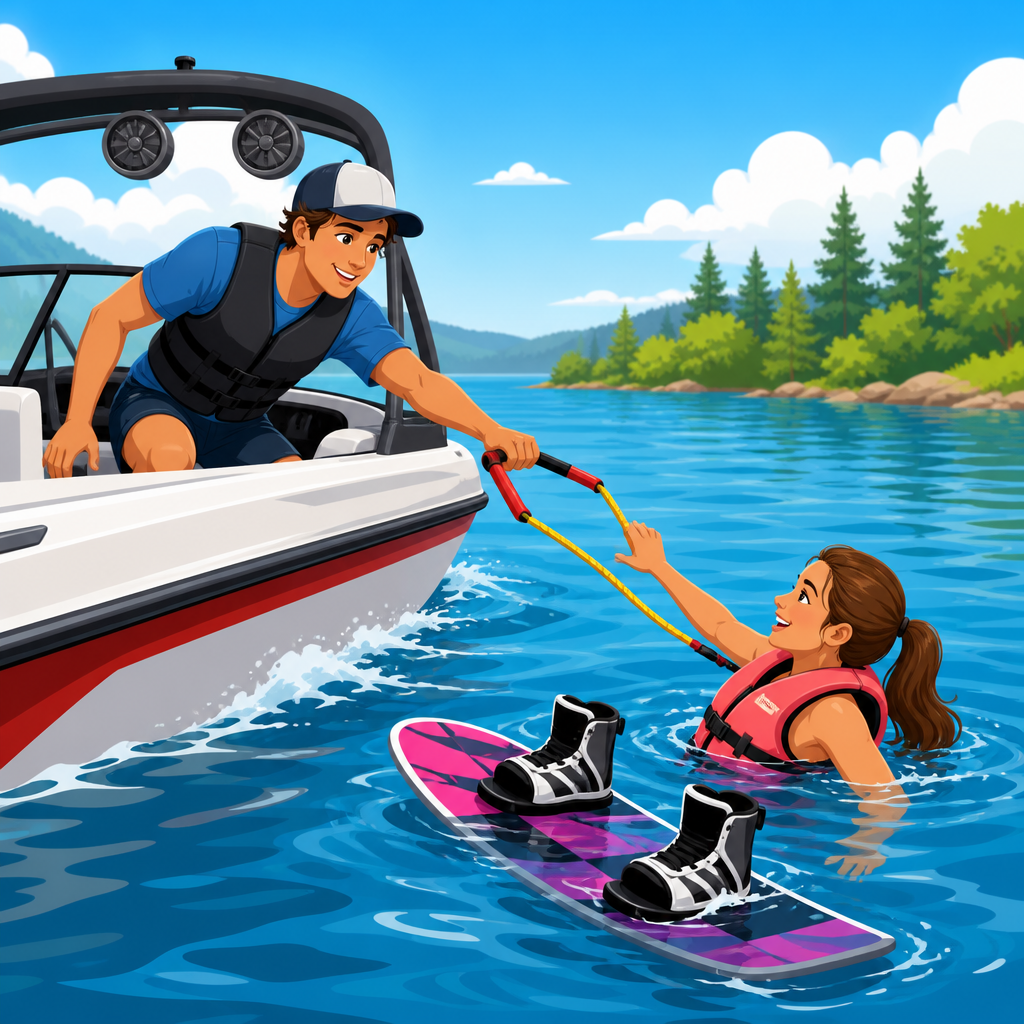
How to rescue a fallen wakeboarder or water skier starts with one principle: every pickup is a safety procedure, not just a courtesy loop with the boat. In towing sports, a “fallen rider” is any wakeboarder, water skier, kneeboarder, or tuber who has released the handle or gone down unexpectedly and is now floating in open water, often with limited mobility, reduced visibility, and gear that can drift. A proper rescue means turning the boat, re-approaching at idle speed, maintaining visual contact, keeping the propeller well away from the person, and recovering them without creating new hazards. I have run pickups on crowded lakes, narrow river channels, and rough afternoon chop, and the difference between a smooth recovery and a dangerous one is almost always preparation.
This topic matters because most tow-sport incidents happen not during the exciting part of the run, but during transitions: the start, the fall, the retrieval, and the handoff between driver, observer, and rider. The U.S. Coast Guard and state boating agencies repeatedly stress three basics that apply here: carry a wearable life jacket for every person aboard, maintain a proper lookout, and operate at safe speed for conditions. In practice, rescuing a fallen wakeboarder or water skier sits at the center of broader safety and training for water sports and fishing. Anglers share water with tow boats, paddlecraft, and swimmers; families often move between fishing in the morning and skiing in the afternoon. A hub article on safety must therefore cover crew roles, right-of-way awareness, emergency communication, weather judgment, and post-incident checks, not just the pickup itself.
Key terms are straightforward but important. The driver controls boat speed, route, and final approach. The observer, sometimes called the spotter, watches the rider continuously and relays signals. A pickup pattern is the route the boat takes after a fall so the rider stays visible and clear of the propeller. Neutral means the engine is disengaged from the propeller, but the prop can still spin if the engine is running and the transmission is mishandled; that is why distance matters. “Downed skier flag” rules vary by state, but in many jurisdictions an orange flag must be raised when a rider is in the water. Understanding these details turns generic boating advice into a repeatable rescue system.
Prepare the crew, boat, and lake before anyone starts riding
The safest rescue begins before the tow rope enters the water. Every tow session needs defined roles: one qualified driver, one dedicated observer, and one rider. The driver should know local boating laws, no-wake zones, channel markers, and typical traffic patterns on that waterway. The observer should understand hand signals, know where the rider is at all times, and be assertive enough to call “rider down” immediately. If you also have children aboard, fishing rods on deck, or loose coolers in the cockpit, secure them before pulling a rider. In my experience, clutter causes more frantic moments during pickups than bad driving does, especially when someone trips while trying to assist.
Equipment checks are nonnegotiable. Use a U.S. Coast Guard approved life jacket designed for tow sports, not an inflatable model intended for calm cruising. Confirm the tow rope is in good condition, the handle is intact, the mirror is adjusted, and the engine cutoff switch lanyard is functional if your boat uses one. Test steering response at idle and verify reverse engages cleanly, though reverse should not be used close to a person in the water. Review local rules on observer requirements and skier-down flags. If you are mixing fishing and water sports, stow knives, hooks, landing nets, and tackle trays before the first run. A rider boarding from the swim platform can be cut badly by a treble hook hidden in a towel pile.
Environmental assessment is part of training. Look at water temperature, wind direction, current, glare, and boat density. Cold water raises the urgency of retrieval because manual dexterity and swimming strength drop quickly. Afternoon sun can blind the driver during a west-facing pickup. Current can push a fallen skier toward docks, bridge pilings, or anglers casting from anchored boats. Explain all of this to new riders in plain language before they start. They do not need a lecture on hydrodynamics; they need to know that after a fall they should keep the life jacket on, signal they are okay, and wait for the boat rather than swimming unpredictably.
The correct rescue sequence after a fall
When a rider falls, the observer should announce it immediately and point continuously at the person in the water until they are back at the boat. Pointing sounds simple, but it is one of the most effective habits in towing because the driver can lose sight of a low-profile wakeboarder behind a roller or in glare. The driver should pull the throttle back smoothly, keep control, and begin a wide turn that preserves distance. Avoid abrupt maneuvers that throw passengers off balance or drag the rope across the rider. If local law requires a skier-down flag, the observer should raise it as soon as the rider is in the water.
The best approach is usually to circle back so the driver’s side keeps the rider visible and the boat stops with the rider on the observer’s side, away from the propeller. Approach from downwind or down-current when possible, because wind and current will drift the boat toward the rider at idle rather than away from them. The final closing speed should be very slow. Shift to neutral before the rider reaches the side of the boat, then let momentum die. If you overshoot, continue away, reset, and make another approach. Do not back aggressively toward a person in the water. Most serious propeller injuries happen because operators rush the last few yards.
The rider should be instructed beforehand to keep clear of the rope and signal condition. A raised arm commonly means “I’m okay,” while patting the head is widely used in some areas, but do not rely on one gesture alone; teach your crew your signals before the run. If the rider appears injured, unconscious, or unable to move effectively, the rescue changes from routine pickup to emergency response. Kill forward motion, keep the propeller well away, throw flotation if needed, call emergency services, and bring the most capable swimmer aboard only if conditions and training support that decision. Unplanned in-water rescues can create a second victim very quickly.
| Situation | Immediate Driver Action | Observer Action | Key Risk to Control |
|---|---|---|---|
| Routine fall, rider alert | Throttle down, wide turn, idle approach | Point at rider, raise flag if required | Losing sight of rider |
| Rider near traffic lane | Approach promptly from safe angle, create visible buffer | Point continuously, watch oncoming boats | Secondary collision from other vessels |
| Rider appears injured | Stop clear, neutral early, avoid prop wash over rider | Communicate symptoms, prepare flotation and phone/radio | Worsening spinal or head injury |
| Cold water or strong current | Expedite return without speeding final approach | Monitor responsiveness and drift | Rapid fatigue and separation from rider |
Special cases: injury, unconscious riders, heavy traffic, and mixed-use water
Not every rescue is routine. A hard edge catch on a wakeboard can produce concussion-like symptoms, shoulder dislocation, or a brief loss of consciousness. A slalom skier can suffer leg or rib injuries that make climbing difficult. In these cases, keep instructions short: “Are you breathing normally? Can you move your arms and legs? Do not remove your life jacket.” If there is any sign of head, neck, or back injury, minimize unnecessary movement and call for emergency help immediately. Many lakes have marine patrol, park rangers, or 911 dispatch protocols for boat ramps and numbered shoreline markers. Know those access points before the day begins.
Heavy traffic changes your priorities. On busy summer weekends, your first job after a fall is to make the rider visible and protected from other boats, personal watercraft, and anglers moving between spots. Raise the flag if your state requires it. Keep the boat between oncoming traffic and the person in the water when safe to do so. Sound signals can help if another operator is not paying attention, but do not assume they understand your intentions. I have had to wave off approaching rental boats more than once because they were watching the wake, not the rider floating in it.
Mixed-use water adds another layer. A rescue route that seems ideal from the helm may cut through a line of bank anglers, drift over trolling passes, or send rollers into kayaks and canoes. That matters because safety in fishing and water sports is shared, not siloed. Tow operators should avoid repeated pickups through known fishing lanes, marinas, swim beaches, and narrow channels. If you fish and tow on the same day, brief everyone that hooks, cast lines, anchor ropes, and drifting tackle can snag a life jacket or tow line. A good rescue is not only successful for your rider; it also avoids endangering everyone else on the water.
Training habits that prevent emergencies
The strongest crews train for ordinary problems until the response becomes automatic. Start every new rider with a dry-land briefing: hand signals, how to deep-water start, what to do after a fall, and where to wait for the boat. Then rehearse the pickup pattern with no rider in tow. Have the observer practice pointing, raising the flag, and directing the final approach in short phrases such as “ten yards, rider on starboard, neutral now.” Standardized language reduces confusion, especially when wind noise, engine noise, and adrenaline are high.
Skill progression matters too. Do not put a beginner wakeboarder into afternoon chop behind an overloaded boat and then act surprised when repeated falls create rescue fatigue. Match the session to the athlete and conditions. Early morning water is usually calmer, visibility is often better, and traffic is lighter. Use progressive starts, shorter line lengths where appropriate, and realistic run durations. Fatigue is a hidden factor in many pickups because tired riders signal poorly, drivers rush to finish “one last set,” and observers stop scanning with discipline. Good training is as much about stopping at the right time as pushing performance.
Maintenance is another safety habit often overlooked in hub-level guidance. Steering play, throttle stiffness, weak batteries, and intermittent kill switches all become critical during a rescue. So do boarding ladders and swim platforms. Test them. A rider with cramped legs or a mild ankle sprain may be unable to reboard without a ladder, turning a minor fall into a prolonged exposure problem. Keep a compact first-aid kit, whistle, waterproof phone case or VHF radio where appropriate, and drinking water accessible. Heat stress, sun glare, and dehydration degrade judgment long before anyone recognizes it.
Building a complete safety culture for water sports and fishing
A true safety hub connects rescue technique to everything around it: planning, equipment, etiquette, law, and post-incident review. After any awkward pickup, ask what failed. Did the observer lose sight of the rider? Was the rope left in the water near the prop? Did fishing gear block the walkthrough? Did glare make the approach unsafe from that direction? These debriefs should be specific and calm. In crews I trust, the best improvements came from simple notes such as “switch seats so the observer has a clearer line aft” or “move the landing net before towing begins.”
It also helps to organize your broader learning around related topics. Rescue technique sits alongside life jacket selection, tow-sport hand signals, boat driver training, weather risk assessment, cold-water preparedness, propeller awareness, child passenger safety, and respectful operation near anglers and paddlers. For fishing crossover, include hook and knife storage, livewell and deck management, anchoring safety, and emergency response in remote coves. Internal pathways between these subjects make the guidance practical because most real days on the water involve multiple activities, mixed experience levels, and changing conditions.
The main takeaway is simple: rescuing a fallen wakeboarder or water skier is a disciplined boat-handling procedure built on preparation, communication, and patience. Slow down, keep the rider in sight, approach from a controlled angle, shift to neutral early, and never trade precision for speed. If you manage those basics consistently, you reduce the risk of propeller injury, secondary collision, and chaotic decision-making. Review your crew roles before your next outing, inspect your gear, and practice the pickup pattern until every person aboard knows exactly what happens when a rider goes down.
Frequently Asked Questions
What is the safest way to turn the boat around and return to a fallen wakeboarder or water skier?
The safest return always starts with the mindset that this is a recovery procedure, not a casual circle back. As soon as the rider falls, the driver should reduce speed smoothly and keep the person in sight at all times. A spotter should continue pointing directly at the fallen rider so the driver never loses their position, especially in glare, chop, or busy water. In most cases, the boat should make a controlled turn that keeps the rider on the driver’s side, where visibility is best. The return should be deliberate and wide enough to avoid creating unnecessary wake around the person in the water.
As the boat comes back, approach from downwind or down current when possible, because that gives the driver better control at low speed and reduces the chance of drifting over the rider. The final approach should always be made at idle speed. Never power directly at a fallen rider, never cut too close, and never reverse near them because the propeller area remains one of the greatest hazards in any pickup. The goal is to stop the boat a safe distance away, with the rider clearly visible and able to move toward the side of the boat without entering danger near the stern.
Why is it so important to keep the fallen rider in sight during the entire rescue?
A person floating in open water can disappear from view much faster than many boaters expect. Even on calm water, a rider sits low in the surface, may be partially submerged, and can blend into glare, shadows, chop, or boat wake. Helmets, dark life jackets, boards, skis, or tubes can also make it harder to distinguish the person from surrounding gear. In congested boating areas, losing visual contact even briefly can turn a routine pickup into a true emergency.
That is why maintaining visual contact is a core rescue rule. Ideally, a dedicated observer or spotter should never take their eyes off the rider and should continue physically pointing to their location until the pickup is complete. This helps the driver track the person during turns, glare changes, and traffic checks. Constant visual contact also improves awareness of the rider’s condition. You may notice hand signals, signs of injury, difficulty treading water, separated equipment, or changing drift caused by wind and current. In practical terms, seeing the rider continuously is what allows every other part of the rescue to happen safely and accurately.
How close should the boat get to a fallen wakeboarder or skier, and from which side should you pick them up?
The boat should get close enough for a safe and easy recovery, but never so close that the rider is placed in danger from the hull, propeller, or sudden movement. A common best practice is to stop at a short but clear distance from the rider and allow them to come to the side of the boat rather than trying to place the boat directly on top of them. The driver should approach slowly, at idle only, and avoid last-second throttle changes that can shift the boat unpredictably.
Whenever possible, the rider should be kept on the driver’s side during the final approach. This gives the driver the best direct line of sight and reduces blind spots. It also helps the operator judge distance more accurately and stop the boat in a controlled position. The rider should never be brought to the stern while the engine is engaged, and no one should be allowed near the propeller area. If the rider is tired, injured, or tangled in gear, the boat should remain stable and the crew should communicate clearly before assisting them aboard or repositioning them for another start. A careful side pickup is almost always safer than trying to maneuver tightly around the person in the water.
What should you do differently if the fallen rider appears injured, disoriented, or unable to get back to the boat easily?
If the rider appears injured or is moving abnormally, the rescue should immediately shift from a standard pickup to a more protective recovery. The first priority is to stabilize the situation: keep the rider in sight, approach at idle, stop in a controlled position, and communicate calmly. Ask simple questions to assess responsiveness and determine whether they are conscious, breathing normally, and able to move their arms and legs. If there is any sign of head, neck, or back injury, avoid telling them to climb aggressively or make sudden twisting movements.
In these situations, the crew should minimize unnecessary motion of the rider and bring assistance from the safest side of the boat, away from the stern. If local conditions permit, shut the engine down once the boat is in a secure position and the rider is alongside, especially if hands-on help is needed in close proximity to the water. If the rider cannot board independently, seems confused, is taking on water, or is in severe pain, treat the incident as a medical emergency and contact emergency services or marine patrol as quickly as possible. Good rescue judgment means recognizing when a simple pickup is no longer enough and when protecting the rider from further injury becomes the main objective.
How can boat crews make rescues safer before anyone even falls?
The safest rescue is the one the crew is already prepared to perform. Before towing begins, assign clear roles: one person drives, one person acts as the spotter, and everyone understands the pickup plan. Review hand signals, emergency signals, and what will happen after a fall. Make sure the driver knows to reduce speed smoothly, turn predictably, keep the rider on the driver’s side when possible, and return only at idle. The spotter should understand that their job does not end when the rider falls; they are essential to maintaining visual contact and communicating the rider’s exact location and condition.
Preparation also includes equipment and situational awareness. All riders should wear properly fitted life jackets designed for tow sports. The crew should know the local boating rules, avoid high-traffic areas, and stay alert to wind, current, visibility, and other vessels that may affect a pickup. Tow ropes should be managed carefully so they do not drift into the propeller or create entanglement hazards near the rider. A rescue becomes much safer when everyone onboard treats each run as a coordinated operation. That preparation reduces hesitation, prevents dangerous improvisation, and helps ensure that when someone goes down, the return is calm, controlled, and centered on safety.