Fly fishing from a boat opens water that bank anglers never reach, but the best boats for fly fishing in rivers and lakes are not all built for the same water, weather, or casting style. In practical terms, a fly fishing boat is any craft that lets an angler position efficiently, cast safely, manage line cleanly, and land fish without fighting the platform as much as the current or wind. That definition matters because many people shop by brand or hull material first, when the real decision starts with where you fish most often: narrow rivers, broad tailwaters, alpine lakes, warmwater reservoirs, or shallow back bays connected to river systems.
I have fished from drift boats, rafts, skiffs, canoes, kayaks, jon boats, and inflatables, and each one solved a different problem while creating its own compromises. A boat that tracks beautifully across a still lake may be frustrating in a technical riffle. A craft that slips over six inches of water may become miserable in afternoon chop. The right choice comes down to stability, draft, maneuverability, interior space, transport method, and how your line behaves around cleats, seat frames, coolers, and anchor ropes.
This hub article covers fly fishing from a boat comprehensively so you can compare major boat types, understand which designs fit rivers versus lakes, and avoid expensive mistakes. It also gives you a framework for evaluating common use cases: solo stillwater fishing, guided float trips, family lake outings, and walk-in access to remote water. If you want one clear takeaway early, it is this: the best boat is the one that matches your primary water and casting habits, not the one that looks most capable in every category.
Fly anglers need features that conventional boat buyers often underrate. Elevated standing decks can improve sight lines on lakes, but too much height can make line control harder in wind. Open floors matter because stripped fly line catches on hinges, cup holders, and textured seams. Quiet hull behavior matters because slap against chop pushes fish down in clear shallows. Even seating layout matters: a center console may be ideal for running water quickly, yet it can interfere with backcasts and two-person casting rotations.
Why this decision matters is simple. Boat choice affects catch rates, safety, maintenance costs, and how often you actually fish. The wrong hull can turn an enjoyable evening hatch into a constant battle with spinouts, blown drifts, and tangled running line. The right hull expands access, protects anglers in changing conditions, and makes technique easier, whether you are nymphing a seam, stripping streamers along weed edges, or presenting dry flies over rising trout. For anyone building a serious fly fishing setup, boat selection is foundational, not optional.
What makes a boat good for fly fishing
The best fly fishing boats share a few core traits regardless of category. First is stability, especially initial stability, which is how steady the boat feels when you step, turn, or shift weight to cast. Wide-beam jon boats, dedicated skiffs, and many rafts score well here. Secondary stability, the resistance the hull gives as it leans farther, matters when waves hit broadside or when a fish circles under the boat. Kayaks and canoes vary dramatically depending on hull shape, chine design, and beam width.
Second is maneuverability. On moving rivers, quick lateral adjustments matter more than top-end speed. Drift boats excel because their rocker profile and hull geometry let rowers ferry, pivot, and hold productive lines through riffles and boulder gardens. On lakes, tracking and efficient propulsion matter more. A pedal kayak, for example, can hold course while your hands stay free, which is a genuine advantage when covering shorelines or staying on suspended fish over structure.
Third is fishability, a category that includes line management, deck layout, anchor control, storage, and casting clearance. Clean interiors with minimal snag points are not a luxury. Fly line will find exposed screws, seat brackets, tackle trays, and transducer cables with remarkable consistency. The best setups use stripping mats or line trays, recessed hardware where possible, and uncluttered standing areas. Good grab points and non-slip flooring also matter because many fly anglers cast standing for hours.
Finally, there is transport and ownership reality. A boat can be brilliant on the water and still be wrong if it requires a full-size truck, winter storage, expensive registration, or a partner every time you launch. Many anglers fish more often from simple craft because they can launch alone after work. That practical truth is why inflatables, car-topper jon boats, and fishing kayaks have become central to modern fly fishing, especially for anglers balancing convenience with performance.
Best boats for fly fishing in rivers
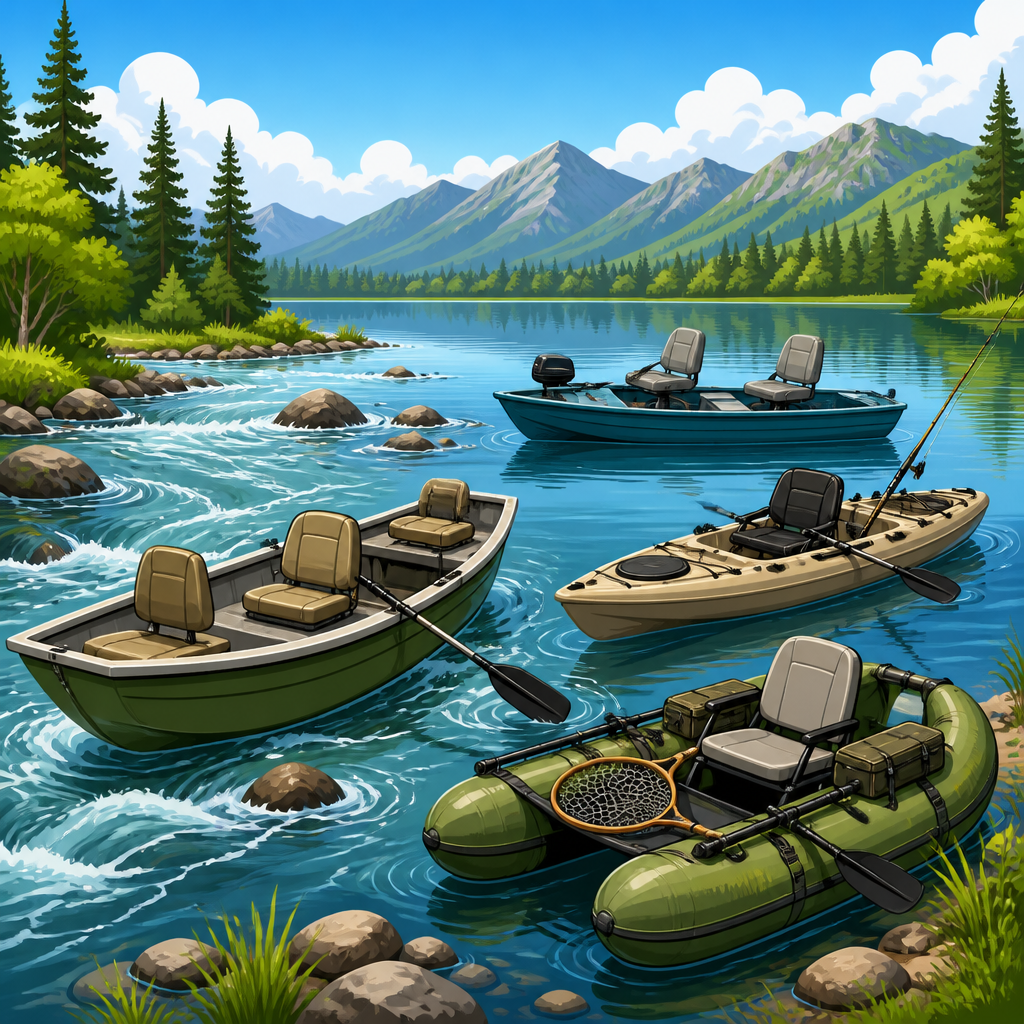
For rivers, the drift boat remains the benchmark. A classic hard drift boat, often built from fiberglass, aluminum, or wood composite, is designed to be rowed downstream with precise control. It handles technical current, sets anglers up for repeated presentations, and gives two anglers stable casting positions. In the West, guides rely on drift boats because they can back-row to slow a drift, slip into side channels, and position clients broadside to banks where trout hold. Their main limitations are draft in very low water, trailer dependence, and less comfort on large windswept lakes.
Rafts with fishing frames are the most versatile river option for anglers who prioritize shallow draft and impact tolerance. A whitewater-capable raft can slide over skinny riffles that would punish a hard boat. On rocky freestones, I have watched raft owners take lines I would never attempt in aluminum. Add a row frame, casting platforms, and an anchor system, and a raft becomes an excellent fly fishing platform. The tradeoff is that rafts are slower to row in flat sections and can feel less crisp in current seams than drift boats.
Inflatable kick boats and pontoons deserve mention for solo anglers. They are affordable, easy to transport, and effective on gentle rivers, side channels, and small stillwaters. A one-person pontoon boat with oars can cover much more water than a float tube while keeping you drier and carrying more gear. However, in pushy current, limited anchor options and lower overall stability mean they demand conservative use. They are tools for moderate water, not substitutes for a fully rigged guide boat.
Canoes and river-capable fishing kayaks can work well on slower rivers, especially where access is limited. They excel in low-gradient systems where stealth matters more than whitewater control. A canoe shines when two anglers want simplicity and lightweight transport, but open hulls can become line tangles if gear is not secured. A sit-on-top kayak offers better individual control and often better standing stability than many paddlers expect, yet fighting current while trying to maintain casting angles takes practice.
Best boats for fly fishing in lakes
Lakes place different demands on a fly fishing boat. Wind management, efficient covering of water, and the ability to stay comfortable over longer distances rise to the top. For large lakes and reservoirs, an aluminum jon boat or modified-V boat with an electric trolling motor is one of the smartest all-around choices. These boats are stable, simple, and relatively affordable. With a bow-mounted trolling motor, you can work weed lines, shoals, and drop-offs methodically while keeping casters on productive angles. Many serious stillwater anglers add pedestal seats, removable casting decks, and fish finders from Garmin, Humminbird, or Lowrance.
Technical poling skiffs and microskiffs are outstanding where lakes have extensive flats, shallow coves, and clear-water sight fishing. Their low draft and quiet hulls make them excellent for carp, bass, pike, and even trout cruising shorelines. They are less common in cold-water fly fishing circles because cost is higher and their strengths matter most in shallow visual fisheries, but for anglers targeting selective fish in calm conditions, few platforms are better.
Fishing kayaks are arguably the fastest-growing stillwater option. Modern models from brands such as Hobie, Old Town, and Native Watercraft offer stand-up stability, pedal drives, gear tracks, and elevated seating. For solo lake anglers, they solve the launch problem elegantly: no trailer required, low operating cost, and good reach beyond bank water. Their biggest limitations are exposure to weather, reduced gear capacity compared with a boat, and more complicated line management around pedal systems and accessories.
Float tubes remain highly effective on smaller lakes, farm ponds, and protected bays. They are slow, but they let anglers approach quietly and fish precise depths with sinking lines. In fertile stillwaters where trout cruise shoals near chironomid hatches, a tube can be all you need. The limitation is obvious: range, exposure, and safety margin shrink quickly when wind builds. For broad lakes with regular afternoon weather, a tube is a tactical tool, not a universal answer.
How the major boat types compare
The most useful way to compare fly fishing boats is by matching them to water type, transport needs, and casting style rather than ranking them universally.
| Boat type | Best water | Main strengths | Main limitations |
|---|---|---|---|
| Drift boat | Rivers, tailwaters | Superb rowing control, stable casting, guide-friendly layout | Needs trailer, less ideal on large windy lakes |
| Fishing raft | Rocky rivers, shallow runs | Shallow draft, forgiving on impact, versatile frame options | Slower on flat water, less precise than hard boats |
| Jon or modified-V boat | Lakes, reservoirs, slow rivers | Stable, affordable, motor-compatible, easy to customize | Can drift poorly in wind, hull slap in chop |
| Fishing kayak | Small to midsize lakes, calm rivers | Solo launch ease, low cost, stealth, pedal options | Limited space, weather exposure, line management challenges |
| Canoe | Protected lakes, gentle rivers | Lightweight, efficient, simple transport | Less stable for standing, open interior catches line |
| Float tube or pontoon | Small lakes, gentle current | Portable, inexpensive, very stealthy | Limited range, low speed, reduced safety in wind |
If you fish rivers seventy percent of the time, a drift boat or framed raft usually beats any compromise craft. If you mostly fish lakes alone, a pedal kayak or small motorized aluminum boat often delivers more trips per season because launching is easier. That is the hidden metric many buyers miss: the best boat is often the one that lowers friction between leaving work and getting on the water.
Features, rigging, and safety for fly fishing from a boat
After hull choice, rigging determines whether a boat feels purpose-built or merely usable. Start with the floor and deck. Textured marine flooring should provide grip without grabbing line. EVA foam is popular because it softens noise and is easier on knees, though some patterns catch line more than smooth vinyl. Keep decks clear. Flush-mount hardware, tidy wiring, and secured net handles reduce tangles. On several boats I have rigged, simply relocating spare rods and removing unnecessary cleats improved line control more than adding expensive accessories.
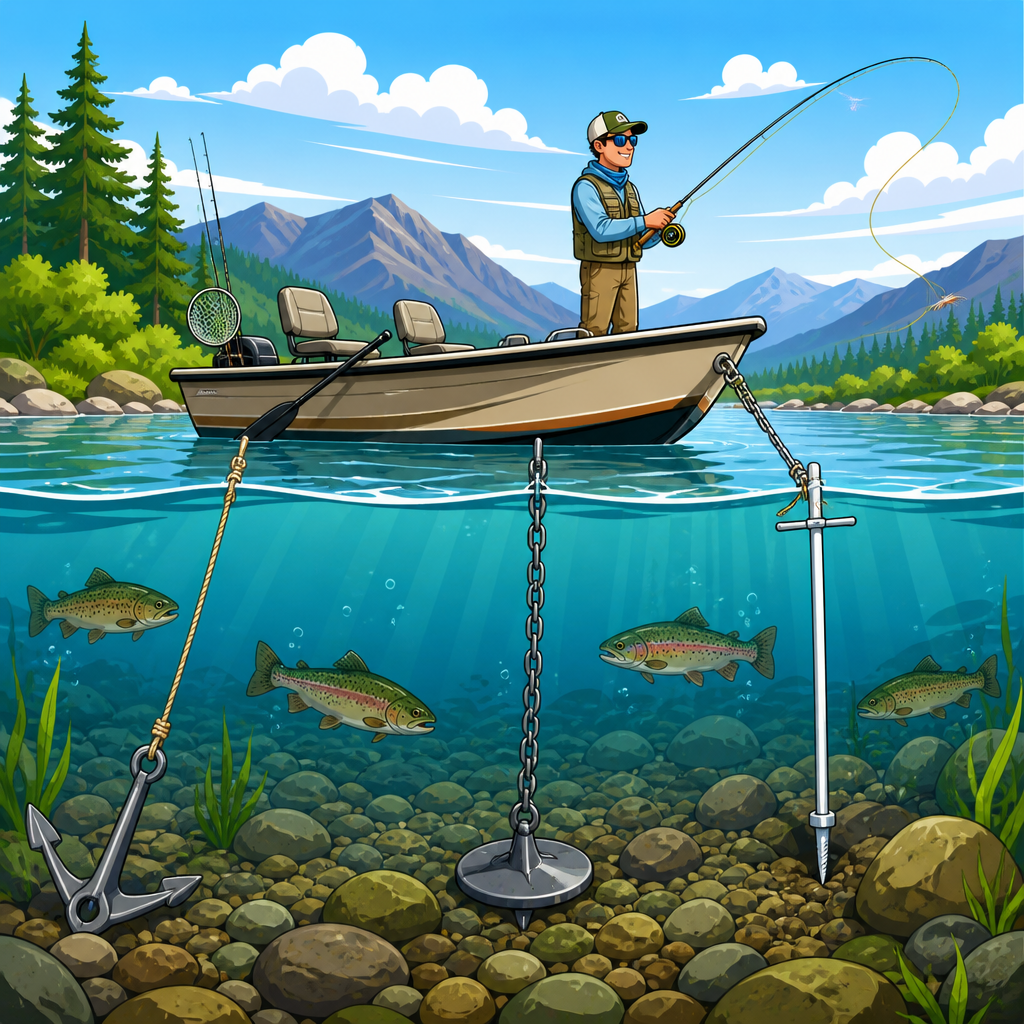
Anchoring requires discipline. On rivers, anchoring from the stern in current can swamp small boats; many guides follow strict river-specific practices and avoid anchoring in heavy flow altogether. On lakes, anchor trolleys for kayaks and bow-mounted systems for boats help control swing. A bow-mounted trolling motor with spot-lock style GPS anchoring, available on models from Minn Kota, can transform lake fly fishing by holding position over shoals or along drop-offs without repeated manual anchoring.
Electronics should support fishing, not clutter the casting zone. A compact sonar/GPS unit is invaluable on lakes for finding depth transitions, bait, and temperature changes, especially when fishing chironomids, balanced leeches, or deep shoal edges. Rivers demand less electronics and more clean utility: good oarlocks, spare oars, a dependable trailer setup, and dry storage. Safety gear is non-negotiable. Wear a properly fitted personal flotation device, carry a whistle, check local regulations, and respect capacity ratings. Wind is the great equalizer on lakes, and cold water turns small mistakes serious very quickly.
For a hub page on fly fishing from a boat, the final recommendation is straightforward. Choose a drift boat or fishing raft if rivers are your primary water. Choose a jon boat, modified-V aluminum boat, or fishing kayak if lakes dominate your season. Prioritize stability, clean line management, and ease of launch over flashy extras. A well-matched boat lets you cast more effectively, reach less-pressured fish, and fish more days each year. Use this guide to narrow your category, then compare models, demo them on your home water, and build a setup that truly fits how you fish.
Frequently Asked Questions
What type of boat is best for fly fishing in both rivers and lakes?
The best boat for both rivers and lakes is usually the one that balances stability, draft, maneuverability, and ease of transport rather than excelling in only one category. For anglers who split time between moving water and stillwater, versatile craft such as inflatable rafts with fishing frames, drift boats, hybrid skiffs, and some compact jon boats often make the most sense. Each of these platforms solves the same core problem in a different way: helping you hold position, cast safely, manage fly line, and land fish without constantly fighting the boat itself.
On rivers, shallow draft and control matter most. You want a boat that can slip over skinny water, react predictably in current, and avoid hanging up on rocks or gravel bars. Drift boats and rafts shine here because they are designed to move with current while still giving the rower enough authority to place anglers in productive seams, riffles, and runs. On lakes, however, tracking, wind resistance, and room to fish comfortably for long sessions become more important. A boat with better open-water behavior, more storage, and the ability to handle chop will usually feel more at home there.
If you truly want one boat to cover both environments, many anglers do best with a practical compromise rather than a perfect specialist. A raft with a solid fishing frame is one of the most adaptable options because it floats shallow, handles rivers well, and can still fish lakes effectively in moderate weather. A small skiff or jon boat can also work if your river fishing is on gentler systems and your lake fishing matters more. The key is to choose based on where you fish most often, how many people usually come along, and whether your priority is standing stability, rowing control, motor capability, or portability.
Is a drift boat better than a raft for fly fishing rivers?
A drift boat is not automatically better than a raft, but it is often better on the right kind of river and for the right style of fishing. Drift boats are prized for precise boat control, excellent tracking, and roomy fishing layouts. They allow a skilled rower to ferry, back-row, and set anglers up for controlled presentations through runs and seams with impressive accuracy. Many anglers also prefer the elevated casting positions and hard floor underfoot, which can make repeated casting, line handling, and netting fish feel more natural and efficient.
That said, rafts have major advantages that make them the better choice on many rivers. They draft very shallow, absorb impacts well, and are generally more forgiving around rocks, ledges, and technical structure. On smaller rivers, rocky freestones, and remote access waters, rafts often provide a margin of safety and flexibility that hard-sided boats cannot match. They are also easier to transport and store, especially for anglers without space for a trailer or who need to launch at rough access points.
The real difference comes down to river character and fishing style. If you fish broad, floatable rivers with defined channels and want polished rowing performance and a dedicated fly fishing platform, a drift boat is hard to beat. If your rivers are lower volume, more technical, more obstacle-filled, or require dragging, bumping, or improvising at launch sites, a raft may be the smarter and more durable tool. Both can be excellent fly fishing boats; the better one is the one that fits your water, not the one with the strongest reputation.
What features matter most in a fly fishing boat beyond brand and hull material?
The most important features in a fly fishing boat are the ones that directly affect how well you fish from it: stability, deck layout, line management, seating and standing position, draft, storage, and boat control. Brand and hull material certainly influence durability and maintenance, but they do not tell you whether a boat will actually help or hinder your casting, mending, stripping, and fish fighting. A well-known name means very little if the layout tangles fly line, the platform feels unstable when you stand, or the boat is poorly suited to the water you fish.
Stability is usually at the top of the list because fly anglers cast dynamically, shift weight often, and need confidence while standing. A boat that feels steady underfoot improves casting rhythm and reduces fatigue. Deck layout matters just as much. Clean, uncluttered casting spaces are essential because fly line finds every latch, cleat, hinge, and corner available. Open floors, smooth surfaces, and thoughtful storage placement make a huge difference in real-world fishing efficiency. The less time you spend untangling line, the more time you spend presenting flies effectively.
Boat control is another defining feature. In rivers, this means how well the craft responds to oars and current. In lakes, it includes tracking, resistance to wind drift, and how easily the boat can be positioned with a trolling motor or outboard. Draft determines where you can fish and how close you can work shorelines, shoals, and shallow structure. Storage should keep gear accessible without turning the boat into an obstacle course. Ultimately, the right boat is the one whose design serves the mechanics of fly fishing first, instead of asking the angler to constantly work around the platform.
Can you fly fish effectively from a jon boat, kayak, or small skiff?
Yes, you can fly fish very effectively from a jon boat, kayak, or small skiff, provided you match the craft to the water and understand its strengths and limitations. These boats are often excellent choices because they are accessible, widely available, and practical for many anglers who do not need a dedicated drift boat or large technical poling skiff. In fact, some of the most productive fly fishing happens from modest, well-rigged boats that are stable, uncluttered, and easy to launch.
A jon boat is especially useful on lakes, reservoirs, and slower rivers. Its open layout makes it friendly for fly line, and many models offer strong stability for standing casts. Add a bow or stern casting deck, remove unnecessary hardware, and rig smart storage, and a jon boat can become a very capable fly fishing platform. A small skiff offers similar benefits with improved hull performance in some conditions, particularly if you need to cover more water or handle light chop. Both can be ideal for warmwater species, lake trout, bass, pike, and even certain river fisheries where current is manageable.
Kayaks can be highly effective too, especially for solo anglers who value stealth and access. They excel in small waters, back bays, coves, and protected shorelines, and they can reach places bigger boats never will. The tradeoff is reduced room for casting, line management, and gear organization. Standing is possible in some fishing kayaks, but not all, and wind can be a serious factor. The bottom line is that these smaller boats can work extremely well for fly fishing if they provide a stable casting platform, clean line handling, and safe positioning for the kind of water you fish most often.
How should I choose a fly fishing boat based on the water, weather, and casting style I fish most?
The smartest way to choose a fly fishing boat is to start with your real fishing conditions instead of with brand loyalty, appearance, or assumptions about what “serious” anglers use. Think about where you fish most often, not where you hope to fish once a year. River current, lake size, launch access, wind exposure, average trip length, and whether you fish solo or with a partner all matter more than marketing language. The best boat is the one that makes your most common fishing days easier, safer, and more productive.
If you mainly fish moving water, prioritize shallow draft, maneuverability, and rowing control. If you primarily fish lakes, focus more on stability at rest, wind management, space to strip line, and how the boat performs in chop. Weather should shape your decision as well. Anglers who often fish windy lakes need a boat that can hold position and stay fishable when the surface gets rough. Anglers on technical rivers need forgiveness around structure and predictable handling in current. Launch style also matters. If you need to car-top, drag to unimproved put-ins, or store the boat in limited space, portability may be every bit as important as on-water performance.
Your casting style deserves just as much attention. Fly anglers who stand and make repeated long casts need stability and uncluttered deck space. Anglers who fish indicator rigs, streamers, or multiple rods need practical storage and clean rigging zones. Those who sight-fish in shallow water may value elevated visibility and stealth, while anglers who drift and cast opportunistically may put more weight on boat control and drift pace. When you choose from that perspective, the decision becomes clearer: not “What is the best fly fishing boat overall?” but “What boat lets me fish my water, in my weather, using my style, with the fewest compromises?”