Choosing the right fishing boat and upgrading it intelligently can raise catch rates more than most anglers expect. After rigging center consoles, aluminum tillers, bass boats, and bay boats for different fisheries, I have seen a consistent pattern: success improves when the boat matches the water, supports the technique, and reduces wasted motion. In practical terms, “upgrading your fishing boat” means improving layout, electronics, propulsion, storage, safety, and fishability so you spend more time presenting baits in productive water. “Better catch rates” does not mean luck; it means finding fish faster, staying on them longer, and handling rods, tackle, and live bait efficiently.
This topic matters because the best boats for fishing enthusiasts are not simply the biggest or most expensive hulls. They are the boats configured to solve real fishing problems. A bass angler needs shallow draft, casting room, and precise boat control. A coastal inshore crew may need a bay boat with trolling motor integration, livewell capacity, and room for multiple rods. A Great Lakes troller benefits from a deep-V hull, kicker motor, sonar mapping, and downrigger space. The hub question is straightforward: which upgrades meaningfully improve fishing performance, and which should wait? The answer starts with understanding your platform and the waters you fish most often.
Boat choice sets the ceiling for every later improvement. Hull design, length, beam, deadrise, freeboard, and weight affect ride quality, stability, fuel burn, and access to fishing areas. Materials matter too. Fiberglass boats generally provide smoother rides, refined layouts, and better sound damping, while aluminum boats often cost less to own, launch easily, and handle rough use well. Propulsion choices shape noise, range, and control. Outboards dominate many modern fishing segments because they are serviceable, efficient, and maximize cockpit space. Jet boats access skinny water but can be less efficient at cruise. Electric-only setups fit some freshwater lakes but demand careful battery planning.
For fishing enthusiasts building a long-term setup, a hub article should connect boat selection with functional upgrades. That means viewing every addition through a simple filter: does it help you locate fish, present lures more effectively, preserve energy, or land and store fish responsibly? A premium seat or stereo may improve comfort, but a quality chartplotter, transducer, trolling motor, and organized tackle system usually affect outcomes sooner. The most successful builds are balanced rather than flashy. They respect capacity plates, weight distribution, battery loads, and corrosion prevention. When anglers treat the boat as a working fishing platform instead of a floating accessory, catch rates typically follow.
Start With the Right Fishing Boat Platform
The best boats for fishing enthusiasts differ by species, water type, and crew size. I usually guide buyers into five practical categories. Bass boats are optimized for freshwater casting, speed, and deck space. Center consoles are versatile offshore and inshore tools with 360-degree fishability. Bay boats bridge shallow coastal work and nearshore capability. Deep-V aluminum or fiberglass boats shine on larger lakes and rougher water. Jon boats and skiffs provide affordable access to rivers, backwaters, and ponds. The mistake many buyers make is choosing a boat for occasional dream trips instead of the eighty percent of days they actually fish.
A useful baseline is length matched to conditions. Boats under sixteen feet can be effective on protected water but limit range, storage, and rough-water comfort. Seventeen- to nineteen-foot boats are common all-around freshwater choices. Twenty- to twenty-four-foot center consoles and bay boats offer a strong balance of fishability, range, and family versatility. Offshore-focused anglers commonly move beyond twenty-four feet for safety, fuel capacity, and seakeeping. More length usually means better ride and capacity, but also higher tow weight, storage cost, fuel use, and maintenance. Better catch rates come from using the boat often, so realistic ownership costs matter as much as performance.
Stability and deck layout directly influence fishing efficiency. A wider beam improves lateral stability while casting or netting fish. Clean decks reduce snags and speed lure changes. Elevated foredecks help sight fishing but may increase windage. Freeboard should suit your fishery: low sides can make landing fish easier in calm water, while higher sides improve security offshore. Storage should keep rods protected and tackle dry without forcing constant bending and searching. A good platform lets each person move, cast, and fight fish without interfering with others. That operational smoothness is one of the least glamorous but most important catch-rate advantages.
Electronics That Find Fish Faster
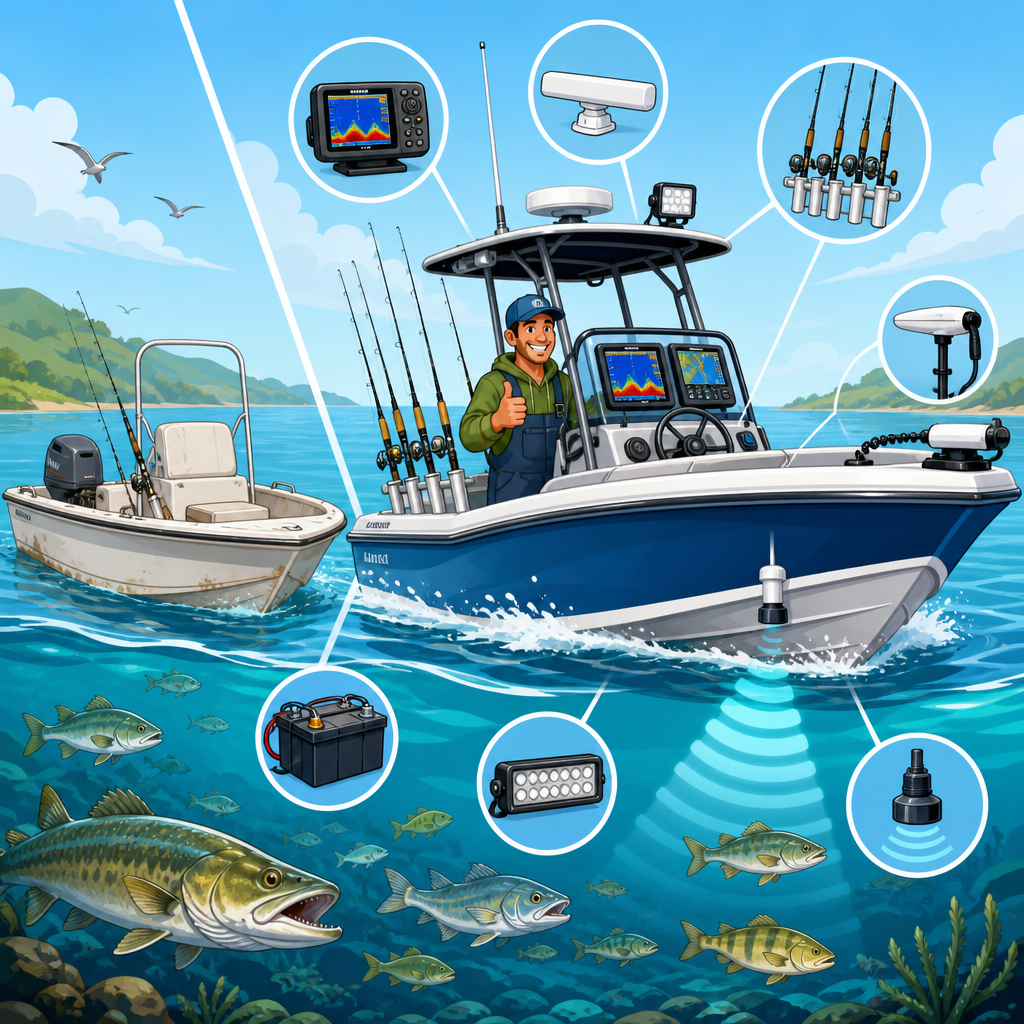
If one upgrade changes outcomes fastest, it is modern marine electronics installed and tuned correctly. Sonar, GPS mapping, and trolling motor integration reduce blind fishing. On freshwater boats, a common high-value package is a bow-mounted graph for forward-facing sonar and a console unit for side imaging, down imaging, and navigation. On saltwater boats, a chartplotter-fishfinder combo with quality coastal cartography, sonar history, and radar compatibility often delivers the most practical gain. Brands such as Humminbird, Garmin, Lowrance, and Simrad all offer capable ecosystems; the best choice is usually the one you will learn deeply and network properly.
Transducer selection matters as much as screen size. Side imaging helps locate brush, rock transitions, bait schools, and edges without driving directly over fish. Down imaging sharpens structure interpretation beneath the hull. CHIRP sonar improves target separation by sweeping frequency ranges. Forward-facing sonar can reveal fish movement and lure response in real time, which has changed crappie, walleye, and bass tactics substantially. However, it is not magic. Poor mounting height, electrical interference, or incorrect gain and range settings can make expensive hardware underperform. I have seen anglers transform results simply by repositioning a transducer and learning how bottom hardness and bait clouds appear at different speeds.
| Upgrade | Primary Benefit | Best For | Main Limitation |
|---|---|---|---|
| Side imaging sonar | Covers water quickly and locates structure off both sides | Bass, walleye, multi-species lake fishing | Less useful at very slow drift-free bow fishing |
| Forward-facing sonar | Shows fish and lure interaction in real time | Crappie, bass, suspended fish | High cost and learning curve |
| GPS trolling motor | Precise boat positioning and route control | Inshore, bass, vertical jigging | Battery demand and bow weight |
| Radar-capable chartplotter | Safer navigation and target awareness in low visibility | Offshore and coastal anglers | Expense and mounting complexity |
To get the full benefit, network your system. NMEA 2000 and Ethernet connections can share waypoints, engine data, heading sensors, and sonar sources across displays. A heading sensor is especially valuable because it stabilizes chart orientation and improves casting accuracy to isolated targets. Mapping should also match the fishery. LakeMaster, Navionics, C-MAP, and Garmin Navionics+ all have strengths in specific regions and contour detail. Use custom shading to highlight productive depth bands. When your electronics consistently answer four questions—where am I, what is below me, what is around me, and how should I hold position—catch rates improve for very practical reasons.
Boat Control, Propulsion, and Power Management
Fish are often lost before the cast because the boat drifts too fast, spooks a flat, or cannot repeat a productive line. That is why boat control upgrades pay so reliably. A GPS-enabled trolling motor from Minn Kota, MotorGuide, or Garmin can anchor the boat electronically, follow contours, and maintain heading in wind. For bass anglers, this means more time casting at the sweet spot. For walleye anglers, it means controlled drifts and precise live sonar presentations. For inshore crews, it means holding on oyster edges or bridge pilings without dropping a noisy anchor. These systems do not replace skill, but they multiply it.
Engine setup also affects fishability. Proper prop pitch and engine height improve holeshot, efficiency, and handling. A four-stroke outboard generally offers quiet operation and strong fuel economy, which matters when covering water all day. Shallow-water anglers often add trim tabs, jack plates, or hydraulic steering to improve performance and control. Offshore or trolling-focused boats may benefit from a kicker motor for ultra-slow presentations and backup propulsion. None of these upgrades should be chosen casually; they must match hull rating, transom strength, and intended use. A boat that runs cleaner, idles predictably, and holds course lets anglers focus on reading conditions instead of managing equipment.
Electrical capacity is the hidden foundation beneath all modern upgrades. Large displays, live sonar, pumps, lighting, and trolling motors demand healthy batteries, correct cable sizing, circuit protection, and charging strategy. Lithium iron phosphate batteries are increasingly popular because they save weight, hold voltage well under load, and charge quickly, but they require compatible chargers and should come from reputable marine-focused manufacturers with a proper battery management system. AGM batteries remain dependable and simpler for many owners. The key is building enough reserve. Voltage drop, random shutdowns, and sonar interference are not minor annoyances; they are fishing-day failures that directly cut productive time.
Deck Layout, Storage, and Fish Handling Upgrades
Once the boat can find fish and hold position, the next gains come from efficiency on deck. Rod management is the first priority. Horizontal racks, vertical holders, and lockable compartments should fit the techniques you actually use, whether that is seven-foot spinning rods for finesse or longer trolling rods with line-counter reels. Tackle storage should separate terminal tackle, reaction baits, leaders, and tools so every item is reachable without digging. On guide boats and family rigs, I favor clear labeling and standardized boxes because clutter compounds quickly. Every minute spent untangling or searching is a minute not fishing productive water.
Livewell quality matters more than many recreational anglers realize. Healthy bait catches more fish, and healthy tournament fish survive release at higher rates. A good livewell system includes adequate volume, smooth interior surfaces, recirculation, aeration, and pump redundancy where possible. In hot weather, insulation and temperature management become important. For saltwater species, raw-water washdown and insulated fish boxes simplify cleanup and preserve harvest quality. Landing upgrades count too: a rubber-coated net protects slime coats, lip grips help in controlled situations, and a stable boarding ladder improves recovery if someone goes overboard. Fishability and safety are closely linked on a serious fishing platform.
Comfort upgrades can also improve catch rates when chosen for function. Shock-mitigating pedestal seats reduce fatigue on rough runs. Nonskid decking or marine foam improves footing and lowers noise, though foam requires diligent cleaning and can trap hooks. Leaning posts, toe rails, and grab handles make long days manageable. Shade systems help on saltwater boats, but they should not block casts or sightlines. I have watched crews fish harder and smarter simply because they were less tired, less frustrated, and more organized. The goal is not luxury. The goal is a deck layout that supports repeatable execution from first light to the last drift.
Safety, Maintenance, and Smart Upgrade Priorities
The best boat for fishing enthusiasts is the one that returns safely and launches reliably every time. Safety upgrades are therefore fishing upgrades. A fixed-mount VHF with Digital Selective Calling, EPIRB or personal locator beacon for offshore use, updated life jackets, navigation lights, bilge pumps, and a well-stocked first-aid kit are baseline equipment, not extras. Weather awareness should be built into the system through reliable apps, radar where appropriate, and conservative go/no-go decisions. The U.S. Coast Guard safety checklist is a better upgrade roadmap than many accessory catalogs because it addresses the failures that end trips completely.
Maintenance protects every performance gain you buy. Corrosion control on trailers, battery terminals, pumps, and connectors is essential in saltwater environments. Flush outboards, inspect fuel filters, monitor tire age, grease hubs, and service wheel bearings before long trips. Keep bilges dry and wiring supported above standing water. Software updates for electronics often improve mapping, sonar performance, and system stability, but update well before a trip, not the night before. I advise owners to rank upgrades in three tiers: reliability first, fish-finding second, convenience third. A boat with spotless electronics but weak batteries, stale fuel, or trailer trouble will not improve catch rates.
For most anglers, the smartest path is to define one primary fishery, choose a platform that serves it well, and then add upgrades that remove the biggest bottlenecks. If you struggle to locate fish, prioritize sonar and mapping. If wind control ruins presentations, prioritize a GPS trolling motor or anchoring solution. If deck chaos wastes time, fix storage and rod handling. The central lesson is simple: better catch rates come from better systems, not random accessories. Build your boat around the way you fish, review performance after each season, and upgrade with purpose. Start with the highest-impact improvement on your list and make the next trip more efficient.
Frequently Asked Questions
What boat upgrades improve catch rates the most?
The upgrades that usually make the biggest difference are the ones that help you find fish faster, present baits better, and waste less time during the day. In most cases, that means starting with quality electronics, a practical deck layout, and propulsion upgrades that improve boat control. A modern fishfinder with GPS mapping and side or down imaging can completely change how efficiently you locate structure, bait, depth changes, and productive holding areas. Instead of drifting around guessing, you can move with purpose and spend more time fishing where fish actually are.
After electronics, boat control is often the next major leap. A trolling motor with GPS anchoring, spot-lock, or precise track control lets you hold over brush piles, work a shoreline thoroughly, or stay positioned on wind-blown points without constantly correcting. In shallow water, a push pole or shallow-water anchor can be just as valuable. These upgrades do not just add convenience; they help you make better casts, maintain the right angle, and keep your lure in the strike zone longer.
Layout and storage upgrades also matter more than many anglers realize. If rods are hard to reach, tackle is buried, or the deck is cluttered, you lose rhythm and efficiency. Cleaner rigging, accessible tackle storage, better rod management, and dedicated net and tool placement reduce wasted movement and keep you fishing instead of searching for gear. Livewell improvements, better lighting for early starts, non-slip deck surfaces, and upgraded seating can also contribute by making long days safer and more productive. The best upgrades are not always the flashiest ones. They are the ones that remove friction from your system and make every minute on the water count.
How do I choose upgrades based on the type of fishing boat I own?
The right upgrades depend heavily on your hull design, the waters you fish, and the techniques you use most often. A center console used offshore or in open bays benefits from upgrades that improve range, situational awareness, and deck utility. That can include larger multifunction displays, radar, VHF radio improvements, additional rod holders, better live bait systems, and transducer setups that read cleanly at speed. In that type of boat, you often want open movement around the deck, secure storage, and strong washdown capability because multiple anglers may be fishing at once and conditions can change quickly.
An aluminum tiller boat or small utility fishing boat usually benefits more from efficient, space-saving upgrades. Lightweight electronics, a properly sized trolling motor, smarter battery placement, compact storage systems, and improved seating can dramatically increase fishability without overloading the hull. Weight distribution matters a lot in these boats, so every addition should be evaluated for balance, draft, and performance. For anglers fishing rivers, small lakes, or electric-only waters, simple upgrades that improve casting room and maneuverability may outperform expensive add-ons.
Bass boats and bay boats are more specialized, so upgrades should support the speed and precision those platforms are built for. On a bass boat, flush-mounted electronics, upgraded trolling motor control, better tackle organization, and deck lighting often deliver major returns. On a bay boat, shallow-water anchors, casting platform enhancements, trim tab refinements, and improved rod storage can make stalking flats or working nearshore structure much more efficient. The main principle is simple: do not upgrade just because a product is popular. Upgrade to solve a specific problem on your specific boat in your specific fishery.
Are electronics really worth the cost when upgrading a fishing boat?
For many anglers, electronics are among the most valuable upgrades available because they shorten the learning curve and reduce unproductive time. A good sonar and mapping setup helps you understand what is under the boat, where fish are positioned, how bait is moving, and how underwater structure influences feeding behavior. That knowledge improves decision-making all day long. Instead of randomly trying spots, you can identify likely holding areas, verify whether fish are present, and adjust based on real conditions rather than assumptions.
That said, electronics are only worth the cost if they match how you fish and if you learn how to use them. A top-tier display with advanced imaging will not improve catch rates much if the screen is mounted poorly, the transducer is installed incorrectly, or the operator never moves beyond basic depth reading. Sometimes a mid-range unit with reliable charts, clear sonar, and good waypoint management is a better upgrade than an expensive package loaded with features you will never use. Proper installation is also critical. Clean power, correct transducer placement, and screen visibility in sunlight all affect real-world performance.
Electronics also work best as part of a system. GPS mapping pairs with trolling motor control. Sonar pairs with strategic boat positioning. Waypoints pair with repeatable drifts and casting angles. When used together, they help you return to productive spots accurately and fish them more effectively. If your budget is limited, prioritize dependable mapping and sonar first, then expand into networking, additional screens, or advanced imaging later. Well-chosen electronics do not replace experience, but they absolutely help you fish smarter and more consistently.
Should I upgrade the motor, trolling motor, or boat control systems first?
In many cases, upgrading boat control systems before making a major outboard change will improve catch rates more directly. A reliable trolling motor with enough thrust, efficient battery capacity, and features like GPS anchoring can transform how you fish. It lets you hold on offshore structure, work a breakline cleanly, or cover shallow water with less noise and less fatigue. If your current setup drifts too fast, struggles in wind, or constantly forces you off target, upgrading boat control may deliver a bigger fishing advantage than adding horsepower.
That said, the outboard still matters if reliability, fuel efficiency, hole shot, or running performance are limiting your access to productive water. If the main motor is unreliable, underpowered, or expensive to operate, you may avoid making long runs, lose time troubleshooting, or fish closer to the ramp than you should. In that situation, improving the outboard or prop setup can absolutely raise catch rates by expanding your range and confidence. Sometimes the best “motor upgrade” is not a full repower but a tune-up, prop change, jack plate adjustment, or updated fuel system that helps the boat run cleaner and more efficiently.
The smartest approach is to identify the exact bottleneck. If you are finding fish but cannot stay on them, focus on trolling motor and positioning upgrades. If you cannot reach the fish safely or consistently, evaluate the main engine and overall performance. If you fish shallow, consider shallow-water anchors or trim improvements. Catch rates improve when the boat responds precisely to the conditions. Better control means better presentations, and better presentations usually mean more bites.
How can I upgrade my fishing boat on a budget without hurting performance?
Budget upgrades can be extremely effective if you prioritize function over appearance and avoid adding unnecessary weight or clutter. Start by improving organization. Better tackle trays, tool holders, rod straps, under-seat storage systems, and designated spaces for nets, pliers, and landing gear can make a noticeable difference in efficiency. Many anglers spend money on major accessories before fixing basic deck chaos, but a cleaner and more intuitive layout often improves catch rates immediately because it reduces downtime between casts, lure changes, and fish handling.
Next, focus on high-value improvements that support decision-making and boat control. That might mean adding a dependable entry-level sonar/GPS unit, replacing worn batteries, upgrading onboard charging, installing brighter navigation or deck lights, or improving seating and visibility at the helm. Even small changes such as a better transducer mount, improved bilge reliability, or a non-slip casting surface can pay off over time. If your boat already has electronics, learn to use every feature before replacing them. Better waypoint management, contour reading, and sonar interpretation often produce more fish than buying a larger screen.
Most importantly, be selective. Every upgrade should answer a practical question: Will this help me find fish faster, fish more effectively, move more safely, or stay organized under pressure? If the answer is no, it may not deserve your budget yet. Avoid overloading a smaller boat with heavy accessories that reduce performance, draft, or deck space. A well-thought-out, modestly upgraded fishing boat usually outperforms a poorly rigged boat with expensive gear. Smart upgrades are the ones that support your fishing style, preserve the boat’s balance, and help you spend more time making quality presentations.