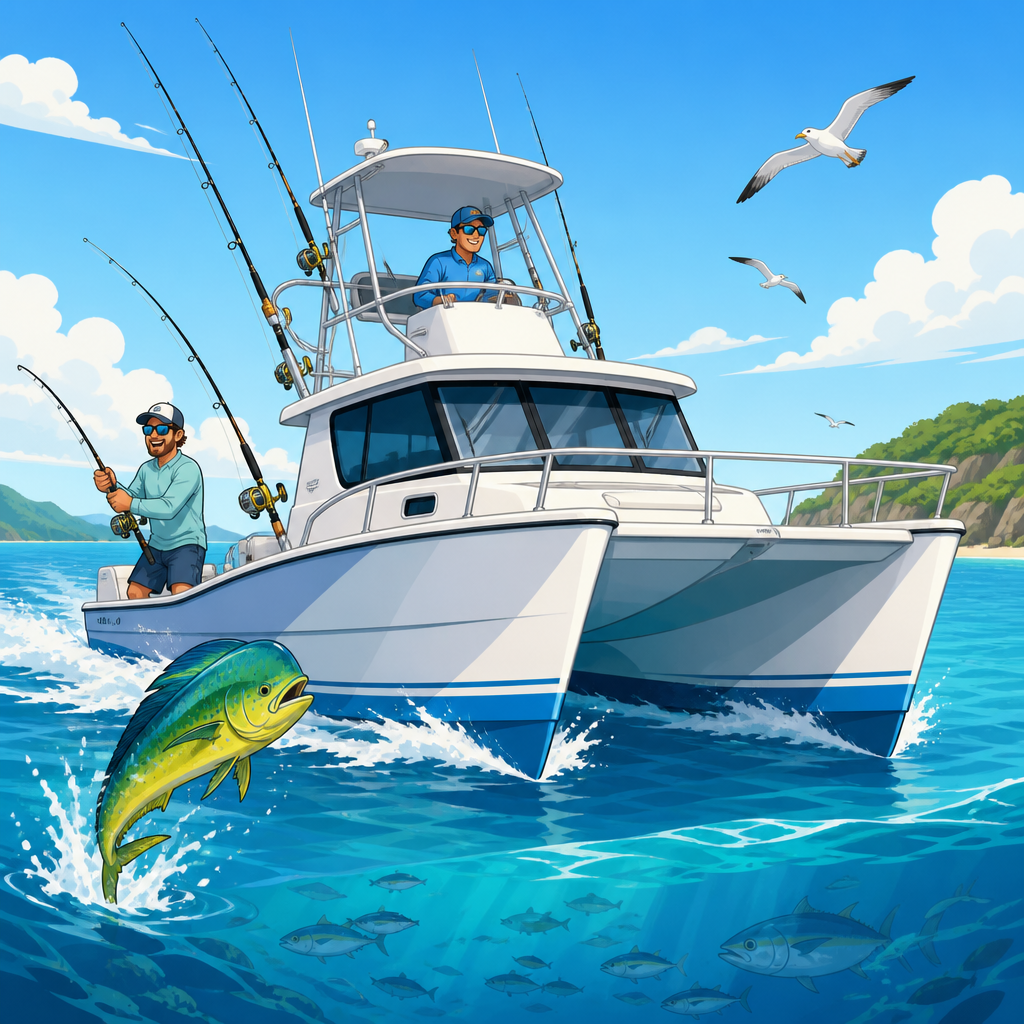
Sport fishing rewards precision, range, stability, and endurance, and that is exactly why catamarans have moved from niche platforms to serious contenders among the best boats for fishing enthusiasts. A catamaran is a dual-hull vessel: instead of one deep monohull, it uses two slender hulls connected by a bridgedeck. That geometry changes nearly everything that matters on the water, from how the boat rides through chop to how much usable deck space anglers get around the cockpit. After years of evaluating fishing platforms at marinas, sea trials, and offshore tournaments, I have seen more crews ask the same practical question: if the goal is to fish harder, safer, and longer, why not start with a hull design built for stability and efficiency?
The answer is not that catamarans are automatically better for every buyer. It is that dual hulls solve several common fishing problems at once. They reduce roll at rest, improve lateral stability while multiple anglers work one side, create wide beam without the penalty of a huge single hull, and often deliver a softer ride in short-period chop. Those advantages matter whether the day involves drifting for snapper, trolling offshore for tuna and marlin, live-baiting near wrecks, or running family-friendly inshore trips where comfort keeps people engaged. They also matter to owners comparing center consoles, walkarounds, pilot houses, and offshore sport boats within the broader category of the best boats for fishing enthusiasts.
This hub article explains why catamarans deserve a top place in that conversation. It also connects the bigger picture: choosing the right fishing boat means matching hull type, layout, power, range, storage, and fishability to the waters you actually run. A tournament crew in the Gulf Stream does not need the same boat as an inshore angler on bays and sounds. By the end, you should understand what makes the best catamarans for sport fishing effective, which tradeoffs to weigh against monohulls, and how to decide whether a dual-hull platform belongs at the center of your next boat search.
Why Dual Hulls Matter for Sport Fishing Performance
The defining benefit of a catamaran for sport fishing is stability. Because the hulls are spaced apart, the boat resists rolling more than many comparable monohulls, especially at rest or when drifting beam-to the sea. In practical terms, that means less deck fatigue, better footing while rigging baits, and more confidence when two or three anglers move to one corner during a fight. On boats I have tested in quartering chop, the difference is immediate: coffee stays in cups more often, tackle trays remain manageable, and crew members who usually struggle with motion fatigue last far longer through a full tide cycle.
Ride quality is the second major reason dual hulls matter. Each hull is narrower and can slice through short chop with less pounding than a broad single hull, while the tunnel between them helps cushion reentry in many sea states. Good cats are not magic carpets; tunnel slap can happen, and loading matters. But in the confused conditions common near inlets and offshore weather windows, many fishing catamarans maintain speed more comfortably than similarly sized monohulls. That translates into real operational gains: earlier departures, less physical wear on the crew, and a wider comfort margin on the run home.
Space efficiency is the third reason. Catamarans carry wide beam farther forward, which creates exceptional cockpit area, broad walkways, and room for multiple livewells, fish boxes, coolers, and tackle stations without making the deck feel crowded. For fishing applications, usable square footage matters more than brochure length. A 28-foot cat can fish “bigger” than expected because the beam supports several stations at once. That is why many buyers exploring the best boats for fishing enthusiasts end up comparing catamarans not just by length, but by working room, storage access, and how naturally anglers can move around rods, bait, and fish.
What Makes the Best Catamarans for Sport Fishing Stand Out
The best catamarans for sport fishing are not simply wide boats with two hulls. The strongest models pair hull geometry with a fishing-first layout. Start with the cockpit. Serious offshore crews need toe-kicks, coaming bolsters, insulated fish boxes with macerator pumps, and clear access around the outboards during leader work. Inshore and mixed-use owners should still insist on rod storage that protects tackle, easy washdown access, and livewells positioned where cast-net bait or purchased pilchards can be managed without bottlenecks.
Hull design details matter more than many first-time buyers realize. Deadrise at the sponsons, tunnel height, bridgedeck clearance, and weight distribution all shape how the boat lands and turns. Builders such as World Cat, Freeman Boatworks, Invincible, Twin Vee, and Aquila have each approached these variables differently depending on mission. A high-end offshore tournament cat may emphasize speed, range, and rough-water composure. A value-driven coastal model may prioritize room, simplicity, and fuel economy. Neither is universally better; the right choice depends on whether your fishing days are defined by 60-mile tuna runs, reef hopping, or family bottom fishing closer to port.
Power systems also separate average builds from standout platforms. Most fishing catamarans in the 24- to 40-foot range use twin outboards, though triple and quad setups appear on larger offshore machines. The twin-hull form often benefits from efficient cruise speeds because each hull has lower resistance than a comparable beamy monohull, but actual fuel burn depends heavily on displacement, prop selection, engine height, and sea state. During comparisons, ask for fuel-flow data at idle, best cruise, and fast cruise, not just top speed. A boat that runs 35 knots at reasonable burn with full bait, ice, and four anglers is more valuable than one flashy wide-open-throttle number.
| Feature | Why It Matters for Anglers | What to Check Before Buying |
|---|---|---|
| Wide beam and twin hull spacing | Improves stability at drift and adds cockpit working room | How the boat feels with crew moving to one side |
| Bridgedeck clearance | Reduces pounding and tunnel slap in chop | Sea trial in mixed conditions, not flat water only |
| Livewell capacity | Keeps bait healthy during long runs and hot weather | Shape, pump redundancy, and pickup placement |
| Fish box insulation | Preserves catch quality on full-day offshore trips | Drainage, macerators, and realistic box dimensions |
| Rod storage layout | Separates trolling, jigging, and pitch setups efficiently | Access under way and protection from salt spray |
| Fuel capacity and cruise efficiency | Determines safe range and operating cost | Verified gallons per hour and reserve planning |
Top Catamaran Styles and Leading Examples
Center console catamarans dominate the sport fishing market because they maximize 360-degree fishability. Boats like the World Cat 280CC-X, Twin Vee 280 GFX2, and Invincible 33 Catamaran show how the format scales from coastal versatility to serious bluewater work. The appeal is straightforward: open deck layout, strong sightlines, room for large electronics, and enough beam to support multiple anglers without everyone bumping shoulders. For kite fishing, casting around schooling fish, or clearing lines during a chaotic hookup, center console cats are among the most capable platforms available.
Large offshore luxury-performance cats occupy another tier. Freeman models in particular have become highly visible in tournament circles because they blend speed, range, and deck space in ways monohull owners immediately notice. Their reputation did not appear by accident. Crews value the ability to run long distances in ugly water while maintaining confidence and comfort. That said, these boats command premium pricing, larger tow and storage demands, and substantial engine costs. They make sense for owners who truly use that capability, not buyers who mostly fish protected bays.
Cabin-equipped cats deserve attention too. Pilothouse and cuddy arrangements are less common in the U.S. offshore scene than center consoles, but they can be excellent for northern climates, overnight canyon runs, and mixed recreational use. Brands in the cruising and utility space have shown how twin-hull platforms can carry enclosed protection without becoming awkward fishing boats, provided rod holders, deck drains, washdown systems, and aft cockpit design remain priorities. For buyers who want one vessel for family cruising and dedicated angling, this category can outperform a specialized open boat.
How Catamarans Compare With Other Best Boats for Fishing Enthusiasts
If this page is your hub for the best boats for fishing enthusiasts, catamarans should be evaluated alongside monohull center consoles, bay boats, aluminum multispecies boats, flats skiffs, walkarounds, and express offshore boats. Each class has a clear use case. Bay boats draft shallow and excel in estuaries. Flats boats pole across skinny water where no catamaran of similar length belongs. Deep-V monohulls often bank more predictably in hard turns and may offer simpler docking behavior for operators used to traditional hulls. Express and convertible boats provide overnight capability and weather protection that open cats rarely match.
Where catamarans pull ahead is the combination of offshore fishability and day-long comfort. Many anglers shopping one boat to do “almost everything” eventually recognize that stable drift behavior, broad deck space, and comfortable cruise matter more to their actual days than ultimate top end or the shallowest possible draft. For live-bait fishing, bottom fishing over structure, and social family trips that include non-anglers, the dual-hull format often creates the least compromise. Children move around more securely, older passengers sit more comfortably, and experienced anglers still get the cockpit they need.
Still, there are tradeoffs. Some catamarans require different throttle and trim habits. Certain models can lean outward in turns rather than inward like monohulls, which surprises new operators. Berthing costs may rise because beam is wider. Trailerability becomes more complicated once beam exceeds road limits. In a following sea, some cats need careful handling to avoid awkward motions. These are not deal-breakers, but they are reasons to perform a genuine sea trial in the conditions you fish most. The best fishing boat is not the one with the loudest reputation; it is the one whose design aligns with your water, crew, budget, and skill.
Buying Factors: Size, Budget, Range, and Setup
For most buyers, the ideal sport fishing catamaran falls between 26 and 34 feet. Below that range, builders can still create capable boats, but offshore storage, fuel, and fish-box volume become tighter. Above that range, capability improves, yet costs rise quickly across engines, maintenance, insurance, marina space, and electronics. A 28- to 30-foot cat is often the sweet spot for private owners who want real offshore confidence without committing to a professional-grade operating budget.
Budget planning should include more than the purchase price. Outboards need scheduled service, fuel filters, impellers, lower-unit work, and eventual repower planning. Bottom paint, trailer brakes, batteries, pumps, and electronics all age in saltwater environments. If the boat uses sophisticated multifunction displays from Garmin, Simrad, or Furuno linked to radar, sonar modules, autopilot, AIS, and digital switching, replacement and integration costs can be significant. The smart buyer estimates annual ownership cost before signing, not after the first season.
Setup determines whether the boat fishes efficiently. A coastal angler targeting redfish, cobia, and nearshore kingfish may prioritize trolling motor integration, shallow-water anchoring options where practical, and removable seating that opens deck space. An offshore tuna crew should focus on transducer selection, insulated boxes, redundant bait systems, outriggers, kite rod holders, and battery capacity for electronics-heavy days. Safety gear should match the mission too: EPIRB, PLB, VHF with DSC, life raft for bluewater runs, and navigation backups are not optional on serious offshore boats. When buyers ask me what separates a good fishing cat from a great one, the answer is usually thoughtful rigging, not just hull shape.
Conclusion: Choosing the Right Dual-Hull Fishing Platform
The best catamarans for sport fishing earn their reputation because dual hulls solve core problems anglers face every trip: instability at drift, punishing rides in chop, cramped work areas, and limited flexibility between hard-core and family use. When designed well, a catamaran delivers a broad, confident platform that lets anglers fish longer, move more safely, and cover distance with less fatigue. That is why dual hulls matter, and why they deserve a leading place in any serious guide to the best boats for fishing enthusiasts.
The right cat is not simply the biggest or fastest model you can afford. It is the one whose layout, range, ride, storage, and rigging fit your fisheries. Compare center console cats against monohulls honestly, sea-trial them in real conditions, verify fuel data, and inspect fishing systems with the same scrutiny you give engines. Pay attention to livewell design, fish-box drainage, bridgedeck clearance, and crew movement patterns. Those details determine whether the boat excels after the showroom shine fades.
If you are building out your shortlist, start with how and where you fish most often, then evaluate catamarans as a serious first option rather than an alternative curiosity. Done right, a dual-hull platform can be the most capable all-around answer in your search for the best boats for fishing enthusiasts. Use this hub as your starting point, then compare layouts, sea-trial leading models, and choose the fishing boat that will keep you comfortable, efficient, and ready when the bite turns on.
Frequently Asked Questions
Why are catamarans considered some of the best boats for sport fishing?
Catamarans stand out in sport fishing because their dual-hull design directly improves many of the things serious anglers care about most: stability, range, deck space, ride quality, and fishability. Instead of relying on a single deep hull, a catamaran uses two narrow hulls connected by a wide bridgedeck. That layout creates a broader footprint on the water, which helps the boat remain more level at rest and underway. For anglers, that translates into a more stable platform when drifting, casting, rigging baits, or fighting fish around the cockpit.
Another major advantage is usable space. Because beam is carried farther forward and aft, many fishing catamarans offer exceptionally open cockpit layouts, wide walkways, and more room for livewells, tackle stations, coolers, rod holders, and multiple anglers moving at once. On long offshore runs, comfort becomes just as important as layout, and this is another area where cats shine. Their hulls often slice through chop efficiently, reducing pounding and allowing for a more composed ride in mixed conditions. That can mean less fatigue for the crew and more confidence when running farther to reach productive grounds.
Catamarans also appeal to anglers who want efficiency and serious offshore capability. Many modern models are designed to deliver strong fuel economy for their size and speed, helping owners extend range without sacrificing performance. Combined with shallow draft, excellent visibility, and a balanced feel while trolling or drifting, those characteristics explain why catamarans have evolved from niche alternatives into top-tier fishing platforms for everyone from tournament competitors to weekend offshore crews.
How does the dual-hull design improve stability for offshore fishing?
The dual-hull design improves stability by spreading buoyancy across two separate hulls rather than concentrating it in one. In practical terms, that wider stance gives the boat more resistance to rolling, especially when the crew shifts weight, when anglers gather on one side during a hookup, or when the boat sits beam-to the swell while bottom fishing or live-baiting. Stability at rest is one of the most noticeable differences anglers feel when stepping aboard a catamaran for the first time. The deck tends to remain flatter and more predictable, which makes everything from tying leaders to handling gaffs easier and safer.
That stability matters offshore because sport fishing is rarely a static activity. People are constantly moving, rods are being repositioned, tackle hatches are opened, and fish are fought from corner to corner. On a less stable platform, those movements can create more roll and more fatigue over a full day on the water. A well-designed catamaran dampens much of that motion, giving anglers a more secure footing and a cockpit that feels more controlled during active fishing situations.
Stability underway is also important. While every hull design has trade-offs, many offshore catamarans track cleanly and maintain a composed attitude in cross chop, quartering seas, and trolling conditions. The result is a platform that can help crews stay effective when weather and sea state are less than ideal. For families, charter operators, and hardcore anglers alike, the added confidence and comfort that come from improved stability can be just as valuable as raw speed or headline horsepower.
Do catamarans provide a smoother ride than monohulls in rough water?
In many offshore conditions, yes, a quality fishing catamaran can provide a smoother and more controlled ride than a comparable monohull, particularly in short chop and uneven coastal seas. The reason comes down to hull geometry. The two slender hulls tend to enter and pass through waves differently than a single wider hull, often softening impact and reducing the pounding that anglers associate with hard-running offshore days. That can make long runs to canyons, reefs, rips, or distant weed lines less physically demanding for both captain and crew.
However, it is important to understand that ride quality depends on more than simply having two hulls. Factors such as hull shape, tunnel design, bridgedeck clearance, displacement, construction quality, weight distribution, and sea conditions all influence how any boat performs. A well-built catamaran with proper setup can feel remarkably capable and efficient in rough water, but not every cat rides the same, and different designs may excel in different conditions. Some are optimized for speed and range, while others are tuned more toward all-around comfort and family fishing versatility.
For sport fishing, what matters most is how that ride quality affects the day. A smoother ride can preserve energy, reduce crew fatigue, protect gear from excessive shock, and make it easier to arrive at the fishing grounds ready to fish instead of needing recovery time after the run. It can also improve safety and confidence when weather shifts unexpectedly. So while “smoother” should never be treated as an absolute rule in every sea state, the best catamarans absolutely earn their reputation by delivering a ride that many offshore anglers find more comfortable and more fishable over the long haul.
What features should anglers look for in the best catamarans for sport fishing?
When evaluating the best catamarans for sport fishing, anglers should look beyond the novelty of twin hulls and focus on how the boat is actually designed to fish. Start with cockpit layout and fishability. A great fishing cat should have wide, unobstructed working space, secure footing, easy movement around the transom, and enough room for multiple anglers to fight fish without crowding each other. Look for practical details such as insulated fish boxes, large livewells, raw-water washdowns, toe kicks, coaming bolsters, in-deck storage, tackle rigging stations, and strategically placed rod holders that support trolling, chunking, bottom fishing, and kite fishing.
Next, pay close attention to offshore capability and comfort. Fuel capacity, efficiency, and cruising range are major considerations if you regularly make long runs. The helm should provide strong visibility, intuitive controls, weather protection, and modern electronics integration for radar, sonar, chartplotting, and autopilot. Seating matters too, especially for crews spending full days on the water. A catamaran’s natural beam can allow for more creative console and seating layouts, but the best designs balance comfort with open fishing access instead of turning the boat into a cruiser that merely looks fishable.
Construction quality is equally important. Seek proven builders with solid reputations for hull engineering, fit and finish, systems access, and long-term durability. Examine how the boat handles drainage, bilge access, storage seals, wiring runs, and hardware installation. Performance should also be sea-trialed in realistic conditions, not judged only from brochure numbers. Finally, think about ownership factors like trailerability, marina slip requirements, service access, and resale value. The best fishing catamaran is not simply the widest or fastest model available; it is the one that combines stability, efficiency, smart deck design, and dependable offshore performance in a package that matches the way you actually fish.
Are there any trade-offs to choosing a catamaran for fishing?
Yes, and understanding those trade-offs is part of making a smart buying decision. Although catamarans offer outstanding stability, deck space, and offshore comfort, they are not automatically the right answer for every angler or every use case. One of the most common considerations is beam. Because catamarans are generally wider than comparable monohulls, they may require larger trailer setups, wider storage accommodations, or marina slips that cost more or are harder to find. That extra width is a major reason they feel so stable and spacious, but it can affect logistics and ownership costs.
Handling characteristics can also differ from what some boaters are used to. Catamarans often respond differently in tight maneuvers, following seas, and docking situations, particularly for owners transitioning from monohulls. None of that is inherently negative, but it does require familiarization and confidence at the helm. In addition, not all catamarans are equal in rough water. Designs with insufficient bridgedeck clearance or poorly optimized hull geometry may produce more tunnel slap or behave less comfortably in certain sea states. That is why sea trials and builder reputation matter so much.
There can also be differences in purchase price, maintenance complexity, and engine setup depending on the model. Many offshore fishing cats are twin-engine platforms, which can improve performance and redundancy but may also increase service costs. For some anglers, these trade-offs are easily outweighed by the benefits in stability, space, and ride quality. For others, especially those fishing mostly inshore or storing the boat in tighter facilities, a monohull may remain the more practical choice. The key is not whether catamarans are universally better, but whether the dual-hull advantages align with your fishing style, home waters, storage situation, and long-term ownership priorities.