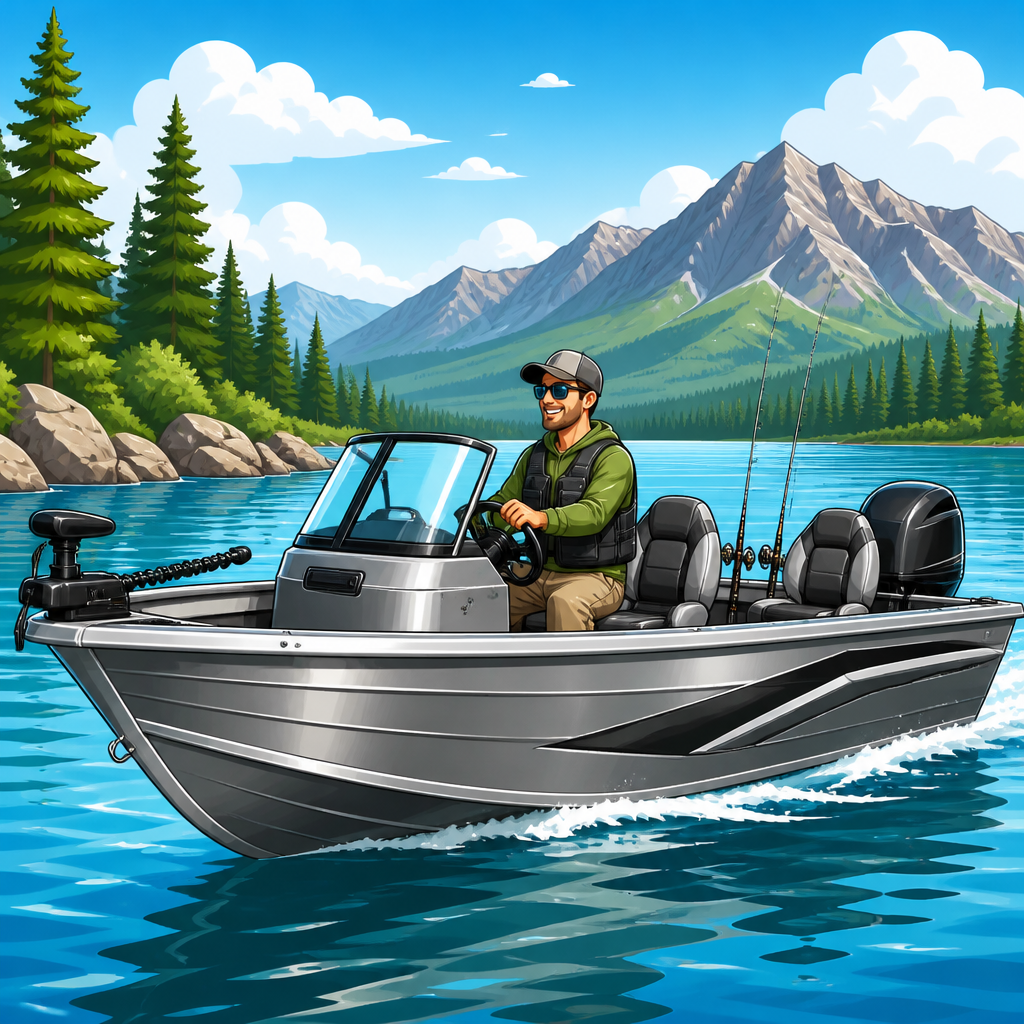
Choosing the best aluminum fishing boats starts with understanding what makes aluminum such a dominant material for anglers who demand durability, predictable performance, and lower long-term ownership costs. In my experience testing rigs on rivers, reservoirs, and shallow backwaters, aluminum consistently proves its value because it absorbs abuse that would leave gelcoat scarred, repairs more simply after impacts, and keeps overall package weight manageable for towing, launching, and storage. When buyers search for the best boats for fishing enthusiasts, they are usually balancing several priorities at once: hull strength, ride quality, deck layout, outboard compatibility, fishability, and budget. This hub brings those factors together so you can compare boat categories clearly and make a smarter decision.
An aluminum fishing boat is any angling-focused vessel built primarily from marine-grade aluminum alloys, most commonly 5052 or 5086, using riveted or welded construction. Durability refers not only to resistance against dents, corrosion, and fatigue, but also to how well the hull, transom, stringer system, and deck hardware hold up after years of trailering and repeated launches. Performance is broader than top speed. It includes hole shot, fuel economy, draft, stability at rest, dry ride characteristics, tracking in wind, and how confidently a boat handles rough chop, current seams, and tight timber-lined channels. A strong aluminum boat should let an angler fish hard without constantly worrying about cosmetic damage or structural weakness.
This topic matters because boat ownership is expensive, and the wrong hull design can punish you on every trip. A bass angler on a stump-filled lake needs something very different from a walleye angler crossing big northern water or a crappie angler weaving through flooded brush. The best aluminum fishing boats solve those problems with purpose-built layouts and hull geometries. They also cover a wide range of buyers, from first-time owners looking at tiller jon boats to serious tournament anglers considering aluminum bass boats from brands such as Lund, Tracker, Xpress, Crestliner, Alumacraft, SeaArk, G3, and Ranger. As the central guide for this subtopic, this article maps the major boat types, explains core buying criteria, and shows where each style excels so you can narrow your search with confidence.
What Makes an Aluminum Fishing Boat Durable and High Performing
The first thing I evaluate is construction method because it shapes both longevity and on-water behavior. Riveted aluminum boats are lighter and often cost less, and many have delivered decades of service when maintained properly. Welded aluminum boats usually appeal to buyers who prioritize ruggedness around stumps, rocks, and hard commercial-style use. Neither approach is automatically better in every case. A poorly executed welded hull can crack, while a well-built riveted hull can outlast expectations. The key is manufacturing quality, hull design, transom reinforcement, and how the boat will actually be used. For inland lakes and moderate chop, either can be excellent. For repeated impacts in river systems and shallow cover, welded models often earn the edge.
Hull shape matters just as much as material thickness. A mod-V jon boat offers shallow draft, open interior space, and easy maneuverability in creeks, marshes, and backwaters, but it will ride harsher in open water than a deeper V-hull. Deep-V aluminum fishing boats are the standard for big-water walleye and multispecies anglers because they cut chop better, track cleanly, and provide more security in rough conditions. Pad-hull aluminum bass boats prioritize acceleration, speed, and casting deck space. Beam width, deadrise, chine design, and freeboard all influence stability and comfort. I have seen buyers focus too heavily on horsepower ratings while ignoring deadrise and layout, then regret it after one windy season.
Durability also depends on details buyers sometimes miss during showroom walkarounds. Look closely at weld consistency, hatch fit, hardware backing plates, trailer bunk alignment, wiring looms, bilge access, and livewell plumbing. Marine-grade aluminum should be paired with stainless fasteners where appropriate, but dissimilar metal contact must be managed to reduce galvanic corrosion. Powder-coated trailers, sealed wiring, quality hubs, and transom tie-down geometry matter because many failures happen on the road, not on the water. Performance improvements often come from rigging choices too. Proper prop selection, hydraulic steering on higher-horsepower setups, jack plates where suitable, and weight distribution can transform how an aluminum fishing boat planes, corners, and carries a load.
Best Aluminum Boat Types for Different Fishing Styles
The best boats for fishing enthusiasts are not one-size-fits-all. They are optimized for species, water type, crew size, and transport realities. A 16-foot jon boat with a tiller outboard may be ideal for a solo angler targeting bass in cypress sloughs, while a 20-foot deep-V with a windshield, bow-mount trolling motor, and kicker setup suits Great Lakes walleye much better. Matching hull style to fishing style prevents expensive compromise. In practice, most buyers land in one of four aluminum categories: jon boats, aluminum bass boats, deep-V multispecies boats, and utility or tiller rigs.
Jon boats excel in shallow water and simplicity. They usually feature a flat or modified V bottom, broad working room, and minimal systems. They launch easily, tow behind smaller vehicles, and can access places fiberglass hulls avoid. Aluminum bass boats add elevated casting decks, rod storage, larger outboards, and tournament-friendly electronics placement. Brands like Xpress and Tracker have built strong followings by delivering bass layouts with the impact tolerance of aluminum. Deep-V boats from Lund, Crestliner, and Alumacraft dominate colder regions where anglers face long runs and rough conditions. Utility and tiller boats remain favorites for camps, guides, and buyers who value open floorplans, lower maintenance, and exceptional control while trolling or working shorelines.
| Boat type | Best use | Main strength | Tradeoff |
|---|---|---|---|
| Jon boat | Shallow rivers, marshes, ponds | Very shallow draft and simplicity | Rougher ride in chop |
| Aluminum bass boat | Bass fishing and tournaments | Fast layout with large casting decks | Less suited to heavy open-water chop |
| Deep-V multispecies | Walleye, pike, salmon, big lakes | Best rough-water ride and security | Higher cost and deeper draft |
| Tiller or utility rig | Versatile family and guide use | Open space and precise control | Fewer premium deck features |
If you are unsure which category fits, start with your most common trip, not your dream trip. Ask where you fish eighty percent of the time, how far you run, whether you stand and cast all day, and how often you trailer alone. Those questions usually clarify the answer faster than spec-sheet shopping.
Top Aluminum Fishing Boat Brands and Standout Models
Lund remains a benchmark in the deep-V aluminum segment because its IPS hull designs, high freeboard options, and meticulous layouts consistently serve walleye and multispecies anglers well. Models such as the Lund Impact, Rebel, and Pro-V line are known for balancing fishability with rough-water confidence. Crestliner competes strongly with welded construction and practical layouts, especially in models like the Fish Hawk and XF series. Alumacraft has long earned trust for versatile inland-lake rigs, and Ranger’s aluminum line brings polished storage, fit and finish, and strong trailer packages to buyers who want a premium feel without stepping into fiberglass.
For bass anglers, Xpress deserves attention because it helped define the aluminum pad-hull category. The Hyper-Lift hull is designed for speed, lift, and efficient handling, giving anglers a true bass-boat experience in aluminum. Tracker remains one of the most visible options thanks to package pricing, dealer reach, and approachable ownership for first-time buyers. The Pro Team series has introduced many anglers to organized bass fishing. G3, backed by Yamaha, offers dependable all-around aluminum rigs with smart layout choices and strong motor pairing. SeaArk stands out for buyers who fish punishing rivers and prioritize heavy-gauge welded construction over flashy cosmetics.
No brand is best for everyone, and each has tradeoffs. Premium names often command higher prices but reward owners with stronger resale, better layouts, and broader dealer support. Value-oriented boats can still be excellent if the hull matches your water and the package includes reliable rigging. I advise buyers to compare not just length and horsepower, but also aluminum gauge, fuel capacity, storage dimensions, transom design, trailer brakes, and standard equipment. Two 18-foot boats can feel entirely different in build quality and fishability. A short test ride in crosswind or boat wake will often reveal more than an hour on a showroom floor.
How to Choose the Right Size, Layout, and Power Setup
Boat size should reflect the water you fish, the people you bring, and the vehicle you tow with. Smaller aluminum fishing boats in the 14- to 16-foot range are affordable, easy to store, and excellent for ponds, creeks, and protected lakes. In the 17- to 19-foot class, you get the sweet spot for many bass and multispecies anglers: enough deck room and horsepower for serious fishing, while still staying manageable for solo launching. At 20 feet and above, deep-V and premium aluminum rigs deliver better rough-water capability, storage, and passenger comfort, but they require more tow vehicle, more garage space, and a bigger fuel budget.
Layout affects fishability every minute on the water. Bass anglers usually benefit from large forward casting decks, center rod lockers, recessed trolling motor pedal trays, and dual electronics mounting positions. Walleye and multispecies anglers often prefer deeper cockpits, windshield protection, convertible seating, and stern space for trolling systems. Tiller buyers should think about balance, battery placement, and whether rear steering will open up the interior more effectively than a side console. Livewell size, net storage, tackle drawer access, and boarding ladder placement all matter in daily use. A smart layout reduces fatigue because you spend less time stepping around gear and more time fishing efficiently.
Power setup is where performance is either unlocked or wasted. I generally recommend buying enough horsepower to reach the upper third of the manufacturer’s rating range if budget allows, because underpowering hurts hole shot, top-end efficiency under load, and resale value. Pair the outboard with the right propeller pitch and material, and verify wide-open-throttle rpm after break-in. Add a trolling motor with sufficient thrust for your boat’s loaded weight and wind exposure; 24-volt systems are common for mid-size rigs, while 36-volt systems increasingly appear on larger aluminum bass and deep-V boats carrying large graphs and lithium batteries.
Ownership Costs, Maintenance, and Long-Term Value
One reason aluminum remains popular is that lifetime cost can compare favorably with fiberglass. Tow weight is usually lower, which can reduce vehicle demands and fuel use. Cosmetic scratches are less emotionally painful, and hull repairs are often more straightforward after contact with docks, stumps, or gravel ramps. Insurance can be reasonable depending on value and horsepower. That said, premium aluminum boats are not cheap. Once you add modern electronics, hydraulic steering, lithium batteries, shallow-water anchors, and upgraded trailers, some aluminum rigs approach fiberglass pricing. Buyers should evaluate package value, not assume aluminum automatically means budget.
Maintenance is simple but should be disciplined. Rinse the hull after use, especially if you boat in brackish or salt water. Inspect for chipped paint, loose fasteners, cracked welds, trailer corrosion, and bunk wear. Keep the bilge dry, service wheel bearings, and maintain the outboard according to the manufacturer schedule. Electrical systems deserve regular attention because graphs, live sonar, pumps, and chargers create heavy demand. Corrosion prevention is essential when mixing metals, installing aftermarket accessories, or storing near moisture. I also tell owners to check transducer placement and wiring clamps yearly; vibration and trailering abuse can cause subtle failures long before they become obvious on the water.
Resale value depends on brand reputation, condition, and whether the boat was rigged intelligently. Clean welds, organized wiring, quality electronics installation, and a service history support stronger pricing. Over-customization can hurt value if it narrows the buyer pool. The strongest long-term choice is usually a boat that fits your real fishing style, not the most expensive package you can finance. When an owner chooses the right aluminum fishing boat, uses it often, and maintains it well, the return is measured not only in resale, but in reliable access to water, reduced stress at launch, and confidence when conditions get ugly.
The best aluminum fishing boats combine rugged construction, practical layouts, and performance tailored to how and where you fish. Jon boats shine in skinny water, aluminum bass boats deliver speed and deck efficiency, and deep-V models own rougher lakes and multispecies duty. Brands such as Lund, Crestliner, Xpress, Tracker, Alumacraft, Ranger, G3, and SeaArk all offer credible options, but the right choice depends on hull design, size, power, and rigging rather than logo alone. If you remember one principle, let it be this: buy for your most common conditions, then evaluate build quality and layout with the same seriousness you give horsepower and electronics.
As the hub for best boats for fishing enthusiasts, this guide should help you narrow the field before diving into more specialized comparisons on bass boats, walleye rigs, shallow-water setups, and family-friendly fishing boats. A carefully chosen aluminum boat will give you years of dependable service, easier ownership, and the freedom to fish harder in places that punish lesser setups. Make a shortlist, schedule on-water demos, inspect the trailer and rigging closely, and choose the boat that fits your water, your style, and your long-term budget.
Frequently Asked Questions
Why are aluminum fishing boats considered one of the best choices for durability?
Aluminum fishing boats have earned their reputation for durability because the material is exceptionally well suited to the real-world abuse that anglers put boats through. On rivers, stump-filled backwaters, rocky shorelines, and shallow ramps, aluminum can take scrapes, bumps, and minor impacts that would often leave fiberglass with chips, cracks, or expensive cosmetic damage. That toughness matters over years of ownership, not just during the first season. A well-built aluminum hull is designed to flex slightly under stress instead of failing in a brittle way, which helps it handle rougher treatment with less drama.
Another major advantage is that aluminum boats are generally easier and more affordable to repair if damage does occur. Dents, worn rivets on older models, or localized hull damage can often be addressed without the kind of extensive refinishing that fiberglass repairs may require. For anglers who fish hard and launch often, that lower repair complexity can make a meaningful difference in long-term ownership costs. Durability also extends to the finish and structure: many quality aluminum fishing boats use welded construction, reinforced transoms, strong hull bracing, and corrosion-resistant coatings that help them stand up well in both freshwater and, with proper care, many saltwater environments. In short, aluminum is popular not because it is indestructible, but because it is practical, resilient, and forgiving in the exact conditions where fishing boats are most likely to get tested.
How does an aluminum fishing boat perform compared to fiberglass on the water?
Performance differences between aluminum and fiberglass boats are real, but they depend heavily on hull design, intended use, and the kind of water you fish most often. Aluminum boats are typically lighter, which gives them several practical advantages. They usually require less horsepower to get on plane, they are easier to tow with a wider range of vehicles, and they can often run effectively in shallower water. That lighter overall package is especially valuable for anglers who fish rivers, electric-motor-only lakes, smaller reservoirs, or remote launches where maneuverability and simplicity matter more than top-end speed.
Modern aluminum fishing boats also perform far better than many people assume. Better hull engineering, improved pad and modified-V designs, stronger welded construction, and smarter weight distribution have significantly narrowed the gap in ride quality and handling. Many premium aluminum bass boats and multi-species rigs deliver excellent acceleration, stable casting decks, precise control with trolling motors, and dependable rough-water capability for their class. Fiberglass may still hold an edge in some big-water situations because of its mass and its ability to smooth out chop, but aluminum offers highly predictable performance with fewer ownership compromises for many anglers.
What matters most is matching the boat to the environment. If you routinely cross large windswept lakes at speed, you may prioritize a deeper, heavier hull. If you fish shallow, launch often, tow long distances, or value impact resistance over a showroom-perfect finish, aluminum often becomes the more useful and more efficient choice. For many buyers, that blend of practical performance and everyday durability is exactly what makes aluminum such a strong option.
What features should I look for when choosing the best aluminum fishing boat?
The best aluminum fishing boat is not just the toughest hull on the lot; it is the one that fits your fishing style, water conditions, and long-term ownership goals. Start with hull design. A mod-V or jon-style hull is excellent for shallow water, smaller lakes, and backwater access, while a deeper V aluminum boat is usually better for bigger lakes, rougher water, and multi-species fishing where ride comfort matters. Welded construction is often preferred for strength and long-term ruggedness, though well-built riveted boats can also perform very well and sometimes offer a softer ride due to slight flex characteristics. The key is overall build quality, not just the label.
Next, look closely at layout and fishability. A serious fishing boat should have a stable casting platform, intelligently placed storage, secure rod lockers if the size allows, accessible livewells, and enough deck space for the techniques you use most. Seating configuration matters too, especially if you split time between hardcore fishing and family use. Console layout, electronics mounting space, trolling motor compatibility, and battery compartment access all affect how usable the boat feels once it is rigged. Small design differences become very important when you spend full days on the water.
Also pay attention to transom rating, trailer quality, fuel capacity, and overall weight. A lightweight boat can be a huge advantage, but not if it comes at the expense of stability or poor balance. Check the beam width, side depth, and maximum person and gear capacity. If you plan to fish big reservoirs, a wider beam and more freeboard may be worth prioritizing. If you frequently launch alone, simplicity and manageable size may matter more. Finally, evaluate the reputation of the manufacturer for weld quality, fit and finish, customer support, and resale value. The best aluminum fishing boats combine durable construction with thoughtful design, not just a shiny spec sheet.
Are aluminum fishing boats more affordable to own over the long term?
In many cases, yes. One of the strongest arguments in favor of aluminum is that it often reduces total ownership cost over time, not just initial purchase price. Aluminum fishing boats are commonly less expensive than comparable fiberglass models, and their lighter weight can lower costs in several areas at once. Towing is easier, which may reduce strain on your tow vehicle and expand the range of vehicles that can handle the boat safely. Fuel consumption on the water is often lower as well because lighter boats typically perform well with less horsepower. For anglers who make frequent trips, those savings can add up.
Maintenance and repair are another big part of the equation. Aluminum does not have gelcoat that can be heavily scratched, chipped, or spider-cracked from routine contact with docks, trailers, rocks, or submerged timber. That does not mean aluminum is maintenance-free, but it usually tolerates cosmetic abuse better and can be less stressful to own if you fish hard in demanding environments. When repairs are needed, they are often more straightforward than extensive fiberglass restoration. Insurance, storage, and even trailer wear can also be more manageable depending on the size of the rig.
Resale value is another factor many buyers underestimate. Well-kept aluminum fishing boats from respected brands tend to hold value well because demand remains strong among practical anglers who want dependable, versatile rigs. Buyers know aluminum is useful, durable, and often less intimidating to own than a larger, more delicate boat. The exact economics depend on brand, engine, trailer, and local market conditions, but in general, aluminum makes a compelling long-term financial case for anglers who prioritize function, durability, and lower operating stress.
What types of anglers benefit most from owning an aluminum fishing boat?
Aluminum fishing boats are especially well suited to anglers who fish in varied or unforgiving environments and want a rig they can use confidently without constantly worrying about cosmetic damage. River anglers, crappie fishermen, bass anglers targeting shallow cover, walleye anglers on mixed-structure lakes, and hunters who use the same boat for multiple seasons all tend to benefit from aluminum’s toughness and versatility. If your normal day includes bumping docks, sliding over shallow ramps, navigating stump fields, or fishing areas where submerged hazards are common, aluminum is often the more practical and less stressful choice.
They are also a great fit for owners who value convenience. Because aluminum boats are generally lighter, they are easier to tow, launch, retrieve, and store. That makes a meaningful difference for solo anglers, weekend fishermen, and anyone who does not want the commitment of a very large tow vehicle or oversized storage setup. New boat buyers often appreciate that aluminum lets them get into a capable, fishing-focused platform without jumping immediately to the highest price bracket. Experienced anglers appreciate them for the opposite reason: they know exactly how useful a durable, efficient boat can be over many seasons.
Perhaps the biggest group that benefits is anglers who place utility above image. If your priority is reaching productive water reliably, handling abuse well, keeping ownership costs predictable, and getting strong real-world performance from a boat that is easy to live with, aluminum makes a lot of sense. The best aluminum fishing boats are not just entry-level compromises; many are purpose-built, highly refined machines that deliver serious capability for serious fishermen.