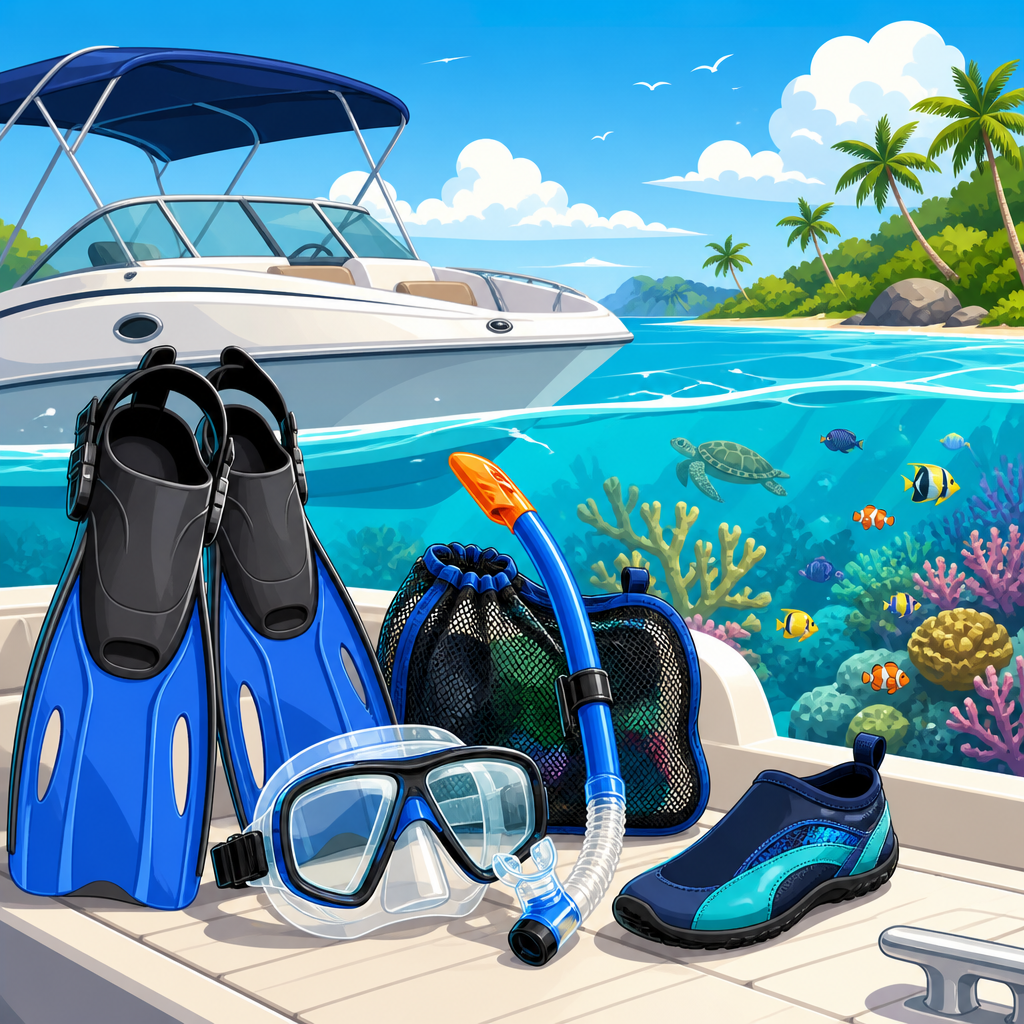
Boaters who want to explore what lies below the surface need snorkeling gear that works reliably on deck, in current, and around ladders, cleats, and wake. The best snorkeling gear for boating enthusiasts is not simply the lightest or cheapest set on a store shelf. It is a system built for easy entry from a boat, clear vision in changing conditions, efficient surface swimming, safe storage, and fast rinsing after use. When I outfit a boat for family snorkeling days or add guest kits before a reef stop, I focus on fit, durability, and how each piece performs when people are climbing in and out repeatedly.
Snorkeling from a boat differs from beach snorkeling in several important ways. You usually enter deeper water, often over reefs, grass flats, wreck edges, or rocky points. You may deal with current, chop, prop wash, and limited staging space. Gear has to be comfortable enough for a long float yet compact enough to stow in a console, locker, or dry bin. The core kit includes a mask, snorkel, fins, exposure protection, and optional flotation or anti-fog accessories. For some boaters, “snorkeling gear” also extends to deck footwear, mesh bags, and rinse systems because poor storage ruins good equipment faster than use does.
This matters because the right setup directly improves safety, comfort, and what you actually see in the water. A leaking mask forces constant clearing. Fins that are too soft waste energy in current. A bulky snorkel catches wind and slaps your face when climbing a ladder. On a boat, small annoyances become trip-ending problems quickly. Good gear selection reduces fatigue, makes children and beginners more confident, and helps experienced users stay out longer with less effort. If your broader interest is fishing and water sports, a dependable snorkeling kit also turns transit time and anchored downtime into useful exploration, bait observation, or family activity without carrying scuba equipment.
What the best boat snorkeling setup includes
The best kit starts with a low-volume mask made from soft silicone, tempered glass, and a dependable buckle system. Low-volume masks are easier to clear and sit closer to the face, which helps when waves wash over you near the boat. Tempered glass is nonnegotiable because acrylic lenses scratch easily and distort over time. I prefer masks with a broad silicone skirt seal rather than overly rigid frames. Brands such as Cressi, TUSA, Scubapro, Mares, and Oceanic consistently make masks that hold up in saltwater use. The best choice is the one that seals on your face without strap tension.
For snorkels, a streamlined semi-dry design is usually the best compromise for boating enthusiasts. Fully dry snorkels can reduce splashing at the surface, but some are bulky and awkward when you look down for long periods. Simple J-tube snorkels are excellent for experienced users and free divers because they are light and easy to clear, though they allow more water entry in chop. A purge valve can help beginners, but every extra valve adds another failure point. On boats carrying mixed-skill guests, I usually stock semi-dry snorkels with flexible lower sections because they pack better and fit more face shapes comfortably.
Fins should match where and how you snorkel from the boat. Full-foot fins are compact, efficient, and great for warm water, especially when people are entering gently from a swim platform. Open-heel fins paired with neoprene booties are better for rocky launches, ladder entries, and variable temperatures. They also fit a wider range of users, which matters on family boats and charter setups. Split fins reduce muscle strain for relaxed cruising, while paddle fins provide stronger thrust in current or around reefs. For most boaters, a medium-stiff compact paddle fin is the most versatile option because it stores easily and still pushes well.
Exposure protection is often overlooked, yet it changes the experience more than most accessories. Even in warm climates, a rash guard or thin neoprene top prevents sunburn, jellyfish irritation, and chafing from vests. In cooler water, a 2 mm or 3 mm shorty wetsuit can extend snorkel time dramatically by reducing heat loss. Add defog solution, a mask box, a mesh gear bag, and a small dedicated freshwater rinse jug, and you have a complete boat-ready snorkeling system rather than a pile of separate items.
How to choose a mask that seals, clears, and lasts
If one piece deserves the most attention, it is the mask. In practice, mask fit determines whether the outing feels effortless or frustrating. To test fit, place the mask gently on your face without using the strap and inhale slightly through your nose. A suitable mask should stay in place for a moment and feel evenly sealed around the cheeks, upper lip, and brow. Facial hair, high cheekbones, and narrow noses all affect fit, which is why a highly rated mask can still be wrong for you. I have seen expensive masks fail in ten minutes while modestly priced models worked flawlessly for years.
Lens shape matters too. Single-lens masks often provide a broad field of view that is excellent for sightseeing and keeping track of snorkel partners. Dual-lens masks can fit lower-volume designs and may allow prescription inserts, which are valuable for users who otherwise miss fish detail, navigation markers, or ladder placement. Frameless masks pack well and are popular on center consoles with limited storage, but framed masks often feel sturdier when multiple people use them. For most boating enthusiasts, tempered glass, easy-adjust buckles, and a silicone strap with enough grip to stay put on wet hair are the features worth prioritizing.
Maintenance is simple but important. New masks often need careful cleaning to remove manufacturing residue that causes fogging. Toothpaste is commonly used, though dedicated mask pre-cleaners are more consistent. Before each session, apply anti-fog, rinse lightly, and avoid touching the inside lens. After use, rinse the mask in fresh water and store it out of direct sun. Heat warps skirts and weakens straps, especially when gear is left on a hot dashboard or open transom seat. A rigid mask box is worth the space because crushed skirts are a common source of chronic leaking on boats.
Fins, flotation, and mobility around the boat
Fins do more than increase speed. They reduce energy use, improve control near current lines, and help snorkelers return to the boat without overexertion. The wrong fins create calf cramps, ankle rub, and awkward ladder climbs. When I am choosing fins for boat use, I look first at blade length and foot pocket comfort. Long freediving fins generate impressive efficiency but are cumbersome on crowded decks and difficult for beginners near ladders. Very short travel fins pack neatly but can struggle in stronger current. Mid-length fins usually strike the best balance for recreational boat snorkeling.
Flotation is equally important, especially for children, tired swimmers, and anyone snorkeling in offshore conditions. Inflatable snorkel vests are excellent because they add buoyancy without locking the user into a bulky foam jacket. They can be partially inflated for relaxed surface viewing or fully inflated during rest periods near the boat. Standard life jackets are appropriate during transit, but once in the water they can push the body into an awkward position for face-down snorkeling. In areas with boat traffic, a bright snorkel vest or tow float also improves visibility to operators, paddle craft, and support crew.
| Gear item | Best choice for most boaters | Why it works from a boat |
|---|---|---|
| Mask | Low-volume tempered-glass silicone mask | Easier clearing, reliable seal, better durability in storage |
| Snorkel | Semi-dry snorkel with flexible lower section | Handles chop well and stays comfortable during ladder use |
| Fins | Mid-length paddle fins or adjustable open-heel fins | Good thrust in current with manageable deck handling |
| Protection | Rash guard or 2 mm to 3 mm shorty | Reduces sun, stings, and heat loss on longer sessions |
| Safety add-on | Inflatable snorkel vest or bright tow float | Improves buoyancy and visibility near anchored boats |
Booties deserve mention because they solve several boating-specific problems. They protect feet on ladders, swim steps, rocky shore landings, and slippery ramps. They also improve fin fit in adjustable open-heel designs. Look for thin, grippy soles rather than heavy dive boots unless you are combining snorkeling with shore diving. The goal is traction and comfort, not bulk. On boats where guests frequently rotate through gear, open-heel fins plus 2 mm booties are often the easiest system to fit safely.
Boat-specific safety, storage, and care
Safe boat snorkeling begins before anyone enters the water. Engines must be fully off, keys removed or controlled, and a clear reboarding plan established. A boarding ladder should already be deployed or instantly deployable from the water. The captain or spotter needs to know who is in, where they are drifting, and what signal means return to the boat. Current can separate people from a drifting vessel surprisingly fast, especially around passes, bridge pilings, and reef edges. Good snorkeling gear supports safety, but procedures matter just as much as equipment quality.
Storage affects lifespan more than many buyers realize. Salt crystals abrade buckles, UV degrades silicone and plastics, and trapped moisture encourages mildew. I recommend one mesh bag per person for wet gear, plus a ventilated locker or shaded tub for transit. Masks should never be tossed lens-down with fins and anchors. Snorkels should not stay clipped tightly to masks for months because that bends retainers and stresses purge sections. After each trip, rinse everything thoroughly, soak occasionally in fresh water, and let gear dry fully before long-term storage. This routine preserves elasticity, clarity, and hygiene.
There are also legal and environmental considerations. Many marine parks restrict touching reefs, collecting marine life, or entering sensitive seagrass zones. Reef-safe sun protection is widely encouraged because oxybenzone and octinoxate have faced restrictions in several destinations due to coral concerns. Gloves are prohibited in some protected areas because they can encourage contact with coral and wildlife. If your boat snorkels around moorings or popular reefs, carry a dive flag or locally required marker where regulations call for it. Good practice is simple: maintain buoyancy, keep fins clear of coral, and leave every habitat untouched.
Best gear combinations for different boating styles
Not every boater needs the same setup. A family on a pontoon in warm inland or coastal water usually does best with soft full-foot fins, simple semi-dry snorkels, broad-view masks, rash guards, and inflatable vests sized for each user. Comfort and easy sharing matter more than maximum propulsion. A center console owner running offshore to reefs benefits from sturdier gear: compact paddle fins, low-volume masks, anti-fog, tow floats, and perhaps shorty wetsuits for wind-chilled rides home. On sailboats, storage space is at a premium, so frameless masks and compact fins become especially useful.
Anglers adding snorkeling to fishing days often want utility as much as recreation. Snorkeling lets them inspect artificial reefs, check anchor placement, observe bait concentrations, and understand structure that fish finders only suggest. For that purpose, efficient fins and a low-profile snorkel matter because users may cover more distance and spend more time peering downward. Families focused on sightseeing may prioritize bright colors, prescription-capable masks, and comfort-focused fins. Charter operators should stock durable mid-range gear in multiple sizes, emphasizing sanitation, simple adjustment, and replacement parts availability over boutique styling.
If you are building a hub page for scuba diving and snorkeling from a boat, the central idea is flexibility. Start with a personal fit-based mask, add a boat-appropriate snorkel, choose fins based on current and ladder use, and round out the kit with exposure protection and flotation. Then connect that setup to related topics boaters frequently need: choosing anchorages for snorkeling, preventing seasickness before water entry, underwater communication signals, and post-trip gear care. A smart kit does not just improve one swim. It turns your boat into a reliable platform for repeated in-water exploration.
For boating enthusiasts, the best snorkeling gear is the gear that fits well, performs predictably in moving water, and survives the realities of marine storage. Prioritize a low-volume tempered-glass mask, a streamlined snorkel, fins matched to your usual conditions, and practical protection such as a rash guard, booties, or a shorty wetsuit. Add flotation for visibility and confidence, especially when children, beginners, or offshore stops are involved. These choices deliver better comfort, less fatigue, easier reboarding, and more time actually looking at reefs, bait schools, grass beds, and bottom structure instead of fussing with equipment.
The biggest mistake I see is buying an all-in-one budget set without testing fit or thinking about boat use. Mask leaks, weak buckles, flimsy fins, and poor storage quickly erase any savings. A better approach is to assemble a modular kit from proven brands and maintain it carefully with fresh-water rinsing, shade, and ventilated storage. That approach is more dependable, easier to upgrade, and safer for guests. If you want your fishing and water sports setup to do more, start with one excellent boat-ready snorkeling kit, use it often, and build from there into more advanced scuba and boat exploration skills.
Frequently Asked Questions
1. What snorkeling gear works best for people getting in and out of the water from a boat?
The best snorkeling gear for boaters is gear that is easy to put on quickly, stays secure in moving water, and does not become a hassle on a wet deck. A low-volume mask with a dependable silicone skirt is usually the strongest starting point because it seals well, clears easily, and packs safely in a boat locker. For the snorkel, many boaters prefer a semi-dry or dry-top design because it helps reduce splashing and accidental water intake when there is chop, wake, or current around the boat. Fins should balance propulsion with practicality. Full-foot fins can work well in warm, calm conditions, but open-heel fins with adjustable straps are often better for boating because they are easier to don at a swim platform or ladder and can be worn with booties for added grip and comfort.
Boat entry and reboarding matter just as much as in-water performance. Long freediving fins may be efficient, but they can be awkward around cleats, ladders, and crowded cockpits. Many boating enthusiasts do better with shorter travel or mid-length snorkeling fins that still provide thrust without becoming clumsy on deck. A well-fitting mask strap, flexible fin straps, and a snorkel keeper that holds firmly without being difficult to release are small features that make a big difference when gearing up while the boat moves. If children or guests will be using the gear, simple adjustment systems are especially valuable.
It is also smart to think of snorkeling gear as a complete onboard system rather than isolated pieces. A mesh gear bag for drainage, anti-fog solution, defogging rinse bottle, and a dedicated freshwater rinse container help preserve the gear and make it easier to rotate between users. For boaters, the best setup is the one that moves smoothly from storage to swim platform to water and back again with minimal fuss and maximum reliability.
2. How should a mask fit for boating and snorkeling in changing conditions?
Mask fit is the single most important factor in snorkeling comfort and visibility. A premium mask that does not fit your face will perform worse than a modestly priced one that seals correctly. For boating enthusiasts, this matters even more because conditions can change quickly. Wind chop, wake, current, and frequent entries from the side of the boat or a swim ladder all increase the chance of a poor-fitting mask shifting or leaking. A proper fit starts with the shape of the skirt. Soft silicone generally seals better and lasts longer than cheaper materials, especially after repeated exposure to sun, salt, and heat in a marine environment.
To test fit, place the mask gently on your face without using the strap and inhale lightly through your nose. If it seals briefly and stays in place, that is a good sign. Then check for pressure points around the bridge of the nose, upper lip, and forehead. A mask can seem fine for one minute in a store and become irritating after twenty minutes in the water, so comfort matters as much as suction. Many boaters prefer tempered glass lenses for durability and optical clarity, and a low-volume design can make clearing water easier if the mask gets bumped during entry or by surface chop.
Lens style also affects usability. Single-lens masks can offer a wide, open view that many casual snorkelers enjoy, while dual-lens masks may fit a broader range of faces and sometimes make prescription options easier to find. If you snorkel around reefs, sandbars, docks, or rocky shorelines from the boat, strong side visibility helps with awareness and orientation. Whatever style you choose, avoid overtightening the strap. A mask should seal because it fits, not because it is cranked down. Overtightening often makes leaks worse and leaves users uncomfortable before the swim even starts.
3. Are short fins or long fins better for snorkeling from a boat?
For most boating enthusiasts, short to mid-length fins are the more practical choice. They are easier to walk in on deck, simpler to manage on swim platforms, and less likely to catch on ladders, cleats, ropes, or other people. That convenience matters a great deal when entries and exits happen in a dynamic environment rather than from a beach. Boaters often need to gear up quickly, step carefully on wet surfaces, and reboard efficiently while holding onto rails or waiting near the stern. In those situations, a compact fin can reduce awkwardness and improve safety.
That said, fin choice should still match the kind of snorkeling you do. Longer fins can provide more efficient propulsion over distance and may be useful when swimming against current or covering a wide area from an anchored boat. However, many recreational snorkelers do not need maximum fin power. They need control, comfort, and manageable movement around the boat. Mid-length snorkeling fins often hit the sweet spot by offering enough thrust for surface swimming without feeling oversized or cumbersome in a marine boarding environment.
Open-heel fins deserve special consideration for boaters. They adjust easily for different users, work with neoprene booties, and tend to be more forgiving when feet are wet or conditions are rough. Booties can also provide better traction on ladders and decks and help prevent blisters during repeated use. Full-foot fins are lighter and simple, but they usually fit a narrower range of users and can be less forgiving during long family boating days with multiple swimmers. If you regularly carry guest kits onboard, adjustable open-heel fins are often the most versatile and boat-friendly option.
4. What features make a snorkel safer and more comfortable around wake, chop, and current?
A good boating snorkel should help you breathe comfortably at the surface without becoming fussy, restrictive, or prone to flooding every time the water gets lively. For that reason, many boating enthusiasts prefer semi-dry or dry-top snorkels. A semi-dry design reduces splash entry from wavelets and wake, while a dry-top model adds a valve system that closes more fully when submerged or hit by water. This can be especially useful around anchored boats, mooring fields, or drift-snorkeling situations where conditions are less predictable than in a calm lagoon.
Comfort comes from more than the top design. The mouthpiece should be soft, properly sized, and shaped so the jaw does not tire quickly. A purge valve can make clearing easier for beginners or casual snorkelers, although some experienced users prefer a simpler design with fewer parts. Flexible lower sections can also improve comfort because they move with the face and reduce pulling at the mask strap. When gear is being shared among family members or guests, easy cleaning and simple operation become even more important than technical extras.
For boating use, durability matters. Snorkels get tossed into bags, wedged into lockers, stepped around on deck, and exposed to salt, sun, and rinse cycles. A model with quality silicone and sturdy attachment hardware usually holds up better than bargain sets. It is also wise to avoid oversized or bulky snorkels that catch wind or feel awkward during reboarding. The ideal snorkel for a boater is streamlined, comfortable for longer surface swims, easy to clear, and dependable when small waves and boat wake make surface breathing more challenging.
5. How should boating enthusiasts store, rinse, and maintain snorkeling gear on board?
Proper maintenance is what keeps snorkeling gear comfortable, clear, and ready for spontaneous use. On a boat, salt, sun, heat, and cramped storage are the main enemies. The best routine is simple: rinse every item with fresh water as soon as possible after use, let it drain thoroughly, and store it where it is protected from crushing and prolonged UV exposure. Masks should ideally ride in a protective case so the skirt does not warp and the lenses do not get scratched by buckles, zippers, or tackle. Fins and snorkels can go into a mesh bag that allows airflow and quick drying.
If you snorkel multiple times in one day, keeping a dedicated rinse bin or freshwater washdown bucket on board can make a big difference. A quick freshwater soak helps remove salt crystals, sand, sunscreen residue, and organic debris before they harden or stain the gear. Pay extra attention to mask skirts, snorkel mouthpieces, purge valves, and fin straps, since those are the areas most likely to collect grime or develop wear. After the day ends, let the gear dry in shade rather than baking in direct sun for hours, which can shorten the life of silicone and plastics.
Long-term care also matters. Periodically inspect straps, buckles, snorkel keepers, and fin adjustment systems for cracking or corrosion. Replace worn parts before they fail during a swim. Use anti-fog products that are compatible with your mask and avoid harsh cleaners that can damage coatings or silicone. If you keep guest kits onboard, label sizes and store each set together so setup is fast and organized. Well-maintained snorkeling gear not only lasts longer, it performs better when the family is ready to jump in and explore below the boat.