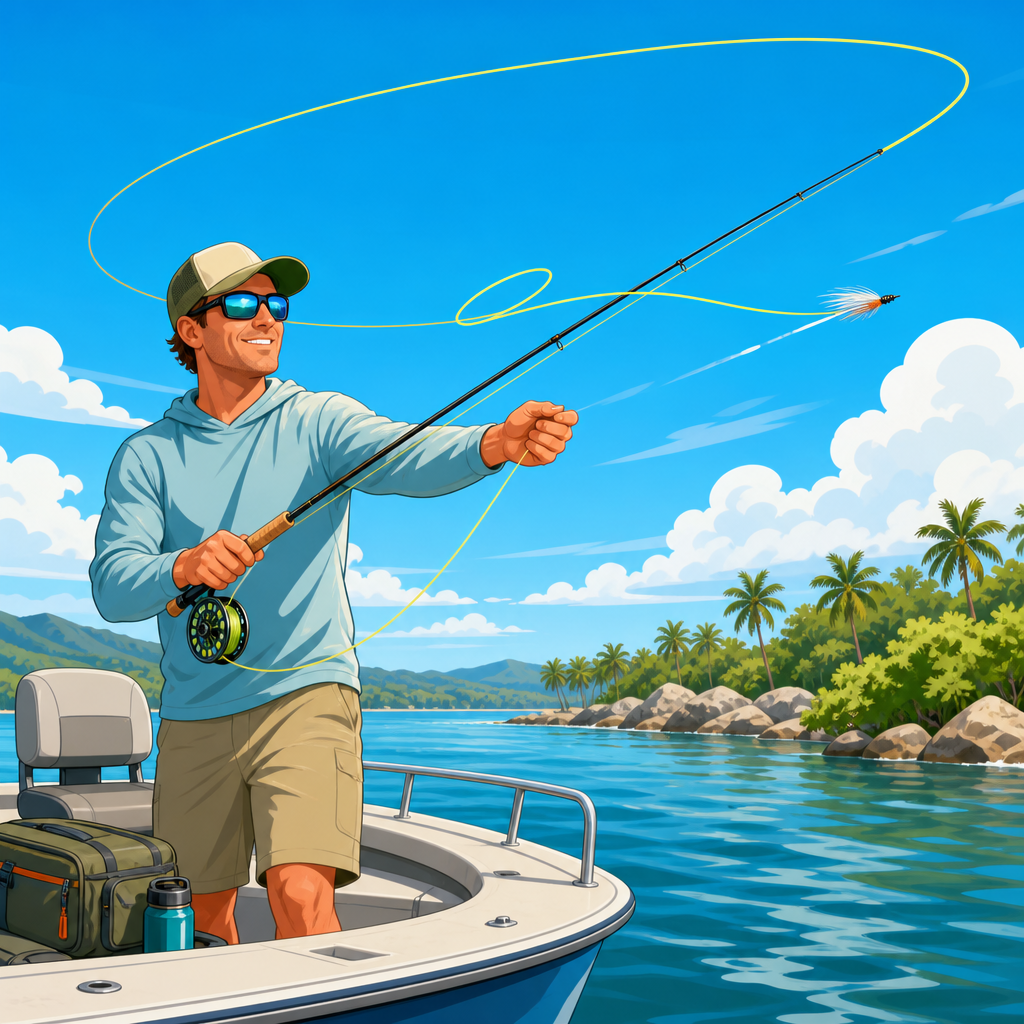
Fly fishing from a boat demands a different skill set than wading a riverbank, because your casting platform moves, your footing changes, and fish often appear at shifting angles and distances. In practical terms, improving your fly casting while on a boat means learning to deliver the fly accurately, safely, and efficiently from a deck, seat, or casting platform while compensating for wind, current, hull position, and limited backcast room. I have spent enough hours on skiffs, drift boats, jon boats, and bass boats to know that even strong casters can unravel once the boat starts sliding sideways or a guide calls a target at two o’clock with ten feet to spare.
The core challenge is simple: a good fly cast on land is built on balance, timing, line control, and loop shape, but on a boat every one of those variables becomes less stable. The deck may be wet. Gear may catch your running line. A trolling motor may alter your presentation angle. Other anglers may share the cockpit, turning a normal backcast into a safety problem. Add wind and sun position, and the margin for error gets small fast. That is why dedicated boat casting skills matter for anyone serious about fly fishing from a boat, whether chasing redfish on the flats, smallmouth on reservoirs, striped bass in current, or trout from a drift boat.
This guide explains how to improve your fly casting while on a boat by breaking the problem into the factors that matter most: stance, line management, stroke adjustments, distance control, specialty casts, communication, and practice. It also serves as a central reference for the broader subject of fly fishing from a boat, because casting is connected to boat position, fish behavior, presentation angle, and on-the-water etiquette. If you can cast cleanly from a boat, you fish longer, reach more targets, spook fewer fish, and convert more opportunities into solid eats.
Build a stable casting platform before you ever false cast
The first improvement usually has nothing to do with the rod hand. It starts with posture and footing. On a boat, I tell anglers to widen their stance slightly more than they would on firm ground, keep knees soft, and center weight over the middle of both feet rather than leaning into the cast. A locked stance works until the hull rocks. Then the upper body compensates, the rod tip wobbles, and loop control disappears. Stability is accuracy.
If you are on a poling skiff or bass boat deck, strip away clutter around your feet. Fly line tangles on cleats, cup holders, seat hinges, and dry bag straps are one of the biggest causes of blown shots. A stripping basket is useful in surf and some boat situations, but on many decks a clean line mat is the better solution. In drift boats, anglers standing forward should know where anchor rope, oars, and spare rods sit before making a cast. Boat awareness is part of casting mechanics because hesitation changes tempo.
Boat position matters just as much. A caster who knows the bow is quartering into the wind can plan a lower backcast and a more aggressive forward stop. A caster who ignores hull angle ends up reacting late. Good guides constantly adjust the boat to create easier casting lanes. Smart anglers help by asking one direct question before a drift or approach: where should my safe backcast lane be? That five-second check prevents hooked jackets, ears, and electronics.
Refine your casting stroke for tight space and moving water
A boat rewards compact mechanics. Long, showy false casts waste time and collapse under pressure. The most reliable boat cast is a controlled stroke with a crisp stop, minimal slack, and just enough line speed for the target distance. In my experience, anglers improve fastest when they shorten the stroke, reduce false casting to one or two cycles, and focus on tracking the rod tip straight on both the backcast and forward cast.
When backcast room is limited by a console, outboard, mangroves, or another angler, the solution is not always brute force. Instead, raise the elbow slightly, tilt the casting plane, and use a higher backcast if space overhead allows, or a sidearm backcast if the obstacle is vertical. The key is to maintain loop shape. A sidearm cast done correctly is not weaker; it simply changes the plane to fit the environment.
Timing also changes on a boat because visual references shift. On land, many anglers unconsciously time the cast by how their body feels relative to the ground. On a moving hull, that feedback is less reliable. Watch the line. Wait for the backcast to straighten before driving forward. Most tailing loops from a boat come from starting too soon, especially when excitement spikes after a guide spots fish.
Hauling becomes more valuable from a boat than many anglers realize. A well-timed single haul increases line speed without forcing a longer stroke, which is ideal when space is tight. A double haul helps punch into wind and carry heavier flies, but only if the line hand returns smoothly toward the stripping guide before the next stroke. If the haul creates slack, the extra speed is lost. Practice compact hauling at thirty to fifty feet first, because that range covers a large share of real boat shots.
Control line, distance, and accuracy under real fishing pressure
Most missed fish from boats are not caused by lack of maximum distance. They come from poor distance control at common fishing ranges. Redfish, carp, pike, bass, and trout are often hooked within twenty to fifty feet. At those distances, fast delivery matters more than hero casting. I train anglers to know exactly what thirty feet, forty feet, and fifty feet of fly line look and feel like outside the rod tip, then rehearse delivering each length with one pickup and one presentation cast.
Accuracy on a boat is partly visual and partly procedural. Pick a target lane, not just a target spot. Fish move, and the boat moves too. Casting three feet ahead of a cruising fish is often better than trying to hit the fish’s nose. For structure fishing, aim for edges: weed lines, dock shadows, mangrove pockets, current seams, and drop-offs. Those lanes hold fish and give a cleaner presentation path than dropping directly on top of visible cover.
Line management is where many good casters become average from a boat. Loose coils underfoot must feed cleanly, especially during quick second shots. Strip line into consistent piles or onto a mat. Keep the rod tip low after the cast when conditions call for immediate contact, such as streamer fishing or bank shots for bass. In saltwater sight fishing, however, the rod tip often stays slightly elevated to preserve a clean pickup for the next cast. Context decides technique.
| Boat casting problem | Common cause | Best correction |
|---|---|---|
| Fly lands short | Starting forward cast before backcast straightens | Pause longer and watch the line unroll behind you |
| Wide, weak loops | Rod tip tracking in an arc that is too large | Shorten stroke and make a firmer stop |
| Line tangles on deck | Stripping into random coils around hardware | Clear the deck and stack line in organized piles or on a mat |
| Hooking the boat or partner | Poor awareness of casting lane and wind direction | Change casting plane and confirm safe backcast side |
| Missed quick second shot | Too much line outside tip or slack after first pickup | Manage line length and keep tension during recast |
One overlooked distance tool is the water load. In tight quarters, letting the line and fly touch the water behind or beside the boat before the next cast can help load the rod and relaunch efficiently. This is especially useful with streamers, bass bugs, and heavier saltwater patterns. It is not elegant tournament casting, but it catches fish. The point of fly fishing from a boat is functional delivery, not perfect lawn-casting form.
Use specialty casts that solve boat-specific problems
Several casts become disproportionately valuable once you start fly fishing from a boat regularly. The roll cast is the first. While rarely the primary presentation from an open skiff, it is indispensable in drift boats, tight banks, and tree-lined shorelines where a full backcast is unsafe. A strong roll cast also transitions naturally into a single Spey-style repositioning move when changing direction on moving water.
The backhand cast is another major separator. Right-handed anglers on the bow often struggle when wind pushes from the casting side or fish appear on the non-dominant shoulder. Rather than twisting the whole body and risking a dangerous cross-body stroke, learn a proper backhand delivery. It keeps the fly away from you and preserves accuracy. For many flats anglers, backhand proficiency is not optional; it is a safety skill and a fish-catching skill.
The Belgian cast, sometimes called the oval cast, is ideal with weighted flies, bulky deer-hair bass bugs, and windy conditions. Because the line stays in continuous motion on different planes, it reduces the chance of the fly colliding with the rod tip and helps maintain tension. I use it often from boats when throwing sinking lines or large streamers. It is not a cure-all, but when fly mass and wind combine, it is one of the cleanest answers.
Reach mends and aerial mends matter too, especially in rivers and current seams. Drift boat anglers targeting trout, smallmouth, or steelhead often need the fly to land with immediate slack in a specific direction. Executing that adjustment in the air saves time compared with landing the line straight and mending late. On stillwater from anchored or slowly drifting boats, a reach can also reposition the line away from the fish and improve the retrieve angle. Better casting from a boat is not only about getting there; it is about making the line land in a useful shape.
Match your casting decisions to the boat, fish, and conditions
Not every boat fishes the same, so casting strategy should change with the platform. A drift boat on a trout river emphasizes quick shots, mending, and repeated deliveries to banks, seams, and pockets. A skiff on a flat emphasizes clock-direction communication, fast target acquisition, and controlled shots to moving fish in wind. A bass boat on a reservoir often calls for repeated casts around cover with larger flies and more aggressive line pickup. The best anglers adapt their casting style to the boat rather than forcing one universal rhythm.
Wind deserves direct treatment because it magnifies every flaw. If the wind blows off your casting shoulder, lower the cast on the forward stroke and keep the fly downwind of your body. If it blows onto your casting shoulder, change hands, use a backhand cast, or alter your body position so the fly never crosses your face. Serious saltwater guides insist on this because eye injuries from flies are entirely preventable. Polarized glasses are mandatory, and a hat is sensible, but technique is the real safeguard.
Fish behavior should determine delivery speed. Schooling fish that are moving fast may require one false cast and immediate presentation. Laid-up fish in skinny water may need a softer, higher-precision cast with less line slap. Bank-oriented bass near wood can tolerate a firm shot if the fly lands tight to cover; spooky redfish over sand often cannot. The common mistake is using the same energy for every target. Better boat casting means matching loop shape, line speed, and landing angle to the fish in front of you.
Communication matters more than many anglers expect. On guided boats, the best outcomes happen when directions are concise and standardized: “eleven o’clock, forty feet, moving left” tells the caster where, how far, and what the fish is doing. Ask your guide or partner how they prefer to call shots, then stick to that format. It reduces cognitive load and allows your casting mechanics to stay automatic. On many boats, the difference between a rushed cast and a clean eat is simply clearer communication.
Practice for boat reality, not perfect conditions
If you want measurable improvement, practice like you fish. Lawn casting has value, but only if it includes boat-specific constraints. Mark targets at twenty-five, thirty-five, forty-five, and fifty-five feet. Practice with one or two false casts maximum. Simulate quick direction changes. Work from elevated platforms if possible, or cast from a cooler, low dock, or stable trailer to change your visual angle. Better yet, practice from an actual stationary boat at the ramp or shoreline after checking safety and local rules.
Rehearse the first shot. In real fly fishing from a boat, the first shot is the money shot because fish windows close quickly. Strip out a known length of line, hold the fly safely, then deliver to target on command. Repeat until you can place the fly within a few feet of target reliably. Then add a second shot after one strip, because many fish change direction or the boat drifts. This drill exposes weak line management faster than any distance contest.
Film yourself. Most anglers are surprised by what video reveals: excessive body sway, too many false casts, collapsing wrist position, poor tracking, and line hand drift. Slow-motion review on a phone is enough. If you can, work once with a certified casting instructor or an experienced guide who teaches regularly. Ten minutes of precise correction often fixes problems that months of unsupervised practice reinforce.
Finally, make safety part of practice. Wear glasses, know your backcast lane, pinch barbs when appropriate, and never sacrifice control for distance. Better fly casting while on a boat is not about looking polished. It is about delivering the fly on time, on target, and without chaos. Master that, and every other part of fly fishing from a boat becomes easier. Start by cleaning your deck, shortening your stroke, and practicing accurate first shots at real fishing distances. Those three changes produce results on the very next trip.
Frequently Asked Questions
How is fly casting from a boat different from casting while wading?
Fly casting from a boat is fundamentally different because the platform beneath you is rarely as stable, predictable, or forgiving as solid ground. When you are wading, your body position usually stays fixed relative to the water, and your casting angles remain fairly consistent from one presentation to the next. On a boat, however, everything can change in seconds. Wind can push the hull, current can swing the bow, a trolling motor or guide adjustment can alter your presentation angle, and your footing may shift depending on whether you are standing on a deck, seated low in the boat, or casting from a raised platform.
That means your casting mechanics need to become more adaptable. Instead of relying on a long, relaxed backcast with plenty of room, you often need a tighter, more efficient stroke that keeps the line under control and away from obstacles like outboard motors, rod holders, coolers, seat backs, and other anglers. Accuracy also becomes more important because boat fishing frequently involves short windows of opportunity. A fish may show itself near grass edges, mangroves, docks, banks, or structure, and you may only get one or two seconds to deliver the fly before the angle disappears.
Another major difference is line management. In the water, stripped line may drift at your feet. In a boat, loose line can wrap around cleats, get under shoes, snag on deck hardware, or blow overboard. Good boat casting therefore includes more than just rod motion. It also means organizing your line, setting your stance, anticipating casting lanes, and understanding where your backcast and forward cast can safely travel. The anglers who improve fastest are the ones who treat boat casting as a complete system of balance, awareness, timing, and efficient presentation rather than just a standard cast done from a floating surface.
What is the best way to improve accuracy when fly casting from a moving boat?
The fastest way to improve accuracy from a boat is to shorten your casting process and simplify your movements. Many anglers miss targets from a boat because they make too many false casts, wait too long to deliver, or try to power the rod instead of controlling the loop. Boat shots often demand speed, but speed should come from preparation and clean mechanics, not from rushing. If you can pick up line, make one or two controlled false casts, and present immediately, your accuracy will improve dramatically.
Start by focusing on a compact casting stroke with a crisp stop on both the backcast and forward cast. Tight loops track better in wind and help you put the fly exactly where you want it. Keep your elbow and rod tip on a consistent path, and avoid wide, sweeping motions that create open loops and unpredictable turnovers. It also helps to practice at real fishing distances rather than idealized casting distances. Many useful shots from a boat happen inside 30 to 50 feet, so being deadly accurate at moderate range usually matters more than being able to bomb a long cast.
You should also train your eyes and body to cast to targets at changing angles. On a boat, fish are not always at twelve o’clock. They may show up off your casting shoulder, across the bow, down the bank, or quartering away with the boat drifting. Practice throwing at targets positioned left, right, short, and long. Learn to change direction with a roll cast pickup, a single backcast adjustment, or a quick repositioning move instead of starting over every time the angle changes.
Finally, communicate with whoever is controlling the boat. Good boat positioning can make an average cast easy and a difficult cast impossible. If you can ask for a better angle, a slower drift, or a small adjustment in approach, do it. Accuracy from a boat is not just an individual skill; it is often the result of teamwork between caster and boat handler. The more you coordinate those two elements, the more confidently and consistently you will hit your targets.
How can I deal with limited backcast room when fly casting on a boat?
Limited backcast room is one of the most common boat-fishing problems, and solving it begins with accepting that a traditional overhead cast is not always the right answer. Seat backs, center consoles, push poles, outboards, trees along shorelines, bridge structure, and other anglers can all block a clean backcast. The solution is to build a set of alternative casts and line-control habits that let you stay effective even when space is tight.
One of the most useful adjustments is learning to cast with a higher backcast plane or a more vertical stroke when the obstacle is low and behind you. By changing the rod angle, you can often keep the line above obstructions and still deliver a clean forward cast. In other situations, a sidearm stroke may be better, especially when casting under wind or around structure. The key is understanding that your casting plane can change to match the situation. You do not need one perfect style; you need control over several practical styles.
Roll casts, water-loaded pickups, and single-hand Spey-style repositioning casts can also be extremely valuable from a boat. These allow you to move line into a better casting position without needing a long aerial backcast. If your fly is already on the water and the next shot is only a modest distance away, a quick water anchor and redirection move can be far more efficient than stripping in, false casting repeatedly, and risking tangles or collisions.
Another overlooked improvement is simply managing how much line is outside the rod tip. Anglers often carry too much line in the air, which increases the size of the casting arc they need and makes backcast control harder. If room is limited, fish shorter and cleaner. Keep only the amount of line you can control, shoot line on the delivery when needed, and let the rod do the work. The best boat casters are not always the flashiest; they are often the ones who can adapt instantly, keep their line compact, and deliver an efficient cast in whatever space the boat gives them.
What are the most important safety tips for fly casting around other people on a boat?
Safety should always come before distance or presentation, because a fly rod on a boat creates hazards quickly when space is limited. Hooks, weighted flies, fast rod strokes, and shifting footing mean even a routine cast can become dangerous if you are careless. The first rule is to always know where everyone is before you start your stroke. That includes not only the person standing nearest you, but also anyone seated behind you, handling gear, poling the boat, operating the trolling motor, or moving unexpectedly while you cast.
Control your backcast height and direction at all times. Many boat accidents happen when anglers become target-focused and stop tracking where the fly is traveling behind them. If another person is in the danger zone, do not cast until the situation changes. It is better to miss a shot than drive a hook into a guide, partner, or yourself. Wearing polarized glasses is essential, and a hat provides additional protection. These are not optional accessories on a boat; they are basic safety gear.
You should also match your cast to the conditions. In heavy wind, use tighter loops, more deliberate timing, and casting angles that keep the fly away from your body and from others. If the wind is blowing onto your casting side, consider changing shoulders, altering the casting plane, or using a safer presentation angle instead of forcing a dangerous stroke. Weighted flies require even more caution because they can rebound, tail, or track unpredictably if your loop collapses.
Line management matters for safety too. Loose line underfoot can cause slips, surprise snags, and sudden disruptions in your casting stroke. Keep the deck clear, strip line into a basket or organized area when possible, and avoid stepping into coils while you are preparing to cast. Finally, communicate clearly. A quick “coming back,” “fish at ten o’clock,” or “making one cast” helps everyone on the boat stay aware. Safe boat casting is largely about discipline: controlled movements, clean line handling, and constant awareness of the people and obstacles around you.
What drills should I practice to get better at fly casting from a boat?
The best drills for boat casting are the ones that reflect real fishing conditions rather than ideal lawn-casting scenarios. Start with quick-delivery drills. Strip out a practical fishing length of line, place targets at varying distances, and practice picking up the line and delivering to the target with no more than one or two false casts. This builds efficiency, timing, and confidence under the kind of pressure you actually feel when a fish appears suddenly.
Next, work on directional change drills. Set targets at different clock-face angles around you and practice delivering to each one without excessive setup. For example, cast to a target at eleven o’clock, then quickly redirect to one at two o’clock, then to one at nine o’clock. This teaches you to control your loop and reposition your cast without falling apart mechanically. It is one of the most useful practice routines for anglers who fish from drift boats, skiffs, and bass-style casting decks where opportunities come from multiple directions.
You should also practice from unstable or elevated footing whenever it is safe to do so. A dock, casting platform, or stable boat at rest can help you simulate the balance demands of fishing afloat. Focus on keeping your stance athletic, your head level, and your