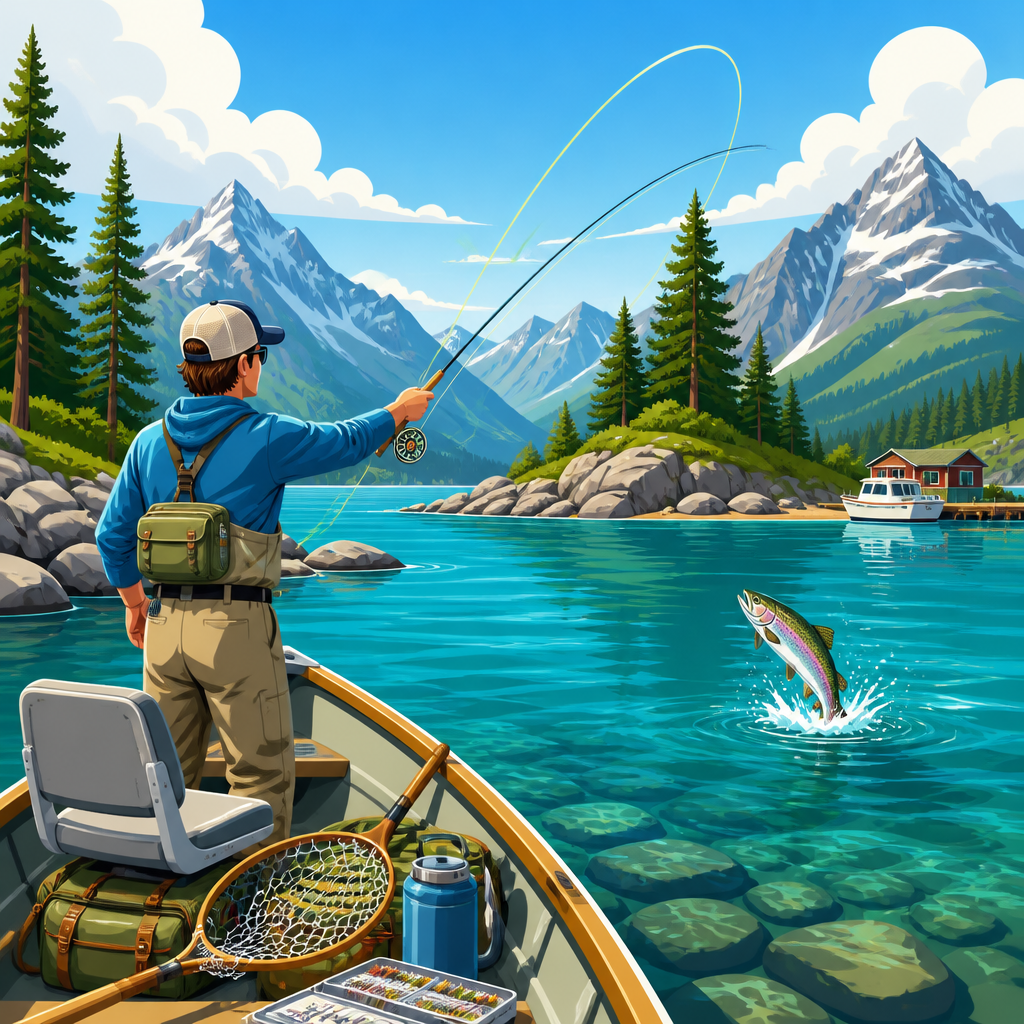
Fly fishing from a boat opens water that bank anglers never touch, from weed-edge flats and driftable freestone rivers to tide-swept estuaries where migratory fish feed hard. In practical terms, “fly fishing from a boat” means casting a fly rod from a drifting, anchored, rowed, poled, or motorized craft to reach productive structure, control presentation, and cover water efficiently. I have spent enough dawn launches and windy drifts to know that the boat changes everything: casting angles improve, backcasts become trickier, and fish that seemed inaccessible from shore suddenly become realistic targets. For many anglers, the best fly fishing destinations you can reach by boat are not simply scenic places; they are fisheries where mobility, stealth, and boat positioning directly increase success.
This matters because a boat expands both opportunity and species range. Trout anglers can float western rivers and target runs impossible to wade safely. Saltwater anglers can pole skiffs onto bonefish flats or drift shorelines for striped bass. Lake anglers can set up on shoals, drop-offs, and shoal-to-basin transitions where stillwater trout, pike, and smallmouth feed predictably. The destination, however, should match the craft, the season, and the skill level of the crew. A drift boat is ideal on rivers with structured current, a flats skiff excels in skinny water, and a raft or jet sled may be the right answer where access is rough or draft must stay minimal. The best destination is the one where boat type, fish behavior, regulations, and weather align.
As a hub for the broader fly fishing from a boat topic, this guide covers where to go, why those places stand out, what species to expect, and how to evaluate a fishery before committing time and travel budget. It also addresses the questions anglers ask most often: which destinations are best for trout, bass, or saltwater species; what kind of boat works best; when should you go; and what practical limitations should shape your plan. The destinations below are not random postcard picks. They are proven waters where boating is part of the fishing system itself, and where presentation, drift control, and access define the quality of the day.
What Makes a Boat-Access Fly Fishing Destination Truly Great
A top boat-access fly fishing destination combines four elements: productive fish habitat, reliable navigation, manageable weather windows, and enough access infrastructure to launch safely. Productive habitat means more than pretty water. On trout rivers, look for riffle-run-pool sequences, side channels, undercut banks, and insect-rich seams. On lakes, focus on shoals, weedlines, inflows, and oxygenated basins. In saltwater, the markers are tides, bait concentration, bottom composition, and current edges. The best destinations also let anglers move between spots without wasting half the day running from launch to fishable water.
Navigation matters just as much as fish density. Some famous fisheries hold excellent fish but punish poor boat handling with shallow bars, hidden timber, tidal range, or sudden afternoon winds. I rank destinations higher when a competent angler can fish effectively without local hero-level skills, or when guide services and accurate charts make the learning curve reasonable. Lakes with clear hazard marking, rivers with defined float sections, and coastal systems with established skiff routes are consistently more enjoyable and safer. That balance between adventure and predictability is what separates a great destination from an expensive gamble.
Seasonality should also shape the definition of “best.” A river that is perfect during salmonfly season may be too warm in late summer afternoons. A redfish marsh may be exceptional on strong flood tides and average on neap tides. A destination deserves hub-level status when it offers a well-defined seasonal pattern anglers can plan around. Places with dependable hatches, migrations, or forage events make trip timing easier and outcomes better. Named data sources such as USGS stream gauges, NOAA tide tables, and state fisheries reports should be part of every destination evaluation, because great fishing starts with measurable conditions, not guesswork.
Best Trout Destinations You Can Reach by Boat
For freshwater fly anglers, trout rivers remain the clearest example of why boats matter. Montana’s Madison, Yellowstone, and Missouri rivers are premier choices because each rewards drift control differently. The Madison offers fast, technical pocket water where quick casts to banks, boulders, and foam lines produce aggressive brown and rainbow trout. The Yellowstone, especially in floatable sections, gives anglers side channels, cutbanks, and classic western structure. The Missouri is a dry-fly and nymphing powerhouse, known for prolific aquatic insect life and stable tailwater conditions. In all three cases, a drift boat or raft turns miles of fishable water into a realistic day plan.
Alaska deserves separate mention because many of its finest fly fishing opportunities are fundamentally boat-oriented. Rivers such as the Kvichak and Kanektok are not just about trout; they are about trout feeding around salmon runs, sculpin habitat, and seasonal abundance that creates extraordinary size potential. Rainbow trout, Dolly Varden, Arctic char, and salmon can all be in play depending on the drainage and timing. Boat travel in Alaska also solves a key access problem: much of the best water is remote, braided, or bordered by soft ground that limits wading. A raft, jet boat, or lodge-managed skiff often determines whether you merely visit the river or actually fish it effectively.
Stillwater trout anglers should look hard at fisheries such as British Columbia’s interior lakes, Oregon’s East Lake, and large western impoundments where chironomid hatches, leech patterns, and balanced leech presentations shine from anchored or slowly drifting boats. These destinations produce because trout patrol shoals and depth transitions that shore anglers often cannot reach. On many of these lakes, fish move with light, temperature, and wind lanes, so the boat is not just transportation; it is the platform that lets you stay on the feeding path. An anchor system, sonar, and disciplined depth control frequently matter more than heroic casting distance.
Top Warmwater and Bass Waters for Fly Fishing by Boat
Smallmouth bass may be the most underrated boat-access fly fishing target in North America. Rivers such as the Susquehanna, upper Mississippi backwaters, and Tennessee systems offer outstanding warmwater action with streamers, poppers, and baitfish patterns. From a raft, jon boat, or skiff-style river boat, anglers can work current seams, boulder gardens, eddies, and shaded banks efficiently. Smallmouth are ideal for mobile fly fishing because they often group on structure, react aggressively to moving flies, and remain active over long warm seasons. In practical terms, a boat allows constant repositioning so anglers can hit prime water at the right angle rather than simply casting wherever shoreline access permits.
Largemouth bass destinations reward a different approach. Florida’s Lake Okeechobee, the California Delta, and vegetation-rich southern reservoirs can be excellent from flats boats, bass boats adapted for fly casting, or stable skiffs. The key features are grass lines, lily pads, canals, and bait-rich shallow zones where deer hair poppers, divers, and weedless streamers can be fished cleanly. These waters are not always thought of first by dedicated trout fly anglers, but they belong in any comprehensive fly fishing from a boat discussion because they teach line management, accurate short casting, and fish-fighting around cover better than almost anywhere else.
Pike and musky also fit this category, especially in northern lakes and river systems across Minnesota, Wisconsin, Ontario, and Manitoba. They are boat fish by nature because large predators patrol weed edges, points, saddles, and cabbage beds that are easiest to probe while drifting or using a trolling motor. Fly anglers need room for oversized flies and clear decks for figure-eight finishes boats provide both. These fisheries deserve attention in a hub article because they expand the idea of fly fishing beyond classic trout settings and show how versatile a boat-based approach can be.
Premier Saltwater Fly Fishing Destinations by Boat
Saltwater is where boat access becomes nonnegotiable. The Florida Keys remain one of the world’s benchmark destinations because skiffs can target bonefish, permit, and tarpon across flats, channels, and ocean-side edges in a single region. Every serious discussion of the best fly fishing destinations you can reach by boat should include the Keys, not for glamour but for fish diversity, guide infrastructure, and technical challenge. Presentation windows are short, fish are often visible, and success depends on quiet boat positioning, quick line pickup, and accurate casts delivered before wind or current ruins the shot.
Louisiana’s marshes and South Carolina’s Lowcountry are top destinations for redfish. Both systems allow skiffs and technical poling skiffs to access ponds, grass edges, oyster banks, and flood-tide opportunities where redfish tail in shallow water. These fisheries are productive because the fish are structure-oriented and often feed in water too remote or too muddy for shore access to be practical. Louisiana often offers sheer numbers and broad marsh coverage, while South Carolina can deliver highly visual flood-tide fishing that rewards exact timing. In each case, understanding tide phase is as important as fly selection.
For striped bass, the Northeast coast from Long Island to Cape Cod offers world-class boat-based fly opportunities around rips, estuaries, boulder fields, and bait concentrations. Here, the boat allows anglers to intercept moving fish rather than waiting on fixed shoreline windows. False albacore in the same region add speed and urgency, turning a skiff or center console into a run-and-gun fly platform during late summer and fall. Farther afield, the Yucatán for permit and bonefish, Belize for mixed flats species, and Christmas Island for giant trevally and bonefish represent destination-level saltwater trips where the boat is inseparable from the fishery itself.
How to Match Destination, Boat Type, and Fishing Style
The right destination depends on whether your boat supports the presentations the fishery requires. Drift boats excel on moderate western rivers where anglers need broad standing platforms and precise rowing control. Rafts are more forgiving on technical or shallow rivers and are often easier to trailer and launch on rough access points. Skiffs dominate flats fisheries because shallow draft and poling capability let anglers approach fish quietly. On lakes, prams, stillwater skiffs, and multi-species boats provide stability for indicators, full-sinking lines, and repeated repositioning. Choose the destination first by fish and season, then confirm your boat can deliver the necessary angle, stealth, and safety margin.
| Destination type | Best boat style | Primary species | Why boat choice matters |
|---|---|---|---|
| Western trout river | Drift boat or raft | Brown, rainbow, cutthroat trout | Controls drift through seams, banks, and side channels |
| Interior trout lake | Stillwater skiff or pram | Rainbow and brown trout | Anchors over shoals and maintains exact presentation depth |
| Shallow saltwater flat | Poling skiff | Bonefish, permit, redfish | Minimal draft and quiet approach protect shot opportunities |
| Warmwater river | Jon boat, raft, or river skiff | Smallmouth bass, pike | Reaches structure efficiently and handles mixed depth water |
Style matters too. If you love sight fishing, favor flats, clear lakes, or low-water smallmouth rivers where fish location is visual. If you prefer numbers and repetition, driftable trout rivers and marsh redfish ponds are usually better. If your strength is presentation at depth, stillwater trout destinations offer outstanding technical fishing from anchored boats. I have seen many anglers choose famous destinations that did not suit how they actually like to fish. The smarter move is to match your habits to the fishery. A destination becomes “best” when it fits both the species and the way you naturally solve fishing problems on the water.
Planning, Safety, and Common Mistakes on Boat-Based Fly Trips
The most successful trips are planned around conditions, not just geography. Before booking, check flows, seasonal closures, tide swings, prevailing wind, water temperature, and invasive species rules. On rivers, rising and stained water can improve streamer fishing but make floating more technical. On lakes, wind may reposition trout onto chironomid shoals or make anchoring unsafe. On the coast, moon phase can dramatically alter tidal access and sight-fishing windows. Essential tools include detailed nav charts, local guide reports, stream gauges, marine forecasts, and regulations from agencies such as NOAA, state wildlife departments, or provincial fisheries managers.
Safety has to be integrated into the fishing plan. Every boat-based fly angler should think in terms of casting space, hooks under load, balance on elevated decks, and emergency recovery. Personal flotation devices, push poles, spare oars, a throw rope, a waterproof VHF or satellite communicator in remote areas, and eye protection are baseline gear, not extras. In my experience, the highest-risk moments are rarely while fighting fish. They happen at launches, in sudden wind shifts, crossing shallow bars on plane, or when anglers stand and cast without noticing current or deck clutter. Clean line management and clear role assignment in the boat prevent many preventable incidents.
The most common mistake is treating the boat like a moving dock rather than an active fishing tool. Good boat fly fishing requires deliberate positioning: setting a drift angle, stopping outside the fish’s window, controlling sun angle, and preserving a clean casting lane. Another mistake is overpacking. Too many rods, loose bags, and fly boxes create tangles and hazards. Finally, many anglers underestimate local knowledge. On destination trips, a guide on day one often shortens the learning curve enough to save the entire week. Even experienced anglers benefit from seeing how locals approach launch timing, line choice, and the exact structure fish use in that specific water.
The best fly fishing destinations you can reach by boat are the places where access, fish behavior, and boat control come together to create opportunities unavailable from shore. Trout rivers such as the Madison and Missouri, Alaska’s remote systems, British Columbia stillwaters, smallmouth-rich warmwater rivers, the Florida Keys, Gulf marshes, and Northeast striper grounds all prove the same point: the boat is not incidental equipment. It is part of the method. When chosen well, it gives anglers better angles, safer access, more productive water, and the flexibility to stay with changing conditions throughout the day.
If you are building your fly fishing from a boat plan, start by identifying your target species, the season you can travel, and the type of casting you enjoy most. Then match those priorities to a destination and a craft that support them. Use local reports, regulations, and weather data to narrow the decision, and be realistic about your navigation skills. A well-matched boat trip produces more than fish. It builds confidence in reading water, managing presentations, and making efficient decisions on unfamiliar water.
This hub should serve as your starting point for every subtopic that follows, from fly selection and line systems to anchoring methods, drift control, and destination-specific tactics. Pick one fishery, study its seasonal windows, and book or plan with intention. The right boat-access destination will make you a better fly angler faster, and the next great day on the water is usually one launch away.
Frequently Asked Questions
What makes a destination especially good for fly fishing by boat?
The best boat-access fly fishing destinations combine fish-rich water with the kind of structure, current, and access that reward mobility. A boat lets you reach places that shore anglers usually cannot, so the most productive destinations tend to have long weed lines, shallow flats, gravel bars, seams, submerged timber, tidal channels, undercut banks, drop-offs, and current edges spread over a wide area. Instead of being locked into one casting angle from shore, you can position the boat to drift naturally through feeding lanes, anchor above structure, or pole quietly into skinny water where fish feel less pressured.
Another major factor is how well the water matches a fly presentation. Freestone rivers with riffle-run-pool sequences are excellent because a drift boat or raft can move you from one prime lie to the next while keeping your flies in front of trout for longer. Lakes with shoals, weed beds, and wind-driven food lanes are ideal because a boat allows precise coverage of productive edges. Estuaries and coastal marsh systems also stand out because fish often feed according to tide movement, and a skiff or flats boat gives you access to channels, oyster bars, creek mouths, and bait-rich flats at the right stage of the tide.
Practical considerations matter too. The best destinations have reliable launches, navigable water for the type of craft you plan to use, manageable weather patterns, and enough room to fish safely. A great destination is not just one with famous fish; it is one where the boat actually improves stealth, presentation, and efficiency. When a location lets you use drifting, anchoring, rowing, poling, or controlled motor moves to put a fly naturally in front of fish, that is when a boat-access destination becomes truly exceptional.
Which types of waters are best for boat-based fly fishing trips?
Three broad categories consistently rise to the top: driftable rivers, stillwaters, and tidal salt or brackish systems. Each offers a different style of fishing, but all benefit tremendously from boat access. Driftable rivers are classic fly-fishing water because a boat allows you to cover long stretches of productive runs, side channels, cutbanks, and pocket water in a single day. On trout rivers, this means more shots at fish in prime holding water. On warmwater rivers, it means efficient access to bass habitat like wood, grass edges, and current breaks that may be difficult or impossible to reach from shore.
Stillwaters such as large lakes, reservoirs, and natural trout lakes are often underrated as boat fly fishing destinations. Fish in lakes roam, and a boat helps you follow seasonal movements tied to temperature, wind, forage, and light. You can work shoals during a hatch, hover over drop-offs, or drift parallel to weed edges where trout, pike, bass, and panfish patrol. The ability to adjust your position constantly is critical on stillwater, especially when fish are feeding in narrow bands of depth or structure.
Tidal fisheries may offer the biggest payoff of all for anglers who understand timing. Estuaries, coastal bays, mangrove shorelines, marshes, and flats can be phenomenal by boat because fish movement is driven by incoming and outgoing water. Redfish, striped bass, sea trout, bonefish, snook, and other migratory or tide-oriented species often feed hard where moving water pushes bait. A boat lets you intercept those windows, approach fish from the right angle, and stay with the changing conditions. If your goal is versatility, a destination with multiple fishable zones such as flats, channels, and creek mouths is hard to beat.
How do I choose the right boat for a fly fishing destination?
The right boat depends on the water depth, current, wind, distance you need to travel, and how quietly you must approach fish. On rivers, drift boats, rafts, and certain low-profile skiffs excel because they allow controlled downstream movement and repeated presentations to likely holding water. Drift boats are especially effective on trout rivers where precise positioning matters, while rafts can shine on shallower, rockier systems that demand flexibility and toughness. If the river includes long flat sections or access points far apart, a craft with some motor capability may be useful where regulations allow it.
For lakes and reservoirs, stability and fishability are usually more important than speed. A skiff, jon boat, tiller boat, or stable center-console can all work well depending on size and conditions. Fly anglers benefit from open decks, uncluttered casting space, and a layout that minimizes line snagging. Wind can be a bigger obstacle than current on open stillwaters, so a boat that holds position well and gives you options for drifting, using a trolling motor, or anchoring can make a huge difference in both comfort and effectiveness.
In flats, marshes, and estuaries, shallow draft becomes a top priority. Technical poling skiffs, shallow jon boats, and specialized inshore skiffs are popular because they can access water too skinny for deeper boats and approach fish with less disturbance. If sight-fishing is the goal, a stable platform and quiet hull are major advantages. If the destination includes rough crossings before you reach protected water, you may need to balance shallow-water performance with enough seaworthiness for changing conditions. In every case, the best fly fishing boat is the one that safely matches the environment while helping you present the fly cleanly and efficiently.
What fish species and destination styles are most popular for fly fishing from a boat?
Boat-based fly fishing is incredibly diverse, which is part of its appeal. Trout are perhaps the most iconic target, especially on driftable western rivers, spring creeks with float access, and stillwaters with healthy midge, mayfly, or damselfly populations. A boat allows anglers to move through long sections of productive trout habitat, fish emergers and streamers more effectively, and reach banks, shelves, and current seams that receive less pressure. In lakes, boat access is often the difference between casually blind-casting and consistently finding cruising or suspended trout.
Bass are another hugely popular option, especially in rivers, reservoirs, and vegetated lakes. Smallmouth often relate to current breaks, ledges, and rocky shorelines, all of which are easier to cover from a drifting or controlled-position boat. Largemouth thrive around pads, reeds, timber, docks, and grass edges that are tailor-made for boat access. Pike and musky also fit the boat-fishing model well because they are often found along expansive weed flats, drop-offs, and bait-rich structure where mobility matters.
Saltwater and brackish destinations bring another level of excitement. Flats and estuary anglers frequently target redfish, striped bass, bonefish, snook, tarpon, sea trout, and false albacore depending on region and season. These fisheries often reward anglers who can adapt quickly to tide changes, bird activity, bait movement, and weather shifts. The common thread across all of these destination styles is that a boat dramatically expands your reach. It lets you fish where the food is concentrated, where fish feel secure, and where presentation angles are best, which is why so many top fly fishing destinations are best experienced afloat.
What should I plan for before booking a boat-access fly fishing destination?
Start with seasonality and fish behavior, because the best destination in the wrong week can be disappointing. Research when water levels, hatches, bait migrations, spawning movements, and tides line up with the style of fishing you want to do. On rivers, runoff and dam releases can change clarity and safety overnight. On lakes, water temperature and wind direction may determine where fish are feeding. In estuaries and coastal systems, tides often matter as much as time of year. Knowing whether the fishery is best at dawn, on a flooding tide, during a caddis hatch, or when bait schools gather will help you choose the right window rather than simply the most convenient travel date.
Next, think through logistics. Confirm launch access, navigational hazards, licensing, guide requirements, boating regulations, and whether local conditions favor drifting, anchoring, poling, rowing, or motorized movement. If you are bringing your own boat, make sure it is appropriate for the destination’s depth, weather, and ramp conditions. If you are hiring a guide, ask detailed questions about boat type, casting room, target species, expected casting distances, and the physical demands of the day. Good preparation also includes matching tackle to the destination, such as sink-tip lines for streamer rivers, floating lines for flats, or intermediate lines for lake edges and estuary channels.
Finally, prepare for efficiency and safety on the water. Boat fly fishing adds complexity because loose line, hooks, wind, and movement all interact. Wear a life jacket when appropriate, keep decks clear, secure gear, and organize flies and tools so they are easy to reach without cluttering your casting space. Bring layers, sun protection, rain gear, drinking water, and a plan for weather changes. The anglers who get the most from boat-access destinations are usually not the ones with the most expensive equipment; they are the ones who arrive with a realistic plan for conditions, understand how the boat changes presentation, and stay flexible enough to adapt when fish shift with current, wind, or tide.