Long-distance paddling rewards preparation more than raw strength, and the best kayak accessories are the tools that keep you efficient, safe, comfortable, and organized over hours or even multi-day trips. In practical terms, long-distance paddling usually means any outing long enough that small discomforts become major problems: a full day covering coastal miles, a river traverse with changing currents, or an expedition linking campsites across lakes and estuaries. For anglers and adventure paddlers alike, the right accessories turn a kayak from a simple boat into a reliable travel system. That matters because endurance on the water is shaped by hydration, navigation, weather exposure, storage discipline, and rescue readiness as much as by paddle technique.
After rigging touring kayaks, fishing kayaks, and stand-up paddle setups for long routes, I have learned that accessory choices should follow a simple rule: buy gear that solves predictable problems without adding unnecessary weight or deck clutter. A long-distance setup must support three priorities. First is safety, including a properly fitted personal flotation device, signaling equipment, and communication backup. Second is efficiency, which includes paddles, seating support, and deck organization that reduce fatigue. Third is sustainability over time, meaning you can stay warm, dry, fueled, and mentally focused when conditions change. This hub article covers the essential kayak accessories for long-distance paddling and also serves as a guidepost for the broader world of kayaking and paddleboarding adventures, from route planning to on-water comfort and gear care.
The most useful way to think about kayak accessories is by function rather than by brand hype. Safety accessories help you survive an incident. Performance accessories help you move farther with less effort. Comfort accessories prevent repetitive strain and distraction. Storage and navigation accessories keep your trip orderly and on course. For a sub-pillar page under Fishing & Water Sports, that framework also connects naturally to related topics readers often explore next: kayak fishing setups, stand-up paddle touring, dry bag systems, cold-water paddling clothing, cart transport, and overnight trip packing. Whether you paddle sit-inside touring kayaks, sit-on-top fishing models, or expedition-ready inflatable boards, the accessory logic is the same. You need dependable equipment matched to distance, water type, and weather risk, not a pile of gadgets that look useful on shore and become dead weight offshore.
Safety Accessories That Deserve First Budget Priority
The single most important accessory for long-distance paddling is a high-quality life jacket designed specifically for paddlesports. A paddling PFD has larger arm openings, a higher back to clear the seat, and pockets for essentials such as a whistle, energy gel, or VHF radio. For long routes, fit matters more than marketing. If the jacket rides up when you sit, chafes under the arms, or restricts torso rotation, you will paddle less efficiently and may stop wearing it correctly. In the United States, the Coast Guard requirement to carry a wearable PFD is the legal baseline, not the performance standard. Choose one you will wear all day.
Beyond flotation, signaling and rescue accessories are mandatory for serious distance travel. A pealess whistle attached to the PFD is standard because it works when wet and requires no batteries. In coastal or large-lake environments, I strongly recommend a waterproof handheld VHF radio for weather updates and emergency calls; on smaller inland routes, a fully waterproof phone case plus a battery backup can be enough if service exists, but radio remains more reliable. A compact bilge pump, paddle float, and sponge are especially important for sit-inside kayaks because self-rescue depends on getting water out after reentry. On open water, deck-mounted perimeter lines and reflective tape improve recovery and visibility. If your route includes shipping channels, fog, or low-light returns, add a white navigation light and a bright safety flag.
Cold water creates the biggest hidden risk in kayaking and paddleboarding adventures. Water temperatures below roughly 60 degrees Fahrenheit can disable a paddler quickly, even on a warm day. That makes thermal protection an accessory category, not an optional apparel upgrade. Depending on the conditions, that may mean a dry suit, wetsuit, neoprene gloves, pogies, or a paddle jacket layered over synthetic base clothing. Cotton remains a poor choice because it loses insulation when wet. I have seen paddlers overinvest in electronics and underinvest in immersion protection, which is backwards. If you capsize far from shore, no navigation device matters as much as your ability to stay functional in the water long enough to recover or await help.
Efficiency Upgrades That Reduce Fatigue Mile After Mile
The best long-distance accessory purchase after safety gear is often a better paddle. Cheap heavy paddles waste energy with every stroke, and over a ten-mile day the difference between an entry-level aluminum shaft and a lighter fiberglass or carbon blend paddle is substantial. Weight, blade shape, shaft indexing, and feather angle all affect cadence and wrist comfort. High-angle paddlers usually prefer shorter, broader blades for power, while low-angle touring paddlers often benefit from longer, narrower blades that support an efficient cruising pace. For inflatable paddleboards used on touring routes, the same principle applies: a lighter adjustable paddle preserves shoulders and makes cadence easier to maintain into wind.
Seat and posture accessories can extend your range more than many people expect. On kayaks, supportive seat backs, adjustable foot braces, and thigh contact determine how effectively power transfers from the torso into the stroke. If your feet slide or your hips are unsupported, your arms overwork to compensate. In sit-on-top fishing kayaks, a breathable framed seat may improve comfort dramatically, but it should not raise your center of gravity so much that stability suffers in waves. For paddlers prone to numb legs or lower back fatigue, small adjustments such as a seat pad, lumbar support, or repositioned foot pegs often do more than a full gear overhaul.
Tracking aids also matter on distance routes. A skeg or rudder is not an accessory on every boat, but on touring kayaks and some longer paddleboards it can reduce corrective strokes in wind or quartering chop. That translates directly to saved energy. The tradeoff is mechanical complexity and, in shallow or weedy water, occasional frustration. I advise paddlers to treat steering systems as efficiency tools, not substitutes for technique. Learn forward stroke mechanics, edging, and sweep turns first, then use skeg or rudder to hold cleaner lines when conditions demand it.
| Accessory | Main Benefit | Best Use Case | Key Tradeoff |
|---|---|---|---|
| Lightweight touring paddle | Reduces fatigue and improves cadence | Full-day lake, river, and coastal trips | Higher cost than entry-level paddles |
| Paddling PFD with pockets | Improves safety and keeps essentials accessible | All long-distance routes | Must be carefully fitted for comfort |
| Dry bag system | Protects clothing, food, and electronics | Overnights and wet-weather travel | Can create clutter if overpacked |
| Deck compass or GPS | Supports route accuracy in low visibility | Open water and complex shorelines | Requires practice and power management |
| Spray skirt | Keeps cockpit drier and warmer | Touring kayaks in cold or rough water | Needs wet-exit practice |
Storage, Hydration, and Dry Management for Real-World Trips
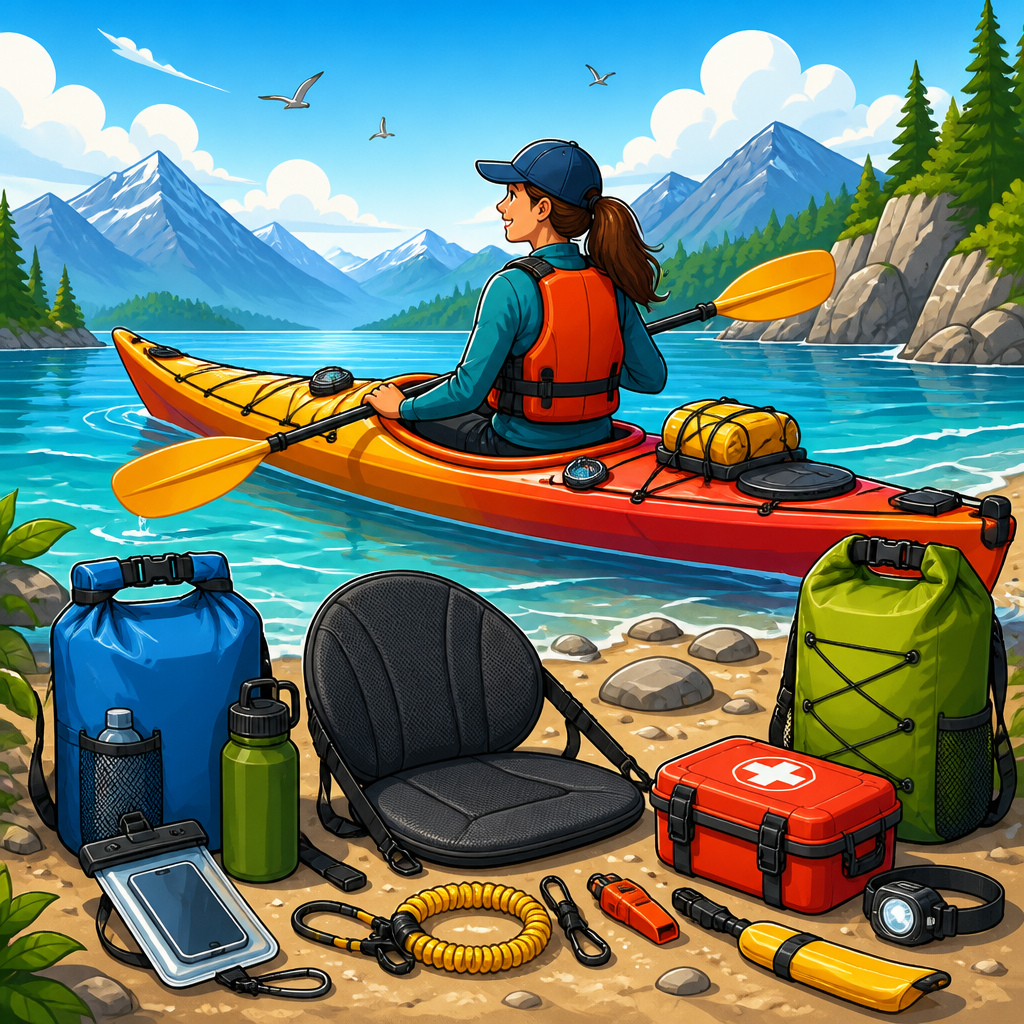
Long-distance paddling falls apart quickly when hydration and storage are treated casually. The most effective setup is a layered dry storage system. Critical items such as spare insulating layers, first-aid gear, electronics, and sleep gear should live in separate dry bags inside hatches or secured to the deck. Color coding helps on the water: blue for clothing, red for medical, yellow for food, for example. Roll-top dry bags from brands such as SealLine, NRS, and Watershed are common because they handle splash, rain, and occasional submersion better than standard backpacks. For sit-on-top kayaks and paddleboards, attachment points and deck bungees should secure bags tightly enough that a capsize does not scatter your kit.
Hydration access deserves deliberate planning. If water is stored where you cannot reach it while paddling, you will drink less often and performance will drop. Many experienced paddlers use a hydration bladder routed to the seat or PFD area, while others secure insulated bottles within immediate reach under deck lines or beside the seat. During summer mileage, electrolyte replacement matters too, especially in saltwater environments where sun exposure and wind can mask sweat loss. A practical rule is to sip regularly rather than waiting for thirst. For trips longer than a few hours, quick calories matter just as much. Energy bars, trail mix, jerky, fruit chews, and sandwiches packed in waterproof containers are more useful than elaborate meals you never stop long enough to eat.
Spray skirts, deck bags, and cockpit organizers also earn their place on distance trips. A well-fitted spray skirt keeps waves, paddle drip, and cold wind out of a sit-inside kayak, preserving warmth and reducing the amount of water you must manage later. Deck bags put sunscreen, snacks, chart notes, and spare gloves where they can be reached without landing. For anglers, accessory tracks, tackle crates, and rod leashes should be installed conservatively. The goal is to maintain a clean working deck that still allows self-rescue. Every item added above deck increases snag risk, windage, or reentry complications, so storage should favor low profile and secure attachment.
Navigation, Weather Awareness, and Trip Planning Tools
For long-distance paddling, navigation accessories are not just for wilderness expeditions. They are what keep a straightforward day from becoming an exhausting detour. A deck compass is still one of the most reliable tools available because it works without charging cables, updates, or cell service. Paired with a waterproof chart case or laminated route notes, it gives immediate direction when fog, shoreline sameness, or fatigue blur judgment. GPS devices and smartphone mapping apps add speed and precision, and many paddlers now use platforms such as Navionics, Gaia GPS, onX Backcountry, or Paddle Logger depending on region and trip style. The key is redundancy. Electronics fail, batteries drain, and touchscreens can become difficult with wet hands.
Weather monitoring is equally important because wind direction often determines whether a route feels efficient or punishing. Before launch, check National Weather Service marine forecasts, local wind models, tides, and river levels. During the trip, an inexpensive watch, VHF radio, or phone app can help you compare real conditions against your plan. One habit I encourage is setting turnaround thresholds in advance: a maximum headwind, a latest safe crossing time, or a minimum daylight buffer for reaching camp. That turns weather decisions from emotional guesses into preplanned risk controls. For paddleboard touring, weather discipline matters even more because standing increases wind exposure and balance demands.
Route planning tools also include analog essentials many newer paddlers skip: tide tables, portage straps, and shuttle logistics notes. On rivers, mileage can look easy on a map and still become difficult because of strainers, low-head dams, or mandatory carry sections. On coastal water, current windows may dictate launch timing more than distance itself. The best accessories support the route you actually face, not the one you imagined at home. Good planning shortens crossings, protects energy reserves, and prevents small mistakes from stacking into emergencies.
Comfort, Protection, and Camp-Ready Add-Ons
Comfort accessories are often dismissed until pain starts limiting mileage. Gloves or pogies can prevent blisters and cold-hand fatigue, though fit is personal and some paddlers prefer bare hands for shaft feel. Polarized sunglasses reduce glare and make it easier to read water texture, weed lines, submerged structure, and shifting current seams; for anglers, they also improve fish spotting. A brimmed hat, sunscreen, lip balm, and sun sleeves matter more on water than on land because reflected ultraviolet exposure is relentless. If bugs are common near launch or camp, a head net and compact repellent can save your evening recovery time.
For overnight trips, camp-oriented accessories should be judged by packability and moisture resistance. A compact camp chair may sound indulgent, but after ten hours in a cockpit it can improve recovery enough to justify its weight on roomy boats. Headlamps with red light modes, lightweight stove systems, repair tape, spare rudder cables where relevant, and multi-tools all have a place when self-sufficiency matters. For inflatable kayaks and touring paddleboards, pump reliability, valve tools, and patch kits become mission-critical rather than optional. I recommend testing every repair item at home first. A patch kit that works in theory but not under wet, windy field conditions is not real preparedness.
The best kayak accessories for long-distance paddling are the ones that disappear into the experience because they consistently do their job. Start with safety and thermal protection, upgrade the paddle and fit points that influence efficiency, build a clean dry-storage and hydration system, then add navigation and comfort items that match your water, season, and trip length. This approach supports the full spectrum of kayaking and paddleboarding adventures, from fitness touring and kayak fishing to overnight river travel and coastal exploration. If you are building your setup now, audit your current gear before your next trip, replace the weakest link first, and let each accessory earn its place by making you safer, steadier, and more capable on the water.
Frequently Asked Questions
What are the most important kayak accessories for long-distance paddling?
The most important accessories are the ones that protect your energy, improve on-water safety, and keep essential gear accessible for hours at a time. At the top of the list is a properly fitted personal flotation device, because comfort and safety are non-negotiable on any long outing. A lightweight paddle with an efficient blade shape also makes a major difference, since reducing strain over thousands of strokes can help prevent fatigue in your shoulders, wrists, and lower back. Many experienced paddlers also consider a spare paddle essential, especially on remote routes where gear failure can quickly become a serious problem.
Beyond the basics, storage and organization accessories matter far more on long-distance trips than they do on short recreational paddles. Dry bags, deck bags, waterproof phone cases, and hatch organizers help you separate safety gear, food, extra layers, and navigation tools so you do not waste energy digging through loose equipment. A reliable bilge pump or sponge, a paddle leash, and deck lines or bungees can also make the kayak more manageable in changing conditions. If the trip involves open water, variable weather, or overnight stops, accessories such as a GPS or chart case, tow line, repair kit, and marine light become especially valuable.
Comfort accessories are often underestimated until a few hours have passed. A supportive seat pad, back support that does not restrict paddling posture, foot braces adjusted correctly, sun protection gear, and a hydration system can dramatically improve endurance. Long-distance paddling is rarely about one miracle item; it is about building a kit that helps you stay efficient, safe, comfortable, and organized from launch to landing.
How do I choose kayak accessories that improve comfort on all-day or multi-day paddles?
Start by thinking about the problems that typically build slowly over time: pressure points, dehydration, sun exposure, cramped legs, wet clothing, and the frustration of not being able to reach essentials when you need them. The best comfort accessories solve those issues without cluttering the cockpit or interfering with your stroke. A well-designed seat cushion or padded seat upgrade can reduce soreness significantly, but it should still allow you to maintain strong posture and torso rotation. Similarly, adjustable foot pegs or foot braces should support your legs without forcing your knees into an awkward angle.
Hydration is one of the most important comfort and performance factors on long trips, so many paddlers benefit from a hydration bladder or easy-access water bottle system. If you have to stop and unpack every time you need a drink, you are less likely to hydrate consistently. Clothing accessories also matter. A brimmed hat, neck gaiter, paddling gloves, polarized sunglasses with a retention strap, and layers that handle wind and spray can prevent the kind of minor discomfort that becomes draining after several hours. In cooler conditions, dry bags for spare clothing and a reliable paddling jacket are just as important as seat upgrades.
Organization also contributes directly to comfort. A deck bag within reach can hold snacks, sunscreen, maps, and small safety items so you do not break rhythm every time you need something. For multi-day trips, look for accessories that reduce repeated hassle, such as compact camp storage bags, labeled dry bags, and quick-access food storage. The right setup should make the kayak feel easier to live out of, not more crowded. If an accessory adds bulk but does not solve a real problem, it probably does not belong on a long-distance loadout.
Which safety accessories should I carry for long-distance kayak trips?
For long-distance paddling, safety accessories should be chosen with the assumption that conditions can change and help may not be immediate. A properly fitted life jacket is the foundation, but it is only the start. You should also carry a whistle, a bilge pump or sponge, and a paddle float if there is any chance you may need to perform a self-rescue. A spare paddle is strongly recommended for longer routes, especially on open water, coastal sections, or isolated rivers where losing or damaging your main paddle could leave you in a dangerous situation.
Navigation and communication tools are also essential safety accessories. Depending on the route, that may include a waterproof map case, compass, GPS device, or a phone in a dependable waterproof pouch. On remote or offshore-style trips, many paddlers add a VHF radio or personal locator beacon for another layer of emergency communication. Visibility equipment matters too. A signal light, headlamp, reflective tape, and bright deck rigging can all help you be seen in low light or poor weather. If there is any chance your paddle will run late, those items become much more than a convenience.
A compact first-aid kit and repair kit round out a strong long-distance safety setup. First aid should cover blisters, cuts, minor strains, sun-related issues, and any personal medications. A repair kit might include duct tape, patch materials, cord, spare hardware, and tools appropriate for your kayak type. The key is not to carry random emergency gear, but to carry safety accessories that match the water, distance, weather, and remoteness of the trip. Good long-distance paddlers plan for the most likely problems first, then add protection for the serious low-probability ones.
How should I pack and organize accessories for a long-distance kayaking trip?
The best packing system is one that keeps your kayak balanced, your critical items dry, and your most-used gear easy to reach while you are still on the water. A common mistake is packing everything securely but burying essentials under layers of less important equipment. For long-distance paddling, think in zones. Safety items such as your whistle, knife, communication device, and rescue gear should be on your person or immediately accessible from the cockpit. Frequently used items like water, snacks, sunscreen, navigation tools, and an extra layer should go in a deck bag or top-access dry bag.
Weight distribution is equally important. Heavier gear should generally be packed low and close to the center of the kayak to preserve stability and handling. Lighter, bulkier items can go toward the ends as needed, but overloading the bow or stern can make the boat harder to control in wind, waves, or current. For overnight trips, it helps to separate equipment by function: one dry bag for sleep gear, one for clothing, one for kitchen items, one for food, and one for emergency or repair supplies. Color-coded or labeled bags save time and reduce frustration at campsites and rest stops.
Waterproofing deserves special attention. Even if your kayak has hatches, use quality dry bags for anything that truly needs to stay dry, including insulating layers, electronics, and sleeping gear. Smaller waterproof pouches can protect phones, keys, and documents. Before a major trip, test your packing setup on a shorter paddle to make sure the kayak still feels responsive and that you can access what you need without awkward twisting. Smart organization is one of the most underrated accessories in itself, because it makes every other piece of gear more useful.
Are fishing and expedition-specific accessories worth adding for long-distance paddling?
They can be, but only when they support the mission without compromising efficiency. For anglers, accessories like rod holders, tackle storage crates, fish finders, anchor systems, and gear tracks can be useful, but they should be evaluated through the lens of distance and endurance. A long-distance fishing paddle is different from a short session near the launch. Every extra item adds weight, catches wind, takes up deck space, or creates clutter around your stroke and entry-exit points. The best fishing accessories for a long trip are usually the most streamlined ones: secure rod storage, compact tackle organization, and simple mounting systems that do not interfere with paddling mechanics.
For expedition-style paddling, specialty accessories often become more worthwhile. A spray skirt, more advanced navigation tools, a solar charging setup, camp-friendly dry storage, and a high-capacity hydration system can all add meaningful value on multi-day routes. Cold-weather or coastal paddlers may also benefit from a tow system, immersion gear, chart deck, and more robust rescue equipment. These are not luxury add-ons when conditions demand them; they are practical tools that help manage exposure, fatigue, and logistics over longer distances.
The smartest approach is to match accessories to actual trip demands rather than aspirational packing. If an accessory improves safety, conserves energy, protects critical gear, or helps you stay organized over many hours, it is probably worth considering. If it mainly adds complexity or duplicates something you can do more simply, leave it behind. Long-distance paddling rewards discipline. The best setup is not the one with the most accessories, but the one with the right accessories for the route, conditions, and style of paddling you plan to do.