Open-water kayaking rewards skill, judgment, and preparation in ways few outdoor sports can match. It also punishes avoidable mistakes. After years of planning coastal paddles, guiding new kayakers, and fishing from sit-on-top boats in bays, estuaries, and nearshore swell, I have learned that staying safe while kayaking in open water is less about bravado and more about systems. Open water means large lakes, coastal sounds, open bays, tidal rivers, and the ocean beyond sheltered coves, where wind, waves, current, boat traffic, and weather can change faster than many beginners expect. This hub article covers the essential safety practices behind kayaking and paddleboarding adventures, from trip planning and gear selection to self-rescue, group travel, and decision-making. If you want one principle to remember, it is this: the safest kayakers treat every outing as a risk-management exercise before it becomes a recreational one.
Open-water hazards differ from what most paddlers experience on calm ponds or slow creeks. Distance from shore magnifies consequences. A ten-knot wind can turn a simple return paddle into an exhausting grind. Cold water drains strength and coordination long before air temperature feels dangerous. Tidal current can carry you off line even when the surface appears manageable. Powerboats may not see a low-profile craft until they are close. For anglers and adventure paddlers alike, these conditions matter because success depends on returning safely, not just launching confidently. The skills on this page form the foundation for related topics across kayaking and paddleboarding adventures, including choosing boats, reading marine forecasts, paddling with fishing gear, and building rescue competence.
Safety starts with understanding three core terms. Primary stability is how steady a kayak feels when sitting flat on calm water; secondary stability is how well it resists capsizing when edged in waves or turns. Immersion protection refers to clothing that protects you in the water, not just on the deck, such as a wetsuit or drysuit paired with proper layers. A float plan is a written or shared record of where you are launching, your route, who is with you, and when someone should worry if you do not return. These are not technicalities. They directly shape whether an uncomfortable moment stays manageable or becomes an emergency.
For this fishing and water sports hub, think of open-water safety as a chain. Break one link, such as neglecting the forecast, skipping a life jacket, or paddling alone beyond your skill level, and every other decision becomes weaker. Strengthen the chain with training, equipment, and conservative judgment, and open-water kayaking becomes far more predictable. Paddleboarding in open water follows the same logic, with special attention to leash use, remounting, and wind exposure. The sections below explain the practices that experienced paddlers rely on every trip.
Choose the Right Kayak, Paddleboard, and Essential Safety Gear
The best open-water kayak is not automatically the fastest or the cheapest. It is the craft that matches your environment, body size, cargo, and skill. Touring kayaks between roughly 12 and 17 feet track better, carry safety gear more efficiently, and handle chop more predictably than short recreational kayaks with large cockpit openings. Sit-on-top fishing kayaks offer easier reentry and deck access, but they are more exposed to wind and spray. Inflatable paddleboards can work well in sheltered bays, yet they require stricter limits on distance, weather, and offshore wind. In guided settings, I have seen beginners struggle most when they bring boats designed for small lakes into tidal or coastal water. Hull design cannot replace judgment, but the wrong platform narrows your margin immediately.
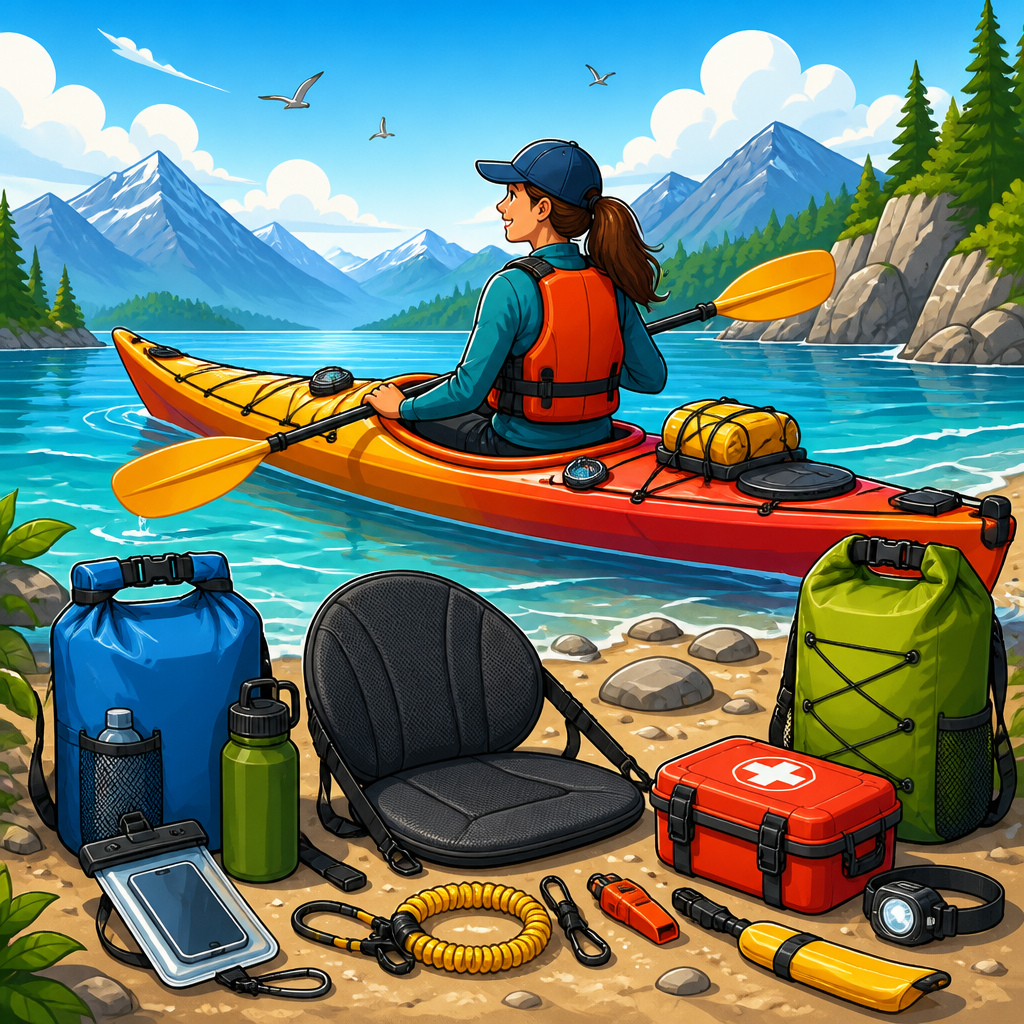
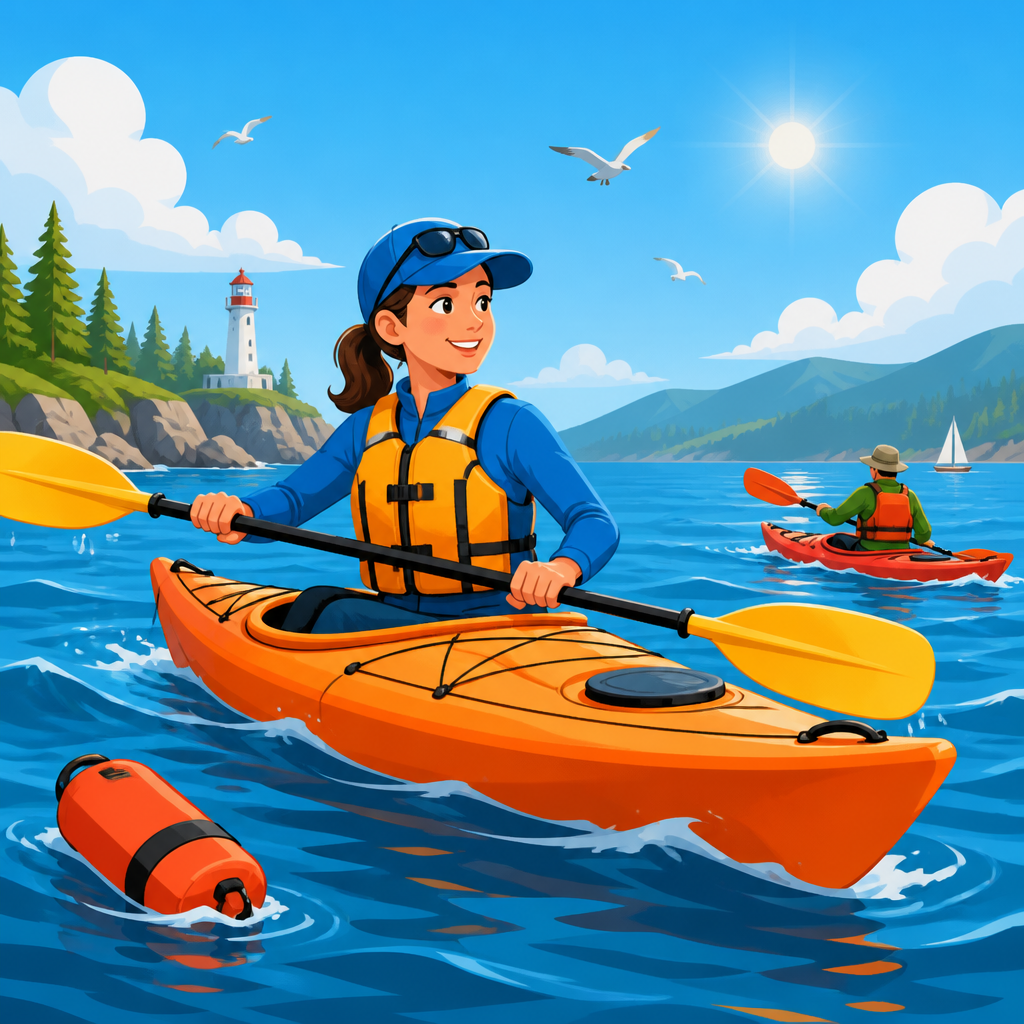
Your personal flotation device is nonnegotiable. Wear a Coast Guard approved PFD at all times, not stowed under deck bungees. For kayak fishing and longer touring trips, I prefer Type III paddling-specific models because they allow shoulder rotation and include accessible pockets for a whistle, knife, and communication device. Cold-water clothing matters just as much. The long-standing “dress for the water temperature, not the air temperature” rule remains the correct standard. In water below about 60 degrees Fahrenheit, a wetsuit or drysuit should be considered normal protective equipment, because cold shock and rapid loss of dexterity can occur within minutes. Cotton clothing is a poor choice because it loses insulation when wet.
Carry safety equipment that solves real problems. A bilge pump removes water after reentry in sit-inside kayaks. A paddle float supports self-rescue practice. A tow belt helps in group incidents. A 360-degree white light is critical if there is any chance of low-light return. A VHF marine radio is superior to a phone for coastal communication because it reaches nearby vessels and the Coast Guard on Channel 16. Phones still matter, but they belong in a waterproof case attached to your body, not loose in a hatch. For paddleboarders, a properly chosen leash is usually essential in flatwater and surf zones because the board is your largest source of flotation; in moving water, however, specialized quick-release systems are safer than standard ankle leashes due to entrapment risk.
Beyond the basics, visibility and redundancy improve outcomes. Bright hull colors, high-visibility PFD panels, and a signal mirror make it easier for rescuers or boaters to spot you. Spare paddles are standard on longer kayak trips because lost propulsion offshore creates immediate exposure risk. Navigation tools can be simple but must be reliable: a deck compass, chart app downloaded for offline use, and paper chart in a dry bag give layered protection when electronics fail.
Plan Every Open-Water Trip Around Weather, Water, and Route
The safest paddlers build their day before they ever touch the water. Start with the forecast from sources made for mariners, not just general weather apps. In the United States, NOAA marine forecasts, tide tables, and nearshore wave predictions provide the details that matter: sustained wind, gusts, wave period, small craft language, thunderstorm timing, and water temperature. Wind direction often matters more than wind speed alone. A 12-knot offshore wind can turn a casual paddleboard outing into a dangerous drift problem, while the same speed blowing onshore may still be manageable in a protected bay. Tidal current deserves equal attention. In places like Puget Sound, San Francisco Bay, or the inlets of the Carolinas, current can exceed the speed a novice can sustain for long.
Route planning should answer practical questions clearly. Where is the easiest launch? What is the bailout shore if conditions worsen? When will the tide help or hinder the return? Are there ferry lanes, shipping channels, or no-landing shorelines? I recommend paddling into the wind or current early and using the easier leg on the way back, when fatigue is higher. Distance should also be conservative. Many new paddlers judge mileage by hiking standards and underestimate how waves, corrective strokes, and headwinds slow progress. On open water, three miles can feel longer than six flat miles inland.
A written float plan is one of the simplest safety steps with the highest value. Leave it with a reliable person, not just a social post. Include launch point, route, group size, boat descriptions, car information, and your check-in time. If you change plans after launching, update someone if possible. This habit matters because rescue delays often begin with vague information. Commercial outfitters and expedition leaders formalize this process for a reason: accurate last-known-position data saves time.
| Planning Factor | What to Check | Why It Matters |
|---|---|---|
| Wind | Direction, sustained speed, gusts | Controls drift, wave shape, and effort needed to return |
| Water Temperature | Actual surface temperature | Determines immersion clothing and hypothermia risk |
| Tides and Current | Tables, current stations, slack timing | Affects route timing, crossings, and landing difficulty |
| Boat Traffic | Channels, ramps, ferry routes | Changes visibility needs and crossing strategy |
| Thunderstorms | Timing, lightning risk, frontal passage | Requires early launch, cancellation, or immediate shelter |
Cancellation is part of good planning, not failure. I have scrubbed trips when the wind looked only “moderate” on paper because the combination of fetch, cold water, and novice paddlers was wrong. That decision has never felt regrettable at the dock.
Build Paddling Skills Before You Need Rescue Skills
Good technique is a safety system because efficient paddlers waste less energy and maintain control in rougher conditions. Learn a forward stroke that rotates from the torso rather than pulling mostly with the arms. Practice low and high braces with qualified instruction, because they prevent capsizes when boat wakes or beam waves hit unexpectedly. Sweep strokes and edging help turn quickly without losing balance. For paddleboarders, stance, knee paddling in wind, and quick transitions from standing to prone or kneeling are core defensive skills, not beginner-only drills.
Rescue competence should be practiced in controlled water before you depend on it in open water. Sit-inside kayakers should know wet exits, assisted T-rescues, paddle-float reentries, and if appropriate, rolling. Sit-on-top paddlers and paddleboarders should practice remounting repeatedly while tired and wearing real gear. The first time many people attempt reentry is after an accidental capsize, which is exactly when failure is most likely. Professional instruction from organizations such as the American Canoe Association or British Canoeing dramatically shortens the learning curve because instructors correct body position, sequencing, and common mistakes on the spot.
Group skills matter as much as individual ability. Paddle close enough to communicate, especially during crossings. Stronger paddlers should naturally bracket weaker ones rather than racing ahead. Use simple signals for stop, help, regroup, and change direction. In wind, voices disappear quickly. I encourage small groups to assign roles before launch: lead navigator, sweep paddler, and radio carrier. Structure reduces confusion when something goes wrong.
Manage the Biggest Open-Water Risks: Cold, Fatigue, Traffic, and Capsize
Most open-water incidents trace back to a short list of hazards. Cold water is first because it can disable capable athletes quickly. The classic “1-10-1” rule is a useful guideline: about one minute to control breathing after sudden immersion, roughly ten minutes of meaningful movement before dexterity collapses, and approximately one hour before hypothermia becomes critical, though exact times vary with temperature, body type, clothing, and conditions. That is why reentry practice and proper clothing are inseparable. If you fall in, focus on breathing control, staying with the boat, and getting back on or signaling for help immediately.
Fatigue sneaks up on paddlers who launch hard, skip hydration, or fight conditions too long. Dehydration is common even in cool weather, especially for kayak anglers who stay seated for hours. Eat before you are hungry and drink before you are thirsty. Shoulder overuse is another issue. A paddle that is too long, feather angle that feels awkward, or a seat that forces poor posture can turn minor inefficiency into pain and loss of control. On longer outings, short breaks every hour maintain better performance than one long stop after you are already drained.
Boat traffic requires defensive positioning. Cross channels quickly at right angles when clear. Do not linger where powerboats are committed to speed. Assume operators have limited visibility and may not understand your movement. Lights, bright clothing, and flags help, but they do not grant immunity. Fishing kayaks are particularly vulnerable because rods and gear distract attention. When I fish in open bays, I set a rule that navigation comes before tackle every time: if the wind shifts or traffic increases, rods go down and the boat gets repositioned first.
Capsize prevention is partly technical and partly behavioral. Keep your center of gravity low in beam seas. Secure loose gear so it does not shift during a brace or reentry. Avoid overloading the stern with coolers, batteries, or crates that affect trim. Enter and exit through surf only if you have practiced surf-zone timing, because many spills happen in the last twenty feet near shore. The best capsize recovery is still the one you never need because you turned around early.
Make Smart Decisions on the Water and Know When to Turn Back
The most underrated safety skill in kayaking and paddleboarding adventures is real-time judgment. Conditions rarely match the forecast perfectly. Swell can wrap into a point more strongly than expected. Afternoon sea breeze can arrive an hour early. A paddler who looked comfortable at launch may reveal weak technique once the chop builds. Experienced paddlers constantly reassess three things: the environment, the group, and the exit options. If any one of those worsens, the plan should tighten. That can mean shortening the route, hugging shore, taking a rest landing, or ending the trip.
Set objective limits before you launch. For example, decide that if sustained wind exceeds a certain threshold, if thunder is heard, if one paddler capsizes twice, or if the return pace drops below a target, the group heads in. Predetermined thresholds reduce ego-based decisions. I use them because on-water optimism is real; people often want one more cove, one more drift, one more photo. Objective limits replace hope with discipline.
If an emergency develops, simplify. Stay with the boat unless reaching shore is unquestionably safer and closer. Use the radio early rather than late. A Pan-Pan urgency call can be appropriate before a crisis becomes life-threatening, while Mayday is reserved for grave and imminent danger. On inland waters without radio coverage, phone emergency services and provide your exact location from a chart app or GPS. Once ashore, treat for cold, wind exposure, dehydration, or minor injury before deciding whether to relaunch.
Staying safe while kayaking in open water comes down to preparation, competent skills, and conservative choices. Choose a craft designed for the conditions, wear your PFD, dress for immersion, and carry communication and rescue gear you know how to use. Study marine forecasts, tides, current, and route options before every launch, then leave a clear float plan with someone reliable. Build paddling efficiency, bracing, reentry, and group communication skills in controlled settings so they are available under stress. Respect the main hazards—cold water, fatigue, boat traffic, weather changes, and capsize risk—and respond early instead of late.
As the hub for kayaking and paddleboarding adventures within fishing and water sports, this guide gives you the framework that every related topic depends on. Whether you are planning a shoreline paddle, a kayak fishing session in an open bay, or your first stand-up paddleboard tour beyond a protected cove, the same principle applies: reduce variables before they become problems. Review your gear, practice one rescue skill this week, and use the next forecast to plan a shorter, smarter trip. That habit will do more for your safety than any single product you can buy.
Frequently Asked Questions
What safety gear should I always carry when kayaking in open water?
The non-negotiable item is a properly fitted, Coast Guard-approved personal flotation device, and it should be worn at all times, not just strapped to the deck. In open water, conditions can change too fast to rely on the idea that you can put it on later. Beyond that, every kayaker should carry a paddle leash or secure spare paddle strategy, a whistle or other sound-signaling device, a bilge pump or sponge for sit-inside kayaks, and a communication tool that works beyond the shoreline, such as a waterproof VHF radio or a fully protected phone in a reliable dry case. A bright light is also important if there is any chance of low visibility, delayed return, or early launch.
For cold water or changeable weather, immersion protection matters just as much as flotation. That may mean a wetsuit, drysuit, or paddling jacket layered appropriately for the water temperature, not just the air temperature. Many open-water incidents become serious because paddlers dress for sunshine and calm launch conditions rather than for an unexpected capsize offshore. It is also smart to carry a compact first-aid kit, tow line, knife, chart or navigation app backup, extra hydration, and high-energy snacks. The exact gear list varies by location and distance from shore, but the principle stays the same: open-water kayaking demands equipment that helps you stay afloat, stay visible, stay oriented, and communicate when plans go wrong.
How do I know if the weather and water conditions are safe enough for my trip?
The safest approach is to evaluate several factors together instead of focusing on a single forecast number. Wind speed and direction matter because they affect not only how hard you work but also whether you can get back to your launch point. A light offshore breeze at the start of the day can become a dangerous barrier to returning once you are tired. Tide, current, swell, wave period, boat traffic, water temperature, visibility, and the timing of weather changes all need to be part of your decision. Large lakes and coastal areas can create steep, confused chop that feels very different from protected water, even when the forecast sounds manageable on paper.
It also helps to compare the forecast with your actual skill level, not your idealized one. If you are still developing bracing, self-rescue, navigation, or endurance, then “marginal but possible” conditions are not safe conditions. A good rule is to build a conservative go/no-go system before launching. If wind exceeds your comfort threshold, if storms are possible, if the current turns against your route, or if cold water raises the consequences of a capsize, postpone the trip. Experienced paddlers stay safe not because they never encounter rough water, but because they are disciplined about what they choose to launch into. Open-water judgment starts before the kayak touches the water.
What is the biggest mistake beginners make when kayaking in open water?
The biggest mistake is underestimating how quickly small problems stack into a real emergency. A beginner may launch with a casual mindset because the shoreline looks calm, the sky seems clear, and the distance appears short. But open water magnifies bad assumptions. Wind pushes harder once you leave shelter. Currents carry you sideways even when you think you are paddling straight. Fatigue builds faster when there is constant chop. Then a simple issue, like a dropped paddle, poor hydration, or a missed navigation point, starts a chain reaction. That is why open-water safety is really about planning systems rather than relying on confidence alone.
Another common beginner error is staying too focused on the kayak and not enough on rescue ability. Many people think stability is the whole answer, especially with wider recreational or sit-on-top boats, but stability does not replace skill. You should know how to re-enter your kayak, how to assist another paddler, how to paddle efficiently in wind, and how to recognize when turning back is the smart move. Beginners also often skip float plans, paddle alone, or head out without understanding local tides and traffic patterns. The safest learning path is to build experience gradually in protected conditions, practice recovery skills until they feel routine, and treat every open-water trip as something that deserves respect.
Should I kayak alone in open water, or is it better to paddle with others?
Paddling with others is almost always the safer choice in open water, especially if you are new to exposed conditions or traveling far from shore. A competent partner or group gives you immediate help if you capsize, cramp, lose gear, become fatigued, or face changing weather. Group paddling also improves visibility to boaters and reduces the pressure to solve every problem by yourself. The key word, though, is competent. A group only improves safety if people communicate well, stay within sight, understand rescue roles, and match one another’s pace and skill level. A poorly organized group can drift apart and create just as much risk as solo paddling.
If you do choose to paddle alone, your margin for error becomes much smaller. You should be fully comfortable with self-rescue, route planning, and independent decision-making, and you should leave a detailed float plan with someone reliable on shore. That plan should include your launch point, route, expected return time, vehicle description, and instructions on when to call for help if you do not check in. Solo paddlers should also be especially conservative with distance, weather, and exposure. There is nothing inherently reckless about solo kayaking for skilled paddlers, but there is far less room for denial, improvisation, or preventable mistakes. In open water, isolation turns minor setbacks into major problems very quickly.
What should I do if I capsize or get into trouble far from shore?
First, stay with your kayak unless there is an immediate life-threatening reason not to. The boat provides flotation, visibility, and a larger target for rescuers than your body alone. If you capsize, focus on controlling panic and taking the next right step: account for your paddle, orient yourself to waves and wind, and begin the rescue method you have practiced. For sit-inside kayaks, that may involve a paddle-float rescue, bilge pumping, or an assisted re-entry. For sit-on-top kayaks, it may mean climbing back aboard from the side while keeping your weight low and centered. The key is that these techniques need to be practiced ahead of time, ideally in conditions that are safe but realistic, because open water is the wrong place to attempt a first rescue.
If re-entry fails, conditions worsen, or you are drifting farther from safety, use your communication tools early rather than late. That could mean hailing nearby boaters with a whistle, using a VHF radio to call for assistance, or contacting emergency services with your phone if you have signal and waterproof protection. Conserve energy, keep your body as insulated as possible, and avoid abandoning gear that can aid flotation or make you easier to spot. If you are with others, stay together unless separation is part of a deliberate rescue plan. The broader lesson is simple: surviving trouble in open water depends less on heroic effort than on practiced rescue skills, calm decision-making, and the discipline to call for help before the situation becomes critical.