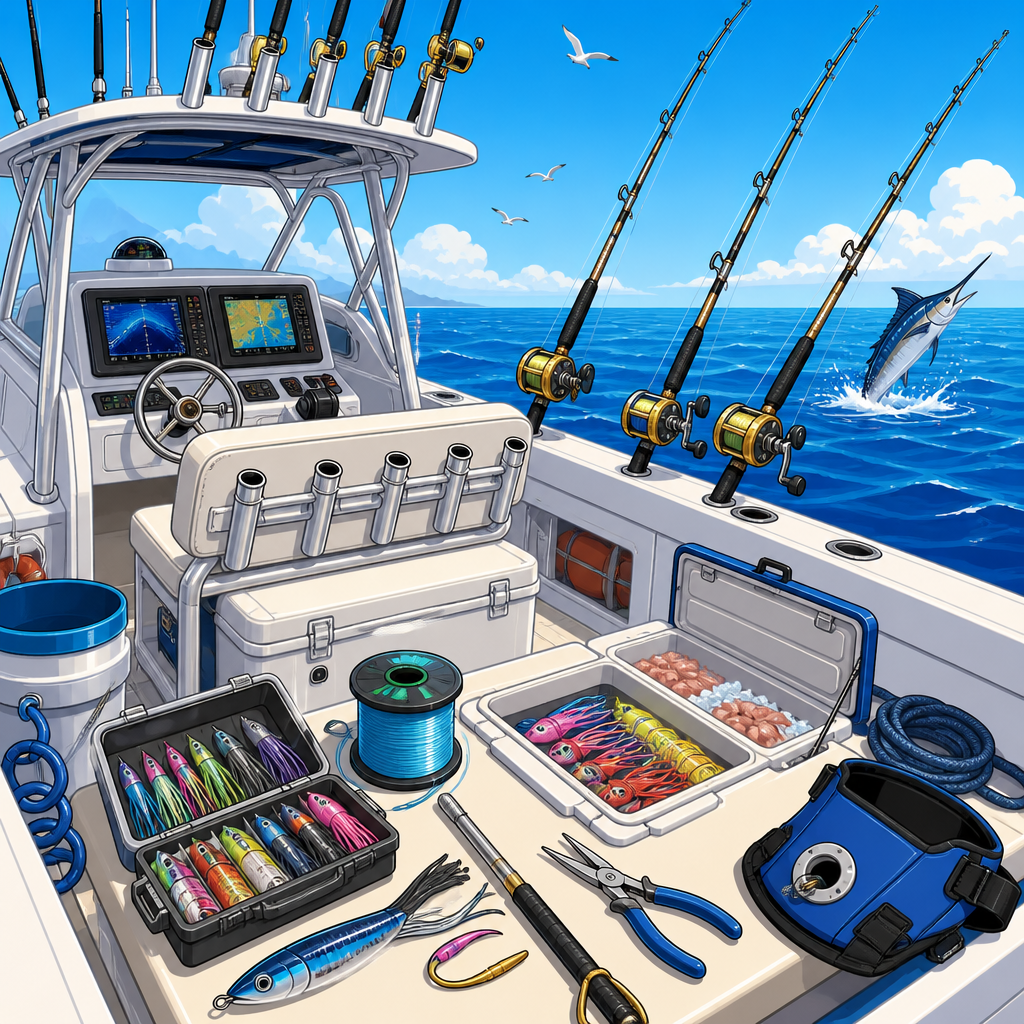
Setting up a boat for deep-sea fishing starts with one core decision: choosing the right fishing gear for your boat, your target species, and the offshore conditions you expect to face. Deep-sea fishing usually means operating beyond protected inshore waters, often over reefs, wrecks, ledges, or open blue water where depth, current, weather, and fish size change the demands on every piece of equipment. A proper setup is not just about catching more fish. It protects the crew, reduces equipment failure, improves fuel efficiency, and helps you fish effectively whether you are trolling for mahi, dropping for grouper, or drifting live baits for tuna.
In practice, I have seen many offshore days ruined by the same avoidable mistakes: undersized rods paired with heavy sinkers, reels without enough line capacity, tackle stored where salt reaches everything, and boats loaded with gear that does not match their size or layout. The best deep-sea boat setup is balanced. Rods, reels, lines, terminal tackle, electronics, storage, safety equipment, and deck workflow all need to support the way the boat will actually fish. That is why this topic matters for any angler building a capable offshore platform.
This guide serves as a hub for choosing fishing gear for your boat, with emphasis on deep-sea use. It covers the core systems you need to evaluate, how to match equipment to techniques, and what tradeoffs matter on small center consoles, walkarounds, and larger sportfishing boats. If you want a reliable offshore setup, begin by treating gear selection as part of boat rigging, not as a separate shopping list.
Match Fishing Gear to Boat Size, Range, and Fishing Style
The first step in setting up a boat for deep-sea fishing is defining the boat’s operating profile. A 22-foot center console running twenty miles offshore needs a different gear plan than a 34-foot express fishing overnight canyons. Before buying equipment, answer three questions clearly: how far offshore will you run, what species will you target most often, and how many anglers will fish at once? Those answers determine not only tackle strength but also storage requirements, rod holder placement, ice capacity, and battery demand.
For example, a boat focused on bottom fishing for snapper and grouper needs stout conventional outfits, heavier sinkers, electric reel power options in some regions, and cockpit storage for leader spools, jigs, and dehooking tools. A trolling-focused offshore boat targeting wahoo, tuna, and billfish needs more rod holders, outriggers, lure rigging space, and reels with substantial line capacity and smooth drag. A hybrid setup is common, but trying to outfit one boat equally well for every technique usually creates clutter and wasted expense. It is better to build around the techniques you will use on most trips and add specialized gear in stages.
Boat layout matters just as much. Deep gunwales can support heavy trolling rods and larger holders. Smaller boats with limited deck space benefit from multi-purpose combos and vertical storage. If your transom area is tight, avoid bringing six rod types when three carefully selected categories will cover most situations. Offshore efficiency comes from access and simplicity. Gear should be reachable, secure, and safe in rough water.
Choose Rods, Reels, and Line Systems That Work Together
The most common question anglers ask is simple: what rod and reel setup is best for deep-sea fishing? The direct answer is that no single setup covers every offshore job, but most boats should carry three classes of outfits: trolling outfits, bottom or jigging outfits, and lighter spinning or pitch-bait outfits. Each class fills a defined role, and line selection must match it.
Trolling outfits are usually conventional reels on rods rated for the drag and lure spread you intend to run. For mahi and school tuna, 20- to 30-class tackle is often sufficient. For larger tuna, wahoo, and mixed offshore trolling, many crews rely on 30- to 50-class reels loaded with braided backing and a monofilament topshot. The braid provides capacity; the mono adds shock absorption and easier handling in the spread. On boats under twenty-six feet, oversized trolling tackle can become a burden, so scale carefully.
Bottom fishing and vertical jigging setups need lifting power, not just line strength. Shorter conventional rods with strong butt sections help move fish away from structure. Reels should have low gearing or high torque, dependable drags, and enough line for deep drops in current. Braided main line is standard because its thin diameter reduces scope and transmits bites better than monofilament. A fluorocarbon or heavy mono leader then provides abrasion resistance around wrecks and reef edges.
Spinning outfits are the most versatile tools on many offshore boats. A medium-heavy spinning combo can cast metal jigs to breaking tuna, throw live baits to cobia, or pitch to a mahi under floating debris. I recommend keeping at least one spinning setup rigged and ready even on trolling trips, because offshore opportunities appear quickly and disappear faster.
Drag performance matters more than many buyers realize. A reel with a high stated max drag but poor heat management or inconsistent startup inertia can cost fish. Proven platforms from Shimano, Penn, Daiwa, and Avet remain popular because they deliver repeatable drag under load and have parts support. When selecting line, remember the practical rule: enough strength to pressure the fish, enough capacity to survive the run, and enough reserve to fish safely if current or boat handling goes against you.
Select Terminal Tackle, Lures, and Tools by Technique
Terminal tackle is where offshore success often turns. Leaders, hooks, swivels, sinkers, jigs, skirts, and rigging hardware must fit both the target species and the way the boat fishes. For trolling, carry lure heads and skirts in sizes that match your local forage and sea state. Bullet heads track well in calm to moderate conditions, while more aggressive faces can smoke and dive to create a stronger surface signature. Wahoo spreads often include high-speed lures, planers, or weighted trolling leads, which require heavier rods and secure holders.
For bottom fishing, circle hooks are widely preferred and required in some fisheries because they improve corner-of-the-mouth hookups and reduce deep hooking. Sinker weight should be chosen by current and depth, not habit. Using more lead than necessary tires anglers and makes presentations less natural. Knife jigs, slow-pitch jigs, and flutter jigs each have distinct actions, so stock them intentionally rather than filling bins with random metal.
Every offshore boat also needs practical deck tools: crimpers sized to your sleeves, split-ring pliers, braid scissors, dehookers, venting tools where legal and appropriate, descending devices for reef species, gaffs matched to target size, and a quality landing net if your fishery calls for one. Cheap hardware rusts fast offshore. Stainless and anodized tools cost more upfront but lower replacement rates and frustration.
| Technique | Primary Rod and Reel | Main Line | Typical Terminal Tackle | Best Use |
|---|---|---|---|---|
| Trolling | 30-50 class conventional | Braid backing with mono topshot | Skirted lures, planers, wire leaders, ball-bearing swivels | Mahi, wahoo, tuna, billfish |
| Bottom fishing | Heavy conventional | 50-80 lb braid | Circle hooks, heavy leaders, sinkers, chicken rigs | Snapper, grouper, amberjack |
| Vertical jigging | Short jigging conventional or spinning | 40-65 lb braid | Knife jigs, assist hooks, fluorocarbon leaders | Tuna, amberjack, deep reef fish |
| Pitch baiting | Medium-heavy spinning | 30-50 lb braid | Live bait hooks, fluorocarbon leader, small swivels | Mahi, cobia, sailfish, school tuna |
Rig the Boat for Storage, Access, and Crew Safety
Good gear becomes great only when the boat is rigged to use it efficiently. Start with rod storage. Offshore rods should be secured in heavy-duty holders with backing plates where needed, especially if they will carry trolling loads. Flush-mount holders are excellent for fixed positions, while adjustable holders help on boats that switch between drifting, trolling, and deep dropping. Rocket launchers, under-gunwale racks, and console-side holders can all work, but none should block movement around the deck.
Tackle storage should separate daily-use items from backup inventory. Use waterproof boxes for hooks, leaders, and jigs, then store bulk spares lower and drier in labeled compartments. I prefer keeping one tray dedicated to each technique so the crew can change from trolling to bottom fishing without dumping gear across the cockpit. Salt management is critical. Ventilated compartments reduce trapped moisture, and freshwater rinse routines after every trip dramatically extend equipment life.
Coolers, fish boxes, and livewells also affect gear choices. If you plan to troll live baits, the livewell must keep baits healthy at speed and in rough water. If you plan to ice large pelagics, measure the fish box before assuming your catch will fit. Many owners learn too late that long fish and big ice loads require different cooler layouts than reef species do.
Safety rigging is part of fishing setup, not an accessory. Keep knives accessible for line emergencies. Mount a throwable device, EPIRB or PLB as appropriate, VHF radio, and first-aid kit where they can be reached quickly. Offshore tackle includes hooks under tension, heavy sinkers, swinging rods, and braided line that can cut skin. Clear deck paths, non-slip surfaces, and assigned rod positions prevent accidents when the sea builds or a fish runs under the boat.
Use Electronics and Power Systems to Support the Gear Plan
Deep-sea fishing gear is more effective when paired with the right electronics. At minimum, most offshore boats need a quality chartplotter, VHF radio, and fishfinder with transducer performance matched to intended depth. For bottom fishing, sonar detail is critical. A proper CHIRP transducer can separate bait, structure, and fish marks far better than outdated entry-level systems. For trolling, radar and chart overlays can help identify temperature breaks, birds, shipping lanes, and weather cells that influence fish location and safe routing.
Electronics also shape tackle choices. If your sonar and charts consistently put you over deep structure in 250 to 500 feet, your rod and reel selections need to handle that depth efficiently. If your boat regularly fishes floating weed lines and surface activity, spinning tackle and pitch baits deserve more cockpit priority than electric deep-drop rigs.
Do not overlook power demand. Livewell pumps, washdowns, multifunction displays, radar, electric reels, and refrigerated boxes all load the electrical system. Battery capacity, charging output, fuse protection, and corrosion-resistant wiring determine whether premium gear works when needed. I have troubleshot offshore boats where tackle selection was excellent but electrical planning was so poor that electronics dimmed during engine restarts and electric reels tripped breakers under load. Build the power system to support the fishing system.
Build a Smart Buying Strategy and Seasonal Upgrade Path
The best way to choose the right fishing gear for your boat is to buy in phases based on the trips you will actually take in the next season. Begin with safety gear, navigation electronics, one reliable trolling setup, one dependable bottom setup, and one versatile spinning outfit. Add specialized rigs only after the core system proves itself. This approach prevents overspending on niche tackle while exposing real gaps in your setup.
Budget matters, but cheap offshore gear is often expensive over time. Reels with poor sealing corrode internally. Rod guides fail under braid. Discount swivels open on strong fish. Instead of buying five mediocre combos, buy two durable ones and maintain them. Rinse lightly, dry fully, back drags off after trips, inspect leaders and crimps, and replace line on a schedule. Preventive maintenance is part of setup because offshore conditions exploit every weakness.
Use each season to refine the boat. Maybe your first year shows that you troll far more than you bottom fish, so outriggers and additional 30-class reels become the next upgrade. Maybe deep current makes your original bottom rods too soft, so you move to shorter parabolic jigging rods. Keep notes after trips on what was used, what stayed in storage, and what failed. That simple review process is how experienced crews turn a general-purpose boat into an efficient deep-sea fishing platform.
Setting up a boat for deep-sea fishing comes down to fit. The right gear fits the boat, the fishery, the crew, and the conditions. Start by defining your offshore range and primary techniques. Match rods, reels, and lines so they work as systems rather than isolated purchases. Choose terminal tackle with purpose, rig storage for fast access, and support everything with dependable electronics and power. A well-set-up boat is safer, cleaner, and more productive because every item onboard has a job.
If you are building your offshore setup now, audit your current boat before buying anything new. List the species you target, the depths you fish, the number of anglers aboard, and the gear that actually gets used. Then upgrade the gaps in order of impact. That method will help you choose the right fishing gear for your boat and create a deep-sea setup that performs consistently trip after trip.
Frequently Asked Questions
What equipment should I prioritize first when setting up a boat for deep-sea fishing?
The first priority is always a safe, dependable foundation: a mechanically sound boat, working safety gear, reliable navigation electronics, and fishing equipment matched to the offshore environment. Deep-sea fishing places far more stress on a boat than casual inshore trips. You may be running long distances, crossing changing sea conditions, and fighting larger fish around reefs, wrecks, ledges, or open water. That means your setup should begin with the essentials that keep the crew safe and the boat operational before you spend money on specialized tackle.
Start with required and practical safety gear, including properly fitted life jackets, a VHF radio, flares or signaling devices, a first aid kit, fire extinguishers, bilge pumps, and an emergency position-indicating device where appropriate. Then focus on navigation and fish-finding tools such as GPS, chartplotter, sonar, and radar if you regularly run offshore in low visibility or at dawn and dusk. Once those systems are in place, turn to core fishing equipment: rod holders, a quality anchor system if you bottom fish, a gaff or landing tool, a large cooler or fish box, tackle storage, and heavy-duty rods and reels suited to your target species.
After the basics, prioritize rigging for the style of fishing you plan to do most often. If you troll offshore for pelagic species, invest in outriggers, trolling rods, and a spread management system. If you drop for snapper, grouper, or other bottom species, focus on stout conventional tackle, terminal rigs, sinkers, and a setup that makes it easy to manage lines vertically in current. In short, build your boat in layers: safety first, boat reliability second, navigation third, and species-specific fishing gear after that. That approach gives you a practical setup that performs well offshore without creating weak points in safety or organization.
How do I choose the right rods, reels, and line for deep-sea fishing?
The right tackle depends on three main factors: the size and behavior of your target species, the technique you plan to use, and the conditions offshore. Deep-sea fishing is not one-size-fits-all. Trolling for tuna, drifting live baits for kingfish, dropping heavy rigs to bottom structure, and casting to surface-feeding fish all demand different rod actions, reel capacities, drag systems, and line strengths. Choosing properly matched tackle improves hook-up ratios, reduces fatigue, and helps protect both the angler and the equipment when larger fish make long runs or dig hard near structure.
For bottom fishing in deeper water, anglers commonly use shorter, more powerful conventional setups with reels capable of holding enough braided line to fish effectively in current and depth. Braided line is popular because its thin diameter cuts through water better and improves sensitivity, especially when fishing reefs or wrecks. A monofilament or fluorocarbon leader is then added for abrasion resistance and shock absorption. For trolling, heavier rods with quality lever-drag reels are often preferred because they can handle sustained pressure, larger baits, and long battles with fast pelagic fish. If you are targeting smaller offshore species, you can step down in size, but the drag system and line capacity still need to match the possibility of a much larger bycatch.
A good rule is to match your lightest practical tackle to the species and conditions without underpowering the setup. Offshore currents, depth, and fish size can expose weaknesses quickly. Reels should have smooth, reliable drags and corrosion-resistant construction. Rods should be rated for the line class and lure or sinker weight you expect to use. Line choice should also reflect your fishing method: braid for sensitivity and capacity, mono when stretch is useful, and fluorocarbon leaders where visibility and abrasion matter. If your boat will be used for mixed offshore trips, a balanced spread of setups is ideal, such as a few heavy trolling outfits, several medium-heavy bottom rigs, and one or two versatile spinning rods for live baiting or opportunistic casting.
How should I organize my boat to make deep-sea fishing safer and more efficient?
Organization is one of the most overlooked parts of a proper offshore setup, but it has a direct impact on safety, speed, and fishing success. In deep-sea conditions, loose gear becomes more than an inconvenience. It can become a tripping hazard, a damaged piece of equipment, or a dangerous distraction when a fish is on or weather turns unexpectedly. A well-organized boat allows the crew to move cleanly, respond quickly, and keep lines, tackle, and landing tools where they can be reached without confusion.
Begin by assigning specific storage areas for rods, terminal tackle, tools, safety equipment, bait, and fish. Rod holders should be placed with your fishing style in mind, whether for trolling spreads, drift fishing, or bottom fishing. Frequently used items such as pliers, cutters, dehookers, knives, leader spools, and extra rigs should be stored in secure but easy-to-access compartments. Heavy gear should be kept low and balanced to avoid unnecessary movement and maintain boat stability. Coolers, fish boxes, and livewells should be positioned so they do not block access to the transom, walkways, or controls.
Efficiency also improves when the deck is set up for the order of operations you use most. For example, bait preparation should happen at a designated rigging station, hooked fish should have a clear path for fighting around the boat, and landing tools should be stored close to where fish are brought aboard. Keep the cockpit uncluttered, coil ropes and cords neatly, and secure anything that can slide in rough seas. Labeling storage compartments and creating a standard place for critical gear helps every crew member know where things belong. The result is a boat that fishes harder, wastes less time, and remains far safer when action gets busy offshore.
What electronics and navigation tools are most important for offshore and deep-sea fishing?
The most important electronics for deep-sea fishing are a dependable GPS/chartplotter combo, a quality sonar or fish finder, and a VHF radio. These systems form the core of your offshore decision-making. The chartplotter helps you navigate to waypoints, reefs, wrecks, ledges, and return routes. Sonar helps you understand bottom structure, bait presence, fish depth, and water column activity. A VHF radio gives you a critical communication tool for weather updates, vessel contact, and emergency use. If your budget allows, radar and an EPIRB or PLB add another layer of safety for boats regularly running farther offshore.
Good sonar is especially valuable because deep-sea fishing often depends on finding subtle differences in bottom contour, locating suspended bait schools, or staying over productive structure while drifting. In offshore water, fish may not always be visible as textbook marks, so learning how your unit displays bait, thermoclines, hard bottom, and drop-offs is just as important as buying the machine itself. A chartplotter with updated mapping helps you run safely, avoid hazards, mark productive locations, and repeat drifts or trolling passes precisely. Many offshore anglers also rely on engine data integration, heading sensors, and autopilot systems to improve long runs and maintain consistent boat control.
Weather awareness matters just as much as fish-finding capability. Electronics should help you avoid trouble, not just locate fish. Monitor marine forecasts before departure, use onboard weather tools when available, and never depend on one single device. Carry backups such as a handheld GPS, extra batteries, paper charts if appropriate, and a second communication option. Offshore equipment should be installed cleanly, protected from salt intrusion, and tested regularly. The best electronics package is not necessarily the most expensive one. It is the one you understand, maintain, and trust when distance, changing sea state, and limited visibility raise the stakes.
How do I prepare my boat for changing offshore weather, rough water, and long runs?
Preparing for offshore conditions means treating every trip as a systems check rather than just a fishing outing. Deep-sea fishing often involves long travel times, limited shelter, and weather that can change faster than many boaters expect. Your boat should be ready not only to fish effectively, but also to handle pounding seas, strong current, unexpected wind shifts, and the physical strain of running far from the dock. Preparation reduces breakdown risk, protects passengers, and gives you better decision-making options if conditions deteriorate.
Before leaving, inspect fuel levels carefully and build in a healthy reserve for rougher-than-expected runs, detours, and additional engine burn while idling, trolling, or repositioning. Check the engine or engines, battery charge, bilge pumps, steering, lights, trim systems, and all electronics. Confirm that safety gear is onboard, accessible, and in working order. Secure hatches, tackle trays, coolers, anchors, gaffs, and anything else that could shift in rough water. Review the weather forecast, wave period, wind direction, current, and the timing of any fronts or storms. Then compare those conditions to the capability of your boat, your crew’s experience, and the distance you plan to travel.
It is also smart to prepare the crew, not just the vessel. Make sure everyone knows where the life jackets are, how to use the radio, and what to do in an emergency. File a float plan