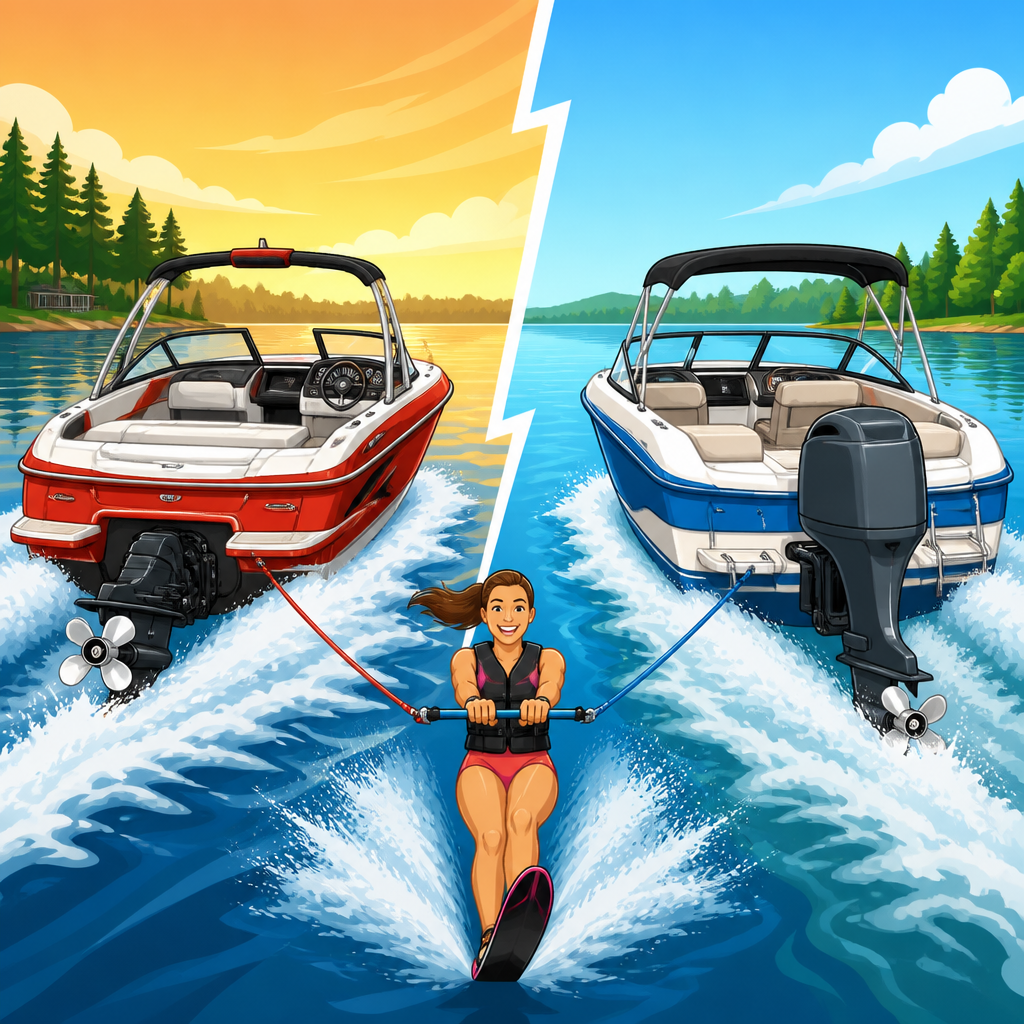
Choosing between inboard and outboard motors for water skiing affects acceleration, wake shape, passenger space, maintenance demands, and long-term ownership costs. For buyers comparing water skiing and wakeboarding boats, the engine layout is not a small technical detail; it determines how the boat performs when a skier cuts hard, how safely riders enter the water, and how easily the hull can be tuned for slalom skiing, beginner lessons, wakesurfing, or mixed-family use. In practical terms, an inboard motor sits inside the boat and typically drives a propeller under the hull through a straight shaft or V-drive, while an outboard motor mounts externally on the transom with the engine, gearbox, and propeller in one unit. Those different layouts create different strengths.
I have tested both styles in ski schools, marina demo days, and family towboat setups, and the distinction becomes obvious the moment a skier calls for more speed. Inboards usually deliver the predictable pull, central balance, and cleaner tracking that dedicated ski boat owners want. Outboards often offer easier service access, more cockpit flexibility, shallower draft, and strong all-around utility for owners who also fish, cruise, or trailer frequently. Wakeboarding adds another layer because some modern towboats are built to shape larger wakes intentionally, while classic slalom ski boats aim to minimize wake disturbance. Understanding those tradeoffs matters because the wrong choice can leave an owner paying for capability they never use or struggling with compromises every weekend.
This guide covers water skiing and wakeboarding boats as a hub page for the wider subtopic. It explains how inboard and outboard motors compare on towing performance, wake quality, safety, maintenance, fuel efficiency, cost, and best-use cases. It also clarifies where sterndrives fit, why tournament ski boats still rely on inboards, and why some family buyers continue to prefer outboard-powered tow platforms. If you are trying to decide what works best for slalom skiing, beginner water skiing, wakeboarding, or a crossover boating lifestyle, the answer starts with the motor configuration and how honestly you define your primary use.
How Inboard and Outboard Motor Layouts Change Boat Performance
The core difference is weight placement. In an inboard ski boat, the engine mass sits low and near the center of the hull. That centralizes weight, improves balance, and helps the boat track straight when a skier loads the line aggressively. Tournament-style direct-drive inboards are famous for this quality. Because the propeller and running gear are fixed beneath the boat, steering response at tow speeds is consistent and the stern does not squat unpredictably during hole shot. For slalom skiing, that matters because the skier feels every change in pull timing and line tension.
An outboard places significant weight on the transom. Modern four-stroke outboards are refined and powerful, but they still move the center of gravity aft. That can be useful for quick bow lift and top-end speed, yet it often creates a different wake profile and a different feel under acceleration. On some hulls, the stern-heavy setup can produce more pronounced wake at skiing speeds, especially if the boat also carries fuel, batteries, and gear aft. For casual skiing, that may be acceptable. For course skiing, it usually is not. This is one reason purpose-built ski boats have remained inboard-dominant for decades.
The transmission path also matters. Inboards use a marine transmission connected to a shaft and propeller, which creates direct mechanical delivery of torque. Outboards package powerhead, midsection, and lower unit into one external assembly. That integrated design simplifies repower options and service replacement, but from a towing perspective, the inboard’s fixed geometry often feels more planted. Drivers notice that difference when holding exact speeds of 30 to 36 mph for slalom or 18 to 23 mph for wakeboarding. Precise speed control systems such as PerfectPass or Zero Off have historically paired especially well with inboard towboats because those boats were engineered around repeatable towing loads.
Acceleration, Pull, and Speed Control for Water Skiing and Wakeboarding
For water skiing, especially deep-water starts and slalom passes, low-end torque and smooth speed recovery are more important than headline horsepower. Inboards excel here. A well-set-up direct-drive or V-drive towboat delivers strong initial pull without excessive bow rise, helping the driver maintain sightlines and helping the skier get up faster. The engine’s central location reduces porpoising and can make throttle inputs feel more linear. In real use, that means fewer surges when a beginner wobbles on start and less lag when an advanced skier loads the rope exiting the wakes.
Outboards can also pull skiers effectively, and many modern 200 to 350 horsepower outboards have no shortage of muscle. The issue is not whether an outboard can tow; it is whether the entire boat package is optimized for tow consistency. A bay boat with a ski pylon may yank a skier up quickly, but it may wander more in cross chop, throw a busier wake, or react differently when passengers shift seats. By contrast, a dedicated inboard ski boat is designed from keel up for tow sports. That specialization shows up in tracking fins, flatter wakes, centered towing points, and calibrated speed-holding systems.
Wakeboarding changes the target. Riders often want a larger, more defined wake at lower speeds, and many V-drive inboards intentionally place weight farther aft to create that shape. Ballast tanks, wake plates, and surf systems make these boats highly tunable. Outboards can support wakeboarding on crossover pontoons, deck boats, and some purpose-built tow models, but they generally offer less refined wake shaping. The engine hanging on the transom also creates design limitations around swim platforms and surf safety. As a result, buyers serious about wakeboarding usually still gravitate toward inboards, particularly V-drives built for wake sports.
| Factor | Inboard Motor | Outboard Motor |
|---|---|---|
| Slalom skiing pull | Excellent tracking, smooth torque, minimal wake on dedicated hulls | Good on some crossover hulls, less ideal for tournament-style use |
| Wakeboarding wake | Highly tunable with ballast and wake systems, especially V-drives | Adequate for casual riding, usually less adjustable |
| Beginner towing | Predictable speed recovery and stable pull | Strong power available, but boat behavior varies more by hull |
| Top-end versatility | Built for towing first, not broadest mission range | Often better for mixed use such as fishing and cruising |
Wake Shape, Hull Design, and Why Dedicated Ski Boats Use Inboards
The ideal wake depends on the sport. Slalom skiers want the smallest, softest wake possible because they cross it repeatedly at speed. Wakeboarders want a larger wake with clean lips for pop. Wakesurfers want a long, surfable face, though that discipline requires additional safety considerations and is rarely associated with outboards because of propeller placement. Boat builders solve these conflicting goals through hull geometry, engine placement, running attitude, and ballast strategy. That is why a single phrase like best water sports boat can be misleading without identifying the actual sport.
Direct-drive inboards dominate slalom skiing because they put the engine near the middle of the boat and keep the hull level at skiing speeds. Classics from MasterCraft, Malibu, and Nautique earned reputations in tournament circles for small wakes and exact tracking. Many are also certified for competition use under standards recognized by organizations such as USA Water Ski & Wake Sports and the International Waterski & Wakeboard Federation. Those endorsements are not marketing fluff; they reflect measurable criteria in pull consistency, wake characteristics, and course suitability.
V-drive inboards reverse the layout by placing the engine farther aft while keeping the propeller under the hull. That shift creates more interior seating and, with ballast, bigger wakes for wakeboarding and wakesurfing. Outboard towboats can be fun and capable, but the motor hanging off the back influences transom design and aft-water interaction. Builders can compensate with clever hulls, tabs, and integrated tow features, yet they rarely duplicate the precise wake profile of a purpose-built inboard towboat. If the primary goal is serious skiing or wakeboarding progression, hull specialization still wins over broad versatility.
Safety, Swimmer Access, and On-Water Practicality
Safety is where buyers should slow down and think past brochures. An inboard’s propeller sits under the boat, ahead of the transom, which reduces direct exposure when a skier or wakeboarder climbs onto the swim platform from behind. That does not remove risk, but it is one reason inboards are favored in tow sports. Outboards place the propeller at the very rear where people reboard, requiring stricter engine-off routines and more awareness around children, ropes, and crowded swim stops. For watersports families, that distinction matters every single outing.
There are practical advantages on the outboard side too. Outboards tilt clear of the water, which helps in shallow launches, beach approaches, and trailering. Saltwater owners often appreciate being able to trim the engine up after use to reduce corrosion exposure. Service access can also be easier because major components are contained in one unit outside the hull. By contrast, inboards may require more confined engine-bay work, and shaft, strut, and rudder gear add underwater hardware that must be inspected. In freshwater ski-lake ownership this is routine, but it is still part of the ownership picture.
Daily usability depends on the crew. Families who spend half the day towing and half the day cruising may like the flexible stern arrangements found on some outboard deck boats and dual consoles. Owners focused on repetitive ski sets usually prefer the lower tow point engineering, stable tracking, and integrated platforms of an inboard towboat. In my experience, the happiest buyers are the ones who match their actual Saturday routine, not their aspirational one. A serious slalom skier will resent a compromise hull quickly, while a casual family may resent paying for a tournament-grade boat that is less useful for everything else.
Maintenance, Durability, Fuel Use, and Cost of Ownership
Outboards have a strong reputation for straightforward maintenance because the engine is modular and externally mounted. Winterization, spark plug access, lower-unit service, and even full engine replacement are often simpler than major inboard repairs. Brands such as Yamaha, Mercury, and Suzuki have extensive dealer networks, and digital diagnostics have improved troubleshooting. For owners far from specialty towboat dealers, that support network can be a deciding factor. Inboards, especially from dedicated towboat brands, may require technicians familiar with PCM, Indmar, or Ilmor marine powertrains and with the electronics that manage ballast and speed control systems.
Fuel efficiency depends heavily on hull type, speed, and load. At cruise, many modern outboards are efficient because they benefit from advanced fuel injection, variable valve timing, and optimized gearcases. But tow sports are not primarily about cruise numbers. At fixed towing speeds with repeated acceleration, a lightweight purpose-built inboard can be competitive because it is operating in its intended envelope. Buyers should look beyond broad claims and compare gallons per hour at actual ski and wakeboarding speeds with a normal crew and ballast load.
Initial price and depreciation vary sharply by segment. A premium inboard towboat with ballast, tower, surf systems, touchscreen controls, and trailer can be expensive, and insurance may reflect that value. Outboard-powered crossover boats may cost less at entry level and offer wider resale appeal in mixed-use markets. However, dedicated ski boats hold value well among informed buyers because their use case is clear and demand remains stable. The right financial question is not simply which motor is cheaper. It is which platform delivers the lowest cost per enjoyable hour for the activities you truly do most often.
Best Choice by Use Case: Slalom, Family Skiing, Wakeboarding, and Multiuse Boating
If your priority is slalom skiing, the best answer is an inboard direct-drive ski boat. It offers the flattest wake, best tracking, and most predictable pull. If your priority is wakeboarding or wakesurf-adjacent family watersports, a V-drive inboard is usually the right answer because it produces larger adjustable wakes and offers better social seating. If you want one boat for fishing, sandbar trips, cruising, and occasional towing, an outboard-powered crossover can make more sense, especially on coastal or shallow waters where trim range and service convenience matter.
For beginners learning deep-water starts, both layouts can work, but the inboard still provides a calmer, more controlled platform. For vacation-home owners on small freshwater lakes, inboards often fit the mission perfectly. For owners who trailer long distances, boat in brackish water, or need broad utility, outboards earn their following honestly. There is no universal winner. There is only the better fit for your water, your sports, your crew, and your maintenance reality. That is why this topic sits at the center of any useful guide to water skiing and wakeboarding boats.
Inboard vs. outboard motors for water skiing comes down to specialization versus versatility. Inboards deliver superior tow performance, cleaner wake control, and safer reboarding geometry for dedicated ski and wake use. Outboards deliver easier service, shallow-water practicality, and stronger crossover appeal for owners who want one boat to do many jobs. Before buying, list your primary sport, typical crew size, water depth, storage setup, service access, and budget for fuel and maintenance. Then sea-trial both configurations at actual towing speeds. A short demo reveals more than any brochure. Start with your real use case, and the right motor choice becomes much clearer.
Frequently Asked Questions
Which is better for water skiing: an inboard or an outboard motor?
For dedicated water skiing, an inboard is usually the better choice. Inboard ski boats are designed around consistent pull, predictable tracking, and a flatter, narrower wake, which are exactly the qualities skiers want. Because the engine is mounted inside the boat and connected to a fixed driveline, power delivery tends to feel smooth and direct when a skier accelerates out of the water or cuts aggressively from side to side. That helps the driver hold speed more accurately and gives the skier a cleaner, more repeatable pass.
Outboards can still tow skiers effectively, especially for recreational use, beginner lessons, and families who want one boat for multiple activities. They often offer strong hole shot, lighter overall boat weight, and easier maintenance access. However, many outboard-powered boats are not optimized for tournament-style slalom skiing, and their hulls may produce a different wake profile than a purpose-built inboard ski boat. If your priority is serious skiing performance, particularly slalom, the inboard almost always has the edge. If your goal is mixed use with flexibility, lower complexity in some service areas, and good all-around towing capability, an outboard may make more sense.
How do inboard and outboard motors affect wake shape and skier performance?
Wake shape is one of the biggest performance differences between the two layouts. Inboard ski boats are engineered to create a small, soft, low-profile wake at skiing speeds. That matters because skiers cross the wake repeatedly, and a flatter wake reduces disruption, preserves speed, and makes edge transitions smoother. For slalom skiers especially, the wake behind a proper inboard ski boat is a major advantage. The boat’s weight distribution, hull design, and centered driveline all work together to create a more controlled pull and a wake shape tailored to skiing rather than general boating.
Outboard boats can produce perfectly acceptable wakes for casual skiing, but they often vary more depending on hull style, engine weight at the transom, passenger placement, fuel load, and trim settings. Some outboard tow boats and crossover models are designed to manage wake better than typical fishing or runabout layouts, but they still may not match the specialized wake characteristics of a true inboard ski boat. For beginners, that difference may not be critical. For intermediate and advanced skiers, especially those practicing technique, the consistency and ski-focused wake of an inboard can make a noticeable difference in comfort, control, and confidence.
Is one option safer than the other for skiers getting in and out of the water?
Inboard boats are generally considered safer for watersports when it comes to rider proximity at the stern. With an inboard, the propeller is mounted underneath the hull rather than hanging directly off the back of the boat, which reduces the risk around swimmers and skiers entering or exiting the water from the transom area. That is one reason direct-drive and V-drive inboards have long been popular in dedicated tow sports. Families teaching children to ski often appreciate this layout because it creates a more controlled environment around the swim platform.
Outboards require more caution because the engine and propeller are mounted at the rear. Modern safety practices, proper engine shutoff, and careful boarding procedures go a long way, and many families safely use outboards for towing every season. Still, from a design standpoint, the inboard layout offers an inherent advantage in stern-area safety during watersports use. That does not mean outboards are unsafe by default; it means the margin for careful operation is narrower. If towing children, beginners, or large groups is a major part of your boating routine, the inboard layout often provides added peace of mind.
What are the main differences in maintenance, reliability, and long-term ownership costs?
Outboards are often praised for service accessibility and simplified maintenance. Because the engine is mounted externally, many routine tasks are easier to reach, and in some markets, qualified outboard technicians are more widely available than specialized inboard tow-boat mechanics. Outboards also offer the convenience of trimming the engine out of the water when the boat is not in use, which can help with corrosion exposure in certain environments. For owners who value easy service logistics, broad dealer support, and straightforward seasonal care, an outboard can be very appealing.
Inboards, however, are far from a poor ownership choice. Many are built for heavy tow-sport use and can be extremely durable when maintained properly. The tradeoff is that service access may be tighter, winterization and driveline-related maintenance can be more involved, and some repairs may require more specialized labor. Long-term cost depends on more than just the engine itself. Buyers should also consider fuel consumption, insurance, storage, resale value, and how well the boat fits its intended use. A family that buys an inboard specifically for skiing may save money in the long run by avoiding the need to upgrade later. On the other hand, a buyer who needs one boat for cruising, fishing, and occasional skiing may find an outboard to be the more economical and practical solution overall.
Which is the better choice for families who want to ski, wakeboard, wakesurf, and cruise in one boat?
That depends on which activity matters most. If skiing is the top priority, an inboard remains the strongest option because of its pull characteristics, tracking, and wake design. If wakeboarding or wakesurfing is equally important, many buyers start looking at inboard V-drive boats because they can be weighted and tuned more effectively for larger wakes and surf waves. In that sense, inboards often offer the greatest performance ceiling for families who are serious about tow sports, even though the exact inboard layout matters.
Outboards can be excellent for mixed-family use when versatility is the main goal. They are commonly found on crossover boats that provide open cockpit space, easier beaching in some situations, simpler service access, and solid performance for casual skiing and wakeboarding. They may also free up interior layouts differently depending on the boat design, though the engine’s placement at the stern can influence seating and onboard movement. If your weekends include tubing, cruising, sandbar stops, and only occasional ski sets, an outboard-powered boat can be a very smart compromise. If you want the boat to feel purpose-built when a skier cuts hard, needs a precise tow speed, or wants the cleanest possible wake, an inboard is usually the better long-term fit.