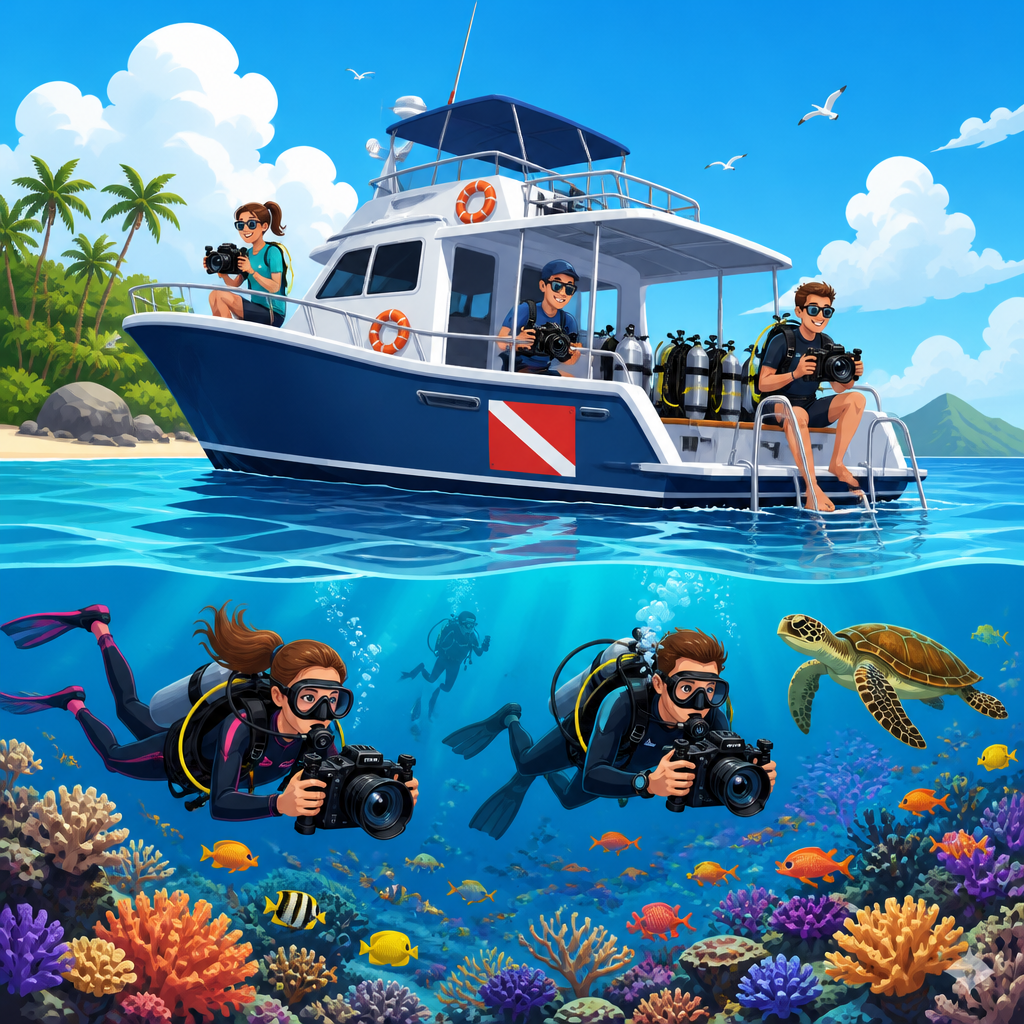
The best dive boats for underwater photography combine stable handling, smart deck layouts, camera-safe workspaces, and easy water access, because photographers need far more from a vessel than a simple ride to a reef. In practice, the right boat can improve image quality, protect expensive housings and strobes, and reduce the fatigue that leads to rushed descents or missed wildlife encounters. When I evaluate boats for photo-focused diving, I look at how the platform supports the entire workflow: gearing up, entering the water, managing cameras, surfacing, rinsing equipment, reviewing files, and repeating the process safely through a full day offshore.
Underwater photography from a boat sits at the intersection of scuba diving, snorkeling, seamanship, and camera logistics. A dive boat is any vessel used to transport divers or snorkelers to a site and support them before, during, and after water activities. Underwater photography adds specialized needs, including padded camera tables, dedicated freshwater rinse tanks for housings, shaded preparation areas, giant stride or platform entries that reduce impact, and ladders that allow a diver to pass up a rig before climbing aboard. Boats that work well for general sightseeing often fail photographers because they expose gear to spray, crowd cameras near tanks, or force awkward exits that increase the risk of flooding a housing.
This matters because underwater imaging gear is heavy, delicate, and expensive, while ocean conditions are dynamic and unforgiving. A current-swept liveaboard route in Raja Ampat, a shark feed in the Bahamas, and a calm snorkeling trip over seagrass in the Florida Keys all demand different boat characteristics. New divers often focus on destination first, but experienced shooters know the boat can determine whether a trip yields sharp, well-lit images or a memory card full of compromised shots. As the hub for scuba diving and snorkeling from a boat, this guide explains which boat types suit photography best, what features actually matter, how to compare operators, and where each setup shines in the real world.
What Makes a Dive Boat Good for Underwater Photography
A good photography dive boat does four things consistently: it keeps people safe, keeps gear protected, streamlines repetitive tasks, and matches the sea state at the destination. Safety starts with predictable handling, clear briefings, oxygen kits, VHF or satellite communications, trained crew, and boarding systems that work for tired divers in swell. Gear protection means stable camera benches, non-slip decks, separated tank racks, freshwater camera rinse bins that are not used for masks or fins, and enough shade to keep housings, batteries, and screens from overheating. Workflow support includes camera hand-up procedures, separate entry and exit lanes, and enough room for photographers to stage lenses, ports, and strobes without blocking other guests.
Boat stability is especially important for imaging. Monohulls with deep-V shapes can cut chop well on fast runs, but beam width and displacement often determine how much a boat rolls while divers kit up. Catamarans generally provide a steadier platform at rest, which is valuable when assembling O-rings or changing memory cards. For small-boat day operations, a broad stern, low freeboard at the pickup point, and a practical transom ladder often matter more than top speed. I have seen excellent images come from simple six-pack boats when the captain understood diver pickup, while large vessels with poor camera handling caused delays and damaged ports. Size helps, but thoughtful design helps more.
Entry and exit methods directly affect photo efficiency. Back roll entries are common on rigid inflatable boats and work fine for compact systems, but they are hard on oversized DSLR or mirrorless housings with dual strobes. Giant stride entries from a stable gate or side platform are better for preserving strobe arm positions. For exits, the best setups allow a diver to remove fins in the water, pass the camera to crew, and climb a wide ladder with solid handholds. Hydraulic platforms are excellent on larger boats because they reduce strain and speed up recovery between dives, which is useful during four-dive days or when snorkeling guests share the vessel with scuba divers.
Top Dive Boat Types for Photo-Focused Scuba Diving and Snorkeling
Liveaboards are often the best dive boats for underwater photography because they eliminate daily shore transfers and maximize time at high-quality sites. On strong itineraries in places like the Red Sea, Maldives, Socorro, or Komodo, photographers can dive early, stay close to action, and return immediately to charging stations and camera tables. The advantages are obvious: fewer rushed departures, easier sunrise and night dives, and access to remote reefs with less diver pressure. The tradeoff is that liveaboards require trust in the operator’s maintenance, safety culture, and camera facilities. Not every liveaboard marketed to divers is designed for serious shooters, so details like workstation space, rinse protocols, and skiff support still matter.
Dedicated day boats are the workhorses of coastal scuba diving and snorkeling from a boat. These range from small six-pack charter boats to large Newton-style or custom fiberglass vessels carrying twenty or more guests. The best day boats for photographers have covered decks, marine heads, camera tables, freshwater showers, and enough deck organization to separate gearing-up zones from camera prep zones. They are ideal in destinations with short run times and many nearby reefs, such as Cozumel, Key Largo, Bonaire’s boat-access sites, or parts of Hawaii. For mixed groups of divers and snorkelers, a day boat with a broad swim platform and easy ladder access supports both activities without slowing the whole operation.
Rigid inflatable boats, usually called RIBs, excel where speed and maneuverability matter. Operators in the Galápagos, South Africa, the United Kingdom, and many drift-diving destinations use them because they can launch quickly, track bubbles in current, and recover divers efficiently. For underwater photographers, RIBs are a specialized choice. They are superb for action-oriented dives where proximity to wildlife outweighs comfort, but they offer limited camera protection and often require stripped-down setups. Small mirrorless rigs and action cameras do better here than large dome-port systems. If your goal is wide-angle pelagic encounters and you can accept a minimalist topside workflow, a well-run RIB can still be one of the best platforms.
Catamarans deserve separate attention because they serve both dive and snorkel markets particularly well. Their beam creates stability at anchor, and the wide stern area can support dual ladders, camera stations, and comfortable seating without crowding. In calmer regions, operators often use sailing catamarans or power cats for family trips that blend snorkeling, discover scuba sessions, and photography. For image makers, the big advantage is reduced roll while changing settings or swapping batteries between sessions. Catamarans are less common in rough expedition-style diving, but in warm-water destinations where comfort and stability drive the experience, they are highly effective boats for underwater photography and relaxed snorkeling alike.
Features Photographers Should Prioritize Before Booking
When comparing operators, ask direct questions about camera support instead of relying on brochure photos. The essentials are straightforward: Is there a dedicated camera table? Is the freshwater rinse tank reserved only for cameras? Are there charging outlets near dry storage? Can crew hand cameras down after entry and receive them before ladder ascent? Are giant stride entries available, or is every entry a back roll? Does the boat carry enough shade to keep systems out of direct sun? These details reveal whether the operator truly understands photo diving or simply tolerates cameras on board. An honest answer from a captain or shop manager usually tells you more than marketing language ever will.
| Boat type | Best use | Photography strengths | Main limitations |
|---|---|---|---|
| Liveaboard | Remote multi-day dive travel | More dives, camera rooms, charging space, dawn and night access | Higher cost, variable maintenance standards, fixed itinerary |
| Day boat | Coastal reef diving and mixed snorkel groups | Easy logistics, shade, rinse tanks, broad appeal | Less site access, repeated transit time, crowding on busy routes |
| RIB | Fast pickups, current, pelagic encounters | Speed, maneuverability, efficient diver recovery | Limited gear protection, rougher ride, minimal workspace |
| Catamaran | Stable warm-water trips and family snorkeling | Low roll, wide deck, comfortable platform for cameras | Less common in technical or rough-water operations |
Camera facilities should be evaluated with the same seriousness as engine maintenance and safety gear. A true camera station has padding, tie-down points, and separation from tank valves and weight belts. Freshwater rinse bins should be deep enough for housings yet placed where accidental mask defog or fin rinsing will not contaminate them with sand. Electrical systems matter as much as wet areas: boats used by photographers need reliable charging capacity for strobes, video lights, and spare batteries, ideally with surge protection and enough outlets to avoid unsafe power-strip daisy chains. On premium liveaboards, a dedicated camera room is a major advantage because it centralizes tools, compressed air for drying, and clean bench space.
Crew procedures can make an average boat excellent. On the best operations I have used, the briefing covers current, depth, expected marine life, hand-up protocol, emergency recall signals, and exactly where cameras are staged before and after the dive. Crew know not to grab a housing by strobe arms, and they understand that a photographer may need an extra minute to secure ports or check vacuum systems. Many modern housings from Nauticam, Ikelite, Sea and Sea, and Marelux use leak detection or vacuum valves, and a crew familiar with those systems reduces stress. A boat that respects camera handling usually also demonstrates discipline in tank analysis, diver counts, and site management.
Matching the Boat to Your Shooting Style and Destination
Wide-angle reef scenics, macro subjects, big animals, and split-level snorkeling images all place different demands on a boat. For macro diving, comfort and repetition matter most. You may spend several dives on nearby sites, carrying focus lights, snoots, and smaller ports, so a spacious day boat or stable catamaran is ideal. For big-animal work involving sharks, mantas, or schooling hammerheads, the best dive boat may be a liveaboard with skiffs or a fast pickup boat that can reposition divers quickly. Snorkel photographers pursuing turtles, rays, bait balls, or shallow coral scenes benefit from boats with easy reboarding and low platforms, because frequent water entry and exit is part of the creative process.
Destination also changes the calculation. In Cozumel, current and drift profiles make efficient pickups and disciplined roll calls more important than luxury deck space. In Indonesia, where distant reefs and early morning light create outstanding conditions, liveaboards dominate serious photo itineraries. In the Red Sea, many established vessels are designed around divers first and now include camera amenities because demand from photographers is so strong. In colder water regions such as British Columbia or northern Europe, enclosed cabins, hot drinks, and robust ladders become critical because thick exposure suits, steel cylinders, and rougher seas increase fatigue. There is no universal best boat; there is only the best boat for the dive plan you actually have.
Photographers traveling with non-divers or casual snorkelers should think about group dynamics before booking. A hard-core photo liveaboard may frustrate family members who want relaxed snorkeling and beach time, while a sightseeing catamaran may leave a serious shooter without proper rinse tanks or camera handling support. Mixed groups usually do best on dedicated day boats or stable catamarans in destinations with protected reefs and short runs. These operators can often split a day between scuba diving and snorkeling from a boat, allowing one guest to do a two-tank dive while another enjoys guided surface photography over shallow coral. Choosing for compatibility, not just ambition, usually leads to better images and a better trip.
How to Choose an Operator and Plan a Better Photo Dive Trip
Start with the operator, not the vessel photo on the homepage. Review the company’s safety record, diver-to-guide ratio, certifications, oxygen and first aid readiness, and emergency communication systems. Standards from agencies such as PADI, SSI, and NAUI matter for training quality, but daily operational discipline matters more once you are on board. Read reviews for comments about crew professionalism, punctual pickups, and camera care rather than generic praise. If you are booking a liveaboard, ask about skiff deployment, charging hours, freshwater production, and whether camera tables are inside or exposed to spray. These operational specifics often determine whether your week feels efficient and calm or chaotic and gear-intensive.
Preparation improves outcomes as much as the boat itself. Use checklists for batteries, O-rings, silica packs, lenses, ports, sync cords, and save-a-dive spares. Pack a padded camera mat if you are unsure about deck surfaces. Bring dry bags for towels and backup clothes, especially on smaller boats where spray reaches everything. For snorkeling from a boat, carry anti-fog, reef-safe sun protection suited to local regulations, and a lanyard or hand strap for compact rigs. If sea sickness is a risk, treat it early according to medical advice; nausea ruins concentration, and concentration is central to safe diving and reliable camera setup. Small preventive decisions are often what protect expensive systems offshore.
The best dive boats for underwater photography are the ones that let you focus on composition, light, and marine life instead of worrying about your housing, your ladder exit, or whether someone will dump a sandy mask into the camera rinse tank. Prioritize stable platforms, thoughtful gear handling, efficient entries and exits, and crews with proven camera awareness. Match the boat type to your destination, your subjects, and the needs of everyone in your group, whether you are planning a shark-focused liveaboard, a reef-rich day charter, or a snorkeling trip with a compact setup. Use this hub as your starting point, then compare operators carefully and book the platform that will help you come home with safer dives and stronger images.
Frequently Asked Questions
What features make a dive boat especially good for underwater photography?
The best dive boats for underwater photography are designed to support much more than basic transport to and from the dive site. A truly photo-friendly boat starts with stability, because excessive rocking makes it harder to assemble housings, change lenses or ports, review settings, and safely move expensive camera systems around the deck. Hull design, size, and overall ride quality all matter, especially on longer runs where fatigue can affect your focus before you even enter the water.
Beyond ride comfort, deck layout is one of the most important factors. Underwater photographers benefit from dedicated camera tables, padded work surfaces, freshwater rinse tanks reserved only for camera equipment, and enough protected space to avoid crowding. A good boat separates camera preparation areas from high-traffic gear-up zones so housings, strobes, focus lights, and arms are not constantly at risk of being bumped. Shaded areas are also valuable, since direct sun can overheat electronics, fog housings, and make detailed setup work more difficult.
Entry and exit design is another major consideration. Wide giant-stride platforms, diver lifts, sturdy ladders, and crews trained to hand camera rigs into and out of the water can significantly reduce stress and lower the chance of damaging equipment. For photographers carrying larger systems, easy water access is not a luxury; it directly affects safety, energy use, and readiness for the shot once underwater. The best boats also offer practical support features like tank placements that do not block movement, secure storage for personal items, charging stations for batteries, and rinse and dry areas that keep the workflow organized throughout the day.
In short, the ideal underwater photography dive boat combines stability, smart ergonomics, crew awareness, and equipment protection. When all of those features come together, photographers can spend less energy managing logistics and more energy creating better images.
Why is boat stability so important for underwater photographers?
Boat stability matters because underwater photography begins long before the diver descends. Photographers often need to install housings, inspect O-rings, mount strobes, attach focus lights, confirm sync connections, and fine-tune exposure settings on deck. On an unstable boat, each of those tasks becomes more difficult and riskier. A sudden roll or sharp bounce can knock a camera off a bench, cause a diver to rush assembly, or increase the chance of missing a small but critical sealing issue that later leads to a flooded housing.
Stability also affects diver energy levels. Underwater photography already demands concentration, buoyancy control, patience, and physical effort, especially when working in current, surge, or repeated entries over a full day. If a boat pounds through chop or rocks heavily while divers prepare, photographers may arrive at the site tired, distracted, or even seasick. That fatigue can translate into poor decisions underwater, such as skipping a final camera check, descending too quickly, or giving up early on a promising encounter.
From an image-making perspective, a stable boat supports a calmer, more deliberate workflow. Photographers can review previous shots, swap accessories, clean ports, and discuss marine life behavior with guides without feeling rushed or physically unsettled. This is especially important on trips targeting macro subjects, rare behavior, or split itineraries where shooters may alternate between wide-angle and close-focus setups between dives. The more stable the platform, the more efficient and careful those transitions become.
Ultimately, boat stability protects both the person and the gear. It reduces unnecessary strain, lowers the likelihood of accidents, and helps photographers start each dive prepared rather than depleted. That is a major reason serious image-makers often prioritize stable handling as highly as destination quality.
How should a dive boat handle camera gear to keep it safe?
A well-run dive boat protects camera equipment through both physical design and disciplined operating procedures. The design side includes padded camera tables, secure storage locations, non-slip deck surfaces, dedicated freshwater rinse tanks for cameras only, and enough room for photographers to work without crowding. These features matter because modern underwater imaging systems are not just cameras; they are complex assemblies that may include ports, extension rings, dual strobes, fiber-optic cables, vacuum valves, monitors, and delicate arms and clamps. Even a minor impact can affect alignment, seals, or electronics.
Equally important is how the crew handles gear. The best dive boats have staff who understand that camera rigs should never be stacked with general scuba equipment or left in uncontrolled traffic areas. Crew members should know how to pass housings safely, where to place them during entries and exits, and when to avoid touching controls, ports, or strobe arms. Boats that cater regularly to photographers often have a clear routine: cameras stay on designated workstations until divers are ready, then are handed down carefully at the entry point or passed up once the diver is back at the ladder.
Freshwater management is another key detail. A dedicated camera rinse tank is essential, but it only works if it is truly reserved for cameras and not shared with masks, fins, or regulator second stages. Shared tanks often become a source of scratches, contamination, and accidental knocks. Charging areas should also be dry, sheltered, and organized, with enough outlets for batteries, lights, and accessories. The safest boats understand that batteries, memory cards, silica packs, tools, and spare parts all need a manageable place within the daily workflow.
In practical terms, photographers should look for boats that treat camera systems as mission-critical equipment rather than an inconvenience. When a boat has proper storage, thoughtful handling routines, and a crew that respects the value and fragility of imaging gear, the entire experience becomes smoother, safer, and far more productive.
Is a larger dive boat always better for underwater photography?
Not always. Larger dive boats often provide advantages that photographers appreciate, including greater stability, more deck space, larger camera tables, improved shade, better rinse facilities, and more comfortable transit in rougher conditions. On long offshore runs or full-day charters, those benefits can make a significant difference in comfort and efficiency. A bigger platform also usually makes it easier to separate diver traffic from camera work areas, which is one of the best ways to reduce accidental damage to housings and accessories.
However, size alone does not guarantee a better photography experience. A poorly designed large boat can still have cramped camera stations, awkward entries, limited rinse options, or chaotic diver flow. Meanwhile, a smaller boat that is purpose-built for photographers may outperform a bigger vessel by offering smarter storage, more attentive crew support, and faster access to the water. In some destinations, smaller boats also have practical advantages such as quicker repositioning, easier mooring near specific reef structures, and more intimate diver-to-guide ratios that help photographers work more deliberately.
The real question is whether the boat’s layout and operations match the needs of underwater imaging. Photographers should consider how many divers are onboard, how much space each person actually gets, whether there is a dedicated area for camera prep, and how entries and exits are managed. If the boat carries a large group but offers little room to protect equipment, its size becomes less meaningful. On the other hand, if a compact boat limits movement so much that gear changes and safe handling become stressful, that can hinder the photographic process.
So while larger boats often have a natural advantage, the best choice is the one that balances stability, space, workflow, and support. For underwater photographers, function matters more than raw dimensions. A well-organized boat of moderate size can easily deliver a better shooting day than a bigger vessel with poor planning.
What should photographers ask before booking a dive boat trip?
Before booking, underwater photographers should ask questions that go beyond the usual dive itinerary and focus directly on how the boat supports imaging work. Start with the camera setup area: Is there a dedicated camera table? Is it padded? Is there shade over the workspace? Are there separate rinse tanks reserved strictly for cameras? These details reveal very quickly whether the operator genuinely understands photographers or simply claims to accommodate them.
Next, ask about boat entry and exit procedures. Find out whether the crew hands cameras down to divers, receives them from the water, and assists with large rigs. Ask whether the boat uses giant-stride entries, ladders, stern platforms, diver lifts, or inflatable transfers, because each method affects how easily you can manage a housing. If you use a heavy DSLR or mirrorless setup with strobes, this is especially important. You should also ask about the average number of divers onboard, since even a well-equipped boat can become difficult for photographers if it is consistently overcrowded.
It is also smart to ask about power and storage. Confirm whether there are charging stations for batteries, dry storage for accessories, and room for spare lenses, tools, O-rings, and backup parts. If you are traveling on a liveaboard or full-day vessel, ask whether there is a camera room or indoor workspace where you can perform maintenance out of wind and spray. Photographers shooting multiple formats should ask how easy it is to switch between macro and wide-angle configurations during the day and whether there is enough time and space to do so properly.
Finally, ask about the crew’s experience with photographers specifically. Do they host photo groups often? Do guides understand slow, deliberate diving styles and subject approach techniques? Are they comfortable with divers who spend most of a dive on one patch of reef or