Electric boats moved from niche curiosity to serious marine category in just a few years, and 2026 is the point where the market finally offers credible choices for commuters, tenders, luxury day boats, fishing skiffs, and high-performance runabouts. An electric boat uses battery-stored energy to power one or more electric motors instead of relying solely on gasoline or diesel engines. In practice, that means instant torque, quiet operation, simpler maintenance, and zero tailpipe emissions on the water. It does not mean every model fits every boater. Range, charging access, hull efficiency, local speed limits, and the intended use case still determine whether a battery-electric vessel is practical. After tracking launches, sea trials, propulsion updates, and owner feedback across the last several model years, I can say the best electric boats on the market in 2026 are no longer defined only by novelty. They are defined by purpose-built engineering.
That matters because the conversation has matured. Buyers are asking better questions: How many kilowatt-hours does the pack hold? What is the realistic cruising range at displacement speeds versus planing speeds? Is charging possible from standard shore power, DC fast charging, solar supplementation, or battery swapping? Which brands have strong dealer service and software support? Those are the right questions, and the strongest builders now answer them clearly. Regulations also play a role. Lakes and urban waterways increasingly favor low-noise, low-emission craft, while premium waterfront communities are more receptive to clean propulsion. For many owners, the appeal is simple: less vibration, lower operating cost, and a more relaxing experience. The best electric boats in 2026 deliver that without asking buyers to tolerate weak performance or experimental reliability.
What makes an electric boat the best choice in 2026
The best electric boats are not automatically the fastest or the most expensive. The winners balance hull design, battery management, motor efficiency, thermal control, charging flexibility, and after-sales support. In my experience, electric propulsion exposes bad naval architecture quickly. A heavy hull with poor hydrodynamics drains batteries fast, while a lightweight, well-optimized hull can transform modest battery capacity into useful range. That is why leading brands focus on integrated design rather than simply dropping batteries into a conventional gasoline layout. Companies such as Candela, X Shore, Arc, and Frauscher work from the propulsion system outward, pairing software controls with efficient hull forms and lightweight materials.
Battery chemistry and system architecture also separate leaders from followers. Most serious 2026 electric boats use lithium-ion packs with advanced battery management systems that monitor cell temperature, charging rate, discharge health, and safety isolation. Marine-rated waterproofing and corrosion protection are mandatory, not optional. Reputable builders also give realistic performance data. If a boat advertises long range, check the speed at which that number was achieved. As on electric cars, speed dramatically affects efficiency. On boats, the effect is even stronger because hydrodynamic drag rises sharply as speed increases. The best builders explain this openly and provide multiple operating profiles instead of one flattering headline figure.
Top electric boats to watch and buy in 2026
Candela remains one of the most important names in the category. The Candela C-8 stands out because its hydrofoiling system reduces drag dramatically once the boat lifts above the water. In practical terms, that gives it one of the most efficient high-speed electric profiles on the market. It is not a cheap boat, and foil systems add technical complexity, but the payoff is real range at speeds that would drain most conventional electric hulls. For buyers who want innovation backed by serious engineering, Candela is a benchmark. The company’s commercial P-12 shuttle also reinforces its credibility, because commercial deployment tends to expose weaknesses faster than leisure use.
X Shore has built a strong identity around Scandinavian design, premium materials, and user-friendly software. The X Shore Eelex 8000 and related platform variants appeal to owners who want a versatile day boat with clean styling and practical deck layouts. The interface is among the best in the segment, and that matters more than many first-time buyers realize. A marine electric system needs intuitive energy monitoring, route planning, and charging visibility. X Shore’s boats are not the absolute cheapest way into electric boating, but they are among the most polished complete products available in 2026, particularly for coastal day use and luxury tender roles.
Arc has become the high-profile American performance brand in this space. The Arc One drew attention first, but the broader significance is Arc’s software-first approach to electric marine systems. The brand focuses on torque-rich acceleration, wake-friendly capability, and premium build quality. For buyers crossing over from luxury wake boats or high-end day boats, Arc offers an electric experience that feels emotionally compelling rather than merely responsible. That distinction matters in adoption. People buy boats for enjoyment first. Arc understands that and builds around thrill, finish quality, and digital integration while still delivering the maintenance advantages of electric propulsion.
Frauscher, especially through its collaboration on electric models with premium propulsion partners, remains a strong option for buyers who care as much about traditional European craftsmanship as propulsion innovation. The Frauscher x Porsche 850 Fantom Air is one of the most talked-about premium electric boats because it combines a proven luxury boat design language with high-performance automotive-derived electric technology. This boat targets affluent buyers who want status, acceleration, and brand confidence. It will not be the mainstream value pick, but in 2026 it represents how seriously established luxury brands now take electric marine propulsion.
| Boat | Best For | Key Strength | Main Tradeoff |
|---|---|---|---|
| Candela C-8 | Longer high-speed day cruising | Hydrofoiling efficiency and range | High price and technical complexity |
| X Shore Eelex 8000 | Premium coastal day boating | Refined design and easy software interface | Range depends heavily on speed |
| Arc One | Performance and watersports appeal | Strong acceleration and luxury execution | Premium cost and limited production scale |
| Frauscher x Porsche 850 Fantom Air | Luxury buyers | Prestige, fit and finish, fast electric performance | Very high purchase price |
Best electric boats by use case
If your priority is family day cruising, the best electric boat is usually not the fastest one. It is the model with enough battery for a full outing, predictable handling, comfortable boarding, and reliable local charging. In that role, X Shore and Candela both make sense, but for different reasons. X Shore favors straightforward all-around usability, while Candela rewards owners who regularly cover meaningful distances at speed. For protected harbors, resorts, and luxury waterfront properties, smaller electric tenders from brands including Vita and RAND can be excellent fits because their short-range limitations matter less in controlled operating areas.
For watersports and high-energy recreational use, Arc is especially compelling. Electric motors deliver instant torque, which is ideal for pulling skiers and wake riders smoothly. The challenge is that repeated hard acceleration uses energy quickly, so buyers need realistic expectations about session length. For anglers, compact electric fishing boats and skiffs are growing in appeal, especially on lakes with engine restrictions. Here, silent operation is a tactical advantage as much as an environmental one. Fish are less disturbed, and low-speed positioning is easier to manage. Some buyers may still prefer hybrid or auxiliary setups if they fish large open water for full days, but electric-only options are becoming increasingly viable.
Commercial and municipal buyers should evaluate electric passenger boats and workboats differently from private owners. Duty cycle analysis is essential. The right question is not “What is the maximum range?” but “Can this boat complete its route repeatedly with safe reserve capacity and practical turnaround charging?” That is why Candela’s commercial work has industry significance. Repeated-route passenger service is one of the strongest electric use cases because operations are predictable. Marinas, campuses, ferry operators, and hotel groups can justify shore infrastructure if fuel savings, lower maintenance, and quieter service improve the overall economics.
How range, charging, and operating cost really work
Range is the first issue most buyers ask about, and it should be. Electric boat range is highly sensitive to speed, load, current, wind, and hull cleanliness. A manufacturer may quote an impressive figure, but real planning should include a healthy reserve. I generally advise evaluating your most common trip, doubling the distance for comfort, then checking whether that profile still leaves margin for weather or detours. If not, the boat may still work for you, but only with disciplined charging and route planning. Electric boating rewards owners who think in mission profiles rather than abstract top-line specs.
Charging is improving, but it is still uneven by region. Many owners will rely primarily on Level 2-style AC shore charging at home dock installations or marina berths. That works well for overnight replenishment. Some premium models support faster DC charging, which is valuable for commercial users or active day boaters making multiple trips. Before buying, confirm actual connector type, charging curve, and local infrastructure. Do not assume every marina can support high-output charging. I have seen buyers focus on brochure performance and ignore shore-side reality, only to discover that the practical bottleneck is not the boat but the dock.
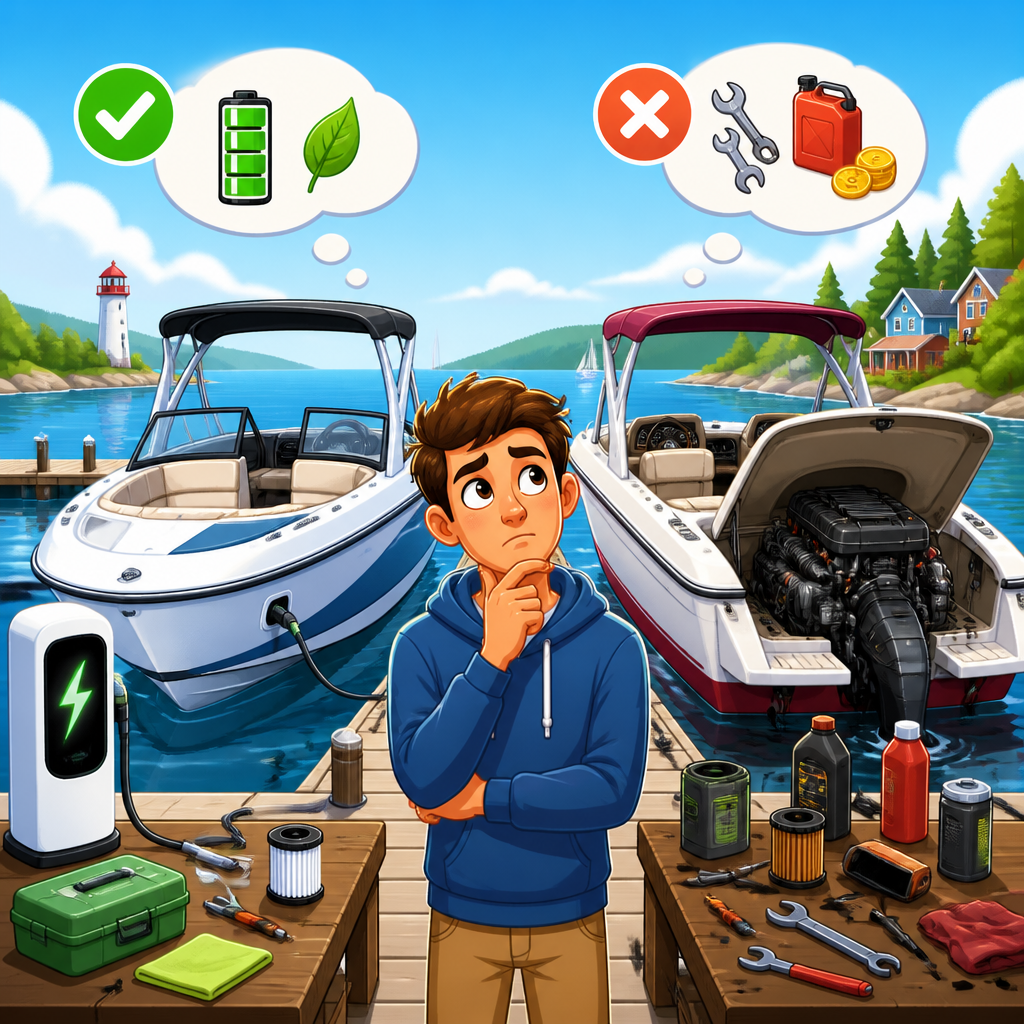
Operating cost is one of electric boating’s strongest advantages. Electricity is usually cheaper than marine gasoline or diesel on an energy-equivalent basis, and electric drivetrains have fewer routine service items. There is no oil change, no fuel filter replacement, and less vibration-related wear. That said, batteries are expensive assets, and long-term replacement economics matter. The best brands provide transparent warranty terms, thermal protections, and service diagnostics that help preserve battery health. Total cost of ownership often looks favorable over time, especially for owners who use their boats regularly, but low annual-hour users may take longer to recover the premium purchase price.
What buyers should check before choosing an electric boat
The smartest electric boat purchase starts with a usage audit. Measure your normal route length, average passenger count, docking setup, towing needs, and local water conditions. Then verify support. A beautiful boat without dependable service backing is a risk, especially in a young market. Ask who handles software updates, battery diagnostics, motor repairs, and winterization. Check ingress protection ratings, warranty coverage, and whether the builder follows recognized marine electrical standards through suppliers and installation practices. Reputable components from companies with proven marine or automotive-grade experience should carry more weight than marketing claims.
Sea trial behavior matters too. During trials, pay attention not just to acceleration but to visibility, regenerative features if offered, helm interface clarity, low-speed maneuvering, and energy consumption at the speeds you actually plan to use. Many electric boats feel amazing for five minutes. The better ones remain intuitive after an hour of mixed operation. Also evaluate resale logic. Brands with production momentum, clear parts support, and strong design identity are more likely to retain value. In 2026, the best electric boats are those that fit a defined mission, provide transparent performance data, and come from builders treating electrification as a complete system, not a publicity exercise.
Electric boats in 2026 finally offer credible options across multiple categories, from efficient hydrofoiling cruisers to luxury day boats and performance-focused runabouts. The best models share the same fundamentals: efficient hulls, honest range data, marine-grade battery systems, thoughtful software, and dependable service networks. Candela leads in efficiency innovation, X Shore in polished premium usability, Arc in performance excitement, and Frauscher x Porsche in luxury positioning. Each excels because it matches electric propulsion to a clear boating mission rather than forcing a generic template onto a new technology.
For most buyers, the right choice comes down to how and where the boat will be used. If you have predictable routes, reliable charging, and a desire for quiet low-maintenance operation, an electric boat can be an outstanding upgrade. If you regularly run long offshore distances at high speed with limited shore power access, the tradeoffs remain real. The market is improving quickly, but disciplined buying still matters. Compare real-world range, charging compatibility, warranty support, and local service before you commit. Start with a sea trial, ask hard technical questions, and choose the electric boat that fits your actual water time, not just the most impressive headline spec.
Frequently Asked Questions
1. What should buyers look for when comparing the best electric boats on the market in 2026?
When comparing electric boats in 2026, buyers should start with use case rather than brand hype. The right boat for a marina commuter, lake cruiser, yacht tender, fishing skiff, or performance runabout can be very different even if all of them are battery-powered. Range, top speed, cruising efficiency, charging options, passenger capacity, and hull design are the core factors that matter most. A fast electric boat may deliver thrilling acceleration but consume energy much more quickly at higher speeds, while a slower displacement-style boat can often stretch battery capacity much farther. That is why real-world cruising range is more important than headline figures alone.
Battery size and chemistry also deserve close attention. In 2026, many top electric boats use advanced lithium battery systems with integrated thermal management and sophisticated battery monitoring. Buyers should ask how much usable capacity the pack provides, how long it lasts under normal operation, and what type of warranty protects it. Equally important is motor configuration. Some boats use a single inboard electric drive, others use outboard systems, and premium models may use twin motors for better handling and stronger acceleration. The best setup depends on whether the priority is simplicity, shallow-water access, performance, or easy servicing.
Charging flexibility is another major differentiator. Some electric boats are designed primarily for overnight dock charging, while others support faster charging that makes them more practical for commercial use or multiple outings in one day. It is also wise to evaluate the software ecosystem. The strongest brands now offer smart displays, route planning, battery diagnostics, mobile app integration, and over-the-air updates. Finally, buyers should look at build quality, dealer support, local service availability, and the manufacturer’s long-term stability. In a rapidly evolving category, the best electric boat is not just the one with the most impressive specs, but the one that fits how and where you actually boat.
2. How far can electric boats realistically travel on a single charge in 2026?
Realistic range in 2026 varies widely because electric boats are highly sensitive to speed, load, weather, and water conditions. Unlike cars, boats must continuously push through water resistance, and that resistance rises sharply as speed increases. As a result, an electric boat that can cruise for several hours at moderate speed may see its range drop dramatically if the driver runs at full throttle. For that reason, the most trustworthy range estimates are usually given at specific cruising speeds rather than as one universal number.
In practical terms, small electric tenders and harbor boats may comfortably handle short trips between a yacht, marina, waterfront home, or nearby anchorage. Electric day boats and family cruisers in the mid-market often provide enough range for a half-day or full-day outing when operated sensibly. Premium models with larger battery packs can support longer coastal runs, especially at efficient cruising speeds. High-performance electric runabouts can be extremely quick and exciting, but their range tends to be more limited when used aggressively. Fishing skiffs and utility boats may offer very usable low-speed endurance, which makes them attractive for inland waters, quiet coves, and controlled operating environments.
The most important takeaway is that buyers should match range expectations to trip profile. If most outings involve two to four hours on a lake, short island hops, or regular dock-to-destination commuting, many 2026 electric boats are now fully practical. If the plan involves long offshore days, unpredictable detours, or remote refueling-style flexibility, conventional or hybrid options may still make more sense. Smart captains also leave a battery reserve rather than planning to return at near zero charge. In 2026, electric range is no longer a novelty issue, but it still requires a more deliberate operating mindset than simply topping off a gas tank anywhere.
3. Are electric boats actually cheaper to own and maintain than gas or diesel boats?
In many cases, yes, electric boats can be cheaper to own and maintain over time, but the answer depends on purchase price, annual usage, electricity costs, storage setup, and battery longevity. Up front, electric boats often cost more than comparable combustion models because battery systems, power electronics, and marine-grade integration remain expensive. However, they can offset part of that premium through lower operating costs. Electricity is generally less expensive than marine gasoline or diesel on an energy basis, especially for owners who charge at home docks, private slips, or marinas with favorable rates.
Maintenance is where electric propulsion often becomes especially attractive. Electric motors have fewer moving parts than internal combustion engines, which means there is no oil changing, fewer fluid-related service items, and less routine mechanical complexity. Owners also avoid many of the common pain points associated with fuel systems, exhaust components, and engine winterization. Quiet operation and instant startup add practical convenience that many boaters quickly come to appreciate. That said, electric boats are not maintenance-free. Owners still need to maintain hulls, steering components, trailers, onboard electronics, cooling systems where applicable, and battery health according to manufacturer guidance.
Battery replacement is the long-term cost variable buyers should evaluate carefully. A quality battery pack should last for years, but eventual degradation is inevitable, and replacement can be expensive. This is why warranty terms, expected cycle life, and manufacturer reputation matter so much. Some premium brands now provide stronger battery assurances and better software tools for monitoring health over time. For owners who boat frequently in short to moderate sessions, the total cost of ownership can be very compelling. For occasional users who are paying a large premium for technology they rarely use, the savings may take much longer to appear. In short, electric boats often win on day-to-day efficiency and reduced routine maintenance, but the financial case is strongest when the boat’s operating pattern aligns well with the technology.
4. How long does it take to charge an electric boat, and what charging options are available in 2026?
Charging time depends on battery size, state of charge, onboard charger capacity, and the power source available at the dock or marina. In 2026, many smaller electric boats can be recharged overnight on standard shore power, which is perfectly acceptable for owners who use the boat once per day or for predictable local trips. Larger electric day boats and premium runabouts may require higher-capacity charging systems, and many support faster charging methods that significantly reduce downtime. For some owners, overnight charging remains the simplest and most economical solution. For others, especially commercial operators or boaters who want multiple sessions in a day, faster charging capability is becoming increasingly valuable.
Charging infrastructure is improving, but it is still not as universal as fuel docks. Buyers should confirm what power service is available where the boat will actually live, not just what is possible in ideal conditions. A waterfront homeowner may have an easy path to installing dedicated charging equipment, while a marina customer may depend on existing dock power policies and electrical capacity. Some manufacturers provide bundled charging solutions or work with installers to make setup more straightforward. Portable charging options may exist for certain smaller craft, but larger boats benefit most from a permanent, properly installed marine charging arrangement.
Modern charging systems also include smarter features than earlier electric boats offered. Battery management software can optimize charging speed, protect battery health, and allow owners to monitor status remotely through an app. Some systems can schedule charging around off-peak electricity rates, which can reduce costs over time. The key point is that charging in 2026 is no longer a fringe inconvenience for every buyer, but it still requires planning. If your boating habits fit a repeatable routine and your dock access is dependable, charging can be simple. If you need spontaneous long-distance operation with minimal downtime, charging logistics remain one of the biggest practical limits of the category.
5. Which types of boaters are the best fit for electric boats in 2026?
Electric boats in 2026 are an excellent fit for boaters whose real-world use lines up with the strengths of battery propulsion. Commuters traveling fixed waterfront routes, owners of luxury tenders, lake-house families taking short leisure cruises, eco-conscious resort operators, and anglers using quiet skiffs on inland waters are all strong candidates. These users benefit from silent running, immediate torque, low vibration, and reduced routine maintenance. Electric propulsion is especially appealing in places where noise matters, where local environmental standards are tightening, or where short repeatable trips make charging easy to manage.
They are also increasingly attractive to premium recreational buyers who care about design, innovation, and onboard experience. Many of the best electric boats on the market in 2026 deliver a smoother, more refined feel than similarly sized gas-powered models. The absence of engine rumble changes the mood on the water, making conversation easier and cruising more relaxing. For some owners, that quality-of-life improvement is just as important as efficiency or sustainability. Businesses such as marinas, waterfront hotels, and tour operators may also find electric fleets useful because of lower local emissions, easier guest operation, and a more modern brand image.
On the other hand, electric boats are not yet ideal for every boater. Offshore anglers, long-range cruisers, and owners who routinely operate far from reliable charging access may still be better served by gasoline, diesel, or hybrid solutions. Buyers who want maximum speed for long distances also need to understand the tradeoff between performance and range. The best fit is someone who values quiet operation, predictable charging, and practical daily usability more than unlimited roaming freedom. In 2026, that describes a much larger share of the boating public than it did just a few years ago, which is exactly why electric boats have become a serious market category rather than a niche experiment.