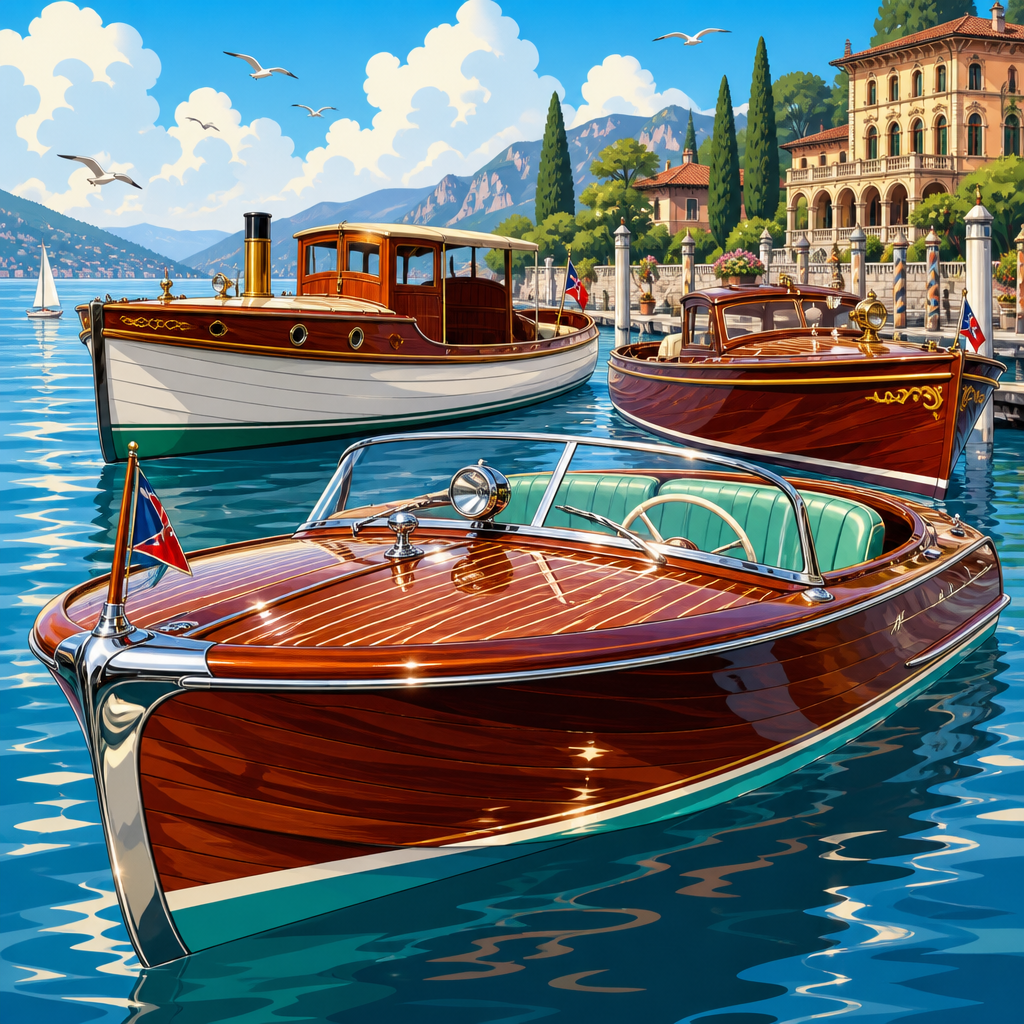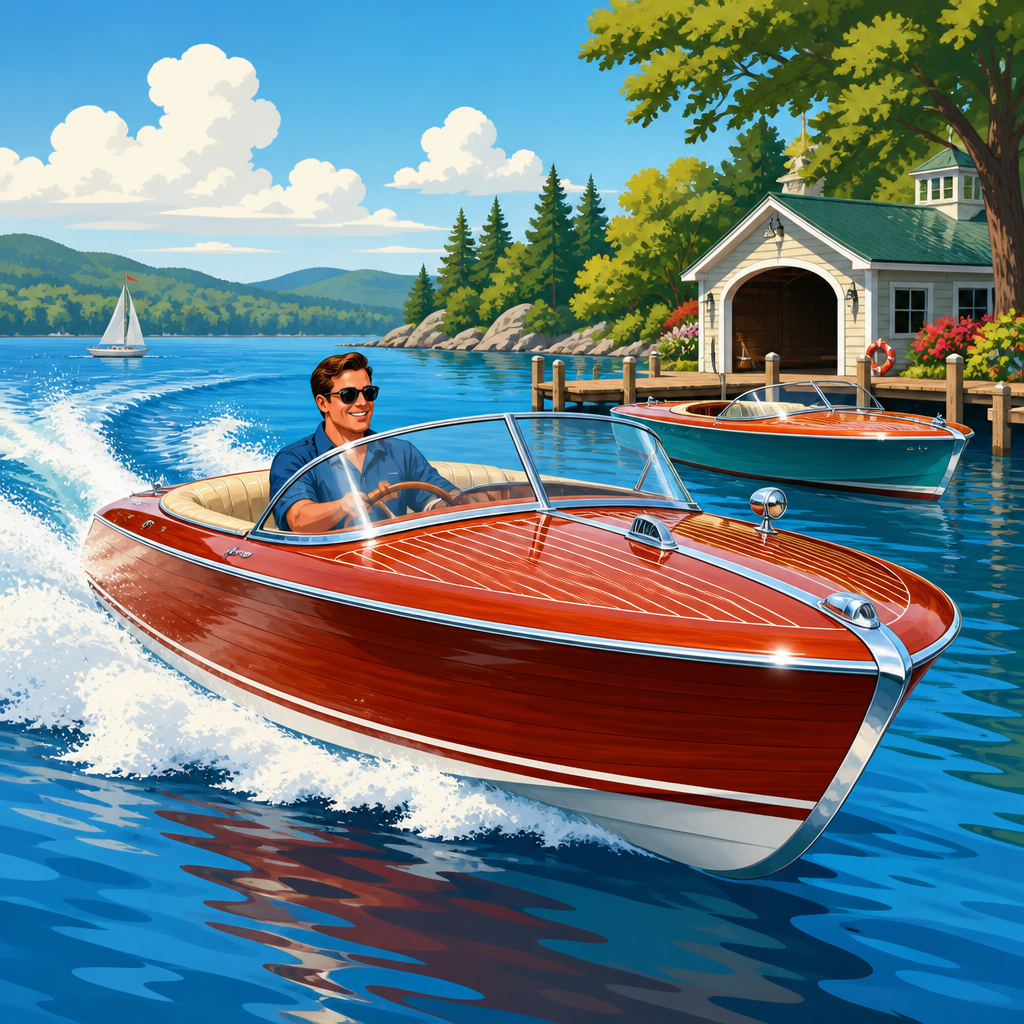
Classic speedboats still command attention because they combine mechanical honesty, elegant proportions, and a driving experience that many modern boats cannot replicate. In the broad world of historic and classic boats, these runabouts and racers form one of the most recognizable categories, linking early marine engineering with today’s collector culture. A classic speedboat generally refers to a high-performance pleasure craft or racing-inspired boat built in an earlier design era, often from the 1920s through the 1970s, with hallmark features such as varnished mahogany, tumblehome sterns, hard chines, chrome deck hardware, and inboard gasoline engines. Some enthusiasts apply the label to fiberglass models from the 1960s and 1970s as well, especially when those boats preserve iconic styling and period construction methods.
Within the larger historic and classic boats landscape, classic speedboats sit beside antique sailboats, commuter yachts, wooden skiffs, lobster boats, and early production fiberglass cruisers. They matter because they represent a turning point in recreational boating: the moment when speed, leisure, craftsmanship, and social status converged. In my experience around restorers, brokers, and owners, no other classic boat type creates the same instant reaction at a dock. People stop for the shine of the varnish, the exhaust note, and the unmistakable profile. Yet popularity is not based on looks alone. These boats remain relevant because they offer tangible value as collectibles, educational artifacts, lifestyle purchases, and usable machines that still perform well on protected water.
This hub article explains why vintage speedboat designs endure, which eras and builders define the category, what ownership really involves, and how classic speedboats connect to the wider study of historic and classic boats. If you are researching boat types, evaluating a restoration candidate, or deciding whether a vintage runabout belongs in your collection, this guide gives you the context needed to judge authenticity, usability, maintenance demands, and market appeal with confidence.
The design language that made classic speedboats timeless
Classic speedboats are popular first because their design language is coherent and instantly readable. The best-known examples, including Chris-Craft Barrel Backs, Hacker-Craft runabouts, Gar Wood utilities, Riva Aquaramas, and Donzi 16s, were shaped around clear visual priorities: long foredecks, low windshields, balanced beam-to-length ratios, and a stern treatment that looked fast even at rest. Unlike many modern sport boats that chase interior volume, vintage designs accepted tighter cockpits in exchange for cleaner lines. That tradeoff produced boats that photographers, collectors, and casual spectators still find beautiful.
Materials play a major role. In wooden classics, mahogany planking over frames creates warmth and depth that molded fiberglass cannot fully imitate. The surface changes through the day as light catches grain, stain, and varnish. Chrome ventilators, cleats, and cutwaters add contrast, while upholstery tends to use simple period-correct color schemes rather than busy patterns. Italian classics such as Riva took this visual discipline even further, pairing mirror-finished decks with precise hardware placement and luxurious interiors. Even early fiberglass speedboats borrowed heavily from wooden predecessors, preserving wraparound windshields, colored hull bands, and rakish transoms to carry forward that emotional appeal.
Function also shaped style. Hard chines improved planing efficiency. Relatively narrow hulls reduced drag. Cockpit layouts kept weight near the center of gravity. Engine boxes in inboard boats were not merely packaging compromises; they became part of the social arrangement, creating intimate seating clusters. These features remind buyers that classic speedboats were engineered objects, not decorative props. Their appearance follows purpose, and that is a major reason vintage designs age well.
The key eras, builders, and boat types in the classic speedboat category
Anyone studying historic and classic boats should understand the main periods that define classic speedboats. The prewar era established the American mahogany runabout as a status symbol and weekend performance craft. Companies such as Chris-Craft, Gar Wood, Hacker-Craft, Century, and Dodge built boats for lake resorts, private estates, and emerging yacht clubs. Hull construction relied on planked wood, mechanical fasteners, and robust inboard engines from makers such as Hercules, Gray Marine, and Chrysler Marine. Designs ranged from compact utilities to elegant dual-cockpit runabouts and race-influenced triples.
The postwar period expanded ownership. Manufacturing scaled up, marine engines improved, and families gained more disposable income. Chris-Craft and Century became household names in many boating regions. By the 1950s and early 1960s, speedboats reflected automotive influence through tail-fin hints, brighter upholstery, and more powerful V8 installations. At the same time, European builders, especially Riva in Italy, elevated the category into floating luxury goods. The Aquarama became an international benchmark because it combined high speed, twin engines, and couture-level finish quality.
The 1960s and 1970s brought fiberglass, and this broadened the definition of a classic speedboat. While some traditionalists prioritize wood, early fiberglass performance boats from Donzi, Formula, Glastron, Bertram, and others are now legitimately historic. They mark the transition from hand-crafted timber runabouts to mass-produced planing hulls with modern maintenance advantages. A Donzi 16 or early Formula Jr., for example, may be as culturally important to performance boating as a wooden Chris-Craft is to classic lake cruising. For a hub page on historic and classic boats, that continuum matters: classic does not mean one material, one country, or one ownership style.
Why vintage speedboats still outperform expectations on the water
Many people assume classic speedboats are admired mainly at docks, but well-sorted examples remain satisfying underway. A properly restored 1950s inboard runabout planes smoothly, tracks predictably on sheltered water, and delivers a tactile feel modern sterndrive bowriders often soften. You hear the engine, feel the hull transition, and notice steering input immediately. That directness is part of the appeal. In sea trials I have seen buyers change their minds once they feel how alive a vintage hull is at 25 to 40 knots.
Performance varies by era and layout. Lightweight wooden runabouts with flat or moderately V-shaped aft sections can accelerate briskly and cruise comfortably on lakes and rivers. Deeper-V fiberglass classics from the 1960s handle chop better and represent a different branch of speedboat history. Neither is universally superior; each was optimized for a purpose. Wooden lake runabouts excel in protected conditions and social day use. Early fiberglass performance boats often deliver broader usability and easier routine ownership. The lasting popularity of vintage speedboats comes partly from this diversity. Buyers can choose romance, sport, practicality, or a mix of all three.
| Classic speedboat type | Typical era | Construction | Best use | Main ownership consideration |
|---|---|---|---|---|
| Mahogany runabout | 1920s–1950s | Planked wood over frames | Lake cruising, shows, collecting | Varnish, fastener, and plank maintenance |
| Luxury Italian classic | 1950s–1970s | Premium wood, twin inboards | Prestige day boating | High restoration and parts costs |
| Early fiberglass sport boat | 1960s–1970s | Molded fiberglass | General performance boating | Stringer, transom, and gelcoat condition |
| Race-influenced inboard utility | 1930s–1960s | Wood with powerful inboards | Club events, spirited runs | Engine originality and hull integrity |
Importantly, speed in a classic boat is not just a number. The sensation comes from low seating, open cockpits, long sightlines over the foredeck, and the mechanical soundtrack. That emotional performance is why owners continue to use these boats rather than treat them solely as museum pieces.
The collector market, restoration culture, and enduring demand
Classic speedboats remain popular because they sit at the intersection of collector value and active use. Unlike many antiques, a restored runabout can still do exactly what it was built to do on a summer afternoon. That makes the category more approachable than static collecting fields. Buyers range from first-time lake-house owners seeking a single statement piece to serious collectors who maintain multiple boats from different eras. Auction houses, specialist brokers, marque clubs, and concours events sustain this ecosystem by setting condition standards and documenting provenance.
Restoration culture is central to demand. Wooden speedboats require knowledge of species selection, frame repair, refastening, fairing, stain matching, bedding compounds, and multi-coat varnish systems. Good restorers also understand originality. Replacing a bottom, for example, may improve utility, but the method chosen matters. Some owners prefer traditional plank-on-frame restoration, while others opt for modern no-soak bottoms using marine plywood and epoxy systems to reduce leakage and ease launching. Neither approach is automatically right. The best choice depends on whether the goal is judged authenticity, reliable family use, or long-term preservation.
Fiberglass classics bring their own restoration realities. Osmotic blistering, transom core rot, stringer deterioration, obsolete wiring, and fuel tank corrosion are common concerns. Yet parts access can be better, and upkeep may be less intensive than for wood. This is one reason early fiberglass speedboats have gained traction among younger enthusiasts. They offer historic character without requiring the same varnish schedule or seasonal swelling behavior associated with planked hulls.
Market demand usually follows recognizable names, documented history, and quality of restoration. A Chris-Craft with original hardware, matching engine data, and professional records inspires more confidence than an anonymous rebuild with uncertain components. The same principle applies across historic and classic boats generally: provenance narrows risk and supports value.
Ownership realities: storage, maintenance, safety, and usability
People buy classic speedboats for emotion, but they keep them only if ownership works in practice. Storage is the first deciding factor. Wooden boats benefit from covered storage, stable humidity, and disciplined off-season care. Sun damages varnish quickly, and poor ventilation encourages mildew and structural issues. Lift storage helps, but hull support must be correct to avoid stressing frames or planking. Fiberglass classics are less sensitive, though covered storage still preserves gelcoat, upholstery, and hardware.
Maintenance is predictable if approached systematically. Engines need regular oil changes, ignition checks, cooling-system inspection, and fuel management, especially where ethanol-blended gasoline can damage older hoses, tanks, and carburetor components. Electrical systems often need thoughtful updating for safety, but that work should be discreet. I usually advise owners to separate cosmetic originality from invisible reliability upgrades. Bilge pumps, marine-grade wiring, battery switches, fusing, and fire suppression improve safety without undermining period appearance.
Usability depends on honest matching between boat and waterway. A 19-foot mahogany runabout is ideal for inland lakes, quiet rivers, and short social outings. It is not the right choice for rough coastal passages, unattended moorings, or owners who cannot commit to regular cosmetic care. Early deep-V fiberglass classics stretch the envelope but still demand realistic expectations around range, noise, weather protection, and passenger comfort. Historic boats reward informed ownership. They punish casual neglect.
How classic speedboats connect to the broader historic and classic boats hub
As a sub-pillar within types of boats, classic speedboats are an entry point into the entire historic and classic boats subject. They illustrate the major themes that define older craft across categories: evolving materials, changing leisure patterns, regional design traditions, restoration ethics, and the tension between originality and usability. If you understand why a 1950s runabout remains desirable, you are already asking the same questions used to evaluate antique sailboats, commuter yachts, classic fishing boats, and heritage motor yachts.
This hub should lead readers outward to deeper topics such as wooden boat restoration, classic fiberglass identification, inboard engine history, boat valuation, marine survey standards, and preservation events. It should also connect buyers with practical decision guides on transport, insurance, documentation, and marina suitability. Historic and classic boats are not a narrow niche; they are a framework for understanding how boat design evolved through craftsmanship, technology, and culture.
Classic speedboats stay popular because they deliver beauty, history, and genuine on-water pleasure in one package. Their shapes are timeless, their engineering stories are meaningful, and their ownership experience feels personal in a way modern production boats rarely match. For some owners, the draw is concours-level restoration. For others, it is a reliable early fiberglass hot rod that turns every fuel stop into a conversation. Both belong in the same historic narrative.
If you are building knowledge in the types of boats category, start here and use classic speedboats as your gateway into historic and classic boats. Study the major builders, learn the difference between cosmetic charm and structural soundness, and match any purchase to your water, budget, and maintenance tolerance. Done well, owning a vintage speedboat is not nostalgia for its own sake. It is an informed choice to preserve and enjoy one of boating’s most compelling design traditions.
Frequently Asked Questions
What makes a speedboat “classic” rather than simply old?
A classic speedboat is usually defined by more than age alone. In most cases, the term refers to a boat from an earlier design period that reflects the styling, engineering, and construction methods of its time in a way that still feels distinctive today. That often includes long, elegant proportions, lower profiles, exposed or character-rich hardware, and hull shapes developed before computer-aided design and mass-standardized production became the norm. Many classic speedboats were built as wooden runabouts, mahogany racers, or early fiberglass performance boats, and they often carry visual cues tied to hand craftsmanship and a more direct mechanical layout.
What separates a classic from an outdated boat is significance and identity. A truly classic speedboat tends to represent a recognizable era in marine design, whether that means prewar racing influence, postwar luxury runabout styling, or the bold performance culture that followed. These boats often have a strong connection to notable builders, historic races, technological milestones, or collector communities. In other words, a classic speedboat is appreciated because it embodies a design language and boating experience that remains desirable, not because it has merely survived for decades.
Why are vintage speedboat designs still so popular with enthusiasts and collectors?
Vintage speedboats remain popular because they offer a combination of beauty, heritage, and sensory appeal that modern craft often struggle to match. Their lines are usually cleaner and more graceful, with proportions that emphasize motion even when the boat is sitting still. Classic dashboards, chrome fittings, wood decks, analog gauges, and period-correct upholstery create a level of visual character that feels intentional and memorable. For many enthusiasts, these boats are rolling—or more accurately floating—examples of industrial art.
There is also a strong emotional component to their appeal. Classic speedboats represent a time when performance boating felt more mechanical, more personal, and more closely connected to the driver. The sound of the engine, the feel of the hull, and the straightforward nature of the controls create an experience that many owners describe as more authentic than what they get from newer boats packed with digital systems. Beyond that, collector culture plays a major role. Ownership can be tied to restoration, preservation, show participation, historical research, and the pride of maintaining something with genuine lineage. That mix of aesthetics, hands-on involvement, and historical value is exactly why vintage speedboats continue to attract attention across generations.
How do classic speedboats differ from modern performance boats on the water?
The biggest difference is the nature of the driving experience. Classic speedboats tend to feel more direct and less filtered. Their steering, throttle response, hull behavior, and engine character often communicate more clearly to the driver, especially at moderate to high speeds. In many cases, the boat demands a little more awareness and involvement, which is part of the appeal. Rather than relying on advanced electronics, automated systems, or heavily engineered comfort features, classic boats often let the operator feel the water and the machine more intimately.
That said, modern performance boats usually outperform classics in pure efficiency, convenience, and sometimes absolute speed. Newer boats benefit from advanced hull design, lighter materials, more reliable powertrains, better safety systems, and easier maintenance. They are often more forgiving, more fuel-efficient, and better suited to owners who want turnkey performance. Classic speedboats, by contrast, trade some of that practicality for personality. They may ride differently, require more operator skill, and ask more from the owner in terms of upkeep, but they reward that effort with a style and driving feel that many people consider impossible to replicate in a contemporary package.
Are classic speedboats mainly collectibles, or can they still be used regularly?
Many classic speedboats are absolutely still used, and for a lot of owners, regular operation is a major part of the enjoyment. A well-restored and properly maintained classic can be driven on lakes, sheltered coastal waters, and at organized boating events with real confidence. In fact, some enthusiasts believe a classic boat should not just be displayed but experienced, because its handling, sound, and motion are central to its identity. Boats that remain in active use often build stronger owner communities as well, since they appear at shows, rendezvous, parades, and heritage racing gatherings rather than sitting unseen in storage.
However, how often a classic speedboat is used depends heavily on its condition, rarity, and originality. A museum-grade example or a historically important race boat may be operated sparingly to preserve its value and structural integrity. Other boats, especially those sympathetically restored with reliable mechanical updates, may see frequent seasonal use. The key is balancing preservation with practicality. Owners need to think about wood care, engine servicing, storage, fuel systems, weather exposure, and parts availability. So while classic speedboats can still be very usable, regular enjoyment works best when paired with realistic maintenance planning and respect for the boat’s age and construction.
What should a buyer consider before purchasing a classic speedboat?
Anyone considering a classic speedboat should start with condition, authenticity, and intended use. It is important to determine whether the boat is an original survivor, a faithful restoration, a modified example, or a cosmetic project hiding structural issues. Hull integrity is critical, especially with wooden boats, where rot, delamination, failed fasteners, and poor previous repairs can turn an attractive purchase into an expensive undertaking. Mechanical condition matters just as much. A period engine may add authenticity and value, but it can also require specialized knowledge, custom parts, and more frequent attention than a modern replacement or rebuilt unit.
Buyers should also research the builder, model history, documentation, and market support. Some classic speedboats have strong enthusiast networks, excellent parts availability, and well-established values, while others are obscure and harder to restore properly. Storage and transportation should be considered early, since keeping a classic boat dry, covered, and properly supported can dramatically affect long-term preservation. Finally, it helps to be honest about ownership goals. If the aim is frequent use with minimal hassle, a restored classic with sensible updates may be the best choice. If the goal is collecting, showing, or historical preservation, originality and provenance may matter more than convenience. The most successful purchases happen when the buyer understands that a classic speedboat is not just a boat, but also a piece of marine history that deserves informed stewardship.