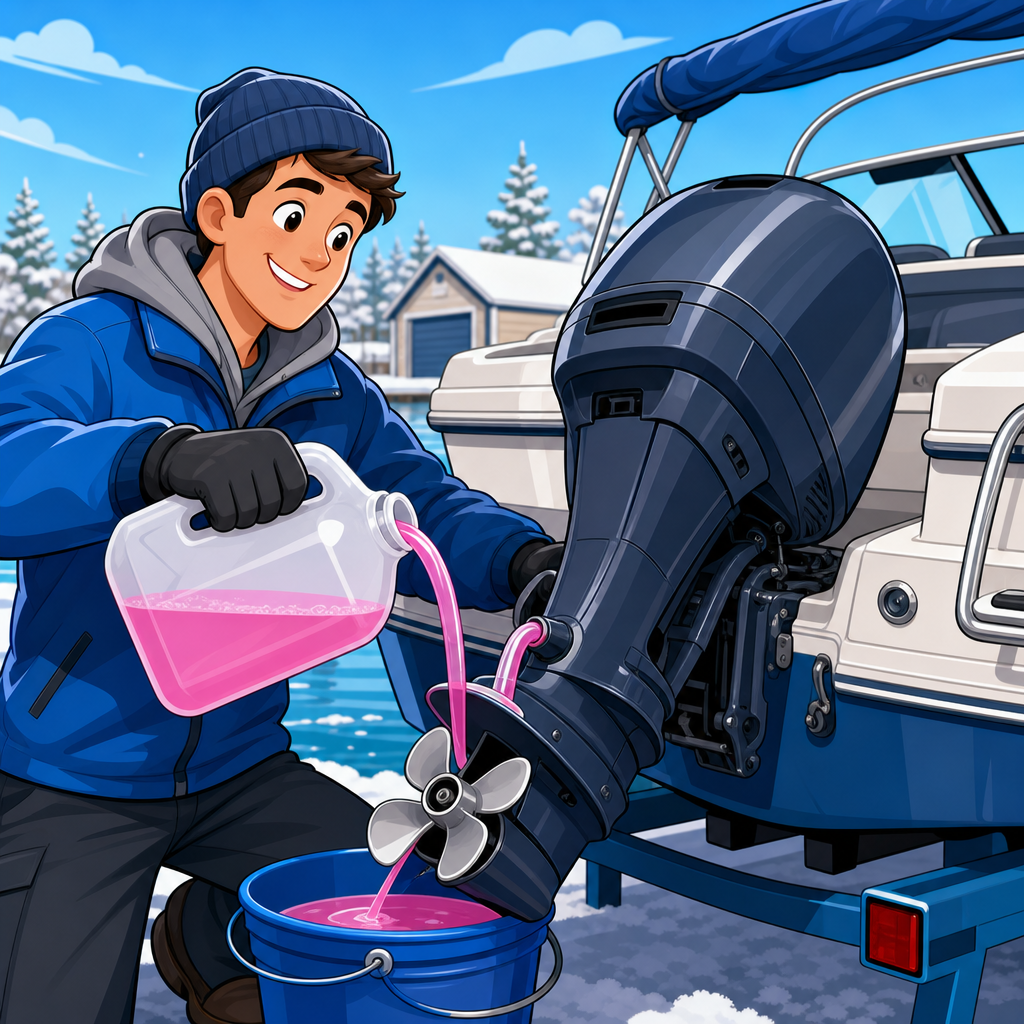
Winterizing a boat engine starts with choosing the right anti-freeze, because the fluid you pump through the cooling system determines whether freezing temperatures leave your engine protected or cracked by spring. In marine maintenance, anti-freeze for winterizing is the protective liquid circulated through raw-water passages, pumps, hoses, coolers, mufflers, and related components before storage. It is different from engine coolant sealed inside a closed cooling loop. That distinction matters. I have seen owners pour automotive coolant into the wrong side of the system, assume they were safe, and then discover split housings, ruined manifolds, or a burst sea strainer after one hard freeze. The best anti-freeze for winterizing your boat engine is usually a marine, propylene glycol-based product rated for burst protection appropriate to your climate and suitable for the systems on board. Getting that choice right is central to winterizing and seasonal prep, because this one step connects to draining, stabilizing fuel, fogging, battery care, sanitation systems, freshwater plumbing, and off-season inspection planning. A proper winterization routine preserves reliability, lowers spring commissioning costs, and extends the life of expensive components such as heat exchangers, exhaust elbows, raw-water pumps, and generator cooling circuits.
Boat owners often ask a simple question: what anti-freeze should I use? The short answer is pink or blue marine anti-freeze made for potable water or engine winterization, not green automotive ethylene glycol, and not windshield washer fluid. The more complete answer depends on engine type, storage location, and how the system is configured. A raw-water-cooled outboard stored vertically may need less anti-freeze than an inboard with long hose runs, waterlift mufflers, strainers, sea cocks, and an auxiliary generator. A sterndrive owner in the Mid-Atlantic faces different risks from a sailboat owner hauled in Minnesota. The hub purpose of this guide is to explain those differences clearly, so every related winterizing task makes sense in context. If you maintain your own boat, you need to understand freeze point versus burst protection, how dilution changes performance, why alcohol content matters in some products, and how much volume to use so the anti-freeze actually reaches every vulnerable component. Once those fundamentals are clear, the rest of winterizing becomes a methodical process instead of a seasonal guessing game.
What marine anti-freeze is and why propylene glycol is usually best
Marine anti-freeze sold for winterizing is typically formulated from propylene glycol, water, corrosion inhibitors, and dye. Propylene glycol is favored because it is less toxic than ethylene glycol, the chemical used in most automotive coolants. On boats, lower toxicity matters because winterizing fluid can end up in bilges, boatyards, or sanitary systems, and it is often used in potable water lines as well. Most reputable marine brands, including Star brite, Camco, and Splash, label their products by burst protection, commonly -50 degrees Fahrenheit or -100 degrees Fahrenheit. Those labels do not mean the fluid remains fully liquid at that temperature. They mean the product resists expansion damage down to the listed burst threshold when used as packaged. Actual freeze slush may appear at a warmer temperature.
That technical distinction is important enough to repeat in plain terms. Freeze protection is the temperature where ice crystals begin forming. Burst protection is the temperature where the slushy mixture still should not expand enough to crack components. For winterizing a boat engine, manufacturers and service yards usually care most about burst protection, because engines are damaged by expansion, not by slush alone. In my experience, many preventable failures come from owners either misunderstanding the label or diluting the product so heavily with residual water that the stated protection no longer applies. If you feed one gallon of -50 marine anti-freeze into a system that still contains one gallon of water, you do not end up with -50 protection. You end up with something much weaker, and in severe climates that can be disastrous.
How to choose the best anti-freeze for your climate and engine type
The best anti-freeze for winterizing your boat engine depends first on where the boat will spend the winter. In moderate climates where brief dips below freezing are normal, -50 marine anti-freeze is often sufficient if the system is properly drained first and the product exits the exhaust at full strength color. In colder inland regions with prolonged hard freezes, many technicians step up to -100 propylene glycol for a larger safety margin and better corrosion inhibitor concentration. That is especially smart for inboards, diesel auxiliaries, generators, air-conditioning pumps, washdown circuits, and any boat with long runs where trapped water is likely. The product cost difference is small compared with the price of a cracked manifold, damaged oil cooler, or failed pump housing.
Engine configuration matters just as much as geography. Raw-water-cooled engines are most vulnerable because lake or seawater sits directly in the block, manifold, and exhaust circuit until drained or displaced. Closed-cooled engines are only partly protected by their permanent coolant, because the raw-water side still includes the sea strainer, heat exchanger, transmission cooler, raw-water pump, and exhaust components. Outboards and many stern drives drain more effectively when trimmed correctly, but they still have vulnerable passages if stored incorrectly or if manufacturer procedures are ignored. Always check the service manual for drain points, thermostat considerations, and whether flushing muffs, a pickup bucket, or a dedicated winterization fitting is recommended. The right anti-freeze cannot compensate for the wrong procedure.
| Boat or system | Typical best choice | Why it works |
|---|---|---|
| Potable water lines and sinks | Propylene glycol -50 | Lower toxicity, suitable for freshwater systems, adequate in moderate winter storage |
| Raw-water-cooled inboards | Propylene glycol -100 in colder regions | Extra margin against dilution and trapped water in blocks, manifolds, and exhaust parts |
| Closed-cooled engines, raw-water side | Propylene glycol -50 or -100 depending on climate | Protects strainers, heat exchangers, coolers, pumps, and exhaust runs outside the closed loop |
| Heads, holding tank lines, macerators | Marine sanitation anti-freeze, usually propylene glycol -50 | Compatible with sanitation hoses and pumps, lower odor and toxicity concerns |
Common mistakes that ruin winterizing protection
The biggest mistake is relying on color alone. Pink anti-freeze is common, but not every pink fluid has the same chemistry or level of protection. Read the label for propylene glycol content, burst rating, intended use, and whether the product contains ethanol. Some alcohol-enhanced products are acceptable for plumbing, but many mechanics avoid high-alcohol blends for engine winterizing because alcohol can dry certain rubber parts and may not provide the same corrosion protection as a stronger propylene glycol formulation. A second mistake is skipping the drain step. If a block, manifold, muffler, or strainer is full of water, pumping anti-freeze in without draining first can leave a weak mixture in the lowest points. The discharge may look pink while hidden pockets remain dangerously diluted.
Another common error is treating every engine the same. On carbureted gasoline inboards, thermostats may stay closed unless the engine reaches operating temperature before anti-freeze is introduced, which can leave untreated water upstream or downstream depending on layout. Some owners idle for too short a period, assuming circulation happened. Others run too long from a small bucket and let the pump ingest air, which interrupts flow and can damage the impeller. I also see people winterize the engine and forget the generator, air-conditioning pump, livewell system, washdown hose, cockpit shower, or transom sink. Winterizing and seasonal prep is a system-wide job. One overlooked component can turn spring launch day into a repair list.
Step-by-step strategy for using anti-freeze correctly
The most reliable process begins with fuel stabilization, engine warm-up, and a full inspection for leaks or weak hoses. Once the engine has reached temperature, shut it down, close the sea cock if equipped, and drain water from all manufacturer-specified low points. On many inboards that includes the block drains, manifold drains, sea strainer, coolers, and raw-water pump housing. Probe drain holes with a small pick or wire if rust scale blocks them. Reinstall plugs or close petcocks, then feed marine anti-freeze from a clean bucket or winterizing jug into the raw-water intake using a short hose, the sea strainer basket housing, or a dedicated fitting. Restart the engine only long enough to pull the fluid through steadily until undiluted anti-freeze exits the exhaust.
How much should you use? There is no universal gallon count, but most small outboards and stern drives require less volume than inboards with generators and heaters. For many single inboard gasoline engines, two to five gallons is a practical working range if the system was drained first. Large diesels, gensets, and boats with long exhaust runs can require more. The target is not an arbitrary quantity but confirmed circulation. I recommend catching some exhaust discharge in a clear container to verify strong color and slippery feel rather than a watery tint. If the first bucket exits pale pink, run more product until the color stabilizes. Label the date, product type, and temperature rating in your maintenance log so spring commissioning and future winterizing are easier to repeat accurately.
How anti-freeze fits into complete winterizing and seasonal prep
Engine anti-freeze is only one piece of the winterizing hub, but it connects to almost every other off-season task. Fuel should be stabilized with a marine gasoline or diesel treatment before the final run so treated fuel reaches injectors, carburetor passages, and pumps. Engine oil and filter changes are best done before storage to remove acids and contaminants. Gear lube on outboards and stern drives should be checked for water intrusion; milky oil signals seal issues that need attention before freezing weather worsens the damage. Batteries should be cleaned, fully charged, and either maintained on a quality smart charger or stored according to manufacturer recommendations. Bilges should be dried, because standing water accelerates corrosion and can freeze around pumps and hoses.
Freshwater and sanitation systems need their own anti-freeze plan. Drain the water heater, bypass it if possible, and pump marine anti-freeze through sinks, showers, transom washdowns, raw-water washdowns, heads, sump boxes, and macerators until each outlet shows full-strength color. Air-conditioning systems, baitwells, livewells, and deck wash pumps are frequently forgotten, yet they are among the easiest freeze casualties. Seasonal prep also includes ventilation, moisture control, and physical protection. Clean the boat thoroughly, remove food and damp textiles, lubricate linkages, inspect sacrificial anodes, and support the cover so water and snow cannot pool. When owners use a checklist that ties engine anti-freeze to every other system, they miss less, spend less in spring, and gain a much clearer maintenance record for resale or warranty discussions.
Best practices, limitations, and what to do in spring
No anti-freeze can rescue a neglected cooling system with blocked drains, failed impellers, or severe rust scale, so inspection is part of protection. Replace worn impellers on schedule, because vanes that crack or set over winter can compromise spring cooling. Check hose clamps, seacock operation, and the condition of exhaust elbows and manifolds, especially on saltwater boats where corrosion is accelerated. If you are unsure whether your engine is fully raw-water cooled or closed cooled, confirm before winterizing. The wrong assumption leads to the wrong procedure. It is also wise to keep product containers or photos of labels, since yards, insurers, or future buyers may ask what was used and when. Documentation signals disciplined care, and disciplined care is what prevents expensive surprises.
When spring arrives, recommission methodically. Open sea cocks, reinstall drain plugs if removed, inspect belts and hoses, and confirm battery voltage before cranking. On potable water systems, flush winterizing anti-freeze thoroughly until taste and color are gone. On engines, expect temporary colored exhaust discharge as the remaining fluid clears. Watch operating temperature, oil pressure, and water flow immediately after startup. If any cooling alarm, steam, or abnormal heat appears, shut down and investigate rather than hoping it resolves. The core takeaway is simple: the best anti-freeze for winterizing your boat engine is a marine propylene glycol product chosen for your climate, used in the right quantity, and applied as part of a complete seasonal prep routine. Build a checklist, follow the manual, and make winterizing a repeatable habit before the first hard freeze.
Frequently Asked Questions
What kind of anti-freeze should you use to winterize a boat engine?
For winterizing a boat engine, you want a marine non-toxic anti-freeze designed for raw-water systems, not standard automotive coolant. In most cases, the right product is propylene glycol-based marine anti-freeze labeled specifically for winterizing boats, RVs, and potable water systems. This is the fluid pumped through the engine’s raw-water side to protect passages, hoses, pumps, heat exchangers, coolers, and exhaust components from freeze damage during storage. It is not the same as the coolant used inside a closed-cooling engine block, where permanent engine coolant circulates year-round.
The reason this matters is simple: automotive anti-freeze is formulated for sealed engine cooling systems and contains additives that are not intended to be discharged through marine exhaust or used as a winterizing fluid in raw-water circuits. Marine winterizing anti-freeze is made for temporary circulation and layup protection. It is also generally safer to handle in a boating environment. When shopping, look for a product that clearly states its burst protection and intended use for marine engines. A quality marine anti-freeze should provide corrosion inhibition as well as freeze protection, because winter storage is not just about preventing ice formation; it is also about limiting internal rust, scale, and deterioration while the boat sits idle.
What is the difference between freeze protection and burst protection on marine anti-freeze labels?
This is one of the most misunderstood parts of winterizing a boat engine. On many marine anti-freeze containers, the temperature on the label refers to burst protection rather than freeze protection. Burst protection means the product may begin to form slush or ice crystals at a warmer temperature, but it is still designed to expand in a way that helps prevent cracking of engine and plumbing components down to the rated temperature. Freeze protection, by contrast, refers to the temperature at which the fluid remains fully liquid without ice crystal formation.
In practical terms, a jug marked with a lower burst-protection rating may still start to crystallize before reaching that number, yet continue to protect the system from splitting. That is why it is important to read the label carefully and understand what the manufacturer is actually promising. For boat winterizing, the key is choosing a product with a protection level appropriate for the coldest conditions your boat may experience in storage, while also making sure it will not become dangerously diluted by any water left in the system. If there is residual water in the raw-water passages, the final protection level inside the engine can be significantly weaker than what the jug says. That is one reason many experienced boat owners favor stronger marine anti-freeze formulas in colder climates.
Is -50°F marine anti-freeze good enough, or should you use -100°F?
The answer depends on climate, storage conditions, and how completely the engine has been drained before the anti-freeze is introduced. -50°F marine anti-freeze is commonly used and can be adequate for many boats when the raw-water system has been properly drained and the engine is stored in a moderate winter climate. However, because some water almost always remains in low spots, pumps, coolers, mufflers, and hoses, the anti-freeze can become diluted as it moves through the system. That dilution reduces the actual level of protection inside the engine and exhaust components.
For that reason, many boat owners and technicians choose -100°F marine anti-freeze for added margin, especially in regions with severe winters or when winterizing systems that are difficult to drain completely. The stronger formula generally provides better burst resistance after mixing with residual water and often offers more robust corrosion protection as well. It is not necessarily about chasing the lowest possible number on the label; it is about accounting for the reality that your winterizing fluid will rarely remain at full strength once it is inside the engine. If your boat is exposed to prolonged hard freezes, stored outdoors, or has a complex raw-water system, stepping up to a stronger marine anti-freeze is often a smart and inexpensive layer of protection.
Can you use automotive anti-freeze instead of marine anti-freeze when winterizing a raw-water-cooled boat engine?
In general, no. Automotive anti-freeze is not the correct product for winterizing the raw-water side of a boat engine. Most automotive coolants are based on ethylene glycol and are intended for sealed cooling systems, where the fluid stays contained inside the engine and heat exchanger. In a winterizing procedure for a raw-water circuit, the anti-freeze is pumped through components that normally carry lake, river, or seawater and may exit through the exhaust system. That process calls for a marine non-toxic anti-freeze formulated for winter layup, not a permanent automotive coolant.
Beyond the environmental and safety concerns, automotive coolant is simply not designed for this specific purpose. Marine winterizing anti-freeze is intended to protect raw-water passages during storage and is typically labeled for seasonal use in engines, plumbing systems, and related marine components. If your engine has closed cooling, that does not change the basic rule: the coolant inside the closed loop may indeed be an engine coolant approved by the manufacturer, but the raw-water side still needs the proper marine winterizing anti-freeze if you are circulating a protective fluid through it before storage. Keeping those two systems separate in your mind is essential. One is the engine’s internal coolant system; the other is the winterized raw-water system. They are not interchangeable.
How do you know the anti-freeze has fully protected the entire boat engine cooling system?
You know the system is properly winterized only when the marine anti-freeze has displaced enough water and reached every component in the raw-water path. That typically means it must travel from the intake side through the raw-water pump, engine passages, heat exchanger or coolers if equipped, hoses, thermostat-related routing where applicable, and out through the exhaust. On many boats, the process is confirmed visually by watching for a strong, consistent flow of the colored anti-freeze exiting the exhaust outlet. A brief hint of color is not always enough, because it may indicate partial mixing rather than full displacement.
The best approach is to prepare the system carefully before pumping anti-freeze. Drain low points where possible, remove plugs called for by the engine manufacturer, and make sure the engine can actually draw the fluid continuously without sucking air. Use enough volume to account for the entire raw-water circuit, not just the engine block. Components such as sea strainers, oil coolers, power steering coolers, waterlift mufflers, exhaust elbows, and long hose runs can hold a surprising amount of water. Continue pumping until the discharge is clearly the same anti-freeze you are feeding in and remains consistent. On some setups, testing the discharged fluid with a refractometer or hydrometer can provide added confidence that the final mixture still has adequate protection. In short, complete protection is not about pouring in a certain number of gallons and hoping for the best; it is about making sure the right marine anti-freeze has actually reached and protected every vulnerable part of the raw-water system.