A damaged or bent boat propeller can turn a smooth, efficient ride into vibration, poor acceleration, higher fuel burn, and even serious drivetrain damage. In practical terms, the propeller is the rotating blade assembly that converts engine torque into thrust, while steering maintenance covers the linked systems that keep the boat tracking where the helm points it, including the prop shaft, hub, rudder or outdrive components, cables, hydraulic steering, trim tabs, and engine alignment. When owners ask how to repair a damaged or bent boat propeller, they usually need more than a quick fix. They need a clear process for diagnosing blade damage, deciding whether repair is safe, checking related steering and driveline parts, and preventing the same failure from happening again.
This matters because propeller problems rarely stay isolated. I have seen a lightly bent blade create enough imbalance to wear cutless bearings, loosen hardware, and make hydraulic steering feel unpredictable at speed. A prop strike can also damage the prop shaft, distort the hub, nick the skeg, or knock engine alignment out of tolerance. On outboards and sterndrives, impacts often travel through the gearcase and steering pivot points. On inboards, they may show up as stuffing box leaks, shaft wobble, or rudder handling issues. Ignoring a damaged propeller is expensive because the prop is the first visible symptom, not always the only failure.
Good propeller and steering maintenance starts with terminology and a systematic inspection. Pitch is the theoretical forward travel of a propeller in one revolution. Diameter is the circle made by the blade tips. Cup is the slight curl at the trailing edge that helps grip water. Rake describes blade angle relative to the hub. Ventilation is surface air reaching the blades; cavitation is vapor bubble formation from local pressure drop, which can erode metal. Understanding those terms helps you identify whether performance loss comes from impact damage, incorrect prop selection, worn steering components, or an engine setup issue. For a maintenance hub page, the goal is not just to explain repair, but to connect the full subtopic so every inspection leads to the next right step.
How to tell whether a boat propeller needs repair or replacement
The fastest way to evaluate a propeller is to look for three categories of damage: edge damage, blade distortion, and hub or bore damage. Minor edge nicks on an aluminum prop may be repairable if the blade shape remains true and there are no cracks radiating toward the root. A bent blade, especially one twisted backward or forward relative to the others, nearly always needs professional straightening and balancing. If the hub is spun, the prop may look normal but slip under load, causing high RPM with poor boat speed. Stainless steel props tolerate smaller impacts cosmetically, but they can transfer more force into shafts and gears, so hidden drivetrain checks are even more important.
Common symptoms are easy to recognize once you know what to compare. Sudden vibration after striking bottom or debris is the classic sign of a bent blade. Lower top speed, slower planing, and a change in wide-open-throttle RPM often indicate altered pitch or cup. Steering pull, wandering, or a new helm vibration can signal that the prop damage affected steering geometry or that impact forces reached other components. If your boat previously ran 5600 RPM and now peaks at 5900 while going slower, the prop may have lost effective pitch from a bent or chipped blade. If RPM drops and acceleration suffers, the blades may be deformed in a way that overloads the engine.
Use a disciplined inspection routine before making the repair-versus-replace decision. Haul the boat or trim the drive safely clear of the water. Remove the propeller according to the engine maker’s procedure. Clean off fishing line, grease, and marine growth. Sight each blade edge-on and face-on, comparing blade spacing and curvature. Measure from a fixed point on the hub to corresponding points on each blade tip if you suspect bending. Check for cracks around the blade root and at the hub. Spin the shaft by hand and watch for runout. If impact was severe enough to mark the prop badly, inspect the skeg, cavitation plate, prop nut, thrust washer, and shaft splines as part of the same job.
| Condition | Typical symptoms | Best action |
|---|---|---|
| Small edge nicks, no cracks | Light vibration, minor efficiency loss | Professional repair and balance |
| Bent blade, shape visibly distorted | Strong vibration, RPM or speed change | Repair if structurally sound; replace if severe |
| Cracked blade or cracked hub area | Unsafe operation, risk of blade failure | Replace immediately |
| Spun rubber hub | Engine revs rise, boat speed does not | Rehub or replace propeller |
| Shaft appears bent after strike | Persistent vibration with spare prop | Stop use and inspect driveline professionally |
How to repair a bent propeller safely
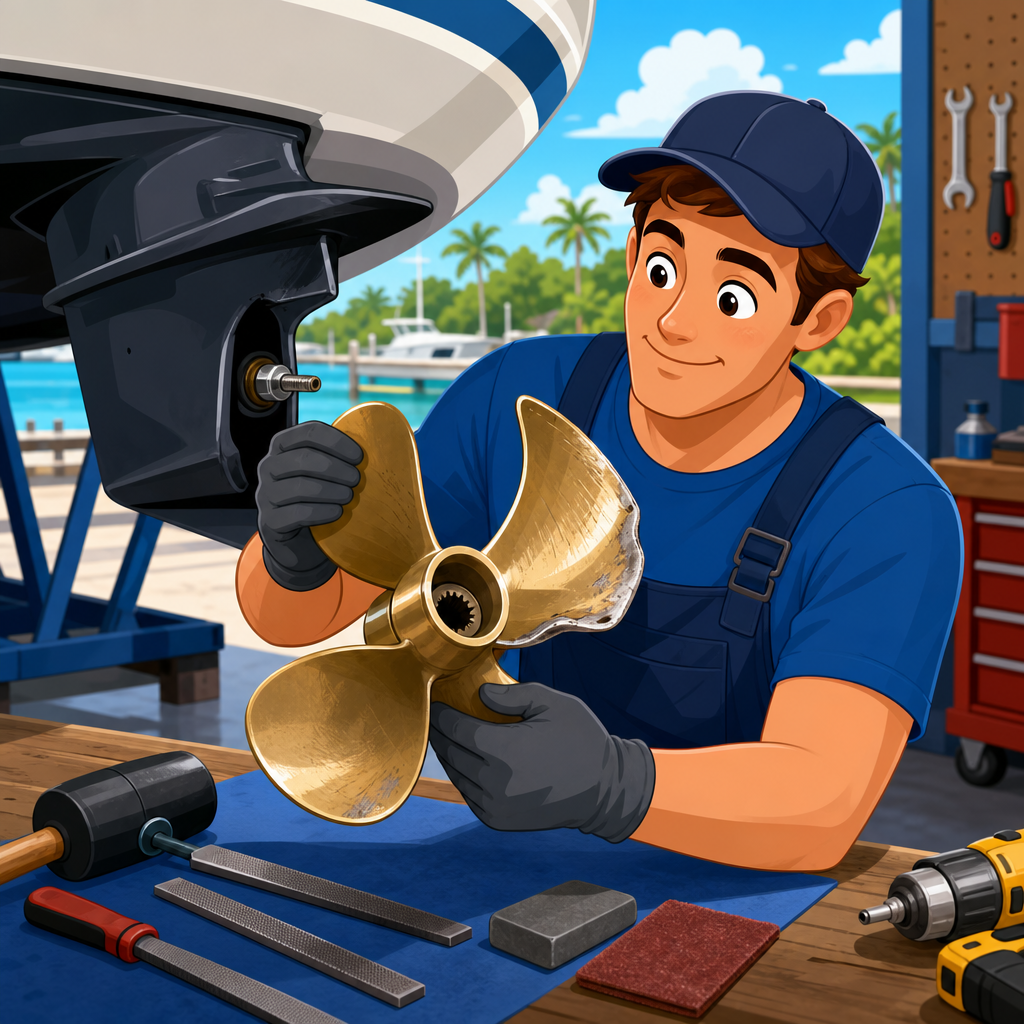
For most boat owners, safe repair means removing the propeller and sending it to a qualified prop shop rather than trying to bend it back in the garage. Propeller repair is precision metalwork. A technician checks pitch blocks or computerized scanning data, restores blade geometry, repairs edge loss by welding if appropriate, and dynamically balances the finished prop. In my experience, a prop that looks only slightly bent can be far enough out of true to keep a boat vibrating even after a casual hammer-and-vise attempt. Home straightening also work-hardens metal, especially aluminum, and can create tiny cracks that fail later under load.
There are limited cases where owner repair is acceptable. You can remove burrs from very small edge nicks with a fine file, preserving the original contour and avoiding excess material removal. The key is restraint: smooth the sharp damage, do not reshape the blade freehand. Afterward, the prop should still be balanced professionally if vibration was noticeable. Aluminum props are often economical to repair when damage is modest, while badly damaged low-cost aluminum models may be cheaper to replace. Stainless steel repairs cost more, but a quality stainless propeller is also more valuable and often worth restoring if the hub and blade roots remain sound.
When reinstalling the repaired or replacement propeller, treat the job as a maintenance checkpoint. Verify the shaft is clean and lightly lubricated if specified by the manufacturer; some splines require specific marine grease while others call for a dry fit, so check the service manual. Install the thrust washer in the correct orientation, torque the prop nut to spec, and fit a new cotter pin or locking tab where required. Then sea-trial the boat with baseline numbers in mind: idle smoothness, time to plane, cruising RPM, wide-open-throttle RPM, and top speed with normal load. If a fresh prop still produces vibration, the prop was not the only issue.
Inspecting the propeller shaft, bearings, and lower unit after impact
A prop strike inspection should always extend beyond the blades because rotational systems amplify even small deviations. Start with the propeller shaft. On outboards and sterndrives, remove the prop and check for fishing line around the shaft seal; trapped line can cut seals and lead to gear lube leaks. Then rotate the shaft and watch for visible wobble. A dial indicator is the proper tool for measuring shaft runout, and the acceptable limit depends on the manufacturer. If runout exceeds spec, replacing or straightening the prop alone will not solve vibration and continued use can damage gears and bearings.
On inboard boats, inspect the shaft, coupling, and strut bearing together. A bent prop from grounding often means the shaft also took a hit. Look for uneven wear in the cutless bearing, shiny contact marks, stuffing box drip changes, and a coupling face that no longer mates evenly. Feeler gauge checks at the shaft coupling are a reliable way to assess alignment after impact or seasonal layup. ABYC-aligned service practice treats shaft alignment as a precision task, not a visual guess. If the engine mounts shifted or compressed, a good propeller can still run badly because the shaft centerline is no longer true.
Do not overlook the lower unit or gearcase. Drain a small sample of gear lube and look for water intrusion or metallic particles. A hard strike can damage carrier bearings, chip gears, or distort seal surfaces without obvious external damage. Inspect the skeg and anti-ventilation plate because they affect handling and indicate force direction during the strike. If the skeg is bent, steering pull may persist even with a perfect propeller. For sterndrives, check gimbal bearings, U-joints, and bellows. For saildrives or straight-shaft inboards, inspect the folding or feathering mechanism carefully because blade synchronization matters as much as shape.
Steering maintenance linked to propeller problems
Propeller and steering maintenance belong together because changes in thrust reveal weakness in helm systems. A damaged propeller can create uneven loading that feels like cable stiffness, hydraulic wander, torque steer, or delayed rudder response. Start at the helm and work aft. Mechanical steering should move smoothly lock to lock without hard spots. Stiffness often comes from a corroded tilt tube on outboards, a seized cable, or lack of lubrication at pivot points. Hydraulic systems should hold course without excessive wheel drift; if they do not, inspect for fluid loss, air in the lines, cylinder seal leakage, or worn check valves in the helm pump.
For outboards and sterndrives, verify engine mounting bolts are tight and steering link hardware is secure with proper locking fasteners. Check the steering arm, pivot bushings, transom bracket, and trim system for play. A prop impact can transmit enough load to loosen connections you would not otherwise suspect. On inboards, inspect the rudder stock, stuffing box or lip seal, tiller arm, quadrant, and autopilot linkage if fitted. Excessive play at the rudder can mimic prop-induced wandering, especially at low speed in crosswinds. If the boat recently developed steering pull after a prop repair, compare trim tab settings and engine trim before assuming the prop shop missed the geometry.
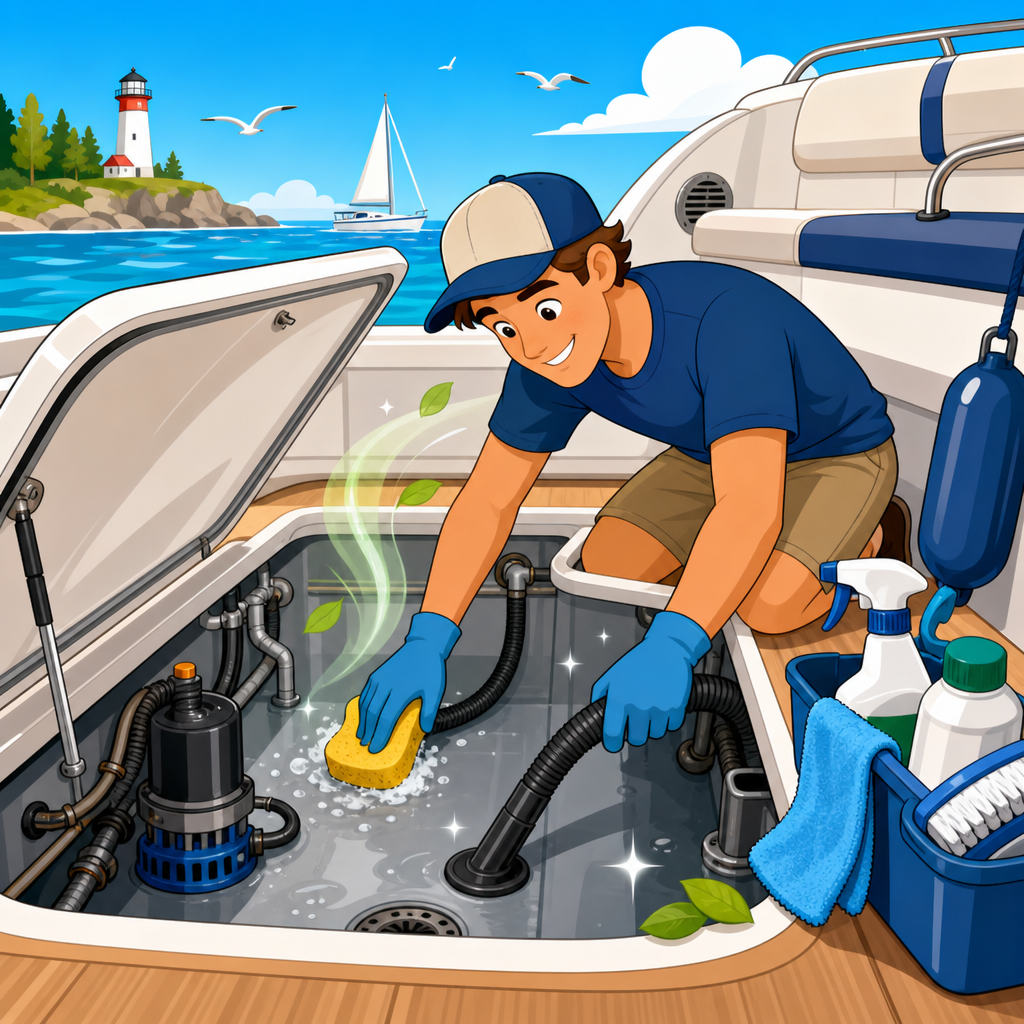
Routine steering maintenance also improves propeller life because a boat that tracks properly places steadier load on the blades. Flush salt deposits from exposed steering components, grease fittings with the lubricant specified by the manufacturer, and replace worn bushings before slop becomes impact loading. On hydraulic systems, bleed the helm using the maker’s procedure, not improvised methods that leave air pockets. SeaStar, Uflex, and Teleflex manuals provide model-specific service steps worth following closely. I recommend documenting helm effort, free play, and any pull tendency each season, because changes over time are easier to catch when you have written baselines.
Preventing future propeller damage and choosing the right replacement
The best way to avoid another bent boat propeller is to reduce strike risk and run a propeller matched to the boat’s real operating profile. Use updated charts, depth alarms, and local knowledge in shoal areas; many prop repairs come from familiar waterways where complacency replaces caution. In marinas and rivers, floating line and submerged timber are common causes of hub and edge damage. At the ramp, inspect the prop before every tow home. A missing chunk caught early may save a weekend, while one more high-speed run with vibration can turn a prop job into a shaft-and-bearing job.
Replacement choice matters. Aluminum props are affordable, easy to repair, and a sensible default for many pontoons, fishing boats, and utility craft. Stainless steel props cost more but usually hold shape better, deliver sharper handling, and can improve efficiency because blades flex less under load. The tradeoff is that stainless transfers impact energy deeper into the drivetrain. Match diameter and pitch to the engine’s recommended wide-open-throttle range, then verify with a real sea trial. A prop that lets the engine over-rev or lug is the wrong prop even if it physically fits. Hub kits, vent plugs, blade count, and rake should match the hull’s use, not forum guesswork.
This hub page connects the full propeller and steering maintenance topic: diagnosing vibration, repairing bent props, checking shafts and bearings, servicing hydraulic or cable steering, selecting replacement props, and preventing repeat damage. The core lesson is simple. Treat every propeller problem as a system problem until inspection proves otherwise. Repair what is safe to repair, replace what is cracked or structurally doubtful, and verify results on the water with RPM, speed, and handling data. If your boat has developed vibration, steering pull, or performance loss, schedule a complete propeller and steering inspection before the next outing. That one step protects the engine, restores confidence at the helm, and usually costs far less than ignoring the warning signs.
Frequently Asked Questions
How can I tell if my boat propeller is bent or damaged?
A bent or damaged boat propeller usually makes itself known through performance changes before the damage is obvious to the eye. Common warning signs include increased vibration, slower acceleration, reduced top speed, poor hole shot, difficulty getting on plane, and higher fuel consumption. You may also notice the engine revving higher than normal without the expected forward thrust, which can point to a propeller issue or a spun hub. In some cases, steering may feel less precise, especially if the damaged prop has also affected nearby components such as the prop shaft, outdrive, or lower unit.
A visual inspection is the next step. Look closely at each blade for bends, chips, cracks, missing material, uneven edges, or blade tips that no longer match one another. Even minor distortion can throw the propeller out of balance and create vibration throughout the drivetrain. Also inspect for fishing line around the prop shaft, because line can damage seals and create additional problems that mimic prop issues. If the boat recently struck a rock, sandbar, log, or submerged debris, assume the propeller and connected steering and drive components should be checked carefully. Damage is not always limited to the prop itself, so it is wise to inspect the hub, shaft, rudder or outdrive hardware, trim tabs, and engine alignment if symptoms continue after the propeller is removed.
Can a bent propeller be repaired, or does it need to be replaced?
Many bent propellers can be repaired, but whether repair is the right choice depends on the severity of the damage, the prop material, and whether the blades have cracks or missing sections. Aluminum props with minor bends, small dings, and moderate edge damage are often good candidates for professional repair. Stainless steel props can also be repaired, but because they are stronger and harder to reshape, the work should be done by an experienced propeller shop with the proper tools and balancing equipment. A qualified technician can restore blade shape, pitch, rake, and cup far more accurately than a do-it-yourself attempt.
Replacement is usually the better option when the propeller has severe blade distortion, deep cracks, major chunks missing, a damaged hub, or repeated prior repairs that have weakened the metal. If the impact was strong enough to damage the shaft or lower unit, replacing only the propeller may not solve the underlying problem. As a rule, small cosmetic damage may be repairable, but structural damage requires a more cautious approach. For safety, performance, and long-term drivetrain health, it is best to let a propeller specialist inspect the part and determine whether repair will return it to proper balance and specification. Running a badly damaged prop to save money often costs more later in bearings, seals, gearcases, and steering components.
Is it safe to keep using a boat with a damaged propeller?
In most cases, no. Continuing to operate a boat with a damaged or bent propeller can create problems far beyond reduced performance. A propeller that is out of balance sends vibration through the prop shaft, bearings, seals, transmission or lower unit, and connected steering system. Over time, that vibration can accelerate wear, loosen hardware, compromise engine alignment, and contribute to leaks or gear damage. What starts as a bent blade can turn into a much more expensive mechanical repair if the boat keeps being used at speed.
There are also handling and safety concerns. A damaged propeller may cause unpredictable tracking, poor maneuverability, sluggish response, and reduced control in docking or rough-water situations. If the impact that bent the propeller also affected the rudder, outdrive, hydraulic steering, or trim tabs, the boat may not respond normally at the helm. While moving the boat slowly for loading, unloading, or getting back to a marina may be unavoidable in some situations, regular use should stop until the prop and surrounding drivetrain components are inspected. If you feel strong vibration, hear unusual noises, or notice leaking gear oil or steering fluid, shut the boat down and arrange for a proper evaluation before operating it again.
What is involved in professional boat propeller repair?
Professional propeller repair is more than simply bending a blade back into place. A reputable prop shop begins by cleaning and inspecting the propeller for hidden cracks, hub issues, blade thinning, and other structural concerns. The technician then measures the propeller against its original specifications, including pitch, diameter, rake, and cup. Damaged blades are carefully reshaped using specialized tools, and any nicks or edge damage are welded and finished as needed. The goal is to restore not just appearance, but also the exact geometry that allows the prop to run smoothly and efficiently.
After reshaping, the propeller is balanced to reduce vibration and ensure even operation under load. This balancing step is critical because a prop can look acceptable but still perform poorly if one blade carries more weight or angle than the others. In some cases, the shop may also recommend hub replacement, especially if the prop has suffered a hard strike or if the hub shows signs of slipping. The best repair shops will also advise you to inspect related systems such as the prop shaft for runout, engine alignment, rudder or outdrive components, steering cables or hydraulics, and trim tabs. That broader inspection matters because a propeller impact often transfers force into the systems that keep the boat tracking straight and responding correctly at the helm.
How can I prevent future propeller damage and protect my boat’s steering and drivetrain?
The best prevention starts with careful operation and regular inspection. Avoid running in unfamiliar shallow water without checking charts, depth sounders, tides, and local hazards. Slow down in areas known for rocks, stumps, sandbars, floating debris, or heavy marine growth. After any grounding or underwater strike, inspect the propeller immediately rather than waiting for performance symptoms to appear later. Even a light impact can alter blade shape enough to affect balance and thrust. It is also smart to carry a spare propeller, the correct tools, and replacement hardware if your boating style or cruising area makes prop damage more likely.
Routine maintenance is just as important. Remove the propeller periodically to check for fishing line around the shaft, grease the shaft if required by the manufacturer, and inspect the hub, seals, and mounting hardware. Pay attention to new vibration, steering pull, poor acceleration, or changes in RPM at normal cruising speed, because these often signal early trouble. Keep the broader steering and propulsion system in good condition as well, including cable or hydraulic steering components, engine alignment, trim tabs, rudder or outdrive hardware, and lower unit service intervals. A healthy propeller works as part of a larger system, and protecting that system is the best way to preserve fuel efficiency, smooth handling, and long-term reliability on the water.