Boat steering problems rarely start with a dramatic failure; they usually begin with small warning signs such as heavier wheel effort, a slight delay in response, or a faint grinding feel that many owners ignore until docking becomes stressful. Knowing how to maintain and lubricate your boat’s steering system is essential because steering is not just a comfort item. It is a primary safety system that affects control at speed, maneuverability in marinas, and confidence when weather changes quickly. In my experience maintaining outboards, sterndrives, and small inboard boats, steering issues are among the most preventable problems on the water, yet they are also among the most common because owners focus on engines first and linkages last.
A boat’s steering system includes the helm, steering wheel, cable or hydraulic lines, tilt tube or pivot points, drag link, engine steering arm, and related fasteners. On many trailerable boats, the system is either mechanical cable steering or hydraulic steering. Mechanical systems use a rotary or rack helm to push and pull a cable connected to the outboard or sterndrive. Hydraulic systems use a helm pump, hoses, and a steering cylinder filled with hydraulic fluid. Both systems require inspection, cleaning, correct lubrication at approved points, and periodic adjustment or component replacement. Propeller and steering maintenance belong together because prop condition, shaft alignment, and lower-unit impacts directly affect how a boat tracks and how much steering load the helm transmits.
This topic matters for three practical reasons. First, neglected steering increases the chance of seizure, especially where a stainless steering cable passes through an aluminum tilt tube and corrosion forms internally. Second, poor lubrication shortens service life by increasing friction and wear on moving parts. Third, steering faults hide other problems: a bent propeller, damaged skeg, worn engine mounts, or loose linkage can all feel like “bad steering” at the wheel. A smart maintenance routine turns this subtopic into a system check, not a one-part fix, which is why this article serves as a hub for propeller and steering maintenance across the broader boat maintenance and repairs category.
Know Your Steering System and Its Failure Points
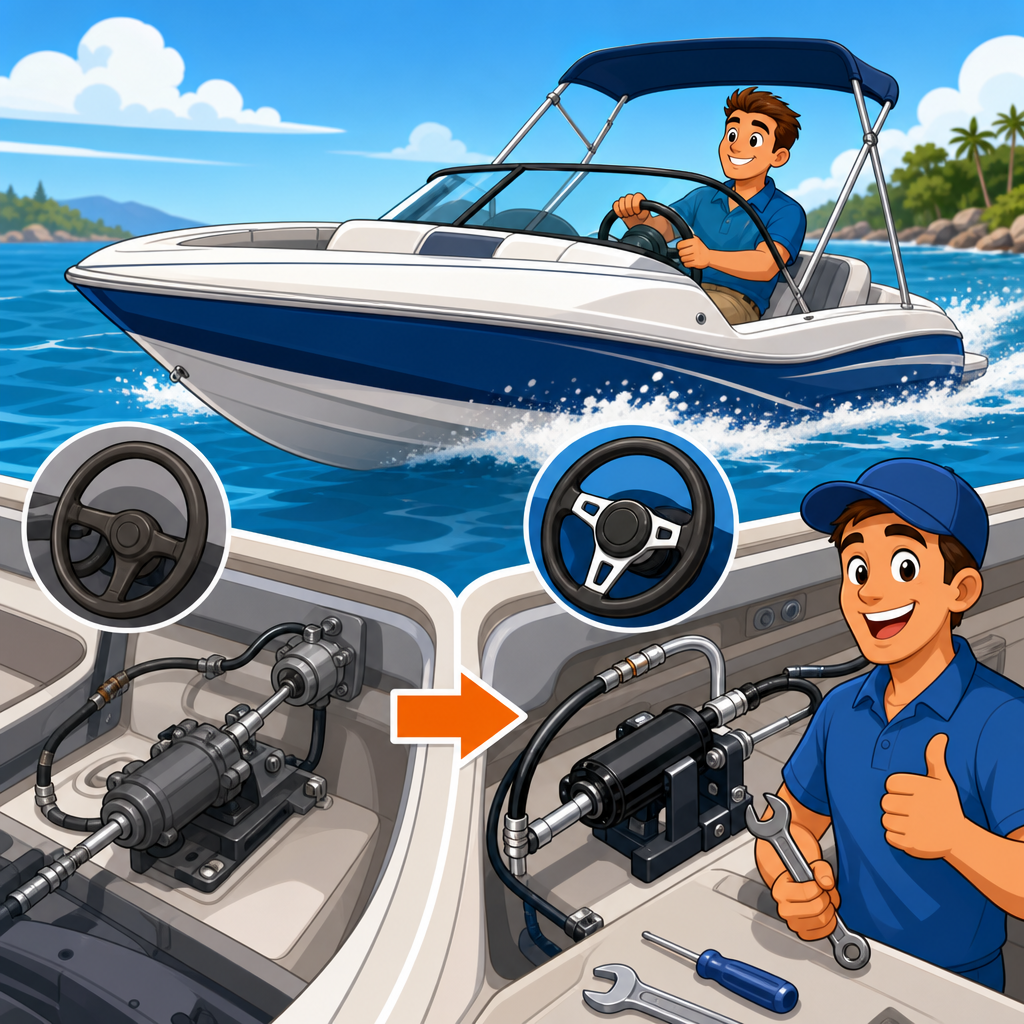
The first step is identifying what you have installed. Mechanical cable steering is common on smaller fishing boats, runabouts, and pontoons. It is relatively simple and cost-effective, but cable systems are vulnerable to corrosion, binding, and stiffness if they sit unused. Hydraulic steering is common on larger outboards, offshore center consoles, and high-horsepower setups. It offers smoother operation and reduced steering torque, but it introduces seals, fluid condition, and air intrusion as maintenance concerns. A no-feedback mechanical helm, standard rotary helm, rack-and-pinion helm, and front-mount or side-mount hydraulic cylinder all have different service points, so the owner’s manual and steering manufacturer’s instructions should always govern the details.
The highest-risk failure points are predictable. On mechanical systems, the cable ram, engine tilt tube, steering arm connection, and transom support bracket pivot areas collect salt, dried grease, and corrosion. On hydraulic systems, trouble usually appears as fluid weeping at seals, soft steering from entrained air, uneven response lock-to-lock, or corrosion on cylinder rods and fittings. In both types, loose fasteners, worn bushings, cracked boots, and deferred cleaning accelerate wear. I have seen many “frozen cable” diagnoses where the real culprit was a neglected tilt tube packed with hardened grease and oxide. I have also seen props with minor blade deformation create steering pull that owners misread as helm failure.
Propeller condition belongs in this section because steering feedback starts at the stern. A dinged prop can create vibration, torque steer, and tracking issues. A spun hub can cause inconsistent thrust. Fishing line wrapped around the prop shaft can damage seals and eventually contaminate gear lube, leading to lower-unit drag or damage. If your boat suddenly pulls to one side, requires constant correction, or vibrates more during turns, inspect the propeller before assuming the helm is at fault. Steering maintenance is most effective when paired with regular prop inspection, skeg checks, and lower-unit visual review after any impact.
How to Inspect the System Before Lubrication
Inspection should happen before grease touches anything. Start with the boat on the trailer or securely moored with the engine off and the battery switch off where appropriate. Turn the wheel from lock to lock. The motion should be smooth and reasonably even. Mechanical systems may feel heavier than hydraulic ones, but they should not bind, jump, or stop abruptly. Watch the engine while someone turns the wheel. Any delay between wheel movement and engine movement suggests play in the helm, cable, or link arm. Check fasteners at the steering link arm, support brackets, and cylinder mounts for looseness, missing cotter pins, or deformation. Use a flashlight; many serious faults are visible long before they are felt.
Next, inspect corrosion points and protective finishes. On outboards, focus on the tilt tube, steering tube ends, pivot tube fittings, drag link, and the exposed steering ram. Surface corrosion can often be cleaned and protected, but pitting on a polished hydraulic cylinder rod or steering ram is more serious because it damages seals over time. Look for leaking hydraulic fluid around the helm, hoses, and cylinder fittings. Fluid at a fitting may mean a loose connection, but fluid at a rod seal usually means service is due. On cable systems, pull back any boots if accessible and inspect for rust staining or damaged jackets. A cracked cable jacket invites water intrusion and typically means replacement, not lubrication.
Finally, inspect the propeller and lower unit because they directly influence steering load. Remove the propeller periodically to check for fishing line, grease the prop shaft with marine grease where specified, and inspect for bent blades, nicks, or uneven wear. Check that the skeg is straight and the trim tab above the prop, if fitted, is correctly adjusted. On many single-outboard boats, trim tab position helps offset steering torque. If the wheel consistently pulls under power, adjustment may be needed after confirming the prop and steering hardware are sound.
| Component | What to Check | Common Symptom | Typical Action |
|---|---|---|---|
| Steering cable ram | Rust, scoring, stiff travel | Heavy wheel effort | Clean, lubricate approved points, replace if binding remains |
| Tilt tube | Corrosion, hardened grease | Frozen or jerky steering | Remove cable, clean tube, re-grease, inspect alignment |
| Hydraulic cylinder | Fluid leaks, pitted rod | Soft or uneven steering | Bleed system, replace seals or cylinder if damaged |
| Drag link and fasteners | Play, missing cotter pins | Delayed engine response | Torque correctly, replace worn hardware |
| Propeller | Dings, bent blades, line on shaft | Vibration, pull, poor tracking | Repair or replace prop, remove line, inspect seals |
Lubricating Mechanical Steering the Right Way
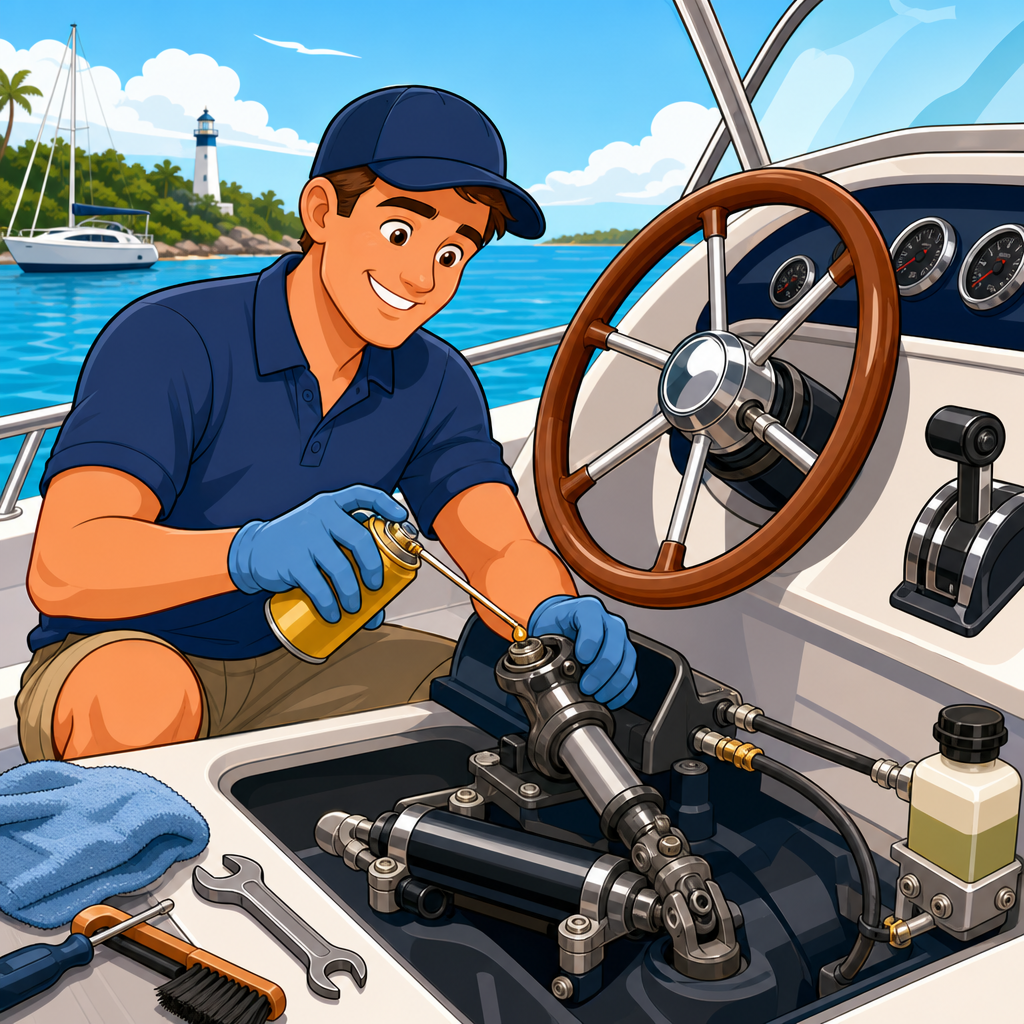
Mechanical steering requires targeted lubrication, not blanket greasing. The most important rule is to lubricate only the points recommended by the engine and steering manufacturers. On an outboard with cable steering, the usual service points are the engine tilt tube, steering cable output end, pivot points on the engine bracket, and the steering link arm hardware. Use a quality marine grease with strong water resistance and corrosion inhibitors; many technicians prefer lithium-complex or calcium-sulfonate marine grease that meets NLGI standards for chassis applications. Avoid mixing incompatible greases if possible. If you do not know what is already in the fittings, purge old grease thoroughly until fresh grease appears clean and consistent.
For a cable system that still moves freely, grease the tilt tube zerk fitting if equipped, or follow the manufacturer’s manual for disassembly and hand-greasing. Turn the wheel while applying grease to distribute it evenly. If the steering cable ram is exposed, wipe it clean with a lint-free cloth first. Never coat the entire exposed ram with excessive grease in a way that traps grit; that often makes matters worse. The better practice is to clean the area, protect bare metal appropriately, and ensure the internal tube and approved fittings receive fresh lubricant. If the cable remains stiff after the tube has been cleaned and greased, the cable itself may be corroded internally and replacement is the safe solution.
The engine pivot points also need attention. Grease fittings on the swivel bracket, tilt pivots, and steering pivot areas should take grease smoothly. If a fitting will not accept grease, do not keep pumping until a seal fails. Remove and inspect the fitting, clear blockages, and verify the passage is open. After lubrication, turn the engine by hand where appropriate and operate the steering through full travel. You want smooth motion, no popping, and no visible flexing of hardware. On older boats, one successful tilt-tube service can restore steering dramatically, but if corrosion has already seized the cable to the tube, plan for cable removal, tube cleaning with a suitable brush, and possibly a complete steering kit replacement.
Maintaining Hydraulic Steering for Smooth, Safe Control
Hydraulic steering needs less routine greasing than mechanical steering, but it still requires disciplined maintenance. The key tasks are checking fluid level, inspecting hoses and fittings, protecting exposed cylinder surfaces, and bleeding air out when the system feels spongy or after any component service. Use only the fluid specified by the steering manufacturer, such as SeaStar hydraulic fluid in systems designed for it. Automotive substitutes may affect seals or performance. A properly maintained hydraulic system should provide firm, consistent wheel feel with predictable engine response and no fluid loss.
Begin at the helm reservoir or fill port and confirm fluid is at the correct level. Low fluid usually means there is a leak somewhere; hydraulic steering does not consume fluid under normal operation. Follow every hose from helm to cylinder, checking for chafe, loose supports, corrosion at fittings, and any sign of seepage. At the cylinder, inspect the rod for rust spots, nicks, or oily residue around the seals. Small leaks should not be ignored because they let air enter the system and can worsen quickly. If you need to bleed the system, follow the manufacturer’s sequence exactly, usually involving fill tubing, bleeder fittings at the cylinder, and turning the wheel slowly while maintaining fluid level to avoid drawing in more air.
Lubrication on hydraulic systems is mostly external and limited to mounting points, pivot hardware, and engine bracket grease points rather than the hydraulic internals. Keep cylinder rods clean, but do not smear heavy grease on them. Protect exposed metal with appropriate corrosion inhibitors around, not on, sealing surfaces. If steering effort suddenly rises on a hydraulic setup, do not assume it needs grease. Check for cylinder misalignment, seized engine pivot points, contaminated or incorrect fluid, or hidden impact damage to the lower unit or propeller. On high-horsepower outboards, torque loads are substantial, and a neglected transom bracket can make a healthy hydraulic helm feel faulty.
Propeller and Steering Maintenance as One Routine
Owners get better results when propeller and steering maintenance are scheduled together every 50 to 100 engine hours or at least seasonally. Remove the propeller, inspect the blades, clean the shaft, and apply marine grease sparingly to the prop shaft splines if the manufacturer specifies it. Reinstall with the correct thrust washer, spacer, nut torque, and locking hardware. While the prop is off, spin and inspect for roughness, look for seal leaks, and check the skeg and anti-ventilation plate for impact marks. Any stern impact strong enough to nick a prop can also stress steering linkages or shift the engine alignment enough to change steering feel.
Sea conditions and storage practices matter. Saltwater boats need more frequent freshwater rinsing and corrosion prevention, especially around the tilt tube, stainless fasteners threaded into aluminum, and hydraulic fittings. Boats that sit unused for months often develop steering stiffness simply because grease hardens and corrosion starts in still, damp spaces. Turning the wheel and moving the engine through its range during storage periods helps. During winterization, I recommend a steering-specific checklist alongside engine and fuel tasks: inspect wheel effort, lubricate approved grease points, check prop condition, remove any line from the shaft, and note part numbers for components that may need spring replacement.
Use the hub structure of your maintenance content the same way you use the routine on the boat: connect the major systems. Steering inspection should lead naturally to deeper guides on replacing a steering cable, bleeding hydraulic steering, servicing a seized tilt tube, diagnosing steering torque, repairing a bent propeller, and checking lower-unit seals after fishing line intrusion. For readers building a full boat maintenance and repairs plan, this page should anchor that sequence because it shows how control, driveline condition, and corrosion prevention intersect in real use.
Common Mistakes, Service Intervals, and When to Call a Pro
The biggest mistake is trying to fix stiffness by adding grease without diagnosis. If a cable is internally corroded, more lubrication will not restore safe operation. Another common error is using general-purpose spray lubricants as a substitute for proper marine grease and cleaning. Sprays can be helpful for light corrosion protection on external hardware, but they are not a cure for seized steering components. Over-greasing is also a problem. Excess grease attracts grit, hides cracks, and can blow out seals if forced into blocked passages. Follow manufacturer intervals, but as a practical rule, inspect steering monthly during the season, lubricate approved points every 50 to 100 hours or seasonally, and perform a thorough end-of-season review before storage.
Call a qualified marine technician when the wheel binds hard, the engine does not respond proportionally to wheel input, hydraulic fluid continues to drop, the cylinder rod is pitted, helm mounts are loose, or corrosion requires steering cable removal from a stuck tilt tube. Those jobs often need pullers, heat, alignment checks, seal kits, torque specifications, and experience with brand-specific systems from SeaStar, Teleflex, Uflex, and engine manufacturers such as Mercury, Yamaha, Suzuki, and Honda. Steering is not the place to improvise with undersized hardware or automotive parts.
Good steering maintenance delivers a simple benefit: control you can trust. Clean inspections, correct lubrication, prompt propeller checks, and realistic replacement decisions prevent most steering failures before they strand you or make close-quarters handling risky. Build this routine into your broader boat maintenance and repairs schedule, then follow the related guides in your propeller and steering maintenance plan to go deeper on cable replacement, hydraulic bleeding, prop repair, and lower-unit inspection. Start with a lock-to-lock steering check today, and fix small issues before they become expensive or unsafe.
Frequently Asked Questions
How can I tell if my boat’s steering system needs maintenance or lubrication?
Most steering systems give warnings long before they fail completely, and those early signs are exactly what boat owners should pay attention to. If the wheel feels stiffer than usual, turns unevenly from one side to the other, responds with a slight delay, or produces a scraping, grinding, or binding sensation, maintenance should move to the top of your list. You may also notice the boat no longer tracks as predictably, especially at low speeds or during docking, where steering issues often become more obvious. In cable steering systems, these symptoms can point to corrosion, dried lubricant, internal cable wear, or stiffness at the engine tilt tube. In hydraulic systems, warning signs may include a spongy feel, inconsistent steering effort, fluid seepage, or small air bubbles in the helm fluid reservoir.
A good habit is to inspect the system before symptoms become severe. Look at steering linkages, the cable end, fittings, support brackets, and any visible moving joints for rust, salt buildup, damaged seals, or dried grease. If the wheel suddenly becomes much harder to turn after the boat has been sitting, that often suggests contamination or corrosion rather than a simple adjustment issue. Catching these changes early can prevent expensive repairs and, more importantly, reduce the chance of losing precise control when maneuvering in tight quarters or rough conditions.
What parts of a boat steering system should be lubricated regularly?
The exact lubrication points depend on whether your boat uses mechanical cable steering, hydraulic steering, or another system, but several areas commonly need attention. On many outboard-powered boats with mechanical steering, one of the most important points is the engine tilt tube, where the steering cable’s ram passes through. This area is especially prone to corrosion and contamination, and when it gets neglected, steering effort can increase dramatically. Pivot points, steering linkages, drag links, and grease fittings on the engine bracket should also be checked and lubricated according to the manufacturer’s recommendations.
It is important, however, not to assume that every component should be greased. Some sealed steering cables and helm assemblies are not designed for routine internal lubrication, and forcing lubricant into the wrong area can trap debris or damage seals. Hydraulic steering systems usually do not require “lubrication” in the same way cable systems do, but they do require fluid level checks, leak inspections, and clean, properly maintained seals and fittings. The smartest approach is to identify your steering system model and follow the service guidance for that exact setup. Routine attention to the proper lubrication points reduces wear, keeps steering effort consistent, and helps preserve accurate response at both idle and cruising speed.
What type of lubricant should I use on my boat’s steering system?
You should always start with the steering system and engine manufacturer’s recommendations, because using the wrong product can do more harm than good. In marine environments, lubricants must resist water washout, salt exposure, and corrosion, so a high-quality marine grease is often the correct choice for external pivot points, zerk fittings, and steering-related hardware designed to accept grease. For areas like the tilt tube on many outboard setups, technicians commonly use a marine-grade waterproof grease after cleaning out old residue and corrosion. The key is choosing a product formulated for marine use rather than a general-purpose automotive lubricant that may not hold up in wet, salty conditions.
You should also be cautious with spray lubricants. While they can be useful for loosening stuck components or protecting certain exposed parts, they are not always a substitute for proper grease, and they should never be sprayed indiscriminately into sealed steering assemblies. Hydraulic systems require the correct steering fluid specified for the helm and cylinders, not grease or generic oil. Mixing incompatible fluids can damage seals, reduce performance, and create leaks. If you are unsure, it is better to pause and verify the product specifications than to guess. In steering maintenance, using the correct lubricant is just as important as lubricating the correct component.
How often should I inspect and maintain my boat’s steering system?
At a minimum, the steering system should be inspected before the boating season begins, checked periodically during the season, and looked over again before storage. For boats used heavily, especially in saltwater, monthly inspections are a smart standard. If you run offshore, fish often, trailer regularly, or leave the boat exposed to harsh weather, your steering system experiences more stress and contamination, which means it deserves more frequent attention. A quick pre-departure steering check should become routine: turn the wheel lock-to-lock, confirm smooth movement, inspect visible hardware, and look for anything loose, leaking, or corroded.
Annual maintenance should be more thorough. That includes cleaning and lubricating approved components, inspecting the cable ram or cylinder, checking mounting bolts and link arms, examining protective boots and seals, and verifying that the steering moves freely throughout the full range of motion. Hydraulic systems should be checked for fluid level, signs of seepage, and any evidence of air in the lines. Mechanical systems should be evaluated for cable stiffness, corrosion, and free play. If anything changes noticeably from one trip to the next, do not wait for the next scheduled maintenance interval. Steering is a safety-critical system, and small issues tend to become bigger ones quickly when moisture, vibration, and load are involved.
Can I maintain and lubricate my boat’s steering system myself, or should I call a professional?
Many boat owners can handle basic steering maintenance themselves, provided they work carefully and stay within the limits of their experience. Routine tasks such as visual inspections, cleaning accessible components, applying the correct marine grease to approved fittings, checking for corrosion, and verifying smooth wheel travel are well within reach for an attentive owner. If your steering system documentation clearly identifies service points and procedures, doing this work yourself can save money and help you become more familiar with how the boat feels when everything is operating correctly. That familiarity is valuable, because it makes subtle changes easier to notice early.
That said, there is a point where professional service is the safer choice. If the wheel remains stiff after lubrication, if the cable appears seized, if hydraulic fluid is leaking, if there is excessive play at the helm, or if you suspect internal damage in the helm, cable, or cylinder, it is time for a marine technician. Steering repairs often involve critical adjustments, specialized bleeding procedures, or component replacement that must be done correctly to avoid dangerous loss of control. As a rule, owners should handle preventive care and simple inspections, but they should not guess when symptoms point to wear, leakage, internal corrosion, or impending failure. When steering reliability is in question, professional diagnosis is the right investment.