Properly greasing boat trailer bearings is one of the most important jobs in trailer maintenance and towing because it protects the hub assembly, prevents roadside breakdowns, and keeps a boat moving safely between the ramp, the highway, and storage. Trailer bearings are small precision rollers or tapered elements that let the wheel hub spin freely around the spindle, while grease is the lubricant that reduces friction, carries away heat, and blocks water intrusion. On boat trailers, that last function matters more than many owners realize. Every launch and retrieval can expose hot hubs to cold water, creating pressure changes that may pull moisture past the seals. I have seen bearings that looked fine at the start of a season turn rusty and pitted after only a few neglected dunkings, and the repair bill is always higher than the cost of routine service.
This subject matters because bearing failure is rarely isolated. When lubrication breaks down, temperatures rise, the rollers score the race, the grease oxidizes, and the seal hardens. Left alone, the hub can wobble, the spindle can be damaged, and the wheel can lock or even separate. That is why proper bearing care is not just about adding grease until something oozes out. It is a process that includes choosing the right marine grease, inspecting the seal, understanding the type of bearing protector on the hub, setting the bearing preload correctly, and verifying that the trailer is road-ready before towing. As the hub page for trailer maintenance and towing, this guide connects the core practices every boat owner should understand, from lubrication intervals and inspection routines to common warning signs and the situations that call for a full repack or replacement.
Many owners ask the same direct questions: How often should boat trailer bearings be greased? What kind of grease should be used? Can you simply pump grease through a bearing protector? The short answer is that marine-grade wheel bearing grease should be used, service intervals should be based on mileage, immersion, and storage conditions, and adding grease through a fitting helps but does not replace periodic disassembly and inspection. A well-maintained trailer usually gets hub checks before every trip, a more thorough inspection several times each season, and a complete bearing service at least annually for heavily used boat trailers. Understanding those basics gives you a practical system instead of a guess, and that system is what keeps towing dependable.
Why boat trailer bearings fail and what proper greasing actually does
Boat trailer bearings fail for four main reasons: water intrusion, contaminated grease, improper adjustment, and heat. Water is the biggest enemy because it displaces lubricant and starts corrosion on polished bearing surfaces that must remain smooth. Even slight rust creates microscopic roughness, which increases friction and accelerates wear. Contamination is next. Sand, road dust, and tiny metal particles can circulate inside the hub and act like grinding compound. Improper adjustment is also common. If the spindle nut is too tight, the bearings run hot. If it is too loose, the hub develops play, the seal can leak, and the rollers do not load correctly. Heat usually appears as the final symptom, but it is often the result of one of those other conditions.
Proper greasing solves several problems at once. First, it creates a lubricating film that separates moving metal surfaces. Second, it fills internal spaces so moisture and debris have fewer paths into the bearing cavity. Third, quality marine grease resists washout better than standard automotive grease and maintains consistency under repeated water exposure. In practice, I treat grease as both lubricant and protective barrier. On boat trailers used in brackish or salt water, that barrier is even more important because corrosion progresses faster and can attack races, cages, and seals between trips. This is why the correct procedure includes cleaning old grease out during major service, not just topping off indefinitely. Fresh grease performs best when it is not diluted by contaminated residue.
Another key point is that bearing systems vary. Some hubs use a simple dust cap, some use spring-loaded bearing protectors such as Bearing Buddy, and others use spindle-lube or EZ Lube style systems that push grease through the spindle to the inner bearing and back outward. These systems are useful, but they are not foolproof. A protector can maintain positive pressure and reduce water entry, yet overfilling can still blow out a rear seal. A spindle-lube system can make routine lubrication easier, but if the old grease is milky or metallic, the hub still needs to come apart. Proper greasing, then, means using the system as designed while recognizing its limits.
Tools, grease types, and the inspection routine every owner should follow
The right setup makes bearing service cleaner and more accurate. At minimum, keep a grease gun, marine wheel bearing grease rated for disc or drum trailer use as applicable, spare seals, cotter pins or tang washers, nitrile gloves, solvent for cleaning, lint-free rags, a torque wrench, pliers, a seal driver or suitable installer, jack stands, and an infrared thermometer. I also recommend carrying a complete spare hub assembly preloaded with bearings and seals, especially for long trips. It can turn a major roadside delay into a thirty-minute repair.
Grease selection deserves precision. Use a marine-grade wheel bearing grease with strong water resistance, corrosion inhibitors, and compatibility with your brake system temperatures. Lithium complex and calcium sulfonate formulations are both common, but mixing grease chemistries can cause separation or softening. If you do not know what is already in the hub, the safest route is full disassembly, cleaning, and repacking with one product. Trusted options are available from Lucas Oil, Mystik, Timken, and CRC, but the label matters more than the brand alone. The grease should be specifically intended for wheel bearings and marine exposure.
Before every tow, do a fast inspection. Grab each tire at the top and bottom and rock it to check for play. Spin the wheel and listen for grinding. Inspect the back of the hub for grease sling, which often indicates a failed inner seal. Look at the tires for uneven wear, because a bad bearing or loose hub can change wear patterns. After ten to fifteen miles on the road, stop and feel each hub carefully or use an infrared thermometer. A warm hub is normal; one hub that is significantly hotter than the others points to trouble. During seasonal inspection, remove the wheel and check brake components, lug torque, hub cap condition, and suspension fasteners as part of a broader trailer maintenance and towing routine.
| Task | When to do it | What to look for | Action |
|---|---|---|---|
| Pre-trip hub check | Before every tow | Play, noise, visible leaks, damaged caps | Do not tow until faults are investigated |
| Temperature check | After first 10–15 miles | One hub hotter than others | Inspect bearings, brake drag, and adjustment |
| Grease top-up through protector | As needed during season | Low spring tension or low grease level | Add slowly, avoid overpressurizing seal |
| Full bearing service | Annually or more for heavy use | Milky grease, metal flakes, rust, seal wear | Clean, inspect, repack, replace worn parts |
| Saltwater trailer service | More frequently | Corrosion on races, caps, hardware | Shorten interval and rinse trailer after use |
Step-by-step: how to grease boat trailer bearings correctly
If your trailer has bearing protectors or a grease-through spindle, begin by securing the trailer on level ground, chocking the wheels, and lifting one side safely with jack stands. Remove the dust cap or inspect the protector. With a spring-loaded protector, add grease slowly while rotating the wheel by hand. Rotating helps distribute grease and reduces the chance of hydraulic pressure building too quickly behind the inner seal. Stop when the piston or indicator reaches the manufacturer’s normal operating position. Do not keep pumping just because grease accepts easily. That is how seals get blown out and brakes get contaminated.
For a grease-through spindle, remove the rubber plug, attach the grease gun, and pump while rotating the hub. New grease should move through the inner bearing, across the hub cavity, and out through the outer bearing. Continue only until the old grease purges and the new grease appears clean and consistent. Wipe away excess and reinstall the plug. This method is excellent for maintenance between full services, but it is not a substitute for hands-on inspection. If the expelled grease is milky, gritty, darkened, or full of metallic shimmer, plan a full teardown immediately.
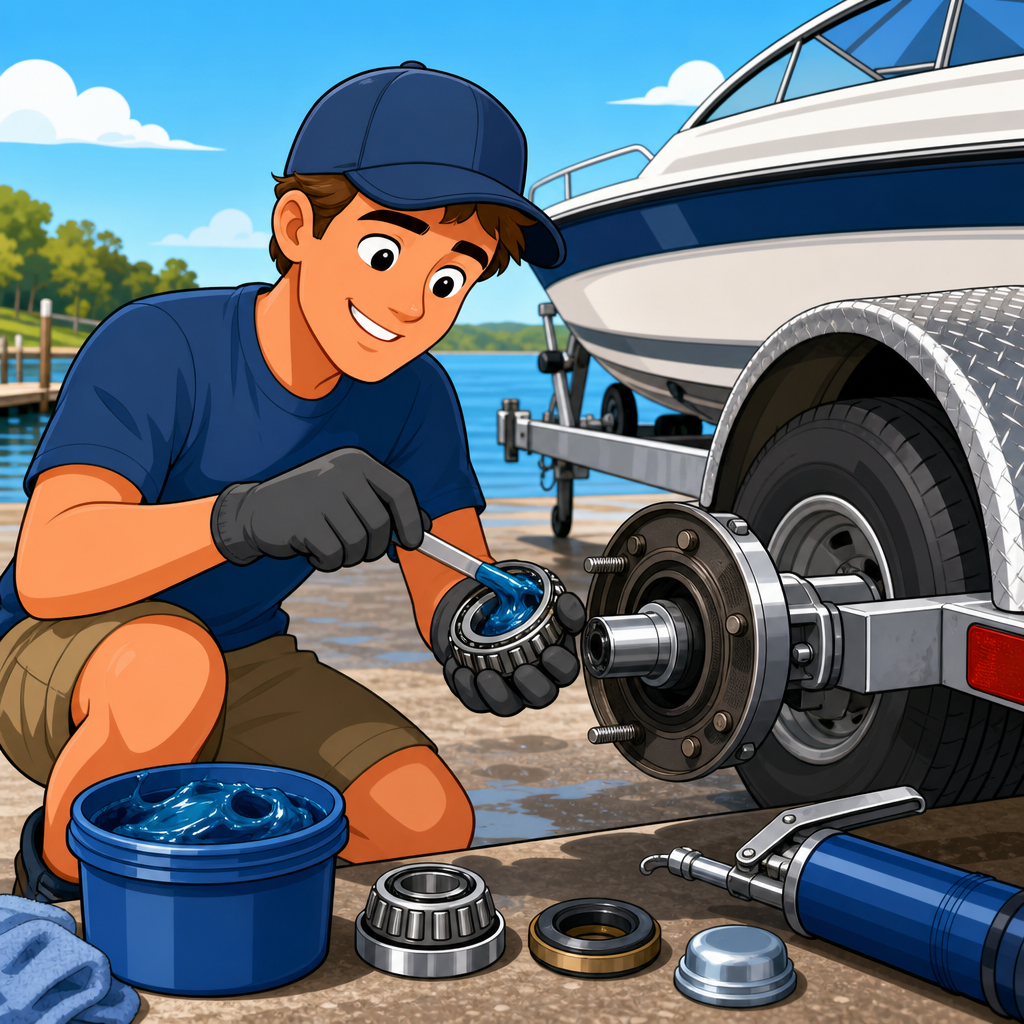
For a complete repack, remove the wheel, dust cap, retaining device, spindle nut, washer, and outer bearing, then slide the hub off carefully. Pry out the old seal and remove the inner bearing. Clean both bearings, the races, spindle, and hub cavity with solvent and dry everything thoroughly. Inspect each roller and race under good light. You are looking for pitting, blue discoloration from heat, scoring, cage damage, and any roughness when the bearing is turned. Replace bearings and races as matched sets if any defect appears. Never install a new bearing on a worn race and expect long service life.
To pack the bearing, work grease into it from the wide end until it pushes through between every roller. A bearing packer tool speeds this up and keeps the job cleaner, but hand packing is effective when done thoroughly. Apply a light coating of grease to the races and the spindle, install the inner bearing, and drive in a new seal squarely. Then slide the hub back on without damaging the seal lip. Install the outer bearing, washer, and spindle nut. Tighten the nut while rotating the hub to seat the bearings, then back it off and set it according to the axle manufacturer’s guidance, usually just snug enough to remove end play without preload that creates drag. Insert a new cotter pin or engage the retainer, fill the cap or protector as required, reinstall the wheel, torque the lug nuts properly, and test for smooth rotation. After the first short drive, recheck hub temperature and free play.
Common mistakes, warning signs, and how this connects to safe towing
The most common mistake is assuming more grease is always better. Excess grease pressure often damages the rear seal, which then coats brake shoes or pads and reduces stopping power. Another mistake is ignoring compatibility. Mixing unknown grease types can turn a stable lubricant into a runny or lumpy mess that no longer protects the bearing. I also see owners reuse seals, skip cleaning, or tighten spindle nuts by feel without understanding bearing adjustment. Those shortcuts save minutes and cost hubs.
Warning signs are usually visible before failure. Grease on the inside of a wheel, a burnt smell after towing, vibration, rumbling, a hub too hot to touch, or repeated need for grease all indicate a problem. On the road, if one wheel seems harder to spin by hand at a stop or the trailer tracks oddly, inspect immediately. Bearing issues also overlap with broader trailer maintenance and towing topics. Tires, brakes, suspension, tongue weight, and lighting all influence safety, but the hub is where rolling load meets the axle. When it fails, every other towing system is affected.
As the central guide for this subtopic, use bearing service as the foundation for a larger maintenance schedule. Pair annual bearing work with brake inspection, axle and spring hardware checks, bunk or roller examination, winch strap inspection, trailer light testing, tire age verification, and torque checks on wheel lugs and U-bolts. Keep a maintenance log with dates, mileage, launch frequency, and whether the trailer was used in freshwater or saltwater. That record will tell you far more than guesswork. The real benefit of properly greasing boat trailer bearings is not just avoiding repairs. It is towing with confidence, launching without delay, and knowing the trailer under your boat is as dependable as the tow vehicle in front of it. Make bearing checks part of every trip and schedule a full service before the next season begins.
Frequently Asked Questions
Why is greasing boat trailer bearings so important?
Greasing boat trailer bearings is critical because the bearings carry the load of the trailer while allowing the wheel hub to rotate smoothly around the spindle. Without proper lubrication, the metal rollers and races create excess friction, which quickly builds heat and accelerates wear. On a boat trailer, this problem is even more serious because hubs are regularly exposed to water, and in many cases they are submerged at the launch ramp. If water gets past the seals and contaminates the grease, lubrication quality drops, corrosion can begin inside the hub, and the chance of bearing failure rises dramatically.
Well-greased bearings help prevent roadside breakdowns, damaged spindles, ruined hubs, and unsafe towing conditions. They also protect seals, reduce operating temperatures, and extend the service life of the entire hub assembly. In practical terms, proper bearing lubrication means more reliable trips to and from the ramp, less risk of a seized wheel on the highway, and fewer expensive repair surprises. For any trailer owner, especially someone towing a boat, bearing grease is not a minor maintenance item—it is one of the main things standing between smooth towing and a serious failure.
How often should boat trailer bearings be greased or serviced?
The right service interval depends on how often the trailer is used, how far it is towed, and how frequently the hubs are exposed to water. As a general rule, boat trailer bearings should be inspected and serviced at least once a year, even if the trailer is not used heavily. For trailers that see frequent launching, long highway trips, saltwater exposure, or extended storage periods, bearings may need attention more often. Many owners also make it a habit to inspect the hubs before and after peak boating season, which is a smart preventive approach.
It is important to understand that adding grease through a bearing protector or grease fitting is not always the same as fully servicing the bearings. Periodic greasing can help maintain positive pressure and reduce water intrusion, but it does not replace removing the hub, cleaning the bearings, checking the races, inspecting the seals, and repacking the bearings when needed. If you notice hub temperatures running hotter than normal, grease leaking around the wheel, grinding noise, wheel play, or milky, discolored grease, service should be done immediately. If the trailer is dunked in cold water soon after highway towing, that rapid temperature change can also increase the chance of water being drawn into the hub, making more frequent inspection worthwhile.
What type of grease should be used for boat trailer bearings?
Boat trailer bearings should be lubricated with a high-quality marine wheel bearing grease designed to resist water washout, corrosion, and high operating temperatures. Marine grease is formulated specifically for wet environments, which makes it a better choice than a general-purpose automotive grease for most boat trailer applications. Because boat trailers are repeatedly exposed to fresh or salt water, the grease must do more than reduce friction—it also needs to help block moisture and protect metal surfaces from rust and pitting.
When choosing a grease, look for one that is labeled for marine use and compatible with wheel bearings. It is also important to avoid mixing incompatible grease types unless the product manufacturer clearly states they can be combined. Mixing different thickeners or grease chemistries can reduce performance and lead to separation, softening, or poor lubrication. If you are unsure what grease is already in the hub, the safest approach is to fully disassemble, clean, inspect, and repack the bearings with one known marine grease product. Consistency matters. Using the correct grease—and using it consistently throughout the hub assembly—helps maintain reliable lubrication and reduces the chance of contamination or premature failure.
What is the proper way to grease boat trailer bearings?
The proper method starts with safely lifting and supporting the trailer, removing the wheel if necessary, and inspecting the hub for signs of damage, grease leakage, overheating, or water contamination. If the trailer has standard hubs, the best practice is to remove the dust cap, take off the hub, clean the bearings thoroughly, inspect the rollers and races for scoring, discoloration, pitting, or roughness, and then repack the bearings completely with fresh marine grease. Grease should be worked through the bearing until it pushes out between the rollers, ensuring full coverage rather than just coating the outside. Once repacked, the hub should be reassembled with a new grease seal if needed, adjusted to the manufacturer’s specification, and spun to confirm smooth operation.
If the trailer uses a bearing protector system such as Bearing Buddies or an EZ Lube style spindle, grease can often be added through the fitting, but it must be done carefully. Pumping too fast or adding too much grease can blow out the rear seal, which may actually let water in and grease out. The goal is to add grease slowly and only until the system indicates the hub is properly pressurized or fresh grease begins to appear where expected. Even with these systems, periodic full disassembly and inspection is still important because grease fittings do not let you evaluate bearing wear, race condition, or seal integrity. The safest approach is to treat grease fittings as a maintenance aid, not a substitute for full bearing service.
How can you tell if boat trailer bearings need immediate attention?
There are several warning signs that suggest the bearings need immediate inspection or service. One of the most common is a hot hub after towing. While hubs may feel warm after highway travel, one hub that is noticeably hotter than the others can indicate excess friction, over-tight adjustment, failing bearings, or insufficient lubrication. Other red flags include grinding or rumbling noise, grease splattered on the inside of the wheel, wobble or looseness in the tire when rocked by hand, and visible rust or milky grease around the cap or seal area. Any of these symptoms should be treated as a signal to stop towing until the hub assembly is checked.
Drivers should also pay attention to performance changes on the road. If the trailer begins pulling oddly, if a wheel seems harder to turn during inspection, or if you smell burnt grease, the bearings may be close to failure. In severe cases, neglected bearings can overheat enough to damage the spindle, destroy the hub, or even allow the wheel assembly to come apart. That is why routine checks matter so much. Before a trip, spin each wheel if possible, check for play, inspect the grease condition, and feel the hubs during travel stops. Catching a problem early is far easier and less expensive than dealing with a breakdown on the roadside or at the boat ramp.