Winterizing an outboard vs. inboard motor comes down to one core difference: outboards are self-contained power units mounted outside the hull, while inboards are integrated systems inside the boat that rely on additional cooling, exhaust, fuel, and drivetrain components that also must be protected for freezing weather. That distinction changes every part of winter storage, from how water is drained to how fuel is stabilized and how corrosion is controlled. For boat owners in cold climates, proper winterizing is not optional maintenance; it is damage prevention. Water expands by roughly nine percent when it freezes, and that expansion can crack engine blocks, manifolds, coolers, pumps, lower units, hoses, and fittings. I have seen spring recommissioning bills jump from a few hundred dollars for routine service to several thousand after one missed drain plug or neglected raw-water passage. Winterizing also affects reliability, emissions compliance, resale value, and the life of wear components such as impellers, batteries, and fuel system seals.
In practical terms, winterizing means preparing a boat and its propulsion system for a period of non-use during freezing temperatures or prolonged storage. Seasonal prep usually includes fuel treatment, lubrication, battery care, corrosion protection, moisture control, inspection, and either draining or protecting water-exposed systems with the correct marine antifreeze. The phrase marine antifreeze matters. Ethylene glycol automotive coolant and propylene glycol marine antifreeze are not interchangeable in every application, and burst protection ratings can be misleading if products are diluted by residual water. Winterizing and seasonal prep also extend beyond the motor itself. This hub covers the broader maintenance picture: engine-specific differences between outboards and inboards, raw-water versus closed-cooling systems, sterndrives and shafts, fuel and electrical storage, checklist planning, and the common mistakes that cause expensive spring surprises. If you want one page that explains what changes, what stays the same, and what to prioritize before the first hard freeze, this is it.
Why winterizing differs between outboard and inboard motors
An outboard motor packages the engine, gearcase, cooling passages, and drive assembly into one external unit. Because it is mounted on the transom and trims down, gravity helps drain many water passages after operation. That makes an outboard simpler to winterize, but not maintenance-free. You still need to address fuel stability, fogging where appropriate, lower-unit lubricant, grease points, battery condition, sacrificial anodes, and corrosion protection. Modern four-stroke and direct-injected two-stroke outboards may have manufacturer-specific procedures for fogging or storage mode. Yamaha, Mercury, Suzuki, Honda, and Evinrude have all published model-dependent guidance, and following the service manual always overrides dockside folklore.
Inboard motors are more complex because the engine sits inside the hull and is connected to raw-water intakes, strainers, circulation pumps, heat exchangers or water jackets, exhaust manifolds, mufflers, and sometimes generators, water heaters, air-conditioning pumps, and sanitation systems that share the winter storage risk. A simple raw-water-cooled inboard requires every water-holding cavity to be drained fully or displaced with the proper antifreeze. A closed-cooling inboard adds another layer: the engine block may circulate permanent coolant internally, but the raw-water side still contains water in the heat exchanger, oil cooler, power steering cooler, manifolds, and hoses. Many owners misunderstand this and assume “closed cooled” means no winterization is needed. It absolutely does not.
Sterndrives sit between the two categories and complicate the comparison. The engine is inside the boat, but the drive is mounted on the transom like an external lower unit. Winterizing a sterndrive often follows inboard engine procedures plus drive-specific service for bellows, gimbal bearings, U-joints, and gear lube. As the seasonal prep hub, this article treats sterndrives as part of the inboard side because their freeze risk is driven by internal engine and raw-water plumbing.
The core winterizing tasks both systems share
Whether you own an outboard fishing boat or an inboard cruiser, several winterizing fundamentals are the same. Fuel should be stabilized before storage because gasoline oxidizes and loses volatility, while ethanol-blended fuel can absorb moisture and contribute to phase separation under the right conditions. The best practice is to add a marine fuel stabilizer to fresh fuel, then run the engine long enough to circulate treated fuel through lines, pumps, injectors, or carburetors. Filters and water-separating fuel canisters should be checked or replaced if service intervals are due. Diesel-powered inboards need stabilizer appropriate for diesel, plus attention to microbial growth, water contamination, and cold-flow issues depending on region.
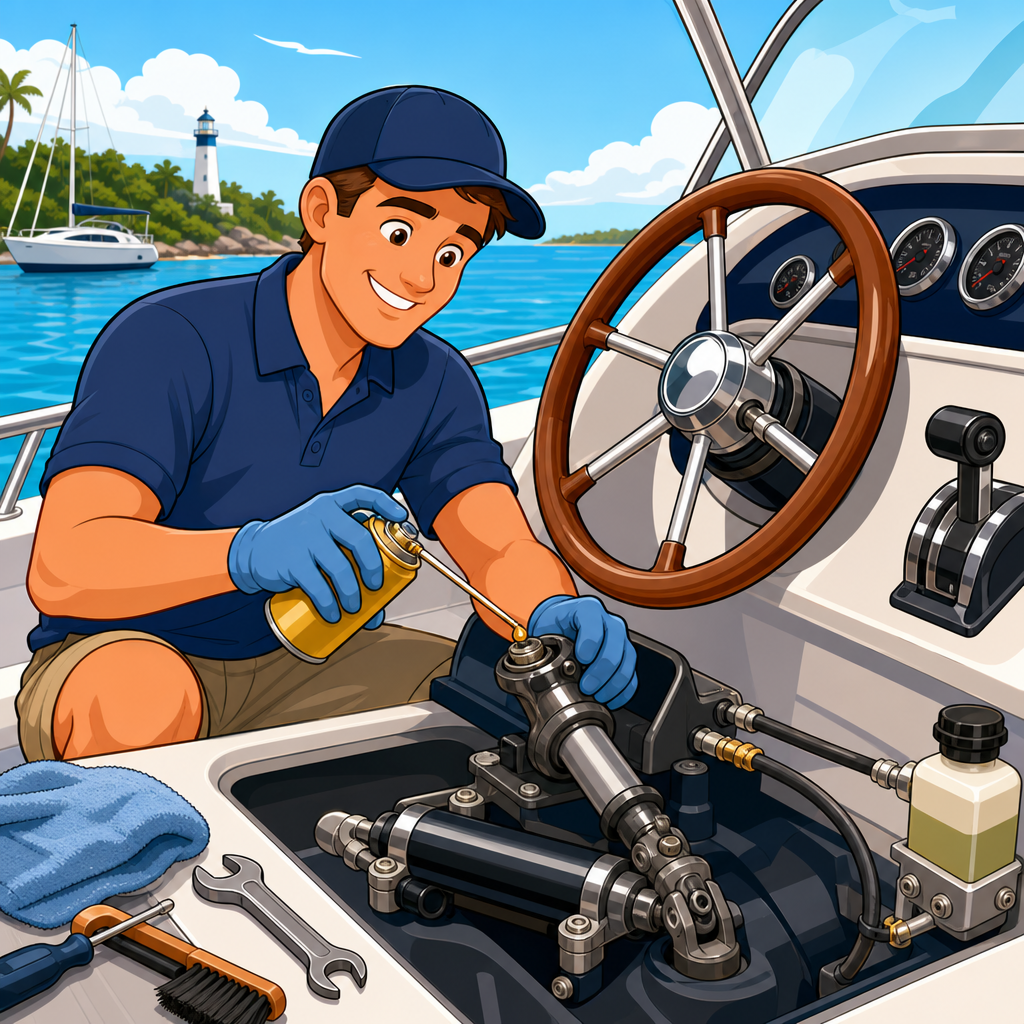
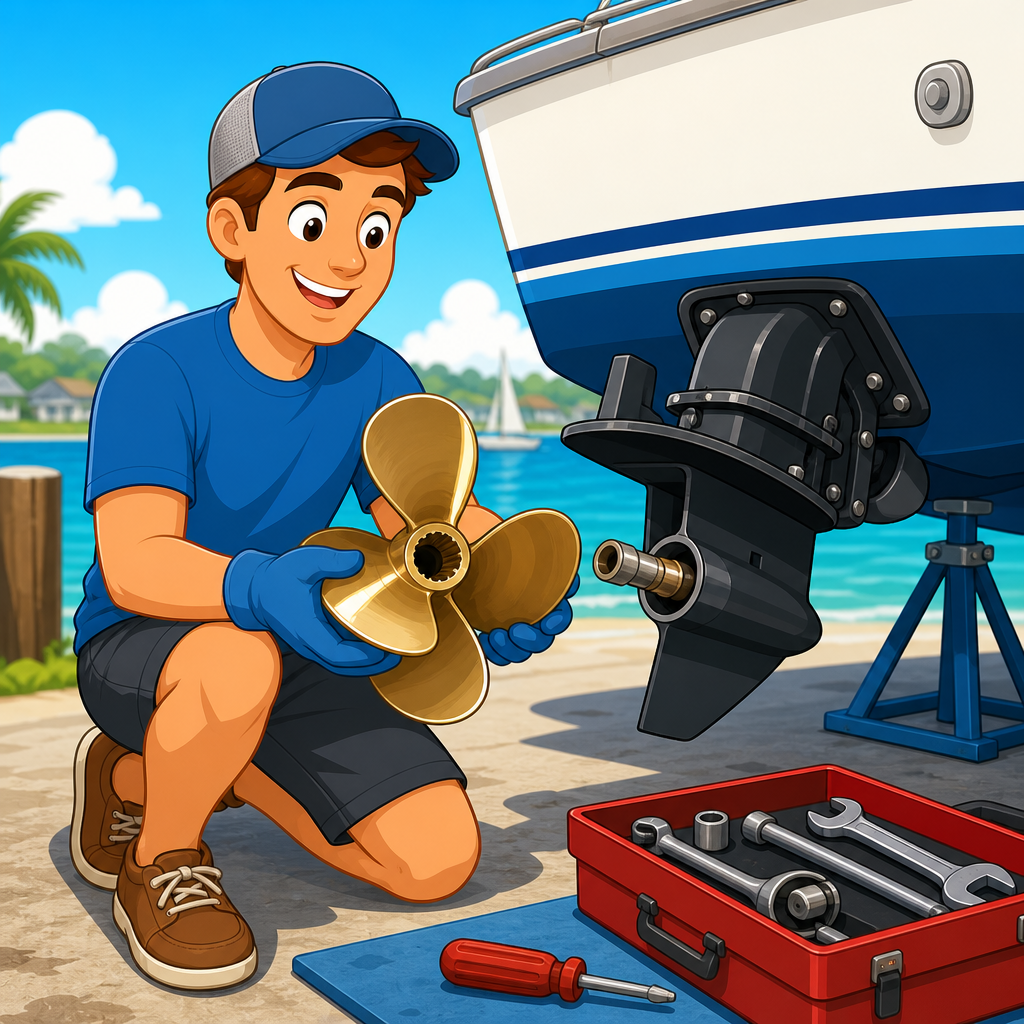
Lubrication service is another common task. Engine oil should be changed before storage if it contains combustion acids, moisture, or contaminants that would sit against internal surfaces all winter. Gear lube in lower units, transmissions, and sterndrives should be inspected for metal or milky appearance that signals water intrusion. Grease fittings, steering pivots, throttle linkages, and propeller shafts should be serviced. Remove the propeller and inspect for fishing line wrapped behind the hub, because trapped line can cut seals and allow water into gearcases. Battery care also matters across all platforms. Either remove batteries to a temperature-stable place or leave them installed on a quality marine-rated smart charger. A neglected battery can sulfate, freeze if discharged, or fail under spring load testing.
Seasonal prep includes cleaning and inspection because storage is when small issues become large ones. Wash salt residue, flush where required, dry compartments, and protect metal surfaces with corrosion inhibitor. Inspect belts, hoses, clamps, wiring, and anodes. Ventilate the boat if indoor storage conditions allow, and control moisture to reduce mildew. Document what you did, what parts you used, and what should be addressed at spring commissioning. Good records help with warranty discussions and increase resale confidence for the next owner.
Outboard winterizing: the usual process and the common failure points
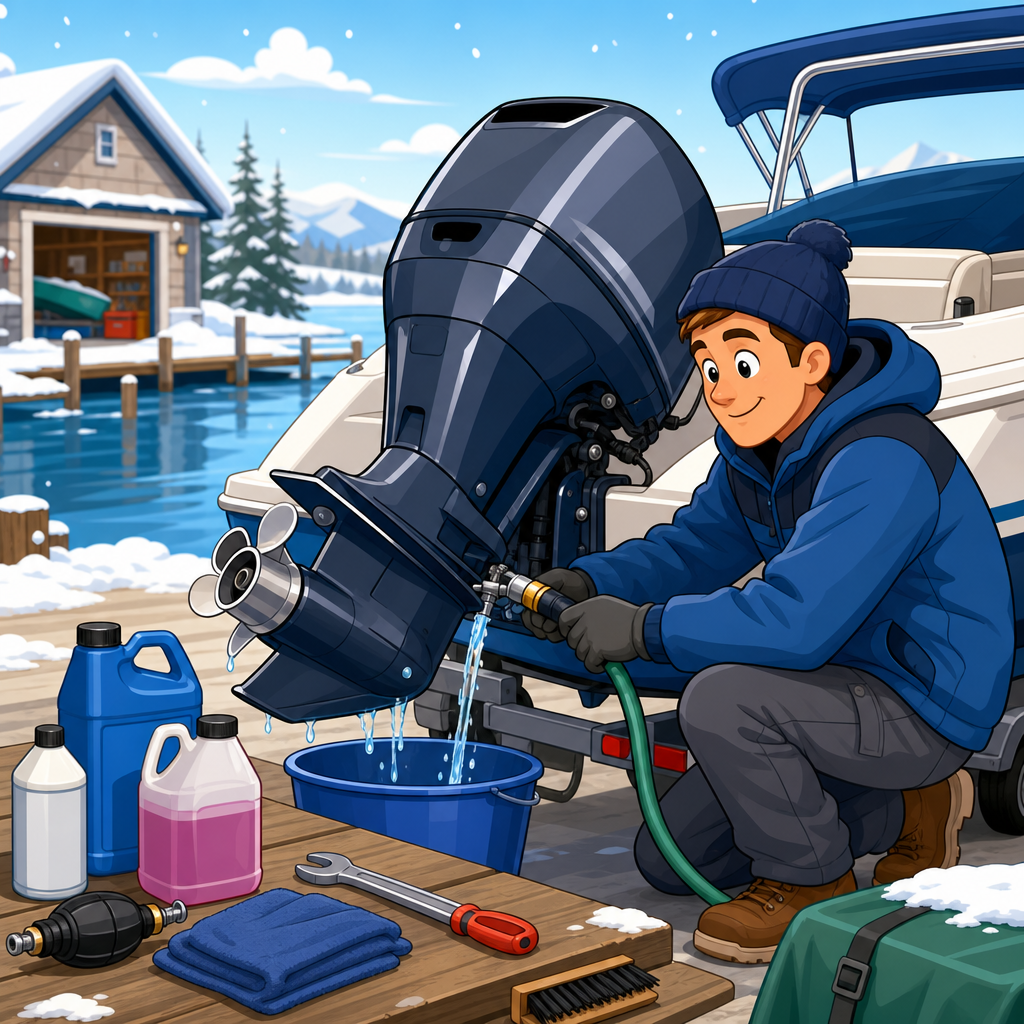
With an outboard, the first priority is flushing and draining the cooling system correctly. After the final run, flush with fresh water using earmuffs or the manufacturer’s flush port if allowed by the service manual. Then store the motor in the full-down position so water can drain from the powerhead passages and exhaust housing. Storing tilted up is one of the most common mistakes I see on trailer boats after a cold snap; trapped water can freeze in places the owner assumed were empty. Once drained, many owners move to fuel stabilization, engine oil and filter service on four-strokes, gearcase lubricant replacement, and propeller inspection. If gear lube comes out milky, seal failure should be fixed before spring launch, not ignored.
Fogging depends on engine design. Carbureted two-strokes often benefit from fogging oil introduced through the intake during shutdown. Many modern EFI four-strokes and direct-injected outboards do not use old-school fogging methods, or they require an electronic storage mode to avoid sensor issues and excessive deposits. This is where the factory manual earns its cost. Follow the exact sequence for your model, including whether to drain the vapor separator, replace spin-on filters, or lubricate cylinders. Finish by greasing steering tubes and pivots, spraying corrosion inhibitor on external metal, checking anodes, and covering the engine in a way that prevents trapped moisture.
Failure points on outboards are usually lower-unit seal leaks, batteries left to die, stale fuel in small portable tanks, and corrosion from poor rinsing in saltwater use. In northern freshwater regions, freeze damage is less common on properly stored outboards than on inboards, but it still happens when engines are not left vertical or when owners assume a brief drain is enough after muddy or mineral-heavy use. Seasonal prep for outboards also includes trailer maintenance because many outboard boats sit on trailers all winter. Wheel bearings, brake actuators, tires, lights, bunks, and winch straps belong on the same checklist.
Inboard winterizing: where complexity and cost increase
Inboards require a more methodical process because there are more systems holding water. On a raw-water-cooled gasoline inboard, the safest approach is to identify every drain point listed by the engine maker, open them, probe them if sediment blocks flow, and confirm complete drainage from the block, manifolds, coolers, pumps, and low sections of hose. On some boats, owners then introduce propylene-glycol marine antifreeze through a flushing adapter or seacock-fed bucket until colored antifreeze exits the exhaust. The key is understanding that antifreeze only protects what it actually reaches at a sufficient concentration. Pouring a few gallons through without draining first can leave pockets of diluted fluid below the product’s burst protection rating.
Closed-cooling inboards add engine coolant service to the checklist. The coolant concentration inside the engine’s closed loop should be tested with a refractometer or hydrometer appropriate to the coolant type and corrected if weak. Meanwhile, the raw-water side still must be winterized by draining or antifreeze displacement. Exhaust manifolds and risers deserve special attention because they are expensive and vulnerable. Marine engines from MerCruiser, Volvo Penta, Crusader, PCM, and Indmar all have layout-specific drain procedures, and there is no universal shortcut that safely replaces the manual. If the boat has a generator, air-conditioning system, livewell, washdown pump, or water heater tied into engine cooling, those circuits need separate winterizing steps.
Mechanical protection also goes deeper on inboards. Shaft seals, rudder ports, transmission fluid, v-drive units, seacocks, strainers, and bilge pumps should all be inspected. Sterndrives need drive service, bellows inspection, and often annual removal on schedule to inspect gimbal components. In spring, the boats that start the season smoothly are usually the ones winterized with a written system map rather than memory.
| Task | Outboard motor | Inboard motor |
|---|---|---|
| Cooling-system protection | Flush, drain by storing down, follow model-specific fogging or storage mode | Drain all raw-water circuits or fill with marine antifreeze; verify every low point |
| Lubrication service | Engine oil on four-strokes, gearcase lube, grease pivots and steering | Engine oil, transmission or v-drive fluid, coolers, shaft or drive components |
| Freeze-risk components | Lower unit, trapped water if stored tilted up | Block, manifolds, heat exchangers, pumps, hoses, mufflers, accessories |
| Typical mistakes | Leaving engine tilted, skipping gear-lube check, stale fuel | Missing drain plugs, assuming closed cooling needs no service, diluted antifreeze |
Raw-water, closed-cooling, and antifreeze choices
The most confusing part of winterizing and seasonal prep is usually cooling-system terminology. Raw-water cooling means lake, river, or sea water circulates directly through engine or exhaust components to remove heat. Closed cooling means the engine circulates coolant internally through a heat exchanger, while raw water cools the exchanger and often the exhaust. The winterizing implication is simple: any component that ever contains raw water remains a freeze risk. That includes strainers, sea pumps, oil coolers, aftercoolers on some diesel engines, and exhaust sections. Marine antifreeze used for winterizing is typically propylene glycol because it is safer for incidental environmental exposure than ethylene glycol, but product labels vary. Some products are intended mainly for potable water systems, others for engine lay-up, and the burst-protection number is not the same as the freeze-slush point.
In the field, I recommend treating antifreeze concentration as a system result, not a jug promise. If a -50 product mixes fifty-fifty with residual water in a hose or muffler, it may no longer protect to the expected level. That is why complete draining first is so important on inboards. For potable water systems, pink non-toxic antifreeze is standard. For engine closed loops, use the coolant specified by the manufacturer, often an ethylene-glycol-based coolant with corrosion inhibitors matched to aluminum, cast iron, and gasket materials. Mixing coolant chemistries casually can shorten component life.
Seasonal prep beyond the motor: fuel, batteries, plumbing, and storage strategy
As the hub for winterizing and seasonal prep, this page also needs to connect propulsion work to whole-boat storage decisions. Fuel tanks should be managed based on material, venting, and climate. Many modern gasoline boats are stored with tanks nearly full to reduce condensation space, but not overfilled, and only after treated fuel has been circulated. Diesel owners should prioritize water control and filter condition. Batteries should be fully charged before storage because lead-acid batteries suffer most when left partially discharged. AGM batteries self-discharge more slowly than flooded batteries, but both benefit from smart maintenance charging and periodic inspection.
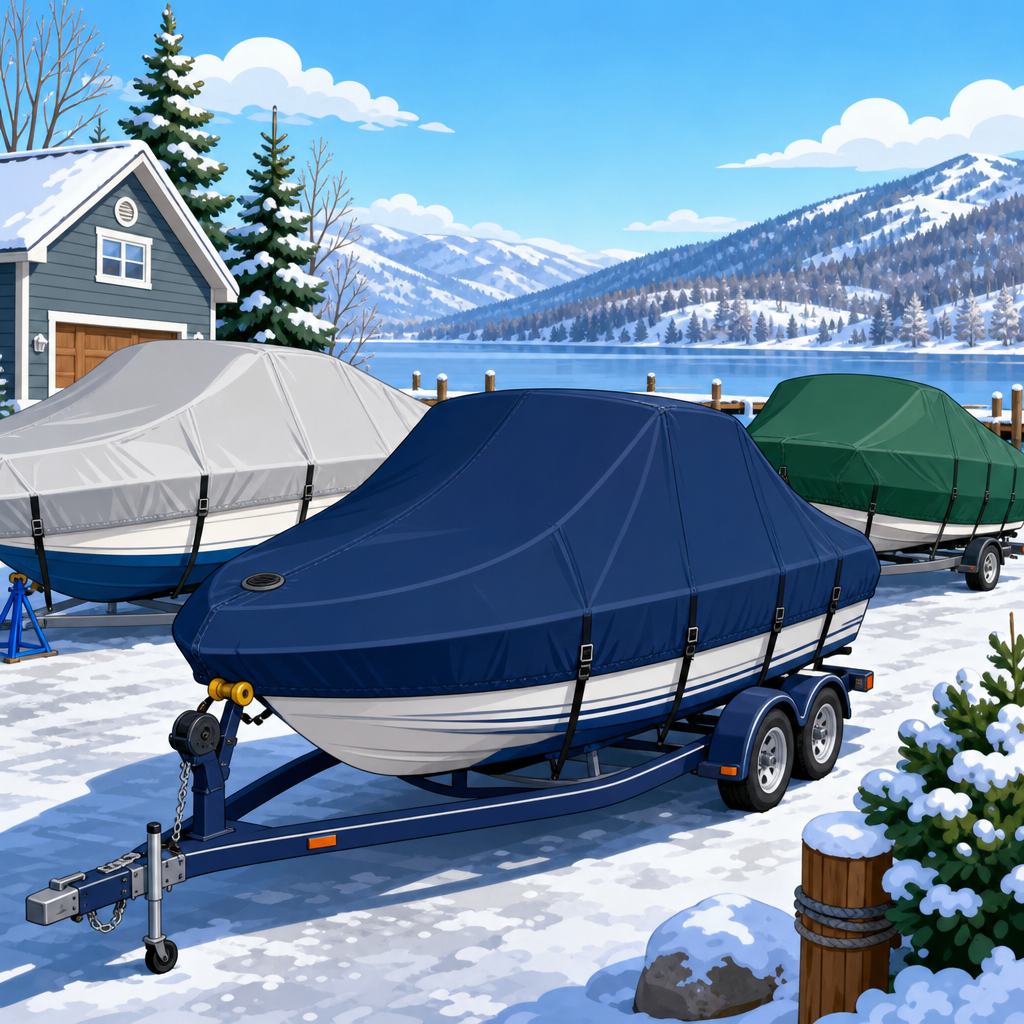
Plumbing systems often fail before engines do. Freshwater pumps, faucets, sumps, washdowns, heads, macerators, shower mixers, livewells, and baitwells all need draining or antifreeze protection. Ice makers and transom showers are easy to miss. Inside the boat, remove perishables, clean bilges, prop lockers open where safe, and use moisture absorbers or dehumidification if the storage setting supports it. The choice between indoor, shrink-wrapped, covered outdoor, or dry-stack storage affects how much ventilation and moisture management you need. A tightly wrapped boat without proper vents can trap condensation and mildew.
The biggest benefit of a hub-level winterizing plan is consistency. Build a checklist by system, not by memory: propulsion, cooling, fuel, electrical, plumbing, hull, trailer, safety gear, and documentation. Then schedule spring commissioning tasks at the same time. That is how you turn winterizing from a stressful annual scramble into a repeatable maintenance routine that protects both outboard and inboard boats.
Common mistakes, service timing, and when to hire a professional
The most expensive winterizing mistakes are predictable. Owners skip the manual, assume a friend’s process applies to a different engine, use automotive antifreeze in the wrong place, forget hidden low points, or store an outboard tilted up. Others wait until the first freeze warning, then rush through the work at the ramp with poor lighting and no drain tools. Timing matters. Winterize before hard-freeze nights arrive, ideally while parts are still available and shops are not overloaded. If the engine has known issues such as overheating, water in gear lube, weak compression, or fuel contamination, address them before storage so damage does not worsen unseen.
Professional service is worth considering when the boat has multiple raw-water circuits, diesel aftercoolers, generators, sterndrives, joystick systems, or warranty requirements tied to documented maintenance. A technician can pressure-test cooling passages, inspect bellows, sample fluids, and verify antifreeze concentration with the right instruments. Many owners still do part of the work themselves by handling cleaning, fuel treatment, batteries, and storage prep, then paying for engine and drive winterization. That split approach often makes sense.
Winterizing an outboard vs. inboard motor is different because the systems are different, but the goal is identical: remove freeze risk, preserve internal surfaces, and make spring launch predictable instead of expensive. Outboards are generally faster and less complex to winterize because they drain more easily and package fewer onboard systems. Inboards demand more discipline because raw-water plumbing, exhaust components, and accessories create many more places for trapped water and corrosion. Across both types, the essentials never change: stabilize fuel, service lubricants, protect batteries, inspect for wear, control moisture, and follow the manufacturer’s procedure instead of generic advice.
As your Boat Maintenance & Repairs hub for Winterizing & Seasonal Prep, use this page as the starting map for every related task on your boat. Build a checklist, gather the correct fluids and tools, and work system by system before temperatures drop. If any step is unclear, book qualified marine service early. A careful winterizing routine is one of the cheapest ways to protect your engine, your boating season, and your resale value.
Frequently Asked Questions
What is the main difference between winterizing an outboard motor and an inboard motor?
The biggest difference is where the engine lives and how many connected systems have to be protected. An outboard is a self-contained unit mounted on the transom, so winterizing usually focuses on the engine itself: draining water from the lower unit and cooling passages, changing lubricants, stabilizing fuel, fogging where appropriate, and protecting exposed metal from corrosion. Because the powerhead, gearcase, and cooling path are all part of one external assembly, the process is generally more straightforward and faster.
An inboard is more involved because the engine is installed inside the hull and depends on a broader network of components. In addition to the engine block, manifolds, heat exchanger or raw-water cooling circuit, exhaust system, hoses, seacocks, strainers, fuel system, and drivetrain-related parts may all need attention. Any place that can trap water becomes a freeze risk. That is why winterizing an inboard is not just about the engine; it is about protecting the entire onboard system from cracking, corrosion, and stale fuel over the off-season.
Why is draining and antifreeze use different for outboards compared with inboards?
Outboards are designed so that cooling water can usually drain effectively when the motor is stored in the full down position. That is one of the reasons manufacturers stress keeping the engine vertical during storage. If the outboard is tilted up, water can remain in sections of the lower unit or cooling passages and create freeze damage. In many cases, once the engine is fully lowered and allowed to drain, there is far less concern about trapped water than there is with an inboard. That said, owners still need to follow the engine maker’s exact procedure, because some outboards may also require flushing, thermostat-related considerations, or other service before storage.
Inboards are different because water can collect in multiple internal and connected areas that do not automatically empty just because the boat is sitting still. The engine block, exhaust manifolds, raw-water pump, hoses, coolers, mufflers, and strainers can all hold water. Depending on the engine type and cooling configuration, proper winterization may require draining specific plugs or petcocks, blowing out certain lines, and then circulating the correct marine antifreeze through the raw-water side. The key point is that inboards have more places where water can hide, so the draining process is more methodical and mistakes are more expensive.
How does fuel-system winterization differ between an outboard and an inboard?
Both engine types need fuel stabilization, but the way fuel is stored and delivered often changes the winterizing routine. With an outboard, the fuel may be in a portable tank, a built-in tank, or both, depending on the boat. Winter prep usually includes adding a quality marine fuel stabilizer, running the engine long enough to distribute treated fuel through the system, checking water-separating filters, and inspecting fuel lines for cracks or softness. Many owners also pay close attention to ethanol-related issues, since phase separation, varnish, and moisture contamination can create spring startup problems if untreated fuel sits too long.
Inboards typically rely on larger permanent fuel tanks and more fixed fuel-system components, which means stale fuel and condensation can become even bigger concerns over long storage periods. Stabilizer should be added at the correct ratio, and the engine should be run long enough to move treated fuel through pumps, lines, carburetors, or injectors. Fuel filters and water separators should be checked or replaced, and owners should inspect the system for leaks, corrosion, and hose degradation. Because inboards often sit enclosed in an engine compartment, any fuel issue is also a safety issue, so careful inspection matters just as much as stabilization itself.
Is corrosion protection more important on an outboard than an inboard during winter storage?
Corrosion protection is critical for both, but the risk profile is different. Outboards spend their lives exposed to the elements, so they need special attention on the exterior. Salt residue, moisture, and temperature swings can attack brackets, steering components, mounting hardware, electrical connections, and the lower unit. Winterizing an outboard usually includes washing and flushing thoroughly, touching up damaged paint, lubricating pivot points, greasing fittings, inspecting sacrificial anodes, and applying corrosion inhibitor to appropriate metal surfaces and electrical areas. Because the engine is outside the hull, simple exposure is a major factor.
Inboards are somewhat sheltered, but that does not make them immune. Corrosion in an inboard often shows up in the cooling system, exhaust components, hose clamps, engine mounts, and enclosed engine-compartment hardware. Moisture trapped in the bilge or poor ventilation during storage can accelerate rust and corrosion on internal components. For that reason, winterizing an inboard should include cleaning the engine space, checking for standing water, protecting metal surfaces, inspecting clamps and fittings, and making sure sacrificial anodes and bonding systems are in good condition where applicable. Outboards battle exterior exposure; inboards often battle hidden internal corrosion.
Can a boat owner winterize an outboard or inboard motor themselves, or is professional service the better choice?
Many boat owners can winterize an outboard themselves if they are comfortable following the manufacturer’s service schedule and understand the specific procedure for their engine model. Outboards are usually more DIY-friendly because the systems are more compact and accessible. Routine tasks such as changing engine oil on four-strokes, replacing lower-unit gear lube, stabilizing fuel, checking spark plugs, greasing moving parts, and storing the motor in the correct position are within reach for many owners. The most important rule is to follow the exact engine manual, because details like flushing steps, fogging recommendations, and lubrication points vary by brand and model.
Inboards are often better handled by an experienced technician unless the owner already understands marine cooling systems, drains, manifolds, seacocks, strainers, and antifreeze circulation procedures. Missing one drain point or one water-filled hose can lead to cracked castings, damaged manifolds, or ruined pumps by spring. Professional service is especially valuable for raw-water-cooled engines, closed-cooling systems with mixed components, or any setup where access is limited. A capable DIY owner can absolutely winterize an inboard, but the margin for error is smaller, and the cost of a mistake is usually much higher than with an outboard.