Keeping a boat’s hull polished and waxed is one of the highest-value maintenance jobs an owner can do because it protects gelcoat, improves appearance, reduces drag, and extends the life of the finish. In practical terms, hull cleaning and protection means removing oxidation, stains, growth residue, and old product buildup, then restoring gloss with polishing compounds and sealing that surface with wax or a synthetic protectant. I have worked on faded center consoles, chalky sailboat topsides, and lightly weathered runabouts, and the pattern is always the same: owners who maintain the hull regularly spend less money, get better resale value, and avoid the aggressive compounding required after years of neglect.
For a boat maintenance and repairs program, this topic sits at the center of preventive care. A hull is not just cosmetic. Ultraviolet exposure breaks down gelcoat resins, airborne contaminants bond to porous surfaces, waterline staining embeds minerals, and neglected oxidation roughens the finish enough to hold dirt and increase resistance underway. A polished, protected hull is easier to wash, less likely to stain, and simpler to inspect for cracks, blisters, impact marks, or failed sealant around fittings. That makes this guide the hub for hull cleaning and protection: it explains the full process, the right materials, where each step fits, and when to branch into related jobs such as stain removal, oxidation correction, ceramic coatings, non-skid cleaning, and seasonal storage prep.
Polishing and waxing are related but not identical. Polishing is the corrective step. It uses abrasives, from heavy compound to fine finishing polish, to level oxidation and restore gloss. Waxing is the protective step. It lays down a sacrificial barrier that slows UV damage and contamination. On gelcoat boats, especially older fiberglass hulls, understanding that distinction matters because using wax on oxidation does not fix the problem; it simply seals dullness in place. Likewise, compounding too aggressively removes material unnecessarily. The best results come from matching the product and pad to the condition of the hull, working methodically, and stopping as soon as the surface reaches the desired clarity and shine.
The payoff is measurable. A smooth hull sheds grime faster during routine washing, often needs less scrubbing at the end of the season, and photographs better for insurance records or resale listings. On trailered boats, polished topsides are also less likely to hold black streaks under rub rails and scuppers. On boats kept in slips, a protected freeboard cleans more easily after salt dries. If you want one repeatable maintenance skill that improves appearance, preservation, and day-to-day cleaning, learning how to polish and wax your boat’s hull is it.
Inspect the Hull and Choose the Right Level of Correction
Before opening a bottle of compound, inspect the hull in bright indirect light and again in direct sunlight. Run a clean microfiber cloth across the surface. If the cloth comes away chalky and the finish looks flat, you are dealing with oxidation. If the hull is glossy but marked with tannin streaks, rust drips, or a yellow-brown waterline, cleaning may be enough before protection. If the gelcoat is deeply porous, heavily faded, or crazed, a standard one-step cleaner wax will underperform. I usually divide hulls into four categories: clean and glossy, lightly oxidized, moderately oxidized, and heavily oxidized. That simple diagnosis determines whether you need a wash and wax, a polish and wax, or a multi-stage compound, polish, and protect sequence.
Color also changes the approach. Dark blue, black, and red hulls reveal swirls, haze, and patchiness more readily than white gelcoat, so they benefit from finer finishing steps and cleaner pad management. White hulls hide micro-marring but show embedded stains more clearly, especially around exhaust outlets and through-hulls. Gelcoat thickness is another factor. Marine gelcoat is generally thicker than automotive clear coat, which gives you more correction margin, but that is not a reason to be careless. Repeated heavy compounding over years can thin edges and raised body lines. Start with the least aggressive test spot that achieves the result, then repeat that system across the boat.
The table below helps match common hull conditions to the right process.
| Hull condition | Typical signs | Recommended process | Tools and products |
|---|---|---|---|
| Clean and glossy | Strong reflection, no chalking, minor smudges | Wash, decontaminate if needed, apply wax or sealant | Boat soap, clay substitute or chemical decon, finishing pad, marine wax |
| Light oxidation | Slight dullness, faint chalk on cloth, water spots | Light polish, then wax | Dual-action polisher, foam polishing pad, finishing polish |
| Moderate oxidation | Visible fade, uneven gloss, embedded stains | Compound, refine with polish, then wax | Rotary or forced-rotation polisher, wool or microfiber pad, medium compound |
| Heavy oxidation | Chalky surface, severe dullness, poor reflection | Wash, oxidation remover or heavy compound, second polish, protect | Heavy-cut compound, wool pad, follow-up foam pad, durable wax or sealant |
Gather Tools, Prepare the Surface, and Work Safely
Good results depend on preparation more than speed. Start by washing the hull with a pH-balanced boat soap to remove salt, loose dirt, and film. Avoid household detergents because they can strip existing protection unpredictably and dry rubber or vinyl trim. For waterline stains, use a dedicated hull cleaner based on oxalic or hydrochloric chemistry only where needed and rinse thoroughly. Wear nitrile gloves and eye protection, and never let acid cleaners dry on the surface or contact trailers, painted metals, or unsealed concrete. If the boat is on a trailer, chock wheels and stabilize it. If it is in a yard, confirm access around the full perimeter before you begin machine work.
Dry the hull completely and mask adjacent surfaces. Blue painter’s tape around decals, textured plastics, unpainted rubber rub rails, and sharp hardware edges saves time later. Oxidized gelcoat can sling residue during machine polishing, and compounds stain porous trim. For tools, a dual-action polisher is safest for most owners because it generates less heat and lowers the risk of holograms. A rotary polisher cuts faster on neglected gelcoat and is common in yards, but it demands pad control and careful edge work. Keep multiple pads on hand because a loaded pad cuts poorly and leaves haze. I generally rotate pads every section and clean them with compressed air or a pad brush.
Choose marine products from established brands such as 3M, Meguiar’s, Presta, Buff Magic, or Star brite, and read the label for intended substrate. Some compounds are designed specifically for fiberglass and gelcoat and stay wet longer on large vertical panels. Use quality microfiber towels with a short nap for product removal and a separate set for final wipe-down. If you are working outdoors, plan around temperature and sun. Most compounds and waxes behave best on a cool surface between roughly 60 and 80 degrees Fahrenheit. Direct midday sun shortens working time, increases smear risk, and can make one side of the boat cure differently from the other.
How to Polish a Boat Hull Without Damaging the Gelcoat
The most reliable way to polish a boat hull is to perform a test spot about two feet by two feet on the worst representative section. Apply a small amount of product to the pad or panel, spread it at low speed, then increase machine speed enough to engage the abrasive without overheating the surface. Work overlapping passes horizontally and vertically. On moderate oxidation, I often start with a wool or microfiber cutting pad and a marine compound, then refine with a foam polishing pad and lighter polish. Wipe the residue, inspect from multiple angles, and decide whether the result is good enough. If yes, repeat that exact process panel by panel. If not, step up one level in pad or product aggressiveness, not both at once.
Keep sections manageable. Large sweeping passes are inefficient on vertical hull sides because product dries before the abrasives finish working. On most boats, a section around three square feet gives consistent results. Watch the residue and the feel of the pad. If the compound flashes instantly, add less product and reduce speed or surface temperature. If the pad cakes with oxidation, clean it immediately. Fresh pads cut cleaner, finish better, and run cooler. Around chines, corners, and sharp mold lines, lighten pressure and keep the machine moving. These areas have less margin and are easier to burn through or leave uneven.
Not every defect should be chased. Deep scratches that catch a fingernail, impact scars, spider cracks, or gelcoat pitting will not disappear with normal polishing. Overworking them only removes surrounding material. A polished hull should look uniformly bright and reflective, not artificially ground flat. After compounding, a second refining step matters more than many owners realize. Heavy-cut products restore color quickly but can leave micro-haze, especially on dark hulls. A finishing polish on foam improves clarity, increases gloss, and gives wax a cleaner base to bond to. That extra pass is often what separates a decent DIY job from a professional-looking finish.
Waxing, Sealing, and Building Long-Term Hull Protection
Once the hull is corrected and fully wiped down, apply protection. Traditional marine waxes based on carnauba blends offer warm gloss and straightforward use, while synthetic polymer sealants usually last longer and resist detergents better. On boats stored outdoors, I lean toward durable marine sealants because UV and salt exposure break down natural waxes quickly. On meticulously kept trailer boats, a premium wax can still be a good choice if appearance is the top priority and reapplication is easy. What matters most is thin, even coverage. Thick coats waste product, cure unevenly, and become harder to buff off.
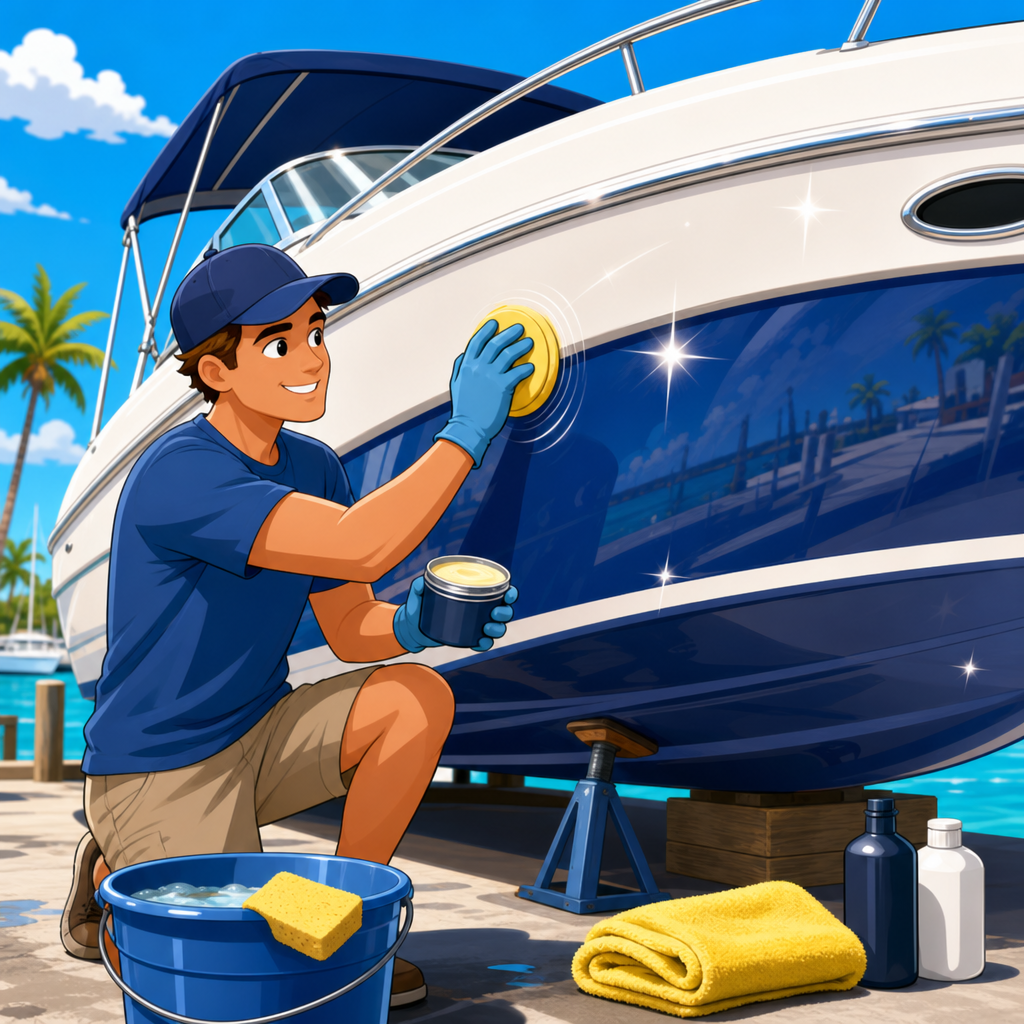
Apply wax by hand with a foam applicator or by machine with a soft finishing pad at low speed. Follow the manufacturer’s cure directions rather than relying on old advice about letting product haze heavily. Modern formulas vary. Some are wipe-on, wipe-off; others need several minutes before removal. Use clean microfiber towels and turn them frequently. If you see smearing, the coat may be too heavy, the surface may be warm, or humidity may be high. A second coat can improve uniformity, especially on porous older gelcoat, but it should be applied after the first has cured as directed. More than two coats at one session rarely adds meaningful durability.
Protection is not limited to wax. Synthetic spray sealants can be used as maintenance toppers after washes. Ceramic-based marine coatings are another option for owners willing to do meticulous prep and pay more for product. They can offer strong water behavior and easier cleaning, but they do not eliminate washing or make the hull immune to oxidation. They also demand careful decontamination and precise application. For most DIY owners, a proven routine of wash, polish as needed, and wax or sealant two to four times a year on exposed surfaces remains the best balance of cost, labor, and reliable protection.
Maintenance Schedule, Common Mistakes, and When to Hand the Job Off
A practical hull cleaning and protection schedule depends on storage and use. In saltwater, rinse after every trip if possible. Wash monthly during the season, spot-treat stains as they appear, and refresh protection every three to six months for boats kept outside. Trailered freshwater boats may stretch that interval if they are covered and washed promptly. At spring commissioning, inspect oxidation, waterline staining, and any failed previous coating. At haul-out, clean thoroughly before deposits harden over winter. Keeping notes on products, pad combinations, and dates makes each season easier because you know exactly what worked on your specific gelcoat.
The most common mistakes are easy to avoid. Do not polish a dirty hull. Do not use automotive compounds blindly on marine gelcoat without verifying compatibility. Do not leave oxidized residue packed into pads. Do not work in direct heat when you can choose shade. Do not expect cleaner wax to correct serious oxidation. Do not skip masking around textured trim and decals. Another mistake is ignoring the waterline and under-rub-rail streaks until they become permanent-looking. Frequent mild cleaning is far easier than annual aggressive restoration. If your boat has painted hull sides rather than gelcoat, stop and confirm the paint system; Awlgrip and similar coatings require different products and often prohibit abrasive polishing altogether.
Some projects justify professional help. If the hull is heavily oxidized over a large area, if access requires staging, if the finish is painted, or if prior repairs have left uneven gelcoat thickness, a yard detailer may be the smarter choice. The same is true when oxidation returns quickly because that can indicate severe porosity or a failed previous coating. Still, most owners can handle routine polishing and waxing with patience, the right machine, and a disciplined process. Start with a test spot, use the least aggressive method, protect the finish after correction, and maintain it on a schedule. If you want your boat to look better, clean easier, and hold value longer, make hull polishing and waxing a standard part of your boat maintenance and repairs routine this season.
Frequently Asked Questions
What is the difference between polishing and waxing a boat hull, and do I need to do both?
Yes, in most cases you should do both, because polishing and waxing serve two different jobs. Polishing is the corrective step. It removes oxidation, chalkiness, light surface staining, waterline discoloration, and minor defects while restoring clarity and gloss to the gelcoat. Depending on the condition of the hull, this may involve anything from a light finishing polish to a more aggressive rubbing compound. Waxing, or applying a synthetic sealant, is the protective step that comes afterward. It seals the freshly polished surface, adds slickness and shine, helps repel dirt and grime, and slows down future oxidation caused by UV exposure, salt, and weather.
A simple way to think about it is this: polish fixes the surface, wax protects the surface. If you skip polishing on a faded or oxidized hull and go straight to wax, the finish may look only slightly better for a short time because the underlying damage is still there. On the other hand, if you polish and do not apply protection afterward, the hull can quickly lose its restored shine. For a boat with healthy gelcoat and only minor dullness, a cleaner wax or all-in-one product may be enough for maintenance. But for heavily weathered topsides, especially on older center consoles, sailboats, or boats stored outdoors, separate washing, decontamination, polishing, and then waxing typically produce the best and longest-lasting results.
How do I know whether my hull needs a light polish, a heavy compound, or just a fresh coat of wax?
The condition of the gelcoat tells you what level of correction is needed. If the hull still has decent gloss, feels smooth after washing, and does not leave much chalky residue on your hand when rubbed, it may only need a finishing polish and a protective wax or sealant. If the surface looks dull, feels rough, shows visible oxidation, or leaves a white powder on your fingers or applicator, it likely needs a stronger polishing step. More severe fading, patchy gloss, stubborn staining, and a noticeably chalky appearance usually mean you should start with a rubbing compound designed for marine gelcoat and then refine the finish with a polish before applying protection.
A good approach is to perform a small test spot in an inconspicuous but representative area of the hull. Start with the least aggressive product and pad combination likely to work. If a light polish removes the haze and brings back gloss, there is no need to jump to a heavy compound. If the test spot still looks dull or uneven, increase the cut. This method saves time, preserves gelcoat, and helps you avoid unnecessary abrasion. It is also worth remembering that darker hull colors often show defects more clearly and may require an extra refining step to achieve a deep, even shine, while white gelcoat can hide some imperfections but still benefit dramatically from proper correction and protection.
What is the correct step-by-step process for polishing and waxing a boat hull yourself?
The best results come from following the steps in the right order. Start by giving the hull a thorough wash using a marine-safe soap to remove salt, loose grime, and surface contamination. If the boat has scum lines, rust streaks, tannin stains, or leftover growth residue, treat those with the appropriate cleaner before polishing. Remove any old wax buildup if needed, especially if the surface feels uneven or products have been layered repeatedly over time. Once clean, dry the hull and inspect it in good light. Tape off rub rails, fittings, decals, and any textured surfaces you do not want to stain or burn through with a machine.
Next comes correction. Work in manageable sections using either hand applicators for small areas or, more commonly, a dual-action or rotary polisher with marine compounds and polishes suited to gelcoat. Begin with a test spot to choose the right pad and product. Compound if necessary to remove oxidation and restore an even surface, then follow with a finer polish to improve gloss and clarity. Wipe away residue as you go and inspect your results from different angles. Once the hull is corrected, apply a wax or synthetic protectant in thin, even coats. Allow it to haze or cure according to the product instructions, then buff off with clean microfiber towels or finishing pads. Many owners also benefit from applying a second coat for more uniform coverage. The final result should be a clean, glossy, protected surface that feels slick and sheds water more easily.
Can I polish and wax a badly oxidized or chalky hull by hand, or do I need a machine?
You can do some hull work by hand, but if the gelcoat is badly oxidized, chalky, or heavily weathered, a machine is usually the better choice. Hand polishing works for small touch-up areas, tight spaces, spot stain removal, and applying final protection. It is also useful if the oxidation is very light. However, once you are dealing with large topsides, significant fading, or years of neglect, polishing by hand becomes slow, inconsistent, and physically exhausting. A quality dual-action polisher is often the best tool for DIY owners because it is safer and easier to control than a rotary buffer while still delivering enough correction for many gelcoat restoration jobs.
That said, the machine alone is not what determines success. The right combination of pad, product, pressure, arm speed, and section size matters just as much. Gelcoat is generally harder and thicker than automotive paint, so it often responds best to products specifically made for marine surfaces. If the hull is extremely neglected, a rotary can cut faster, but it also carries a higher risk of swirl marks, overheating edges, or causing uneven results in inexperienced hands. For most boat owners, a dual-action machine with a structured test-spot process is the sweet spot between effectiveness and safety. If you are uncomfortable with machine polishing, start with a small section and build confidence before tackling the whole hull.
How often should I polish and wax my boat hull, and how can I make the protection last longer?
The ideal schedule depends on how and where the boat is used. A boat kept in the water, exposed to strong sun, salt, airborne pollution, and regular washing will usually need protection more often than a trailer-kept boat stored under cover. As a general rule, most owners should plan on waxing or sealing the hull at least once or twice per season, while polishing should be done only as needed based on actual oxidation and loss of gloss. Some boats with good storage habits and consistent upkeep may need only a light annual polish and fresh protection. Others, especially boats in harsh climates or with darker gelcoat, may need more frequent attention to keep the finish looking sharp.
To make your work last longer, focus on maintenance between major detailing sessions. Wash the hull regularly with a pH-appropriate boat soap instead of harsh household detergents that can strip protection. Remove bird droppings, salt deposits, and waterline buildup promptly so they do not etch or stain the surface. Use a spray wax or maintenance topper if compatible with your main protectant to refresh slickness and gloss. Cover the boat when possible, or store it out of direct sun to reduce UV degradation. Finally, avoid over-polishing. Every abrasive correction step removes a tiny amount of material, so the smartest long-term strategy is to do a thorough restoration when needed, then preserve that finish with gentle washing and timely reapplication of wax or sealant.