Exploring the Amazon’s hidden waterways by boat reveals a version of the rainforest most travelers never see: narrow blackwater channels, seasonally flooded forests, remote river communities, and wildlife-rich tributaries far beyond the main cruise routes. In boating terms, “hidden waterways” refers to side channels, igarapés, oxbow lakes, várzea floodplains, and lesser-known tributaries that branch from the Amazon’s main stem and major rivers such as the Rio Negro, Solimões, Tapajós, and Madeira. These routes matter because they offer quieter navigation, closer contact with biodiversity, and a more accurate understanding of how life in the basin actually functions. I have planned river itineraries in northern Brazil and Peru, and the biggest misconception I regularly hear is that the Amazon is one river and one experience. It is not. It is an immense network shaped by rainfall, sediment, flood pulses, local economies, and navigational constraints. For boaters and expedition-minded travelers, this subtopic sits at the heart of hidden and underrated boating destinations because the Amazon combines world-class scenery with practical complexity. Understanding where to go, when to go, what kind of vessel to use, and how to navigate responsibly turns an intimidating region into one of the most rewarding boating destinations on earth.
What makes the Amazon’s lesser-known waterways special
The Amazon Basin contains more navigable water than any other rainforest region, but the most memorable journeys often happen away from the widest channels. Hidden waterways include narrow creeks shaded by overhanging forest, clearwater tributaries with sandy beaches, blackwater corridors that reflect the canopy like glass, and flooded woodland passable only during high water. These routes feel secluded not because they are untouched, but because they are lightly trafficked compared with the sections used by ferries, cargo barges, and mainstream expedition ships. In practical travel planning, they are underrated because they demand more local knowledge, smaller draft, and more flexible timing than standard river cruising.
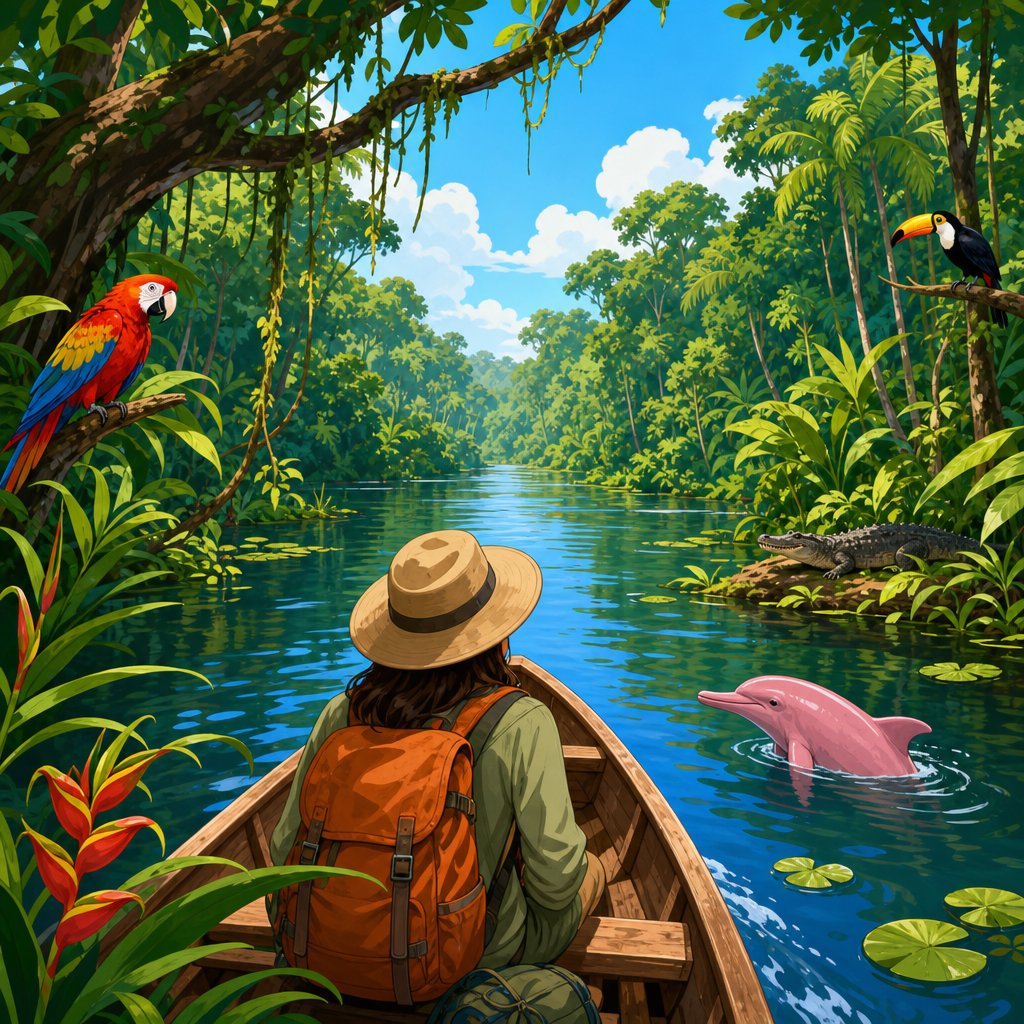
Each water type creates a different boating experience. Blackwater rivers such as stretches of the Rio Negro are acidic, dark, and often low in sediment, which means fewer mosquitoes in some zones and striking mirror-like surfaces at dawn. Whitewater systems, including the Solimões, carry Andean sediment and support highly fertile floodplains where communities farm, fish, and travel by canoe. Clearwater rivers such as parts of the Tapajós can be visually surprising to first-time visitors, with blue-green shallows and beaches that resemble coastal destinations during the dry season. The hidden channels connected to these rivers are where travelers often see hoatzins, squirrel monkeys, giant river otters, pink river dolphins, and caimans at a respectful distance.
For travelers researching hidden and underrated boating destinations, the Amazon stands out because it delivers both scale and intimacy. A boater can spend a morning crossing a broad river measured in miles, then enter an igarapé barely wider than the vessel. That contrast is rare globally. It is also why this sub-pillar topic connects to other destination pages on jungle rivers, expedition cruising, small-boat wildlife travel, and culturally immersive boating routes. The Amazon is not just a destination; it is a framework for understanding how remote waterways can be explored without reducing them to a checklist of famous sights.
Best regions for exploring hidden waterways by boat
The Brazilian Amazon around Manaus is the most practical starting point for many travelers because it combines transport links, guides, fuel access, repairs, and immediate access to side channels on the Rio Negro and lower Solimões. From Manaus, small expedition boats can enter Anavilhanas Archipelago, one of the world’s largest freshwater archipelagos, where countless channels thread through forested islands. This is an ideal hub-style destination because it supports half-day outings, multiday itineraries, canoe extensions, and wildlife observation with relatively efficient logistics. During high water, many routes open into flooded forest, creating a surreal paddling and skiff environment among tree trunks.
Farther west, the Pacaya-Samiria National Reserve in Peru is one of the best examples of a hidden-waterway system that rewards patient exploration. Access usually runs through Iquitos and onward by river, but once inside the reserve, the boating experience becomes quieter and more wildlife-focused. Guides navigate lakes and narrow channels where traveler numbers are lower than in better-known sections of the central Amazon. Pink dolphins, monk saki monkeys, and prolific birdlife are common draws. This region suits travelers who prioritize conservation-led guiding and flexible small-boat operations over luxury amenities.
The Tapajós region near Alter do Chão offers a distinctly different style of Amazon boating. In the dry season, sandbars and beaches emerge, and the river’s clearer water creates excellent visibility for swimming in designated safe areas. Side channels and forest-fringed inlets feel more relaxed than the busier commercial arteries elsewhere. For boaters seeking an underrated blend of rainforest scenery and beachlike stops, it is one of the strongest alternatives to the classic Manaus-focused itinerary.
Other worthwhile areas include the Mamirauá Sustainable Development Reserve, known for community-based wildlife tourism and flooded forest ecosystems, and sections of the Juruá and Jaú systems, where remoteness increases and logistics become more specialized. These areas reinforce an important planning principle: in the Amazon, “best” depends on water level, boat size, guide quality, and your tolerance for heat, distance, and unpredictability.
Choosing the right boat, season, and route
The right vessel determines what you can safely and comfortably reach. Large river ships are useful for covering distance and sleeping comfortably, but they cannot enter the smallest channels. Regional liveaboards and expedition boats strike the best balance for most travelers, pairing cabins and dining space with aluminum skiffs or canoes for side excursions. Private speedboats can work for day exploration near urban gateways, though they are less suitable for immersive multiday travel because noise, range, and weather exposure become significant drawbacks. If your goal is hidden waterways, prioritize operators that regularly deploy skiffs at dawn and dusk, when wildlife activity is highest.
Season matters as much as boat choice. High water generally opens access to flooded forest and interior channels, often from roughly December through May in central Brazilian zones, although exact timing shifts by region and annual rainfall. Low water, commonly June through November in the same broad area, reveals beaches, concentrates wildlife near remaining water, and can simplify walking excursions on exposed ground. Neither season is universally better. High water delivers deeper penetration into forest systems; low water produces stronger contrasts in landscape and often easier photography from stable banks and sandbars.
| Planning Factor | High Water Season | Low Water Season |
|---|---|---|
| Access | More flooded forest and interior channels open | Some side routes become too shallow, but beaches emerge |
| Wildlife Viewing | Excellent for canopy-level forest access and birding | Wildlife may concentrate near remaining water sources |
| Boating Style | Skiff exploration through trees and broad navigability | Main-channel travel with sandbar stops and defined shorelines |
| Photography | Reflections, mist, immersive forest scenes | Open vistas, river beaches, dramatic low-water textures |
Route design should be conservative. In my experience, travelers often underestimate transit time because maps flatten the reality of current, fuel stops, rain squalls, and channel obstructions. A strong itinerary leaves room for weather delays, mechanical checks, and local opportunities, such as spending longer in a productive oxbow lake at sunset instead of forcing a schedule. That flexibility is a hallmark of good Amazon boating.
Wildlife, communities, and the realities of navigation
Hidden Amazon waterways are attractive largely because they bring wildlife and human life into close focus, but they are not wilderness in the simplistic sense. River communities depend on these channels for transport, fishing, school access, and trade. Small boats carry families, produce, fuel, and building materials. Responsible travelers treat every route as shared infrastructure, not a private nature corridor. That means reducing wake near houses and canoes, requesting permission before photographing residents, and buying local services when possible. In reserves such as Mamirauá, community-run lodges and guide networks have shown that boating tourism can create income tied directly to standing forest and healthy fisheries.
Wildlife encounters are often best in quieter backwaters. Giant river otters favor oxbow lakes and calm channels where fish are abundant. Black-collared hawks patrol shorelines. Macaws and parrots cross open water at first light. Pink river dolphins are frequently seen near confluences and fishing areas, though feeding them is discouraged because it alters behavior and can increase conflict. Caiman spotting is common after dark with trained guides using low-impact lights. The rule I give travelers is simple: choose operators who never chase animals, never block movement paths, and never guarantee sightings. In the Amazon, ethical observation and realistic expectations go together.
Navigation has genuine hazards. Floating logs can damage propellers and lower units. Sandbanks shift. Unmarked channels dead-end in vegetation. Water hyacinth mats can obscure debris. GPS plotters help, but they do not replace local pilots who understand seasonal river behavior. Commercial standards vary by country and operator, so ask direct questions about life jackets, communications equipment, first-aid capability, spare fuel management, engine redundancy, and evacuation planning. A well-run small-boat operation in the Amazon should brief guests clearly, monitor weather, and explain why some routes are changed or canceled. That is not poor service; it is competent seamanship.
How to plan a responsible and memorable Amazon boat trip
Start with a realistic objective. If you want maximum comfort, broad scenic exposure, and a taste of side-channel exploration, a four- to seven-night expedition from Manaus or Iquitos is usually the strongest entry point. If you care most about photography, birding, or community-based travel, narrow your destination accordingly and choose a specialist operator. Ask how much time is spent in small craft versus on the mother boat, how many guests share each skiff, and whether guides are trained naturalists or primarily boat drivers. Those details shape the trip more than brochure adjectives do.
Pack for function. Lightweight long sleeves, quick-dry trousers, sun protection, dry bags, insect repellent, and closed shoes for muddy landings are essentials. Binoculars matter more than many first-time travelers expect. So does a waterproof phone case and a power strategy, because charging availability can be limited on smaller vessels. Health preparation should include destination-specific medical advice, hydration discipline, and documentation for travel insurance that covers remote evacuation. Conditions are humid, gear gets wet, and plans change. Travelers who accept that reality usually enjoy the Amazon most.
Finally, judge value by access and expertise, not by cabin décor alone. The strongest hidden-waterway trips are led by crews who know bird calls, fishing seasons, river levels, and which community festivals or conservation rules affect a route. They can explain why a blackwater channel supports different species from a sediment-rich tributary, or why a flooded forest passage is possible this week but not next month. That local intelligence turns a boat ride into genuine understanding.
Exploring the Amazon’s hidden waterways by boat is one of the most compelling ways to experience hidden and underrated boating destinations because it combines biodiversity, cultural depth, and navigational adventure in a single setting. The key lesson is that the Amazon rewards specificity. Choose the right region, the right season, and the right boat, and the basin opens into a network of intimate routes far beyond the obvious cruise corridors. Manaus and Anavilhanas suit first-time planners who want reliable logistics. Pacaya-Samiria suits travelers focused on wildlife and reserve-based exploration. The Tapajós offers a clearer-water alternative with beaches and quieter side trips. Across all of them, smaller craft, flexible schedules, and knowledgeable local guides make the biggest difference.
This sub-pillar topic matters within boating destinations and travel because the Amazon sets the standard for how to approach remote waterways well: understand hydrology, respect communities, plan around seasonality, and prioritize operators with strong safety and conservation practices. Done properly, an Amazon boat journey is not just scenic transportation. It is an education in how rivers shape ecosystems and daily life. Use this page as your hub, then build outward into detailed guides on seasonal planning, vessel types, wildlife-focused routes, and lesser-known Amazon tributaries. If you are ready to move beyond crowded marinas and familiar coastlines, start planning an Amazon itinerary that reaches the waterways most travelers never find.
Frequently Asked Questions
What counts as the Amazon’s “hidden waterways,” and how are they different from the main river routes?
In the Amazon, “hidden waterways” generally refers to the smaller, quieter, and less-traveled aquatic corridors that branch away from the broad main channels. These include igarapés, which are narrow forest streams often shaded by dense vegetation; blackwater side channels fed by tannin-rich waters; oxbow lakes formed when rivers change course; seasonally flooded várzea forests; and little-known tributaries connected to major systems such as the Rio Negro, Solimões, Tapajós, and Madeira. Unlike the Amazon’s main stem and the better-known cruise routes, these waterways tend to be more intimate, ecologically varied, and dependent on seasonal water levels.
What makes them so compelling is that they offer a completely different scale of experience. On the main rivers, the landscape can feel immense and open, with large vessels, broader navigation lanes, and longer distances between points of interest. In the hidden waterways, the boat often moves slowly through tunnel-like passages framed by overhanging trees, mirrored water, and close-up wildlife habitat. These environments reveal the Amazon as a living network rather than a single giant river. Travelers are more likely to witness subtle transitions in water color, forest type, bird activity, and community life, all within relatively short distances.
From an exploration standpoint, these routes also provide access to places that larger boats simply cannot enter. Small expedition boats, canoes, and skiffs can navigate shallower areas and tighter bends, allowing visitors to enter flooded forests, approach lagoons at dawn, and visit remote settlements with minimal disturbance. That combination of ecological richness, physical remoteness, and limited traffic is exactly why these waterways are considered “hidden” and why they are often the most memorable part of an Amazon journey by boat.
What kind of wildlife can you see when exploring the Amazon’s hidden waterways by boat?
The smaller tributaries and side channels are often among the best places in the Amazon to observe wildlife because they are quieter, less disturbed, and closer to the habitats animals actually use for feeding, nesting, and shelter. Depending on the region, season, and time of day, travelers may encounter pink river dolphins, caimans, sloths, several species of monkeys, giant river otters, turtles, iguanas, and an extraordinary diversity of birds. Herons, egrets, kingfishers, macaws, hoatzins, toucans, and hawks are frequently spotted along the margins of lakes and creeks, especially during early morning and late afternoon outings.
These hidden waterways are especially rewarding for birdwatchers and wildlife photographers because the viewing conditions can be far more favorable than on open water. Boats move more slowly, the banks are closer, and the animals often concentrate around fruiting trees, mud edges, flooded roots, and shallow feeding zones. In blackwater channels and oxbow lakes, reflections can be remarkable, creating beautiful visual conditions for photography. In flooded forest environments, you may literally float through the canopy zone where fish, birds, insects, and mammals interact in ways that are difficult to observe elsewhere.
That said, wildlife sightings are never guaranteed, and the Amazon rewards patience more than speed. A knowledgeable local guide or naturalist makes a huge difference, not only in spotting animals but in interpreting behavior, tracks, calls, and habitat clues. The most successful excursions are usually those that leave early, keep noise to a minimum, and focus on immersion rather than rushing from one sighting to the next. The hidden waterways are less like a zoo and more like a field classroom: the deeper you pay attention, the more the rainforest begins to reveal itself.
When is the best time of year to explore the Amazon’s hidden waterways by boat?
The best time depends on what kind of experience you want, because the Amazon changes dramatically with the annual flood pulse. During high-water season, rivers rise and spill into surrounding forests, opening access to flooded woodlands, interior lagoons, and channels that may be unreachable at other times of year. This is one of the most magical periods for boat-based exploration because you can glide directly through submerged forest, moving among tree trunks and canopy reflections in areas that are dry land for part of the year. Wildlife can still be excellent, and the sheer sense of access is extraordinary.
During lower-water months, the landscape changes again. Beaches, mudbanks, and exposed shorelines appear, and wildlife often concentrates around remaining water sources, which can make certain sightings easier. Some channels become too shallow to navigate, but others become more defined and ideal for skiff excursions, fishing-focused trips, and visits to lakes or tributaries where animal activity intensifies around the edges. Lower water can also make it easier to see riverbank life and understand the shape of the land beneath the floodplain.
Because seasonality varies across the Amazon basin, there is no single universal calendar that applies equally to every departure point. Conditions on the Rio Negro differ from those on the Solimões, Tapajós, or Madeira, and annual rainfall patterns can shift from year to year. The smartest approach is to choose your route first, then ask specifically about expected water levels, navigability of side channels, wildlife goals, and current local conditions. Operators with deep regional knowledge can usually tell you whether a given month is best for flooded-forest access, birdwatching, community visits, photography, or a balance of all of the above.
What type of boat is best for visiting narrow channels, flooded forests, and remote tributaries in the Amazon?
For exploring the Amazon’s hidden waterways, smaller is generally better. Large cruise vessels are comfortable for transiting major rivers, but they are limited when it comes to entering narrow igarapés, shallow lakes, and seasonally flooded forest corridors. The most effective setup is often a combination: a small expedition ship or riverboat as the main base, paired with motorized skiffs, canoes, or other shallow-draft tenders used for daily excursions. This gives travelers both comfort and access, allowing them to sleep aboard a well-equipped vessel while still reaching the places where the real fine-grained exploration happens.
Shallow draft matters because water depth can change quickly with season, sediment, and vegetation. Maneuverability matters because many side channels involve tight bends, submerged roots, overhanging branches, and variable current. Quiet engines and skilled handling matter because wildlife viewing improves dramatically when a boat can approach slowly and with minimal disturbance. Safety is equally important, especially in remote areas where weather, floating debris, and navigation conditions can change quickly. For these reasons, the quality of the crew is often just as important as the type of boat itself.
Travelers should also consider the style of trip they want. If comfort, private cabins, and guided natural history are priorities, a small expedition vessel with daily skiff outings is usually ideal. If the goal is highly local, immersive exploration, some travelers prefer lodge-based stays combined with canoe or small-boat excursions. In very remote areas, custom charters or specialist expedition operators may be the best fit. In all cases, the key question is not just “How big is the boat?” but “Can this operation reliably and safely reach the side channels, oxbow lakes, and floodplain habitats that define the hidden Amazon experience?”
Is it safe and responsible to visit remote Amazon waterways, and how can travelers minimize their impact?
Yes, exploring remote Amazon waterways by boat can be both safe and responsible when it is done with experienced operators, realistic expectations, and strong environmental standards. Safety in the Amazon depends less on dramatics and more on preparation: knowledgeable captains, region-specific navigation experience, well-maintained boats, clear emergency protocols, communication equipment, weather awareness, and guides who understand local river conditions. Travelers should also be prepared for heat, humidity, insects, sudden rain, and long travel times. Vaccination and health recommendations vary by route and country, so it is wise to consult a travel clinic before departure and follow local guidance carefully.
Responsible travel is just as important as personal safety. The hidden waterways are often ecologically sensitive and culturally significant, especially where they pass near Indigenous territories, small river communities, fishing grounds, and wildlife breeding areas. Good operators limit noise, avoid crowding wildlife, follow legal access rules, use local guides, and maintain respectful relationships with communities. They also brief guests on behavior ashore and on the water, including asking permission before taking photographs of people, avoiding single-use plastics where possible, and never feeding or harassing animals. In a place as complex as the Amazon, ethical conduct is part of the journey, not an optional extra.
Travelers can minimize their impact by choosing operators with a clear conservation ethic, supporting community-based tourism where appropriate, packing reef-safe and biodegradable products when practical, bringing reusable water bottles and dry bags, and following instructions during wildlife encounters. Small actions matter: keeping voices low, staying on designated paths during village or forest visits, not collecting natural objects, and understanding that some places are meant to be observed rather than entered. When approached thoughtfully, a boat journey through the Amazon’s hidden waterways can support local livelihoods, deepen ecological understanding, and leave the lightest possible footprint on one of the world’s most important freshwater landscapes.