How to Prevent Rust and Corrosion on Your Boat Trailer starts with understanding a simple truth: a trailer lives in harsher conditions than many boats. It carries heavy loads, gets submerged at ramps, traps salt and road grime in seams, and often sits idle long enough for moisture to attack unprotected metal. In my experience maintaining galvanized and painted trailers for both freshwater fishing rigs and saltwater center consoles, corrosion usually begins in hidden places long before owners notice bubbling paint or orange stains. By the time rust is visible, the damage often extends into fasteners, brake hardware, wiring grounds, bunks, springs, and frame interiors.
Rust is the oxidation of iron and steel. Corrosion is the broader chemical breakdown of metals, including galvanic corrosion that occurs when dissimilar metals interact in the presence of an electrolyte such as saltwater. Boat trailer maintenance therefore means more than spraying off the frame after use. It includes choosing corrosion-resistant materials, washing correctly, inspecting structural and braking components, protecting electrical connections, maintaining wheel bearings, and storing the trailer so moisture does not stay trapped. It also includes towing-related checks, because a neglected trailer does not just look rough; it becomes unsafe on the road.
This trailer maintenance and towing hub matters because trailer failure is expensive, inconvenient, and dangerous. A rusted spring hanger, seized caliper, or corroded ground wire can turn a normal launch day into a roadside breakdown. Preventive care costs far less than replacing axles, brake assemblies, hubs, couplers, and crossmembers. Owners who follow a repeatable maintenance routine get longer trailer life, fewer towing problems, better resale value, and more confidence on every trip. The practical goal is straightforward: keep oxygen, salt, and standing moisture away from vulnerable metal, and catch wear before corrosion becomes structural damage.
Why Boat Trailers Rust Faster Than Other Utility Trailers
Boat trailers are repeatedly exposed to three accelerants: immersion, salt, and neglect between uses. A landscaping trailer may get wet in rain, but a boat trailer is backed into water deep enough to soak hubs, brake rotors, leaf springs, U-bolts, and frame members. If that water is brackish or saltwater, chloride deposits stay on metal surfaces after drying and continue pulling moisture from the air. That is why a trailer can corrode even while parked. In coastal areas, I have seen trailers rust aggressively from salt spray alone, especially on hardware under painted steel frames where chipped coatings expose bare metal.
Design also plays a role. Box tubing can look clean outside while corroding internally if drain holes are blocked. Bunks and brackets trap wet carpet against hardware. Disc brake calipers and backing plates collect salt and silt. Wiring splices corrode when factory connections are poorly sealed. The launch cycle adds thermal shock too: hot hubs entering cold water can draw moisture past worn seals, contaminating bearings. Towing then sprays road salt, grit, and water back onto the frame. This combination makes trailer maintenance and towing inseparable. Every mile and every launch influence how quickly corrosion advances.
Choose the Right Trailer Materials and Protective Finishes
The best defense against rust starts before maintenance: material selection. Painted steel trailers are common and cost-effective, but paint is only a barrier coating. Once chipped, rust can spread underneath. Hot-dip galvanized steel is usually the best all-around choice for saltwater use because the zinc coating sacrifices itself to protect underlying steel. Aluminum trailers resist red rust because the frame is not steel, but they still use steel axles, stainless hardware, brake components, and couplers that need regular protection. Aluminum also corrodes if paired badly with other metals or exposed to trapped salt deposits.
Protective finishes should match the environment. For painted trailers, epoxy primer and marine-grade topcoat outperform generic aerosol touch-up paint. For galvanized trailers, use zinc-rich cold galvanizing compound only after proper surface preparation and only on localized repairs. Do not paint over active corrosion without removing scale first. Replace plain carbon-steel hardware with marine-grade options where appropriate, but avoid creating galvanic problems by mixing metals carelessly. Anti-seize on stainless fasteners helps prevent galling and simplifies future service. When I refurbish older trailers, I prioritize spring hardware, brake line clips, U-bolts, winch stand fasteners, and ground points because these fail early and affect towing safety directly.
Build a Post-Launch Rinse and Drying Routine
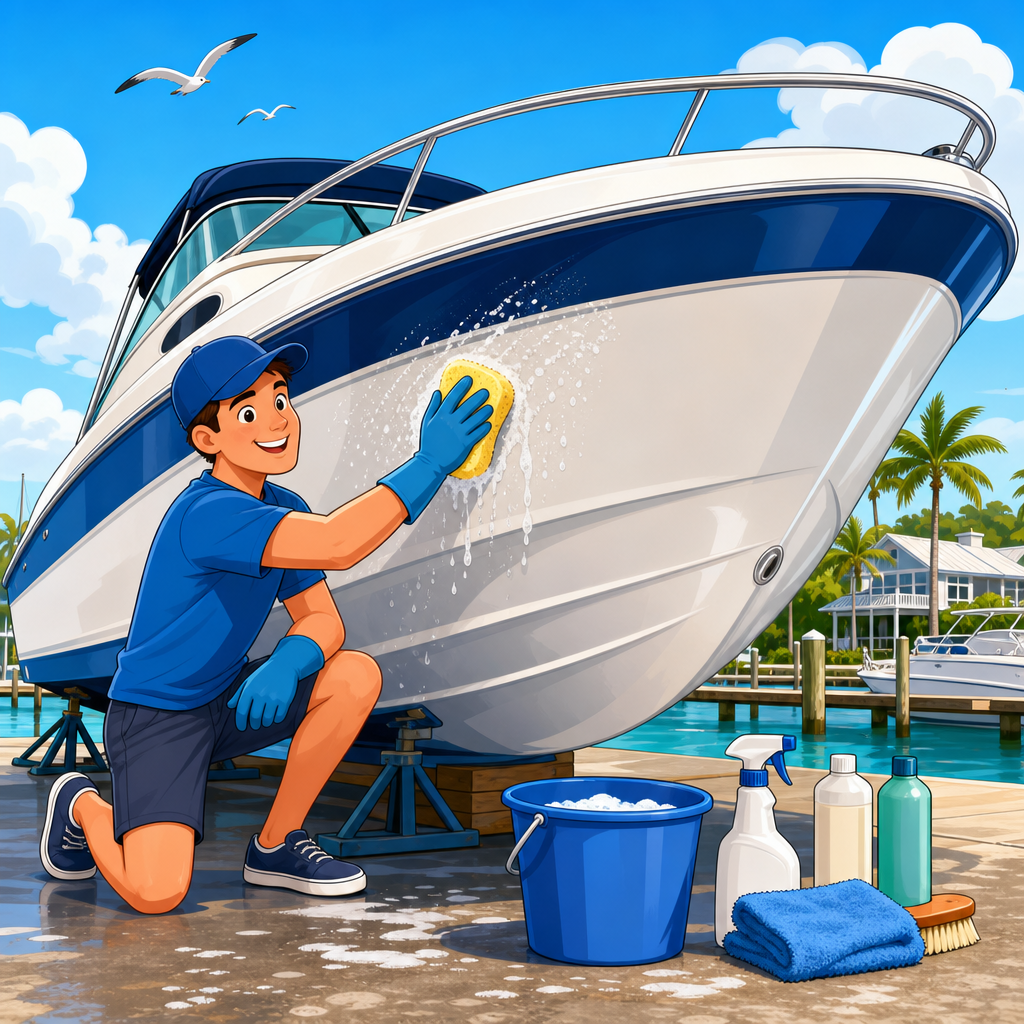
The most effective habit is a disciplined rinse routine after every launch, especially after saltwater exposure. Use low-pressure fresh water first to dissolve and remove chlorides rather than blasting contaminants deeper into bearings or electrical seals. Focus on brake calipers, rotors, drums, springs, equalizers, axle seats, bunk brackets, coupler components, safety chains, jack tubes, and light brackets. Flush inside accessible frame openings if the manufacturer permits it, then ensure drain holes remain open. If your trailer has brake flushing ports, use them. Salt left behind on brakes is one of the fastest ways to destroy expensive components.
Rinsing alone is not enough. Drying matters because corrosion needs persistent moisture. After washing, move the trailer enough to shed trapped water, park on a slight incline if possible, and avoid covering a wet trailer tightly. Compressed air is useful around brake hardware, light mounts, and electrical plugs. In humid climates, a leaf blower works surprisingly well for crossmembers and bunk hardware. I advise owners to wash the tow vehicle hitch area and trailer plug too, because corrosion often starts at the connector and ball mount. A clean, dry trailer is far easier to inspect, lubricate, and keep road-ready between trips.
Inspect the Frame, Suspension, and Fasteners on a Schedule
Regular inspection turns corrosion control into a manageable checklist. Monthly for frequent users, and at minimum each season for occasional boaters, inspect the frame rails, crossmembers, welds, spring hangers, tongue, coupler, safety chains, and bunk supports. Look for blistered coatings, white oxidation on galvanized areas, rust bleed at weld toes, flaking scale, cracked welds, elongated bolt holes, and metal thinning around drain openings. Tap suspect steel lightly with a hammer; dull sound and deformation can indicate hidden weakness. Surface rust can be treated early, but deep pitting near highly loaded areas deserves professional evaluation.
Suspension deserves special attention because corrosion here affects alignment, tire wear, and stability while towing. Leaf springs often rust between leaves where moisture stays trapped. Equalizer bolts seize. U-bolts lose material under their saddles. Torsion axles hide deterioration differently, so inspect mounting brackets and spindle areas closely. Fasteners that appear intact may be heavily wasted under washers or inside brackets. Replace rather than reuse severely corroded hardware. On older trailers, I mark inspected fasteners with a paint pen after torque checks; it saves time and makes movement easy to spot later. Consistency is what keeps small corrosion from becoming roadside structural failure.
Protect Bearings, Brakes, and Electrical Systems
Three systems determine whether a trailer is truly dependable: wheel bearings, brakes, and wiring. Bearings fail when water breaches seals or grease breaks down. Service intervals depend on mileage, immersion frequency, and hub temperature history, but annual inspection is a sensible baseline. Use the grease type specified by the hub or axle manufacturer and avoid mixing incompatible greases. Replace seals whenever hubs are removed. Bearing protectors help, but they are not a substitute for proper adjustment and clean grease. Any grinding noise, hub heat, or grease sling on the wheel requires immediate attention before towing farther.
Brakes corrode faster than owners expect. Stainless caliper pistons, coated rotors, and marine-rated actuators help, yet all brake systems need flushing, lubrication where specified, and periodic replacement of compromised components. Check brake lines for rust at clips and flex hoses for cracking. Surge brake couplers need smooth travel and clean fluid; electric-over-hydraulic systems need watertight connections and healthy batteries. Electrical corrosion often masquerades as random lighting problems. Use adhesive-lined heat-shrink butt connectors, tinned copper wire where feasible, dielectric grease on plug pins, and dedicated ground returns instead of relying only on the frame.
| Component | What to Check | Common Corrosion Sign | Preventive Action |
|---|---|---|---|
| Wheel bearings and hubs | Seal condition, grease quality, hub temperature | Milky grease or rusty staining | Annual service, new seals, correct marine grease |
| Brake assemblies | Caliper movement, rotor surface, line condition | Seized pistons, flaking brackets, rusted fittings | Freshwater rinse, periodic rebuilds, fluid maintenance |
| Leaf springs and U-bolts | Leaf separation, pitting, torque retention | Heavy scaling between leaves | Inspect seasonally, replace as sets when degraded |
| Wiring and lights | Connector pins, splices, grounds, lamp seals | Green copper oxidation, intermittent lights | Heat-shrink splices, dielectric grease, sealed LEDs |
| Coupler and jack | Latch action, wheel or foot, tube movement | Frozen mechanisms, rust at pivot points | Rinse, lubricate, replace worn pins and springs |
Use Coatings, Lubricants, and Storage Practices That Actually Work
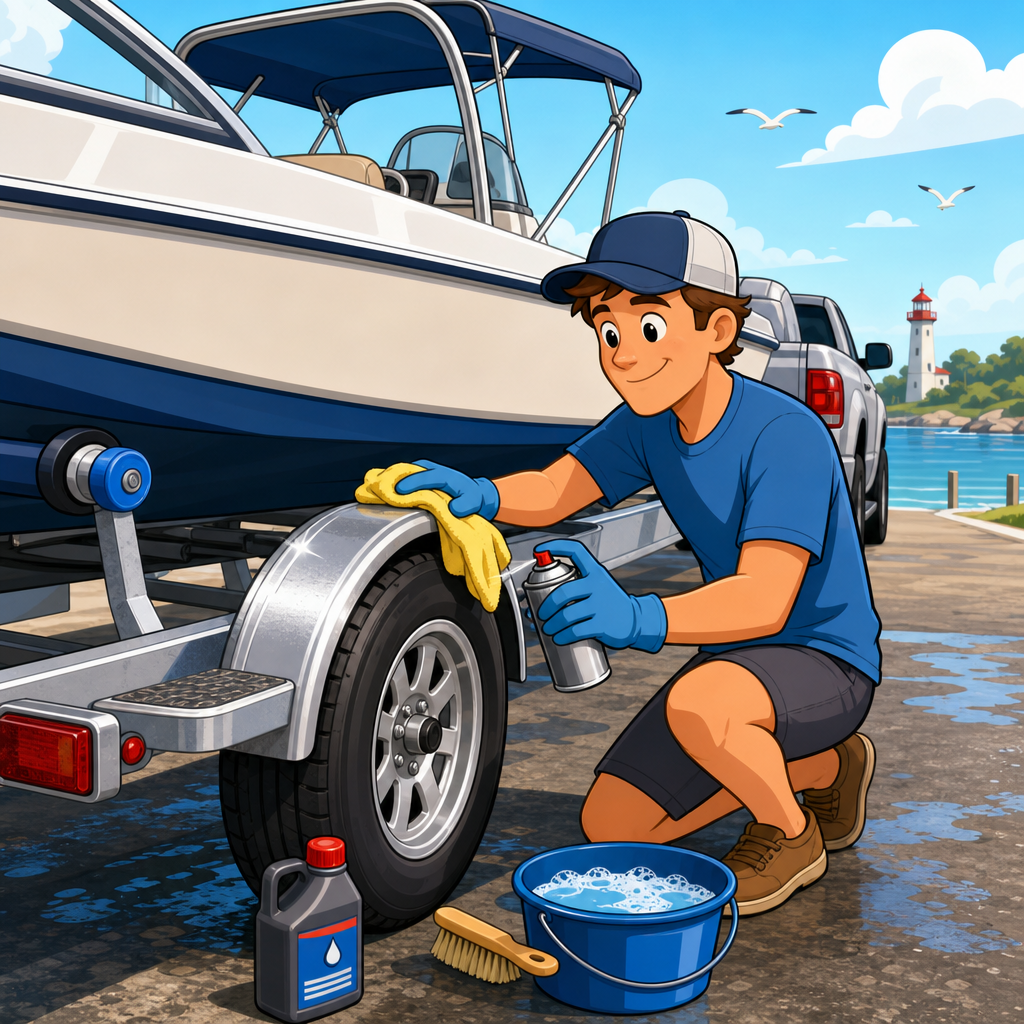
Not every spray marketed for marine use gives lasting protection. The most effective corrosion prevention strategy layers products by purpose. Use coating systems for exposed steel, cavity wax or corrosion inhibitor for enclosed sections and hardware, and the correct lubricant for moving parts. Lanolin-based inhibitors work well on fasteners, springs, and brake backing areas where a soft film is acceptable. Wax-based cavity products help inside frame rails. Waterproof grease belongs on jack screws, coupler pivots, and winch gears where the manufacturer allows it. Keep friction surfaces such as brake rotors and pads absolutely free of overspray.
Storage conditions either preserve your trailer or accelerate corrosion. Whenever possible, store on a hard surface with good drainage, not in wet grass that keeps humidity high around the underside. Slight tongue elevation helps water drain from frame members. Tires should be shielded from sunlight, and wheel chocks should not trap moisture against steel rims. If the trailer sits for long periods, move it occasionally so tires, bearings, and brake components do not remain in one damp position. During off-season service, remove bunk brackets or steps if needed to clean hidden rust pockets. Long life comes from access, cleaning, protection, and repeat inspection.
Create a Trailer Maintenance and Towing Checklist
A practical checklist keeps maintenance from depending on memory. Before every trip, confirm tire pressure, lug nut torque, coupler engagement, safety chain condition, breakaway cable routing if equipped, light operation, winch strap integrity, transom tie-down security, and bearing or hub temperature after the first few miles. Monthly, wash thoroughly, inspect rust-prone points, lubricate the jack and coupler, and test brakes. Seasonally, pull hubs if due, inspect pads or shoes, check suspension hardware torque, touch up damaged coatings, and verify registration and VIN labels remain legible. These habits prevent both corrosion and towing mishaps.
As the hub for trailer maintenance and towing within boat maintenance and repairs, this topic connects directly to bearing service, trailer brake troubleshooting, trailer tire wear, bunk and roller adjustment, light wiring repair, launch ramp best practices, and safe long-distance towing. Rust prevention is the foundation for all of them because corrosion distorts alignment, weakens structure, raises rolling resistance, and creates electrical faults. Owners who inspect after every wash and service on a schedule spend less on emergency repairs and tow with far more confidence. Start with one routine this week: rinse, inspect, protect, and log what you find every time.
Frequently Asked Questions
What causes a boat trailer to rust so quickly, even if it still looks fine on the outside?
Boat trailers corrode faster than many owners expect because they operate in a uniquely harsh environment. Unlike most utility trailers, a boat trailer is repeatedly submerged in water, exposed to salt, road debris, brake dust, and trapped moisture, and then often parked for long periods without fully drying out. That combination creates ideal conditions for rust and corrosion to begin in places you cannot easily see, such as inside boxed frame sections, around welds, behind bunk brackets, inside leaf springs, and in seams where water and grime collect. Saltwater makes the problem much worse because salt accelerates the electrochemical reaction that breaks down protective coatings and attacks bare metal.
Another reason trailers rust “unexpectedly” is that surface appearance can be misleading. A galvanized or painted trailer may still look decent from a few feet away while corrosion is already progressing underneath chipped coatings, inside bolt holes, or around hardware where different metals meet. Areas around U-bolts, brake components, crossmembers, axle mounts, and tongue joints are especially vulnerable. If a trailer is not rinsed thoroughly after launching and retrieval, contaminants stay lodged in hidden areas and keep working long after the trailer has been parked. In practice, rust rarely starts as a dramatic visible problem; it usually begins quietly in neglected, hard-to-reach spots and expands until bubbling paint, flaking metal, seized hardware, or structural weakening finally become obvious.
What is the best routine for preventing rust and corrosion on a boat trailer after each use?
The most effective routine is simple, consistent, and focused on removing contaminants before they can sit on the trailer. After every use, especially after saltwater exposure, rinse the entire trailer thoroughly with fresh water. Do not just spray the visible frame rails and call it done. Flush crossmembers, axles, springs, wheels, brake assemblies, coupler parts, bunk brackets, light mounts, and all underside surfaces. Pay close attention to seams, corners, and hardware where salt and grit collect. If your trailer has brakes, rinse them carefully according to the brake manufacturer’s guidance, since brakes are among the first systems to suffer corrosion damage.
After rinsing, allow the trailer to drain and dry as completely as possible. If practical, park it in a way that does not trap water in low points. Then inspect it briefly while it is still wet enough to reveal problem areas. Look for chipped paint, white oxidation on galvanized surfaces, orange staining, cracked coatings, stuck fasteners, and any signs that water is collecting where it should not. Periodically use a mild boat soap or trailer-safe cleaner to remove road film and oily residue, because corrosion protection products adhere better to a clean surface than a dirty one.
On a regular schedule, apply an appropriate corrosion inhibitor to vulnerable metal surfaces, exposed hardware, leaf springs, winch stands, couplers, safety chains, and electrical connections, while avoiding friction surfaces such as brake pads or rotors. The key is consistency. Owners who make rinsing, drying, inspecting, and touch-up protection part of every trip usually avoid the expensive brake failures, frozen bolts, rotted wiring, and frame damage that develop when maintenance is delayed “until later.”
Is a galvanized trailer better than a painted trailer for corrosion resistance?
In many cases, yes, a galvanized trailer has an advantage in corrosion resistance, especially for repeated saltwater use. Galvanizing coats the steel with zinc, which acts as a sacrificial layer and helps protect the underlying metal even if the surface is scratched or nicked. That makes galvanized trailers especially popular for boaters who launch often in coastal environments. They generally hold up better over time than standard painted steel trailers when both are exposed to the same harsh conditions and receive average maintenance.
That said, galvanizing is not a license to ignore upkeep. Galvanized trailers can still corrode, particularly where the coating has worn thin, where dissimilar metals are in contact, or where salt and moisture stay trapped for long periods. Hardware, brake components, welded areas, and add-on accessories may corrode at different rates than the frame itself. Painted trailers, meanwhile, can perform very well if the paint system is high quality and damage is repaired quickly. The weakness of painted steel is that once the coating is chipped or cracked, bare metal can rust fast beneath the surrounding finish.
The better choice depends on how and where the trailer is used. For frequent saltwater launching, galvanized usually offers a clear durability benefit. For freshwater use or owners who are meticulous about washing, drying, and repairing coating damage, painted trailers can also last a long time. The real takeaway is that material and finish matter, but maintenance matters more. Even the best trailer finish will fail early if salt, moisture, and neglected damage are allowed to build up.
Which parts of a boat trailer should I inspect most often for hidden corrosion?
The highest-priority areas are the ones that trap water, hold road grime, or combine moving parts with exposed metal. Start with the frame, especially inside corners, welds, crossmember connections, the tongue, and any boxed or tubular sections where moisture may sit unnoticed. Then inspect the suspension system closely: leaf springs, hangers, equalizers, U-bolts, and axle seats are all common trouble spots. Springs in particular can rust between the leaves, reducing flexibility and eventually causing failure.
Next, check the braking system. Calipers, backing plates, rotors, drums, brake lines, mounting bolts, and actuators are all vulnerable, especially in saltwater service. Corroded brakes are not just a maintenance issue; they are a major safety issue. Also inspect hubs, lug nuts, wheel studs, and the area around the bearings, since corrosion there can lead to difficult repairs or dangerous wheel-end problems. Wiring and light grounds deserve attention too, because corroded electrical connections often cause intermittent failures that are frustrating to diagnose.
Do not overlook the coupler, safety chains, jack, winch stand, bunk brackets, rollers, and fasteners. These smaller components often show corrosion before the main frame does, and they are essential to safe towing and launching. A good inspection habit is to look from underneath as well as from the sides, and to physically touch suspect areas with a screwdriver or pick if you see bubbling, scaling, or flaking. Surface rust can often be managed, but deep scaling, swelling around seams, cracked weld areas, or metal loss around structural points should be treated as serious warning signs that warrant repair or professional evaluation.
How do I treat rust on a boat trailer before it turns into major structural damage?
The right approach depends on whether the corrosion is light surface rust or more advanced metal deterioration. For minor surface rust on painted components, start by cleaning the area thoroughly to remove salt, dirt, grease, and loose oxidation. Then mechanically remove the rust with a wire brush, abrasive pad, scraper, or sanding tool until you reach sound metal. Once the surface is prepped, apply a rust converter or corrosion-inhibiting primer if appropriate for the trailer’s finish, then follow with a compatible topcoat designed for marine or trailer use. The goal is to seal the metal quickly so moisture cannot restart the process beneath the repair.
For galvanized trailers, repairs should be handled with products intended for zinc-coated surfaces, such as cold galvanizing compounds or zinc-rich coatings, depending on the area and manufacturer recommendations. Standard paint repairs may not adhere properly or may not provide equivalent protection if the surface is not prepared correctly. Hardware that is heavily rusted, seized, or visibly weakened should usually be replaced rather than cosmetically treated. This is especially true for U-bolts, spring hardware, safety chains, brake fasteners, and structural attachment points.
If corrosion has progressed to heavy scaling, metal flaking, perforation, cracked weld areas, or obvious thinning at load-bearing sections, stop treating it as a cosmetic issue. At that stage, sanding and painting are not enough. Structural rust can compromise towing safety, braking stability, and load support. A qualified trailer repair shop should inspect the trailer and determine whether reinforcement, component replacement, or frame repair is needed. Acting early is what saves money. Small rust spots are maintenance items; deep corrosion near axles, springs, couplers, and frame joints can become a safety hazard very quickly if ignored.