How to set up your boat for a perfect fishing experience starts with understanding that successful fishing and trolling equipment is not a pile of gadgets but a system. Every rod holder, battery cable, electronics mount, lure tray, and net position affects how safely, quietly, and efficiently you fish. I have rigged small aluminum tiller boats, center consoles, bass boats, and multi-species rigs, and the difference between a frustrating day and a productive one usually comes down to setup. A well-organized fishing boat reduces tangles, keeps lures in the strike zone longer, protects gear from corrosion, and lets the crew react quickly when fish appear on sonar or a planer board drops back.
In practical terms, setting up your boat means matching equipment to your hull, target species, water type, and fishing style. Trolling equipment includes rods, reels, line, line-counter reels, rod holders, planer boards, downriggers, trolling motors, drift control tools, marine electronics, livewells, tackle storage, landing tools, and power systems. Fishing equipment also includes the less glamorous pieces that make the whole setup work: fuse blocks, battery chargers, deck lighting, non-slip flooring, and weatherproof connectors. This matters because fish are sensitive to noise, anglers need clear workflows, and boats have limited space. The goal is simple: create a stable, safe, repeatable platform where bait presentation, boat control, and crew movement work together instead of competing.
Start with boat layout, species, and fishing method
The best boat setup begins before you buy a single accessory. Think about how you actually fish. A bass angler pitching docks needs open casting lanes, a foot-controlled trolling motor, shallow-water anchoring, and fast tackle access. A walleye troller needs transom space for multiple rod holders, line-counter reels, electronics with side imaging, and a clean path around the cockpit for fighting fish. Offshore anglers need redundancy, larger coolers, outriggers or heavy-duty holders, and stronger washdown systems. If your setup does not reflect your main method, the boat will always feel cluttered.
Boat length and hull design shape every rigging decision. On a 16-foot aluminum boat, one multifunction display, a bow-mounted trolling motor, four adjustable rod holders, and compact tackle storage may be ideal. On a 23-foot walkaround, you can separate helm electronics from a dedicated trolling spread with downriggers, rocket launchers, and in-floor storage. Weight distribution matters more than many owners realize. Place batteries, coolers, and spare tackle with balance in mind so the boat planes efficiently and does not list when passengers move. Clean deck geometry also matters. Keep the path from stern to bow clear enough for a net man to move without stepping over Plano boxes or loose line.
When I audit a fishing boat, I map movements first: where rods are rigged, where lines are set, where fish are landed, and where tackle is changed. That simple exercise exposes problems immediately. If the landing net is under three life jackets, the livewell is blocked by a cooler, or the starboard holder interferes with the outboard during a turn, the setup needs revision. A perfect fishing experience is not about maximum gear. It is about the right gear in the right place.
Build a reliable trolling system with rods, reels, holders, and line management
Trolling spreads perform best when every component is purpose-built. Start with rods matched to presentation. Moderate or moderate-fast actions are common for crankbaits, live-bait rigs, and many salmon presentations because they absorb surges and keep hooks pinned. Line-counter reels are the standard choice for precision because they let you repeat productive lead lengths. For freshwater trolling, many anglers rely on reels like the Okuma Cold Water or Shimano Tekota because they deliver dependable drags and repeatable deployment. In saltwater, lever drags and heavier conventional reels are often necessary.
Rod holders deserve more attention than they usually get. Cheap plastic holders flex, creep, or fail under load. Adjustable aluminum or reinforced composite holders from brands such as Traxstech, Cisco, Cannon, and Scotty hold angles securely and make spread management easier. Mount them where rods clear the motor, net, and each other during turns. For a typical inland trolling setup, stagger rod lengths and holder angles so inside lines ride higher and shorter while outside lines extend farther from the wake. This creates separation and reduces tangles when waves or fish change line tension.
Line choice depends on target depth and presentation. Monofilament offers stretch and is forgiving with trebles. Braid cuts water and transmits lure action well, but it often requires softer rods or snubbers to reduce pullouts. Lead-core and weighted steel help reach depth without oversized sinkers, while fluorocarbon leaders add abrasion resistance and lower visibility. Good line management also includes terminal organization. Store snaps, swivels, leader spools, diving weights, and replacement trebles in labeled waterproof boxes. One of the easiest upgrades for any trolling boat is a dedicated re-rigging station with nippers, pliers, hook files, and spare leaders within arm’s reach.
| Component | Best Use | Why It Matters |
|---|---|---|
| Line-counter reel | Precision trolling for walleye, salmon, striped bass | Repeats productive lead lengths and speeds pattern adjustments |
| Adjustable rod holder | Multi-rod spreads and changing lure angles | Improves line separation and protects gear under load |
| Lead-core or weighted line | Reaching depth without heavy downriggers | Expands depth control on smaller boats |
| Fluorocarbon leader | Clear water and abrasive structure | Reduces visibility and resists nicks from rocks or teeth |
Choose electronics and boat control tools that help you find and stay on fish
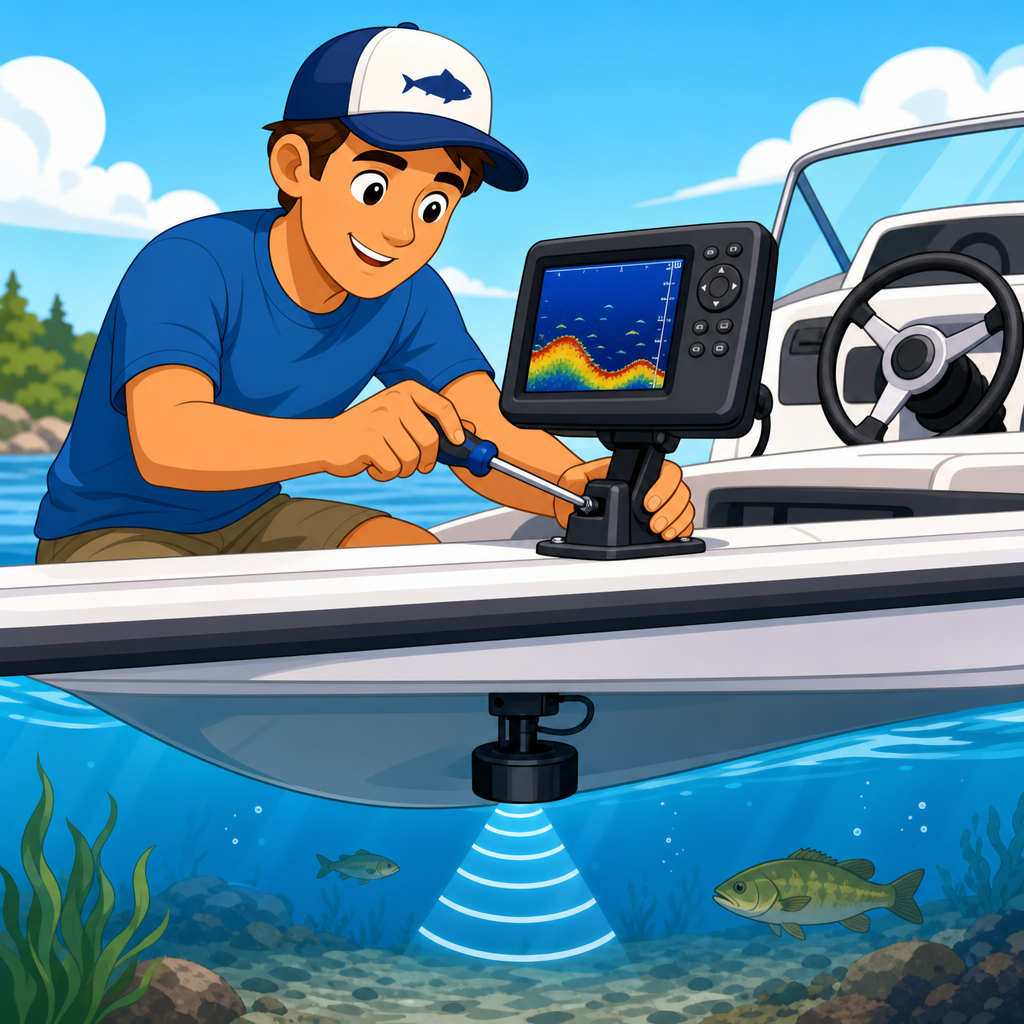
Modern fishing electronics have changed boat setup more than any other category. A fishfinder is no longer just a depth gauge. Today’s systems combine high wide CHIRP sonar, side imaging, down imaging, GPS mapping, and networking. Brands like Humminbird, Garmin, Lowrance, and Raymarine each offer strong ecosystems, but the setup matters more than the logo on the bezel. The transducer must be mounted in clean water, the display must be visible in sunlight, and waypoints must sync between the helm and bow if you fish from both positions.
For trolling, boat speed control is critical. Many species respond to subtle speed shifts of 0.1 to 0.3 mph. A GPS-based trolling motor from Minn Kota or MotorGuide can hold heading, follow contours, and maintain speed more consistently than manual steering in wind. On larger boats, kicker motors paired with tie bars and autopilot systems provide excellent control and fuel efficiency. If you troll for open-water species, add a speed-and-temp sensor or use paddlewheel and GPS data together, because current can make speed over ground very different from lure speed.
Mount electronics where they support decisions in real time. The helm display should show chart, sonar, and speed data without forcing the operator to look down for long periods. A bow unit should support casting, vertical jigging, or spot-lock use without exposing wires to foot traffic. Networking is worth the cost because shared waypoints, transducer options, and engine data reduce guesswork. I also recommend creating simple screen presets for trolling, searching, and fishing structure. On the water, speed matters. When birds start working or a bait ball appears on side imaging, you should be able to switch views instantly, not scroll through menus while the opportunity passes.
Organize tackle, bait, nets, and deck workflow for speed and safety
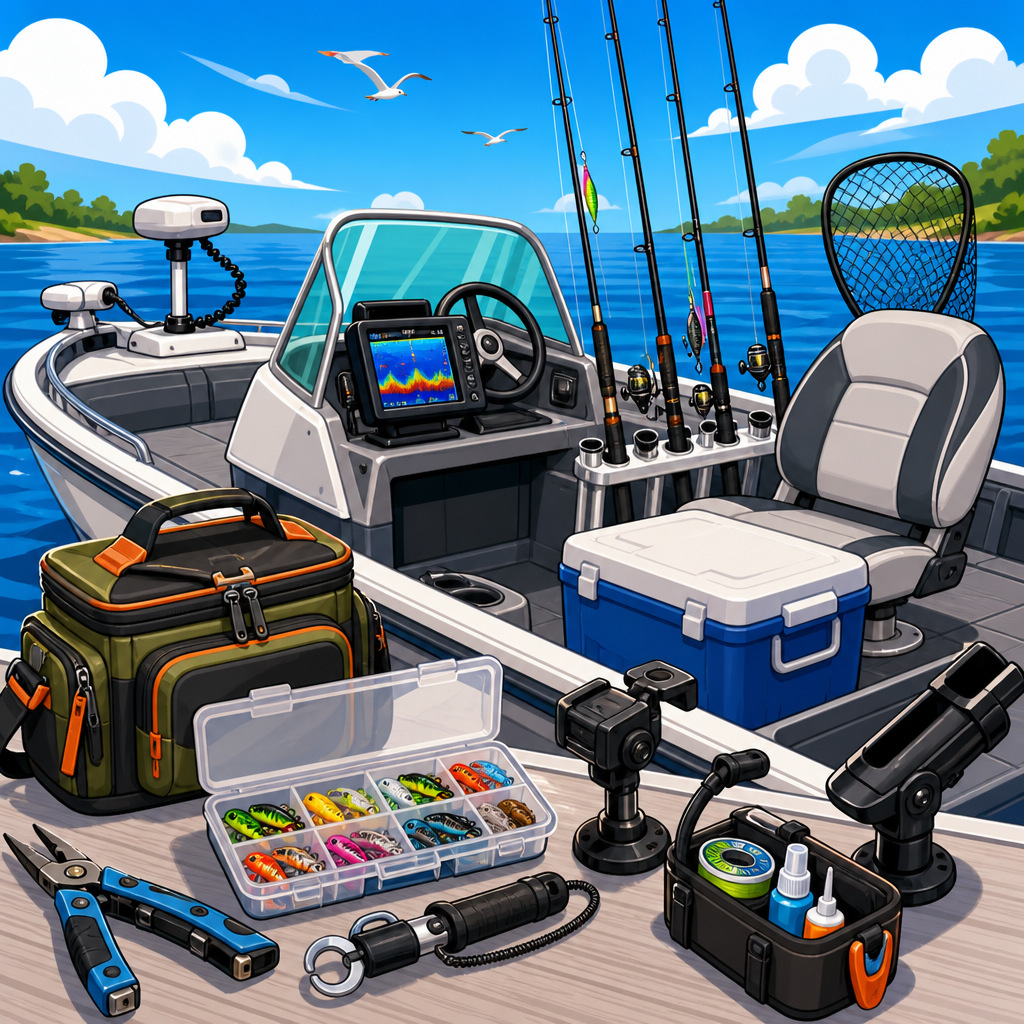
A perfect fishing experience feels smooth because every essential tool is instantly available. Tackle organization should follow frequency of use. Daily baits, terminal tackle, pliers, scissors, scent, and measuring tools belong in the most accessible compartments. Specialty gear can go deeper in storage. Hard baits should be sorted by diving depth, running style, and target species, not just by color. Soft plastics should stay in original packaging when possible so they do not react chemically and melt into one another. Jigs, hooks, and sinkers need rust-resistant containers with drainage or desiccant if you fish in wet conditions.
Landing tools are often overlooked until a big fish is lost at the boat. Use a net with a rubberized bag to reduce hook tangles and protect fish slime coats. Stow it where one person can grab it in one motion. For boats targeting toothy species, keep jaw spreaders, long pliers, and hook cutters ready. If you keep fish, a cooler with organized ice management beats tossing catches under random bags. If you release fish, put fish-care tools first: bump board, dehooker, livewell treatment, and camera position. Good workflow protects both the catch and the crew.
Deck safety is part of fishing efficiency. Loose line, wet packaging, and scattered sinkers create slips and snags. Add marine mats or textured flooring where the crew stands most. Install red or dimmable task lighting for dawn launches and night trolling so knots can be tied without ruining night vision. Keep a designated trash container onboard; the cleanest fishing boats usually fish the hardest because they are not constantly reorganizing. The same principle applies to clothing. A dry box with gloves, rain layers, buffs, and spare sunglasses prevents discomfort from turning into distraction.
Protect power, maintenance, and fishability with smart rigging details
Reliable fishing and trolling equipment depends on electrical discipline. Marine batteries should match the load profile of your setup. A dedicated starting battery protects engine cranking power, while deep-cycle AGM or lithium batteries support trolling motors and electronics. Lithium can save significant weight and provide stable voltage, but only if the charger, battery management system, and outboard manufacturer requirements align. Use tinned marine wire, adhesive-lined heat shrink, waterproof fuse blocks, and proper circuit protection. Corrosion and voltage drop cause many “mystery” electronics failures that are actually rigging mistakes.
Routine maintenance should be built into the boat’s design. Leave access to bilge pumps, fuel filters, battery terminals, and transducer mounts. Label circuits. Store spare fuses, prop hardware, drain plugs, and basic tools in one dry compartment. Rinse saltwater gear after every trip, lubricate reels to manufacturer intervals, and inspect rod guides for grooves that fray line. Trolling motor props often collect braid or vegetation, which can damage seals if ignored. Downrigger cables should be checked for kinks, releases for wear, and mounting bases for flex. Small failures become expensive problems quickly on the water.
Finally, accept that the perfect setup evolves. Seasonal fishing patterns, new electronics software, and changes in your target species will alter what “ideal” looks like. The best boat owners review their setup after each trip. What got used? What caused delays? What storage stayed full all season? Make one improvement at a time, then test it in real conditions. That disciplined approach creates a boat that is not just equipped, but genuinely fishable.
Setting up your boat for a perfect fishing experience comes down to integration. Match the layout to your fishing method, build a trolling system with dependable rods, reels, holders, and line plans, invest in electronics that improve boat control, and organize the deck so the crew can move safely and react fast. Then support all of it with clean rigging, strong batteries, and regular maintenance. When these pieces work together, you spend less time searching for tools, clearing tangles, or troubleshooting power problems, and more time presenting lures correctly and landing fish.
For anyone building out a boating gear and equipment plan, fishing and trolling equipment should be treated as a connected hub, not a shopping list. Rod holders affect spread control, electronics affect lure placement, storage affects speed, and power management affects everything. Start with your most common species and water type, audit your current layout honestly, and upgrade the pieces that remove the biggest friction first. A smarter boat setup does not just improve comfort. It creates more efficient passes, cleaner presentations, and better results every trip. Review your boat today and make the next change count.
Frequently Asked Questions
What is the most important first step when setting up a boat for a better fishing experience?
The most important first step is to think of your boat as a complete fishing system instead of a collection of separate accessories. A lot of anglers start by buying electronics, rod holders, tackle trays, or trolling gear one piece at a time, but the most effective setups are planned around how everything works together. Before drilling holes or mounting equipment, consider how you actually fish: what species you target, whether you troll, cast, drift, or jig, how many people are usually on board, and how often you move around the boat during a day on the water. That big-picture approach helps you create a layout that supports efficiency, comfort, and safety rather than cluttering the deck with gear that gets in the way.
Start by mapping out your fishing workflow from launch to landing fish. Think about where rods are stored, where tackle is accessed, where the net sits, where the batteries are located, and how you move from the helm to the bow or stern. A well-set-up boat lets you grab what you need quickly and quietly, without stepping over gear or creating unnecessary noise. That matters more than many people realize, especially in shallow water or when fishing pressured areas where banging storage lids, kicking tackle boxes, or dragging equipment across the floor can reduce your chances of success.
You should also prioritize balance and accessibility early in the setup process. Heavy items like batteries, coolers, and fuel should be positioned so they do not negatively affect the boat’s trim or create awkward movement. Rod holders should be placed where they support the fishing style you use most often, but they should not block access to cleats, livewells, or walking space. Electronics need to be easy to see from the helm and from key fishing positions without being mounted where they are exposed to excessive impact or spray. When you begin with a clear plan, every later decision becomes easier, and the result is a boat that fishes cleaner, safer, and more effectively.
How should rod holders, tackle storage, and net placement be arranged for maximum efficiency?
These three elements should be arranged around speed, reach, and clean movement. If you want a smooth day on the water, your rods, tackle, and landing tools must be where you naturally need them, not where they simply fit. Rod holders should support your primary presentation style. For trolling, they need to be positioned at the correct angles and spacing to spread lines properly, reduce tangles, and give each angler room to manage fish. For multi-species or mixed-use boats, it helps to use adjustable holders so you can change positions depending on whether you are pulling planer boards, running flat lines, drifting live bait, or storing rods while running.
Tackle storage should be organized by frequency of use and by technique. The lures, terminal tackle, pliers, line cutters, and leader material you use constantly should be accessible without opening multiple compartments or digging through loose trays. One of the best upgrades in any fishing boat is creating dedicated storage for specific jobs. Keep trolling hardware together, casting lures together, and emergency tools in a separate, clearly known location. This saves time, reduces frustration, and keeps your deck clear. It also helps you stay focused when the bite is on, because you are not searching through clutter while lines are in the water.
Net placement is something many anglers underestimate, but it often reveals whether a boat is truly set up well. A landing net should be secured in a location where it is out of the way while fishing, yet instantly reachable with one hand when a fish is boatside. It should not be buried under life jackets, tangled in rods, or laid across the deck where someone can step on it. On smaller boats, a sidewall clip system or under-gunnel holder often works well. On larger boats, stern or cockpit mounting can be ideal if it does not interfere with movement. The key is that the net must be available at the exact moment you need it, without creating a tripping hazard the rest of the day. When rod holders, tackle, and net placement are set up with intention, the entire boat feels more professional and noticeably easier to fish from.
How do electronics and battery systems affect fishing performance and overall boat setup?
Electronics and battery systems have a massive impact on fishing performance because they control how well you find fish, follow structure, manage boat position, and power essential equipment throughout the day. Good fish finders, chartplotters, trolling motors, shallow-water anchors, and onboard chargers can transform your fishing, but only if they are installed as part of a reliable electrical system. A poorly planned setup with weak wiring, undersized batteries, or messy connections can lead to voltage drops, screen interference, reduced trolling motor thrust, and equipment failure at exactly the wrong time.
The foundation is matching your battery setup to the demands of your boat. Cranking batteries should be chosen to handle starting power and electronics load, while dedicated deep-cycle batteries should support trolling motors and other accessories that draw power over long periods. If your electronics are advanced or numerous, many anglers benefit from a separate electronics battery or carefully designed power distribution system to reduce noise and maintain stable voltage. Marine-grade wiring, proper fuse protection, clean terminals, and secure routing are not optional details. They are what make the system dependable in real fishing conditions.
Placement matters too. Electronics should be mounted where they are easy to read without forcing you into awkward posture or pulling your attention away from safe boat operation. At the console, screens should be visible in bright conditions and accessible without crowding steering or throttle controls. At the bow, sonar and mapping units should support precise boat positioning when casting or vertical fishing. Cable routing should be neat and protected from wear, and transducer placement should be chosen to deliver clear readings at the speeds and fishing styles you use most. A well-powered, thoughtfully installed electronics package does more than look impressive. It helps you fish more accurately, move more efficiently, and stay on the water with confidence all day long.
What safety and comfort features should be included in a boat fishing setup?
A perfect fishing experience depends just as much on safety and comfort as it does on tackle and electronics. In fact, a boat that is slightly less advanced but safer and easier to move around in will almost always produce better days on the water than a high-tech rig with poor layout and avoidable hazards. Start with clear deck space. Walkways should be open, gear should be secured, and nothing important should require stepping over rods, bags, or loose tackle. Every item needs a home, especially when the boat is moving or when multiple anglers are fighting fish at once.
Safety equipment should be easy to access, not buried under gear. Life jackets, throwable flotation devices, fire extinguishers, first-aid kits, lights, and signaling devices should be stored where everyone on board can locate them immediately. Check that bilge pumps, navigation lights, horn, and kill switch are all functioning properly. If you fish rough water, early mornings, or changing weather, dependable rain gear, dry storage, and non-slip surfaces become even more important. Handholds and stable footing matter more than anglers sometimes admit, particularly in aluminum tiller boats, center consoles, and multi-species rigs where movement can be constant throughout the day.
Comfort upgrades are not just luxury items; they help you fish better and longer. Good seating, organized storage, shade if appropriate for your style of fishing, and smart cooler placement all improve the experience. Hydration, sun protection, and weather preparedness are part of setup too. If anglers are overheating, cramped, or constantly searching for gear, concentration drops and decision-making gets worse. Even little details like where pliers are clipped, where drinks are stored, or whether there is enough room to retie lines without kneeling on clutter can shape the quality of a trip. The best fishing boats feel calm and controlled because they are designed to reduce stress, protect passengers, and let everyone focus on the water.
How can you customize a boat setup for different fishing styles like trolling, casting, or multi-species fishing?
The best way to customize a boat is to build around your primary fishing style while preserving flexibility for the secondary techniques you use most. A dedicated trolling layout looks very different from a casting-focused bass setup, and a multi-species rig often needs to do both reasonably well without becoming compromised at everything. If trolling is your priority, your setup should emphasize rod holder placement, line spread management, easy access to planer boards or trolling tackle, reliable speed control, and a clean stern or cockpit area for landing fish. Tools, nets, and spare rods should be positioned so lines can be reset quickly and safely without tangling around passengers or equipment.
If casting is your main approach, especially for bass, pike, or shallow-water multi-species fishing, the focus shifts toward open deck space, rapid lure access, bow electronics visibility, and smooth movement around the boat. Rod lockers or deck storage should protect multiple technique-specific rod setups while keeping them close at hand. Trolling motor controls, fish finder screens, and landing tools should support precise positioning and quick reactions. Casting boats benefit enormously from minimizing deck clutter because repeated movement, hook changes, and fish handling happen fast and often.
For anglers who fish for multiple species across changing seasons, modularity is usually the smartest answer. Adjustable rod holders, removable tackle systems, flexible