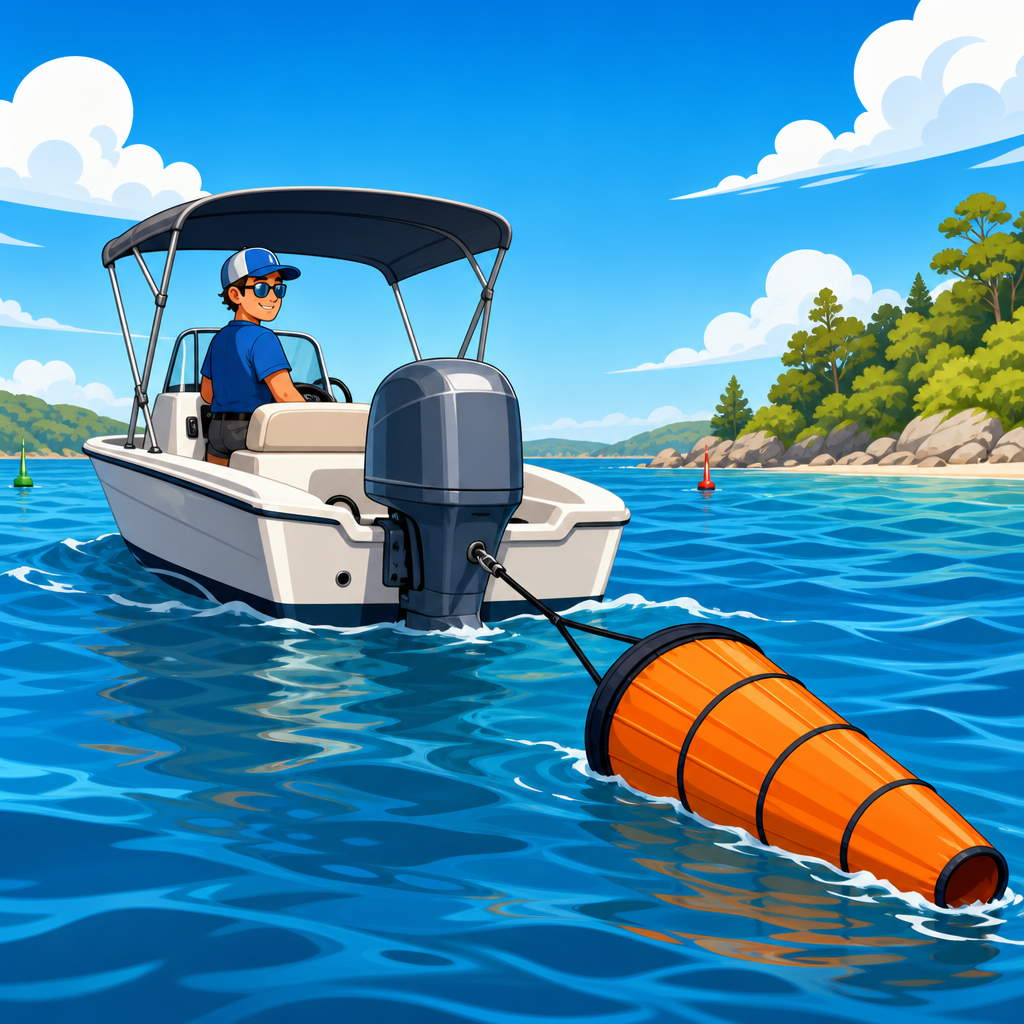
Drift socks are one of the most practical pieces of fishing and trolling equipment because they let boaters control speed, heading, and presentation without adding mechanical complexity. In simple terms, a drift sock is a fabric cone or parachute that creates drag in the water, slowing a boat and stabilizing its position relative to wind and current. I have used them on aluminum walleye rigs, center consoles, and small tiller boats, and the result is consistent: better lure control, more repeatable drifts, and less time fighting the boat. For anglers building out a complete boating gear and equipment setup, the best drift socks belong at the center of the fishing and trolling equipment category.
This topic matters because boat position controls everything downstream. If your boat slides too fast, jigs lift out of the strike zone, live bait snells lose bottom contact, and trolling passes become uneven. If the bow swings unpredictably, your spread tangles and anglers cannot present baits cleanly. Drift control also affects safety, especially on big open water where wind can stack waves and push a boat onto structure or away from a waypoint. A drift sock is not a substitute for a trolling motor, kicker, shallow-water anchor, or GPS-enabled autopilot, but it is often the simplest and most cost-effective tool for managing drift in real conditions.
As a hub for fishing and trolling equipment, this guide connects drift socks to the broader system anglers rely on: trolling motors, marine batteries, sonar and chartplotters, planer boards, downriggers, rod holders, anchor systems, and line-counter reels. Understanding where a drift sock fits helps buyers avoid common mistakes, such as choosing a sock that is too small for the boat, deploying from the wrong cleat, or expecting one accessory to solve every boat-control problem. The best choice depends on hull length, freeboard, displacement, target species, and whether you fish inland lakes, reservoirs, rivers, or coastal bays.
When anglers ask what the best drift socks are, the answer starts with build quality, size, and rigging rather than brand alone. A well-designed drift sock opens quickly, tracks steadily, resists spinning, and retrieves without a fight. Features such as reinforced webbing, floating harness lines, weighted bottoms, and a proper dump line matter far more on the water than marketing language. The sections below explain exactly how drift socks work, how to size and deploy them, which models stand out, and how they fit into a complete fishing and trolling equipment strategy.
How drift socks control boat position and improve fishing presentations
A drift sock works by increasing hydrodynamic drag. Once deployed, the wide mouth opens into the flow and the narrow tail vents pressure, creating a steady resisting force that slows the boat. In practice, that reduced speed makes lure depth more predictable and keeps anglers in productive water longer. On a walleye drift, for example, cutting speed from 1.4 mph to 0.8 mph can be the difference between a bottom bouncer ticking structure properly and skipping above fish. On smallmouth water, slowing the drift helps tubes and drop shots stay vertical longer. On saltwater flats, a controlled slide lets anglers fan-cast likely edges instead of racing over them.
Drift socks also improve heading control. A boat without drag often yaws, with the bow hunting side to side as wind catches the hull. Deploying one sock off the bow quarter or running two socks symmetrically can calm that motion and keep the boat lined up with a breakline, weed edge, or contour. I have seen this matter most when fishing with multiple people. Stable alignment means less crossed line, cleaner casting lanes, and fewer abrupt steering corrections. It is especially valuable when trolling live bait or crawler harnesses where small speed changes affect blade rotation and bait action.
Another overlooked advantage is reduced fatigue. Constant tiller input, repeated trolling motor corrections, and rushed lure adjustments wear anglers down over a long day. A drift sock acts like a passive control surface, buying time and smoothing reactions. That does not replace active steering, but it lowers the workload, conserves battery power, and can make a modest boat behave more predictably in gusty weather. For many anglers, that translates directly into better decisions and better fishing during the final productive hour, when others are already worn out.
What separates the best drift socks from average models
The best drift socks share a few design traits. First, they use durable fabric, commonly heavy PVC-coated or reinforced nylon, that resists abrasion and ultraviolet degradation. Second, they have strong perimeter stitching and webbing straps that distribute load evenly instead of concentrating stress at a single sewn point. Third, they include a weighted bottom or ballast ring to help the sock open reliably, plus a flotation collar or buoyant mouth that keeps the opening presented correctly on the surface. Finally, they have an effective dump line that collapses the sock during retrieval so one person can recover it without excessive strain.
In use, stability matters as much as raw drag. Poorly made socks can spin, collapse, or surge unpredictably. That inconsistency defeats the purpose because lure speed keeps changing. Better models track straight and remain open through gusts and quartering waves. Brands commonly recognized by experienced anglers include Drift Control, Cabela’s Advanced Angler, Frabill, Lindy, and Amish Outfitters. While exact model names change over time, the strongest options consistently emphasize reinforced seams, high-visibility harness lines, and clear sizing guidance tied to boat length and wind conditions.
Hardware quality deserves attention too. A drift sock is only as good as the line, clips, and attachment points used with it. I strongly prefer marine-grade rope that floats, stainless hardware where metal is needed, and oversized clips or carabiners that can be handled with cold hands. Cheap snap hooks corrode, gate springs weaken, and knots tied in slick utility cord can slip under load. If a sock is part of your regular fishing and trolling equipment, treat the rigging as permanent gear, not an afterthought assembled from spare rope in a dock box.
How to size a drift sock for your boat and conditions
Size selection is the most common buying mistake. A sock that is too small does little in strong wind, while one that is too large can overload cleats, make retrieval difficult, and pull the boat awkwardly. Manufacturers usually publish recommended boat lengths, but those ranges are only a starting point. Hull shape, beam, freeboard, total weight, and how much windage your boat carries from consoles, hardtops, or gear all affect drag needs. A lightly loaded 17-foot tiller may need less sock than an 18-foot deep-V windshield boat with three anglers and a full livewell.
A practical rule is to buy for the conditions you fish most often, then add flexibility through deployment options. Inland anglers on medium lakes often do well with one mid-size sock or a pair of smaller socks. Big-water anglers frequently benefit from two socks because they can run one in moderate wind and both when a front pushes through. River anglers use socks more selectively because current already influences speed; there, the goal is often angle control rather than simple slowing. Coastal bay fishermen may pair a drift sock with a trolling motor to fine-tune drifts along grass edges or shell bars.
| Boat type and use | Typical drift sock setup | Why it works |
|---|---|---|
| 14-16 ft aluminum tiller on inland lakes | Single small or medium sock | Reduces drift without overloading light cleats or making retrieval difficult |
| 17-19 ft deep-V multispecies boat | One large sock or two medium socks | Balances higher freeboard and variable crew weight across changing wind conditions |
| 20-22 ft fiberglass walleye boat | Two medium or large socks | Controls high windage and stabilizes heading during live-bait drifts or slow trolling |
| Bay boat or center console in protected saltwater | Single medium sock, sometimes paired with trolling motor | Slows the slide and keeps casting angles consistent along flats and edges |
If you are between sizes, think about your objective. If your main problem is excessive speed in open wind, lean larger within the manufacturer’s limits. If your main problem is modest yaw or subtle course correction, a slightly smaller sock may be easier to manage and still solve the issue. The most accurate approach is to start with a trusted brand’s guidance, then compare your hull and conditions honestly. Experienced anglers do not buy the biggest model available; they buy the model that produces controllable, repeatable drift behavior.
Best drift sock options for different fishing and trolling styles
For freshwater multispecies anglers, the best all-around drift sock is usually a reinforced medium-to-large model with a strong dump line and high-visibility float. This style fits the widest range of situations, from walleye rigging on natural lakes to fall live-bait drifts on reservoirs. It is the model I recommend most because it covers the broad middle of the market and integrates easily with common gear like sonar, bow-mount trolling motors, and standard cleat placements. Anglers who fish two or three times a month do not need exotic features; they need a sock that opens consistently and lasts several seasons.
For serious walleye and Great Lakes anglers, dual-sock setups are often best. Two matched socks allow finer tuning and better symmetry, especially when working long contour drifts with multiple lines out. This setup shines when fish hold tight to a specific depth range and presentation speed must remain steady. I have seen dual socks turn a frustrating broadside skid into a controlled slide that kept crawler harnesses running correctly for the full pass. In these fisheries, paying more for stronger stitching and easier retrieval is justified because the gear sees repeated heavy-load use.
For bass, striper, and inshore anglers who cast rather than drag bait, a compact, easy-to-store drift sock can be the better choice. The goal is often not to slow dramatically but to lengthen the time spent moving across a point, windblown bank, or grass line. Faster deployment and retrieval matter more here because boat position changes quickly as fish reveal themselves on electronics or birds indicate feeding activity. A lighter sock with quality rigging can be ideal as long as it remains stable and does not collapse in chop.
For small-boat anglers, portability is critical. A drift sock should pack down, dry reasonably well, and store without becoming a mildew problem. That makes reinforced nylon models with clear storage bags attractive. If your fishing and trolling equipment lives in a limited locker or under a bench seat, choose a design that can be rigged ahead of time and deployed in seconds. Complicated setups tend to stay stowed when conditions suddenly demand action, which means the gear adds no value at the moment it is needed most.
Deployment, rigging, and safety mistakes to avoid
Correct deployment starts with the attachment point. Most anglers should deploy from a bow cleat, bow eye bridle, or forward quarter, because that keeps the boat oriented safely into the drift. Stern deployment can be appropriate in limited situations, but it increases risk in rough water because following waves can board the transom more easily. On any boat, use strong cleats backed properly to the hull. I do not recommend clipping a loaded drift sock to light rails, seat bases, or accessory mounts that were not designed for sustained side pull.
The next key is line length and retrieval setup. A short tow line can make the sock surge; a modest length of floating rope usually smooths the pull. The dump line should be separate, clearly identifiable, and long enough to collapse the sock from a safe position in the boat. Tangled harness lines are common when people rush deployment while rods, nets, and planer board lines are underfoot. The fix is simple: pre-rig the sock, coil lines neatly, and assign one crew member to manage it. Good systems prevent chaos.
Never treat a drift sock as set-and-forget equipment. Watch weather, monitor your actual speed over ground on GPS, and be ready to retrieve if boat traffic, structure, or wave angle changes. In my experience, the biggest safety mistake is waiting too long to adapt. Another common error is expecting a sock to replace prudent seamanship. It will help control position, but it will not save poor route planning, overloaded boats, weak batteries, or neglected bilge systems. Used correctly, though, it is one of the most effective low-cost tools in the fishing and trolling equipment lineup.
How drift socks fit into a complete fishing and trolling equipment hub
A drift sock works best as part of a coordinated system rather than a standalone purchase. Pair it with a reliable GPS chartplotter to measure speed and repeat productive passes. Combine it with sonar to confirm you are staying on the edge, hump, or suspended fish zone that triggered bites. Use it alongside a bow-mount trolling motor when precision matters; the sock handles the bulk drag while the motor trims direction, which often reduces battery draw. For trolling applications, rod holders, line-counter reels, and planer boards become more effective when boat speed steadies and headings stop wandering.
Anchor systems, shallow-water anchors, and kicker motors also have distinct roles. Anchors hold position; drift socks moderate movement. Shallow-water anchors pin a boat in limited depth; drift socks shine in open water. Kicker motors and electric trolling motors provide propulsion and active control; drift socks add passive drag that smooths their work. The smartest gear plans recognize these differences and buy accordingly. If you are building out the fishing and trolling equipment section of your boat, start with the problems you actually face on the water, then choose the tools that solve those problems cleanly.
The main takeaway is simple: the best drift socks for controlling your boat’s position are the ones sized correctly for your hull, built with reinforced materials, and rigged for safe, repeatable deployment. They improve lure presentation, reduce fatigue, and make other fishing and trolling equipment work better. Whether you fish walleyes on windswept reservoirs, bass on open points, or inshore species across breezy flats, a good drift sock gives you more control without major cost or complexity. Review your boat setup, match the sock to your normal conditions, and add one to your gear plan before your next trip.
Frequently Asked Questions
What does a drift sock do, and why is it so useful for controlling a boat’s position?
A drift sock is a simple but highly effective tool that creates drag in the water, which slows your boat and helps stabilize how it moves in wind and current. Instead of relying only on your trolling motor, kicker, or frequent steering corrections, a drift sock gives you passive control over speed and heading. That matters because boat control is often the difference between a productive day and one where your presentation is constantly moving too fast, wandering off the structure, or swinging out of the strike zone.
In practical use, a drift sock helps keep your drifts more consistent. If the wind is pushing too hard, it reduces speed so your baits stay in the right depth range and move at a pace fish are more willing to chase. It also limits sudden surges and broadside slipping, which can make lure action less predictable. For trolling and live bait presentations, that steadier movement often translates into better lure control, cleaner line angles, and more repeatable passes. One of the biggest advantages is that all of this happens without adding much mechanical complexity. You deploy it, position it properly, and let it do its job.
How do I choose the best drift sock size for my boat?
Choosing the right drift sock size depends mainly on your boat’s length, weight, hull design, and the conditions you usually fish in. As a general rule, bigger and heavier boats need larger drift socks to create enough drag, while smaller tiller boats and lightweight aluminum rigs can often be controlled well with a more modest size. Wind exposure also matters. A tall-sided boat with lots of profile above the waterline will usually need more drag than a lower-profile rig of similar length. If you commonly fish open water in stronger wind, sizing becomes even more important.
The most reliable approach is to start with the manufacturer’s sizing chart, then think about how you actually use your boat. If your goal is simply trimming a moderate drift speed, a standard recommended size usually works well. If you regularly face aggressive wind or need very precise boat control for trolling spinners, bottom bouncers, or live bait rigs, some anglers move toward the upper end of the recommended range. In certain situations, two drift socks can be even more effective than one oversized sock, especially on longer boats where balanced drag improves tracking. The key is not just slowing the boat, but slowing it in a controlled, predictable way that keeps your presentation where you want it.
Where should I deploy a drift sock on the boat for the best results?
Placement has a major impact on how a drift sock affects boat position and handling. In many fishing situations, deploying the sock from the bow helps keep the front of the boat oriented into the wind or current, which can create a more controlled and manageable drift. This is especially useful when you want to maintain a straighter presentation path and avoid broadside drift. On the other hand, deploying from the stern can be useful when you want to slow the boat while keeping the back end more planted, though this approach requires extra awareness of wave direction and safety considerations.
Some anglers also deploy drift socks from the side or use dual socks for specific boat-control strategies, but balance is critical. If the attachment point causes the boat to pull awkwardly, you may introduce excessive swing or inconsistent tracking. In general, you want the sock positioned so the boat drifts naturally and predictably rather than fighting itself. Using proper tow lines, strong cleats, and enough line length for clean deployment helps the sock open fully and pull smoothly. If you are experimenting with placement, do it in manageable conditions first. Small changes in attachment point can noticeably affect heading, speed, and lure presentation.
Can I use more than one drift sock at the same time?
Yes, and in many cases using more than one drift sock is an excellent way to improve control. Dual drift socks are commonly used on larger boats, on days with heavy wind, or when an angler wants to reduce not just speed but also side-to-side wandering. Two socks can distribute drag more evenly across the boat, which often results in a flatter, more stable drift. That can be especially helpful when trolling or covering structure where a consistent angle and boat path matter as much as raw speed reduction.
The main advantage of multiple socks is control through balance. For example, one sock alone may slow the boat, but two well-positioned socks can help keep the hull from pivoting too much or getting pushed awkwardly by gusts. That said, more drag is not always better. Too much drag can make the boat feel sluggish to correct, complicate line management, or create extra strain on cleats and attachment hardware. You also want to avoid setups that interfere with your outboard, trolling motor, or fishing lines. If you move to a two-sock setup, make sure both are sized appropriately, rigged securely, and deployed in a way that supports the presentation you are trying to achieve rather than simply maximizing resistance.
What features should I look for in the best drift socks for fishing and trolling?
The best drift socks combine durability, predictable performance, and ease of use. Start with construction quality. Heavy-duty fabric, strong stitching, reinforced seams, and corrosion-resistant hardware all matter because drift socks operate under constant load and often get used in rough conditions. A well-built model should open reliably, hold its shape in the water, and resist tearing or deformation over time. You also want a design with a proper harness system that spreads load evenly, plus a sturdy dump or retrieval line that makes the sock easier to collapse and bring back into the boat.
Beyond durability, look for features that support practical day-to-day use. High-visibility flotation or markers can make handling easier, especially in low light or choppy water. Compact storage is another plus, since a drift sock that packs down neatly is more likely to stay on board and get used regularly. Some models are designed for smoother tracking, faster deployment, or easier retrieval, all of which matter when you are adjusting boat control throughout the day. Most important, choose a drift sock that matches your boat and the way you fish. The best one is not automatically the biggest or most expensive. It is the one that consistently gives you better speed control, better heading stability, and more repeatable presentations on the water.