Boat grills turn an ordinary day on the water into a social event, and the best models do more than cook burgers. They solve a specific marine problem: preparing hot food safely in wind, spray, and limited space without damaging fiberglass, draining batteries, or violating marina rules. In the boating world, a grill is not just another appliance. It is part of a wider set of must-have boating accessories that shape comfort, safety, storage, and trip planning. I have tested marine grills on center consoles, pontoon boats, and cruising sailboats, and the same pattern always appears: the right setup keeps meals simple, the wrong one creates cleanup headaches, grease stains, and mounting issues you notice all season.
This guide to the top 5 boat grills for the ultimate on-water BBQ serves as a hub within boating gear and equipment because grilling touches many accessory decisions at once. Buyers need to understand fuel type, corrosion resistance, rail or rod-holder mounting, cooking area, lid design, grease management, and compatibility with other onboard essentials. They also need context. A compact grill may be ideal for a 22-foot bowrider with limited deck space, while a larger stainless model makes sense for a cruising catamaran hosting six people at anchor. The goal is not simply to rank products. It is to explain which boat grill fits which style of boating, what supporting gear matters, and how to build a practical galley system around it.
When people search for must-have boating accessories, they usually start with obvious items such as life jackets, VHF radios, dock lines, fenders, coolers, and anchors. Grills belong in that conversation because they affect how long crews stay out, how comfortably they entertain, and how efficiently they use cockpit space. A great marine grill works best when paired with the right accessories: prep tables, marine coolers, non-slip mats, fire extinguishers, cleaning kits, storage bags, and dedicated fuel lockers. This article covers those connections comprehensively, then highlights five standout grills that consistently perform in real marine use.
What makes a great boat grill and why it belongs in your boating accessories plan
A boat grill must handle conditions that defeat many patio models. Marine environments expose metal to salt, humidity, vibration, and UV. That is why 18-9 stainless steel, 304 stainless, and polished marine-grade finishes matter. Inferior hardware pits quickly, burners clog, and hinges seize. Heat control also matters more on a boat because wind strips temperature fast. A useful marine grill needs a lid that locks securely, a burner system that stays lit in breezy anchorages, and a grease tray that can be emptied without dripping onto decks or upholstery.
Mounting flexibility is another deciding factor. On smaller boats, rod-holder mounts save space and avoid drilling. On sailboats and trawlers, rail mounts often create the cleanest setup. Some owners prefer portable grills they can move to the dock or beach, but portability should not come at the cost of stability. I recommend treating the grill as one piece in a broader accessories ecosystem. If your cockpit already has a bait table, cooler seat, transom shower, and boarding ladder, every inch matters. The best choice is usually the grill that integrates cleanly with your layout rather than the one with the largest cooking surface.
Boat grilling also intersects with safety equipment. Every grill setup should live near an accessible Coast Guard-approved fire extinguisher, and every propane installation should include leak checks, proper cylinder storage, and ventilation awareness. Charcoal can work ashore or on larger decks, but propane dominates for a reason: it heats fast, stores compactly, and simplifies cleanup. Electric grills make sense where shore power is available, yet they are less practical for most active day boats. In short, the best boat grills earn their place among must-have boating accessories because they improve the day aboard without compromising safety or space.
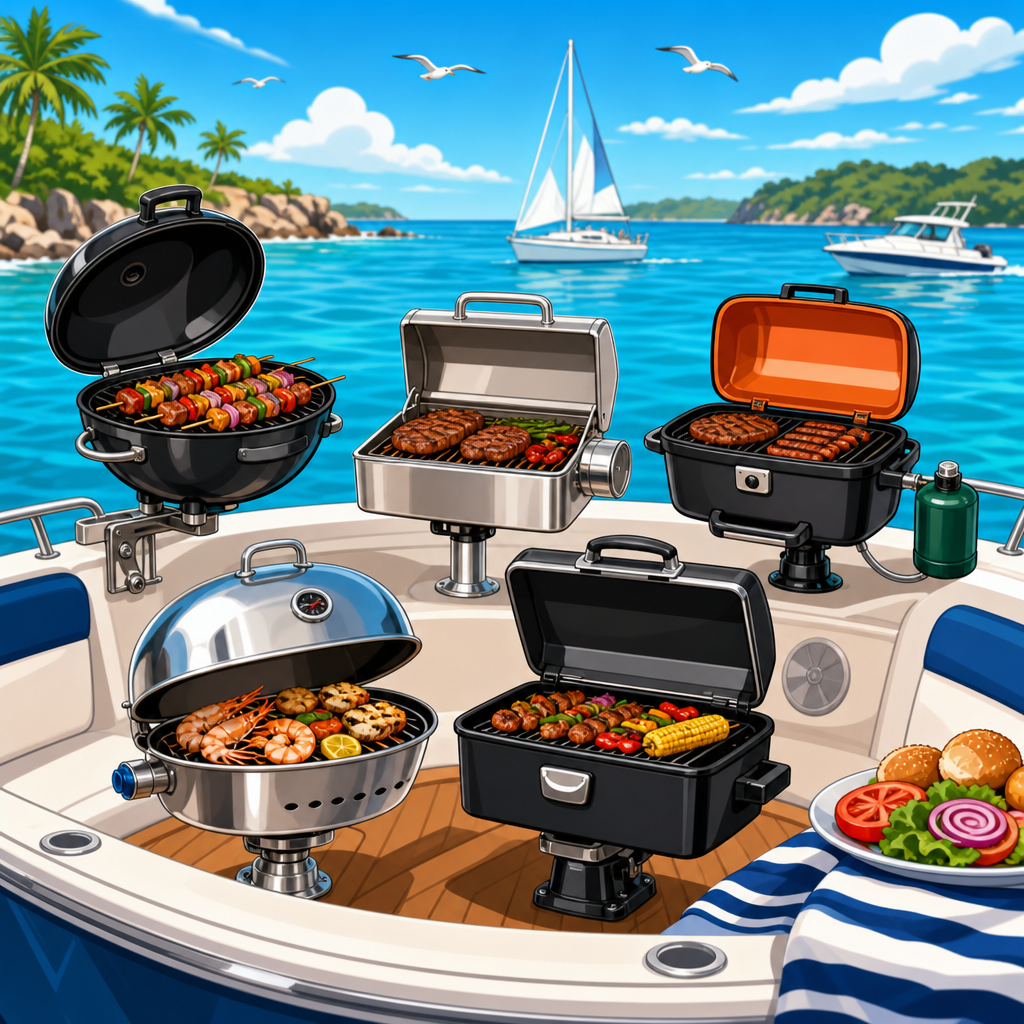
Top 5 boat grills for the ultimate on-water BBQ
After comparing construction quality, heat performance, mounting options, cleaning, and long-term owner feedback, five models stand out. These are not the only good marine grills on the market, but they are the most reliable starting points for most boaters.
| Grill | Best for | Key strengths | Main limitation |
|---|---|---|---|
| Magma Marine Kettle 3 | Small to midsize boats | Compact, proven rail and rod-holder compatibility, even heating for its size | Limited cooking area for larger groups |
| Magma Monterey 2 Infrared | Frequent entertaining | Infrared burner, strong searing, polished stainless build | Higher price and larger footprint |
| Kuuma Stow N Go 160 | Value-focused boaters | Solid heat output, portable design, accessible replacement parts | Fit and finish below premium marine models |
| Weber Q1200 | Dockside and larger deck use | Excellent burner control, familiar cooking performance, easy accessories | Not purpose-built for saltwater mounting |
| Force 10 Gourmet Galley Grill | Cruising sailboats and passagemakers | Heavy-duty marine construction, wind resistance, serious cooking capability | Premium cost and installation complexity |
The Magma Marine Kettle 3 remains one of the safest recommendations in the category. Its popularity is not marketing hype. It fits the way many people actually boat: short to medium outings, two to four diners, limited storage, and a need for simple cleanup. The round design distributes heat well, the polished stainless body resists corrosion, and Magma’s mount ecosystem is mature. If you own a center console, dual console, or compact cruiser, this is often the practical choice.
The Magma Monterey 2 Infrared steps up for crews that grill often. Infrared technology helps the burner recover heat quickly after the lid opens, which is valuable on breezy water. It also sears better than many small propane grills. For pontoons, express cruisers, and larger deck boats, the extra cooking area is useful for fish fillets, vegetables, and burgers at the same time. The tradeoff is cost and a bulkier footprint, so buyers need a dedicated mounting location and storage plan.
The Kuuma Stow N Go 160 is a strong value option because it balances marine utility with mainstream affordability. I have seen it work well on pontoons and family runabouts where owners want a genuine grill but do not want to spend premium Magma or Force 10 money. It heats quickly, packs away relatively easily, and replacement regulators and accessories are easy to source. It is not as refined in finish, but for occasional use it performs above its price class.
The Weber Q1200 is not a traditional marine grill, yet it belongs in this conversation because many boaters use it successfully at the sandbar, on houseboats, and on cruisers with generous deck space. Weber’s burner control and cast-iron cooking grates produce reliable results, and the accessory ecosystem is excellent. The limitation is marine exposure. Unless carefully protected, it will not tolerate saltwater as gracefully as dedicated stainless marine units. Think of it as the best hybrid option for boaters who cook both afloat and ashore.
Force 10’s Gourmet Galley Grill is the premium choice for serious cruisers. Force 10 has long standing credibility in marine cooking equipment, especially for sailboats and offshore applications. This grill is built for owners who spend real time aboard and want restaurant-style performance from a compact galley-adjacent system. The stainless construction is substantial, wind resistance is strong, and the cooking experience feels closer to a permanent marine appliance than a portable accessory. For passagemaking boats, that distinction matters.
How to choose the right grill for your boat size, fuel setup, and crew
The right boat grill depends first on crew size. For two to four people, a compact grill with roughly 100 to 160 square inches of cooking space is usually enough. For five or more, look closer to 180 to 250 square inches, especially if you plan to cook mixed items together. Oversizing creates its own problems. Large grills block walkways, stress mounts, and encourage owners to leave them exposed because stowing them becomes inconvenient. On boats, convenience determines whether gear gets used.
Fuel system planning comes next. Propane is the default for a reason, but the question is whether you will use one-pound cylinders or a larger remote tank. Small cylinders are simple and widely available, making them ideal for day boats. Remote tanks reduce waste and support longer trips, but they require more disciplined storage and line routing. For trailer boat owners, portability may matter more than fixed plumbing. For cruisers, secure long-term fuel management often justifies a more integrated solution.
Mounting should be evaluated before purchase, not after delivery. Rail diameter, rod-holder angle, transom clearance, bimini position, and swim platform traffic all affect usability. I advise owners to stand in the proposed cooking position and simulate opening the lid, turning food, and carrying a tray to the cockpit table. If the cook has to block the helm passage every time, the grill will become an annoyance. Also consider wind direction at anchor. A technically good grill can still smoke out the cockpit if placed poorly.
Finally, think about cleaning and storage. Removable grease trays, dishwasher-safe parts, latchable lids, and padded storage covers matter more on a boat than at home. Salt, fish residue, and marinades become stubborn quickly in the sun. Buyers often focus on BTUs, but cleanup speed is what determines whether a grill feels convenient after a long day of swimming, towing, or fishing.
Must-have boating accessories that complete an on-water BBQ setup
A boat grill works best when paired with a few complementary accessories that support food prep, safety, and cleanup. The first is a quality cooler or portable marine refrigerator. Cold-chain reliability matters on hot decks, especially for raw meat, seafood, dairy, and condiments. Premium rotomolded coolers from YETI, RTIC, and Engel hold ice well, but many boaters overlook organization. Use sealed bins inside the cooler to separate raw proteins from drinks and ready-to-eat foods. That reduces cross-contamination and keeps the lid closed longer.
Second, add a stable prep surface. On many boats, the smartest option is a removable cockpit table or bait-prep station that can double for food assembly. Non-slip cutting boards, nesting bowls, and silicone utensil caddies work better than loose kitchen gear. Third, keep a dedicated grill cleaning kit onboard: nylon brush for appropriate grate types, microfiber towels, biodegradable degreaser safe for marine use, and disposable drip-tray liners where supported. These tools prevent the grill from becoming a sticky storage problem between trips.
Safety accessories are non-negotiable. Keep a compact Class B:C extinguisher near the cooking area and another at the helm. Use heat-resistant gloves, long tongs, and a lidded container for grease waste. If children swim from the stern, establish a no-cook/no-swim overlap rule. In practice, that simple habit prevents most deck chaos around a hot grill. Finally, think about comfort accessories that make meals actually enjoyable: snap-on shade extensions, rechargeable cockpit lights, marine-safe melamine dinnerware, and trash containment that resists wind.
As a sub-pillar hub for must-have boating accessories, this topic connects naturally to articles on marine coolers, waterproof storage, safety gear checklists, portable tables, deck lighting, and fish-cleaning stations. The owners who build a cohesive accessory system get more use from every trip because setup becomes predictable and efficient rather than improvised.
Maintenance, safety, and common mistakes boat owners should avoid
The biggest mistake boaters make is treating a marine grill like backyard equipment. Salt exposure starts working immediately, even in covered slips. After each trip, wipe exterior stainless with fresh water and a soft cloth, clean grates while still warm, empty grease trays fully, and let the unit dry before covering. For polished stainless, dedicated marine metal protectants can help slow staining, but they should never be applied to cooking surfaces. Check burner ports regularly for spider webs, salt crystals, or grease blockage that can disrupt flame pattern.
The second common mistake is poor fuel handling. One-pound propane cylinders should be inspected for rust, denting, and valve damage. Hoses and regulators need periodic replacement based on manufacturer guidance and visible wear. Never store leaking cylinders in unventilated compartments. If you smell gas, shut off the cylinder immediately, ventilate the area, and do not ignite electronics or switches until the source is resolved. These are simple steps, but they are the difference between routine boating and preventable emergency response.
Another error is buying based only on headline power. Higher BTUs do not automatically mean better cooking on the water. Burner geometry, lid seal, wind resistance, grate material, and usable cooking area matter just as much. I have seen modestly rated grills outperform more powerful units because they retained heat efficiently and mounted securely. A stable, well-designed grill beats a flashy one that rattles, flares, or corrodes after a season.
Choose your boat grill the same way you choose other essential boating accessories: match the gear to your vessel, your crew, and the conditions you actually use. Start with a corrosion-resistant model, pair it with safe fuel storage and smart prep tools, and build a compact cooking system that fits your deck layout. For most boaters, the Magma Marine Kettle 3 is the easiest all-around recommendation, while the Magma Monterey 2 Infrared, Kuuma Stow N Go 160, Weber Q1200, and Force 10 Gourmet Galley Grill each serve distinct needs well.
The ultimate on-water BBQ is not about owning the biggest grill. It is about creating a dependable, safe, and enjoyable meal setup that supports longer days aboard and better time with family and friends. When your grill, cooler, prep space, and safety gear work together, lunch at anchor becomes effortless instead of stressful. Use this hub as your starting point for building a smarter boating accessories kit, then choose the grill that fits how you really boat.
Frequently Asked Questions
What makes a boat grill different from a regular portable grill?
A boat grill is built for a very different environment than a backyard or campsite model. On the water, you are dealing with constant motion, wind, salt spray, tight deck space, and nearby materials like vinyl, gelcoat, canvas, and fiberglass that can be damaged by heat or grease. A true marine grill is designed with these conditions in mind. The best ones use corrosion-resistant materials such as stainless steel, secure locking lids, reliable mounting systems, and heat management that helps protect surrounding surfaces.
Another major difference is how the grill integrates with the boat itself. Many top marine grills can be mounted on rails, rod holders, or pedestal systems so they stay stable while underway or at anchor. That matters because a loose grill is not just inconvenient, it is a real safety hazard. Marine-specific grills also tend to be easier to clean in compact spaces and often include features like wind-resistant burner designs, grease containment, and compact footprints that work on crowded decks.
In practical terms, the best boat grill is not simply the hottest or the largest. It is the one that cooks well while minimizing risk, preserving space, and standing up to a harsh saltwater environment. That is why a model that looks similar to a regular portable grill on land can perform very differently once you take it offshore or even into a breezy marina.
What fuel type is best for a boat grill: propane, electric, or charcoal?
For most boaters, propane is the most practical all-around choice because it offers strong heat, quick startup, and wide availability without drawing power from the boat. A good propane marine grill can preheat quickly, handle burgers, fish, skewers, and steaks with ease, and still remain compact enough for rail or rod-holder mounting. Small disposable cylinders are convenient for short trips, while refillable systems can be better for frequent use. The main consideration with propane is safe storage and ventilation, since fuel can become dangerous if handled carelessly in enclosed spaces.
Electric grills can be a strong option in marinas or on larger boats with adequate shore power or generator support, especially where open flames are restricted. They are often simpler to operate and can be easier to justify in locations with strict fire rules. However, electric models may struggle to match the searing power of propane, and they can be a poor fit on boats with limited power reserves because nobody wants a grill draining batteries that are needed for navigation, lights, pumps, or electronics.
Charcoal delivers excellent flavor, but on a boat it is usually the least convenient and often the least marina-friendly option. It produces ash, drifting embers, longer startup times, and more cleanup, all of which become more annoying and risky on deck. In many marinas, charcoal may be prohibited outright because of fire concerns. If your goal is the ultimate on-water BBQ with the fewest headaches, propane usually wins. Electric is a solid niche choice for specific setups and rules, while charcoal tends to be best left for shore-based cooking unless you have a very specific use case and a very safe environment.
How do I choose the right size and mounting style for my boat grill?
The right size starts with your boat’s usable deck space, not just the number of people you want to feed. It is easy to overestimate how much grill you can realistically accommodate once you factor in seating, cooler access, fishing gear, dock lines, and safe movement around the cockpit. A grill that looks modest on paper may feel large once mounted near a stern rail or transom. In most cases, a compact to mid-size grill is the sweet spot because it provides enough cooking area for a small group without dominating the layout or creating unnecessary heat concentration in one area.
Mounting style is just as important as grill size. Rail mounts are popular because they keep the grill elevated, off valuable surfaces, and positioned where smoke and heat can disperse more easily. Rod-holder mounts are common on fishing boats and can be very convenient if they are sturdy and properly located. Pedestal mounts can work well on larger vessels where there is a dedicated space for cooking. Whatever the setup, stability is critical. You want a mount that feels secure in chop, keeps the grill level, and allows enough clearance from upholstery, fiberglass, and foot traffic.
It also helps to think about storage and removal. Some boaters want a grill that stays mounted through the season, while others prefer a quick-release design they can stow after use. If you grill often, ease of setup becomes a major quality-of-life factor. The best boat grill for your setup is the one that fits your crew size, does not interfere with essential movement on deck, and mounts in a way that keeps heat, grease, and flame well away from vulnerable parts of the boat.
Are boat grills safe to use in marinas and while anchored?
Boat grills can be safe, but only when they are used with close attention to local rules, weather, and basic marine fire safety. Marinas vary widely in what they allow. Some permit propane grills under certain conditions, some restrict open flames entirely, and others have rules about where and when cooking can take place. Before firing up any grill, it is worth checking marina policies rather than assuming the rules are the same everywhere. Violating marina regulations is not just inconvenient, it can create real liability and safety issues.
Anchored or rafted-up use is often more flexible, but safety still comes first. The safest grilling conditions are calm weather, good ventilation, and a clear area around the grill free of lines, towels, paper goods, fuel containers, and cushions. You should never use a grill in an enclosed cabin or any space where heat, smoke, or gas can accumulate. It is also smart to keep a marine fire extinguisher nearby and to let the grill cool fully before moving, covering, or storing it. Wind direction matters more than many people expect because a sudden gust can push heat and grease smoke toward canvas, vinyl enclosures, or neighboring boats.
In real-world boating, the safest practice is to grill while stationary in a stable situation, not while actively underway. Even on a calm day, boat movement can affect hot grease, cookware, and food handling. A quality boat grill reduces risks through better mounting and heat control, but no grill removes the need for judgment. Used properly, a marine grill can be a safe and enjoyable part of the boating experience. Used casually or in the wrong setting, it can quickly become the most dangerous accessory on board.
What features should I prioritize when buying one of the top boat grills?
Start with marine durability. Stainless steel construction, corrosion-resistant fittings, and solid hinges are not luxury features on a boat, they are essentials. Salt air and spray are relentless, and cheaper components show it fast. A grill can cook beautifully for a weekend and still be a poor long-term buy if the burner, latch, or mount hardware starts rusting after a short season. Build quality should be at the top of your checklist because it affects safety, lifespan, and overall value.
Next, focus on cooking performance in real marine conditions. That means reliable ignition, even heat distribution, enough burner output to recover when the lid opens, and a design that performs well in wind. A grill that struggles to maintain temperature on an exposed stern is frustrating no matter how polished it looks in product photos. Lid design, grate quality, grease control, and ease of cleaning also matter more than many buyers realize. On a boat, cleanup is never as easy as it is in a backyard, so a grill with smart drip management and accessible surfaces will save time and reduce mess.
Finally, consider how the grill fits into the broader boating setup. The best marine grill should complement your storage plan, fuel strategy, passenger space, and typical trip length. If it is hard to mount, awkward to remove, difficult to clean, or requires more power or fuel management than your boat comfortably supports, it will get used less often. The top boat grills are the ones that balance heat, safety, compact design, and practical ownership. In other words, the best choice is not just about grilling food well. It is about making on-water cooking easy, safe, and realistic every time you leave the dock.