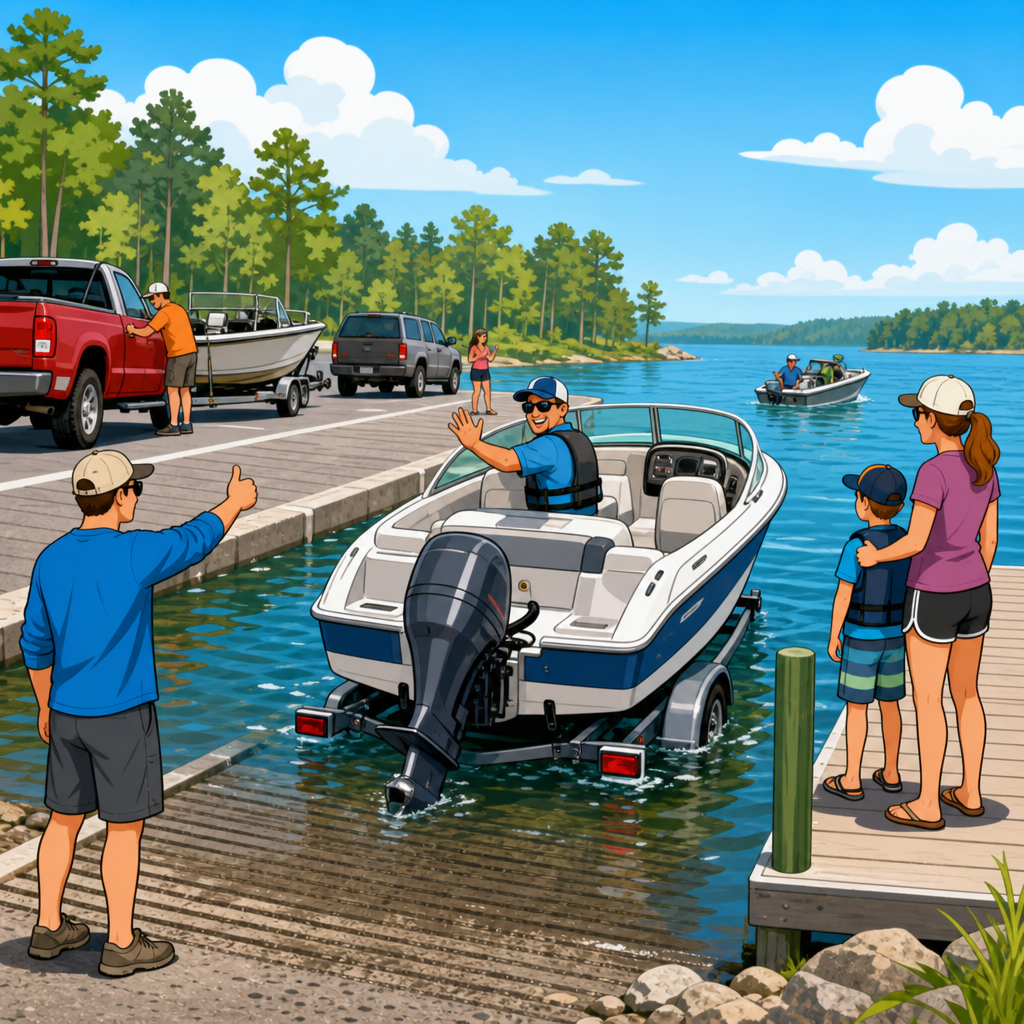
Best boat ramp etiquette starts long before your trailer touches the water. It begins in the parking lot, at home in the driveway, and even while choosing the towing equipment that gets your boat safely to the launch. For boaters, “ramp etiquette” means the set of practical behaviors that keep launching and loading efficient, safe, and respectful for everyone waiting in line. That includes staging your boat away from the ramp, checking drain plugs, securing dock lines, understanding right-of-way near courtesy docks, and knowing how your trailer, hitch, brakes, lights, and tie-downs affect every step of the process.
I have launched everything from lightweight aluminum fishing boats on single-axle trailers to heavier fiberglass center consoles with surge brakes, guide-ons, and bunk trailers. The same pattern always shows up at busy ramps: most delays are not caused by difficult boats or bad ramps, but by preventable mistakes. A dead trailer light, a forgotten transom strap, a winch line not clipped correctly, or a driver backing down for the first time without a plan can turn a two-minute launch into a fifteen-minute bottleneck. Good etiquette is not just about being polite. It reduces accidents, keeps tempers down, protects equipment, and helps everyone spend more time on the water.
This article is the hub for boat trailers and towing equipment within boating gear and equipment. If you are building a complete setup, this is the place to start because ramp manners depend on hardware as much as behavior. Trailer type, tongue weight, tire condition, wheel bearings, brake controller settings, hitch class, and mirrors all influence how easily you can position a boat at the water. A well-prepared rig launches faster and retrieves straighter. A poorly matched rig struggles on slopes, drifts sideways in crosswinds, and creates risk for the people around it.
At a practical level, most boaters want clear answers to the same questions. What should be done before entering the launch lane? What equipment needs checking every trip? When should passengers board? How far should the trailer be backed in? Who moves the boat from the courtesy dock first? The best answers are simple, repeatable, and based on standard boating and trailering practice. Follow them consistently and you will look experienced even at an unfamiliar ramp.
Prepare before you enter the ramp lane
The single biggest rule in boat ramp etiquette is to do all preparation in the staging area, not on the slope. Staging areas exist so you can load coolers, remove travel covers, install the drain plug, connect fenders, prepare lines, test the bilge blower if your boat has an inboard or sterndrive gasoline engine, and disconnect transom tie-downs without blocking other users. If you wait until you are on the ramp to do these tasks, you create a line behind you and increase pressure on yourself. That is when people forget basics.
A consistent pre-launch checklist saves time. I recommend checking five things in the same order every trip: plug, straps, power, paperwork, and plan. Plug means verify the drain plug is installed. Straps means remove stern straps, leave the bow winch connected until the boat is in the water, and confirm the safety chain is attached. Power means batteries on, fuel valve open if applicable, electronics ready, and engine support removed. Paperwork means registration, launch permit, and required safety gear on board. Plan means driver and crew know exactly who parks the tow vehicle, who handles the bow line, and where the boat will wait after launch.
This is also where towing equipment matters. A trailer with a functioning tongue jack, correctly rated coupler, safety chains crossed under the tongue, and a secure wiring harness is easier to manage under stress. If your rig uses a 7-pin connector with electric brakes, test brake response before you get into a crowded line. If it uses surge brakes, inspect the actuator, breakaway cable, and brake fluid level regularly. Boat trailers often live hard lives around fresh and salt water, and neglected components fail at the worst possible time.
Match your trailer and towing setup to your boat
Boat ramp etiquette is easier when the trailer is matched properly to the hull and the tow vehicle is matched properly to the trailer. That sounds obvious, but I routinely see overloaded half-ton vehicles, undersized tires, and tongue weights that are far too light for stable reversing. The result is poor control on steep ramps and erratic movement in crosswinds. A properly sized setup should keep total trailer weight within the tow rating, gross combined weight rating, axle rating, and tire load rating, while maintaining appropriate tongue weight, typically around 7 to 10 percent for many boat trailers depending on design.
Bunk trailers and roller trailers behave differently at the ramp. Bunk trailers support the hull well and are common for fiberglass boats, but they usually require slightly deeper immersion to float the boat cleanly. Roller trailers can launch more easily in shallow conditions, yet they demand careful winch and bow eye handling because the boat can move sooner than expected. Guide posts, side bunks, and keel rollers can dramatically improve retrieval in wind or current. If you regularly use exposed ramps, those additions are not cosmetic; they are operational equipment.
Trailer brakes deserve special attention. In most states and provinces, brakes are required above certain weight thresholds, and for good reason. On a wet ramp, your tow vehicle needs traction and control more than raw power. Well-maintained surge brakes or electric-over-hydraulic systems reduce stopping distance and help prevent the trailer from pushing the vehicle on descents. Tires also matter. Special trailer tires, marked ST, have sidewalls designed for trailer loads and sway resistance. Passenger-car tires are not a substitute. Neither are dry-rotted originals that still show tread but are aging out after years of sun exposure.
| Component | What to check | Why it matters at the ramp |
|---|---|---|
| Coupler and ball | Correct ball size, latch fully seated, pin installed | Prevents uncoupling on steep incline transitions |
| Safety chains | Crossed, properly rated, not dragging | Provides backup control if coupler fails |
| Winch strap and safety chain | No fraying, hook latched to bow eye | Keeps boat secure before and during retrieval |
| Trailer brakes | Actuator or controller working, no leaks | Improves stopping and descent control on wet grades |
| Wheel bearings | Greased, bearing protectors intact, no heat | Reduces risk of roadside failure before launch |
| Lights and wiring | Brake, turn, and running lights functional | Keeps rig legal and predictable in queue traffic |
| Tires | Correct pressure, no cracks, proper load range | Improves backing stability and safety |
| Mirrors | Wide enough for trailer visibility | Makes straight backing faster and safer |
Back down the ramp with control and courtesy
Once your boat is staged and your setup is verified, approach the ramp deliberately. If others are waiting, do not stop at the top to rethink the process. Pull forward only when your lane is clear and your crew is ready. Back slowly, with small steering corrections. New trailer operators often oversteer because they react late and turn too much. Put one hand at the bottom of the steering wheel; move that hand in the direction you want the trailer to go. It is a simple technique, but it reduces confusion immediately.
If you are inexperienced, practice in an empty parking lot before launch day. Cones, painted lines, and repeated short sessions teach more than a dozen stressful attempts at a crowded public ramp. Use your mirrors, not just your backup camera. Cameras flatten depth and can hide the angle of the trailer relative to the lane. On steep ramps, four-wheel drive can help with traction, but it does not improve braking on the way down. Low gear, smooth pedal inputs, and a straight approach do.
Courtesy at this stage means staying predictable. Do not block adjacent lanes with wide turns. Do not leave your vehicle idling in reverse while you chat. If someone offers competent hand signals, agree on them first: palms moving left or right for trailer direction, a raised fist for stop. Random gestures from multiple bystanders usually make things worse. If you miss the lane, pull up and reset. One clean second attempt is better than jackknifing and shutting down two lanes.
Launch efficiently without sacrificing safety
The correct trailer depth depends on hull shape, trailer design, and ramp angle, but the principle is constant: back in only as far as needed to float the boat while keeping control. Too shallow and the boat sticks to bunks or rollers. Too deep and the stern may float sideways before the bow is controlled, or the tow vehicle’s rear tires may lose traction. On many bunk trailers, the fenders approach the waterline while a portion of the bunks remains exposed. That is a starting point, not a rule. Learn your setup on a calm day.
Before releasing the bow, verify the engine will start if conditions allow safe starting at the ramp. Gasoline inboards and sterndrives should have the blower run according to the manufacturer’s guidance before startup. Outboards should be trimmed appropriately for launch depth. Keep a bow line in hand. If the boat is walked off, move it immediately to the courtesy dock or a designated holding area, then clear the lane so the tow vehicle can leave. The courtesy dock is for short-term loading and unloading, not for rigging tackle, wiping down the windshield, or waiting for late passengers.
Passengers should board where the ramp design and local rules make it safest, usually at the dock after the tow vehicle is parked. Sending children or unsteady passengers onto a slippery trailer tongue or wet ramp edge is poor practice. In windy or tidal conditions, assign one person to the bow line and one to the stern line if possible. At busy ramps, clear communication matters more than volume. A calm “hold bow,” “walk forward,” or “bring stern in” prevents collisions far better than shouted improvisation.
Retrieval etiquette matters as much as launching
Many boaters focus on launch behavior and forget that retrieval is where delays often get worse. The same staging rule applies in reverse. Before you enter the lane to load the boat, prepare in the parking area: trailer lights disconnected only if your manufacturer recommends it, straps ready, motor trimmed, gear stowed, and crew briefed. If the ramp is busy, do not tie up the courtesy dock while you fetch the trailer. Have the trailer driver in position before bringing the boat in.
Loading technique depends on local rules and ramp design. Some ramps allow powering onto the trailer; others prohibit it because prop wash scours the bottom and damages the ramp end. Where prohibited, respect the rule. Even where allowed, excessive throttle is a sign of poor setup, not skill. A properly submerged trailer with aligned guide-ons and a centered approach should allow controlled loading with minimal power. Once the bow reaches the stop, attach the winch strap and safety chain before pulling out. Never rely on engine thrust alone to hold the boat against the bow stop during exit.
After you clear the water, move to the staging area before installing transom straps, removing drain plugs where permitted, organizing gear, or pulling weeds from the trailer. This is where good hub-level equipment guidance pays off. A quality trailer winch with the right strap rating, corrosion-resistant hardware, LED trailer lights, bearing protectors, and visible guide posts all reduce retrieval time. So do simple accessories such as boarding steps, non-slip trailer tongues, and wheel chocks for steep lanes.
Common do’s and don’ts every boater should follow
Do inspect your boat trailer before every trip. That includes lug nuts, tire pressure, winch condition, coupler lock, chains, lights, and bearing temperature at fuel stops. Do use a checklist. Do keep your ramp routine short. Do help others if you are truly competent and they want help. Do know local ramp rules about fees, lane direction, no-wake zones, and power loading. Do flush brakes and rinse the trailer after saltwater use. Corrosion is one of the main reasons seemingly minor trailer components fail.
Do not block the ramp while packing coolers, loading rods, or explaining basic boating to guests. Do not unhook the bow winch or safety chain until the boat is in the water and controlled by a line. Do not power-load aggressively unless the facility explicitly allows it and conditions require only minimal throttle. Do not leave your boat sitting at the courtesy dock while you socialize or run to the bait shop. Do not assume all ramps have the same depth, drop-off, traction, or dock layout. A familiar boat can behave very differently on a steep algae-covered concrete slope than it does on your home lake.
Most importantly, do not separate etiquette from equipment. Boat trailers and towing equipment are not background details to launching; they are the system that makes good ramp behavior possible. The right hitch ball height levels the trailer for stable backing. Proper tongue weight helps the trailer track. Functional brakes protect everyone on the descent. Correctly adjusted mirrors reduce hesitation. When boaters upgrade these basics, their ramp manners improve automatically because the rig responds predictably.
Best boat ramp etiquette comes down to preparation, control, and respect. Prepare your boat in the staging area, not on the ramp. Control your rig with the right trailer, hitch, brakes, tires, mirrors, and loading routine. Respect other boaters by keeping the lane clear, moving promptly from the courtesy dock, and following local launch rules. Those habits prevent damage, reduce conflict, and make every trip smoother from driveway to dock.
As the hub page for boat trailers and towing equipment, this topic connects every part of the launch process. Learn how your trailer supports your hull, how your tow vehicle manages weight and traction, and how accessories such as guide posts, winches, straps, and brake systems affect real-world ramp performance. If you want faster launches, safer retrievals, and less stress at crowded public ramps, start by improving the equipment behind your boat as carefully as the gear on it.
Review your current setup before your next trip, build a repeatable checklist, and practice your launch routine on a quiet day. Better habits at the ramp begin with better towing decisions.
Frequently Asked Questions
What should I do before I get in line at the boat ramp?
The most important rule of good boat ramp etiquette is to arrive fully prepared before you ever back down the ramp. That means using the staging area or parking lot to complete every task you can ahead of time. Install the drain plug, remove transom straps, load life jackets and gear, attach dock lines, place fenders if needed, test the battery switch, and make sure your key is ready. If your boat has electronics, livewells, or navigation lights, check them before entering the queue so you are not troubleshooting on the ramp while others wait.
It also helps to review your launch plan with everyone in your crew. Decide who will back the trailer, who will handle the bow line, who will park the tow vehicle, and where passengers should stand. Clear communication reduces confusion and prevents delays once you reach the water. If you are launching alone, prepare your dock lines and any launching aids in advance so the boat can be controlled quickly and safely.
Just as important, make sure your towing setup is roadworthy before you leave home. Proper trailer balance, working lights, secure safety chains, and the correct hitch components all contribute to a smoother experience at the ramp. Many launch delays actually start with equipment problems that could have been caught in the driveway. Preparing early is one of the simplest ways to be respectful, efficient, and safe.
What are the biggest boat ramp etiquette mistakes to avoid when launching?
The most common mistakes all have one thing in common: they slow down the ramp and create unnecessary stress for everyone else. One major error is stopping on the ramp to load coolers, organize tackle, install plugs, or untangle ropes. Those tasks belong in the staging area, not at the water’s edge. Another frequent mistake is blocking access lanes or tying up the courtesy dock longer than necessary. Courtesy docks are meant for short-term loading and unloading, not for leaving your boat unattended while you chat or make extended preparations.
Another don’t is ignoring the flow of traffic and the order of arrival. Boat ramps work best when people take turns, stay alert, and avoid cutting in line. Backing down before another boater who has already staged and waited is a fast way to create tension. The same is true for launching too slowly because you have not practiced backing a trailer. If you are inexperienced, there is nothing wrong with taking your time carefully, but it is smart to practice beforehand in an empty lot so your ramp routine is more controlled.
Safety mistakes also count as etiquette mistakes. Never power-load where it is prohibited, never leave the tow vehicle unsecured, and never allow passengers to stand in dangerous positions between the boat and dock or behind the trailer. Good etiquette is not just about speed; it is about minimizing risk and making the launch predictable for everyone around you.
How can I launch and load my boat quickly without being rude or unsafe?
Efficiency at the ramp comes from preparation, not from rushing. The goal is to move smoothly and confidently while keeping safety first. When launching, back down only as far as necessary, release the boat in a controlled way, and move it promptly to the courtesy dock or clear of the ramp area. If someone is helping, each person should already know their role. One person handles the boat, the other parks the tow vehicle. Keeping the process simple and organized is the best way to avoid bottlenecks.
When loading, have your trailer ready and approach only when the lane is open. Make sure dock lines are positioned for control and that the person driving the tow vehicle is ready before you bring the boat in. If conditions are windy or current is strong, take an extra moment to line up properly rather than making repeated attempts that block the ramp. Boaters around you generally appreciate a careful, deliberate approach more than a hurried one that creates confusion.
Being efficient also means knowing the local rules. Some ramps allow only certain loading methods, and some prohibit engine power-loading because it can damage the ramp bottom. Understanding those rules helps you avoid delays, corrections, and unsafe improvisation. Quick, courteous launching and loading is really about reducing wasted motion, communicating clearly, and leaving the ramp area as soon as the boat is secure.
Who has the right-of-way at a busy boat ramp or courtesy dock?
Right-of-way at the boat ramp is not always governed by a single universal rule, but there are clear etiquette standards that experienced boaters follow. In general, the person actively launching or retrieving at the ramp should be allowed to complete that immediate process without interference. Boats using the courtesy dock briefly to load or unload should move along quickly so others can do the same. Courtesy docks are not long-term parking spaces, and tying up there longer than necessary is one of the most common causes of congestion.
On the water near the ramp, incoming and outgoing boats should proceed slowly, stay clear of the ramp lane until it is their turn, and avoid blocking another vessel’s approach. If several boats are waiting, patience and eye contact go a long way. Often, experienced boaters will signal each other through in a practical order based on who is lined up, who is retrieving, and who can clear the area fastest. Respecting that rhythm keeps the launch area functioning smoothly.
For vehicles and trailers, the same principle applies: wait your turn, stage before entering the lane, and do not block others while preparing. If there is any uncertainty, a polite conversation is better than assuming. Calm communication prevents misunderstandings and helps everyone get on and off the water more efficiently. Good right-of-way etiquette is less about asserting priority and more about cooperating so the entire launch area works safely.
Why does boat ramp etiquette start at home and in the parking lot instead of at the water?
Because most ramp problems are the result of poor preparation, not poor driving. If your trailer lights are not working, your straps are tangled, your drain plug is missing, your battery is dead, or your lines are buried under gear, the delay will show up at the ramp when people are waiting behind you. Taking care of those details at home gives you time to solve problems without pressure. It also helps ensure your tow vehicle, hitch, and trailer are matched correctly for the boat you are hauling, which affects both highway safety and launch control.
The parking lot or staging area is where final ramp prep should happen. That is where you remove tie-downs, check the plug, secure lines, confirm fuel and safety gear, and make sure everyone knows the plan. Doing those tasks before approaching the ramp keeps the actual launch lane open for backing, floating off, and moving on. This division of tasks is one of the foundations of good etiquette because it shows respect for everyone else’s time.
Starting early also makes you a safer boater. A well-prepared launch reduces stress, improves decision-making, and lowers the chance of forgotten essentials or last-minute mistakes. In that sense, boat ramp etiquette is not just about being polite. It is a practical system for managing equipment, reducing congestion, and helping every boater share a limited public space more effectively.