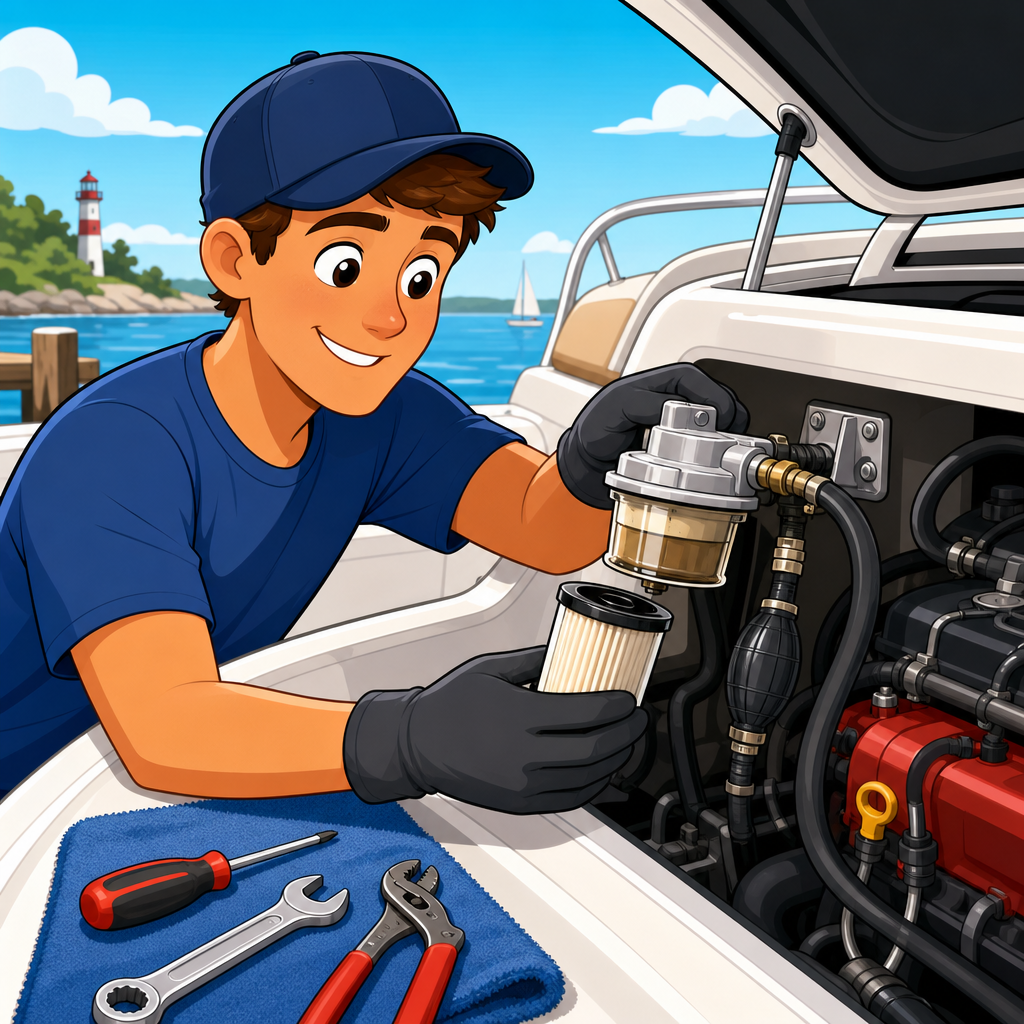
A clogged fuel filter can turn a reliable day on the water into an engine that sputters, stalls, or refuses to start, which is why learning how to replace a boat’s fuel filter step-by-step is one of the most practical maintenance skills any owner can build. In marine service, the fuel filter is the component that traps dirt, rust, varnish, and water before contaminants reach sensitive parts such as the fuel pump, injectors, carburetor passages, or high-pressure common-rail systems. On most recreational boats, that protection comes from two stages: a water-separating fuel filter mounted remotely between the tank and engine, and a smaller on-engine filter that handles finer debris. I have replaced both styles on outboards, sterndrives, and inboards, and the pattern is consistent: neglected filters cause hard starting, uneven idle, loss of power at cruise, and expensive component wear that is avoidable with routine service.
This subject matters well beyond a single filter swap because fuel quality sits at the center of engine care and troubleshooting. Modern gasoline blended with ethanol can loosen deposits inside older tanks and hoses, while diesel systems are especially vulnerable to microbial growth and water contamination. A simple filter change therefore connects directly to broader engine reliability, from diagnosing fuel starvation to protecting injectors that cost far more than the filter itself. As a hub within boat maintenance and repairs, this guide explains the replacement process in plain terms, then ties it to the larger engine care practices that keep marine engines dependable. If you want a boat that starts cleanly, runs smoothly, and gives you fewer surprises at the dock, proper fuel filter service is foundational.
What a Boat Fuel Filter Does and When to Replace It
A boat fuel filter has two jobs: remove solid contaminants and, in many setups, separate water from fuel. Marine water-separating filters commonly use a spin-on metal canister attached to a filter head. Inside is treated media that catches particles, while the bowl or lower chamber allows heavier water to collect. On-engine filters vary by manufacturer. Yamaha, Mercury, Suzuki, Honda, Volvo Penta, MerCruiser, and Yanmar all use slightly different housings, but the function is the same: protect the engine’s fuel delivery system from debris that would restrict flow or damage precision parts.
Replacement intervals depend on engine maker guidance, operating hours, and fuel quality. As a rule, I advise changing the primary water-separating filter at least once per season, replacing it immediately after any contaminated fuel event, and carrying a spare onboard. For engines used heavily, every 100 hours is a practical checkpoint, though many manufacturers specify their own schedule in the service manual. An on-engine filter often follows a 100-hour or annual interval as well. Warning signs that a filter may be restricted include surging at higher throttle, difficulty maintaining RPM under load, hesitation after acceleration, vacuum alarms on diesel systems, and visible water in a clear collection bowl.
There is an important troubleshooting distinction here: a bad fuel filter and a failing fuel pump can look similar. The difference is that filter restriction usually becomes more obvious as fuel demand rises, such as when climbing onto plane or pushing through chop. Ignition issues, by contrast, may show up as misfire even when fuel demand is modest. Replacing a filter is therefore both preventive maintenance and a first-line diagnostic step in engine care.
Tools, Parts, and Safety Steps Before You Start
Before replacing a boat’s fuel filter, confirm the exact part number from the engine manual or the existing filter. Do not rely on thread size alone. A spin-on filter may physically fit the mount yet have the wrong micron rating, gasket dimensions, flow characteristics, or water separation efficiency. Ten-micron filters are common for gasoline water separators, while some diesel systems use different primary and secondary stages. Choose a marine-rated replacement from a reputable manufacturer such as Racor, Sierra, Quicksilver, Yamaha, or the engine OEM, and replace O-rings supplied with cartridge-style filters.
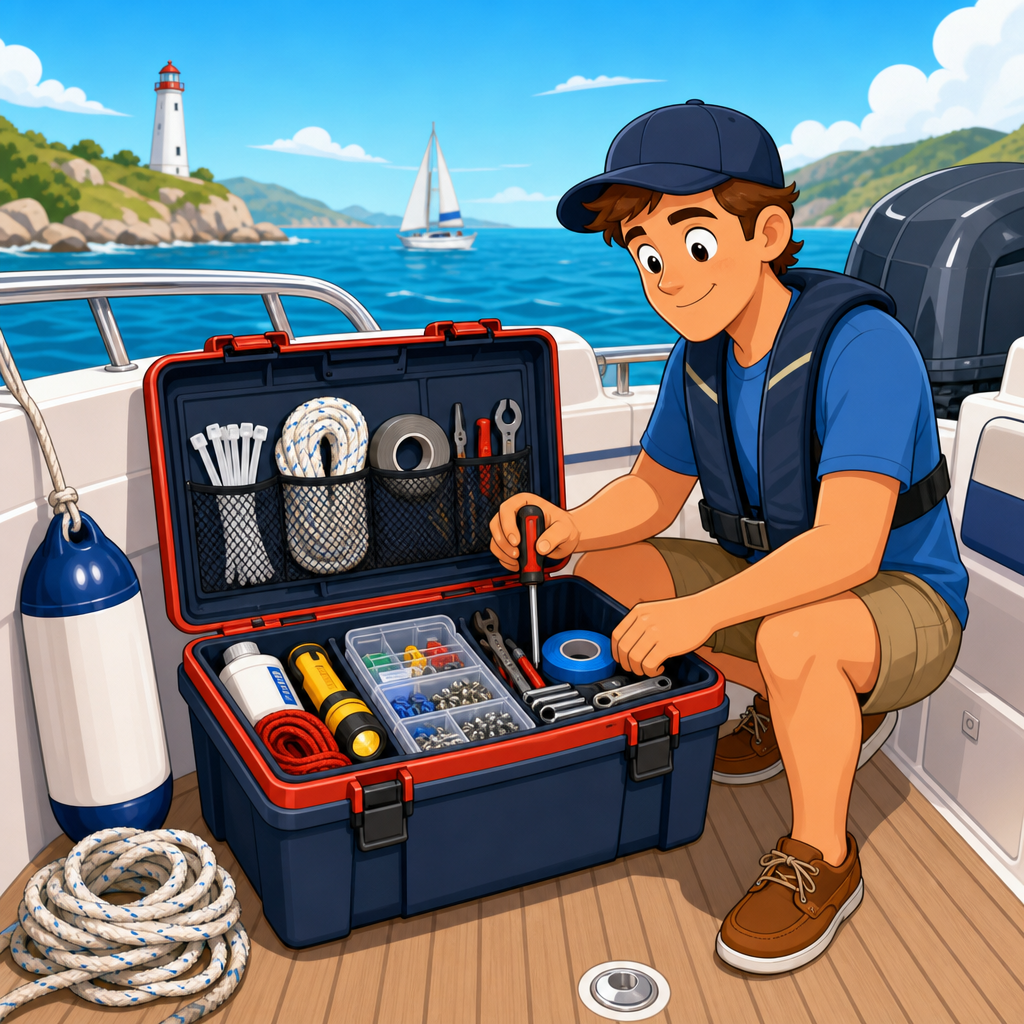
You will also need absorbent pads, nitrile gloves, eye protection, a drain container, a strap wrench or filter wrench if space is tight, clean fuel for priming when permitted by the manufacturer, and a fire extinguisher close by. Ventilate the bilge thoroughly before beginning, turn off battery switches when practical, and eliminate ignition sources. That means no smoking, no heat guns, and no work lights that can ignite fumes. The U.S. Coast Guard and ABYC recommendations on fuel-system safety are worth following closely: contain spills, maintain ventilation, and inspect hoses and clamps anytime the fuel path is opened.
If your boat has a fuel shutoff valve at the tank, close it. If not, work efficiently and keep the old filter upright during removal. For outboards with portable tanks, disconnect the fuel line and depressurize according to the manufacturer’s procedure. On EFI engines, some systems retain pressure downstream, so check the manual before loosening fittings. The cleanest jobs happen when the boat is level, the engine is cool, and the work area is well lit enough to inspect every seal afterward.
Step-by-Step: How to Replace a Spin-On Water-Separating Fuel Filter
Start by placing absorbent pads under the filter assembly. If the filter has a clear bowl or water sensor, disconnect the sensor carefully and note the wiring orientation. Loosen the canister with a strap wrench if needed, then spin it off by hand while keeping it as upright as possible. Pour the contents into a clear container and inspect what came out. Separate water will bead or settle at the bottom of gasoline, while diesel contamination may appear cloudy or dark. This inspection is valuable because it tells you whether the filter change is routine or the first sign of tank contamination that needs broader corrective action.
Next, wipe the filter head thoroughly. This is the step people rush, and it causes leaks. Make sure the old gasket is not stuck to the mounting surface. A double-gasketed spin-on filter will leak air or fuel and can create baffling running issues. If the new filter is installed vertically and the manufacturer allows it, pre-fill it with clean fuel to reduce cranking time. For gasoline engines, many technicians prefer not to pre-fill because anything poured in through the outer holes bypasses the filter media until the engine draws fuel through normally. On many diesel primaries, pre-filling through the center or designated port is accepted, but always follow engine guidance.
Lubricate the new gasket with clean engine oil or fresh fuel, spin the filter on until the gasket contacts the base, then tighten according to the printed instruction, typically an additional three-quarter turn by hand. Do not overtighten with a wrench. Reopen the fuel shutoff if you closed it. Prime the system using the primer bulb on an outboard until firm, or use the engine’s lift pump, electric prime function, or manual priming pump on diesel installations. Then inspect closely for leaks before starting the engine. Once running, hold idle for several minutes and check again around the gasket, drain, bowl, and sensor threads. A dry paper towel passed around the base will reveal seepage faster than your eyes alone.
Replacing On-Engine Fuel Filters and Fine Fuel Elements
On-engine fuel filters vary more than remote separators, so this is where service-manual accuracy matters. Some outboards use a small transparent bowl under the cowl with a replaceable paper element and O-ring. Many sterndrives and inboards use a cartridge or canister mounted on the engine block. Diesel engines may have a secondary fine filter after the lift pump and before the injection pump or high-pressure pump. In every case, cleanliness is critical because anything introduced on the clean side of the filter goes directly toward expensive components.
Begin by cleaning the housing exterior so loose dirt does not fall inside during service. Remove the bowl, cap, or retaining screws carefully, keeping track of the spring, seal, and element orientation. I lay parts on a clean lint-free rag in the exact order they came off. Replace every O-ring included in the kit, lightly lubricate the new seals, and never reuse a flattened ring because it looked serviceable. Reassemble to the specified torque if a value is provided. Plastic bowls and caps crack easily when overtightened, while under-tightened fittings admit air that can mimic a bad injector or weak fuel pump.
After reassembly, prime the system fully. Outboards with primer bulbs should become firm and remain firm. Diesel systems may require bleeding at dedicated screws until fuel free of bubbles emerges. If the engine starts and then dies after a few seconds, trapped air is still likely in the line. Re-prime and repeat the bleed procedure. Once the engine runs steadily, note the service date and engine hours. That simple log entry turns one filter replacement into a useful maintenance record for future troubleshooting and resale history.
Common Fuel Filter Mistakes, Symptoms, and Troubleshooting
Most post-replacement problems come from five mistakes: using the wrong filter, leaving the old gasket in place, failing to prime the system, contaminating the clean side during installation, or ignoring water in the removed filter. The symptoms often overlap, so it helps to troubleshoot methodically rather than swapping random parts. If the engine cranks but will not start after a filter change, first verify fuel shutoff valves are open, primer bulbs are oriented with the arrow toward the engine, and all fittings are tight. Then look for air leaks around filter seals or bowl O-rings. A diesel that starts and stalls repeatedly often has air remaining in the secondary side.
| Symptom | Likely Fuel-Related Cause | What to Check First |
|---|---|---|
| Engine starts, then stalls | Air in fuel system after filter replacement | Prime bulb, bleed screws, filter gasket seal |
| Loss of power at high RPM | Restricted filter or tank pickup issue | Old filter contents, anti-siphon valve, fuel vent |
| Rough idle and hesitation | Water contamination or partially clogged fine filter | Separator bowl, on-engine element, fresh fuel sample |
| Fuel smell near filter | Damaged O-ring or loose canister | Mounting surface, torque, sensor threads |
If performance does not improve after replacing the filter, widen the diagnosis. Inspect the fuel tank vent for blockage, because a plugged vent can cause vacuum lock that feels exactly like fuel starvation. Check the anti-siphon valve at the tank outlet on gasoline boats; corrosion or debris there can restrict flow. Review fuel hose condition, especially older lines that may soften internally from ethanol exposure. On EFI engines, connect a fuel pressure gauge and compare readings to specification at idle and under load. On diesel boats, vacuum gauges across the primary filter are useful because rising vacuum shows restriction before drivability symptoms become severe. Fuel filters solve many issues, but not every issue, and good troubleshooting depends on confirming the rest of the system too.
How Fuel Filter Service Fits Into Complete Engine Care
Fuel filter replacement is best treated as one element in a complete engine care plan, not a standalone chore. In practice, the boats that give owners the fewest fuel-related problems are the ones maintained as systems. That means using clean fuel from high-turnover marinas or trusted landside suppliers, keeping tanks reasonably full during storage to reduce condensation, adding stabilizer when fuel will sit, and checking water-separating filters regularly rather than waiting for a symptom. It also means replacing spark plugs on schedule, monitoring battery voltage, changing engine oil and gear lube, inspecting cooling-water flow, and scanning for fault codes when an engine is electronically controlled. Troubleshooting is faster when the rest of the maintenance baseline is solid.
I also recommend pairing every annual fuel filter service with a quick inspection of the fuel path from tank to engine. Look for date codes and softness on primer bulbs, corrosion at hose clamps, cracked mounting brackets on remote filter heads, and signs of seepage around quick-connect fittings. On diesel boats, polish the fuel if contamination is recurrent and treat microbial growth with products approved for marine tanks. On gasoline boats with ethanol blends, inspect older fiberglass tanks and legacy hoses for compatibility concerns. The filter often catches the symptom, but the root cause usually sits upstream in storage, fuel quality, or degraded components.
The main benefit of knowing how to replace a boat’s fuel filter step-by-step is not just saving a service call. It is gaining control over one of the most common causes of avoidable engine trouble. When you understand what the filter does, install the correct part carefully, prime the system properly, and inspect the old element for clues, you turn routine maintenance into real diagnostic insight. Make fuel filter service part of your seasonal checklist, keep spare elements onboard, and document each change. That simple discipline will improve reliability, protect expensive fuel-system components, and make every trip under your own power more predictable.
Frequently Asked Questions
How do I know when a boat’s fuel filter needs to be replaced?
A boat’s fuel filter often gives warning signs before it completely fails, and recognizing them early can prevent an on-the-water breakdown. Common symptoms include hard starting, rough idling, hesitation when accelerating, loss of top-end power, engine surging, sputtering, or unexpected stalling. In many cases, these issues happen because the filter media has become restricted with dirt, rust, varnish, or water, which reduces fuel flow to the engine. On boats equipped with a clear-bowl water-separating filter, you may also see water, debris, or dark discoloration collecting in the bowl, which is a strong sign the filter is doing its job but may be nearing the end of its service life.
Beyond symptoms, scheduled maintenance is the safest approach. Many boat owners replace fuel filters at least once per season, every 100 hours, or according to the engine and filter manufacturer’s service interval. However, the correct timing depends on the boat’s fuel quality, storage conditions, how often the vessel sits unused, and whether the fuel tank has a history of contamination. Boats that sit for long periods or use ethanol-blended gasoline can develop more moisture and debris issues, while diesel boats may be especially sensitive to water contamination and microbial growth.
It is also smart to inspect the filter anytime you buy used fuel from an unfamiliar marina, after rough weather stirs up sediment in the tank, or if the engine begins acting differently than normal. Replacing the filter before it is fully clogged is inexpensive insurance compared with the cost of damaging injectors, starving a fuel pump, or being stranded offshore. When in doubt, consult your owner’s manual and replace the filter if performance and service history are uncertain.
What tools and supplies do I need to replace a boat fuel filter safely?
Before starting, gather everything you need so the job can be done cleanly and safely. Most boat fuel filter replacements require a new replacement filter element or spin-on canister that matches the engine and filter assembly, a filter wrench if the old filter is tight, clean rags, a small container or absorbent pad to catch spilled fuel, and basic hand tools such as screwdrivers or wrenches if clamps or mounting hardware must be moved. If your system uses O-rings, gaskets, or seals, it is important to replace them with the new parts included with the filter rather than reusing old seals that may leak.
Safety equipment matters just as much as the tools. Work in a well-ventilated area, keep a marine-rated fire extinguisher nearby, and wear fuel-resistant gloves and eye protection. If your boat has a battery switch, turn it off before beginning to reduce ignition risk. Eliminate open flames, smoking materials, heat guns, shop lights with hot bulbs, and anything else that could ignite gasoline or diesel vapors. Have a plan for disposing of fuel-soaked rags and the old filter, since both can present fire and environmental hazards if left lying around.
It also helps to have the engine manual on hand, because fuel systems vary. Some boats use an in-line filter, some use a spin-on water-separating canister, and others have both a primary and secondary filter. Diesel systems may require priming or bleeding air after replacement, while many outboards have a primer bulb that simplifies restart. Taking a minute to identify your exact filter type before buying parts will save frustration and prevent installing the wrong component.
What are the step-by-step basics for replacing a boat’s fuel filter correctly?
The process starts with preparation. Shut the engine off, allow it to cool, switch off the battery if applicable, and close any fuel shutoff valve if your boat has one. Place absorbent pads or a catch container under the filter area to control drips. Then identify whether you are replacing a spin-on canister, an in-line filter, or a cartridge-style element. For a spin-on fuel/water separator, use a filter wrench if needed and remove the old canister carefully, keeping it upright as much as possible to minimize spills. For an in-line filter, loosen the clamps, note the fuel-flow direction marked by an arrow, and disconnect the hoses gently.
Next, compare the old filter with the new one to confirm the size, thread pattern, and sealing surfaces match. If the new filter uses a gasket or O-ring, lightly lubricate it with clean engine oil or fresh fuel if the manufacturer recommends that procedure. Install the new filter by hand until the gasket contacts the mounting base, then tighten according to the printed instructions or service manual. Avoid overtightening, which can damage the seal and make the next service difficult. For in-line filters, make sure the directional arrow points toward the engine, reinstall the hoses fully onto their fittings, and secure the clamps firmly without crushing the filter body.
Once the new filter is in place, prime the fuel system if required. On many gasoline outboards, this means squeezing the primer bulb until it becomes firm. On diesel engines, you may need to use a manual lift pump, an electric priming function, or a bleed screw procedure specified by the manufacturer. After priming, inspect the filter and all connections closely for leaks before starting the engine. Then start the engine and let it idle while checking again for seepage, drips, or air intrusion. A proper replacement ends not when the filter is installed, but when the system is leak-free and the engine runs smoothly under normal operation.
Should I fill the new fuel filter before installing it?
The answer depends on the type of engine, the filter location, and the manufacturer’s instructions. On some diesel applications, pre-filling a primary fuel filter with clean diesel can reduce the amount of air introduced into the system and make restarting easier. However, even on diesel engines, the safer and more professional approach is often to install the filter dry and use the engine’s approved priming method, because pouring fuel into the filter can accidentally introduce dirt into the “clean” side of the system. That contamination can then go directly toward injectors or high-pressure fuel components, which is exactly what the filter is supposed to protect.
On gasoline marine engines, pre-filling is generally less common and often unnecessary, especially when a primer bulb or electric fuel pump can refill the filter quickly. Because gasoline vapors are highly flammable, minimizing handling and spillage is a smart safety practice. If a filter manufacturer specifically states that a spin-on water-separating filter may be pre-filled, follow that guidance carefully and use only perfectly clean fuel from a safe source. Otherwise, install it dry and prime the system normally.
The most important rule is to follow the engine maker’s procedure instead of relying on habit or dockside advice. Modern marine fuel systems can be sensitive, especially direct-injection gasoline engines and high-pressure diesel systems. Installing the filter correctly, keeping contamination out, and priming the system as specified is more important than trying to save a few seconds during restart.
What mistakes should I avoid when replacing a boat fuel filter?
One of the most common mistakes is installing the wrong filter. Marine fuel systems are designed for specific flow rates, filtration levels, and water-separation needs, so a filter that “looks close enough” is not good enough. Always verify the part number against the engine manual or the existing filter manufacturer’s cross-reference. Another frequent error is forgetting to note fuel-flow direction on in-line filters. If installed backward, the filter may restrict flow or fail to protect the engine properly. Reusing old O-rings, seals, or gaskets is also risky, since flattened or cracked seals are a common source of leaks.
Spill control and fire safety are other areas where people cut corners. Replacing a filter in a closed compartment without ventilation, leaving fuel in the bilge, or restarting the engine before checking for leaks can create dangerous conditions. Gasoline fumes are heavier than air and can collect in low areas, so after any fuel work on an inboard or sterndrive boat, proper ventilation and a careful sniff-and-inspect check are essential before ignition. On diesel boats, the fire risk is different, but spills still create mess, odor, and environmental concerns that should be handled responsibly.
Finally, do not assume the job is complete just because the engine starts. A filter can seal well enough to run at idle yet still leak under vibration or higher fuel demand. After replacement, inspect the filter again while the engine is running, and recheck it after a short sea trial. It is also wise to carry a spare filter, the correct wrench, and absorbent pads onboard. Fuel contamination often shows up at the worst possible time, and being prepared can turn a potential towing bill into a quick, manageable repair.