Boat engine maintenance is the difference between a reliable day on the water and an expensive tow back to the marina. In every DIY boat maintenance guide I have built for owners, the engine sits at the center because it affects safety, fuel economy, resale value, and long-term repair costs more than any other onboard system. A boat engine, whether outboard, sterndrive, or inboard, converts fuel into propulsion through tightly timed combustion, cooling, lubrication, and electrical processes. Long-term performance means more than starting every weekend. It means consistent compression, stable operating temperature, clean fuel delivery, predictable charging output, and low internal wear over many seasons.
Many boat owners wait for obvious symptoms such as hard starting, overheating, rough idle, or loss of power. That approach is expensive. Marine engines operate in a harsher environment than most automotive engines because they face humidity, corrosion, vibration, intermittent use, and fuel degradation during storage. Saltwater accelerates corrosion. Ethanol-blended gasoline can absorb water and create varnish deposits. Long idle periods dry seals, flatten batteries, and clog carburetor passages or injectors. A practical DIY boat maintenance guide therefore focuses on prevention, inspection intervals, and accurate recordkeeping.
This hub article explains how to maintain a boat engine for long-term performance using the same checklist structure I use when preparing spring commissioning plans and midseason service schedules. You will learn what to inspect before every trip, what to service by engine hours, how to protect cooling and fuel systems, how to reduce corrosion, and when to stop and call a certified marine technician. If you want dependable starting, fewer breakdowns, and a longer engine life, disciplined routine maintenance is the proven path.
Know Your Engine, Manual, and Maintenance Schedule
The first step in any DIY boat maintenance guide is identifying your engine type and reading the factory service schedule. Maintenance intervals differ across two-stroke outboards, four-stroke outboards, diesel inboards, gasoline inboards, and sterndrives. Manufacturers such as Yamaha, Mercury, Suzuki, Honda Marine, Volvo Penta, and Yanmar specify service by engine hours, calendar time, or both. For example, engine oil on many four-stroke outboards is changed every 100 hours or annually, whichever comes first. Gearcase lubricant, fuel filters, spark plugs, impellers, timing belts, and valve inspections also follow model-specific intervals. The owner’s manual provides torque values, fluid grades, spark plug gaps, winterization procedures, and warning code meanings. Without that baseline, DIY maintenance becomes guesswork.
I recommend building a maintenance log from the first day of ownership. Record engine hours, date, service performed, part numbers used, fluid capacities, and observations such as metal on a magnetic drain plug or water found in a separator bowl. This log protects resale value and helps diagnose future problems. If fuel burn rises, cold starting worsens, or top speed drops, your records can point to the last impeller change, filter replacement, or compression test. Good maintenance is not only turning wrenches. It is tracking trends before they become failures.
Perform a Pre-Trip and Post-Trip Engine Check Every Time
The most effective boat engine maintenance habits are also the simplest. Before launching, inspect engine oil level and condition, coolant level on closed-cooled systems, battery charge state, belt tension where applicable, fuel lines for cracks, primer bulb firmness on portable systems, and the bilge for oil sheen or fuel odor. Check for loose hose clamps, corroded terminals, and water or debris around the lower unit. On outboards, confirm the propeller is secure and free of fishing line behind the hub, because trapped line can destroy prop shaft seals and allow water into the gearcase. On sterndrives and inboards, inspect the engine compartment blower and ventilation before startup because gasoline vapors can ignite explosively.
After every trip, especially in saltwater, flush the engine according to manufacturer instructions. A proper freshwater flush removes salt deposits that restrict cooling passages and accelerate internal corrosion. Also rinse the exterior, but avoid forcing water into electrical connectors or intake openings with high pressure. When the engine is back on the trailer or at the dock, look for fresh leaks, note any alarms or unusual temperature readings, and tilt outboards down long enough to drain water from the hub and exhaust areas. These five-minute checks catch many problems early.
Change Oil, Filters, and Lubricants on Schedule
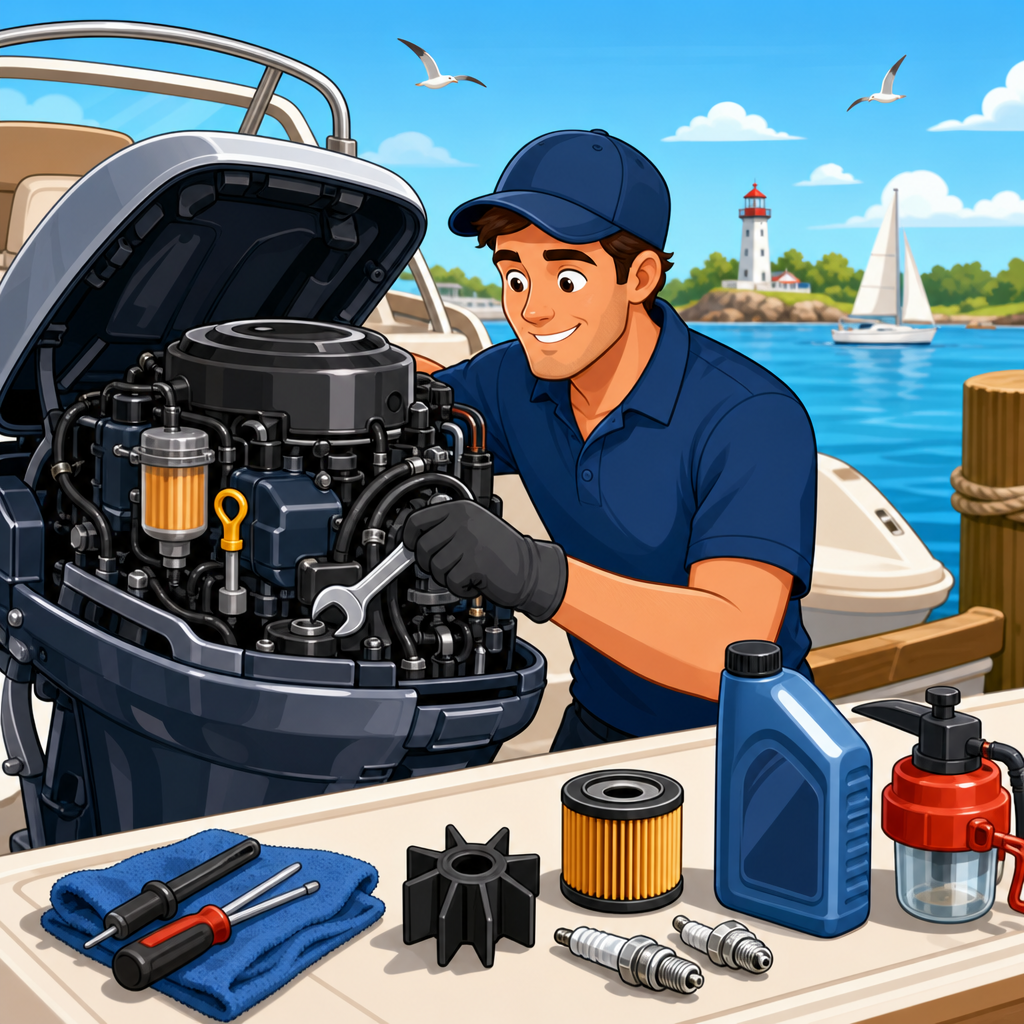
Lubrication failures shorten engine life faster than almost any other neglected item. Engine oil suspends contaminants, cools internal components, protects bearings, and reduces friction at camshaft lobes, crank journals, pistons, and cylinder walls. In marine engines, moisture contamination is a serious concern because short run times and cool operation can prevent complete evaporation. Change engine oil and the oil filter at the interval listed in the manual, using the exact viscosity and specification required, such as FC-W marine oil for many gasoline engines. Warm the engine first so contaminants remain suspended, then extract or drain thoroughly, replace the filter, refill carefully, and verify the final level after circulation.
Do not overlook gearcase or drive lubricants. Lower unit oil should be checked for a milky appearance, which indicates water intrusion through seals. I also look for metal particles during every drain. A small amount of fine paste on a magnetic plug can be normal; shiny chips or large flakes are not. Grease points matter too: steering pivots, tilt tubes, gimbal bearings, and throttle linkages require the correct marine grease to resist washout and corrosion. When owners ask how to maintain a boat engine for long-term performance, my answer always includes consistent fluid service because clean lubricants are cheap insurance compared with a powerhead or drive rebuild.
Protect the Fuel System from Water, Varnish, and Blockage
Fuel system neglect is one of the most common causes of poor marine engine performance. Modern gasoline can degrade in weeks, especially in warm climates and vented tanks. Ethanol blends may absorb moisture, separate under certain conditions, and attack older rubber components not rated for alcohol exposure. Diesel has its own risk profile, including microbial growth and water contamination. A strong DIY boat maintenance guide therefore treats fuel quality as a year-round priority. Use clean fuel from a high-turnover source, keep tanks reasonably full during storage to reduce condensation, and replace aging fuel hoses with USCG-approved ethanol-compatible lines.
Install or service a water-separating fuel filter and inspect it regularly. If the bowl shows water, drain it immediately and determine the source. Replace engine-mounted fuel filters at recommended intervals, and never ignore a soft primer bulb, surging under load, or reduced wide-open throttle rpm. Those signs often point to restriction, air leaks, or contamination. Carbureted engines may require draining bowls before extended storage to prevent varnish. Fuel-injected engines benefit from stable voltage and clean filtration because injectors are precise metering devices. For seasonal layup, add the correct amount of fuel stabilizer, run the engine long enough to circulate treated fuel, and avoid mixing old and fresh fuel blindly the following season.
Maintain the Cooling System to Prevent Overheating
Marine engines depend on cooling system health for survival. Raw-water-cooled engines pump seawater or lake water directly through passages, while closed-cooled systems circulate coolant internally and use raw water in a heat exchanger. In both cases, the impeller is a service item, not a lifetime part. Rubber vanes take a set during storage and can crack, lose flexibility, or shed pieces that later block cooling passages. Replace the impeller at the interval recommended by the manufacturer or sooner if overheating occurs, the telltale stream weakens, or the engine has sat unused for long periods.
Thermostats, pressure caps, hoses, hose clamps, heat exchangers, and strainers also deserve attention. I have seen engines overheat because a simple intake strainer was packed with eelgrass, because a thermostat stuck partially closed, or because scale buildup narrowed a heat exchanger enough to raise operating temperatures under load. Infrared thermometers are useful for spotting uneven temperatures across cylinder heads, exhaust manifolds, or thermostat housings. If an overheat alarm sounds, reduce throttle immediately, shut down if necessary, and investigate before restarting. Repeated overheating can warp heads, damage pistons, and harden exhaust components.
| Task | Typical Interval | What to Watch For |
|---|---|---|
| Engine oil and filter | Every 100 hours or annually | Milky oil, fuel smell, metal debris |
| Gearcase or drive lubricant | Annually or per manual | Water intrusion, shiny metal flakes |
| Water-separating fuel filter | Every season | Water in bowl, restriction, corrosion |
| Impeller inspection or replacement | 1 to 3 seasons depending on use | Weak flow, overheating, cracked vanes |
| Spark plugs | 100 hours or per manual | Fouling, erosion, uneven coloring |
| Battery and terminals | Monthly in season | Low voltage, corrosion, loose cables |
Inspect Ignition, Charging, and Electrical Connections
Electrical reliability determines whether the engine starts, charges, and communicates faults correctly. Marine electrical systems fail gradually, then suddenly. Corrosion at battery terminals increases resistance and reduces cranking voltage. Weak grounds create erratic gauges, sensor faults, and intermittent no-start conditions. Spark plugs wear over time, and their condition reveals a lot: black soot suggests rich running or extended idling, oily deposits suggest internal issues, and a white blistered appearance can indicate overheating or lean operation. Replace plugs at the correct interval and torque them properly into aluminum heads to avoid thread damage.
Test batteries with more than a simple voltage reading. A battery can show acceptable resting voltage yet collapse under load. Use a proper marine battery tester, inspect electrolyte levels on serviceable flooded batteries, and verify that the charging system produces the expected voltage at running speed. Check lanyard switches, neutral safety switches, fuse blocks, and harness connectors for moisture or green corrosion. Use marine-grade tinned wire and adhesive-lined heat-shrink connectors for repairs. Household connectors fail quickly onboard. When troubleshooting electrical issues, think in terms of voltage drop, continuity, and clean grounds rather than replacing random parts.
Control Corrosion, Storage Damage, and Wear Between Seasons
Long-term engine performance depends heavily on what happens when the boat is not being used. Corrosion never takes a season off. In saltwater environments, inspect sacrificial anodes regularly and replace them before they are fully consumed. Use the correct anode material for the water type: zinc is common in saltwater, aluminum works in many brackish and saltwater applications, and magnesium is intended for freshwater. Anodes protect underwater metals only when they have good electrical contact and are not painted over. For sterndrives, corrosion can accelerate rapidly if bonding systems are damaged or shore power grounding issues are present.
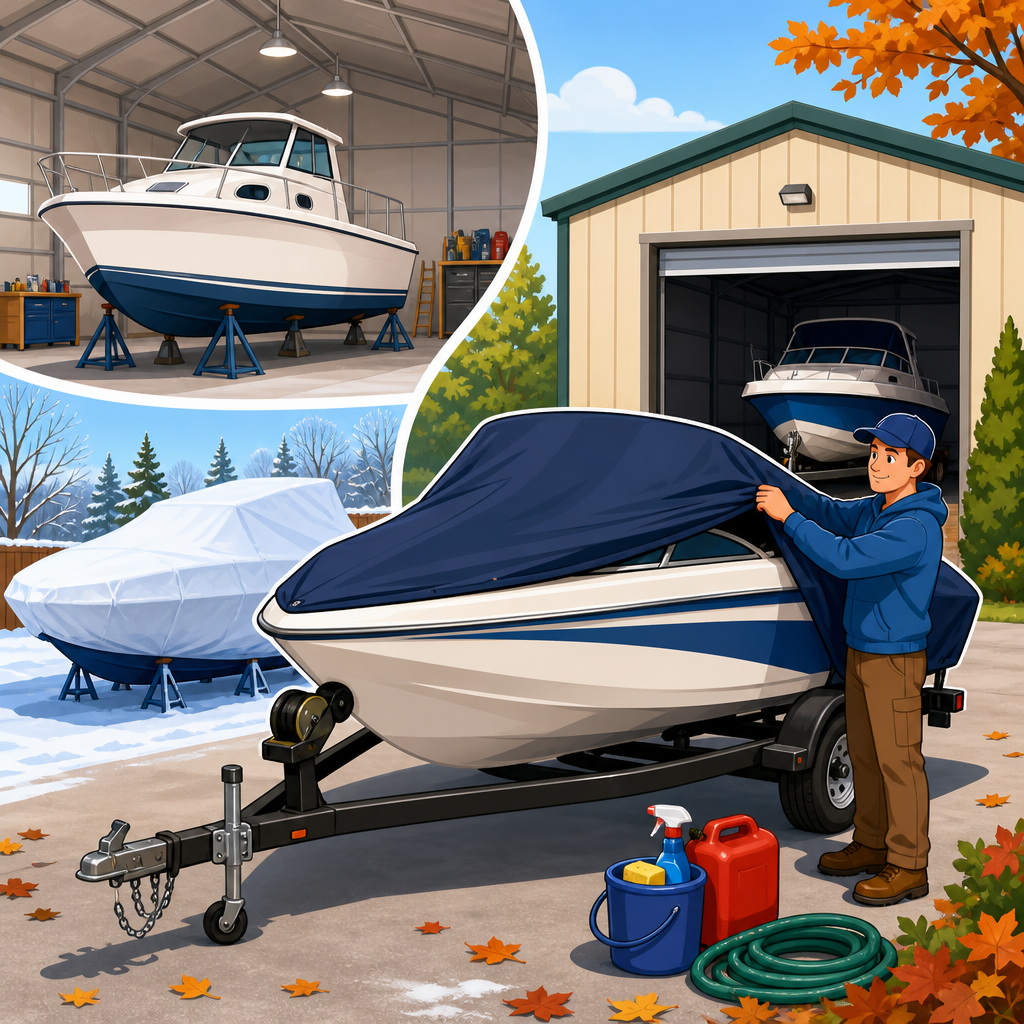
Storage procedures are equally important. Fogging certain engines before layup can protect internal surfaces, while four-stroke and fuel-injected models may require model-specific procedures. Change contaminated oil before storage so acids and moisture do not sit in the crankcase all winter. Stabilize fuel, top off or properly manage the tank based on manufacturer guidance, charge batteries, and use a maintenance charger rather than letting them discharge for months. Store with adequate ventilation and keep rodents away from wiring and sound insulation. If temperatures drop below freezing, winterization is mandatory for raw-water circuits, manifolds, coolers, and pumps. Freeze damage cracks expensive castings quickly.
Know When DIY Ends and Professional Service Begins
A complete DIY boat maintenance guide should also define the limits of home service. Routine fluid changes, filter replacement, spark plug service, battery care, flushing, visual inspections, and many impeller jobs are realistic for attentive owners with the right manual and tools. More advanced work often requires specialized equipment and trained judgment. Compression testing, leak-down testing, injector balance analysis, ECU diagnostics, timing verification, carburetor synchronization, valve adjustment, and lower-unit pressure or vacuum testing can confirm problems that visual inspection cannot. If you find persistent overheating, water in the gear oil, recurring low voltage, metal contamination, heavy smoke, or abnormal compression differences between cylinders, professional diagnosis is the smart move.
The best maintenance strategy is a partnership: handle routine preventive work yourself and schedule periodic professional inspections to catch hidden issues. That approach lowers cost without sacrificing reliability. In practice, owners who maintain logs, use factory parts or equivalent marine-rated components, and address small changes in performance early get the longest service life from their engines. They also spend more time boating and less time waiting for emergency repairs.
Maintaining a boat engine for long-term performance comes down to disciplined routines, accurate information, and early intervention. Know your engine type, follow the factory schedule, inspect before and after every trip, and keep clean oil, clean fuel, and dependable cooling flowing through the system. Protect electrical connections, manage corrosion, and winterize correctly when the season ends. These are the core practices behind every effective DIY boat maintenance guide, and they form the foundation for related work across the broader Boat Maintenance & Repairs category, from lower-unit care to battery management and seasonal commissioning.
The main benefit is simple: preventive maintenance costs far less than emergency repair, and it preserves both safety and enjoyment on the water. A well-maintained engine starts easier, runs cooler, burns fuel more efficiently, and holds its value better. Just as important, routine checks help you spot small leaks, failing seals, clogged filters, and weak batteries before they strand you offshore. If you want your engine to deliver reliable service year after year, start with a written checklist, your owner’s manual, and a calendar-based maintenance habit. Then build out the rest of your DIY boat maintenance guide one task at a time.
Frequently Asked Questions
What routine boat engine maintenance matters most for long-term performance?
The most important maintenance tasks are the ones that protect the engine’s core systems: lubrication, cooling, fuel delivery, ignition, and corrosion resistance. For most boat owners, that means changing engine oil and oil filters on schedule, replacing fuel filters and water-separating filters, inspecting spark plugs, checking belts and hoses, servicing the raw-water impeller, monitoring gearcase or drive lubricant, and keeping battery connections clean and secure. These are not small details. Marine engines operate in a harsher environment than most automotive engines because they deal with moisture, salt exposure, long idle periods, and sustained high-load operation. Ignoring even one of these systems can shorten engine life and reduce reliability.
A smart long-term maintenance routine also includes visual inspections before and after every outing. Look for fuel leaks, oil seepage, loose hose clamps, cracked fuel lines, corrosion around terminals, and any unusual residue in the bilge or around the engine mount area. Check fluid levels, verify cooling water discharge where applicable, and listen for changes in engine sound during startup and operation. If the engine suddenly becomes harder to start, idles roughly, runs hotter, or uses more fuel than normal, treat that as an early warning sign rather than waiting for a breakdown. Consistent, preventive attention is what preserves compression, reduces wear, and helps the engine deliver dependable service year after year.
How often should I change the oil, filters, and spark plugs on a boat engine?
The correct interval depends on the engine type, manufacturer recommendations, operating hours, and how the boat is used, but a practical rule is to follow whichever comes first: the stated hourly service interval or the annual service interval. For many recreational boat engines, oil and oil filter changes are commonly performed every 100 hours or once per season. Fuel filters should be inspected regularly and replaced at least annually, especially if the boat is exposed to ethanol-blended fuel or sits for long periods. Spark plugs may last longer than oil, but they should still be checked on a routine basis for wear, fouling, and gap condition, then replaced according to the service schedule or sooner if performance issues appear.
Hours alone do not tell the full story. An engine that runs in saltwater, spends a lot of time idling, experiences frequent short trips, or sits unused for months may need more frequent service than one used consistently under clean, moderate conditions. The best approach is to combine the manufacturer’s schedule with real-world inspection. Dark, contaminated oil, water in the fuel separator, corroded plug threads, or carbon-fouled spark plugs are signs that maintenance should not be delayed. Keeping a simple maintenance log with engine hours, dates, parts used, and observations helps you stay ahead of problems and also supports resale value by proving the engine has been cared for properly.
Why is the cooling system so important in boat engine maintenance?
The cooling system is critical because overheating is one of the fastest ways to damage a marine engine. Boat engines depend on proper coolant circulation or raw-water flow to regulate temperature while combustion, friction, and continuous load generate heat. If that heat is not controlled, engine oil breaks down faster, metal components expand beyond their intended tolerances, gaskets can fail, and major internal damage can occur. In outboards and many sterndrives, the water pump impeller is especially important because it moves cooling water through the system. A worn, brittle, or damaged impeller can reduce flow enough to create overheating even before a warning alarm sounds.
Good cooling system maintenance includes inspecting the impeller at recommended intervals, checking water intakes for blockage, flushing the engine after saltwater use, and monitoring telltale flow or temperature readings during operation. On closed-cooling systems, coolant condition and level matter just as much as raw-water flow. Heat exchangers, thermostats, and hoses should be checked for corrosion, scale buildup, leaks, and restriction. If the engine runs hotter than normal, never assume it will correct itself. A temperature problem that seems minor today can become a warped head, blown gasket, or seized engine tomorrow. Staying proactive with cooling system care is one of the best ways to protect long-term performance and avoid expensive repairs.
What is the best way to prevent fuel-related engine problems in a boat?
Fuel-related problems are extremely common in marine engines, especially when boats sit unused between trips or through the off-season. The best prevention strategy is to keep fuel fresh, keep water out of the system, and make sure contaminants are filtered before they reach the engine. Use quality marine-grade fuel when available, add a stabilizer if the fuel will sit, and avoid storing old fuel for extended periods. Ethanol-blended gasoline can absorb moisture and contribute to phase separation, which can create hard starting, rough running, corrosion, and injector or carburetor issues. That is why a good water-separating fuel filter is so important on many boats.
Beyond fuel quality, storage habits make a major difference. Keep the tank in good condition, inspect vents and fuel lines regularly, and replace aging hoses with marine-approved components. Drain or replace the water-separating filter at the correct interval and pay attention to any signs of water contamination. If the engine hesitates under load, surges, loses top-end power, or becomes difficult to start after sitting, the fuel system should be one of the first areas you inspect. Carbureted engines may need cleaning if varnish forms, while fuel-injected engines depend on clean injectors and stable fuel pressure. A clean, dry, well-maintained fuel system improves reliability, protects internal engine components, and helps preserve both fuel economy and performance over the long term.
How should I prepare a boat engine for storage or the off-season?
Proper storage preparation, or winterization in colder climates, is essential because engines are often damaged while sitting still rather than while running. Before storing the boat, stabilize the fuel, run the engine long enough to circulate treated fuel through the system, change the engine oil and filter if service is due, and inspect the lower unit or drive lubricant for signs of water intrusion. On applicable engines, fogging the cylinders helps protect internal surfaces from corrosion during long idle periods. The battery should be disconnected or maintained with an appropriate charger, and the engine should be cleaned so salt, grime, and residue do not sit on metal surfaces for months.
Cooling system preparation is especially important. In freezing conditions, any trapped water can crack engine components, manifolds, coolers, or housings. The exact storage steps vary by engine type, so the manufacturer’s procedure should always guide draining, antifreeze use, and system protection. Even in mild climates, off-season preparation still matters because stale fuel, internal condensation, and corrosion can quietly degrade the engine. When the boat comes out of storage, do not simply launch and hope for the best. Reinspect belts, hoses, clamps, fluid levels, filters, battery condition, and starting performance before returning to regular use. Careful storage and recommissioning reduce springtime surprises and play a major role in extending engine life.