A clean boat lasts longer, performs better, and holds its value, which is why every practical DIY boat maintenance guide starts with cleaning. Boat cleaning is more than cosmetic work. It is the routine removal of salt, algae, fuel residue, mildew, oxidation, bird waste, and hard-water minerals that slowly damage gelcoat, metal fittings, vinyl, canvas, and teak. When owners ask how to keep a boat looking new, the answer is consistent care using the right products, correct sequence, and attention to problem areas before they become repairs.
In my own maintenance routines, the boats that stayed sharp season after season were not always the newest or most expensive. They were the ones cleaned on a schedule. A ten-minute freshwater rinse after each trip often prevented hours of stain removal later. A monthly wash with a pH-balanced marine soap protected wax better than aggressive household detergents. A seasonal deep clean exposed failing caulk, loose hardware, and early corrosion that would have gone unnoticed under grime. Cleaning is the front line of boat maintenance and repairs because dirt hides defects, traps moisture, and accelerates wear.
This hub article covers the full DIY boat maintenance guide for cleaning-focused care. It explains what to clean, how often to clean it, which tools matter, and how to avoid common mistakes such as using bleach on vinyl stitching or abrasive pads on clear plastic. It also connects cleaning to broader upkeep decisions, including hull protection, corrosion control, interior care, and routine inspections. Whether you run a fiberglass center console, a pontoon boat, a sailboat, or a family cruiser, the principles are the same: use marine-safe products, work methodically from top to bottom, and treat cleaning as preventive maintenance rather than occasional detailing.
If you want your boat to look new, your goal is not perfection after one weekend. Your goal is a repeatable system. The best DIY boat cleaning tips are simple, disciplined, and based on the materials your boat actually uses.
Build a Cleaning Routine That Matches How You Use the Boat
The most effective DIY boat maintenance guide begins with a schedule. Boats used in saltwater need more frequent rinsing because salt crystals pull moisture from the air and promote corrosion. Freshwater boats still collect tannin stains, scum lines, and mildew, especially when stored under covers with poor ventilation. A practical rule is to rinse after every outing, wash exposed surfaces every two to four weeks during the season, and perform a deeper interior and exterior clean before storage and at launch.
Separate tasks by frequency. After each trip, rinse the hull sides, deck, rails, windshield, outboard or sterndrive exterior, anchor gear, and trailer if applicable. Weekly or biweekly, scrub non-skid decks, wipe vinyl seating, empty lockers, and inspect bilge and drains for debris. Monthly, clean stainless hardware, treat canvas, inspect rubber seals, and remove any developing waterline stains. Seasonally, compound and polish oxidized gelcoat if needed, reapply wax or sealant, deep clean compartments, and evaluate whether neglected grime is actually masking damage.
Climate changes the routine. In humid coastal areas, mildew can appear within days on vinyl and inside enclosed cabins. In northern regions, hard-water spotting and leaf tannins are more common. Boats stored near industrial areas often collect soot and airborne fallout that bond to gelcoat. Matching your schedule to your environment prevents unnecessary heavy cleaning later.
| Task | Recommended Frequency | Main Benefit |
|---|---|---|
| Freshwater rinse | After every trip | Removes salt, dirt, and surface contaminants before they harden |
| Full exterior wash | Every 2 to 4 weeks | Protects gelcoat, metal, and glass from buildup and staining |
| Interior wipe-down | Weekly during use | Reduces mildew, odors, and premature vinyl wear |
| Waterline stain treatment | Monthly or as needed | Prevents permanent discoloration at the scum line |
| Wax or sealant application | Every 3 to 6 months | Adds UV and contamination resistance |
| Seasonal deep clean | At launch and layup | Reveals hidden issues and resets the maintenance baseline |
Use the Right Boat Cleaning Supplies and Avoid Household Shortcuts
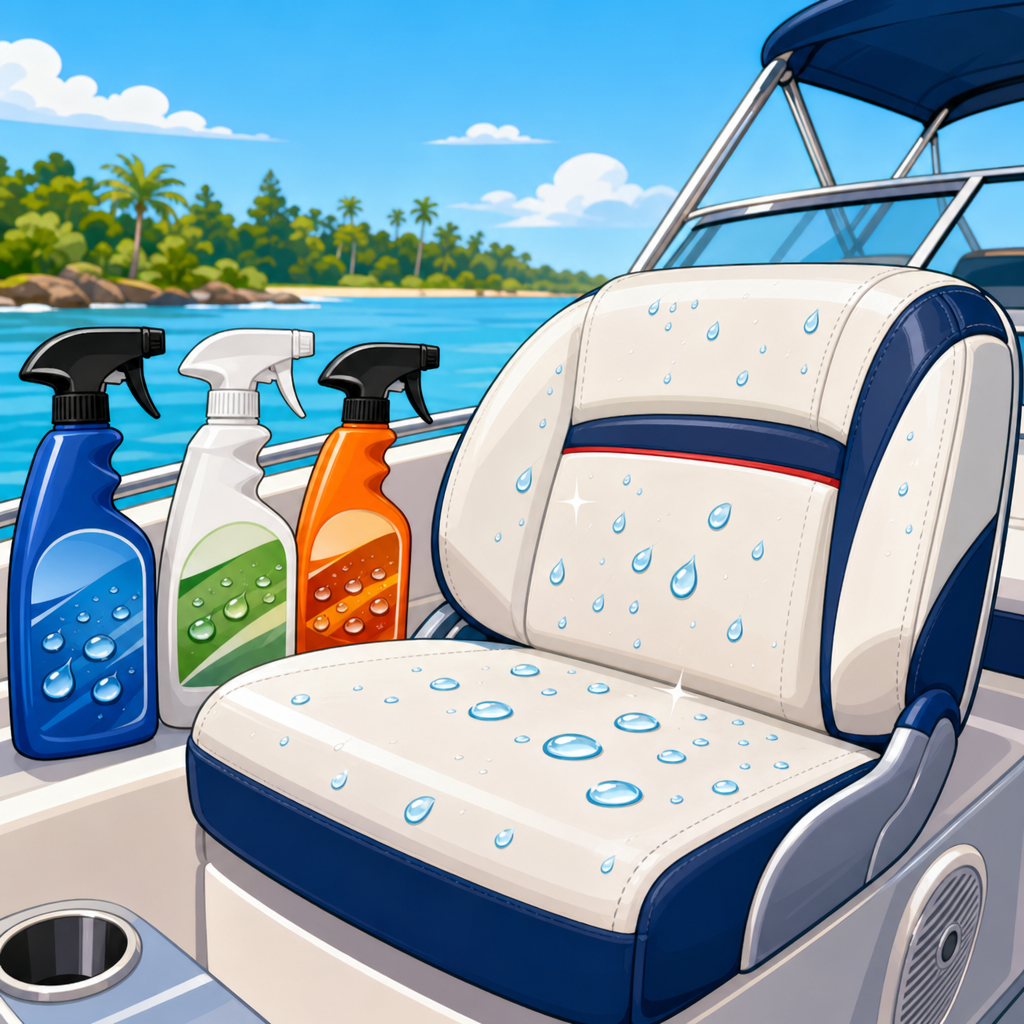
Choosing products matters because marine materials age differently from car paint or household surfaces. A proper boat wash soap is usually pH-neutral and designed to lift grime without stripping wax. Household dish soap cuts grease well, but repeated use removes protective coatings and dries some surfaces. For fiberglass, keep a marine soap, oxidation remover or compound, polish, and a wax or polymer sealant. For vinyl, use a dedicated marine vinyl cleaner and a UV protectant. For metal, use a stainless or aluminum polish matched to the finish. For clear enclosures, use cleaners approved for acrylic or polycarbonate, such as products commonly recommended for Eisenglass and Strataglass.
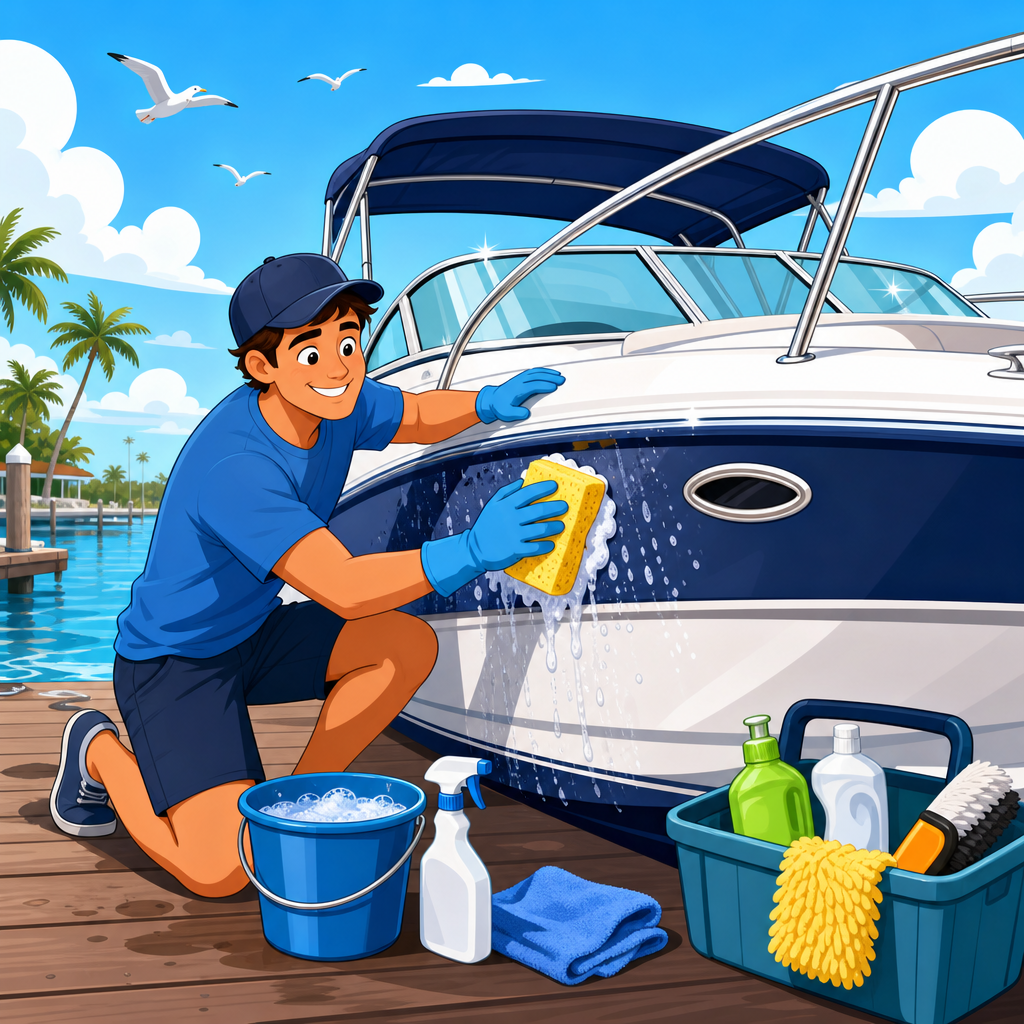
Tools are just as important. Use soft-bristle deck brushes, microfiber wash mitts, separate towels for metal and glass, a non-abrasive scrub pad for stubborn deck soil, and telescoping handles for safe reach. I keep color-coded towels because cross-contamination is real; the black residue from exhaust soot or metal polish can scratch or stain clear panels if you reuse the same cloth. A wet/dry vacuum, soft detailing brush, spray bottles, and a portable pump sprayer also make work faster and more controlled.
Avoid common shortcuts. Bleach can weaken stitching and discolor fabrics. Magic-eraser style melamine pads can dull finishes if used aggressively. Strong acids remove rust and waterline stains quickly, but they can etch trailers, metals, and concrete if oversprayed. Pressure washers are useful at moderate settings, yet too much pressure can lift decals, force water into seams, and damage teak grain or soft caulking. If a cleaner does not clearly state compatibility with marine gelcoat, vinyl, canvas, or plastic, test it in an inconspicuous spot first.
Clean the Hull and Gelcoat Without Causing Oxidation or Swirl Marks
Hull cleaning should always begin with a rinse and visual inspection. Start at the highest point and work down so dirty water does not run over already cleaned areas. Wash in sections using a bucket method or continuous low-pressure rinse to prevent soap from drying on the surface. If your boat sits in the water, pay close attention to the waterline where organic scum, tannins, and mineral deposits accumulate. Use a dedicated hull cleaner only where needed rather than bathing the whole boat in aggressive chemicals.
For fiberglass gelcoat, oxidation is the main threat to that glossy, new-boat appearance. Oxidation happens when UV exposure and weathering degrade the outer surface, leaving it chalky and porous. Light oxidation can often be corrected with a cleaner wax or finishing polish. Moderate to heavy oxidation usually requires compound first, then polish, then protection. Use the least aggressive method that achieves correction. On healthy gelcoat, heavy compounding removes unnecessary material and shortens the finish life.
Machine polishing saves time, but it needs care. A dual-action polisher is safer for most owners than a rotary because it reduces heat buildup and holograms. Wool pads cut faster; foam pads finish better. Clean pads often, keep them flat, and work small sections. If the boat has colored gelcoat, oxidation may be more visible and uneven, so measure progress under direct light. After correction, apply a quality marine wax or synthetic sealant with UV inhibitors. Protection is what keeps the restored shine from fading immediately.
Do not ignore the bottom edge of the transom, under rub rails, or around through-hulls. Exhaust staining, rust streaks, and drip lines often begin there. Those details strongly influence whether a boat looks maintained or neglected.
Keep Decks, Non-Skid, Hardware, and Brightwork Looking Fresh
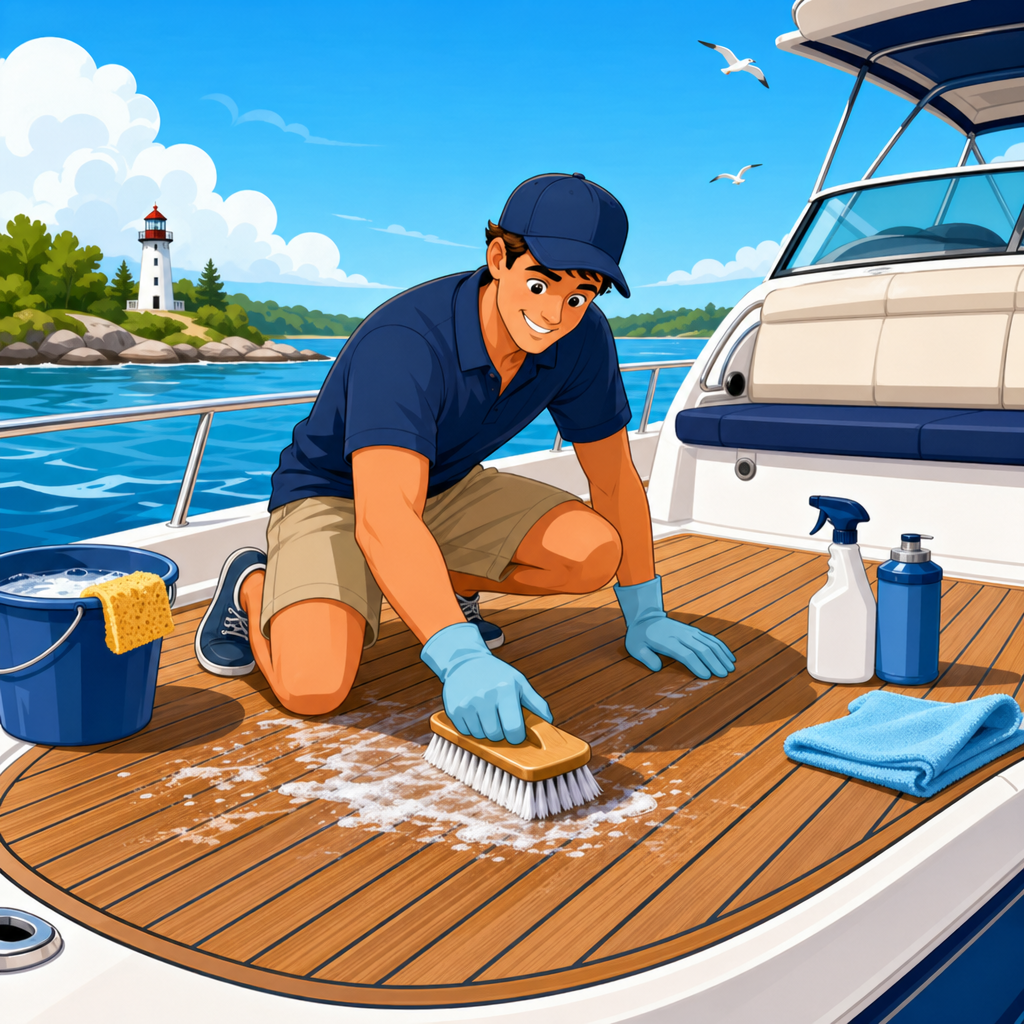
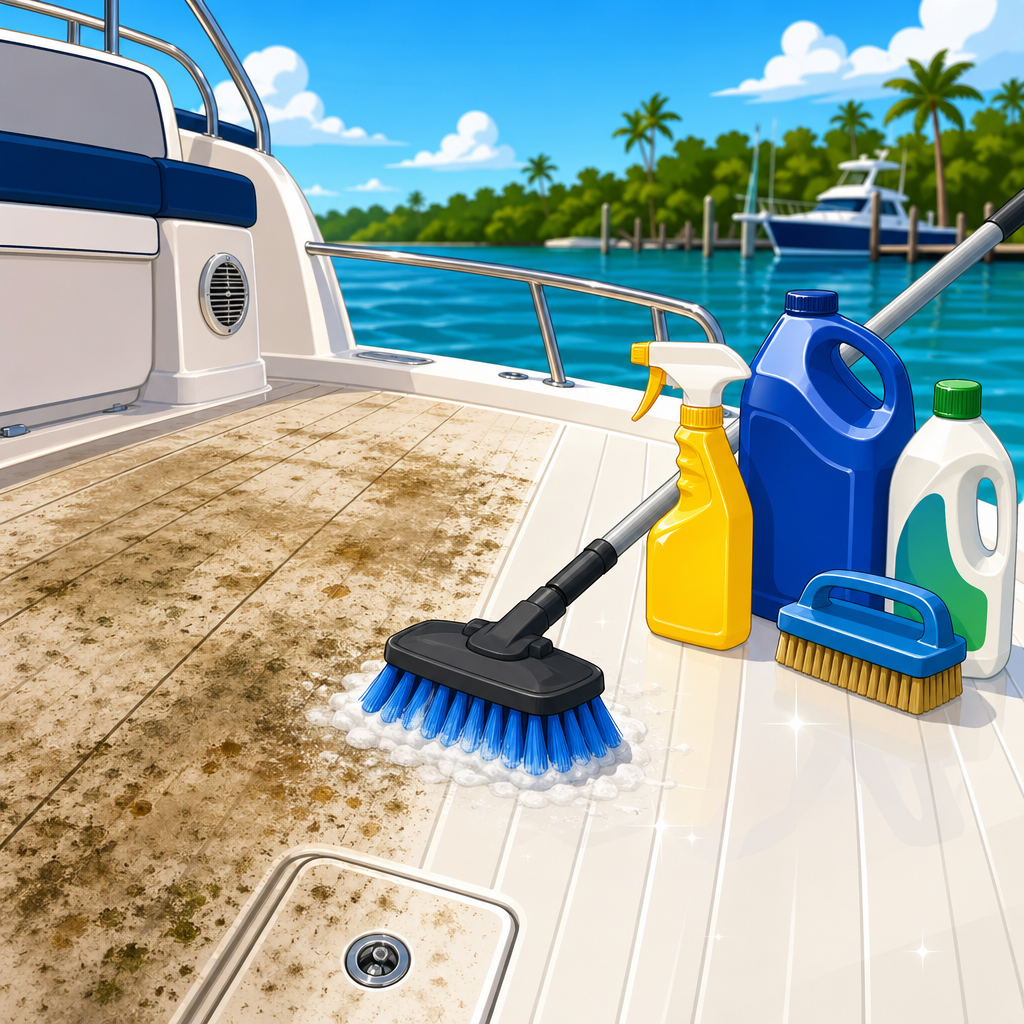
Decks collect sunscreen, fish residue, sand, spilled drinks, and airborne grime. On non-skid, dirt settles into texture, so a soft deck brush and the right cleaner are essential. Scrub with the pattern instead of across it when possible, and rinse thoroughly. If stains remain, use a non-skid-specific cleaner before escalating to stronger chemicals. Many owners overuse harsh degreasers, which can leave surfaces dry and chalky.
Stainless steel rails, cleats, hinges, and fasteners look durable, but they still tea-stain in marine environments. Tea staining is a surface discoloration often caused by salt, oxygen, and trapped contamination. Clean hardware regularly with mild soap and water, then use a stainless polish on dry metal. Pay attention to bases, fastener heads, and underside shadows where moisture lingers. If corrosion returns quickly, inspect for crevice corrosion, dissimilar metal contact, or failed bedding compound rather than just polishing harder.
Aluminum requires a different approach. Bare aluminum pontoons, T-tops, and trailers can be damaged by acidic cleaners intended for fiberglass or stainless. Use aluminum-safe products and rinse thoroughly. For anodized aluminum, avoid abrasive polishing unless the manufacturer specifically allows it, because you can strip the protective finish.
If your boat has teak, clean it gently. Teak is naturally durable because of its oils and silica content, but aggressive two-part acid cleaners can erode softer grain. A mild teak cleaner and soft brush preserve wood better. Some owners oil teak for a warm tone, while others prefer a natural weathered look. Either approach can be fine if consistent. What matters is avoiding trapped dirt and standing moisture that promote black spotting.
Protect Seats, Canvas, Carpet, and Cabin Surfaces From Mildew
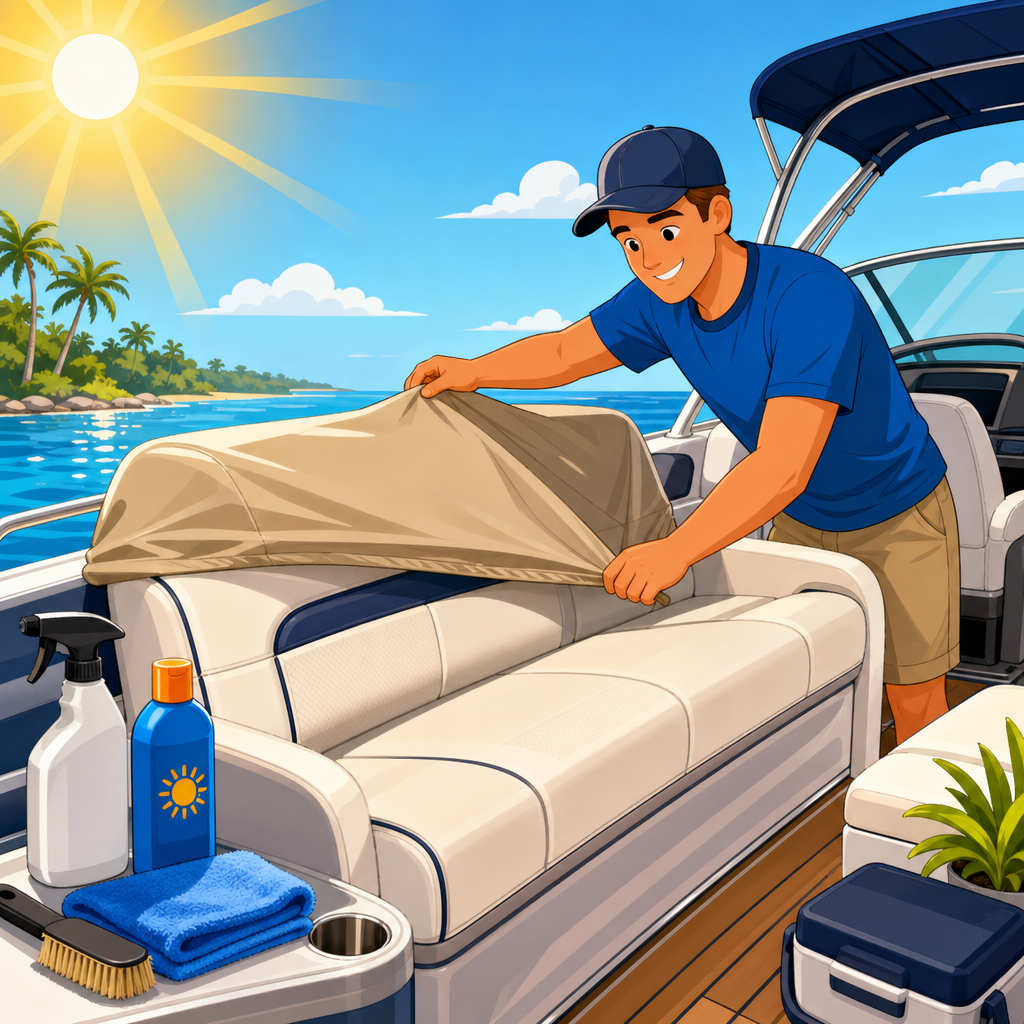
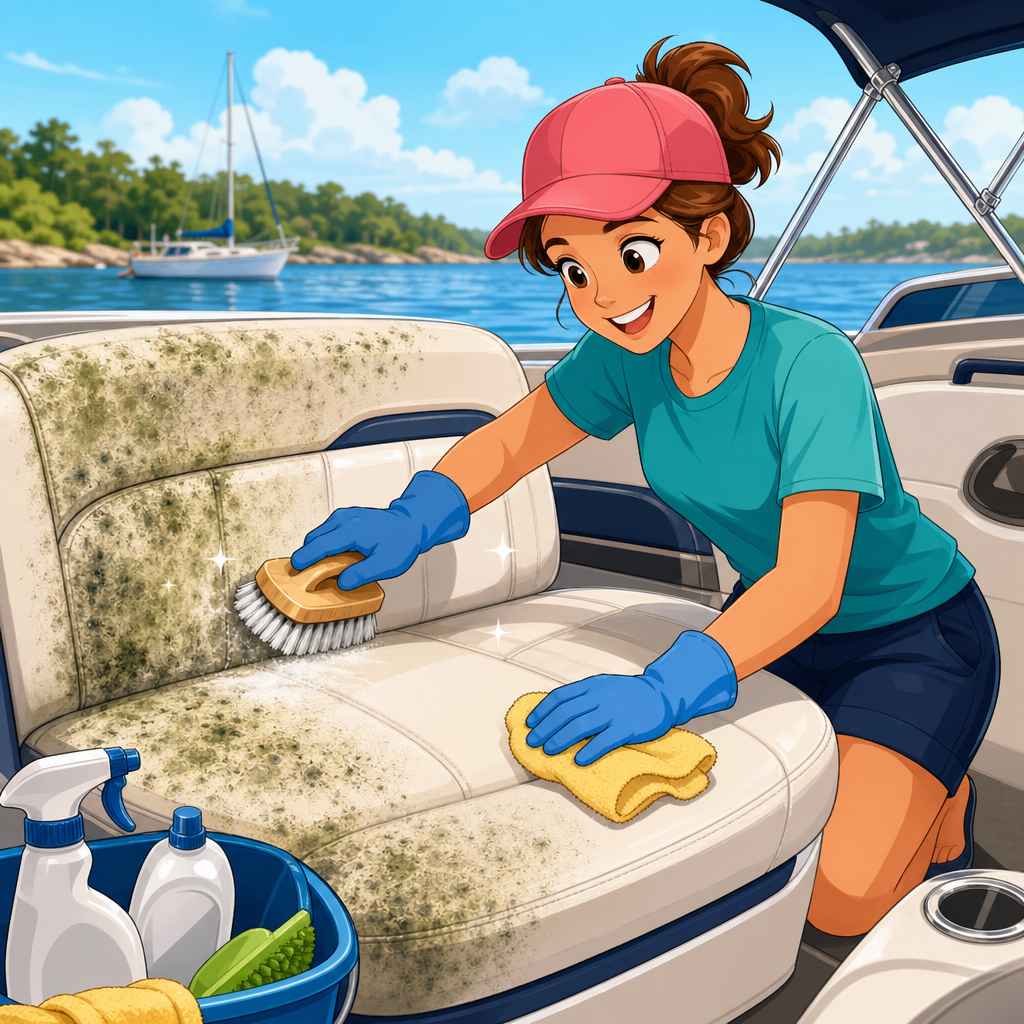
Interior cleaning is where appearance and durability overlap the most. Vinyl seats crack and discolor when sunscreen, fish slime, and mildew remain on the surface. Clean vinyl with a dedicated marine product, using a soft brush in seams and piping where dirt hides. Wipe dry after cleaning, then apply a UV protectant that does not leave the surface dangerously slick. If mildew has formed, treat it early. Deep black staining in neglected vinyl may be impossible to fully reverse because it can penetrate into pores and stitching.
Canvas, bimini tops, and covers need periodic washing and retreatment. Brush off loose dirt first, wash with a fabric-safe cleaner, rinse thoroughly, and allow complete drying before storage. Reapply water repellency when water no longer beads. Sunbrella and similar marine fabrics generally last longer when cleaned regularly and stored dry than when scrubbed hard once a year. Clear vinyl windows should be rinsed before wiping to prevent scratching from salt crystals and dust.
Cabin interiors benefit from moisture control as much as cleaning. Use ventilation, desiccants, or a small dehumidifier when shore power is available. Clean galley surfaces, head compartments, and bilges with marine-safe cleaners that manage odor without overwhelming fragrance. Carpets and removable mats should be dried fully after washing. A clean cabin is not just more comfortable; it helps prevent mold growth, corrosion on hidden fasteners, and stale smells that signal trapped moisture.
Connect Cleaning With Inspections, Storage, and Long-Term Value
The best boat cleaning habit is using every wash as an inspection. While rinsing and drying, look for loose rub rail screws, cracked sealant around deck fittings, gelcoat blisters, damaged hose clamps, fuel sheen in the bilge, UV-faded stitching, and corrosion around battery terminals. I have found leaking hatches, split livewell hoses, and early trailer rust during ordinary cleanups, long before those issues ruined a trip. Dirt covers symptoms. Cleaning reveals them.
Storage practices determine how long cleaning results last. A breathable, properly fitted cover reduces UV damage and debris, but a poor cover that traps moisture can create mildew and abrasion points. Remove cushions when possible during long storage, prop lockers open to improve airflow, and make sure drains are clear before rain. If the boat lives on a trailer, rinse brakes, bunks, rollers, and lights after saltwater use. Trailer cleanliness is part of keeping the whole rig looking new.
Record what you do. A simple maintenance log with dates for wash, wax, vinyl treatment, bottom cleaning, and stain removal helps you spot patterns. It also supports resale because buyers trust a documented boat more than a verbal claim that it was “always maintained.” Appearance influences value quickly. Faded gelcoat, mildew, rust streaks, and dirty bilges suggest neglect even when mechanical systems are sound. A clean boat presents as a cared-for boat, and that perception matters in surveys, listings, and marina inspections.
DIY boat cleaning tips work best when they are part of a larger DIY boat maintenance guide, not a separate chore. Cleaning protects surfaces, supports inspections, extends materials life, and reduces repair costs over time. Keep marine-safe products on hand, follow a realistic schedule, clean gently but consistently, and address stains or corrosion early. If you want your boat to keep turning heads at the dock, start with the basics and repeat them. Build your checklist, clean after every trip, and use this hub as the foundation for the rest of your boat maintenance and repairs plan.
Frequently Asked Questions
How often should I clean my boat to keep it looking new?
The best schedule depends on how often you use your boat and whether it lives in saltwater or freshwater, but regular cleaning is the key to preventing long-term damage. As a general rule, give your boat a light rinse and wipe-down after every outing, especially if it has been exposed to salt spray, fish residue, sunscreen, fuel drips, or muddy water. Salt crystals, bird waste, and organic debris can begin damaging finishes surprisingly quickly, so removing them right away helps preserve gelcoat, metal hardware, vinyl seating, and glass. A more thorough wash should usually be done every two to four weeks during boating season, with extra attention paid to the hull, deck, rails, upholstery, and storage compartments. If the boat stays in the water, the waterline and hull need closer monitoring for scum, algae, and mineral buildup. Seasonal deep cleaning is also important. At least a few times a year, wash, decontaminate, treat mildew-prone areas, polish oxidized surfaces if needed, and apply protective wax or sealant. Consistency matters more than intensity. A boat that is cleaned lightly and often is much easier to maintain than one that is neglected and then aggressively scrubbed later.
What is the correct order for cleaning a boat without damaging the surfaces?
The safest and most effective approach is to clean from the top down and from the least aggressive method to the most targeted treatment. Start by removing loose gear, trash, dock lines, cushions, and anything else that blocks access. Then rinse the entire boat with fresh water to loosen salt, dust, pollen, and surface grime. After that, begin washing upper areas first, such as the windshield frame, hardtop, rails, canvas surrounds, and seating, then move down to the deck, cockpit, transom, and finally the hull. This top-to-bottom sequence prevents dirty water from running back onto areas you already cleaned. Use products made specifically for marine surfaces, because household cleaners can strip wax, dry out vinyl, stain aluminum, or harm protective coatings. Wash one section at a time with a soft brush, microfiber mitt, or non-abrasive sponge, and rinse frequently so soap does not dry on the surface. Once the boat is clean, address any problem areas separately, such as mildew spots, hard-water marks, rust streaks, oxidation, or scuff marks, using the mildest specialty cleaner that will do the job. Dry surfaces thoroughly to reduce spotting, then finish with protection where appropriate, such as wax on gelcoat, protectant on vinyl, metal polish on stainless hardware, and treatment for canvas or teak if needed. The right order makes cleaning more efficient and greatly reduces the risk of scratching, staining, or creating uneven results.
What cleaning products should I use, and which ones should I avoid?
For routine care, stick with pH-balanced boat soap, soft-bristle brushes, microfiber towels, non-scratch sponges, and cleaners that are clearly labeled for marine use. These products are designed for the materials found on boats, including gelcoat, painted surfaces, stainless steel, anodized aluminum, vinyl, canvas, and teak. A quality boat soap removes grime without stripping existing wax or sealant, which is important if you want the finish to stay glossy and protected. For specialized issues, use targeted products rather than stronger general-purpose chemicals. For example, use a mildew remover made for marine vinyl and fabrics, a dedicated hull cleaner for waterline staining, a metal polish safe for stainless fittings, and a polish or oxidation remover specifically intended for gelcoat. What you should avoid is just as important. Harsh household detergents, bleach-heavy mixtures, glass cleaners with ammonia, abrasive powders, stiff wire brushes, and generic degreasers can dull surfaces, weaken stitching, discolor vinyl, and remove protective coatings. Pressure washers can also cause trouble if used carelessly, since they may force water into seams, lift decals, fray canvas, or damage caulking. When in doubt, test any product on a small hidden area first. Using the correct cleaner for each surface not only improves appearance but also extends the life of the materials you are trying to protect.
How do I remove tough stains like mildew, oxidation, bird droppings, and waterline marks?
Tough stains should be treated quickly and with the right method for the material involved. Mildew is common in damp compartments, vinyl seating, canvas covers, and shaded areas, and the best response is to clean it early before it spreads or permanently stains the surface. Use a marine mildew cleaner approved for the material, apply it according to the label, and gently agitate with a soft brush. After cleaning, dry the area thoroughly and improve ventilation to keep mildew from returning. Oxidation on gelcoat appears as fading, chalkiness, or a dull finish, and it typically requires a marine oxidation remover or polishing compound rather than standard soap. Work in small sections, using the least aggressive product that restores gloss, then follow with polish and wax to protect the finish. Bird droppings should be softened with water and removed as soon as possible because they are acidic and can etch surfaces if left sitting in the sun. Avoid scraping them off dry. Waterline stains and mineral deposits often need a dedicated hull or hard-water stain remover. These cleaners are formulated to dissolve rust-colored streaks, calcium deposits, and scum lines without unnecessary abrasion. Always read label directions carefully, wear gloves if recommended, and rinse thoroughly after treatment. The biggest mistake owners make is over-scrubbing with aggressive pads or using one harsh cleaner for everything. Targeted treatment is safer, more effective, and better for keeping your boat looking new over time.
What can I do after cleaning to help my boat stay cleaner longer and maintain its value?
Cleaning is only half the job. Protection and prevention are what keep your boat looking sharp between washes and help preserve resale value over the long term. After the boat is fully clean and dry, apply a quality marine wax or sealant to gelcoat and painted surfaces. This creates a protective barrier that helps repel dirt, salt, UV exposure, and water spotting while making future washing easier. Treat vinyl seating and pads with a marine UV protectant to reduce fading, cracking, and drying. Polish stainless steel and other brightwork as needed to remove surface corrosion and restore shine, and use a protectant on clear enclosures and canvas if the manufacturer recommends it. Good storage habits also make a major difference. Use a well-fitted cover, promote airflow to limit mildew, and avoid trapping moisture in compartments or under cushions. If the boat is stored outside, keep drains clear and remove leaves, standing water, and debris before they stain or encourage mold growth. It also helps to deal with small messes immediately rather than waiting for a major cleaning day. Wipe up fuel splashes, fish blood, sunscreen, and spills as soon as they happen. Finally, inspect your boat while you clean it. Regular washing gives you a chance to spot loose hardware, cracked caulk, rust beginning around fittings, or early oxidation before those issues become expensive repairs. That combination of routine cleaning, surface protection, and early problem detection is what keeps a boat looking newer for longer.