Buying a boat is exciting, but financing one can feel more complicated than choosing the right hull, engine, or layout. A boat loan is a secured or unsecured loan used to purchase a new or used vessel, and the approval process depends on credit, income, debt levels, down payment, boat age, and the lender’s view of risk. In practice, getting a boat loan means preparing your finances, understanding loan structures, comparing lenders, documenting the vessel, and closing the deal without creating problems for registration, insurance, or future resale. I have worked with buyers comparing marina-ready runabouts, liveaboard cruisers, and fishing boats, and the same lesson comes up every time: the best boat financing decision is not just the loan with the lowest rate, but the one that fits ownership costs over time.
This matters because boats are discretionary purchases with meaningful ongoing expenses. Beyond principal and interest, owners pay for insurance, storage, fuel, maintenance, winterization, electronics, safety gear, and sometimes survey or haul-out fees. A lender may approve a payment that looks manageable on paper, while the full annual cost of ownership strains cash flow once the boat is in the slip. Understanding financing and insurance together helps buyers avoid being boat-rich and cash-poor. It also improves negotiating power with dealers and private sellers because a prepared buyer can move quickly, meet documentation requirements, and recognize when a loan offer contains expensive terms such as prepayment penalties, variable rates, or aggressive add-on products.
This guide explains how to get a boat loan step by step and serves as a central resource for financing and insurance for boats. It covers the main loan types, how lenders underwrite marine loans, what paperwork you need, how insurance affects approval, and how to compare offers with confidence. If you are buying your first trailerable boat or moving up to a larger cruiser, the process is easier when you treat it like a full marine transaction rather than a simple consumer purchase.
Step 1: Know what type of boat loan you need
The first step is matching the financing structure to the boat and your financial profile. Most buyers use a secured boat loan, where the vessel acts as collateral. Secured marine loans usually offer lower interest rates and longer repayment terms than unsecured personal loans because the lender can repossess the boat if the borrower defaults. Unsecured loans can work for lower purchase prices or very strong borrowers, but rates are typically higher and terms shorter. Dealer financing is common, especially for new boats, yet banks, credit unions, and marine finance specialists often provide better transparency and stronger options for used vessels or private-party sales.
Loan terms vary by lender and loan size. Smaller boat loans may run seven to twelve years, while larger yachts can be financed over fifteen to twenty years. Longer terms reduce the monthly payment, but they increase total interest and can leave the owner upside down if the boat depreciates faster than principal is paid down. In my experience, buyers focusing only on the monthly number often overlook this risk. A ten-year loan on a modest used center console may be sensible; stretching the same loan far beyond the practical life of the boat’s engine package is not. Lenders also care about boat type. High-performance boats, houseboats, older sailboats, and liveaboards can face stricter underwriting because resale and collateral valuation are less predictable.
Step 2: Check affordability before applying
Before submitting any application, calculate the true ownership budget. Start with the purchase price, then add sales tax if applicable, registration or titling fees, documentation fees, transport, a marine survey if the boat is used, and immediate maintenance items. Insurance should be estimated early, not after the loan is approved. For many lenders, proof of insurance is required before funding, and premium costs can vary significantly based on navigation territory, hurricane exposure, operator experience, horsepower, and whether the boat is kept in the water year-round.
A useful benchmark is to estimate annual operating costs at roughly 10 percent of the boat’s value for many mainstream recreational boats, though this can be lower for small trailer boats and much higher for larger inboard or cruising models. For example, a $60,000 used bowrider financed with 15 percent down may still require several thousand dollars per year for storage, winterization, routine service, and insurance. Lenders usually review debt-to-income ratio, often called DTI, to see whether your existing obligations plus the new payment fit your income. A borrower with excellent credit but heavy mortgage, auto, or revolving debt may qualify for less than expected. Running your own numbers first keeps you from shopping above your comfort zone.
Step 3: Review your credit and improve your file
Credit quality strongly influences approval, down payment, and interest rate. Many marine lenders look for good to excellent credit, especially on larger loans, though some programs exist for fair-credit borrowers with stronger down payments. Review your credit reports from Equifax, Experian, and TransUnion before applying. Check for reporting errors, old balances that should show paid, and utilization that can be reduced. Paying down revolving debt before an application can improve both score and DTI. Avoid applying for multiple unrelated credit lines at the same time because new inquiries and fresh balances can weaken the file.
Lenders also assess stability. Consistent employment, verifiable income, and liquid reserves matter. Self-employed buyers should expect deeper documentation, often including two years of tax returns and recent bank statements. Retirees may qualify comfortably using pension, Social Security, investment income, or required minimum distributions, but they should be prepared to document those sources clearly. If your credit is borderline, a larger down payment can materially improve the approval odds because it lowers the loan-to-value ratio. In marine lending, underwriters care a great deal about collateral position, especially on used boats where values can vary depending on condition, hours, brand reputation, and installed equipment.
Step 4: Compare lenders and understand loan terms
Once you know your budget and credit position, shop lenders deliberately. Start with your bank or credit union, then compare specialist marine lenders and dealer-arranged financing. Ask each lender whether the rate is fixed or variable, whether there is a minimum down payment, how they handle private-party sales, whether older boats are eligible, and whether a survey is required. Clarify all fees, including origination, documentation, title, UCC filing, and late-payment fees. A low teaser rate can become less attractive after fees, shorter amortization, or compulsory add-ons are included.
| Lender type | Best for | Common strengths | Common limitations |
|---|---|---|---|
| Bank | Borrowers with strong credit buying mainstream boats | Competitive rates, established processes, fixed-rate options | May be stricter on older boats and private sellers |
| Credit union | Members seeking lower fees and personalized service | Good rates, flexible underwriting, transparent terms | Membership rules, loan size limits in some cases |
| Marine finance specialist | Complex transactions, larger loans, older vessels | Boat-specific expertise, private-sale support, survey familiarity | Rates may vary more by collateral and profile |
| Dealer-arranged financing | New-boat buyers prioritizing speed and convenience | One-stop process, manufacturer promotions, fast closing | Add-on products, less rate transparency, pressure to finance in-house |
Preapproval is useful because it gives you a realistic price range and strengthens your position with sellers. However, a preapproval is usually conditional. Final approval often depends on the boat itself, including age, make, model, HIN, condition, and valuation. Read the loan estimate carefully. If one lender offers 7.25 percent for 180 months and another offers 7.75 percent for 144 months, the second option may still cost less overall and build equity faster. Compare annual percentage rate, not just note rate, and calculate the total repayment over the full term.
Step 5: Gather the documents lenders and insurers require
Marine transactions move faster when the paperwork is organized in advance. Most lenders want a government-issued ID, Social Security number or tax identification number, proof of income, employment details, housing payment information, and authorization to pull credit. For a used boat, they also usually request the purchase agreement, vessel description, HIN, engine information, trailer details if included, and the seller’s proof of ownership. Depending on the boat and loan size, the lender may ask for a valuation guide reference, photographs, maintenance records, or a formal marine survey prepared by an accredited surveyor. Members of SAMS or NAMS are commonly accepted in the market because their reports follow recognized marine standards.
Insurance requirements should be handled in parallel, not at the end. Most secured lenders require physical damage coverage, often based on agreed value or actual cash value depending on the insurer and vessel. Liability coverage is also standard, and marinas may require specific limits. If the boat will be financed, the lender generally must be listed as lienholder or loss payee on the policy. For used offshore-capable boats or higher-value cruisers, insurers may require a recent out-of-water survey before binding coverage. That survey can reveal issues that affect both insurability and financing, such as wet decks, corrosion, fuel-system deficiencies, or overdue safety upgrades.
Step 6: Choose the boat carefully and protect the collateral
The boat you choose can determine whether the loan closes smoothly. Lenders prefer vessels with clear title, traceable ownership, and a marketable profile. Problems commonly appear in private-party transactions where documentation is incomplete, liens are undisclosed, or the trailer title does not match the seller’s name. Before committing earnest money, verify the HIN on the boat against the title or registration and confirm whether there are recorded liens. On documented vessels, check Coast Guard documentation records. On state-titled boats, review the state title and registration history where available. A missing paper trail can delay funding or kill the deal entirely.
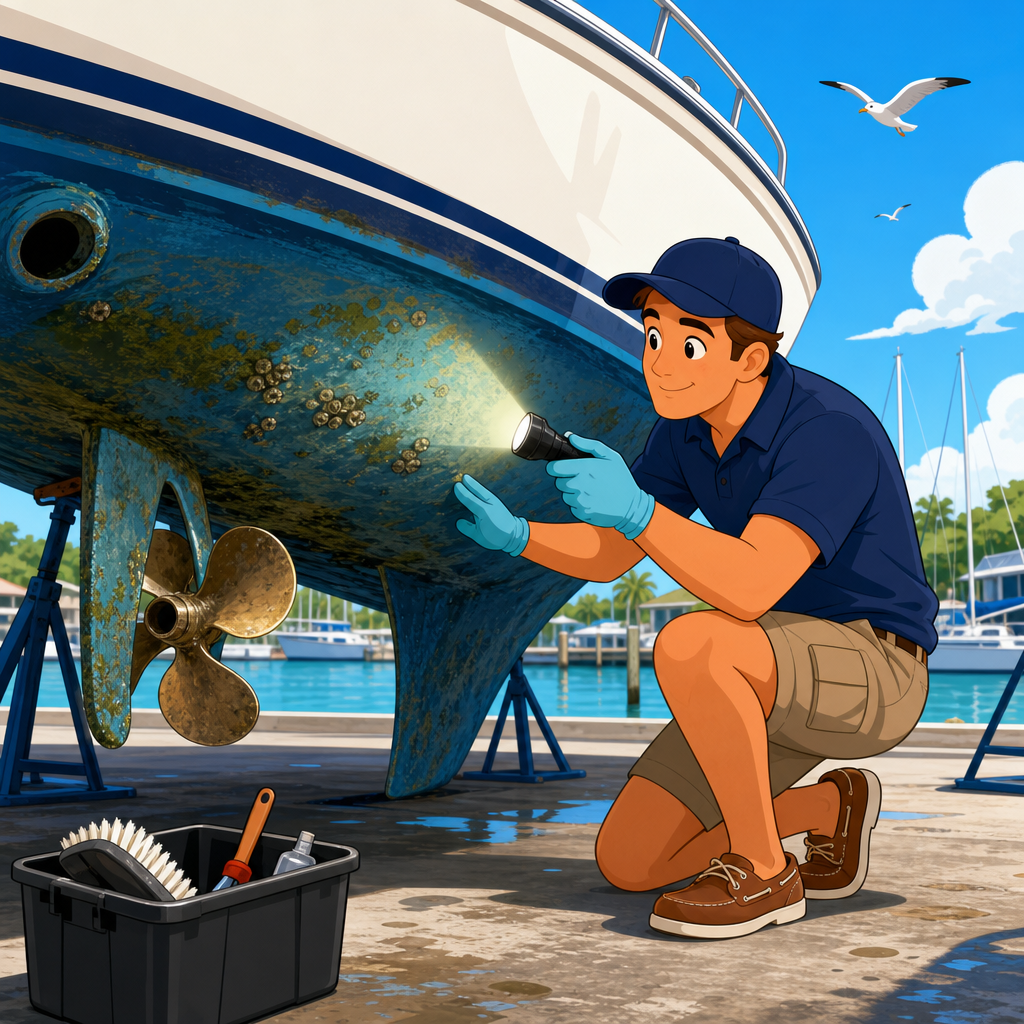
For used boats, I strongly recommend a marine survey and sea trial, even when the lender does not require them. A surveyor checks structural integrity, systems, safety items, and general condition, while a mechanic can inspect the engine, download diagnostic data on newer outboards, and estimate near-term service needs. The findings give you leverage to renegotiate price or request repairs. They also help the insurer classify risk accurately. Buying without inspection may save a few hundred dollars upfront, but it can expose you to thousands in hidden defects while still leaving you responsible for the loan.
Step 7: Close the loan and plan for ownership after funding
At closing, review the promissory note, security agreement, payment schedule, and any insurance or warranty documents. Confirm whether there is a prepayment penalty, grace period, automatic payment discount, or requirement to maintain certain coverage levels. Make sure the seller is paid only through the approved closing process and that title, registration, documentation, and lien recording are handled correctly. If a trailer is included, verify that its VIN and title transfer are completed separately where required. Keep copies of every document because they matter later for tax records, resale, refi decisions, and claims.
After funding, the best financing decision is disciplined ownership. Set aside a maintenance reserve, review your insurance annually, and refinance only if the savings clearly outweigh fees and term reset risk. If rates fall or your credit improves, a refinance can help, but extending the term repeatedly is usually a mistake. For anyone building out a broader buying strategy, this financing and insurance hub should connect naturally to deeper topics such as boat insurance types, marine survey checklists, dealer versus private-party purchases, title and documentation rules, and total cost of boat ownership. Those supporting topics answer the questions buyers ask before and after a loan application, and they make this page the practical starting point for the full purchase journey.
Getting a boat loan is straightforward when you approach it in order: define the right financing type, set a realistic budget, strengthen your credit, compare lenders carefully, prepare your paperwork, inspect and insure the boat properly, and close with clean documentation. The reason this process works is simple. Boat financing is not only about qualifying for money. It is about proving to a lender and insurer that the borrower, the vessel, and the transaction are all sound. When those three pieces align, approvals come faster, terms improve, and expensive surprises become less likely.
The biggest advantage of doing the work upfront is confidence. You can shop with a firm budget, negotiate from a position of strength, and avoid loans that look affordable monthly but create long-term strain. You also protect the boat’s future value by choosing insurable, well-documented collateral and by planning for maintenance from day one. Buyers who follow these steps usually make better decisions on both the purchase and the financing because they are evaluating the full ownership picture, not only the showroom price.
If you are ready to move forward, start by checking your credit, estimating your full annual ownership costs, and requesting preapproval from at least two lenders. Then line up insurance quotes and a survey plan before you make an offer. That sequence will save time, reduce risk, and put you in control of the boat buying process.
Frequently Asked Questions
1. What do lenders look at when deciding whether to approve a boat loan?
Lenders usually evaluate a boat loan application the same way they review other major financing requests: they want to confirm that you are likely to repay the loan and that the boat is acceptable collateral. Your credit score is one of the first factors reviewed, because it helps lenders estimate repayment risk. In general, stronger credit can improve your chances of approval and may help you qualify for lower interest rates and better loan terms. Income is also important, since lenders want to see that you earn enough to comfortably manage the new monthly payment along with your existing obligations.
Beyond credit and income, lenders often examine your debt-to-income ratio, which compares your monthly debt payments to your gross monthly income. If you already carry significant debt from mortgages, auto loans, credit cards, or personal loans, a lender may view a boat loan as too much added risk. The size of your down payment matters as well. A larger down payment reduces the amount financed, lowers the lender’s exposure, and can make approval easier, especially for more expensive boats or applicants with borderline credit.
The boat itself also plays a major role. Lenders may consider the age, type, size, condition, purchase price, and intended use of the vessel. Newer boats are often easier to finance than older ones, and some lenders place restrictions on very old boats, liveaboards, high-performance models, or boats used primarily for charter or commercial purposes. In many cases, the lender will require documentation such as the purchase agreement, boat specifications, title information, registration details, and sometimes a marine survey to verify condition and value. Overall, approval depends on a combination of your financial profile and the lender’s confidence in the boat as collateral.
2. How much should I put down on a boat, and does a bigger down payment help?
A down payment is often one of the most effective ways to strengthen a boat loan application. While exact requirements vary by lender, many borrowers are asked to put down a percentage of the boat’s purchase price, especially for larger loan amounts or used vessels. In some situations, qualified buyers may find low-down-payment options, but that does not necessarily mean it is the best financial move. Putting more money down can reduce your monthly payment, lower the total interest paid over the life of the loan, and improve the likelihood of approval.
A larger down payment also helps by lowering the loan-to-value ratio, which is the amount borrowed compared to the boat’s value. Lenders generally prefer lower loan-to-value ratios because it gives them a cushion if the boat depreciates or if they ever need to recover losses after a default. This becomes especially important with used boats, which may have more variable market values and condition concerns. If the vessel is older or unusual, a stronger down payment can reassure the lender that you have meaningful equity in the purchase from day one.
From a practical standpoint, the right down payment should balance approval odds with your overall financial stability. It is not always wise to drain your savings just to put more down on a recreational purchase. You should still leave room for insurance, maintenance, storage, taxes, registration, fuel, repairs, and emergency expenses. A smart approach is to determine what monthly payment fits comfortably within your budget, then use that number to estimate how much you should finance and how much cash to contribute upfront. In many cases, a healthy but manageable down payment leads to the strongest long-term outcome.
3. What documents and information do I need to apply for a boat loan?
Preparing your paperwork in advance can make the loan process much smoother and help you avoid delays. Most lenders start with personal and financial information, including your full legal name, address, Social Security number, employment details, income, and housing expenses. You may also be asked to provide recent pay stubs, tax returns, W-2s, bank statements, or proof of other income if you are self-employed, retired, or have variable earnings. The lender may use these documents to verify that your stated income is accurate and stable enough to support the loan.
You will also usually need detailed information about the boat you plan to buy. This often includes the year, make, model, hull identification number, engine information, purchase price, and seller details. If the boat is used, lenders may request copies of the title, registration, bill of sale, photos, maintenance records, or a marine survey. Some lenders want to confirm the boat’s current market value through valuation tools, inspection reports, or surveyor assessments, particularly if the vessel is older or the loan amount is substantial. If you are buying from a dealer, documentation may be more standardized, while private-party purchases can involve more back-and-forth.
In addition, many lenders require proof of insurance before closing, since the boat will often serve as collateral for the loan. You may also need to provide information about where the boat will be stored or used, especially if there are navigation, hurricane, or location-specific underwriting concerns. The more organized you are, the easier it is for the lender to process your application efficiently. Before applying, it is a good idea to ask each lender for a checklist so you can gather everything in advance and reduce the chance of last-minute surprises.
4. Should I get a boat loan from a bank, credit union, dealership, or marine lender?
Each financing source has advantages, and the best choice depends on your credit profile, the type of boat you are buying, and how much guidance you need during the transaction. Traditional banks may offer competitive loan products and a familiar application experience, especially if you already have an established relationship with the institution. Credit unions can also be attractive because they sometimes provide lower rates or more flexible service to members. For highly qualified borrowers financing straightforward purchases, either option can work well.
Dealership financing can be convenient because it allows you to shop for the boat and financing in one place. In some cases, dealers have access to multiple lending partners and can help match you with a loan program that fits your needs. That convenience can save time, but it is still important to compare offers independently. The easiest financing option is not always the least expensive, and borrowers sometimes focus only on the monthly payment without fully reviewing the interest rate, loan length, fees, and total borrowing cost.
Specialized marine lenders are often a strong choice for more complex transactions, such as larger vessels, older boats, yachts, or private-party purchases. These lenders tend to understand marine valuations, surveys, titling issues, coastwise documentation, and insurance requirements better than general consumer lenders. They may also be more comfortable with unique boat types that standard banks will not finance. The smartest strategy is usually to compare multiple lenders side by side, looking not just at rate but also at term length, down payment requirements, prepayment rules, age limits, fees, and turnaround time. A slightly higher rate from a lender that can properly handle the transaction may ultimately be worth it if it prevents complications during closing.
5. What steps should I follow to get a boat loan without running into problems at closing?
The best way to avoid problems is to approach the process in a clear sequence. Start by reviewing your credit, income, debts, and savings before shopping. This gives you a realistic idea of what you can afford and whether you should improve your financial profile first. Paying down revolving debt, correcting credit report errors, building cash reserves, and setting a firm budget can all put you in a stronger borrowing position. It is also wise to estimate the full cost of boat ownership, not just the loan payment, so you do not become financially stretched after the purchase.
Next, compare lenders and seek prequalification or preapproval when possible. This step helps you understand your potential rate, loan amount, and required down payment before you commit to a specific boat. Once you identify a vessel, confirm that it meets the lender’s eligibility standards for age, condition, and use. Gather all documentation early, including the purchase agreement, seller information, title records, survey if needed, and insurance quote. Delays often happen when paperwork is incomplete, the boat’s ownership history is unclear, or the vessel’s condition raises underwriting concerns.
Before signing, review the final loan terms carefully. Make sure you understand the interest rate, whether it is fixed or variable, the repayment period, any origination or documentation fees, late-payment penalties, and whether there is a prepayment penalty. Also confirm exactly how and when funds will be disbursed, what documents are needed at closing, and when you can take possession of the boat. If you are buying from a private seller, pay special attention to title transfer procedures and lien release requirements. A smooth closing usually comes down to preparation, verification, and careful review. When you know your budget, choose the right lender, and stay organized throughout the process, getting a boat loan becomes much more manageable and far less stressful.