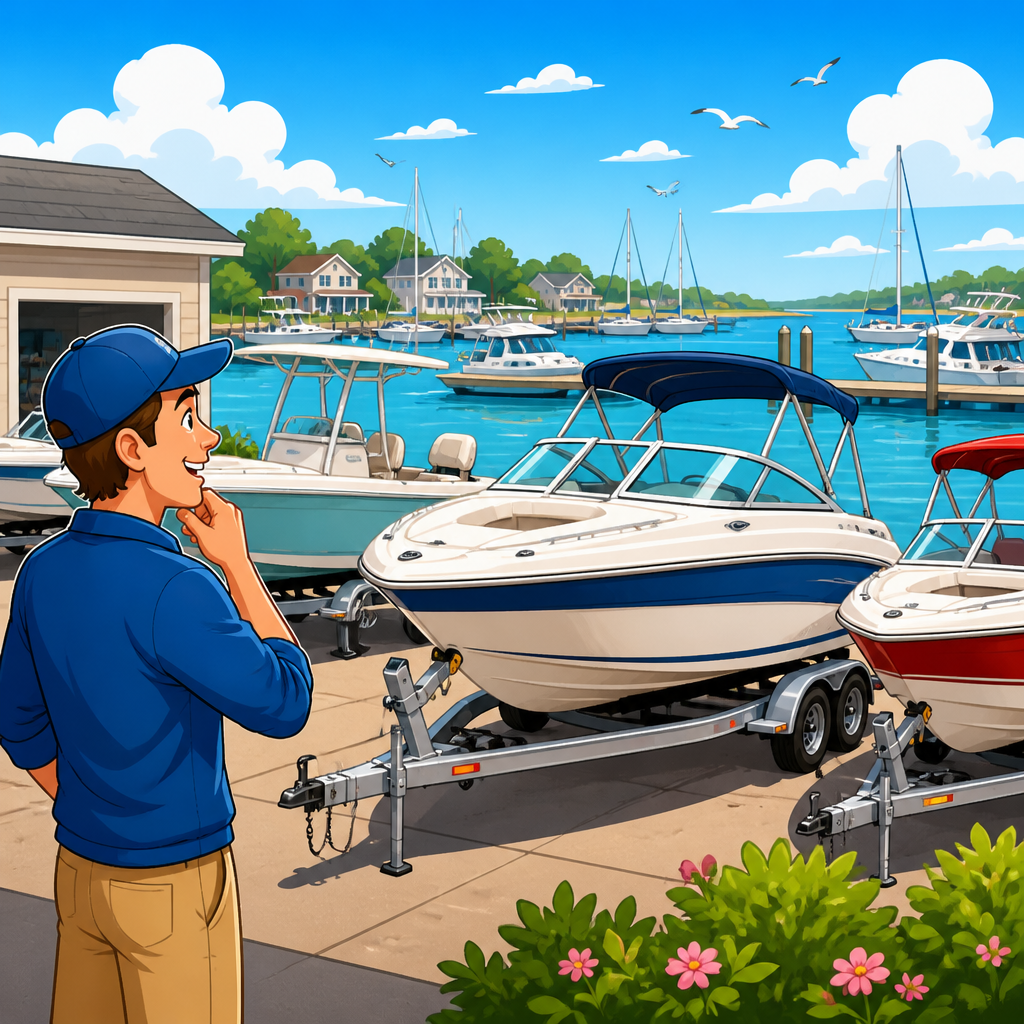

Buying a boat in 2025 means navigating a market where dealership quality matters as much as the boat itself. The best boat dealerships for new and used boats do more than hold inventory: they verify condition, explain financing, support registration, coordinate sea trials, and stand behind the sale when problems appear after delivery. For buyers comparing buying a boat at auction or from a dealer, the dealership route usually offers more transparency, while auctions can offer lower prices with higher risk. Understanding the difference is essential before you spend five figures on a fishing boat or seven figures on a yacht.
In this market, a boat dealership is a licensed marine retailer that sells new boats, used boats, or both, often representing brands such as Sea Ray, Boston Whaler, Grady-White, Yamaha, Beneteau, Jeanneau, or Tracker. Some dealerships focus on pontoons and freshwater fishing boats; others specialize in center consoles, cruisers, wake boats, sailboats, or brokerage yachts. A boat auction, by contrast, is a sale format where boats are sold to the highest bidder, frequently as-is, with limited inspection windows and fewer post-sale remedies. Both channels have a place, but they serve different buyer profiles, budgets, and risk tolerances.
I have worked through dealer purchases, trade-ins, brokerage transactions, and distressed-asset auction reviews, and the pattern is consistent: the best outcomes happen when buyers evaluate the seller as carefully as the vessel. A dealership with strong service records, trained technicians, clear pricing, and a disciplined delivery process can save months of frustration. That matters in 2025 because boat prices remain elevated compared with pre-2020 norms, insurance underwriting is tighter in many coastal regions, and engine, electronics, and trailer repairs are still expensive. This hub explains how to identify the best boat dealerships for new and used boats, when auctions make sense, what documents and inspections matter, and how to compare options without overpaying.
What Makes a Boat Dealership the Best in 2025
The best boat dealerships for new and used boats share a few measurable traits. First, they disclose information clearly. A strong listing includes model year, engine hours, hull identification number availability on request, maintenance history, trailer details, ownership status, and recent upgrades. For used boats, serious dealers provide compression test results for outboards when relevant, generator hours for cruisers, and service invoices for major work such as manifolds, risers, lower-unit service, or moisture remediation. If a salesperson cannot explain the condition of the hull, powertrain, electronics, and title status in plain language, that is a warning sign.
Second, the best dealerships have service depth. In practice, that means factory-trained technicians, parts access, haul-out or launch capability, and a service department that is not overwhelmed for months. Dealers aligned with marine standards and recognized brands tend to have better manufacturer support, but local reputation matters more than logo count. A top-tier dealer can coordinate a pre-delivery inspection, software updates for multifunction displays, trailer brake adjustments, battery load testing, and warranty registration before handoff. That operational discipline is often the difference between a smooth first season and a boat that spends weekends in the yard.
Third, good dealerships know their segment. A bass boat buyer needs different expertise than a family shopping for a 24-foot pontoon or a cruiser buyer considering twin sterndrives. Segment expertise improves fit. For example, a coastal center-console dealer should be able to discuss deadrise, fuel burn at cruising speed, livewell plumbing, jack plates, corrosion control, and whether the listed trailer is rated correctly for the boat with full fuel and gear aboard. A brokerage-oriented yacht dealer should understand survey contingencies, escrow handling, lien releases, and acceptance protocols after sea trial and haul-out.
Finally, the best dealers create a traceable buying process. They use written purchase agreements, spell out refundable and nonrefundable deposits, document contingencies, and provide copies of title, registration, and warranty paperwork. They also explain freight, prep, documentation, taxes, and storage fees before you sign. In my experience, buyers get into trouble not because a boat was secretly bad, but because a sales process was vague. Precision protects both parties.
How to Evaluate New and Used Boat Inventory
New boats and used boats require different evaluation methods. With new inventory, the dealership itself is often the main variable. You are buying a factory-built product with a manufacturer warranty, so questions center on rigging quality, dealer prep, option configuration, and after-sale support. Ask whether the engine has been water-tested, whether software and chart packages are current, whether the trailer VIN matches the purchase documents, and who handles warranty claims if you travel or move. A new boat can still disappoint if the dealer installs electronics poorly, sets up the propeller incorrectly, or rushes delivery without checking pumps, tabs, and battery systems.
Used inventory shifts the burden toward inspection and verification. Condition varies boat by boat, and a clean gelcoat can hide expensive issues. Start with the basics: title status, lien search, engine hours, service history, accident history if known, and where the boat was stored. Then inspect hull, deck, stringers if accessible, fuel system, bilge, wiring, upholstery, trailer, and all accessories. On outboard boats, ask for diagnostic printouts from Yamaha, Mercury, Honda, or Suzuki where available. On inboards and sterndrives, review winterization and cooling-system maintenance. On sailboats, inspect standing rigging age, sail inventory, moisture readings, and thru-hull condition.
Pricing should be grounded in comparables, not seller optimism. Dealers usually price above private-party listings because they recondition boats, provide some level of support, and absorb overhead. That premium can be justified when the work is real. If a used 2021 center console is listed 12 percent above nearby comps but includes fresh 100-hour service, new batteries, trailer tires, updated Garmin units, and documented warranty transfer assistance, the higher asking price may still be the better value. If the premium buys only polished photos, walk away.
| Buying Channel | Best For | Main Advantages | Main Risks |
|---|---|---|---|
| Franchised dealer | New boats, warranty buyers, financed purchases | Brand support, service department, clearer paperwork | Higher pricing, add-on fees, limited negotiation on popular models |
| Independent used-boat dealer | Value-focused buyers seeking selection | Mixed inventory, trade-in flexibility, some reconditioning | Quality varies widely, warranty often limited |
| Brokerage dealer | Larger used cruisers, sailboats, yachts | Escrow process, survey contingencies, market knowledge | Commission structure, slower negotiation cycle |
| Auction | Experienced buyers with repair tolerance | Potential discounts, unique inventory, fast transactions | As-is sales, limited inspections, title and condition uncertainty |
Buying a Boat at Auction or From a Dealer
For most recreational buyers, buying a boat from a dealer is safer than buying a boat at auction. Dealers generally offer more time to inspect, more complete disclosures, and better documentation. Many will permit a marine survey or mechanical inspection, especially on larger used boats. Financing is also easier through dealerships because lenders prefer documented transactions, verified vessel information, and predictable title work. If you are buying your first boat, planning to finance, or want support after the sale, a dealer is usually the right channel.
Boat auctions serve a narrower audience. They can be useful when banks, insurers, municipalities, marinas, or asset liquidators dispose of inventory quickly. You may find repossessions, storm-damaged boats, abandoned vessels, or estate assets priced below retail. The tradeoff is risk. Auction catalogs often rely on limited information, photos may not show structural damage, and preview periods can be short. In many cases the boat is sold exactly as it sits, with no sea trial, no water test, and minimal recourse after payment. Storage charges and buyer premiums can also erase apparent bargains.
A common mistake is assuming every auction boat is cheap enough to justify uncertainty. It is not. I have reviewed auction lots that looked attractive until transport, missing electronics, title curative work, soft decks, seized engines, and trailer repairs were added. The all-in cost ended above local dealership retail for a comparable running boat. Auctions reward buyers who can inspect independently, estimate repairs accurately, and absorb surprises. Dealers reward buyers who value predictability. The smartest approach is not ideological; it is situational. If your priority is immediate use this season, dealership inventory usually wins. If your priority is acquiring a project or specialized asset below market and you understand marine repair economics, auction buying can work.
Questions to Ask Before You Commit
Whether you choose a dealer or an auction, direct questions reveal quality quickly. Ask who owns the boat, whether there is a clear title or documented Coast Guard ownership chain, and whether any liens remain. Ask for the exact engine model and serial number, the most recent service date, and what does not work today. Ask whether the boat has been in saltwater, whether it has suffered grounding, submersion, storm damage, or theft recovery, and whether moisture readings or surveys are available. If a seller hedges on basic facts, assume deeper issues may exist.
At dealerships, ask about fees line by line. Delivery, prep, documentation, haul-out, fuel, battery replacement, and trailer service should not appear as surprises in the finance office. Ask whether the deposit is refundable if survey results are unsatisfactory, if financing is declined, or if a title issue appears. Ask who pays for survey launch fees, haul-out, and mechanical inspections. On new boats, ask for the full warranty booklet, not a verbal summary. Confirm hull warranty term, blister coverage if relevant, component exclusions, and transferability for future resale value.
At auctions, ask what inspection access is permitted, whether keys are available, whether engines can be started, and what title form will be delivered. Some auctions sell with bills of sale only, which can complicate registration in certain states. Also ask about buyer premiums, removal deadlines, storage rates, and whether trailers are included with valid paperwork. These details determine whether a bid is rational.
Due Diligence, Surveys, Financing, and Closing
Due diligence is where good intentions become a safe purchase. For used boats, a marine survey by an accredited surveyor is often the highest-value money you can spend. Surveyors assess hull structure, safety systems, electrical condition, moisture intrusion, and visible deficiencies, then estimate fair market and replacement values. Engines may require a separate mechanic. For larger yachts, lenders and insurers typically require surveys; for smaller boats, buyers should still consider them when the purchase price is significant or the vessel shows age, modifications, or neglect.
Financing in 2025 remains straightforward for clean, well-documented boats and harder for old, obscure, damaged, or heavily modified vessels. Marine lenders review credit, debt-to-income ratio, boat age, manufacturer reputation, engine hours, and loan size. New boats and newer used boats sold by established dealerships usually finance more easily than auction purchases because the collateral package is clearer. Insurance matters early, not after closing. Coastal policies may have named-storm restrictions, navigation limits, lay-up periods, and survey requirements. Get bindable quotes before committing, especially in Florida, the Gulf Coast, and hurricane-exposed markets.
Closing should be boring. That is the goal. You want signed purchase agreements, documented contingencies, clean title or Coast Guard documentation, lien releases, bill of sale, trailer title if applicable, odometer-style hour disclosure where available, and proof that funds moved through the correct channels. Brokerage transactions often use escrow, which protects both sides. Dealer transactions should still provide full paperwork copies before you leave. If anything about the ownership trail or title status is unclear, pause the deal. Boats are optional; legal headaches are not.
How This Hub Helps You Choose the Right Path
This guide is the hub for buying a boat at auction or from a dealer because the decision touches every other part of the boat-buying process. From here, buyers typically branch into model-specific research, marine survey checklists, financing guides, title and registration rules, trade-in strategy, and negotiating tactics for new versus used boats. The central idea is simple: the best boat dealerships for new and used boats reduce uncertainty, while auctions can reduce price. Your job is deciding which form of value matters more for your budget, skills, and timeline.
If you remember only a few points, remember these. First, judge the seller, not just the boat. Second, demand documentation before emotion takes over. Third, compare all-in cost, including repairs, fees, transport, insurance, and downtime. Fourth, use surveys and mechanical inspections whenever the risk justifies them. Finally, understand that a fair dealership premium can be cheaper than an auction mistake. Start with reputable dealers in your target segment, ask disciplined questions, and only pursue auction inventory when you can evaluate risk with confidence. That approach will save money, shorten downtime, and put you on the water with far fewer regrets.
Frequently Asked Questions
What makes a boat dealership one of the best places to buy a new or used boat in 2025?
The best boat dealerships in 2025 stand out because they offer much more than inventory. A strong dealership carefully inspects and documents the condition of used boats, provides clear specifications on new models, and is transparent about pricing, service history, warranties, and ownership records. Buyers should expect a dealership to explain what is included in the sale, whether electronics, trailers, safety equipment, or manufacturer-backed coverage are part of the package.
Top dealerships also simplify the buying process. That includes helping buyers compare boat types, arrange financing, understand insurance expectations, complete registration and titling paperwork, and schedule sea trials or mechanical inspections before finalizing a purchase. In a market where prices, inventory turnover, and buyer expectations continue to evolve, the best dealers reduce uncertainty rather than create it.
Another major difference is post-sale support. Reputable dealerships typically have service departments, relationships with marine technicians, and a process for handling issues that arise after delivery. That support can be especially important for first-time buyers or anyone purchasing a used boat who wants reassurance that they are not taking on hidden problems alone. In short, the best dealership is not just the one with the most boats. It is the one that combines selection, transparency, expertise, and accountability.
Is it better to buy a boat from a dealership or at auction in 2025?
For most buyers, purchasing from a dealership is the safer and more transparent option in 2025. A good boat dealership usually provides more complete information about the vessel’s condition, previous ownership, engine hours, maintenance records, and any known issues. Dealers often allow sea trials, offer referrals for marine surveys, and may include limited warranties or service commitments depending on whether the boat is new or used. That structure gives buyers more confidence and more opportunities to verify what they are buying.
Auctions can sometimes offer lower prices, but they also tend to involve more risk. In many auction environments, boats are sold as-is, where-is, with limited recourse if mechanical, cosmetic, electrical, or title issues appear later. Buyers may have less time to inspect the boat, fewer service records to review, and less assistance with financing, registration, or transport. For experienced buyers who understand marine systems and can evaluate risk quickly, auctions may occasionally present value. For the average buyer, though, lower upfront pricing can be offset by repair bills, missing documentation, or unexpected reconditioning costs.
That is why dealership purchases remain attractive, especially for buyers who want guidance, financing support, legal paperwork handled correctly, and someone to call if problems arise after delivery. If the goal is minimizing surprises and making a more informed purchase, a reputable boat dealership is usually the better path.
How can I evaluate a used boat dealership before making a purchase?
Start by looking at transparency. A trustworthy used boat dealership should be willing to share detailed photos, engine information, maintenance records when available, ownership background, and any known defects. If a dealer avoids specific questions, minimizes obvious wear, or pushes a sale before inspection, that is a sign to proceed carefully. Good dealerships understand that serious buyers want facts, not pressure.
Next, review the dealership’s reputation and processes. Look for customer feedback about honesty, delivery follow-through, communication after the sale, and how the dealership handled complaints. It is also smart to ask whether the dealership performs its own inspections, whether it accepts third-party marine surveys, and whether sea trials are available. A reputable seller should not object to independent verification. In fact, the best dealers usually encourage it because it builds trust and reduces disputes later.
You should also evaluate practical support. Ask who handles registration, titling, trailer paperwork, and lien release documentation if applicable. Confirm whether the dealership has an in-house service department or partnerships with local marine mechanics. If you are financing the boat, ask for a complete breakdown of loan terms, fees, taxes, storage charges, and delivery costs. A strong dealership makes the purchase process easier and more understandable from beginning to end. A weak dealership often leaves key details vague until late in the transaction.
What questions should I ask before buying a new or used boat from a dealership?
Buyers should ask detailed questions that cover condition, ownership, cost, and support. For a used boat, ask about engine hours, maintenance history, repair records, previous damage, how long the boat has been in inventory, and whether the boat has had recent survey findings or water tests. For a new boat, ask about factory warranty coverage, lead times, included features, dealer-installed options, and whether pricing includes freight, preparation, and documentation fees.
It is also important to ask what is not included. Confirm whether the trailer, electronics, batteries, life jackets, anchors, covers, and navigation equipment are part of the final sale. Ask if the dealership offers a sea trial, whether an independent marine survey is allowed, and what happens if issues are discovered before closing. Financing questions matter too. Request a full explanation of interest rates, loan length, down payment requirements, prepayment rules, and the total financed cost over time.
Finally, ask about after-sale support. Find out whether the dealership offers orientation for first-time owners, service scheduling, winterization, storage, warranty claim handling, and troubleshooting assistance after delivery. The answers to these questions often reveal whether a dealership is focused on completing a transaction or building a long-term customer relationship. The best dealerships are usually comfortable answering all of them clearly and in writing.
Why does post-sale support matter when choosing the best boat dealership in 2025?
Post-sale support matters because boat ownership rarely ends at the moment of purchase. Even well-maintained boats can develop issues with electronics, engines, plumbing, batteries, trailers, or onboard systems after delivery. A dealership that stands behind the sale can help coordinate repairs, process warranty claims, answer operating questions, and connect owners with qualified service technicians. That kind of support can save time, reduce stress, and prevent a small issue from turning into a costly problem.
In 2025, buyers are also paying closer attention to ownership experience, not just purchase price. A dealership with strong after-sale service can help with registration corrections, accessory installation, maintenance scheduling, recalls, software updates for modern marine electronics, and seasonal care such as storage or winterization. For first-time boat buyers in particular, having a knowledgeable point of contact after the sale can make ownership much more manageable.
Post-sale support is also a sign of dealership confidence. Businesses that inspect boats carefully, disclose condition honestly, and maintain service capabilities are usually more willing to help after the transaction. Dealers that disappear once paperwork is signed often create frustration when questions or defects emerge. When comparing the best boat dealerships for new and used boats, buyers should treat service after delivery as a major part of the value, not an optional bonus.