Buying a boat without a disciplined inspection process is the fastest way to turn a dream purchase into a repair project, which is why every serious buyer needs a boat inspection checklist before making an offer. A proper inspection is more than a quick walkaround at the dock. It is a structured evaluation of the hull, engine, electrical systems, safety gear, paperwork, and on-water performance, all aimed at answering one question: is this boat sound, fairly priced, and suited to your intended use? In practice, I have seen buyers focus on shiny upholstery or electronics screens while missing moisture intrusion in the transom, neglected service intervals, or title problems that can delay registration for weeks.
When people ask how to inspect a boat before buying, they usually mean two related things. First, they want a practical step-by-step process they can follow themselves before spending money on surveys and haul-outs. Second, they want to know when a professional marine surveyor or mechanic becomes essential. Both matter. A buyer’s own inspection helps eliminate obviously poor candidates early. A professional inspection confirms structural condition, system integrity, and value before closing. The smartest approach combines both: your checklist narrows the field, then experts verify the boat.
This matters because boats hide problems well. Cosmetic detailing can mask oxidation, soft decks may only appear under load, and a cold engine can conceal starting issues that show up after a hard run. Unlike buying a car, you are evaluating a vessel that lives in water, often in salt, with multiple systems exposed to vibration, corrosion, and deferred maintenance. The cost of missing a major issue can be substantial. A wet cored deck, outdrive corrosion, fuel tank replacement, or stringer repairs can each run into thousands or even tens of thousands of dollars. A disciplined inspection checklist protects your budget, strengthens your negotiating position, and helps you buy with confidence.
Start with Research, Ownership Records, and Deal Readiness
Before stepping aboard, confirm the basics. Ask for the hull identification number, registration or documentation details, make, model year, engine hours, maintenance records, storage history, and any insurance claims. Verify that the seller’s name matches the title or documentation. If there is a lien, ask how payoff will be handled. On trailer boats, inspect trailer registration and VIN too. Ownership paperwork problems are not minor administrative issues; they can block transfer, financing, and insurance.
Research the model itself. Look for common weaknesses in owner forums, manufacturer bulletins, and recall databases. Some boats are known for moisture in transoms, others for corroding fuel tanks, failing exhaust manifolds, or poorly bedded deck hardware. I always recommend checking NADA Guides or comparable market listings, but never use asking prices alone to judge value. Comparable condition, equipment, propulsion type, and survey findings determine real market price. Service logs are especially revealing. Regular oil changes, impeller replacement, outdrive service, winterization, and battery replacement intervals show whether the boat has been cared for systematically or only cleaned up for sale.
Bring a flashlight, mirror, notepad, gloves, moisture meter if you know how to use one, and clothes you do not mind getting dirty. Ask the seller not to pre-warm the engine. A cold start tells you far more than a warm engine at idle in the slip.
Inspect the Hull, Deck, and Structural Integrity
The hull is the foundation of every buying decision. Begin outside and work methodically. Sight down the hull sides for waviness, repairs, impact marks, and mismatched gelcoat. Small scratches are common; star cracks around fittings, large gouges, and uneven repairs deserve closer review. On fiberglass boats, tap around suspicious areas and note changes in sound, though sounding alone does not replace a survey. Look carefully at the keel, chines, strakes, and bow stem for grounding damage. On aluminum boats, inspect welds, rivets, and signs of electrolysis. On wood boats, look for rot, fastener movement, and plank seam issues.
Pay special attention to transoms and decks. Soft spots underfoot often indicate wet coring or structural deterioration. Walk the deck slowly, especially around hatches, windlass mounts, stanchions, cleats, seat bases, and tower legs. Flexing is a warning sign. Open lockers and inspect backing plates, tabbing, and accessible stringers. Corrosion on fasteners, dark water stains, or mold lines can point to long-term leaks. In the bilge, you want cleanliness, yes, but not suspiciously fresh paint covering damage. A clean bilge with visible structure is ideal. Heavy oil residue, soaked foam, or standing water should lead to questions about leaks and maintenance habits.
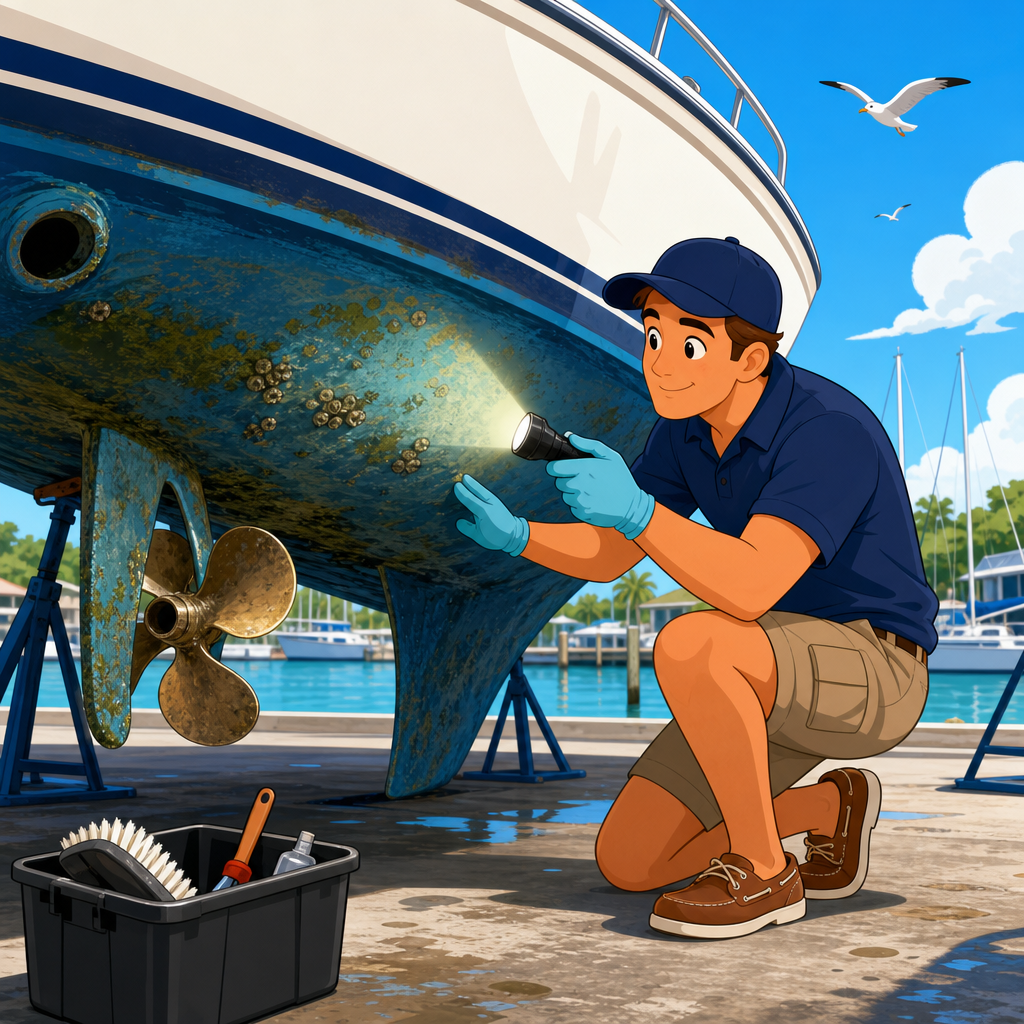
If possible, arrange a haul-out. Bottom paint condition, blisters, damaged through-hulls, bent props, and rudder or shaft issues are difficult to assess in the water. Osmotic blistering varies in severity, but widespread blistering affects value and future maintenance planning.
Evaluate the Engine, Fuel System, and Mechanical Condition
Mechanical condition often determines whether a boat is a smart buy or a budget trap. Start by identifying the propulsion setup: outboard, sterndrive, inboard, jet, or sail auxiliary. Then inspect for maintenance evidence and neglect markers. On outboards, check cowl condition, mounting bolts, trim and tilt function, lower unit skeg, propeller damage, and corrosion around brackets. Remove the engine cover and inspect hoses, clamps, belts, wiring, and signs of fuel seepage or salt buildup. On sterndrives, inspect bellows, gimbal area, hydraulic lines, anodes, and outdrive corrosion. On inboards, examine stuffing boxes or shaft seals, mounts, exhaust risers, raw-water pumps, and alignment clues.
A cold start is essential. The engine should start without excessive cranking, idle reasonably smoothly, and discharge cooling water properly if applicable. Watch for smoke characteristics. Brief condensation vapor can be normal; persistent blue smoke suggests oil burning, black smoke indicates rich running, and white smoke may signal water intrusion or combustion problems depending on engine type. Check the instrument panel for active alarms and confirm gauges are functional. Ask for recent compression numbers or, better, schedule compression and diagnostic checks with a qualified marine mechanic. For modern engines, electronic scan reports can reveal hours by RPM band, fault history, overheat events, and abuse patterns that an hour meter alone will never show.
Inspect the fuel system carefully. Fuel hoses should be marine rated, not cracked or brittle. Tanks should show no seepage, unusual odor, or severe corrosion. Priming bulbs, filters, separators, and shutoff valves should be in sound condition. Ethanol-related issues remain common on older boats with incompatible hoses or neglected tanks.
Check Electrical Systems, Plumbing, and Safety Equipment
Electrical issues are among the most common and most underestimated problems on used boats. Open the battery compartment and inspect age labels, terminal corrosion, hold-down security, and cable routing. A proper marine installation uses ignition-protected components where required, appropriate fusing, and supported wiring runs. Household wire nuts, tangled add-on electronics, and unlabeled breaker panels indicate amateur work. Turn on every system individually: navigation lights, bilge pumps, horn, freshwater pump, electronics, livewell, windlass, trim tabs, stereo, and cabin accessories. Intermittent operation often points to poor grounds or corroded connections rather than failed devices.
Plumbing deserves the same discipline. Test sinks, showers, washdowns, marine head operation, macerators where legal, and holding tank level indicators. Check hoses for brittleness and sanitation lines for odor permeation. Through-hulls and seacocks should operate smoothly and show no severe corrosion. On older boats, original gate valves are a red flag and should be evaluated for replacement with proper marine seacocks. Bilge pumps should cycle correctly both manually and on float switch.
Do not overlook safety gear. Confirm the boat carries the legally required number and type of life jackets, a throwable device when required, sound signaling device, navigation lights, fire extinguishers, ventilation where applicable, and current registration numbers. Flares, EPIRBs, life raft service intervals, carbon monoxide detectors, and fire suppression systems all have expiration or inspection requirements. Missing or outdated safety equipment is not necessarily a deal breaker, but it is a direct replacement cost and a sign of how carefully the boat has been operated.
Inspect the Interior, Cabin, and Signs of Water Intrusion
Inside the boat, your main job is to separate cosmetic wear from structural or moisture-related issues. Upholstery tears, dated curtains, and worn carpet are straightforward budget items. Water intrusion is different. Open every compartment, lift cushions, inspect under berths, and smell the cabin closely. A musty odor often means chronic moisture. Check windows, deck hatches, chainplates on sailboats, and portlight frames for staining, swollen wood, delamination, or mildew. In enclosed cabins, hidden leaks often appear as rusted fasteners, blackened backing panels, or bubbled veneer.
Test every hatch latch, door, drawer slide, and berth support. Galley equipment, air conditioning, shore power inlets, chargers, and refrigeration should all be operated if installed. If the boat has a generator, start it under load. Interior systems are expensive because faults are rarely isolated. A failed air conditioning unit may also reveal clogged strainers, pump issues, poor wiring, or neglected maintenance. On family cruisers, comfort systems influence resale nearly as much as propulsion because buyers expect them to work immediately, not eventually.
Canvas and enclosures also deserve close inspection. Clouded eisenglass, torn seams, failed zippers, and bent frames add up quickly. Replacing a full enclosure on a midsize cruiser can cost several thousand dollars, so include soft goods condition in your valuation.
Sea Trial, Survey, and Price Negotiation Checklist
A sea trial is where the inspection becomes real. At the dock, verify shifting, steering response, throttle smoothness, and electronics startup. Underway, the boat should accelerate cleanly, track predictably, and reach appropriate wide-open-throttle RPM for its engine and propeller setup. Too little RPM can indicate overpropping, hull fouling, excess load, or engine health issues. Too much can indicate underpropping. Watch engine temperature, oil pressure, voltage, and charging behavior throughout the run. Test trim tabs, autopilot if equipped, livewell pumps, anchor windlass, and any systems that can only be assessed under real operating conditions.
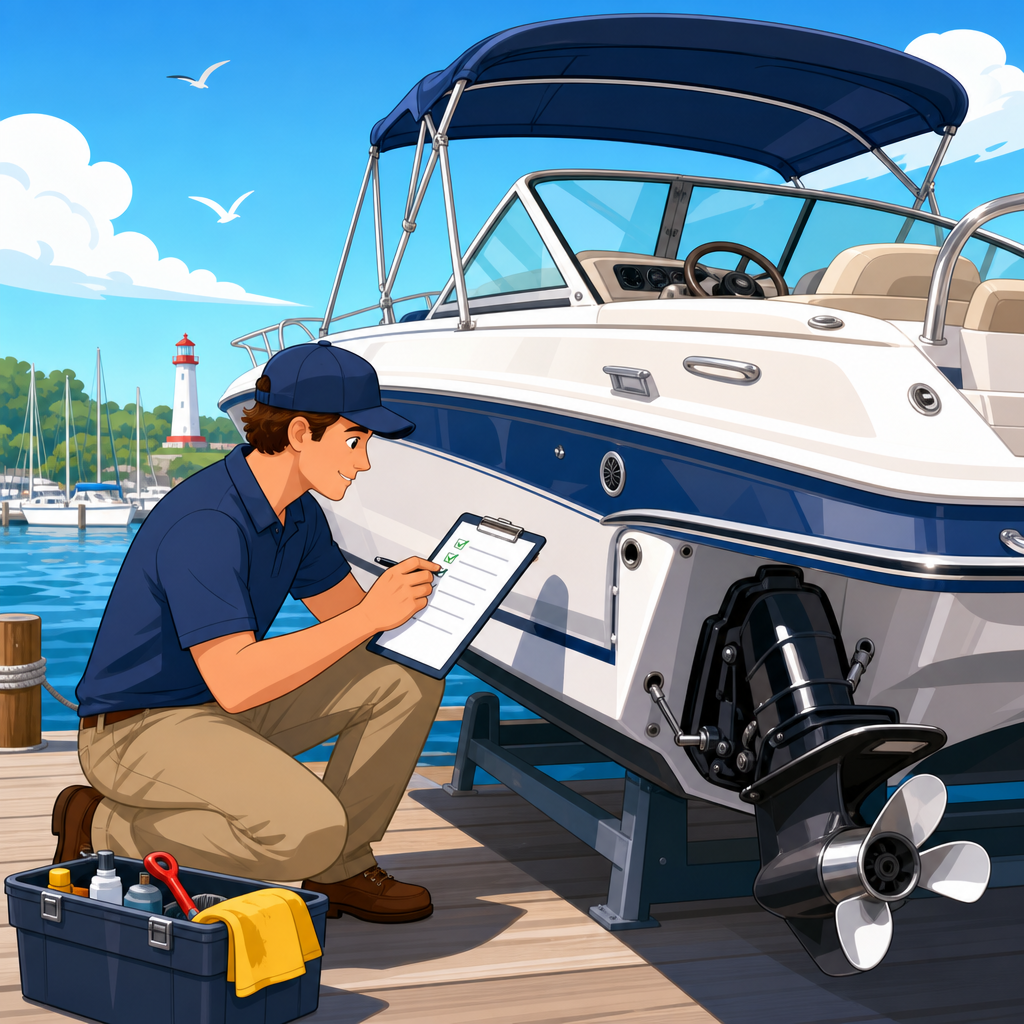
Use this checklist to organize findings and next steps:
| Inspection Area | What to Check | Why It Matters |
|---|---|---|
| Paperwork | Title, lien status, HIN, service logs | Prevents transfer and legal problems |
| Hull and Deck | Cracks, soft spots, blisters, repairs | Reveals structural risk and water intrusion |
| Engine | Cold start, compression, scan report, leaks | Confirms reliability and future repair exposure |
| Electrical | Batteries, wiring, pumps, lights, breakers | Identifies safety issues and hidden DIY work |
| Interior and Plumbing | Leaks, odors, head, tanks, appliances | Shows maintenance quality and comfort costs |
| Sea Trial | RPM, handling, alarms, vibration, temperature | Validates performance under load |
| Professional Review | Marine survey and mechanic inspection | Supports valuation, insurance, and negotiation |
Always make the offer contingent on satisfactory survey and sea trial. A SAMS or NAMS accredited surveyor is the standard choice for condition and valuation, while engine-specific mechanics handle compression, leakdown, computer diagnostics, and propulsion inspections. Survey findings should guide negotiation logically. Safety defects, structural concerns, and major deferred maintenance justify price reductions or seller repairs. Minor cosmetic issues usually do not. The goal is not to “win” the negotiation; it is to buy the right boat at a price aligned with condition.
The best boat inspection checklist for buyers is the one that forces discipline before emotion takes over. Start with records and ownership verification, then inspect structure, machinery, systems, interior condition, and on-water behavior in that order. Look for patterns, not isolated flaws. A boat with tidy records, dry structure, clean wiring, and strong sea-trial performance is usually a far safer bet than a freshly polished boat with vague history and unanswered questions. In my experience, the most expensive mistakes come from rushing, skipping the haul-out, or relying on the seller’s assurances instead of evidence.
Remember that no used boat is perfect. Normal wear, aging canvas, tired batteries, or dated electronics are common and manageable. What matters is whether the boat is fundamentally sound and whether the asking price reflects its true condition. A thorough inspection gives you leverage, protects your budget, and reduces the chances of post-purchase surprises. It also helps you compare boats objectively, which is critical when this page serves as your hub for every “how to inspect a boat before buying” decision that follows.
Use this article as your starting framework, then build a model-specific checklist for the exact boat type you want, from center console to sailboat to express cruiser. Bring a surveyor and mechanic in before closing, document every finding, and walk away when the evidence says to walk. That discipline is how informed buyers end up with better boats, better deals, and better days on the water.
Frequently Asked Questions
What should a complete boat inspection checklist include before I make an offer?
A complete boat inspection checklist should cover every major category that affects safety, reliability, ownership cost, and resale value. Start with the hull and structure by looking for cracks, blisters, soft spots, previous repairs, stress marks around fittings, damaged gelcoat, and signs of water intrusion. Inspect the deck, transom, stringers, hatches, railings, cleats, and windshield for structural weakness or poor repair work. From there, move to the mechanical systems. Check the engine hours, maintenance history, fluid condition, belts, hoses, cooling system, fuel lines, steering components, and evidence of corrosion or leaks. If the boat has an outboard, inspect the lower unit, propeller, skeg, and trim system. If it has an inboard or sterndrive, pay close attention to bellows, mounts, and drivetrain components.
The checklist should also include the electrical system, which is often overlooked by first-time buyers. Test batteries, switches, breakers, wiring condition, bilge pumps, lights, electronics, gauges, horn, navigation systems, and charging equipment. Safety gear is another must-check category. Confirm the boat includes properly sized life jackets, fire extinguishers, flares where required, throwable flotation, anchor and rode, sound-signaling devices, and working navigation lights. Finally, review all paperwork, including title, registration, hull identification number, service records, warranty information, and any liens. A disciplined checklist is not just about finding flaws. It helps you determine whether the boat has been responsibly maintained, whether the asking price matches its real condition, and whether it is suitable for the type of boating you plan to do.
Why is a marine survey important if I already know what to look for during a boat inspection?
Even if you are experienced and confident around boats, a professional marine survey remains one of the smartest steps in the buying process. Your own inspection is essential, but a surveyor brings trained objectivity and technical depth that most buyers simply do not have. A qualified marine surveyor knows where hidden structural problems tend to appear, how to identify moisture intrusion in decks and transoms, how to recognize improper repairs, and how to spot safety or compliance issues that can easily be missed during a casual review. Many serious defects are not obvious at first glance, especially in used boats that have been cosmetically cleaned up for sale.
A survey also gives you leverage and clarity. It creates a documented assessment of the boat’s condition, estimated fair market value, and recommended repairs or deficiencies. That information can help you negotiate the purchase price, request corrections before closing, or walk away from a deal that no longer makes financial sense. In many cases, lenders and insurers require a current survey before financing or covering a vessel, particularly for older or higher-value boats. Just as important, a survey reduces the chance that you will inherit expensive problems after the sale. The cost of a marine survey is usually small compared to the price of replacing a wet transom, rebuilding an engine, rewiring a boat, or correcting major structural damage. In short, your checklist helps you ask the right questions, but a survey helps verify the answers.
What are the biggest warning signs that a used boat may have hidden problems?
Some warning signs are obvious, while others are subtle and easy to dismiss if you are excited about the purchase. One of the biggest red flags is inconsistent maintenance history or no records at all. A seller who cannot explain what work has been done, when it was done, and who performed it may be hiding neglect rather than simply lacking paperwork. Structural warning signs include soft or spongy decks, cracks around stress points, mismatched fiberglass repairs, bubbling or blistering on the hull, water stains inside compartments, mildew odors, and corroded hardware. These can point to water intrusion, poor storage, prior impact damage, or long-term deterioration beneath the surface.
Mechanical and electrical warning signs are equally important. Be cautious if the engine is hard to start, smokes excessively, idles poorly, overheats, leaks fluids, or shows signs of corrosion that seem advanced for the boat’s age. Sloppy or amateur-looking wiring, dead electronics, nonfunctioning pumps, dim lights, and multiple disconnected systems often signal broader neglect. On the paperwork side, missing title documents, liens, altered hull identification numbers, or ownership details that do not match should immediately slow the process down. During the sea trial, pay close attention to vibration, sluggish planing, steering issues, abnormal noises, and gauges that do not read correctly. None of these issues automatically means you should reject the boat, but they do mean you should proceed carefully, investigate further, and factor likely repairs into your decision and your offer.
How important is a sea trial when buying a boat, and what should I evaluate on the water?
A sea trial is extremely important because it is the only way to see how the boat performs under real operating conditions. A boat can look clean at the dock and still have major handling, propulsion, cooling, steering, or electrical issues that only show up when it is underway. Think of the sea trial as the marine equivalent of a road test. It confirms whether the boat starts properly, idles smoothly, accelerates cleanly, reaches operating temperature normally, responds predictably to steering input, and performs the way that type of vessel should. Skipping the sea trial is one of the fastest ways to miss expensive problems.
During the trial, observe the cold start, exhaust smoke, engine noise, vibration, and throttle response. Watch the gauges throughout the run, especially temperature, oil pressure, voltage, and RPM. Note how quickly the boat gets on plane, whether it porpoises or struggles, whether trim systems function correctly, and whether the steering feels tight and controlled. Test forward, neutral, and reverse engagement, and pay attention to unusual clunks or delays in shifting. Also operate onboard systems while underway, including electronics, bilge pumps, trim tabs, navigation gear, and any accessories that place a load on the electrical system. Listen for rattles, inspect for leaks after the run, and check the bilge for water accumulation. A proper sea trial gives you a much clearer picture of overall condition, confirms whether the boat matches the seller’s claims, and helps you decide if it truly fits your intended use.
How can I tell whether the asking price is fair after completing a boat inspection?
Determining whether the asking price is fair requires combining market research with the real-world findings from your inspection. Start by comparing the boat to similar models of the same age, size, power, layout, and general equipment level in your region. Pricing guides and listing comparisons can provide a baseline, but they do not tell the whole story because condition matters enormously in boat values. Two boats of the same year and model can differ dramatically in worth depending on engine hours, maintenance quality, upgrades, storage history, cosmetic condition, and whether major systems need work. That is why the inspection process is so important. It turns the price discussion from opinion into evidence.
After the inspection, create a realistic list of immediate repairs, short-term maintenance items, missing safety equipment, and future capital expenses. If the boat needs tires and brakes on the trailer, battery replacement, bottom work, electronics updates, steering repairs, canvas replacement, or engine service, those costs should influence your valuation. A marine survey can be especially helpful here because it often includes an estimated fair market value and identifies deficiencies in a way that supports negotiation. A fair price is not just what the seller hopes to get or what a listing website suggests. It is what the boat is worth in its current condition, with its specific risks, strengths, and upkeep needs. The best buyers stay disciplined, use inspection findings as leverage, and avoid overpaying for a boat that will immediately require major investment.